PBS Hawaiʻi Classics
A Tribute to Kumu Hula Henry Pa
10/4/2023 | 28m 45sVideo has Closed Captions
211
211
Problems playing video? | Closed Captioning Feedback
Problems playing video? | Closed Captioning Feedback
PBS Hawaiʻi Classics is a local public television program presented by PBS Hawai'i
PBS Hawaiʻi Classics
A Tribute to Kumu Hula Henry Pa
10/4/2023 | 28m 45sVideo has Closed Captions
211
Problems playing video? | Closed Captioning Feedback
How to Watch PBS Hawaiʻi Classics
PBS Hawaiʻi Classics is available to stream on pbs.org and the free PBS App, available on iPhone, Apple TV, Android TV, Android smartphones, Amazon Fire TV, Amazon Fire Tablet, Roku, Samsung Smart TV, and Vizio.
Providing Support for PBS.org
Learn Moreabout PBS online sponsorship[0:16] [CHANTING] Auwē kuʻu, kuʻu kumu e hoʻihoʻi ē Ua hala, ua hala ʻia ē, Kulu waimaka, kulu ʻā, kulu ka lani ē, Aloha au iā ʻoe, Auwē [1:23] Charlotte Simmons: Hello and welcome to Pau Hana Years.
I'm Charlotte Simmons.
This month on the 61st anniversary of his birth, we pay tribute to the renowned masculine style hula master and chanter Henry Moikehaokahiki Pa.
Taking part in this tribute here at Hakepuʻu Valley is the Kapa Hula Mano under the direction of Uncle Henry's alakaʻi, Pa Mai Tenn. Each dancer in this hālau has previously worked directly under uncle Henry's supervision.
[1:55] [CHANTING] E Laka ē Pūpū weuweu e Laka ē E Laka i ka leo E Laka i ka waiwai E Laka i ka loaʻa E Laka i nā mea a pau ʻAnoʻai aloha ē [3:50] [ʻUla Nōweo] ʻUla Nōweo lā lā e ka lae lā Ka pua ʻilima lā A ka lae aʻo Nōhili lā Ka hūwai lana lā o ka ʻawapuhi lā ʻO ke ʻoe kani akua ia lā Aʻo Nōhili e ʻuhene nei lā Ua ʻike wale ʻoe lā I ka ua loko lā aʻo Hānalei lā Ua lipolipo wale lā Aʻo ka nahele lā aʻo Hoʻohie lā [4:55] [He Nani Hāʻupu i ke ahe a ka makani] He Nani Hāʻupu i ke ahe a ka makani He hiʻi ʻia lā me ka wai e ke mamo E nānā iho ʻoe i lalo o Hulāʻia Me he moena pāwehe ala o Mokulēʻia He nani nō mai Līhuʻe a Waialua ʻAʻohe wahi kā ua Nāulu i ke kula Ua pili pono iho lā ia i ka mana nui Ke hoʻonui maila Puaʻena a i luna I kani hone aku lā i ke kula aʻo Nōhili A me he lei hulu mamo ala ka uka o Halemanō Ua Lawa ʻAe ua hiki a mau, Ua noa [6:29] CS: Uncle Henry was born in Hilo, Hawaiʻi on September 1, 1918.
He was adopted by his grandmother, Lukaholani Palea of Honolulu who was married to Henry Fern.
As a youngster he learned the Hawaiian language by conversing with his grandmother.
By the time he was eight years old, he was able to play the ipu.
Prior to his teen years, he began his formal hula instruction at the old Lalani village in Waikīkī, and the Paoakalani area.
His first teacher, Joseph Ilalaole taught him to oli or chat.
He learned the masculine style hula from Akoni Mika of Hilo when Mika visited the village.
When Henry was 14, he was sent to live with his grandfather, John Kalili Pa in Keaukaha, Hawaiʻi, who gave him the name, Moikehaokahiki Pa.
While on the Big Island, he continued his hula studies with Akoni Mika, and by the early 1930s, formed his own hula troupe, called Pua Kalehua.
When he returned to Honolulu, he continued studying the hula with his aunt, Katie Nakaula, who was his grandmother's niece and a court dancer.
Others who influenced Uncle Henry in his career were Mama Bray who inspired his paʻi, the striking of the drum; Malia Kau, who encouraged his chanting; Mary Kawena Pukui, who advised him in his research; and Aunty Rose Joshua, who had been his dearest and closest hula companion throughout the years.
[8:18] [ʻAe He wahi maʻi no ʻIolani] He wahi maʻi ehe aha No ʻIolani ehe aha Aia ko maʻi ehe aha Aʻe i hope ehe aha E Lalawe ana ehe aha Ke kīkala nui ehe aha Ka lāʻau ehe aha I ka pahi ʻolo ehe aha Paʻa ko lima ehe aha E ʻuhau ana ehe aha E ʻiʻi ana eha aha E māmau ana ehe aha Haʻina kō maʻi ehe aha No ʻIolani ehe aha He maʻi no ʻIolani [9:32] [Pua Kukui] ʻAuhea wale ana ʻoe Ē ka liko pua kukui Kuhi au o ka ʻono ia A ke puʻu aʻe moni nei ʻAuhea wale ana ʻoe Ē ka liko pua kukui Kuhi au o ka ʻono ia A ke puʻu aʻe moni nei Piʻikoi kahi manaʻo I ka pili koʻolua ia Eia ka kaula lopi ana Hei kō puʻuwai kapalili ʻAuhea wale ana ʻoe E ua wāhi huapala nei Mai piʻi hou mai ʻoe O loaʻa pono kāua Kulanalana ka mākuʻu I ka noho i ka lio Mōlio ke kaula ʻili I ka lae o ka pipi ʻohi Loaʻa aku ʻoe iaʻu I ka pili koʻolua ia Hei ʻoe kaʻu kīpuka E ka pipi hoʻokahi kiwi Loaʻa aku ʻoe iaʻu I ka pili koʻolua ia Hei ʻoe kaʻu kīpuka E ka pipi hoʻokahi kiwi ʻAuhea wale ana ʻoe E ka ʻiwa hoʻolaʻilaʻi Kīkaha mālie Kīkaha mālie ke alo o nā pali ʻAuhea wale ana ʻoe E ka ʻiwa hoʻolaʻilaʻi Kīkaha mālie Kīkaha mālie ke alo o nā pali Ua pali e ke kua Mahina e ke alo He ʻōiwi nani He ʻōiwi nani kuʻu ipo nohea ʻO nā maka hōʻeuʻeu Umeume i ka puʻuwai Ua like nō ka uʻi Ua like nō ka uʻi me ka ʻohiʻa no Malu Pōhai mai nā manu.
I ke ala hoʻohenoheno ʻO Mākālei ka hoa ʻO Mākālei ka hoa i ke ona hoʻomau ia Pōhai mai nā manu.
I ke ala hoʻohenoheno ʻO Mākālei ka hoa ʻO Mākālei ka hoa i ke ona hoʻomau ia [12:57] CS: Uncle Henry's teachers were trained in the kuahu or kapu system.
He learned his hula is primarily through kūkākūkā, or discussions in Hawaiian with them.
This method compelled him to show the teacher that he could convey a special meaning of a dance by his own motions.
He was judged on his ability to create movements reflecting a mele's meaning.
Uncle Henry felt that most hula teachers today lacked creativity, as they merely pass on motions learned from their teachers.
When he first began teaching hula, Uncle Henry said he was criticized for daring to change what had become established as the orthodox way of expressing a mele.
But soon noticed that those who are most vocal in their criticism, were also the first to adopt his innovations and copy his motions.
Uncle Henry said, "a hula master is a poet expressing his soul in motion."
All of the dances performed during this program were originally choreographed by Uncle Henry.
The Mele Maʻi No ʻIolani was dance to his chanting.
The next two numbers feature Uncle Henry as he performed in the Mele Hawaiʻi series in 1974.
In the first number he chants for the Hui Opio Dancers, Kaupena Wong, Mele Hawaiʻi host, introduces Uncle Henry's second performance.
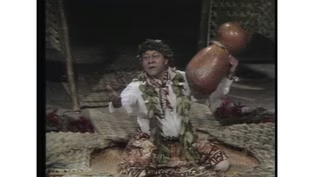
[14:33] [O Lanakila Ke kaʻa ahi Aliʻi] O Lanakila ke kaʻa ahi aliʻi Nānā lawe mai kahu aupuni A hiki ʻo ka lani i Moanalua Ka uwapo holuholu aʻo Hālana ʻAlawa iho ʻoe ma ka ʻaoʻao Ka nome ka huila i ke alahao ʻAʻohe ou loa a e Mānana I ke kuʻupau a nā wilikī Hoʻokahi nā leo aʻo ke kuhina Hoʻopaʻa ʻia mai nā mīkini Kūnou welo pāpale ke aloha Nā kupua nā kini ou e ka lani A kau o ka lani i ke kaʻa pio Huli aku a noho hoʻolaʻilaʻi Kiani ka uwepa haʻa nā lio Kiliʻopu i ke kula o Leilehua He aku mākou o mai ʻoe O Liliʻuokalani lā he inoa He inoa no Liliʻuokalani [16:16] Kaupena Wong: Like his teachers, who in secret kept the chanting and hula rituals alive, the talented hula choreographer Henry Pa uses the ipu, a hollowed out gourd drum as a dance partner, if you will, as he chants and dances about our island landscape.
[16:36] [He Nani Hāʻupu i ke ahe a ka makani] He Nani Hāʻupu i ke ahe a ka makani He hiʻi ʻia lā me ka wai e ke mamo E nānā iho ʻoe i lalo o Hulāʻia Me he moena pāwehe ala o Mokulēʻia He nani nō mai Līhuʻe a Waialua ʻAʻohe wahi kā ua Nāulu i ke kula Ua pili pono iho lā ia i ka mana nui Ke hoʻonui maila Puaʻena a i luna I kani hone aku lā i ke kula aʻo Nōhili A me he lei hulu mamo ala ka uka o Halemanō ʻAe, ua ʻikea mau Ua noa [19:01] Singing: Ma ke alahele ʻo Iesū / I hālāwai aku ai / Me ke kanaka ʻōpio hanohano / Kaulana i ka waiwai / Pane mai e ka ʻōpio / ʻE kuʻu Haku maikaʻi / He aha hoʻi kaʻu e hana aku ai / I loaʻa e ke ola mau?
E hāʻawi, e hāʻawi lilo / I kou mau waiwai / Huli a hahai mai iaʻu / I loaʻa e ke ola mau ia ʻoe / E hāʻawi, e hāʻawi lilo / I kou mau waiwai / Huli a hahai mai iaʻu / I loaʻa e ke ola mau.
[21:08] Singing: Kaulana nā pua aʻo Hawaiʻi / Kūpaʻa ma hope o ka ʻāina / Hiki mai ka ʻelele o ka loko ʻino / Palapala ʻānunu me ka pākaha / Kaulana nā pua aʻo Hawaiʻi / Kūpaʻa ma hope o ka ʻāina / Hiki mai ka ʻelele o ka loko ʻino / Palapala ʻānunu me ka pākaha.
Pane mai Hawaiʻi moku o Keawe / Kōkua nā Hono aʻo Piʻilani / Kākoʻo mai Kauaʻi o Mano / Paʻapū me ke one Kākuhihewa.
ʻAʻole aʻe kau i ka pūlima / Ma luna o ka pepa o ka ʻēnemi / Hoʻohui ʻāina kūʻai hewa / I ka pono sivila aʻo ke kanaka.
ʻAʻole mākou aʻe minamina / I ka puʻu kālā o ke aupuni / Ua lawa mākou i ka pōhaku / I ka ʻai kamahaʻo o ka āina.
Ma hope mākou o Liliʻulani / A loaʻa ē ka pono o ka ʻāina / Haʻina ʻia mai ana ka puana / Ka poʻe i aloha i ka ʻāina.
Ma hope mākou o Liliʻulani / A loaʻa ē ka pono o ka ʻāina / Haʻina ʻia mai ana ka puana / Ka poʻe i aloha i ka ʻāina.
Haʻina ʻia mai ana ka puana / Ka poʻe i aloha i ka ʻāina.
Ka poʻe i aloha i ka ʻāina.
[24:51] Singing: I am weak but Thou art strong / Jesus keep me from all wrong / I'll be satisfied as long / As I walk, let me walk close to Thee.
Just a closer walk with Thee / Grant it, Jesus, is my plea / Daily walking close to Thee / Let it be, dear Lord, let it be.
[26:38] CS: Henry Moikehaokahiki Pa died on April 26, 1979.
Uncle Henry admitted that he didn't know enough about the hula to satisfy himself.
He said, “We have enough within our own culture to learn till and to express that we don't need to branch out into other Polynesian cultures.
But unfortunately this is what commercialization demands.
The young, in order to perpetuate the hula must be encouraged to research, communicate, meditate, and then dare to create—to express their souls in their dance and oli.” Then he concluded, “Onipaʻa na mea Hawaiʻi a pau—hold fast to all things Hawaiian.” Singing: Just a closer walk with Thee / Grant it, Jesus, is my plea / Daily walking close to Thee / Let it be, dear, Lord, let it be.
Let it be, Lord, let it be.
Providing Support for PBS.org
Learn Moreabout PBS online sponsorship












Support for PBS provided by:
PBS Hawaiʻi Classics is a local public television program presented by PBS Hawai'i