
Agricultural Importance
4/20/2023 | 23m 30sVideo has Closed Captions
Agricultural Importance
Farms across Illinois account for a large part of the state’s economy. While many think of large farms growing corn and beans, smaller specialty farms are also playing a big role. We visit Rendleman Orchards to learn more, and bring the farm to table with some help from SIU’s Niki Davis.
Problems playing video? | Closed Captioning Feedback
Problems playing video? | Closed Captioning Feedback
InFocus is a local public television program presented by WSIU
Support provided by:

Agricultural Importance
4/20/2023 | 23m 30sVideo has Closed Captions
Farms across Illinois account for a large part of the state’s economy. While many think of large farms growing corn and beans, smaller specialty farms are also playing a big role. We visit Rendleman Orchards to learn more, and bring the farm to table with some help from SIU’s Niki Davis.
Problems playing video? | Closed Captioning Feedback
How to Watch InFocus
InFocus is available to stream on pbs.org and the free PBS App, available on iPhone, Apple TV, Android TV, Android smartphones, Amazon Fire TV, Amazon Fire Tablet, Roku, Samsung Smart TV, and Vizio.
InFocus
Join our award-winning team of reporters as we explore the major issues effecting the region and beyond, and meet the people and organizations hoping to make an impact. The series is produced in partnership with Julie Staley of the Staley Family Foundation and sponsored locally.Providing Support for PBS.org
Learn Moreabout PBS online sponsorship(upbeat music) - Welcome to InFocus.
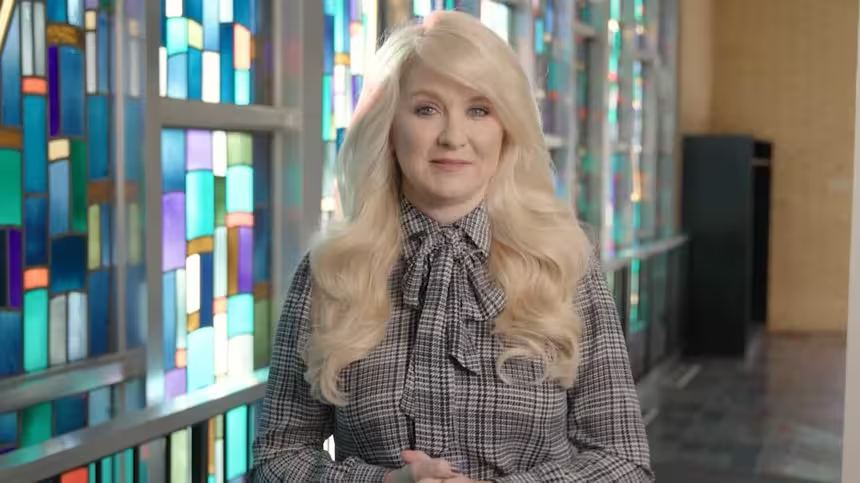
I'm Jennifer Fuller.
If you've spent any amount of time in Illinois or in many Midwestern states, you no doubt know the impact that agriculture has on the state's economy and on the region as a whole.
But inside the economy of agriculture are specialty growers many of whom say agriculture just wouldn't be what it is if they weren't around.
One of those specialty growers is located in Union County.
Rendleman Orchards will celebrate its 150th anniversary this year.
This family farm is perhaps best known for its peaches and its apples, but it's more than that.
The distribution impacts local stores, restaurants and distribution centers, and it has an impact on local tourism.
We talked about all those things with Rendleman Orchards, Michelle Sirles.
- We do a lot more than that but that has been a long, long time mainstay of our farm.
So that's our core - People, ha, core.
- Literally.
- People may be familiar with specialty crops, they may know about things like that, but how important is it to have kind of the things that maybe people aren't familiar with, those unusual things that make Southern Illinois, central Illinois what it is?
- You know, over the past couple decades, we've really seen how important that is to our local economy with jobs, but also food on your plate.
In the last recent years, when you'd go to the grocery and things might be scarce, people were all of a sudden turning to their local farms.
And also for entertainment.
A lot of farms have gone to agritainment or you pick experiences like we have with the flowers and the pumpkins.
So what a farm and a family farm contributes to the region is quite a bit more than what people really realize.
- A lot of people are thinking more and more about shopping local, staying local, and making sure that the foods they're buying are sustainable.
How do local farms help in that process?
- Well, it's a great opportunity for people to get out, talk directly with the farmer, learn how they grow it, be familiar with their practices get a lot of tips inside our farm market, other stores or at the farmer's markets, and learn new ways to cook things, it's wonderful for your health.
You learn a variety of different produce that you can use, color up your plate.
It's preventative healthcare, in our opinion.
- Sure, what do people need to know if they're headed out to a local farm and they don't know a lot about what they're looking for?
Is this someplace that we need to ask a lot of questions?
Are those answers available to them?
- Yes, we use our farm market as the face of our business even though we're primarily a wholesale farm.
Our retail farm market is where we can educate the locals and regionals that come to visit and want to learn about all the different varieties of peaches.
We raise 14 different kinds and we stagger those so that we're harvesting from late June all the way until Labor Day and early, you start with the cling peaches then you move into the free stones.
And a lot of people aren't even aware that there are that many varieties.
And so it's fun for us to share what we do, what we love, our favorite recipes we share on our website.
We began shipping peaches from farm to porch after about 2020, we started doing that.
That's been exciting for us.
We never thought we could do that but now with all of the online opportunities we really can be a nationwide farmer, which has been fun.
- We talk a lot about how things have changed.
You mentioned 2020, so we've talked about how COVID changes everything but new technology changes that as well.
And so people have access to your farm a lot more than they might have in the past.
How do you balance that kind of tradition of 150 years with the technology that's available?
- Well, we have found that you have to roll with the times.
You have to stay up with the latest if you want to be sustainable and go into that next generation.
You can't do the stereotypical set in your ways kind of thing because you just won't be around if you do that.
So we have really adapted and we've put in new website, new online store.
We've had custom gift boxes made, and we have inserts specially made just to handle the shipments.
And it's exciting to know that people that maybe were raised here but no longer live in southern Illinois, they can get on their phone and order a box of peaches or a box of apples delivered right directly to their porch.
- Do you find that the trends are changing as you try to attract younger people.
You have generations who've lived here and they know to come to a local farm if they want specific things but people who are younger tend to want to look on a phone or see things through social media.
Has that changed how you tell your story?
- It's actually been wonderful.
We have been able to spread our stories so much further.
We bring a lot more foot traffic to the store being able to take photos with our phone, share our growing practices, our winter care of the orchards, letting people know exactly what goes into raising their fruit.
We put more of an emphasis on our practices since that's important to people and let them know that their food is safe, it's fresher if they go directly to the farm or order directly from the farmer, the social media definitely drives traffic and it allows us to share our history as well and really build our brand much further when you're sharing your story - How do you interact?
A lot of people talk about the regulations that come into play and so you have to deal with places like the USDA, the Illinois Department of Agriculture and all the different distributors and things like that.
I'm sure that there are different challenges for large farms that grow, you know, just hundreds and hundreds of acres of corn or beans or something like that.
But are the restrictions, the regulations that you have to deal with a big challenge for you?
- Yes, and what Wayne, and I find that is challenging for us is we've already done those food safety practices for 150 years, but actually having to formalize processes and document all of it, we've had to hire more clerical help, and it takes a lot of time away from being out in the orchards.
So that's a constant internal struggle, is finding the time to do what you have to do with what you love doing.
And also, I would say hiring that, you know, there's just more and more regulations on that.
Finding the help you need, the proper documentations, all the new things that are coming down for team members, making sure you're compliant with everything and offering a great place to work is always been our focus.
- Finally, people who are looking to maybe grow their own, maybe not start something quite as large as this but they'd like to grow their own food what would you suggest to someone maybe just trying to start a garden this year?
- Start out small.
Some of your plants can produce a lot more than you think for, it is nice though.
They can share 'em with their neighbors, they can trade.
It's a great way to learn.
And for us, we actually joke about it and say, that's great.
They'll learn how much work goes into this and they won't complain about prices as much.
So, and it is true, the more people learn about the everything that goes into what you do, the more they're willing to support the farmer because they realize that it is labor intensive work and it's usually not in the best of weather.
- This is true, hot and humid to be sure.
- Yes.
- So let's talk a little bit about fruits of the labor and let's head inside and see if we can take a look at how that works.
- Sure.
- Sure.
This way.
- [Michelle] All righty.
- [Jennifer] Thank you much.
- [Michelle] Sure.
- One of the things that people talk a lot about now is bringing farm to table.
We see it a lot in local restaurants but you can also bring it to your farm.
We'd like to reintroduce Niki Davis from SIU's Hospitality Tourism and Event Management Department.
Niki, there are a lot of things that people can find here and grow here that they can bring right to their table.
- Absolutely.
Absolutely.
- Tell me about what you've got here.
- Well, today we are going to focus on apples, which is one of my all-time favorite local pieces of produce.
And we have a butternut squash soup that we've made with the butternut squash and apples mixed in with it.
And we're going to prepare a crostini with apple butter and cheese to go on top of it and make a real simple, quick lunch.
- Sounds wonderful, I'll let you take it away.
- All right.
Thank you.
So simple and quick.
That's kind of what we do, isn't it, as moms?
- Yes, it seems like more and more people are working longer hours and they're wanting something fast and easy for sure.
- So butternut squash soup, one of my favorites.
One of your favorites.
- Mine too.
- And we're going to just simply top the crostini with a little bit of apple butter and I'm gonna let you help me.
We'll do a little bit of cheese on top and these aren't very big, so it won't put much cheese.
And we'll pop these under the boiler for about five minutes.
- Sure.
- And that will be the perfect little topper to add some sweetness.
- I noticed more and more families are using value added products that they're getting from the farm like the apple butter made with local apples, family recipes that have been passed down for generations.
- Well, and that's a great thing to talk about too because if you have too many apples at home, I don't know if that's a possibility and don't manage to get through all of them.
It's apple butter, apple sauce very simple things to make, but even easier to buy, right?
- That's the truth.
That's the truth.
- [Niki] All right, these look great.
- [Michelle] Yes, they do.
- [Niki] Hey, I'm starving.
I don't know about you.
- Cheese on top is always a good thing.
We've gotten more and more into finding local cheeses also - There's not much that we're preparing today that we can't find locally.
The soup was our local apples and local butternut squash.
And if you don't have time to make it from scratch, guess what?
We can buy that at this store too.
But of course, as much as we can make from scratch, that's what we want to do.
And use up our local goodies here.
So these are all prepped and ready.
So let's throw these in under the boiler for a few minutes.
- [Michelle] Sure.
- All right.
Top rack, closest to the broiler.
And that will take about five minutes, position your rack so you can close the door.
All right, let's check these out.
- [Michelle] Looks like it's ready.
- [Niki] They look delicious.
- [Michelle] Yes.
- And very warm.
- So look how bubbly and cheesy that is.
And just a little bit of the brown on top of the cheese that's like perfect.
- [Michelle] Yes.
- And I don't know about you but the cheese that kind of melts onto the pan, that's one of my favorite.
- The crispy part is the best part.
- These look delicious, but let's take a taste test.
- [Michelle] I'm up for that.
- All right, grab one, cheers.
Cheesy and gooey.
- Delicious, I like all of the flavors that are coming together there.
The cheese, the apples, the cinnamon, and the crispy toast.
- And the salty and the cheese balances perfectly with that sweetness in the apple butter.
You're right.
- We did good.
- It's a meal in itself.
- And these cheese and all, they're stuck together.
That's even better, will float right on top and if they sink a little bit, that's okay.
And they will soak up that soup and get a little bit soft on the underneath.
And that's like the perfect combination.
- You'll be able to cut those with a spoon in a minute.
- Oh, absolutely.
I don't know if you saw that cheese pulled, but that was incredible.
- [Michelle] Yes.
- And these, a little snack.
- Right, that's for the cook.
- The cook's snack right there.
And we'll have a few extra just to eat along the side.
And there's the first part of our meal - [Michelle] That looks amazing.
- All right, so let's clean this up a little bit and move on to the next part.
- Sure, I'll help you out here.
- The next part of our quick and easy meal.
And I'm gonna put this down in the sink.
- [Michelle] Yeah, let put that in the fridge.
- We're hanging on to that cheese though.
Thank you, yes.
- [Michelle] Sure.
- Always refrigerate things after they've been opened.
So let's take a look at the spinach that I found at Farmer's Market over the weekend.
Oh my gosh.
- [Michelle] Rich in color, you can see.
- Rich in color and I love just, I love looking at this spinach because it's so different when you pick this up at farmer's market than what you can find in our local grocery stores that's pre-packaged.
- And you can tell with the texture how fresh it is.
- Yes and it's right out of the ground.
We can see that.
But we have fresh spinach washed, cut.
We're going to dress this with some toasted pecans to go with our soup and crostinies, we'll dice up an apple to put on top and then we'll use some really yummy vinaigrette.
And there's our soup and salad.
- You can't beat that.
- Right.
- [Michelle] There you go.
- These are actually local pecans.
We can get them in Southern and central Illinois.
Look how beautiful those are.
Thankfully we can get them already halved so we don't have to go through that trouble.
- [Michelle] Exactly, we're spoiled.
- So we have heat on medium, and we're just going to dump these in.
Nothing special here.
We're going to do a dry toast and it won't take very many minutes, but you can't walk away from this because if you do, they will burn very fast.
And that's not a fun thing, so.
- No but they taste so great in your salads when they're crisped up a little bit.
- It's in the aroma.
Once they start, you'll know when they're finished because you'll be able to smell that toasty, nutty smell in your kitchen.
Don't need anything special.
You can leave them sit for a few seconds at a time.
And I just kind of shake 'em around and do you, you know, fun things with the pan and try not to spill 'em on the stove when I do it.
But it's kind of fun.
- [Michelle] And this process is really fast too.
- It is, so what are some of your favorite local things that we can get our hands on to cook in the kitchen?
- Well, we feel fortunate that we live in Union County, Illinois, because it is the area in Illinois that has the most diverse specialty crops.
- Yes, absolutely.
- So we're a little bit spoiled by all of the farmer's markets you can go to in the small towns and communities.
And every season has its specialties.
So I'm really looking forward to the fresh greens you have.
The spinach, next up will be strawberries.
That's one of my favorites.
And that'll lead us into the berry season.
So I would say fruits in general.
- We're using apples today with the salad but trade the apple for the strawberries in a few weeks and that will be just as delicious.
- Yes.
What's not to love?
- Not much.
- And the pecans, of course, are proteins so that'll be great.
- Absolutely.
- [Michelle] Fill us up.
- This is the point where we have to watch because they'll get away from me to work fast.
I'd say I can smell them, do you smell that.
- [Michelle] Oh, yeah.
- Yeah, I think we're good.
- [Niki] So let's go ahead and put these on the salad.
- [Michelle] Sure.
- And these are going to go straight from the pan right to the top of salad.
- I can smell that as you're pouring those up.
- Right.
Right.
And we'll just put that back over here to cool down.
Perfect and a little bit of cheese.
And then we will cut up an apple and I'll show you a real easy trick for that.
- Wonderful, I like all the tips.
Fast and easy.
- All right.
So let's grab a cutting board and an apple.
- Let's see here, I'm gonna grab one on here Do you want honey crisp or gala or Fuji?
- Oh, you know what, let's do, ask me that question again - [Michelle] Honey Crisp, gala or Fuji?
- Fuji is my favorite.
But there is not a bad apple in the bunch so.
- [Michelle] That is true.
- I think anything that- - These two.
- We like, thank you.
Will be perfect.
These are gorgeous.
All right.
So quick tip.
I learned this from an old friend who was a military cook once upon a time.
And when most people cut apples, they cut down through the middle and try to core them.
- [Michelle] Right.
- [Niki] And all of that fun stuff.
Real simple, especially if we're just dicing for a salad.
Just cut around the core.
- Right.
Apples I always feel like are one of the most economical local fruits.
- Right.
- That go a long way.
Fill you up, a lot of fiber.
- What would you do with that?
- Well, I sometimes will cut off in small pieces.
I have an apple cheese salad that I do.
- Oh, lovely.
- And shoestring.
- Lovely.
All right.
We'll put that out of the way.
And we're just going to dice these.
So each of these chunks, we will cut into slices and bite size pieces and is kind of out of the way on the cutting board.
- Wayne's grandmother used to boil those cores with cinnamon sticks to make her house smell special.
- Smell good, that would be a wonderful use for them.
And let's see, one apple, two apples, however many apples you wanna put in this salad is up to you.
- It is nice I think when you're selecting the apples to choose one that has some color to it that looks great up against the cheese and the greens.
- And that local spinach is very tender and it's a little bit sweet on its own, but it is spinach.
It's still very earthy.
So this combination just balances that earthiness out beautifully.
We're just going to kind of set this to the side - And have a flavor burst.
A lot of people don't realize too, if they go directly to their farmer, they can ask for a utility grade piece of produce.
And that's a number two utility grade.
And if they have imperfections, you're gonna get it for about half price and really stretch your produce dollar.
- And that's a great tip to know.
And that apple, there was one little bitty dimple in it.
Other than that, it's perfectly fine at that.
- Right, right.
And you're not really gonna see it once it's chopped up anyway - This is true.
So let's dress this and then we'll give it a little toss.
Any salad dressing that you like.
I mean, this is a kind of build your own do this your own way.
That was a nice little pop, right?
- Yes.
Fresh.
- [Niki] Very.
- So it is always great to have some local dressings.
Also, a lot of farmers are making value added dressings.
Apple butters, jams, jellies and you can even use some jams and jellies and melt those and mix those up into dressing as well.
If you want sweet.
- And this was a pecan- - Blue cheese.
- Blue cheese, yes, so all of this pairs nicely.
We can give that a little bit of a toss.
- [Michelle] Sure.
- And we will, we're gonna move our spinach out of the way.
- I'll be your assistant here.
- Oh, thank you so much.
- Sure.
- And this won't take much.
Another tip, we kind of built the salad in the serving bowl, but if you want to mix everything up really well build in a separate bowl and then plated it into your serving bowl.
But just a little bit of a mix.
You don't wanna overdress either.
- Right.
- You know, I'll hand you those back.
- A lot of times people like to add more if they like it.
And some don't like that much dressing.
- I don't like that much.
So, but even dressing on the side would be okay in that situation but.
- We do that often when we're busy in season.
We won't dress it until we're ready to eat it because you can fix something like that.
It'll last in your refrigerator for days.
- Refrigerator undressed, yes, it will.
- Yeah, we can, that's a meal prep.
- That's a great tip.
A great tip.
So we have our salad with local spinach, local apples, local pecans, some cheese and a really good balsamic blue cheese pecan salad dressing that pairs perfectly with all of that.
And a butternut squash soup made with butternut squash and apples.
We're showcasing the apple today with our cute little crostinies that have our apple butter and cheese.
And any cheese will be fine.
- Yes.
- Cheddar, Swiss, Greer.
- Whatever you have - Anything you like, whatever you have in the refrigerator you use that to do this.
- I have found some of the local produce delivery services that we have now in this area are now having local cheeses, and they have a huge variety.
- Oh, wonderful.
- Which is surprising.
- [Niki] Wonderful, so I'm ready to eat.
How about you?
- [Michelle] Yes.
- Special thanks to Michelle Sirles and Rendleman Orchards as well as Niki Davis of SIU's Hospitality Tourism and Event Management Program.
You can find all of this information at our website wsiu.org, and of course at our YouTube channel.
Thanks for joining us on InFocus.
I hope we'll catch you next time, I'm Jennifer Fuller.
(upbeat music)

- News and Public Affairs

Top journalists deliver compelling original analysis of the hour's headlines.

- News and Public Affairs

FRONTLINE is investigative journalism that questions, explains and changes our world.












Support for PBS provided by:
InFocus is a local public television program presented by WSIU