
Alexa Tarantino
Season 2 Episode 3 | 18m 34sVideo has Closed Captions
Photographer Sophie Elgort shoots with saxophonist Alexa Tarantino.
Photographer Sophie Elgort shoots with saxophonist Alexa Tarantino — the first woman to be a full-time member of the Jazz at Lincoln Center Orchestra with Wynton Marsalis — as she improvises on set and plays some tunes in the streets of New York. Plus, the pair embark on a game of rapid-fire questions and “This or That.”
Problems playing video? | Closed Captioning Feedback
Problems playing video? | Closed Captioning Feedback
Portrait Mode with Sophie Elgort is a local public television program presented by WLIW PBS
Alexa Tarantino
Season 2 Episode 3 | 18m 34sVideo has Closed Captions
Photographer Sophie Elgort shoots with saxophonist Alexa Tarantino — the first woman to be a full-time member of the Jazz at Lincoln Center Orchestra with Wynton Marsalis — as she improvises on set and plays some tunes in the streets of New York. Plus, the pair embark on a game of rapid-fire questions and “This or That.”
Problems playing video? | Closed Captioning Feedback
Where to Watch Portrait Mode with Sophie Elgort
Portrait Mode with Sophie Elgort is available to stream on pbs.org and the PBS app.
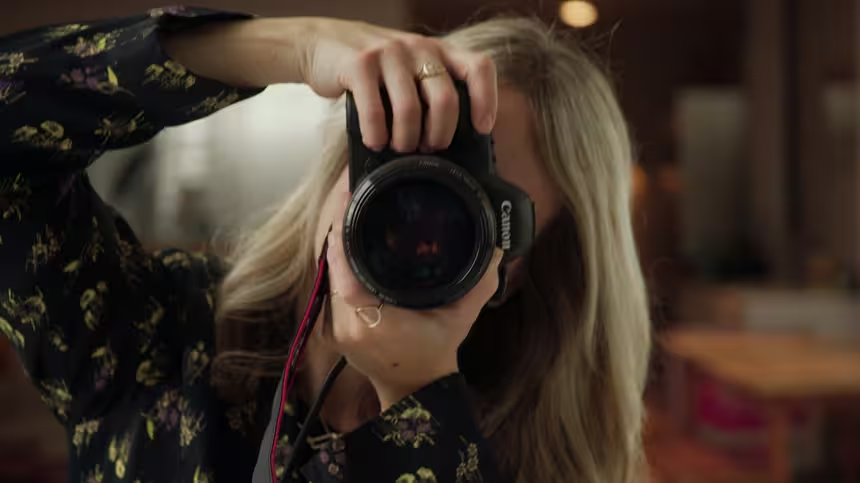
Capturing the art of conversation
In “Portrait Mode with Sophie Elgort," the photographer interviews iconic artists Nile Rodgers, Rita Moreno, Skylar Brandt and Arthur Elgort.Providing Support for PBS.org
Learn Moreabout PBS online sponsorship(upbeat music) - I realized in fourth grade, third grade, that I was like gonna be obsessed with the saxophone.
I saw a young woman play at the high school where I grew up and I just tugged on my mom's jacket, like, that's what I wanna do.
- (upbeat music) - [Sophie] Hello.
- [Alexa] Hey, Sophie.
- You look great.
- Thank you.
- I love it.
- You too.
- Thank you for doing this.
- Thank you for having me, I'm so thrilled to be here.
- Me too.
(camera clicks) So if you could please set up your saxophone.
- Sure, sure, sure, sure.
- And I'll talk to you while you're doing it and snap some pictures along the way.
- Awesome.
- So I know you play a lot of instruments.
- [Alexa] Hm-mmm.
- Which instruments do you play other than the saxophone?
- So I play flutes, clarinet and saxophones, but primarily alto saxophone and soprano saxophone.
And then my main, like other instrument, when some people say like your main double, it's a flute.
In our orchestra, and in the big band jazz tradition, it's really common for saxophonists to have like many instruments at their feet to pick up, so if you, you know, came to a show, you might see me with five or six instruments, like between saxophones and clarinets and flutes.
- All right, I wanna take a couple pictures of you.
(upbeat music) All the different ways that you would hold the saxophone, like you can do.
- Yeah, great.
- So every time I sort of take a picture.
- Sure.
- Feel free to, you know, do something else.
That looks really good.
(upbeat music) I'm gonna do it.
A couple kind of fun flashy ones on here.
- Oh, awesome.
- I feel like these are my different instruments.
- I like it.
- Yeah, this is gonna be cool with a flash, I think.
(camera clicks) This is an old Rolleiflex black and white, - Awesome.
- So I think it'll be fun.
Yeah.
- So maybe I'll look away or something.
- This is a little more kind of old school.
Did you have any mentors early on, or someone who sort of encouraged you in your journey?
- I did, yeah, so actually right from the beginning, I have to mention my family, they were super-supportive.
They're not musicians, but I did learn that my grandmother played piano on the radio during the Great Depression.
So that was always an inspiration to me.
I started on piano and saxophone at the same time and my dad, who's not a musician, but came from sort of a military family, was always very diligent about like work ethic and practice and time management.
And so I really credit my parents for so much of the, just the inspiration and motivation and, you know, that drive that you need to pursue something for the long haul and really be committed.
- Amazing.
- Yeah.
- Well, let's take a breather and do some rapid fire questions.
(upbeat music) (clapperboard claps) First jazz album you ever bought?
- I'm gonna say the first one that was given to me.
"Blue Train" John Coltrane.
- Who is the most underrated jazz musician?
- Hmm, Ornette Coleman - Dream musician to collaborate with dead or alive?
- Ooh, Sarah Vaughan.
- Go-to karaoke song?
- "Love on Top," Beyonce.
- A song you wish you'd written?
- "Just In Time."
- Pre-show ritual you cannot skip?
- Long tones.
- Best advice you ever received?
- Forget about it.
(laughs) - Worst advice you've ever received?
- Don't do it - All right, now we're gonna do some this or that.
Composing or improvising?
- Improvising.
- Smooth jazz or free jazz?
- Free jazz.
- No.
2 or No.
3 reed on alto sax?
- Three - Smalls or Village Vanguard?
- Ooh, I love them both, but I love the Vanguard.
- Touring Europe or the United States?
- Europe.
- Great, thank you.
- (laughs) Yeah, thank you.
- Let's have you play a little bit.
- Awesome.
(gentle saxophone music) (gentle saxophone music continues) (gentle saxophone music continues) (camera clicks) - How does that work?
Are you improvising right now or is this a tune?
- Yeah, yeah, yeah, no, I just, yeah.
- You make it up.
- Yeah, yeah, yeah.
But a lot of, like, some of the things I just heard, a few things like that, like, oh, that's a little tiny bit of this ballad, or that's a little bit of this piece.
Or like, there's just little nuggets that we all kind of gravitate towards and you piece things together in your own way and turn it inside out, turn it backwards, you know, change the key, pick a different ending, you know, a different note to end on that might have a new color.
It's like we're improvising, but so much of what we do is from the records that we've studied, the people that we've studied, the songs that we've studied, that, you know, it's all different, but it's all related.
- When you go to start playing something like you just did, do you have something in your head you're already thinking you might play?
Or does it just start coming out?
- It just kind of starts coming out.
I mean, if I'm gonna stand up to play a solo in the middle of the orchestra, then you don't have a lot of time.
That's part of what is so special about playing in a big band.
It's kinda like being on a sports team.
So we're always like kind of navigating our team plays and then there's a moment where someone has like a spotlight or a highlight and it's not that long because we gotta get back to the play.
So when you have like 8 bars, 16 bars, 32 bars, you kind have a little bit of a plan of attack.
Like, you know, where you have to start, you know where you have to end, you know you have to make it clear, but, you know, you bring your own fire and you do your own thing with everything else in between.
- That's really cool.
- Yeah.
(upbeat music) (camera clicks) - You are the first full-time female performer with the Jazz At Lincoln Center Orchestra with Wynton Marsalis.
How does that feel?
- It's definitely an honor.
I feel super-grateful to have been a part of the family for quite some time.
I first met everybody when I was in high school.
We competed at the Essentially Ellington Festival and Competition, which is a big event that we host at Jazz At Lincoln Center every year.
It's a national endeavor bringing students from all over the country to our hall to celebrate the music of Duke Ellington.
And so I was like one of those high school kids that came through and met Wynton and the band and I had been listening to them for years, you know, so to be a part of the orchestra is just incredible.
It was definitely a dream come true.
And while I am the first woman to be holding a chair in the orchestra, there also have been, you know, a number of amazing colleagues of mine who have held substitute, you know, tours and positions with the group.
I feel very lucky, you know, to be representing and there are more of us, yeah.
- Yeah, have there been moments where you feel underestimated due to being a woman, or do you feel like you're always treated equally?
- No, honestly, I mean, when I was coming up in high school, in college, you know, at summer programs or national festivals, I was always the only young girl in the group.
You know, it would be like me as the sophomore girl with a bunch of senior guys or something like that.
And I always just took it as a challenge to always just like, show people what you're about and just always be real and be authentically you and make it about the music.
So for anybody who may have been judging or underestimating or sort of vibing is what we say in the jazz world, it was always kind of just like, okay, well, let's see what happens on stage.
You can think whatever you want, but the music doesn't lie.
- People hear the sound and it sounds beautiful, but they don't always understand like what goes into playing an instrument, myself included.
- [Alexa] Right.
(laughs) - What is the hardest part about playing the saxophone?
- A challenging element is these things, the reeds, because they are affected by like weather and humidity.
So when we're touring we have, we tour with big road cases with all our instruments and we have boxes and boxes of these because you never know, like if we're going to Aspen for example, or Mexico, or China, you know, the temperature and the humidity and the altitude all affects the way that these work in our favor or against us.
So that's definitely a factor.
The rest of it is just an adventure and just figuring out your sound and your like spirit through the instrument.
It's an infinite world to explore.
(gentle saxophone music) (camera clicks) - Will you humor me?
Let's do a couple really closeups.
- Sure.
- And put the saxophone, like, not like you're playing it, but like almost sort of near your face.
Yeah, I want to see your face.
Okay, that works.
(upbeat music) That's good.
(camera clicks) What is your routine like in terms of your practice schedule and your work ethic?
- When we're home, we rehearse on the weekdays, we rehearse together from 11:00 AM to 6:00 PM and then on show days, we'll have like a sound check for one of the shows.
And then we just do the show at night.
So we take it a little bit easier during the day on show days.
But yeah, we rehearse a lot together, which is really awesome.
It's honestly my favorite part about the gig because it gives you an opportunity to really refine and get to know the music at the deepest level.
You know, when you're freelancing through the city and through, you know, picking up different tours and different traveling gigs, sometimes you don't have the opportunity to see the music beforehand.
You know, you could just go in cold and that's a skill that's super-important for all of us to have.
But this is a real privilege to just dig into the beauty and the spirit of the music.
(upbeat music) - I know you brought a special object today.
- [Alexa] Yes.
Can you tell me about it?
- My grandmother played piano on the radio during the Great Depression, and I never met her, but I always heard about her and I have a lot of her old sheet music.
This is a music box that my grandfather gave to her.
My aunt passed this down to me, she had it, and I guess you know, I'm the musical one.
So I just opened it for the first time in a long time and I forgot that actually still works.
- That is amazing.
What does it play?
- It's playing "So In Love."
- [Sophie] Do you have to wind it?
- I think I do, hold on.
- Yeah, there it is.
- It's playing "So In Love" by Cole Porter, which is amazing.
- Can I take your picture with it?
- Yeah, absolutely.
- Really nice, that's so special.
And I'm gonna take it with a film too that, 'cause it's sort of an old.
- Yeah, that's cool.
- Heirloom.
(camera clicks and whirrs) (gentle music) ♪ When I'm close to you, dear ♪ - Yeah, that's beautiful.
(gentle saxophone music) This is a great view, I'm inspired.
- Oh, good.
(gentle saxophone music) You brought a photo.
- I did, a digital version.
- I wanna recreate it today.
- Awesome.
- And can you tell me first a little bit more about the picture?
- Yes, so this is from my high school days.
This is from a show we used to do in our high school called "Pops and Jazz."
You know, we had tuxes and bow ties.
So as you can see, I kept the suit trends, just spiced it up a little bit, no more bow ties.
- I was like, where's your bow tie?
- Yeah, no more bow ties for me.
But the saxophone that I'm playing is the first saxophone my parents bought for me.
It's a Selmer Mark VI.
That's like the holy grail of alto saxophones.
I typically play Yamaha saxophones.
But today I brought another Selmer Mark VI that walked into our lives at Jazz At Lincoln Center.
My colleague, Sherman Irby, who is our lead alto player, he met a woman who's a big fan of our band.
And her brother had this saxophone.
The sad story is that he was recently in a nursing home and has also just recently passed away, but she didn't know if the saxophone had anything to it.
She was like, I'm not sure about this horn and how to give it a good home.
And we played it and it was just really magical.
And so it just kind of speaks to the beauty and like the old souls that are these vintage horns.
So yeah, thought that'd be special for this old photo.
- Perfect, let's recreate it.
You have one hand?
Yep.
You're perfect with your hands.
And then, of course.
- It's the only way I can put them in.
- You're still perfect with your hands, you're looking down.
- Yeah, I think my eyes are closed.
- And you're sort of.
- Yeah, I know, I know, I know the.
- You know the photo.
- Yeah, 'cause I think I, yeah, so I'm like, - Yep, you're really focused.
Yeah, I love this photo, it's great.
(gentle music) (camera clicks) And then I'm gonna do it on this because I feel like maybe it's not, maybe you're, I can't decide if it's on film or not.
but it does look a little flashy.
- Sure.
(camera clicks and whirrs) - Love it, it looks very focused.
- Yeah, it was a big moment in high school.
(laughs) - [Sophie] It's awesome.
- Hitting the high note.
- Do you have a specific performance that stands out as one of your most meaningful performances?
- Gosh, there are a lot.
I think the most memorable one with Wynton would be in Marciac, France.
Used to play this festival all the time called Jazz in Marciac with his septet.
And we went out one year and we were playing the 11:00 PM set.
At the 9:00 PM set was Chick Corea.
Incredible.
So we checked out his set and cheered them on.
And then jazz festivals always run late.
So it probably was 12:30 AM at this point that we went on.
And Chick stayed for our entire set, which was probably another 90 minutes.
So he stayed till 2:00 AM and when we found out he was still there, Wynton invited him up for an encore with us.
I think we did two or three encores that night.
So we played until about three, I wanna say.
It was wild.
And unfortunately Chick's no longer with us, but it was just another one of those moments of like, this is what it's all about.
It's not about starting on time, it's not about playing all the right notes.
It's not about, you know, it's just about that feeling of being with people and generosity of spirit and just, yeah, it was incredible.
- That's so cool.
- Yeah.
(gentle saxophone music) - So I've been directing you the whole shoot.
- [Alexa] Okay.
- And I know that you are a wonderful director, band leader, everything.
I wonder if you might turn the camera around on me and give me directions.
- Okay, let's go.
- [Sophie] Let's do it.
- Oh, my gosh, okay.
- It's so funny you're treating the camera like I was treating your sax.
- [Alexa] Yeah.
- You're like, "Ah!"
But okay, let's flip places.
- Oh, okay.
- No, unless actually no, I'm not directing you.
You tell me what you want.
- Okay, okay, yeah, let's have you by the window.
The window is good.
All right, Sophie.
Sophie becomes the subject.
- Oh, it is sunny.
- [Alexa] Adjust a little.
Yeah, yeah, yeah, yeah.
I like this though because you're right in front of this little window pane reflection.
You already know the drill.
Oh, that's awesome, Sophie, look at us in our suits.
Here we are.
Oh, this is awesome.
- You know what I like about your style is that you're an encourager, which is how I know you're a band leader and like a director, because I think half of my job is just telling the person that they're doing a great job.
- [Alexa] Yeah, exactly.
- You know what I mean?
- [Alexa] I do it all the time, I'm always like, go team.
Ooh, I love these.
- Sweet, can can you sit there?
(Alexa laughs) So yep, and then like, kind of be like, yeah, hat's nice.
That's nice.
And then just keep like moving your feet a little, like you can have both of them long.
- Oh.
- I know, it looks cool, trust me.
- [Alexa] Okay.
(upbeat music) The cityscape looks so good.
Let's go outside and take a few shots.
- Let's do it.
- I want like, sax on the streets of New York.
- Yes, always.
(gentle saxophone music) - All new meaning to elevator music.
- Oh, my God, that's so true.
(gentle saxophone music) (gentle saxophone music continues) (gentle saxophone music continues) - [Sophie] And then look at me one more time.
Perfect.
Amazing.
(upbeat music) Awesome, thank you.
- Thank you so much.
I appreciate you.
- My star.
(upbeat music) (upbeat music continues) (upbeat music continues) (upbeat music continues)
 New Episode
- Arts and Music

Innovative musicians from every genre perform live in the longest-running music series.
 New Episode
- Arts and Music

Intimate portraits of six of the most influential and celebrated classical music artists.
 New Episode
 New Season
 New Episode
 New Episode
 New Episode
Support for PBS provided by:
Portrait Mode with Sophie Elgort is a local public television program presented by WLIW PBS