
April 30, 2026 - PBS News Hour full episode
4/30/2026 | 56m 46sVideo has Closed Captions
April 30, 2026 - PBS News Hour full episode
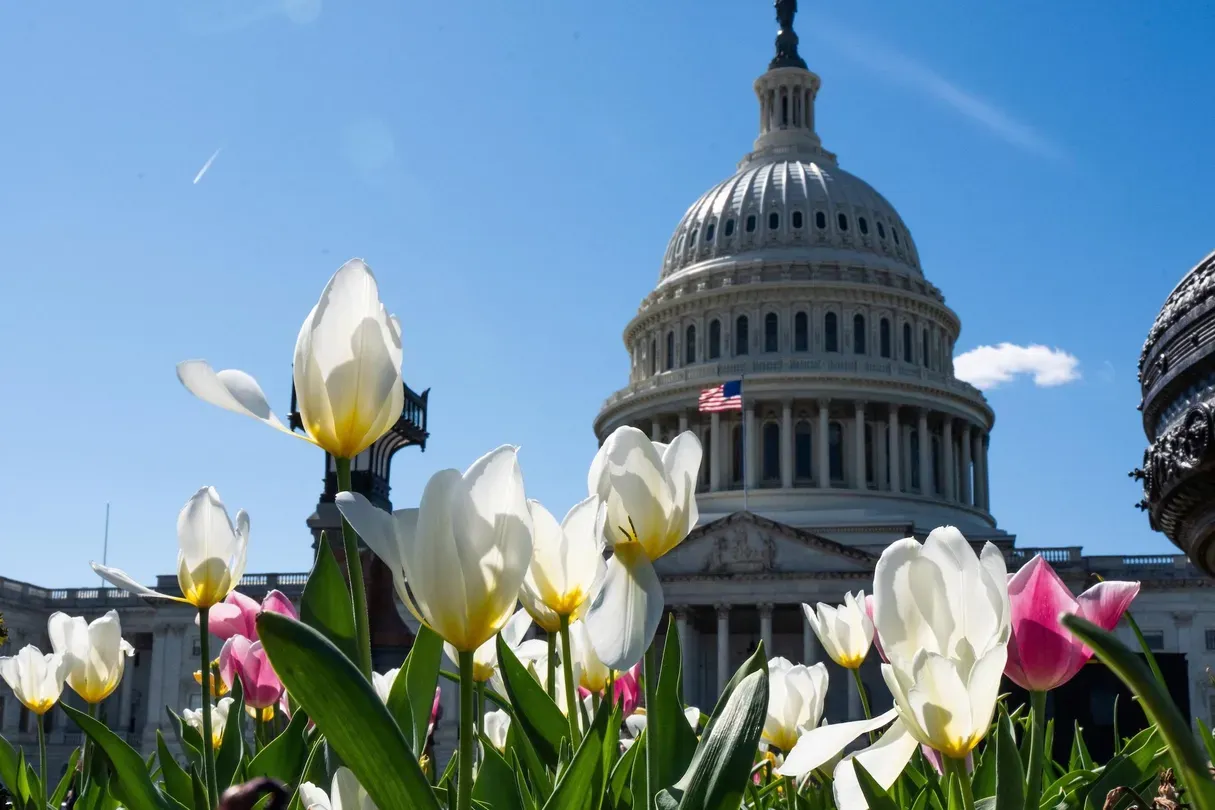
Thursday on the News Hour, lawmakers approve funding for most of the Department of Homeland Security, ending the longest government shutdown in history. Oil prices rise even further as Trump weighs options to end the Iran war and reopen the Strait of Hormuz. Plus, an immigration judge fired by the Justice Department gives an inside look at asylum cases that the Trump administration has halted.
Problems playing video? | Closed Captioning Feedback
Problems playing video? | Closed Captioning Feedback
Major corporate funding for the PBS News Hour is provided by BDO, BNSF, Consumer Cellular, American Cruise Lines, and Raymond James. Funding for the PBS NewsHour Weekend is provided by...
April 30, 2026 - PBS News Hour full episode
4/30/2026 | 56m 46sVideo has Closed Captions
Thursday on the News Hour, lawmakers approve funding for most of the Department of Homeland Security, ending the longest government shutdown in history. Oil prices rise even further as Trump weighs options to end the Iran war and reopen the Strait of Hormuz. Plus, an immigration judge fired by the Justice Department gives an inside look at asylum cases that the Trump administration has halted.
Problems playing video? | Closed Captioning Feedback
Where to Watch PBS News Hour
PBS News Hour is available to stream on pbs.org and the PBS app.
Providing Support for PBS.org
Learn Moreabout PBS online sponsorshipAMNA NAWAZ: Good evening.
I'm Amna Nawaz.
GEOFF BENNETT: And I'm Geoff Bennett.
On the "News Hour" tonight: Lawmakers approve funding for most of the Department of Homeland Security, ending the longest government shutdown in U.S.
history.
AMNA NAWAZ: Oil prices rise even further, as President Trump weighs options to end the Iran war and reopen the Strait of Hormuz.
GEOFF BENNETT: An immigration judge fired by the Justice Department gives an inside look at asylum cases that the Trump administration has ground to a halt.
JEREMIAH JOHNSON, Former Immigration Judge: When I went back to that village and saw the grave, the brother who was killed in the attack and the scars on the father's face, I knew what I had done that day in July in the courtroom was correct.
AMNA NAWAZ: And gold medal skier Lindsey Vonn opens up about her devastating crash at the Olympics, her recovery and the chances of yet another comeback.
LINDSEY VONN, U.S.
Olympic Gold Medalist: I, of course, don't want to end my career on that run at the Olympics, but I'm also a realistic person.
(BREAK) GEOFF BENNETT: Welcome to the "News Hour."
The longest shutdown of a government agency in history has ended with President Trump today signing a House-passed bill to fund most of the Homeland Security Department.
AMNA NAWAZ: The administration had warned that money to pay thousands of federal security workers would run out after today without new funding.
Congressional correspondent Lisa Desjardins is back with us here after spending the day reporting at the Capitol.
So, Lisa, what finally changed to end this shutdown?
LISA DESJARDINS: You, know it was a matter of who changed, and that was House Republicans.
As we were coming into today, there was pressure from President Trump and from House Republican leaders themselves on some of their voters.
And suddenly a rainbow appeared, Amna, as it does.
Here's exactly what happened.
The Senate had passed weeks ago repeatedly a DHS funding bill.
That bill funds most of DHS, except for ICE and Border Patrol.
House Republicans wanted more of a guarantee that ICE would eventually be funded.
And that process has now started.
The ICE funding was in fact a real issue for the GOP.
But so were internal divisions over how exactly to do this.
And after all the drama, I want to peel away the curtain a little bit and I want to show people the actual vote to fund DHS today.
It was an absurdly easy one.
Listen.
REP.
CRAIG GOLDMAN (R-TX): The question is, will the House suspend the rules and recede from the House amendment to the Senate amendment and concur in the Senate amendment?
All those in favor say aye.
CHAMBER: Aye.
REP.
CRAIG GOLDMAN: Those opposed say no.
CHAMBER: No.
REP.
CRAIG GOLDMAN: And in the opinion of the chair, two-thirds meaning affirmative, the rules are suspended.
LISA DESJARDINS: Very easy.
Why did it take months?
There was a real challenge for Speaker Johnson.
This was one of his toughest weeks yet and he spoke to reporters today.
REP.
MIKE JOHNSON (R-LA): The equations that we solved on legislation this week were virtually impossible.
Many of you said it couldn't be done.
But we got it done because ultimately we just used patience and frankly, prayer.
LISA DESJARDINS: I don't know anyone who said that exactly, but it certainly was a hard task.
He has a historically small margin, absolutely.
One other thing.
Democrats, they triggered this shutdown initially over ICE conduct.
They got a lot of attention on that, but there were no official changes at this point to ICE conduct.
But for DHS employees, a massive welcome, their pay should start flowing and work should resume as normal in the next few days.
AMNA NAWAZ: There is another self-created deadline looming -- rather, that they're dealing with on FISA authority.
It's the Foreign Intelligence Surveillance Act, expires at midnight.
What's the latest?
LISA DESJARDINS: More rainbows.
Actually, just not long ago, the House also passed a short-term extension for FISA.
This started in the Senate.
The Senate passed around lunchtime today a 45-day extension, daring the House essentially to block it, this -- important foreign surveillance powers where the U.S.
can get wiretaps on foreign actors.
There are warrant concerns.
So this 45-day sort of punt buys time for reformers to negotiate over their issues.
So that problem now solved for the time.
But I want to erase something else that happened in a "blink and you might miss it" vote.
The Senate also today very quickly passed a rule so that senators themselves can no longer vote -- or no longer bet on places like Polymarket, none of these sort of prediction markets.
And we expect the House to do the same.
AMNA NAWAZ: Meanwhile, President Trump withdrew his, some say, controversial pick to be surgeon general.
That's Casey Means.
What can you tell us about that?
LISA DESJARDINS: Quite a lot of news today.
Means is someone who's known well within Secretary Kennedy's MAHA movement.
She has a massive social following, social media following.
Often she says we rely too much on pills and doctors and we need to change our health and lifestyle, our diet, those kinds of things.
But there were a lot of questions about her during her confirmation hearing with senators, some about her experience.
She does not have a current medical doctor's license, for example, but also about how she answered questions on vaccines.
So her supporters say she's been triggered -- or targeted unfairly, but she doesn't have the votes to get out of committee.
And that just is a matter of fact.
So the president is pulling her nomination.
Instead, who is he nominating?
This is Dr.
Nicole Saphier.
She is the director of the Breast Imaging Center at Sloan Kettering Monmouth.
You may recognize her because she's frequently been a medical contributor at FOX News.
We do not know a lot about her sort of larger health viewpoints, but no doubt we will as her nomination moves forward.
AMNA NAWAZ: Lisa Desjardins kicking off our coverage tonight.
Lisa, thank you.
LISA DESJARDINS: You're welcome.
GEOFF BENNETT: The top U.S.
commander in the Middle East briefed President Trump today on potential military options and the ongoing blockade of the Persian Gulf, while talks to end the war with Iran and ship traffic in the Strait of Hormuz both remain at a standstill.
AMNA NAWAZ: Meantime, Defense Secretary Pete Hegseth faced more grilling from lawmakers as the price of oil is surging and as a key deadline for congressional wartime authorization is fast approaching.
Here's Nick Schifrin with more.
SEN.
TOM COTTON (R-AR): Operation Epic Fury has been a smashing military success.
SEN.
GARY PETERS (D-MI): We have got to see action a whole lot sooner in the straits.
NICK SCHIFRIN: Today on Capitol Hill, much of the partisan war over the war in Iran focused on the fate of the waterway that both Iran and the U.S.
today claim to control.
SEN.
GARY PETERS: We're not going to bring this war to an end until we seize control of the straits in a way that will open them up back up.
PETE HEGSETH, U.S.
Defense Secretary: Which in part is why we have a blockade that has been impenetrable for the Iranians because they don't have a conventional navy to contest it, which means we control the straits.
NICK SCHIFRIN: Secretary Defense Pete Hegseth said a U.S.
blockade that has stopped 38 ships from Iranian docks was pressuring Iran, as echoed today by President Trump.
DONALD TRUMP, President of the United States: The blockade is incredible.
The power of the blockade is incredible.
They're not getting any money from oil.
And, hopefully, it can be worked out very soon.
NICK SCHIFRIN: But in a message read on state TV, today, Iran's new supreme leader, Mojtaba Khamenei, said he has no interest in working it out and said Iran had an ongoing choke hold over the strait.
WOMAN: "The Islamic Iran in gratitude for the divine blessing of exercising authority over the Strait of Hormuz will secure the Persian Gulf region and eliminate the ground for exploitation by hostile enemies."
SEN.
ELISSA SLOTKIN (D-MI): You know, we can try and tell the American people that it's going great and we're killing it, but until the Strait of Hormuz is open, I don't think we can credibly say that with any seriousness.
NICK SCHIFRIN: Global markets also do not believe the strait is open.
Earlier today, Brent crude surged past $126 a barrel, the highest price since the beginning of the war and the highest in four years.
SEN.
KIRSTEN GILLIBRAND (D-NY): This war is costing so much money, over $25 billion already, estimates, $1 billion a day, and they're feeling it every single day at the gas pump.
SEN.
MARK KELLY (D-AZ): This war is stuck.
The Strait of Hormuz is closed.
The Iranian regime is in place, the nuclear material still in their hands.
NICK SCHIFRIN: Hegseth urged critics to wait.
PETE HEGSETH: And I would remind you and this group that we're two months in to an effort.
And many congressional Democrats, as I pointed out, want to declare defeat two months in.
NICK SCHIFRIN: To discuss the blockade and the possibility of restarting the war, a U.S.
official tells "PBS News Hour" the military's top commander in the Middle East, Admiral Brad Cooper, is briefing the National Security Council this afternoon.
But so long as the cease-fire continues, Hegseth says the requirement that the administration get congressional authorization to keep fighting is on hold.
PETE HEGSETH: We are in a cease-fire right now, which our understanding means the 60-day clock pauses or stops in a cease-fire.
(CROSSTALK) PETE HEGSETH: It's our understanding, just so you know.
SEN.
TIM KAINE (D-VA): OK.
Well, I do not believe the statute would support that.
I think the 60 days runs maybe tomorrow.
And that's going to pose a really important legal question for the administration.
NICK SCHIFRIN: But there appears no congressional appetite to enforce that war powers statute.
The U.S.
this week made a new call for countries to join a coalition to help secure the strait.
But that effort wouldn't begin until the war concludes.
Until then, the strait and efforts to end the war remain at a standstill.
For the "PBS News Hour," I'm Nick Schifrin.
GEOFF BENNETT: In the day's other headlines: Maine Governor Janet dropped her Senate bid, an erase seen as a litmus test for which candidates can best help the Democrats in this year's midterms.
The two-term governor said that while she was eager to carry on the campaign, she simply does not have the financial resources to do so.
That leaves oyster farmer and political newcomer Graham Platner with a clear path to the Democratic nomination.
He's vowed to work with Mills in unseating the Republican incumbent.
GRAHAM PLATNER (D), Maine Senatorial Candidate: We need to beat Susan Collins.
That's what this project has been about since the beginning.
That is exactly what the governor got in it to do as well.
And I think we all at this moment need to come together and recognize that building power for working people across the state, that's how we're going to do it.
GEOFF BENNETT: The 41-year-old military veteran held a strong lead over mills and the lead-up to the June primary.
That's despite controversy over past online comments about women and a tattoo he has since covered widely seen as a Nazi symbol, though Platner says he was unaware until recently that the image had been associated with Nazi police.
Maine is a key state for the Democrats should they hope to retake control of the Senate this fall.
In Texas, officials at Camp Mystic are dropping plans to reopen this summer amid outrage by family members who lost loved ones in last year's flooding.
In a statement, camp leaders say they want to give families more time to grieve.
The decision comes just weeks before it was set to welcome hundreds of campers.
And it follows days of tense hearings in which state lawmakers grilled camp officials over their handling of the disaster; 25 campers and two teenage counselors were killed when a flood swept through the camp last July.
The camp's owner also died.
The head of the U.S.
Secret Service provided new details today about last weekend's shooting at the White House Correspondents' Dinner.
Director Sean Curran told FOX News that the officer who was injured in the attack was not hit by friendly fire, but, rather, was shot at point-blank range by the suspect.
Curran also said that same officer was the one who fired five rounds toward the suspect, though he did not hit him.
SEAN CURRAN, U.S.
Secret Service Director: That officer, while being shot, was in the process of falling down and was returning gunfire.
To be shot at is not a pleasant thing.
And to be able to actually return fire in that rate of speed is just remarkable.
GEOFF BENNETT: Meantime, the suspect appeared in a Washington, D.C., court today, where his lawyer said he would not contest the government's effort to keep him in federal custody ahead of trial.
President Trump says he's easing some tariffs on Scotch whiskey.
The decision was, as he put it, in honor of the king and queen of the United Kingdom, who wrapped up their state visit to the U.S.
today.
DONALD TRUMP, President of the United States: Great king.
QUESTION: What would you rate the visit?
DONALD TRUMP: The greatest king, in my book.
GEOFF BENNETT: On their fourth and final day, the royals returned to the White House to bid farewell to President Trump, who has hinted that the visit could help ease recent U.S.-U.K.
tensions.
Then the king and queen laid a wreath at the Tomb of the Unknown Soldier in Arlington, Virginia, and attended events in the fittingly named town of Front Royal.
The visit was meant to mark 250 years since America's independence from Great Britain.
This week, King Charles instead highlighted what he called the unbreakable bond between the two nations.
The U.S.
economy grew 2 percent in the first quarter of the year when compared to 2025.
Economists say business investment and government spending helped drive growth, though the impact of the war with Iran is likely to weigh on the economy moving forward.
Also today, a closely watched reading on inflation hit its highest level in almost three years last month, as gas prices soared.
Meantime, on Wall Street, stocks rallied today, despite the latest spike in oil prices.
The Dow Jones industrial average jumped nearly 800 points on the day.
The Nasdaq added more than 200 points.
The S&P 500 closed out its best month in more than five years.
And J. Craig Venter, the maverick scientist who played a critical role in sequencing the human genome, has died.
In 2000, his company Celera achieved the feat faster than the government-funded Human Genome Project, and Celera did it using Venter's very own genome.
The accomplishment was a major advancement in the understanding of human diseases and their origins.
In 2007, he told the "News Hour" about the benefits of his work at a time of public skepticism surrounding the study of genetics.
J. CRAIG VENTER, Scientist: It takes us in a step of public accessibility of this information, versus it only being in secret databases.
And it sends an important message to the public, you don't have to fear your genetic information.
GEOFF BENNETT: J. Craig Venter's namesake institute said he had recently been hospitalized for side effects from cancer treatment.
He was 79 years old.
And singer-songwriter David Allan Coe has died.
In the mid-1970s, Coe solidified his outlaw country image with songs like "You Never Even Called Me By My Name" and "Long Haired Redneck."
His music was inspired by his own checkered past, which included a stint in prison.
And some of his most well-known songs were actually recorded by other artists.
Johnny Paycheck turned Coe's "Take This Job and Shove It" into a blue-collar anthem in the late 1970s.
Coe himself appeared in a film of the same name and had minor roles IN a handful of others.
His representatives said Coe died yesterday but gave few other details.
David Allan Coe was 86 years old.
Still to come on the "News Hour": airlines under pressure amid rising fuel costs and a budget carrier bankruptcy; Germany builds up its military to prepare for a potential future without U.S.
support; and we report from Texas on how changes to SNAP benefits are affecting residents there.
The war with Iran is driving energy costs to levels not seen in years, and that surge is now rippling through global air travel.
Several U.S.
budget airlines are asking the federal government for a $2.5 billion lifeline, warning that soaring jet fuel prices are putting pressure on their business models and threatening thousands of jobs along with the affordable fares that millions of travelers depend on.
The appeal comes as Spirit Airlines faces a potential bankruptcy and is negotiating separately for a $500 million government bailout, one that could leave the Trump administration with a significant ownership stake.
We're joined now by David Shepardson, an aviation, transportation and technology correspondent at Reuters.
Thanks for being here.
DAVID SHEPARDSON, Reuters: Thanks, Geoff.
GEOFF BENNETT: So, as we mentioned, these low-cost carriers are asking for $2.5 billion, a bailout.
What does that really signal about the health of the sector?
Is this just about the cost of fuel or is this an issue about the deeper business model, deeper problems?
DAVID SHEPARDSON: I really do think it's about the fuel, right?
So, as you mentioned, jet fuel prices have doubled.
Everybody is suffering, not just the budget guys, but the mainline carriers, American, Delta, United, Southwest.
They're all struggling.
They're all being forced to raise prices, raise baggage fees and deal with this.
But the budget guys are in a tougher spot, in part because they have got less room to raise prices.
Their consumers are much more price-sensitive, so it's harder to raise fares and keep those planes filled.
And they're also asking Congress to waive the fuel taxes, the surcharge that you pay on your airline ticket.
So between that and $2.5 billion, it's a big ask.
And, right now, it doesn't appear Congress, the administration, are going to do it now.
But depending how long these fuel prices go on, if we see some of these budget guys get in trouble or file for bankruptcy, then I do think Congress might take a more realistic look.
GEOFF BENNETT: How unusual is a request like this?
The airlines got a $25 billion bailout back in 2020.
Of course, it was a once-in-a-generation pandemic.
We hope once-in-a-generation.
I mean, how does this compare?
DAVID SHEPARDSON: So I do think the rationale is somewhat similar, although you're right, the COVID pandemic was much different, right?
Because demand fell 90 percent overnight.
And they actually got three rounds of bailouts, and they got $54 billion in funding in 202-2021.
So the structure that the budget guys are talking about is similar, in that the government would get warrants in exchange for that money that they could exchange for stock, because, remember, in the COVID bailout, those warrants were basically worthless on the day that they gave them the bailouts.
And then the government got the appreciation.
So the government only got $500, $600 million in exchange for a very large bailout.
So I do think it's similar.
Obviously, things aren't nearly as bad, but it really depends how long this goes on.
GEOFF BENNETT: And Spirit Airlines is asking for a $500 million lifeline.
If that funding falls through, what options remain?
DAVID SHEPARDSON: Really, it doesn't look like much.
If you listen to Spirit and their lawyers, they're basically facing liquidation.
So they do have some money on hand, but they're restricted from using it.
There are negotiations with their creditors and the government to try to reach a deal.
It was supposed to be done by today.
The talks are continuing.
And Spirit has really struggled.
So, since 2019, they haven't made a profit.
They have filed for bankruptcy twice in the last two years.
And they made some mistakes.
They have made a big expansion bet before COVID.
It didn't pay off.
And a lot of the market has moved toward the premium segment, right?
People want the fancier seats, the United, American, Deltas of the world.
And so Spirit has struggled to keep those seats filled.
And that business plan they have depends on much cheaper fuel and questions.
How can they exit bankruptcy of the plan to survive with much higher fuel prices?
GEOFF BENNETT: Why should we care if Spirit collapses?
To your point, they have been struggling for seven years.
If they can't get it together, it's just a free market at play.
DAVID SHEPARDSON: No, you hear that argument from a lot of people on both sides.
However, even if you don't fly Spirit, you do benefit if you're a flier.
They are about 5 percent of the market.
And studies show that the markets where Spirit competes with a Delta or American, those fares are lower.
And we have seen certainly in the past that when budget carriers go out of business or stop flying, the legacy carriers can raise prices.
So they do act as a downward pressure on airfares.
And, also, if you're a college kid or you just can't afford to travel, I mean, Spirit, Frontier, the low -- the smaller guys, they do provide airline travel options for people who really can't afford to fly the mainline carriers.
GEOFF BENNETT: Well, what is the bigger picture for the major airlines?
Because, as you point out, first-class seats are really driving profits in airlines like Delta and United.
DAVID SHEPARDSON: Right, and credit cards too, right?
Between the credit cards and -- that's billions of dollars in profits.
Now, there's still a big demand.
They're all trying to fill those other seats.
And that's why you see the other airlines have these basic economy no-frills fares, because they're trying to compete with the Spirits and the Frontiers of the world to have a lower-cost fare.
But they're really trying to upsell you to all the fancier seats and the premium food or whatever they have in the front of the cabin.
So -- but the Spirits of the world, right, they just don't have the run room to raise the prices, because their consumer base, if you raise prices $20, $50, $75 dollars, they're much less likely to stick with that airfare.
And, also, they're less likely to be business travelers because they have fewer options.
With fewer flights, if your flight gets canceled, you might get stuck for a day on a small carrier, unlike the bigger guys with lots more flights.
GEOFF BENNETT: Yes.
And let's leave our viewers with some news they can use.
If they have summer travel plans, now is the time to buy their tickets?
DAVID SHEPARDSON: Yes, it sounds like a salesman, but you really should buy, right?
The airlines all say they have only been able to pass on 30 percent to 40 percent of the higher cost of fuel.
As the year goes on, they plan to increase that.
United wants to do all of it.
So, really, my advice is, look for airfares now because prices are only going to go up, assuming the war on these high prices continue for months to come.
So don't wait.
Get your airfares now before it's too late.
GEOFF BENNETT: OK, David Shepardson of Reuters, always great to speak with you.
Thanks for coming in.
DAVID SHEPARDSON: Thanks, Geoff.
GEOFF BENNETT: President Trump has ramped up his criticism of Germany's leader after Chancellor Friedrich Merz said the United States had been humiliated by Iran.
In a post on TRUTH Social, the president told Merz to -- quote -- "spend more time on ending the war with Russia and Ukraine, where he has been totally ineffective, and fixing his broken country."
Despite Trump's rhetoric and repeated threats to withdraw the U.S.
from NATO, Germany's top military officer claims relations with American military leaders are as strong as ever.
But he also says the threat from Russia means Germany's push to strengthen its own armed forces is a race against time.
Special correspondent Malcolm Brabant reports from Germany.
MALCOLM BRABANT: In Marienberg in former East Germany near the Czech border, the country's newest recruits perform a last-minute drill before their passing out parade.
For some, the army offered a path out of unemployment.
Others were motivated by Ukraine's resistance against Russia.
For security reasons, they only gave their first names.
FELIX, Army Recruit (through translator): My personal view is that I owe a lot to this country, for education, the health system, and I would call myself a patriot.
JULIA-MARIE, Army Recruit: Of course, I think I'm a little bit concerned, but I'm not really afraid that Russia will attack us or a war will break out, because I think it's more like a warning or a wake-up call for us.
MALCOLM BRABANT: Marching alongside Marienberg's town band, the 371st Mechanized Infantry Battalion will become the tip of NATO's defensive spear.
They can expect to be deployed to Lithuania to strengthen the alliance's eastern flank.
If the German government gets its way, passing out parade is going to be a far more frequent occurrence.
The German chancellor, Friedrich Merz, has said he will do whatever it takes to make sure that Germany is war-ready by 2029.
He's boosted defense spending to make sure that by the end of the decade, Germany will have the strongest military force in Europe.
This footage from the Bundeswehr, or federal armed forces, shows mechanized infantry training to defend the West against Russian aggression.
How dangerous would you say this particular period is?
GEN.
CARSTEN BREUER, German Chief of Defense: I'm now in the military since 42 years, and I must say I have never experienced such a dangerous situation like we are having at the moment.
The clock is ticking.
MALCOLM BRABANT: General Carsten Breuer is Germany's most senior military officer in charge of the Bundeswehr, comprising the army, navy and air force.
GEN.
CARSTEN BREUER: Russia is rebuilding their forces.
We see that the Russian personnel, military personnel is going up to 1.6 million soldiers.
So what we see is a restructuring of the Russian military, and it's all directing against the West.
MALCOLM BRABANT: Increasing the pace of Germany's free armament has become more urgent after President Trump reiterated his dismay over America's NATO allies' refusal to join the war against Iran.
DONALD TRUMP, President of the United States: We spend hundreds of billions of dollars a year on NATO, hundreds protecting them, and we would have always been there for them, but now, based on their actions, I guess we don't have to be, do we?
MALCOLM BRABANT: While Germany's relationship with the White House may be turbulent, according to General Breuer, connections with his American counterparts are secure.
GEN.
CARSTEN BREUER: Are there any breaks in military relations?
Definitely not.
They are as good as in former times.
It's totally clear and we also understand that we have to take over more responsibility for our own security.
MALCOLM BRABANT: Germany's rearmament alarms the nation's teenagers; 18-year-old males are now required to declare whether they're willing to serve.
Fears that compulsory conscription will follow are driving widespread school strikes and marches.
OLE NYMOEN, Author: I don't want to fight in a war for Germany.
I don't want to die for Germany.
I don't want to kill for Germany.
MALCOLM BRABANT: The anti-war rhetoric of author and podcaster Ole Nymoen has turned him into a national figurehead.
OLE NYMOEN: The state doesn't care whether people want to fight or not.
It's just forcing its citizens to.
And this is, in my opinion, the most important argument against fighting for your country.
MALCOLM BRABANT: Stroll through the German capital, and it's easy to find evidence of the decisive 1945 battle between victorious Soviet troops and Berlin's defeated defenders.
Pillars on Museum Island are pockmarked with bullet holes.
As it atoned for its Nazi past, Germany has projected a peaceful posture.
Now the Bundeswehr is having to counter deep-rooted skepticism about its purpose.
The job of Captain Mike Siebert is to convince young people that the army is an essential pillar of Germany's democracy.
He's taking a class on a tour of Parliament.
CAPT.
MIKE SIEBERT, Youth Officer: As the information officer, our job is political education in terms of security policy.
And we are institutionally prohibited from any kind of recruitment.
So if we get invited for a teacher and they're requesting a study trip, for example, it's good that the students get a chance to see that democracy is not abstract.
MALCOLM BRABANT: Opinion polls have consistently shown that most young Germans oppose conscription and are unwilling to fight.
A contrast was provided by this predominantly middle-aged audience at a debate about choosing freedom, who were asked to stand if they'd take up arms to defend Germany.
So will the military reach the required numbers to counter the Russian threat?
Sonke Neizel is a military historian.
SONKE NEIZEL, Military Historian: There are definitely enough young German males who want to defend Germany.
It's about 12 percent.
And you could argue, well, it is not enough, but we don't need any size of an army of millions of soldiers.
We are aiming for 260,000 and possibly, unofficially, up to 300,000.
But this is enough.
MALCOLM BRABANT: In common with other nations which have donated equipment and ammunition to Ukraine, Germany's stocks are severely depleted.
Lieutenant Colonel Marcel Bohnert represents the German Armed Forces Association.
LT.
COL.
MARCEL BOHNERT, German Armed Forces Association: So ammunition is one of our biggest challenges.
So, we need much more.
Our industry builds up capacities currently, so they will produce a lot more.
But we are only able, I guess, to defend Europe with our partners.
So only munitions of Germany will not be enough to really, yes, defend us.
MALCOLM BRABANT: As Russia triples its defense spending, drone warfare is one area of Germany's military-industrial complex that needs rapid growth.
STARK, a small start-up, has won a $300 million contract for its loitering suicide drone that's been tested on the front lines in Ukraine.
Senior vice president Josef Kranawetvogl shows off the warhead that can take out a tank.
JOSEF KRANAWETVOGL, Senior Vice President, STARK: It's highly effective, can destroy up to 800 millimeters of armored steel.
It's battle-proven from beginning on, I would say, because we get quite a lot of feedback from soldiers that use our systems from the front line.
It is essential that you scale up your production right now and it can't be done within some minutes or seconds, so it needs some time to ramp up production and to set up production sites.
And we are on it to do this right now.
MALCOLM BRABANT: Germany's race to build its stockpile of weapons and ammunition is predicated on the fear that in the not-too-distant future an emboldened Russia may test NATO's strength by attacking one of the former Soviet Baltic states.
GEN.
CARSTEN BREUER: Is it a threatening situation at the moment?
Is it a dangerous situation at the moment?
Yes, it is.
Are we going into the war?
No, we don't.
Because we have understood this, we are preparing to defend ourselves, and, therefore, deterrence is key.
Deterrence is coming back, deterrence for NATO, deterrence for European countries.
And if you have this deterrence, this is your insurance.
MALCOLM BRABANT: In Marienberg, the young grenadiers swore to faithfully serve the federal republic and to bravely defend the rights and freedom of the German people.
ROBERT, Army Recruit (through translator): It's important for me to stand up for my country, because this country gives you so many possibilities, so many freedoms.
MALCOLM BRABANT: Brave words on such a big day, but their families are hoping that the vow of their sons and daughters won't be put to the test.
For the "PBS News Hour," I'm Malcolm Brabant in Marienberg.
GEOFF BENNETT: Since returning to office, President Trump has made sweeping changes to the legal immigration system, including speeding up deportations and tamping down on asylum seekers.
AMNA NAWAZ: The Justice Department has also fired more than 100 sitting immigration judges and is now advertising to hire so-called deportation judges in their place.
Ali Rogin recently spoke with one of the fired judges.
ALI ROGIN: Jeremiah Johnson served as an immigration judge in San Francisco for eight years.
He was appointed during President Trump's first term.
In November, he was fired.
Johnson also serves as the executive vice president of the National Association of Immigration Judges.
And since his firing, he's been traveling south of the U.S.
border to understand the implications of his and other judges' decisions.
Judge Johnson, thank you so much for joining me.
President Trump has pursued an aggressive agenda of deportations and detentions since taking office.
How did that political agenda impact the work that you and your colleagues were doing in the courts?
JEREMIAH JOHNSON, Former Immigration Judge: What you saw were, judges were given little time to make those important decisions.
You saw an increase in cases.
You saw pressure to decide cases.
Dockets ballooned.
So it didn't allow judges the opportunity to take the time to consider the evidence and get everything right.
For example, in -- before July of the past year, I was hearing three individual cases a day.
That included testimony, reading through evidence submitted and making a decision.
In July, I was -- three additional detained docket cases were added to my docket.
So I was hearing six cases a day.
The stakes couldn't be higher.
These were people that were fleeing their countries, claiming that they would be murdered, killed, raped, harmed in their home countries.
So you had to spend the time to make sure you got it right.
ALI ROGIN: How were you fired, and were you given any reason?
JEREMIAH JOHNSON: I was given no reason.
It was an afternoon.
I had heard my afternoon case on the bench.
And I learned that other judges in San Francisco had been fired.
I then went to my chambers and logged on and saw an e-mail with the subject line "Termination."
And before I could even print that letter, I was shut out of the computer and escorted out of the building.
ALI ROGIN: President Trump has tried to block all asylum seekers from applying at the border.
He's been blocked several times by the courts.
But do you think he's ultimately going to succeed?
And what would be the implications if he were to succeed?
JEREMIAH JOHNSON: Well, I don't know if he will ultimately succeed, but the law does allow for people who are in the United States to apply for asylum in the United States.
What I worry about is that the access to this important protection is being limited.
And that's being limited in a number of ways, not just by the inability to apply for asylum, but those who are also here in the United States who have applied to have their cases terminated or pretermitted or denied without a full hearing on their asylum application.
ALI ROGIN: Another change to immigration policy under this Trump administration is the ability to hold migrants without bond, meaning that they're held for much longer periods in detention centers, which are often overcrowded, unsanitary.
How is that affecting the experience of migrants who are seeking to get their asylum cases through court?
JEREMIAH JOHNSON: Well, it impacts it by them returning to their country that they claim fear and that they fear of being harmed.
The impacts on them are tremendous.
I do recall an instance where a woman had entered the United States legally.
She had applied for admission into the United States.
She had been held in detention for over eight months.
And by the time she got to my individual hearing docket, she requested to be returned to her home country.
She no longer could bear the harm that she experienced in detention facilities.
And so we had -- that case had to be dismissed and terminated and she returned to her home country, despite having a viable application for asylum.
ALI ROGIN: We talk a lot about how the asylum process works on this side of the border.
Since you have been fired, you have been spending time traveling to the other side of the border to understand the implications of your and your colleagues' decisions.
You recently got back from a trip.
What have those travels been like?
JEREMIAH JOHNSON: They have been very eye-opening and very enriching experience.
For many years, people have traveled all over the world to get to my courtroom in San Francisco and tell me stories about the harm they suffered and why they came to the United States.
It was an opportunity for me to retrace those steps and go on the same path and meet those, not the same individual, but other people who are fleeing their country or migrants or asylum seekers, and see them in a different context.
The last day, you -- we were talking about, before I was fired, the case I heard was a family of four, indigenous Guatemalan, and I had granted that case.
And you hear a lot about asylum cases not being real or there's talk in the administration about the eligibility requirements.
But when I went back to that village and saw the grave, the brother who was killed in the attack and the scars on the father's face, I knew what I had done that day in July in the courtroom was correct.
ALI ROGIN: Judge Jeremiah Johnson, thank you so much for sharing your views.
JEREMIAH JOHNSON: Thank you very much for having me.
AMNA NAWAZ: This year, 22 states across the country are changing what people on food assistance can buy with their benefits.
The new rules are meant to cut out sugary foods and drinks, a central focus of the Make America Healthy Again movement.
GEOFF BENNETT: But advocates fear they could cut down on what food is available for those in need.
Stephanie Sy traveled to Texas, which just introduced its ban, to learn how these new cuts will affect businesses and families.
STEPHANIE SY: At this modest house in Garland, Texas, a line stretches out the door and down the sidewalk.
Every weekday, Good Samaritans of Garland welcomes around 300 families to its food pantry.
SARA KENEFAKE, Good Samaritans of Garland: Food is what brings them in, because that's the first thing you think of.
Hunger is what takes over your mind and your body.
STEPHANIE SY: Sara Kenefake is the pantry's executive director.
She says many here depend on the federal government's Supplemental Nutrition Assistance Program, or SNAP, to buy groceries.
But it's not enough, so they come here.
In Texas, the average SNAP recipient receives $6 per day.
SARA KENEFAKE: I mean, you just look at our economy.
Things are costing more money, but the other things are not changing, the amount of money we make, our minimum wage, our SNAP benefits.
All of those things are not changing.
STEPHANIE SY: And, as of this month, SNAP benefits in the Lone Star State can no longer be used for sweetened drinks like soda or items defined as candy.
Allowing states to introduce these types of bands is a pillar of Health Secretary Robert F. Kennedy Jr.
's Make America Healthy Again agenda.
ROBERT F. KENNEDY JR., U.S.
Health and Human Services Secretary: We're not giving our children good food.
A taxpayer dollar should not be funding the -- these injuries to our children.
And we pay for it twice.
We pay for it through the SNAP program and we pay for it later on with diabetes and obesity.
STEPHANIE SY: Twenty-one other states are rolling out similar restrictions, but in some places implementation has been rocky.
In Texas, some of those who receive SNAP say the guidelines are confusing.
For example, one SNAP benefit recipient we spoke to likes to buy energy drinks for her kids when they play sports.
But with 17 added grams of sugar, that mom can no longer buy this with her SNAP benefits.
The state's definition of candy has also raised some eyebrows.
It includes chocolate, but also gum and yogurt-covered nuts and raisins.
BRITANNY QUICK, Former SNAP Recipient: I have seen reports from acquaintances that, I tried to check out, my entire transaction was declined, and I had to figure out what was not covered.
STEPHANIE SY: So what does that mean for somebody at the checkout counter?
BRITANNY QUICK: It is downright embarrassing if they don't have the cash to cover, because I have been that person.
What do you put back?
How do you know what to put back?
STEPHANIE SY: Garland mom Britanny Quick visits Good Samaritans every other week.
She used SNAP for years to help feed her family of four.
She says the changes might restrict a family's options for things like special occasions.
BRITANNY QUICK: I reminded people, like, hey, this ban is going into effect.
If you're using your SNAP benefits to help pay for your kid's Easter basket, make sure you go ahead and purchase it before the 30th.
So I know a lot of friends were like, oh, I didn't even think of that.
STEPHANIE SY: There are other things she says regulators may not have thought about.
BRITANNY QUICK: My kid is says he has an upset stomach, I go by Sprite or ginger ale, whatever it is that gets fluids in him to stay in him.
STACIE ELLIS, Excellis Nutrition: I feel that they are so detrimental to your health.
STEPHANIE SY: Stacie Ellis, a registered dietitian and nutritionist, agrees with the ban, especially on soda.
STACIE ELLIS: When you're consuming it, it's going straight into your bloodstream.
It's causing your blood sugar to spike.
Your body doesn't like your blood sugar spiking.
And so it's going to take it and turn it into triglycerides.
And so if you do that day after day, that's going to further increase your risk of heart disease.
And then you will have what we call prediabetes and eventually diabetes.
It's a chronic condition, so it slowly starts to deteriorate your body.
STEPHANIE SY: Diet-related chronic diseases are the leading cause of death in the U.S.
Obesity and diabetes alone cost the health care system an estimated $586 billion a year.
When it comes to the government's role in what we eat, what do you think that should be?
STACIE ELLIS: I understand people's concern with not allowing people access to certain foods.
We do have the freedom to consume whatever we'd like.
But I do think the government has a role in educating the population of what we should and should not eat.
STEPHANIE SY: Leslie Redden is a family nurse practitioner in South Dallas, a predominantly Black neighborhood where, at 68 years, life expectancy is more than 10 years less than the national average.
LESLIE REDDEN, Prism Health North Texas: We're seeing a significant amount of prediabetes actually in our younger population these days.
STEPHANIE SY: How young?
LESLIE REDDEN: I would say my youngest is probably 9 right now that is in the prediabetic range that I'm personally caring for.
And then we see a significant increase in cholesterol levels as well.
STEPHANIE SY: But she says for many of her patients, sugary snacks and drinks aren't a preference.
Instead, they may be one of the few ways to get calories for the day.
LESLIE REDDEN: I don't believe we actually even have a commercial grocery store in this zip code, so like a chain grocery store.
STEPHANIE SY: Reducing sugary drinks, reducing candy, from an outsider's perspective, seems like a good idea.
LESLIE REDDEN: I mean, it's actually the ideal.
I would love for all of my patients to be walking into the store that's across the street that's available to them with their parents and saying, hey, like, what can I buy with my benefits today, and that's going to be fresh fruits and fresh vegetables.
But that's not what we have.
That's not what they have access to.
By reducing the unhealthy foods, it just reduces the amount of food that they can purchase.
STEPHANIE SY: What they do have access to, convenience stores.
ANDY TORRES, Southside Grocery: A lot of small businesses like ours aren't going to have grocery aisles, like lettuce and produce and all of that stuff.
STEPHANIE SY: Andy Torres says the restrictions have hit his customers are unclear.
ANDY TORRES: I think it would be better if they had an exact list, because it's kind of like a gray area of what you can and can't sell that's not really specified.
STEPHANIE SY: It will also affect his bottom line.
An analysis by the National Grocers Association shows the cost to convenience stores to cover changes and ensure compliance with the new restrictions could total $1 billion.
STACIE ELLIS: And I get to see the progress.
STEPHANIE SY: Nutritionist Stacie Ellis is optimistic about the health outcomes that may result.
STACIE ELLIS: I do feel that the message that the government gives plays a huge role in what its citizens will consume.
I really think that we will see some improvements.
STEPHANIE SY: But Britanny Quick says the new restrictions won't make her drink less soda.
And for many busy working parents, convenience is driving their choices.
BRITANNY QUICK: The ability to walk by the freezer, grab something and go out and hand it to my child in the car, say eat this on the way, because I was so busy I forgot to make time to make a meal, that's the war that goes on in any parent's head.
STEPHANIE SY: For parents with few options to put food on the table, Quick says the SNAP restrictions are just one extra burden to carry.
For the "PBS News Hour," I'm Stephanie Sy in Garland, Texas.
AMNA NAWAZ: When she retired in 2019, Lindsey Vonn was already considered one of the greatest U.S.
skiers of all time, four World Cup titles, three Olympic medals, including the first gold for an American woman in downhill skiing, and 82 wins at World Cup events.
But, in 2024, at the age of 40, Vonn returned to the slopes, once again competing at the highest level and becoming the oldest World Cup winner in history.
In February, the world watched as she chased another Olympic medal in Italy, just 13 seconds into that run, a devastating crash, Vonn airlifted off the course with a broken ankle and complex fractures in her leg.
I recently spoke with Lindsey Vonn and began by asking her how she's doing five surgeries and just a few months after that crash.
LINDSEY VONN, U.S.
Olympic Gold Medalist: I'm doing better, thanks.
It's still very slow and I'm trying to make progress as best I can, but I'm in a lot better shape than I was when everyone last saw me, that's for sure.
AMNA NAWAZ: I mean, to watch it as viewers was horrifying.
It's unimaginable what it was like for you to live through that just 13 seconds into that downhill run.
In the moment, did you know the extent of your injuries?
Did how serious it was at the time?
LINDSEY VONN: Yes, I knew immediately that I'd broken my leg.
I didn't know how badly it was broken.
I was hoping that it wasn't a compound fracture.
And then I was -- I remember telling the doctor, please don't let me get compartment syndrome, which I did.
And, unfortunately, there was nothing that anyone could have done about that.
That's really dependent upon how much trauma is in your body.
And, of course, my leg was broken in quite a few places.
But I actually didn't really know the severity of everything as a whole until I actually left Italy and was on my way to the U.S.
And then my doctor kind of broke everything down for me step by step on what happened and where things were getting really serious and how he managed to manage the whole situation and make sure that I saved my leg and he was able to make the right decisions, so that I could be where I am now.
AMNA NAWAZ: I mean, you are no stranger to comebacks.
I think that's fair to say you have got a partial knee replacement and you came back to compete after retiring.
It was just days before your Olympic competition that you torn your ACL, which would have been season-ending for a number of people.
Is it resilience?
Is it stubbornness?
Is it determination?
Like, what is it in you that you tell yourself that keeps you going in those moments?
LINDSEY VONN: It's probably everything that you mentioned.
I'm definitely a person that, if I set my mind to something, I will work as hard as it takes to get to where I want to go.
I think if - - I think my body responded really well to tearing my ACL.
There was really not a lot of other damage, relatively speaking.
And with the amount of time I had to do rehab, which I spent 12 hours a day for those five or six days leading up to the Games purely doing rehab and getting my knee ready to be able to compete again.
But that's my determination.
And, also, I just wasn't going to quit.
I was determined to be in these Olympics.
And I didn't want to give up until I knew that was the only way forward.
And, to be honest, I made a smart decision.
I wasn't -- I didn't just whimsically decide to race in the Olympics.
I made sure that I consulted my doctor and my coaches and my P.T.s.
Everyone agreed that I was safe enough to race.
So, if I hadn't have worked as hard as I did, I wouldn't have been able to do it, but I also had the support of everyone around me.
And it was a difficult decision, but I still got third in the downhill training run.
So, I knew physically I was in a good spot leading up to those Games.
AMNA NAWAZ: Even after all of those injuries, I see you have been posting updates online, sharing your recovery and your progress with all your fans who are following along.
Physically, what are you able to do and not do just yet?
LINDSEY VONN: Well, I'm on crutches now.
I have worked my way off of the wheelchair, but I still can't go long distances.
So when I was traveling here to New York, I still needed help.
I was in a wheelchair for that.
But I'm actually supposed to be trying to work my way off of crutches here soon.
Again, it'll be really short distances, but I will be 10 weeks out as of Monday.
So, slowly, but surely, I'm getting there.
I'm still unable to do any weight training.
My rehab exercises are pretty limited for me anyways.
I would always love to be doing more in the gym, but I'm trying to do -- follow the doctor's orders and really be meticulous and slow about how I come back from this injury.
But, yes, working my way off crutches, walking without assistance is my big goal.
AMNA NAWAZ: So, for nearly 10 weeks now, you haven't been able to walk on your own just yet.
That has to be -- especially for someone like you, that has to be really frustrating.
LINDSEY VONN: Yes.
Especially while I was in a wheelchair, I was really 100 percent dependent on people helping me, and I'm a very independent person.
So that was hard.
I feel like at times I was a burden and I don't like feeling that way, which I don't think was a case necessarily, but that's kind of how I perceived it in my mind.
So now that I'm able to do more, I feel better.
But I think it's more mentally challenged at this point than physically.
AMNA NAWAZ: I know you're working with this biopharmaceutical company too as a spokesperson, Invivyd, to raise awareness for this Antibodies for Any Body campaign.
Why is that?
Is that antibody therapy something that's been a part of your recovery?
LINDSEY VONN: As an athlete, of course, I always want to take care of myself.
And I have been really cautious about getting sick my whole career.
Even if I look back to Vancouver, when I was flying over from Europe, I was wearing a mask and gloves, which everyone thought I was crazy, but I just couldn't afford to get sick.
And I think also, as an athlete, we assume that we have all the information, but it's actually really hard to know what's true and what's not.
And what's actually important for you and not.
And so this campaign, Antibodiesforanybody.com is an amazing way to educate everyone on what antibodies do for you.
They fight against germs and toxins.
It just helps you kind of understand the choices that you make in your daily life that affect your health and your immune system and just gives you more information.
AMNA NAWAZ: So you have been out recently talking about your recovery, talking about your plans ahead as well.
And you recently said you had not ruled out returning to the Olympics in 2030.
You said: "I would only do it if I could be as fast, but we will see."
Really, we will see?
You could be back on the slopes.
LINDSEY VONN: I don't know.
I feel like I have gone through such a wheel of emotions since I crashed.
And I, of course, don't want to end my career on that run at the Olympics.
But I'm also a realistic person.
I know the chances of that are probably low, and for a good reason, but I'm just not in a place to make any decisions yet.
I feel like I need to get healthy first and then I can really assess my life and where I am.
I was retired for six years and I had an amazing life.
And in a lot of ways, I'm so excited to get back to it.
But I know that if I -- if I'm physically healthy, I could still be competitive in ski racing if I wanted to.
So it just depends on where I am.
And I don't know where I will be even next week, let alone in a year.
So it'll just take some time.
But I'm sure when I make the decision, I will let you guys know.
AMNA NAWAZ: Well, we will be watching and waiting for what comes next.
Lindsey Vonn, we're wishing you a full recovery.
Thank you so much for making the time.
Pleasure to speak with you.
LINDSEY VONN: Thank you.
I appreciate it.
AMNA NAWAZ: And there's a lot more online, including a lightning round Q&A with Lindsey Vonn.
That's at PBS.org/NewsHour.
And join us again back here tomorrow night for the analysis of this week's news with David Brooks and Jonathan Capehart.
And that is the "News Hour" for tonight.
I'm Amna Nawaz.
GEOFF BENNETT: And I'm Geoff Bennett.
For all of us here at the "News Hour," thanks for spending part of your evening with us.
Fired judge gives inside look at Trump’s deportation agenda
Video has Closed Captions
Fired immigration judge gives inside look at Trump’s deportation agenda (5m 55s)

Germany prepares for a potential future without U.S. support
Video has Closed Captions
Germany builds up its military to prepare for a potential future without U.S. support (9m 7s)

Gold medal skier Vonn opens up about her devastating crash
Video has Closed Captions
Gold medal skier Lindsey Vonn opens up about her devastating crash and recovery (8m 3s)

House passes DHS funding and ends historic shutdown
Video has Closed Captions
What to know after House passes Homeland Security funding and ends historic shutdown (4m 30s)

How new SNAP restrictions are affecting Texas residents
Video has Closed Captions
How new SNAP restrictions on sugary foods and drinks are affecting Texas residents (7m 37s)
Oil prices surge as Trump weighs options to end Iran war
Video has Closed Captions
Oil prices surge again as Trump weighs options to end Iran war and Hegseth faces lawmakers (3m 49s)

Rising fuel costs put budget airlines under pressure
Video has Closed Captions
Rising fuel costs put budget airlines under pressure as Spirit faces bankruptcy (6m 1s)
Providing Support for PBS.org
Learn Moreabout PBS online sponsorship
- News and Public Affairs

FRONTLINE is investigative journalism that questions, explains and changes our world.
 New Episode
- News and Public Affairs

Today's top journalists discuss Washington's current political events and public affairs.
 New Episode
 New Episode
 New Episode
 New Episode
 New Episode
 New Episode
 New Episode

 New Episode
 New Episode
Support for PBS provided by:
Major corporate funding for the PBS News Hour is provided by BDO, BNSF, Consumer Cellular, American Cruise Lines, and Raymond James. Funding for the PBS NewsHour Weekend is provided by...