
Asheville Forever
9/24/2026 | 22m 28sVideo has Closed Captions
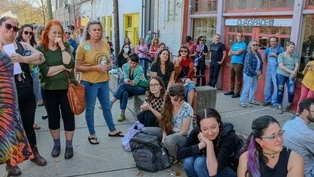
A community in western North Carolina rebuilds after Hurricane Helene.
Residents in a western North Carolina community navigate loss, recovery and an uncertain future after Hurricane Helene’s devastating flooding. Through personal stories of resilience and rebuilding, explore what it means to stay rooted in a region increasingly impacted by climate change.
Problems playing video? | Closed Captioning Feedback
Problems playing video? | Closed Captioning Feedback
PBS North Carolina Presents is a local public television program presented by PBS NC
Asheville Forever
9/24/2026 | 22m 28sVideo has Closed Captions
Residents in a western North Carolina community navigate loss, recovery and an uncertain future after Hurricane Helene’s devastating flooding. Through personal stories of resilience and rebuilding, explore what it means to stay rooted in a region increasingly impacted by climate change.
Problems playing video? | Closed Captioning Feedback
Where to Watch PBS North Carolina Presents
PBS North Carolina Presents is available to stream on pbs.org and the PBS app.
Providing Support for PBS.org
Learn Moreabout PBS online sponsorship[piano intro] [soft music] [soft music continues] - I can't leave this place.
I love everyone here.
- I grew up in Florida, so I'm pretty familiar with hurricanes and tropical storms.
I've never seen destruction like that with my own eyes.
[soft music] We live in Asheville.
We don't get too hot, we don't get too cold.
We're not anywhere near the coast, so we don't need to worry about storm surge and sea level rise.
But I think there's no such thing as a climate haven.
Climate change is going to impact every community, every society, and it's only a matter of time.
- Asheville already had that community mindset embedded in the culture and it showed to be genuine when it was really tested.
[birds tweeting] [indistinct chatter] [soft upbeat music] - I'm on the last, like, I'm about to do the onions for gumbo, and then you can start cooking, Travis.
I like the size of these scones.
So I did some research on the Yule Log cookie.
And I've loved food since I was born.
My whole family loves food.
We went to culinary school when we were 17, 18, and just been cooking ever since.
He can make anything taste delicious.
You know how that's spelled?
- Yeah.
- [Ashley] I'm more trained on pastry and baking.
He's more savory.
It's on the line.
Oh, you're good.
Should have one [indistinct].
We love cooking.
What a privilege to be able to cook the food that we wanna make and people in this town enjoy it.
[traffic whooshing] [machine whirring] - [Mark] When I started blowing glass, I wasn't really an artist.
I was doing what's known as scientific glass, chemistry sets and beakers.
I got into art later.
There's so many different avenues to go down just in the making of the glass.
Asheville's glass community is big.
The glass scene brought me to Asheville.
It's pretty close knit.
[indistinct chatter] - [Reporter] Hurricane Helene arrives in Western North Carolina later this evening and into tomorrow.
- Helene wasn't really on my radar as anything important.
I just thought it was gonna be rainy.
- [Reporter] The category four hurricane with winds of up to 140 miles per hour.
- [Reporter] Flood watches and warnings across our region.
- [Reporter] Leaders are urging everyone to be safe and be prepared.
- This is an unusually dangerous storm that threatens to bring heavy rain and potentially catastrophic flooding tonight and tomorrow for Central and particularly Western North Carolina.
- Everyone who had a cell phone had these notices going off telling us we were in an emergency.
- Everyone kind of started panicking and Travis had an idea.
We're getting cinder blocks and it's like.
- I'm handling it very well.
- We'll move everything out of the store that can fit in cars, and anything that can't, like all of our big equipment pieces, we'll just boost them up on cinder blocks.
We bought like 150 cinder blocks and everyone showed up and people put anything that was small in their cars.
And we just kind of hunkered down in our house.
- [Dispatcher] Communications, all county stations, particularly east end stations, be advised, the dam on Bleachery Road is about to bust and the area will need to be evacuated.
[wind whooshing] [water splashing] [indistinct chatter] [wind whooshing] - [Ashley] You could hear trees cracking like crazy.
- [Mark] Went to bed to wake up early in the morning to the power being out.
[soft music] - [Reporter] The death toll is rising across the southeast.
Tens of thousands of people remain without electricity or water or cell service, and in some places, all three.
- Our water system was knocked out.
Our communications were knocked out.
We were gonna need drinking water.
We were gonna need vital resources to help everyone survive this storm who didn't already perish in the storm.
People were being rescued, people were being discovered.
People couldn't reach their loved ones, so they didn't know if they were in harm's way or not.
[siren wailing] [water whooshing] [soft music] [soft music continues] - It really set in, the extent of what was going on.
[soft music] [water whooshing] It was pretty devastating because I recognized at that point that there were probably some lives lost.
And I was concerned that some of those people might have been friends.
[soft music] And there wasn't really room to process that emotion in that moment because there was the survival instinct.
You know, I kind of went straight into survival mode and everything was about immediate survival for at least the first five days, really.
[machine beeping and whirring] [machine continues beeping and whirring] [machine continues beeping and whirring] - I had no idea that 28 feet of water would swallow our shop.
Like no idea.
There was water all the way up there, like all the way up there.
It was like the bottom of an ocean.
[insects buzzing] Our store is so, was so sparkly around the end of the year.
Just all the holiday stuff and the homemade wreaths from people that dry flowers and fruitcakes, eggnog, holiday cookies stolen.
This window is one of the best spots in the whole store.
[Ashley sighs] Crazy to be here and really think about all the memories here because it's like, this weird spiral of sad and happy.
[laughs] It's like all the joyous times, and then also sad at the same time, 'cause it's gone.
So it's like, I don't know, slightly overstimulating.
[gravel crunching] [birds tweeting] [soft music] [indistinct chatter] All the trees around us fell.
[indistinct chatter] We needed help eating all this food that we had made.
We took some prep tables from our back porch and put them in the driveway and I made a hand drawn menu and hung it on our mailbox and we put all the food out, kind of like a buffet line.
And the first night it was like 20 people came and then there was 50 and then there was 100.
[indistinct chatter] That small amount of time each day, preparing food for our neighborhood, that was just the happiest time of my day.
It really was.
I loved that.
That was the most normal I felt.
It was almost like the hurricane was on pause and all of the destruction around us became kind of subdued and we were just handing plates of food to people.
And that was like my, just the happiest, most normal feeling part of my day.
[soft music] [water whooshing] [air whooshing] [indistinct chatter] - This pile right here.
- Yeah.
This pile here.
- From here over this way.
- [Matthew] We're trying not to throw things away.
- [Worker] Yeah, no, that's awesome.
It's amazing what has survived.
- This building was a distributor for art glass.
Glass blowers have had a chance to come in and salvage the material that they wanted to take.
We want to try and minimize the amount of stuff that goes into the landfill since we're already generating hundreds of tons of trash on this cleanup project.
And yeah, we can- - Can we put one over there?
- [Worker] Yeah, that'll be fine.
- [Matthew] We may have to start going over there to those dumpsters.
Oi!
[glass shattering] [glass continues shattering] - I was involved in the cleanup of Riverview Station.
There's a flame working studio in that park too that I used to work at for about four years.
It meant a lot to the glass community here and it was destroyed.
Moving and doing was a big part of the therapy in all this, like, contributing, being part of fixing, building back up.
- Creeks that usually run dry in the summer and the fall, they flooded and washed people's homes away.
The Swannanoa River and the French Broad River reached record flood stages.
So the water has to go somewhere.
There's a lot of land area and it all gets funneled down.
Attribution scientists have found that climate change made a storm of Helene's magnitude far more likely.
And the two studies I've seen put estimates of up to 20% more precipitation fell during Helene in certain parts of the southeast as a result of climate change.
[torch whooshing] - [Mark] Soon as the electricity came on, the first thing I wanted to do was blow glass.
It's kind of a good meditative practice.
[torch whooshing] [soft music] [traffic whooshing] - You're an artist and you're gonna be in a booth, drop off your work.
Artist parking is at the Cotton Mill.
Any other questions about RADFest?
We want this to be low stress, enjoyable, and about you really being able to sell your work and being part of a community.
- We've been hearing a lot about what some of your number one needs are, and I think they are pickup debris, get potable water, find some money, support our message that we need to be open and operating, and help us with permitting so we can get all this done and bring people back.
Yeah?
- Yeah!
- Okay, great.
- You have to have customers, you have to have water to be able to run your business.
So I think it is a unique challenge to hold together our creative community, our artist community, long enough to get through this.
Because so many are just right on the edge of, "Well, now this isn't gonna work anymore."
Or, "I can't come back from this."
- Thank you to everyone who lost everything and is still finding themselves to come to these meetings and to be a part of our community.
And I just want you to know that like, we're doing everything we can to help and support you, and I'm so sorry that this weekend you may not be able to show, but I want you to know that we're gonna be here for you and we're gonna do everything that we can and create every opportunity that we can, so that way you get to come back too.
And I look at it as that you're here now, so you're not even coming back.
You're here with us.
And I just wanna acknowledge you all and thank you so much for your strength and your perseverance through this.
- I said corn would be nice.
A roasted corn.
Whatever.
I was thinking like we could do beer cheese and then say each brewery, whatever.
Instead of swimming in a pool of depression and grief over what we lost, we need to move forward.
We needed to get cooking again.
My next idea was farmer's markets.
Put it in here for market.
We joined the West Asheville Tailgate Market first, and then we joined the RAD Market.
Sometimes I wonder if the hurricane happened, like, to force us to stop and readjust.
[soft music] [indistinct chatter] [soft music] [paper crinkling] [air whooshing] We love to cook and we love to feed people.
We wanna see what Asheville needs and what our customers want.
We have a couple of fresh cranberry orange walnut scones left.
We have fresh eggnog ready to pour over ice with a shot of your favorite spirit.
Little brandy, little bourbon.
- Yeah, brandy or a little, yeah.
I'm not a bourbon drinker.
- Maybe sherry?
- Ooh, anything goes.
- Yeah.
That sounds great.
We should have one together.
- Yes.
- I'm paying attention to Asheville, paying attention to what we love to make.
I wanna try and do it in a way that is even more sustainable and suits the life that we wanna live.
Here, we gotta get some hot hands for you.
- People in the community care about each other.
I saw human beings being really genuinely good people.
It kind of renewed a certain amount of faith in humanity.
- [Shopper] You wanna go in there?
Don't touch anything.
- Most of the ornaments I've been putting up here are my own.
[indistinct chatter] I have several ornaments on the trees over there.
- Oh, I love the ornaments.
- I have some glasses on the table there.
- Oh wow.
- And I help sell a lot of this stuff in the gallery.
It's kind of, we wear a few hats here.
- We live here too.
- You're local?
Okay.
- I think there's a lot of commitment to being local this year.
- Yeah.
- Really help and support the local stores.
- Yeah.
We appreciate that.
- We all have our little piece of the role in the story.
[indistinct chatter] [indistinct chatter continues] [soft music] [birds tweeting] - The people in the community, I hope that they remain strong in spirit as they have been through all of this.
We're kind of a band of misfits and rebels.
We don't really give up easily.
That's just kind of the nature of the crowd that's here.
- There we go y'all.
Thank you, thank you!
- [Mark] The River Arts District, it's a big part of the art community here.
It's a big part of what this city is.
- That's beautiful too.
- [Vendor] Blast the hot air, we're gonna push air bubbles straight up into the glass.
You'll see as the glass.
- [Vendor] And it's not important that he be finished.
Personally, I think finished is overrated.
- I have always felt the power of connection and community here.
[indistinct chatter] I choose to live here.
- It's not a pretty picture for the region, but I don't think any region is safe anymore.
If Asheville, which was supposed to be a climate haven, suffered this.
[birds tweeting] [soft music] [soft music continues] [soft music continues]
Video has Closed Captions
A community in western North Carolina rebuilds after Hurricane Helene. (30s)
Providing Support for PBS.org
Learn Moreabout PBS online sponsorship












Support for PBS provided by:
PBS North Carolina Presents is a local public television program presented by PBS NC