
August 24, 2023
8/18/2023 | 55m 28sVideo has Closed Captions
Vali Nasr; Brooke Shields; Waad Al-Kateab and Joe Gebbia
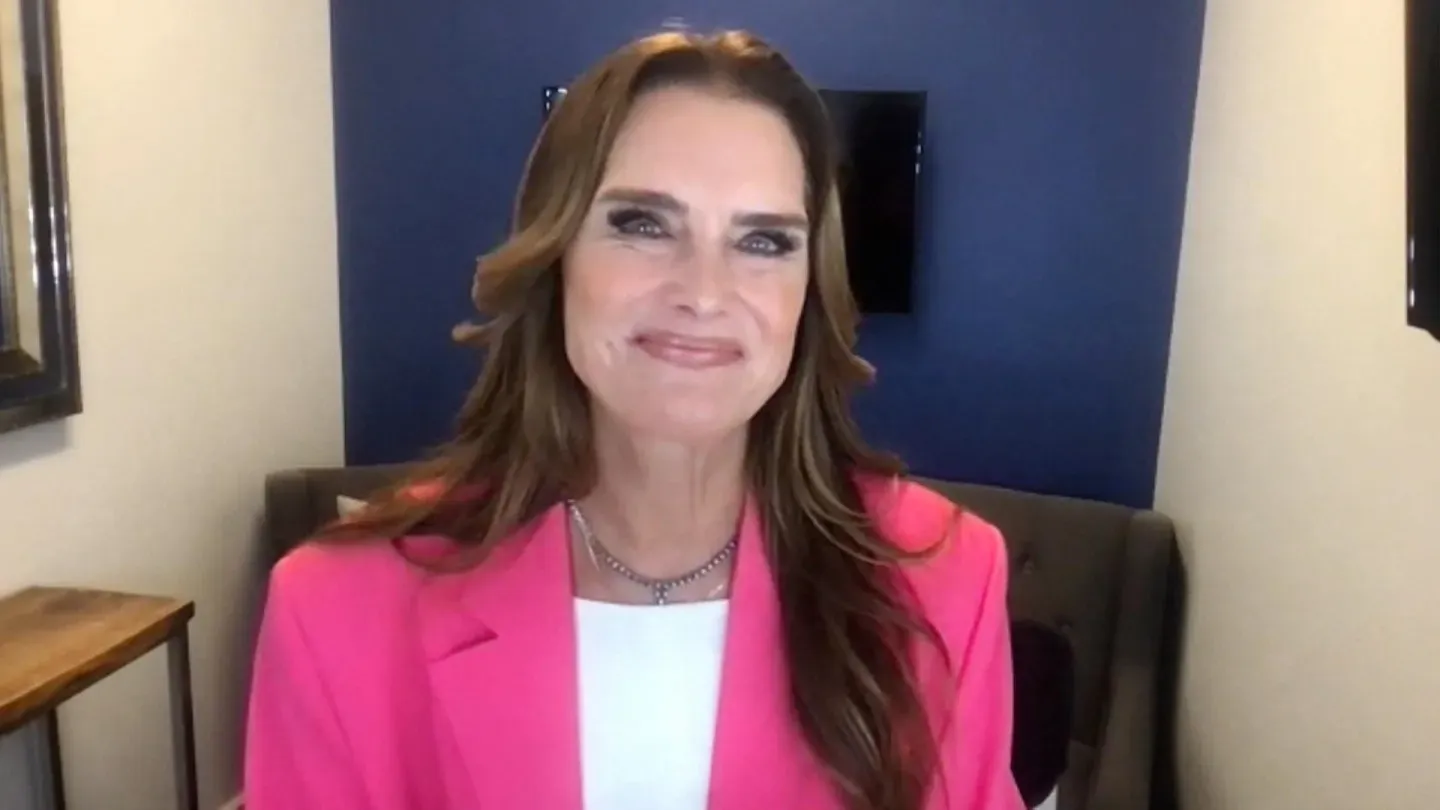
Middle East expert Vali Nasr joins the show. Brooke Shields speaks with Christiane about her new documentary "Pretty Baby," standards of beauty, and her hopes for her own daughters. Oscar-nominated director Waad Al-Kateab and AirBnB founder Joe Gebbia discuss their new documentary, "We Dare to Dream."
Problems playing video? | Closed Captioning Feedback
Problems playing video? | Closed Captioning Feedback
August 24, 2023
8/18/2023 | 55m 28sVideo has Closed Captions
Middle East expert Vali Nasr joins the show. Brooke Shields speaks with Christiane about her new documentary "Pretty Baby," standards of beauty, and her hopes for her own daughters. Oscar-nominated director Waad Al-Kateab and AirBnB founder Joe Gebbia discuss their new documentary, "We Dare to Dream."
Problems playing video? | Closed Captioning Feedback
Where to Watch Amanpour and Company
Amanpour and Company is available to stream on pbs.org and the PBS app.
Watch Amanpour and Company on PBS
PBS and WNET, in collaboration with CNN, launched Amanpour and Company in September 2018. The series features wide-ranging, in-depth conversations with global thought leaders and cultural influencers on issues impacting the world each day, from politics, business, technology and arts, to science and sports.Providing Support for PBS.org
Learn Moreabout PBS online sponsorship[upbeat music] - Hello everyone, and welcome to "Amanpour & Company".
Here's what's coming up.
- The lesson for the region is that the Europeans and Americans can make a lot of noise about human rights, but end of the day, they need oil, they need the money, and they need stability.
- [Christiane] The shifting sands in Saudi Arabia and beyond.
I asked former US State Department official, Vali Nasr about the US Secretary of State, Antony Blinken, seeking a reset there, and embarking on a crucial trip to China.
Then... - And I spent decades trying to nurture all the other areas of my life that could not be reduced to just beauty.
- [Christiane] Dubbed the most photographed woman in the world, but at what cost?
Actress and former child model, Brooke Shields, tells me how she defended her own self-worth.
Also ahead... - [Athlete] Sometimes I want to give up because I'm tired of fighting with everything.
But now, Olympics, it's the big light in my life.
- [Christiane] "We Dare to Dream", a new film follows refugee Olympians on their journey from war zones to the pinnacle of world sports.
Hari Sreenivasan speaks to director and Oscar nominated Syrian filmmaker, Waad Al-Kateab, and Joe Gebbia, the Airbnb co-founder, who helped her produce it.
- [Narrator] "Amanpour & Company" is made possible by the Anderson Family Fund.
Sue and Edgar Wachenheim, III.
Candace King Weir.
Jim Attwood and Leslie Williams.
The family foundation of Leila and Mickey Straus.
Mark K. Blechner.
Seton J. Melvin.
Bernard and Denise Schwartz.
Koo and Patricia Yuen, committed to bridging cultural differences in our communities.
Barbara Hope Zuckerberg.
We try to live in the moment, to not miss what's right in front of us.
At Mutual of America, we believe taking care of tomorrow can help you make the most of today.
Mutual of America Financial Group, retirement services and investments.
Additional support provided by these funders and by contributions to your PBS station from viewers like you.
Thank you.
- Welcome to the program, everyone.
I'm Christiane Amanpour in London.
Now is the time for intense diplomacy, that's what the White House says, as US Secretary of State, Antony Blinken, prepares to travel to Beijing this weekend, hoping to thaw their very chilly standoff.
It follows his other diplomatic trip last week to the Middle East, where reality is beginning to bite.
That region sees the United States pulling back from its historical security role, shifting its strategic gaze to China.
And so that's making room for other players like Saudi Arabia.
From signing global soccer stars to starting up a major new golf tour, to hosting Ukrainian President Volodymyr Zelenskyy and getting Beijing to broker a new diplomatic deal with Iran.
Meanwhile, top Iranian officials have been meeting with Europeans this week.
We get insight into all these moving parts with Middle East expert and former senior advisor at the State Department, Vali Nasr.
Vali Nasr, welcome back to the program.
- Thank you, good to be here.
- So you study this region a lot, so I'm just gonna start by asking you, is there anything that gives you nightmares at night now, or is it all on the right path and you sleep like a baby?
- No, I wouldn't say that I would sleep like a baby, but there are at least some positive signs compared to what we've encountered in the past.
And that is, for instance, that Iran and Saudi Arabia decided that it's the interest of the region and their own national interest to bury the hatchet, find a way to work together, similarly between UAE and Iran, between Saudi Arabia and Turkey, between UAE and Israel.
Things are not solved, but at least the region is taking some ownership of how to fix things, and that's a positive track.
On the other hand, we are also seeing the United States being more interested in diplomacy than war in this region, for pragmatic reasons.
Like right now, it's trying to talk to Iran as a way of trying to contain its nuclear program.
It's trying to work with Saudi Arabia on oil issues.
So, what we are seeing is that everybody's trying to not get into conflict in the Middle East, not to fix things through conflict, but through positive engagement.
Now, this is a steep hill.
There's a lot of issues in the region.
There is too much poverty, too much unemployment, too much authoritarianism, too many bad guys, too much corruption.
We still have broken states in Yemen and Syria.
We still have Bashar al-Assad, we still have problems with Iran, we still have leftovers of what happened in Iran in the past few months.
We have tensions between Iran and Israel, we have Iranian nuclear threat.
All of these things are there, so the problems haven't gone away.
- And that's the positive side.
- And that's the positive.
But at least we're not seeing a near eruption in the region.
- Okay, so let me take one or two of those points.
First and foremost, the New York Times reports today with a headline that Saudi Arabia, and particularly MBS, the Crown Prince, has gone from pariah to partner, whether it's about this diplomacy and being, you know, closer to Iran now, whether it's even about the LIV-PGA golf merger.
I mean, money talks.
How is that possible?
- Well, largely he's also learning on the process.
I mean, he's looked at Bashar al-Assad.
The guy survived.
I mean, in the end, everybody said there's no way in which such a monster can survive in what he did to his own population, and yet he's still there.
- And not only that, rehabilitated in Saudi Arabia- - That's right.
- By all the big muckedy mucks of that region.
- Exactly, or the Taliban are back in Afghanistan or the Ayatollahs in Iran, you know, were turned into a pariah a few months ago, and now the United States is talking to them.
So I think the lesson for the region is that the Europeans and Americans can make a lot of noise about human rights, but end of the day, they need oil, they need the money, and they need stability.
And they're not gonna come in and try to change a regime in Saudi Arabia, they're not gonna get into a tussle that's gonna jack up the price of oil to something that will cause inflation in Europe and America.
And basically, what they need to do is to focus on what they wanna do.
In some ways, just sit tight until the United States and Europe come around to engaging them.
So, pariah stated, in their opinion, is only temporary, right?
And they can live with it.
And in this region, you know, there's plenty of pariahs, so it's not something that really impacts their domestic stability.
- What is the biggest issue?
Is it the Iran nuclear deal?
And can the JCPOA be revived?
'Cause I know you've written something different.
So, can it be revived?
- Still the Iran nuclear deal is the biggest issue in the region because it is the one issue that can cause war in this region, either between Iran and Israel or between United States and Iran.
At this moment, no, the deal cannot be revived because we're too close to the American elections, and I don't think the United States is ready to sort of sign into the deal.
We saw that Iran is not ready to sign, but that does not mean that there's not a possibility of preventing Iran from exploding its nuclear program into a nuclear threshold state.
And I think that's what the United States is right now trying to do, trying to see whether there's a possibility of arriving at some kind of an interim understanding, I even would call it, with Iran.
- So, Donald Trump, who's under indictment, has pled in his arraignment in Miami court, is responsible, along with his partners, MBS and Benjamin Netanyahu, for pulling the US out of this deal and making it a much more dangerous situation.
Would you agree?
- I agree.
I mean, it was based on false assumption that Iran would crumble within a few months, and either the regime would go or the Iranians would completely surrender their nuclear program.
And that hasn't happened, and we can see that that alliance has come apart.
Saudis have now a very different theory for Iran, which is, we don't wanna fight with them.
We wanna open embassies, we wanna do business, we wanna even create a naval security arrangement with Iran in the Persian Gulf.
The United States is no longer on the same page with Israel.
Israel still wants a hard stand against Iran.
The Americans want just managing Iran.
- Okay, so in foreign affairs, you wrote about a new, you know, regional deal rather than just a US Iranian plus the other, you know, big powers.
Last month, you said, "Unlike the JCPOA, this kind of deal would generate buy-in from countries near Iran, making it far more sustainable.
It would give Iran more meaningful and lasting economic relief.
It could permanently, not temporarily, contain Iran's nuclear program, and it might reduce Tehran's support for troublesome militias in the region.
In doing so, such a deal could bring more stability to a part of the world that sorely needs it."
Why do you think, A, that kind of a regional deal would be attractive to Iran, and B, why would it be more stable than with the guarantees of the US and the major Europeans and Russia?
- Well, I mean, any kind of a deal still needs American guarantees because sanctions globally are in America's hands.
I mean, ultimately, Americans have to have a buy-in.
But the reality is that the current JCPOA is not going anywhere.
Any deal US and Iran make right now is only about a temporary ceasefire.
It's not really a peace treaty between them.
- We've seen that the two reporters who broke the news, the Iranian female reporters who broke the news of Mahsa Amini's death, are on trial now.
- That's right.
- Human rights, a big, big issue, but not one that governments tend to focus on in regards to Iran historically.
That, is it complicated?
I wanna know what you think about the possibility of, you know, releasing the Americans who are still held hostage there.
We've seen in the last week or two or more Europeans being released.
- Well, I mean, I think for the Islamic Republic, these are separate issues.
The issue of dual nationals or foreign nationals in prison in Iran is a matter of barter for money or for their own prisoners.
So, there's been negotiations with the US through the Qataris over the release of the three Iran-American prisoners, including Siamak Namazi, who was on your own program, in exchange for $7 billion of Iranian money that are frozen in South Korea, plus some other things.
So, I think the Iranian government is now that it feels a little confident that the protests in the streets are not the way they were, they are making an example of these cases as a way of deterring repetition.
I mean, we read about these journalists, but at the same time as we're talking, the Iranian universities have been told to expel any professor or student who has been seen on a video, and now they have also facial recognition, et cetera, that has been seen during the protest, without possibility of being hired again.
All this with view of not only purging the universities now, but also putting a marker for the next time that something like this happens, that students or professors will think twice before they tweet or show up at protests.
So it's a very, very heavy hand with a government that basically doesn't think it's gonna lose anything by doing these things, because unlike, let's say Saudis or Turks or others, there's no equities in the west, it already has a pariah status, and it's highest priority's survival, and for that survival, it needs to intimidate the population, and it's using the judicial system to do that right now.
- Basically, the United States, even according to some of its own regional officials deployed there, seems to be really pulling out of that region.
I mean, kind of retreating from the Middle East.
A, do you agree with that?
And B, do you see, you know, I guess a belated or a continued pivot to Asia, pivot to China particularly, sucking out all the oxygen of US policy in that region?
- So I would say the United States is still very much in the region in form of business, technology, and having a lot of troops on the ground.
Where it's retreating from is actually commitment to use those troops in a situation that can cause war.
Which is if you're not gonna use your troops for war, then what's the point of having them, right?
They've shown in Afghanistan they wanna leave.
President Trump showed the Saudis that when push came to shove and Iranians hit Saudi oil facilities, knocked 50% of Saudi production offline, threatened global oil, that he basically turned, he didn't do anything about it.
So what's the point of- - So now their security is no longer guaranteed by the United States.
- That's right.
- And they understand that, so they're moving towards China, is that right?
- Well, they're moving towards sort of alternatives.
One movement was closer ties to Israel.
So now I think Saudi Arabia and UAE can feel relatively comfortable that whatever happens, they are not target number one on Iran's retaliation list.
And then you're right, they're looking for also working with Russia, working with China.
Those countries have leverage on Iran.
If those countries are sort of brought into some kind of a political discussion in the region, perhaps they can, you know, help change the atmosphere in the region.
- So, all of that, fine, but the United States is basically saying now, and it's starting to put out intelligence, that it's growing very concerned about a growing military cooperation between Iran and Russia.
The White House has released details of this cooperation, production and supply of drones for use in Ukraine, but also it released a map showing the route that Iran appears to be using to ship equipment from Iran, Amir Abad, to a place in Russia.
Also, it's released satellite image that we're showing of a planned location of a purported drone manufacturing plant inside Russia that the US believes Iran is supplying the material to build this drone plant.
How much of a threat is it to the US, to its regional interests, and obviously to the war in Ukraine, that Iran appears to be forming an axis of whatever, anti-US, anti-NATO, with Russia and China?
'Cause China also apparently has some material and cooperation involved.
- I think in the very short run, I would say this is disconcerting, but I wouldn't say that Iranians are critical to the Russian war effort, right?
Yes, like, hitting Kyiv with huge amounts of drones and missiles is very significant, but the Russians are not, quote, unquote, winning or holding their head above the water because of Iran.
It actually rather portends to something more dangerous coming down the road.
In other words, you know, Iran is gonna basically become so integrated in with Russia that it literally will never not be easily separated anymore.
It also means at some point that the Russians will repay Iran with certain things that everybody else is worried about, like jet fighters, advanced anti-aircraft missiles, et cetera.
And then you're right, if you added the China layer to it, then you're not talking about Iran-Russia, you're talking about a massive Eurasian landmass from China to Russia to Iran.
I mean, we already have heard that UAE has a naval base that was collaborating with the Chinese, which annoyed the United States.
The UAE has come out of this maritime arrangement the United States had and is saying that, you know, Iran, Saudi Arabia, you know, UAE can have their own Persian Gulf security.
That sounds really interesting.
It's gonna get even more interesting if China eventually joins this.
- You know, like most, you know, foreign affairs specialists and diplomats and negotiators, you're obviously very interested in Henry Kissinger's history, and he just turned 100, and there's been a huge number of interviews and articles written.
What is your biggest takeaway from what he's saying now in relation to a lot of these, today, you know, today global crises?
Whether it's, you know, the Cold War potentially between the US and China, whether it's the complete dissolution of relations between the US and Russia, the fate of Ukraine, security of Europe.
- I think the very foremost at the highest level is that Kissinger saw the world through a sort of issue of balance of power.
That's what led him to go to China and try to exercise that.
We're actually in that kind of an environment, that the balance of power globally is shifting.
Within the Middle East it's shifting, in Europe it's shifting, in Asia it's shifting, and therefore that sort of approach that he had, that the United States has to understand, you know, how to maneuver and take advantage of this change of balance of power.
For instance, the United States has not done a very good job so far of playing a balancing role between China and Russia or between Iran and China or Iran and Russia in a way that it would separate these from each other.
- Instead, they've gone together.
- Right.
In fact, our sanctions policy and our aggressive policy against all three of them at the same time is exactly anti Kissingerian in that sense.
So we're actually bringing 'em together.
So, you know, think about the end game in Ukraine.
Think about an end game in China.
Think about an end game in the Middle East.
And so I think his counsel, whether you like Kissinger or not, whether you agree with his policies or not, I think there is something here, because we right now are in a situation that we really need to think out of the box, outside of the parameters that we have, and I think go back to the time when we were so successful in separating two communist power, both of whom were our enemies, from one another, and see how we can do that with China and Russia, with Iran and Russia at this point in time.
- Fascinating.
Vali Nasr, thank you very much indeed.
- Thank you.
- Next to a conversation about beauty, objectification, and finding agency despite it all.
Brooke Shields is one of the most recognizable faces of our time.
As a child star, she was highly sexualized in movies and commercials, and now she's decided to open up about her life in a new documentary, "Pretty Baby".
Here's a clip from the trailer.
- She was catapulted into the world of adult sexuality.
I just always remember thinking, like, I hope she's okay.
She was the young girl in an all-adult world.
- I'm amazed that I survived any of it.
- Brooke Shields spoke to me recently from Los Angeles, and I started by asking why she wanted to explore this issue now.
- I think that it's a very sort of fraught topic because it's that, oh, oh, you must have it so tough 'cause you're pretty, you know?
It is about so much more than that.
It's about self-worth, being objectified, what that means.
How as a young woman trying to grow into my own self-confidence and healthy body image, how it's picked apart all the time.
And there's so much about how transactional beauty is that was fascinating to me to sort of delve into.
And I have two daughters, and their physical attributes are a huge part of how the world reacts to them.
Whether they, you know, people think they should look more like me or they don't look like me, you know, it's all very kind of detailed in its...
I mean, it's delicate.
And so the idea of being beautiful was something that was thrust on me, it felt arbitrary, and I spent decades trying to nurture all the other areas of my life that did not, could not be reduced to just beauty.
- And do you feel now, at the age of, I'm not quite sure, maybe 57, and you look absolutely- - 58.
- 58?
Well, even better.
Do you feel that you did accomplish that, That you were able to live a life, for most of your life, that relied or at least gave you a feeling of self-worth beyond the exterior shell that we all saw?
- I worked very hard and I stayed away from Hollywood.
I stayed on the East Coast.
I always went to normal or regular, conventional children's schools and high schools, and then onto college.
And that I fought for friends that I could trust, friends that were going to be with me for the long haul.
It was a very important, important way to live for me, because I knew that I wouldn't survive this industry because I am a sensitive person and I am an empath, and I'm also an actress, you know?
So I have all of that sort of churning inside me all the time, and if you're not strong and you don't have a place to go home to, emotionally, mentally, physically, I think this industry can devour you.
- I mean, almost if it hadn't been for you and your strength of determination, I think, you might have been gobbled up.
You know, you've said that you were barely even a year old before you did your first public modeling job.
I mean, tell us about that.
It was for what?
- Well, I said to my mother, "It is time for me to earn a living."
[Christiane laughs] I have only known that, but it also was a form of, that's how we lived.
That's how we paid the rent.
That's how we got to go on a vacation.
That's how my mom and I got a car, you know?
It was a business, and that's how it just happened to be what I did.
So, from that time, I was quite young, but I think what it did was, I never knew relative anonymity insofar as I had one life, and then all of a sudden it was usurped by fame.
This was a gradual, continual process, and work ethic was what I relied on the most.
And so I think I dove into the logistics of working, being on time, being a good worker, you know?
And I think that that helped me have a certain perspective.
And again, you know, I never missed school.
So, everybody was always saying, "Oh, you lost your childhood."
And I was a cheerleader.
You know, and in both the high school and college, it was an adjustment for other kids.
You know, I came in, and I came in as a famous person, but you know what, it didn't last long, and within a a semester, I have friends that I am still best friends with.
- I was absolutely fascinated to hear that you did your college thesis on "Pretty Baby", the film, interviewing Louis Malle, the director.
"Pretty Baby" is the name of this documentary.
At the time, you said you knew that this film was going to be in good taste.
I want to watch a clip of it, because it was so controversial and it's followed you basically all your life.
Here's a clip.
- [Interviewer] They say that on the set, you felt very uncomfortable during all this.
Is that true?
- Well, I mean, I knew it was gonna be done in good taste.
So, I mean, you know, if you, like, think about the whole thing, it might be a little uncomfortable, but I knew that it was gonna be in good taste and it wasn't any porno movie, and so I didn't feel so bad about it.
- Honestly, it's amazing.
Of course, it's not a clip from the film, which I will play, but it's you in such a grownup way, the age of, I guess 11 or something, talking to these interviewers.
And I think... Talk to me about what you were trying to discover years later, once you did your thesis, and what did you want to get from Louis Malle, the director?
- Well, I got exactly what I had hoped for.
First of all, the interesting thing was the controversy surrounding that film was always focused on the film, never focused on how these journalists could get away with the line of questioning or sort of the approach to dealing with a child.
And it always sort of struck me as very, just interesting and slightly ironic.
But what I needed to do for myself was reclaim the film, because the film to this day is the best film I've been in, in my opinion.
It's the most artistic and creative and beautiful and quality.
And the subject matter was a true story, so I didn't grapple with that at the time, but I knew that it deserved more of an artistic eye, not just the controversy.
And I had been so plagued by it, and so nobody wanted to hear the narrative that I felt in my heart.
And so I was a French literature major, and I decided to intellectualize it from that perspective, from a literary perspective, from a language perspective, and from working with an unbelievable auteur, you know what I mean?
Like, it was such an honor, but it was all reduced in America.
You know, it was very loved and applauded, it won the Palme d'Or in Cannes, and you know, Europe loved it, and then America just desecrated it.
And then talking to him was, I had to really nail him down.
I kind of had to lie.
I had to tell him I was gonna call one day, and I called the day earlier because he was slippery like that.
He didn't really wanna be in an interview, you know?
Especially with me, you know, so many years later.
And he really affirmed so much of what I believed the movie was showing, you know, within, you know, textually, you know?
And so it just was...
When so much has been said about something you've done or you, you have to find ways to reclaim it so that you can go to sleep at night feeling really good about the choices you made.
- Okay, so that makes- - That's all you've got.
- Yeah, that makes me have to ask you the question then.
At the time, did you feel like it wasn't the right choice?
If you're saying you had to be able to go to sleep at night, being comfortable.
I wanna play something which is, I find really, really, really interesting.
It's the kiss in the film with Keith Carradine.
And you know, he said something to you about it.
Let's just play this clip.
[gentle music] - It's pretend.
This is all make believe.
I've been on those sets.
People are having fun, you're filming it, it's art.
You don't really think about it until later.
There is an aftermath that then cycles in your head of, like, was that okay?
- I would argue she wasn't conscious of what was wrong, but had a feeling that something was not good, was off.
- So that's the clip plus obviously Drew Barrymore and another author talking about it and about you.
Do they get it right?
Is that how you felt, that something might've been off?
- I think that's what Drew's experience was.
What I was worried about was that I had never kissed a boy before and I didn't want it to be taken away.
I didn't want my first to be taken away.
And I was afraid I didn't know how to do it, to be honest.
I had done it, you know, maybe I practiced on like a teddy bear or something like that, but it was, you know, there was this sort of, oh, no, what if I don't do this right?
And he was so, so sweet about it, you know?
I wasn't conflicted with, oh, I'm an 11-year-old and he's an adult and this is creepy.
The set didn't feel creepy.
He's not creepy.
Louis Malle was not creepy to me.
I didn't have that feeling in the pit of my stomach, but I was afraid of not doing it right.
And when he told me that it wouldn't count as my first kiss, it was probably one of the most generous things, an actor, who knows what he was going through, do you know?
So I think it was really kind of him.
But going back to something you said, with regards to going to sleep at night, feeling good about it, I'm not talking about the actual doing of the film.
I stand by that film and I stand by the choice to make it.
I'm proud of it.
And it didn't scar me.
People don't wanna hear that, they wanna hear that I'm dredging up all this, you know, scarring, but what I did have to reclaim and find and go to sleep at night being proud of is the vitriol that was thrown at me.
The negativity, the banning of the movie, the pitchforks and the, you know, and pointing of the how horrible my mother is and pornography, and it was just, it was so...
I was born and raised in Manhattan.
I was more uncomfortable in those interviews being attacked, if there's one that's not in the film, where I finally say to a woman, "I'm so sorry, but I keep answering the same question and I don't think you want my answer."
I lost much respect for all those people in those positions because they wanted my answer to be different.
- Exactly, and you talk about it in an interview with the New Yorker just a few months ago, 'cause we do see a lot of interviews, and actually, as a press person myself, all these years later, I cannot believe the way, and mostly men, but also some very prominent women.
I mean, they were not the kind of questions that I hope I would've ever asked, about your sexuality, your virginity, your mother's alcoholism while she just sat beside you.
Here's what you said to The New Yorker.
"It just never ended.
It made me lose so much respect for, excuse me, the press.
There was no one place that had even a modicum of integrity.
To have Barbara Walters talk about my measurements?
There was nothing intellectual about it.
You saw these adults, who were supposed to be the smart people in the world, be so lowest common denominator.
I just became shut down to all of it.
There's that one interview where they're reading a review of my mother's face."
And I saw that in the, you know, that interview, and you're desperately trying to protect your mother.
- And I mean, that makes me cry, that clip, because at the end, I just say, "She's my mama."
You know, and I've got girls, I've got daughters that would, you know, that they protect me, and you just look at the love, and it was heartbreaking, you know?
But it really did, it set me on this course of, okay, I am not going to be undone by these people.
- Did it ever occur to you that, you know, you're in an America which has a very puriant, you know, quality to a lot of it?
You know, people bound to, you know, react to what they thought was a child being exploited at an overly young age in a highly sexualized and adultified way.
They talked about your mother as the typical stage mother.
Did you ever, was there ever a period where you kind of got it, why people were talking like that?
Not that you agreed with it or you felt it.
- You know, not until much, much later, and not until having children of my own.
Again, I was very good at compartmentalizing.
In order to stay alive, I needed that insofar as I needed to keep my mother alive.
And it was the two of us against the world.
She was an alcoholic.
And when you are a child of an alcoholic, you're vigilant.
And I hardly had any time to think about anything else.
We made movies, I went to school, we made movies, I went to school, we afforded our life.
And I didn't, it wasn't until much, much later.
And the atmosphere around it all has changed.
You know, young models are much more protected now than when they were when I was coming up.
You know, the rules are very different now, and I think they have gotten better in some ways.
There wasn't social media when I was younger, so I don't know how I...
I don't think I probably would've survived social media as a young person, because I was also shielded from a lot of the negativity at the time by my mother.
But it wasn't until later that I realized, oh, I could see most of my movies you couldn't make today.
- Do you think that, you know, now we have intimacy coaches and all of these kinds of things designed to protect, you know, children and others on set in what might be uncomfortable or compromising or intimate.
That I know you went through a horrendous rape.
You talked about it in the, you know, in the documentary.
You talk about disassociating and separating, you know, your body from your mind and getting through a lot of this by doing that.
I guess, do you feel like you might not have had to go through so much of this external pain had there been an intimacy coach on any of your sets?
- No, because nothing ever happened on a set.
And "Pretty Baby" was...
I mean, after "Pretty Baby", I always had body doubles, so I was even more disassociated from the nudity.
In all the "Blue Lagoon" swimming and all that is a body double.
She was 30, too, 30 as well.
And so I didn't have that kind of discomfort on the set, where I was too naive, I was so protected.
I was the mascot, I was the kid.
And so when I found myself in such a shocking, compromising position, I practically blacked out.
And you know, there's still guilt surrounding all of that.
So I don't think it had anything to do with the way the operations were on set.
This was much more a personal life.
- And actually, you did say in the film that being on set was your safe space for many, many reasons.
So let's fast forward, because we started by talking about, you know, why you want to do this documentary and tell your story for, you know, the future generation and other girls, including your own two girls.
And there's quite a lovely scene at the end where you're around the dinner table with your husband, Chris, and you are talking to them about, essentially, agency.
If they wanna post about themselves, no matter how, and they feel comfortable, that's fine.
That was somewhat different to kind of what happened to you, I guess you're saying.
Here's the clip, and then we can talk about it.
- Okay then, let me ask you about TikTok, and let me ask you about Instagram.
When I see...
Okay, by the way- - How is that different from- - Because I'm 16.
- That's exactly my answer.
- And I can post myself in a bikini.
- [Brooke] At least she's posting it herself.
- I'm posting it myself.
- Okay, so there's ownership of- - Yeah.
- Do you look gorgeous?
- Yes.
- And you do too, like, and you should feel that.
Is that empowering?
- Yes.
- Yes.
- Okay.
You're creating your own self-confidence.
- [Daughter] Yes.
- So, their own self-confidence, and as you know, you know, there are all these stats today, because the expectations, the beauty standards still are so, you know, so heavily burdensome for so many women.
The CDC found that teenage girls experience record levels of violent sadness and suicide risk right now.
Such an expectation for fillers and injections, and you know, operations to make yourself look a certain way.
- I was very interested by that conversation with them because they brought up "Euphoria" and they brought up actresses who are in their late 20s playing 19-year-olds.
And that was an interesting conversation too.
I just don't, I'm not so sure that they really do realize the risks of having to wanna live up to these filters and these faces and wanting plumper lips at, you know, 17, 16, 15.
It's very dangerous territory in my opinion, and all I can do is keep conversing with them about it.
- And through this documentary, conversing with a wider group, I expect.
Brooke Shields, thank you so much.
An amazing life.
- Thank you.
It's an honor.
- And as voting for Emmy nominations opens today, that documentary, "Pretty Baby", is in the running.
Turning to the refugee crisis following another tragedy at sea this week, dozens died when their boat sank off the coast of Greece.
The horrific incident is a reminder of the dangers and the challenges they face in search of safety.
Now, a new documentary, "We Dare to Dream", aims to be a beacon of hope.
Oscar nominated director, Waad Al-Kateab, turned her lens on five refugee athletes as they competed for a place in the Tokyo Olympics of 2020.
Waad and Joe Gebbia, one of the film's producers, and the co-founder of Airbnb, join Hari Sreenivasan.
- Christiane, thanks.
Waad Al-Kateab and Joe Gebbia, thank you both for joining us.
First, Waad, I think if people have heard about your work before, it was from a riveting documentary that won so many awards, "For Sama".
And I wonder, being a refugee yourself and covering this idea of athletes who are also refugees, why was that important to you?
- Thank you so much for this question.
I think it was a process of discovery for me.
When I decided to do this film, you know, like as any director, when you've done a very worldwide, successful documentary, when people were talking about it until this single day, you always want to do something after to be also important.
You wanna be also passionate about it.
And for me, you know, like, when I started working on this, I was still emotionally stuck in Aleppo.
I couldn't accept that I'm no longer there anymore.
I couldn't, like, even look forward.
And for me, like, this process of two years working with these amazing athletes, learning from them, from their experience, it just, like, was kind of a therapy for me.
Like, I was able, after this, to be able, like, to accept where I am, to be a proud refugee, to feel like belong.
Not what I lost before, but to these 100 million displaced people around the world.
- Joe, you are one of the co-founders of Airbnb, which has allowed you and continues to allow you to be a philanthropist in lots of different causes.
Why this documentary idea?
What drew you to the topic in the first place?
- Well, thanks for having us, Hari.
I've been involved in the refugee topic for many years now, going back to the early days of airbnb.org, where we leveraged our platform to house people in the greatest need.
And that could be after natural disasters or those seeking asylum.
And we've been very active in the space.
Most recently we've helped house 100,000 Ukraine refugees in different parts of Europe and helped house up to 80,000 Afghan refugees as they resettled in the United States over the last couple of years.
So this is a topic that I've been close to, and it was really born from this idea that if you have the ability to fall asleep at night feeling safe, then that means you have the responsibility to help those that don't.
And so when this opportunity came up to use entertainment to advocate on behalf of refugees, for me, it was a no brainer.
Especially 'cause the stories are so rich, they're so powerful, and they're so inspiring, and it's the kind of story that just had to be told.
And so I couldn't have been luckier to pair up with Waad and our crews to bring this story to life.
- [Athlete] I'd be very honored to be given the opportunity to represent all the underprivileged people around the world.
We also need to showcase that refugees can also be athletes who can compete at the highest level.
- Waad, I think what's interesting is this is maybe one of the first times that you are seeing refugees as kind of multidimensional humans, because more often than not, Americans, and I guess people all over the world, they see refugees in a visual and a narrative frame of someone standing in line for food or someone who's emaciated or someone who's running with clothes on their back.
And yet we are watching a Taekwondo athlete and we're watching a runner.
You know, one of the things that you mentioned early in the film was that filming was your way of fighting back.
- I got this plant.
It will grow out of Aleppo.
[gate clattering] It's still hard for me to realize we survived it.
Filming was my way of fighting back.
I filmed to protect my memories, to preserve the home I miss, and to save the people I lost.
I think from the first second in the film, like, we're breaking stereotypes.
We're showing people who we are, you know?
Not like the labels that's usually been, like, attached to us.
And we're finding representation, you know?
Like, yesterday, we were in a public school in New York with these amazing athletes, and one of the, like, I think, eight years old boy, just stood up and said, like, "I wanna translate to Waab because I speak Arabic and came from Yemen."
Like, to see yourself represented in such an amazing way, like, I think that's what we were fighting bad for.
- Yeah.
How did you choose these different athletes?
- I mean, this is one of the most difficult decision I would've made.
We dig through, like, 56 scholarship holders, athletes, refugee athletes, and we are, like, across different filters and issues until we agreed on these five athletes.
For me, one of the stories is one of the athletes who didn't make it, and that, for me, like, was very important, people who are left behind.
It's not just about this team, it's about the legacy of this team.
It's about the hope that he share with other people.
And then it was really important to look at different stories.
I didn't wanna show the refugee as one picture.
We are different humans with different culture with different, like, background.
We're different, even, characters.
And even circumstances.
- Joe, were there athletes or storylines that resonated with you?
- Well, luckily I get to be very involved in the process.
I was able to fly to Doha, Qatar, where the refugee team staged before departing to Tokyo for the actual games.
And so I was able to meet the athletes firsthand, I was able to meet with the crew, with Waad and others.
The ones that we end up featuring have incredible stories of perseverance, of pushing through adversities that are unimaginable.
And I think when you see these stories play out in the film, you really see the underdog side.
You see the willpower that these athletes have to be members of society, to participate in life, and in this case, the highest level of sport at the Olympics.
- One of the athletes you profile is a female Iranian, Kimia Alizadeh.
And she fled Iran and she competed in Taekwondo for the Olympic refugee team, and she was already an accomplished athlete who had won medals on the international stage before.
And there's a fantastic sort of tension that builds right at the first match that she has.
Tell us a little bit about who she had to fight and what she was going through in her head.
- Yeah, I mean, that was one of the, I would say, like, most emotional moments, like, maybe in my life, as well as in terms of like, looking at someone else, like, situation.
You know, it's the Olympics, so it's every possible team.
It's each country.
It's these people's home countries.
And you think you know, like, you're gonna, like, find them across the corner, or like, while you have coffee or something, and I myself experienced this, you know, when I saw the Syrian team coming in with the Syrian flag, and I was just, like, very heartbroken, you know?
Like, I can't give back to my country, I can't feel represented by this country and this flag, but then you look at the refugee team and you see your own representation.
And like, you know, Kimia for me was like a role model.
Like, she's my hero.
And you know, at the first match, when she had to go against her own country, against Iran, the country that she fled from, and the athlete is her best friend, who they were together since they started Taekwondo.
The coach was her coach when she got the bronze medal.
I think, you know, like, just as much as it's hard and challenging, as much as you can see the strength, and like, there's no one single word can really, like, represent this spot.
I think it's just amazing, you know?
It shows the reality to the point that even sometimes this challenge could be internal, could be between you and your emotion, but you have to stand up.
It's not just like a cliche of words, you know?
Like, people sometimes feel they wanna give up, and they could give up sometimes, but it's about what you wanna do next.
How can you stand up and fight against even your own fear?
- One of the athletes that you profiled is a South Sudanese refugee and- - Anjelina.
- Her story was fascinating because she literally hadn't seen her parents in so many years, and you know, she had gone to a training camp away from her little boy.
And I mean, she had a lot on the line that she was kind of running for.
- [Anjelina] I have been really training hard, sacrificing a lot, so that I can get one more chance.
- This is one story of so many people who, like, they face these difficulties in different way.
And you know, I was very connected to Anjelina because when I had to do my own journey from Turkey to the UK, I had to leave my second daughter behind in Turkey for six months.
And at that time, I didn't know that this would be six months, you know?
So, this could have been Jaden's story, like, with Anjelina's son or her parents' story.
And I think, you know, it's a lot of, like, it's about motherhood, it's about love, it's about not giving up, you know?
In really different way.
And I learned a lot from Anjelina.
- UN High Commissioner for Refugees said in 2021, 89 million people were displaced.
That's the highest since World War II.
And I think it's a hard idea and a number to visualize.
Considering that you've been kind of on different parts of this refugee journey, how do you convey either the scale of the camps that people like Wael are living in, and he said he's been there for more than eight years.
I mean, that's not just a camp, that's now a town in Jordan.
- Yeah, I mean, that's the reality.
You know, you look back at the history and then you look now at what's going on around the world, and unfortunately, it shows that, like, the number is going more and more higher and higher.
And within the circumstances, like, I think the most important thing is, like, responsibility that governments and public should take forward.
You know, it's about what is the future holding for us.
Whether it's Wael in the refugee camp in Jordan, whether it's Cyrille, who became, like, British this year, like, there's a lot between this, and there's so many other people which we don't even know about them.
I think we should look forward and look about, how can we make this life being more, like, in dignity, you know, in a respectful way?
How do we want to be, like, facing if something happened with us today?
- Joe, you mentioned that you've been involved in the refugee issue for a while, and how does this film, do you think, fit right now into kind of the global political climate, where countries that have the means are trying to tighten their borders?
Whether that's in Europe, whether that's here in the United States and elsewhere, there is a little bit more nationalism and protectionism on the rise, and here you are, trying to say something explicitly different.
- Well, that's one of the beautiful themes of sport, is that it does transcend borders and cultures and divisiveness in politics.
And you know, the Olympics in and of itself is a beacon of peace, going back to, you know, when it started in 1896.
It was a time when warring countries would, you know, put down their weapons, when, you know, it would be a time for the world to come together and celebrate, you know, the most elite athletes on the planet.
And so I hope this film is just a continuation of that.
I hope it takes that spirit and is able to get into the living rooms of as many people as we can reach around the world, onto as many devices as we can reach around the world, to show this uplifting, very human story.
- Waad, what do you want refugees that might be watching this film to gather from it?
- The main thing, I want people to see themselves into this.
Especially refugees, like, in camps, in situation where... Like, whether they started their journey today or whether, like, they will have it, whether, like, they had it already, whether, like, for me, you know, I have two little girls, like, seven and six years old.
I want them to see this and to look at Kimia, to look at Wael, and feel inspired, feel, like, driven by this.
And I want, you know, the world to look at this as like, refugees are not the issue, they are not the problem.
We are the result of other issues, and people should take really, like, a deep look about what are these issues.
Whether it's global warming, whether it's, like, war and crimes and people hate, and sometimes even, like, laws, and you know, like, it's a lot of things.
But we are not the problem, we're not the issue.
You know, we are one of the consequences of so many other issues, and that's where people should look and where they should find different solutions.
- Waad, you described this process a little bit like therapy for you.
How did it help?
- I mean, it was a big challenge for me, you know?
Like, I was introduced, I would say, to the world after "For Sama", but within that, I was carrying on my shoulders a very heavy, like, responsibility.
You know, like, within everything happened in Syria, within my personal survival, I needed to tell the world what crimes I've been witnessed, what things happened, I wanted to change something.
And for me, like, within this film, like, I'm very proud, I can't be even, like, more proud of myself, that now in my career as a refugee director, I was able to do a film like this in over, like, 10 countries, with people who speak so many languages, with an amazing crew who supported me.
And that, I think, it's another message, you know, like, behind the film, that refugees should be on the table, refugees should give and be able to give what they can do.
- Yeah.
Joe, you're a member of the Olympic Refugee Foundation, and their mission is in part to provide access to safe sport for a million people.
And I guess my question is, why is sport so important?
Access to sport, what do you think that does in the life of a refugee?
- Well, there's many things that can be provided.
I think sport is one of these things that is universal and accessible and very well understood.
It's a way to build community.
It's a way to build connections within these groups.
And you know, I think it's proven as ways to help deal with, you know, mental illness in certain cases.
So sport can be therapy in and of itself.
You know, it's a way to really create connections, you know, anywhere in the world.
And you know, one soccer ball in one flat space is an easy way to bring people together.
- Waad Al-Kateab and Joe Gebbia, director and producer of "We Dare to Dream", thanks so much for joining us.
- Thank you so much for having us.
- Thank you, Hari.
- Zooming in on the strength of the human spirit.
And that's it for our program tonight.
If you want to find out what's coming up on the show every night, sign up for our newsletter at pbs.org/amanpour.
Thanks for watching, and join us again tomorrow night.
[upbeat music]
 New Episode
- News and Public Affairs

Top journalists deliver compelling original analysis of the hour's headlines.

- News and Public Affairs

Today's top journalists discuss Washington's current political events and public affairs.








 New Episode
 New Episode
 New Episode
Support for PBS provided by: