Washington Grown
Barley & Barstools
Season 13 Episode 1310 | 26m 46sVideo has Closed Captions
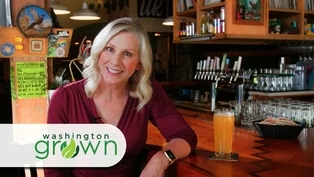
We head east to explore how barley and brewing are woven into Washington’s agricultural story.
We head east to explore how barley and brewing are woven into Washington’s agricultural story. At Klein Farm near Edwall, we see how this golden grain fuels the state’s craft beer scene. Tomás and Val lead a lively Craft Beer Pub Crawl, followed by perfect pairings at The Flying Goat and a sweet stop at Billy Burger. Finally, we revisit Prohibition’s history,
Problems playing video? | Closed Captioning Feedback
Problems playing video? | Closed Captioning Feedback
Washington Grown is a local public television program presented by KSPS PBS
Washington Grown
Barley & Barstools
Season 13 Episode 1310 | 26m 46sVideo has Closed Captions
We head east to explore how barley and brewing are woven into Washington’s agricultural story. At Klein Farm near Edwall, we see how this golden grain fuels the state’s craft beer scene. Tomás and Val lead a lively Craft Beer Pub Crawl, followed by perfect pairings at The Flying Goat and a sweet stop at Billy Burger. Finally, we revisit Prohibition’s history,
Problems playing video? | Closed Captioning Feedback
Where to Watch Washington Grown
Washington Grown is available to stream on pbs.org and the PBS app.
Providing Support for PBS.org
Learn Moreabout PBS online sponsorship- "Washington Grown" is made possible by funding from the Washington State Department of Agriculture and the USDA Specialty Crop Block Grant program, and by the Potato Farmers of Washington.
Learn why Washington is home to the world's most productive potato fields and farmers by visiting potatoes.com.
- Hi everyone, I'm Kristi Gorenson and welcome to Washington Grown.
Eastern Washington is quickly rising as one of the nation's premier craft beer regions because of the world renowned hops and locally grown barley.
In this episode, we're gonna explore some of the areas beloved breweries, and raise a glass to everything that makes this area so special.
I'm learning how malting works in beer.
- Malt is kind of like the unsung hero with beer.
- And I'm making a special pizza with potatoes at The Flying Goat in Spokane.
Okay, so how much?
- Too much, too much, too much.
Oops, I'm sorry, the camera, it made me do that.
[Kristi chuckles] - Then Tomás and Val are taking a tour of some Spokane breweries.
- Oh, that is really... - Wow, did you see that?
- All this and more today on Washington Grown.
[upbeat music] Cooking with Kristi.
- Sweet Pete.
- Jiminy Gee Willikers.
- Watch my bangs.
Go big or go home.
- Ah!
Right in my eye.
- You made me a believer.
Oh, I am making a mess.
- Oh, Val, I love you.
- Heaven on a plate.
That's yummy.
- We're gonna need a to go cup for these.
- Yeah.
- You keep talking, I'll keep eating.
In the Audubon neighborhood of Spokane, there's a little place that feels a little like cheers.
A place with great food, great beer, and familiar faces.
That place is The Flying Goat.
With fresh and unique pizzas flying out of the kitchen and ice cold local brews on tap, guests are quick to call this place a home away from home.
- Well, it's a block and a half away from my house so I don't have to drive.
- Kind of a neighborhood joint that serves really good food.
- If you like a good family vibe, chill vibes, that's the place to be.
- Really, there's nothing that goes better together than pizza and beer.
- Jonathan Sweatt is the owner of Flying Goat.
Together with his team in the kitchen, they're making sure their pizzas are perfect, only using the best ingredients.
- We work with a local farmer.
We bring in almost all of their tomatoes during the summertime.
We also do the arugula.
It doesn't get any better.
The closer it is to your restaurant, the more fun for the chefs and then the guests could feel that and taste just that difference.
- If you like great craft beer, great pizza, and just a friendly environment that everybody knows your name or they'll get to know your name, come on to The Goat.
- Don't miss Later in the show when Flying Goat's chef Adam and I make a special pizza featuring Washington potatoes.
You probably do this in your sleep.
- Sometimes though, we call those nightmares though.
- Work nightmares.
- Ticking machines going off.
- Anxiety, yeah.
[upbeat music] - Being the host of a TV show is sometimes full of surprises.
For example, I just learned something new about myself.
- You're a lot smaller out here than you are on person.
- Really?
- In the camera all the time.
- I look taller on camera?
That's cool.
This is fourth generation dry land wheat farmer, Kevin Klein.
Although this field out in Edwall may look barren, there's actually a lot going on when you look closer.
- So in this field, we currently have a feed barley planted.
Last year we planted this field this spring week.
So this stubble you see right here was the stubble that remained after harvest.
And then we have a no-till drill where you just pull the drill right through here and it places the fertilizer all in the same pass.
Direct seeding helps build your soil health, keeps your residue.
When I say residue- - Oh, it's that, okay.
- It's the straw, it's all this fluff here, this will break down with time.
Definitely helps the soil health.
- Now, this is feed barley for cattle and other animals, but my favorite type of barley is the kind used in beer.
Good thing Kevin grows that too.
- Three years ago, I raised some malt barley on my farm and it was processed here in the state and malted and brought back.
And a local brewery used my malt barley to brew their own beer.
It's nice to follow your farm and go sit in their brewery and enjoy the beer that they brew with it.
- Was it good?
- It was all right.
When in doubt, you go back to a Coors Light.
- There we go.
Now I'm seeing what happens to the barley after harvest.
Cascadia Malts in Nine Mile Falls is taking malt barley and turning it into something brewers can use to make their beer.
- Malt is kind of like the unsung hero, the hidden thing with beer, but it's extremely important.
It ranges anywhere from 90 to 99% of a beer's ingredients - Owner, Corey Freuen knows that the process of malting barley is really all about copying mother nature.
- Malting is essentially the process of mimicking an entire spring's worth of growth, but compressing it into the span of a week.
We convince the barley to soak a certain amount of water, we transfer it into a germination room where we let it germinate over the course of about five days.
This is the germination and kilning room.
- Okay, oh, I can see the sprouts.
- Yeah, it kinda smells like cucumber during this phase.
And so it's starting to push out little rootlets.
You're really just making it as comfortable and happy as possible while it grows.
And then at the end of the week, you halt all that growth with hot air and kiln it to develop flavors and colors.
- Hang in there little dudes.
- These are beer babies.
Beer seeds.
- Hang in there, beer babies.
- Once the malt has modified to the right amount, this entire room becomes a giant kiln, so I start pumping in hot air.
It passes up through the barley, it dries it out first.
It like starts to cure and roast in different colors and flavors.
It's just the perfect place to do beer.
The barley is as good as you'll find anywhere in the world.
You just get out of the way and try not to screw it up.
- And in little old Washington.
- Exactly.
- Yeah.
Here's to your barley and showing us how the malting process goes.
- One of my favorite meals of all time is a classic cheeseburger and fries.
Now add on an incredible real milkshake, and I don't think there's anything better.
When traveling along Highway 2 through central Washington, Wilbur has the perfect place to satisfy that classic American craving.
Welcome to Billy Burger.
- Honestly, it's just the people, the atmosphere.
It really feels like a hometown place where you can stop in and see all your neighbors.
- Ice cream is the best.
French fries, the burgers, and it's all homegrown.
It's real classic cooking here.
Washington grown fries, we've got the burgers, the fresh vegetables.
- This bustling small town joint is run by mother and daughter, Lacey and Kathy, who are keeping this Washington slice of Americana running like the day it opened in 1955.
What's it like working with your mom all these years?
- I'm gonna get emotional.
- That's fine.
- Well, my mom's my best friend.
I am lucky enough to be able to come down here every morning, my mom's here.
That's our time together.
- I love having her here, she's my organizer.
- We've had to stand in line for over an hour.
Yeah, it's pretty popular place.
There's nothing better than a mixed ice cream cone where you order a small at Billy Burger and it's this big.
- Right.
How can you go wrong with a classic, burger, fries, shakes ice cream?
- That's why we come.
Because you know you're always gonna get good quality stuff.
- That's awesome.
- And they're always so friendly.
Everybody's happy here.
- That's awesome.
- Coming up, I'm making a special pizza with potatoes at the Flying Goat in Spokane.
- Okay, so how much?
- Too much, too much, too much.
Oops, I'm sorry, the camera made me do that.
- Then I'm learning how a conservation district is keeping a habitat healthy for wildlife.
I see a bird.
[upbeat music] We are back at the Flying Goat in Spokane.
A wide variety of unique pizzas pair perfectly with their extensive selection of local beers, creating a match made in heaven for lunch or dinner.
But when the food is this good, who really needs an excuse to pull up a chair?
- The pizza is outstanding.
- We devoured everything, it's really good, fresh.
- Killer pizza, so best in town.
- We just really wanted to bring a little bit different style of pizza to Spokane.
- Jonathan Sweatt is the owner of Flying Goat.
He and his team took traditional Neapolitan pizza and gave it their own spin, creating something really special.
- There's nothing better than the history of food and the history is Italy.
But to be able to bring in the local ingredients and the different flavors and things like that, it was too good of a culinary journey to pass up and that's really why we launched The Flying Goat.
It was like, Hey, let's do something that honors the traditions, but also let's do something that's a little bit different and we could put our own spin on it.
- Leading the charge in the kitchen is Executive Chef Adam.
His expertise and energy is the glue that holds the restaurant together.
- It's not only his culinary talents, but his energy, his balance is incredible between just taking care of his team and just making Flying Goat a family.
- Yeah.
Now I get to learn how to make pizza from the GOAT himself, Chef Adam.
We're gonna make some great flying goat pizza, right?
- Right.
[Kristi and Adam laugh] Most of the magic happens with the dock.
So it's just kind of- - The dock.
- The dock, we're gonna push this air out.
Money.
- Sweet, okay.
- Here's the tricky.
You're gonna pull it apart and then twist at the same time.
- Are we supposed to have the bubbles?
- Those are money bubbles.
- Those are money bubbles.
- Now the move is to go out and up at the same time.
Okay, so we're docking.
- Okay.
- And now we're stretching.
- Stretching.
- And we're turning.
- We're turning.
- Easy money.
So now- - The first one was way better.
- No, wait, see, look, this one's way better.
- Really?
- Yeah, this one's got a little thin spot right here.
- Oh yeah, you're right, it does kinda.
- Yeah, I just made that up, but.
- Okay.
Just making me feel better?
You probably do this in your sleep.
- Sometimes, we call those nightmares though.
- Yeah, work nightmares.
- Ticking machines going off.
- Anxiety, yeah.
- Okay.
- All right, so now let's make some pizzas.
Flour, we got the flour too.
- There's the flour.
- I know.
- So what we have is pork and apple sausage.
This is a fresh sausage we made.
We went with apples 'cause it really represents Washington state.
- Yes.
- We're gonna pair it with some potatoes 'cause again... - Washington.
- Washington.
Got some nice arugula.
- Certain times of the year, we work with New Heritage Farms 15 miles away.
Like he's, how much closer do you get?
- I know, that's great, okay.
- Couple ounces of cream.
- I would never think that.
- The cheese and the cream will turn into like our Alfredo.
- Kind of that saucy.
- Yeah.
- Okay, so how much?
- Too much, too much, too much.
Oops, I'm sorry, the camera, it made me do that.
- We add our cheese, potatoes, sausage, and onions, then put the pizza in the oven.
- So then this is our little fresh pop, this little champagne vinegar.
- Okay.
- That we put on this.
- Yes, good job.
[upbeat music] - Look at how crispy that is.
- Yeah, see look and it holds itself up.
- Oh my gosh, yeah, it does, it's not droopy.
- You did all right.
You may have a job in pizza after this film stuff.
- So good.
You're the pizza master.
- Really nothing complicated about it.
It's just about getting the best ingredients you can, showing a little bit of respect.
- I respect you in my belly, it's so good.
- We practiced.
- Yeah.
Done it a few times.
For more chef inspired recipes, visit us at wagrown.com.
Here at Audubon Lake in Reardan, life is thriving in a special ecosystem, which makes it the perfect spot to teach school students about habitats.
- They never thought of this as a habitat, they just thought of it as something to pass through.
- Delaini Disher is the voluntary stewardship and Outreach and Education Coordinator for the Lincoln County Conservation District.
As a steward of the land, she takes students on a field trip to this lake to learn about the plant and animal life in the region.
- The last activity we did, everyone had note cards and they had to tell me what they were finding, whether they found pollinator habitat, wildlife habitat, berries that could be food for birds.
When they stopped in front of a plant, I would have them tell me what they were seeing and how they came to the conclusion.
Sometimes they got it right, sometimes they got it wrong.
But that allowed us to talk about what does make good habitat.
- Today, this is a thriving habitat for birds and other native species, but it didn't always look like this.
- There wasn't a ton going on here.
And Fish and Wildlife decided that in order to allow for it to have a rich habitat, we needed to put in native plants.
So the conservation district partnered with them.
All the plants that you see around us here, we picked out natives that were good for this landscape.
Things that would be homes for birds that travel through and migrate, and things that would provide food.
- The lake also features a covered shelter, a hidden vantage point for bird and wildlife watchers.
- This is the bird blind.
This was installed with the help of Fish and Wildlife a few years back.
And these spotting scopes allow the students or any visitors, and they can view out to the water, see what bird species are here.
- Oh, I just saw one.
- We get a lot of trumpeter swans, mergansers, mallards, Canada geese.
- I see a bird.
- Gets them engaged, they're definitely interested in hearing about the animals.
But then that's a great segue into the plant life and the watershed.
This area, this watershed is upstream from a lot of the watersheds that we rely on to irrigate crops.
Keeping this area healthy keeps us healthy downstream.
So a lot of our farms thrive when this location is thriving.
Because we planted these plants, we've got a root structure, we can prevent erosion, we can improve water retention here.
We'll downstream see that water retention pay off.
Even if we don't work or live up close with agriculture, we affect it and we need it.
We will benefit from the outcomes of a place like this being healthy.
- But the teaching doesn't stop.
After the field trip, our team put together workbooks for students to continue to learn about our natural resources and agriculture.
- Just a fantastic wealth of knowledge.
Great balance between fun, artwork, activities, and interesting facts that are easy to understand, easy to absorb.
- I love it too.
I mean, these are all of our Washington grown specialty crops cherries, peaches, berries.
- Absolutely.
- And its jokes.
- Yes.
- Why was the fruit sad?
Because it was a blueberry.
- Classic example.
[Kristi laughs] - That's awesome.
Well I'm glad that you guys are going to use these, and you have cool stickers.
- Yes.
- Should we tell some more jokes?
What did the peppermint tell his crush?
We were mint to be together.
- That could work.
- Coming up, Tomás and Val are taking a tour of some Spokane breweries.
- We're gonna need a to go cup for these.
- Yeah.
[upbeat music] - Hey everybody, Tomás here, and I'm with my daughter Anna Lucia.
And today we thought it'd be good for something hearty.
And we're actually gonna make one of my favorite dishes in the world.
- Mac and cheese.
- That's right, we're gonna make mac and cheese.
But the trick here is we're gonna be making Beecher's mac and cheese.
The very first season of Washington Grown, one of my very first segments was actually doing a man on the street for Beecher's Cheese.
And ever since then, it became one of my favorites.
It's what we serve at the holidays, and we're gonna make it today for all of you right now.
We're using Beecher's Cheeses, macaroni, flour, milk and butter.
Tim's Barbecue Chips, and some spices.
- First we add Beecher's Flagship cheddar and Just Jack.
Then we add butter and some whole milk.
Next is a bit of flour, some garlic powder.
- Just a little bit.
- Pinch of chili powder and a touch of salt.
- There we go.
- And then we head to the grill.
- Ooh, my goodness.
- That looks good.
- Look at that.
Oh man.
What do you like about it so much?
- I like that it's like different from like box mac and cheese.
It's not like the powdered cheese, it's like actually really good cheese.
- And for a fun topping, we add Tim's Honey Barbecue chips.
- That is good.
- That cheese is so good.
- It's so creamy.
- Well, like you said, it's not the powdery cheese, this is the real stuff.
- Yeah.
- We're gonna eat this up and then we're gonna get onto the next adventure.
You ready?
- All right, here we go, we'll see you guys later.
To learn how to make this recipe and many others, Head on over to wagrown.com.
You know Val, usually when you and I are together, I'm always on the west side of the state.
- Yes you are, a good place to be.
- It is, it is.
But now you're here in Spokane.
Did you know that there's like over 30 breweries here in Spokane?
- Over 30 in Spokane?
No, I did not know that.
- It's become kind of a big deal.
And so I thought it be fun to take you to a few places and we can try out some brews.
- All right, let's get to sipping.
- All right, 'cause it's hot out here.
Our first stop of the day was Black Label Brewing, where owner Dan Dvorak presented quite the variety for us to try.
- Do I have to choose?
- Sure, why not?
What's wrong with and?
- You can try all four.
- Okay.
- So that's our Tropical Thunder IPA.
- Okay, Tropical Thunder.
Ooh, yes, the hops are there.
- Yeah, I'm standing in the middle of Yakima, Moxee right now.
- Yeah, yeah, yeah, yeah, yeah, yeah, yeah, yeah.
Oh, now this one is just so pretty.
- So that's our burgundy scotch, it's a scotch ale.
- Okay.
- And then we finish it off with dark brown sugar.
So you get some of that molasses coming through.
- Yeah, yeah, yeah, yeah.
- Wow, that is very interesting.
- You like that one.
- I do like it.
I think it's because it's very unexpected.
- I mean, it's smooth, which is what I like.
- Yeah, which could be dangerous.
This is only our first stop, Val.
[all laugh] - All right, so this is our Maybach, so it's a German amber larger.
- Oh, that one's mine.
- Really?
Okay, so Val's excited about this one.
That's nice, that's smooth.
[Val laughs] - Well, this was a great place to stop on my little visit over the mountains.
- Want some more?
- Yeah.
- Next stop, Four-Eyed Guys Brewing with unique flavors I've never seen before.
- Look at that, Apple pie blonde.
- Coffee lavender...Crèm-ah-lay?
- Cream ale.
This is only your second stop.
Co-owner, Alex Rausch brought out the first beer, an apple pie blonde.
- That is really... - Wow, did you see that?
Wow, that is so unique.
- Isn't that great?
- It's so different.
I mean, you really do get that apple pie vibe.
- This one's gonna be the cucumber cream ale.
- It smells like a spa.
- I think you nailed it when you said it smells and tastes like a spa.
It really has that cucumbery, fresh, clean vibe to it.
- Out with champagne in the spas, this is what they need to be serving.
Oh my gosh, I would never leave this shop in Spokane.
It's a good thing I don't live here.
- We're gonna need a to-go cup for this.
- Yeah.
And finally, Whistle Punk Brewing.
Where owner Matt Hanson started us off with their lovely day hoppy lager.
- So this beer is brewed with a hundred percent Pilsner from Cascadia Malt, locally grown grain, and it's hopped with hops grown in Yakima.
- It is refreshing.
- And it's, yeah, it's refreshing, crisp.
- I really like this.
- Very floral.
So this next beer is our Pink Party Pilsner.
Lot fruitier.
- Ooh, I like that.
- Quite a bit more bitterness.
- You smell those hops and you go, uh-oh, I'm in trouble.
But then you drink it and it's not as powerful as you might think.
- But it's more of the lemon citrus.
- There's a ton of citrus.
- Aromatics that I'm picking up.
- We've only been to three places, but there's so many breweries here in Spokane, and it really seems like you guys have created just such a close knit community.
- It's a industry that is kind of the more, the merrier.
We all support each other.
It's very, very, very collaborative.
Just last week, we actually released a beer that was a collaboration between like 30 breweries in the area for Spokane Craft Beer Week.
It's really neat the way it happens in Spokane, it's different than other places I've been.
- I love it.
- Yeah.
- Here's to pink.
- Thanks so much.
- Cheers, cheers.
[upbeat music] - Thanks to the ideal growing conditions for grapes, grains, and hops, Washington's beer, wine, and spirit scene is something we are proud of.
It's light, it's refreshing, it tastes like summer and spring.
- Yeah.
- Oh my gosh, these are just, these flavors just evoke emotion for me.
Even when alcohol was outlawed nationwide, Washingtonians didn't simply give it up.
Instead, prohibition became a defining chapter in our state's history.
Let's take a closer look at prohibition in Washington.
Prohibition wasn't just a national story, it was a Washington story too.
Long before the rest of America went dry, voters here pushed to ban alcohol statewide.
For decades, debates over alcohol shaped communities, politics, and everyday life across the region.
The struggle over alcohol in what would become Washington stretches back to the territorial era when questions about liquor were tied up with issues of settlement, culture and community standards.
As towns grew, saloons became central hubs of social life and central points of controversy.
On November 3rd, 1914, Washington voters overwhelmingly adopted Initiative 3, a measure to prohibit the production and sale of alcoholic beverages across the state.
That law went into effect on January 1st, 1916, making Washington one of the first states in the nation to enact statewide prohibition, three years before national prohibition.
The new law closed the saloons and breweries, but it wasn't bone dry at first.
People could still import limited quantities of liquor with permits, and pharmacies sold alcohol for medical use, loopholes that quickly became well known.
Across Washington, the demand for booze sparked a booming underground market.
Rum running boats ran liquor in from Canada through the waters of Puget Sound.
Bootleggers like former Seattle Police Lieutenant, Roy Olmstead built networks that supplied the thirsty and defied enforcement.
In 1919, the US Constitution was amended to ban alcohol nationwide.
Washington's earlier law essentially synced up with national prohibition, and the entire country stayed dry for more a decade.
But the experiment didn't go as reformers planned.
Instead of eliminating alcohol use, prohibition fed illegal activity, empowered bootleggers, and made enforcement costly and complicated.
Home brews and bottles also made home use legal.
- There were not wineries legitimately that could sell their product- - Legitimately, yeah.
- But it was a boom for grape growing in Washington state.
- Really?
- Because you could, as a home owner, make 200 gallons of wine in your home without a permit.
- By the early 1930s, public sentiment had shifted.
On November 8th, 1932, Washington voters approved repeal of the state's prohibition law.
And in October, 1933, the state ratified the 21st amendment, ending national prohibition.
In the years that followed, the state established the Washington State Liquor Control Board, shaping how alcohol would be sold and consumed for decades.
In the middle of it all was the foundation of abundant grape, grain and hop farms on both sides of the cascades.
Once the ban was lifted, growers and scientists began developing the best future possible, especially in Washington Vineyards.
- Dr.
Walter Clore was the reason why we have such an awesome wine industry today.
He studied the science of plants and plant physiology.
And he was working with irrigated plants and crops, and he saw potential in our state as a premium wine producer.
- From bootleggers on the Sound to Speakeasies hidden in plain sight, prohibition was more than a law, it was a transformative chapter in the state's story.
A reminder that laws shape behavior, but culture shapes lives.
- We're so lucky to live in a state of bounty from the produce aisle to the tap.
That's it for this episode of Washington Grown, we'll see you next time.
Video has Closed Captions
Preview: S13 Ep1310 | 30s | We head east to explore how barley and brewing are woven into Washington’s agricultural story. (30s)
Providing Support for PBS.org
Learn Moreabout PBS online sponsorship
- Food
Christopher Kimball’s Milk Street Television
Transform home cooking with the editors of Christopher Kimball’s Milk Street Magazine.
 New Episode

Support for PBS provided by:
Washington Grown is a local public television program presented by KSPS PBS