WLIW21 Specials
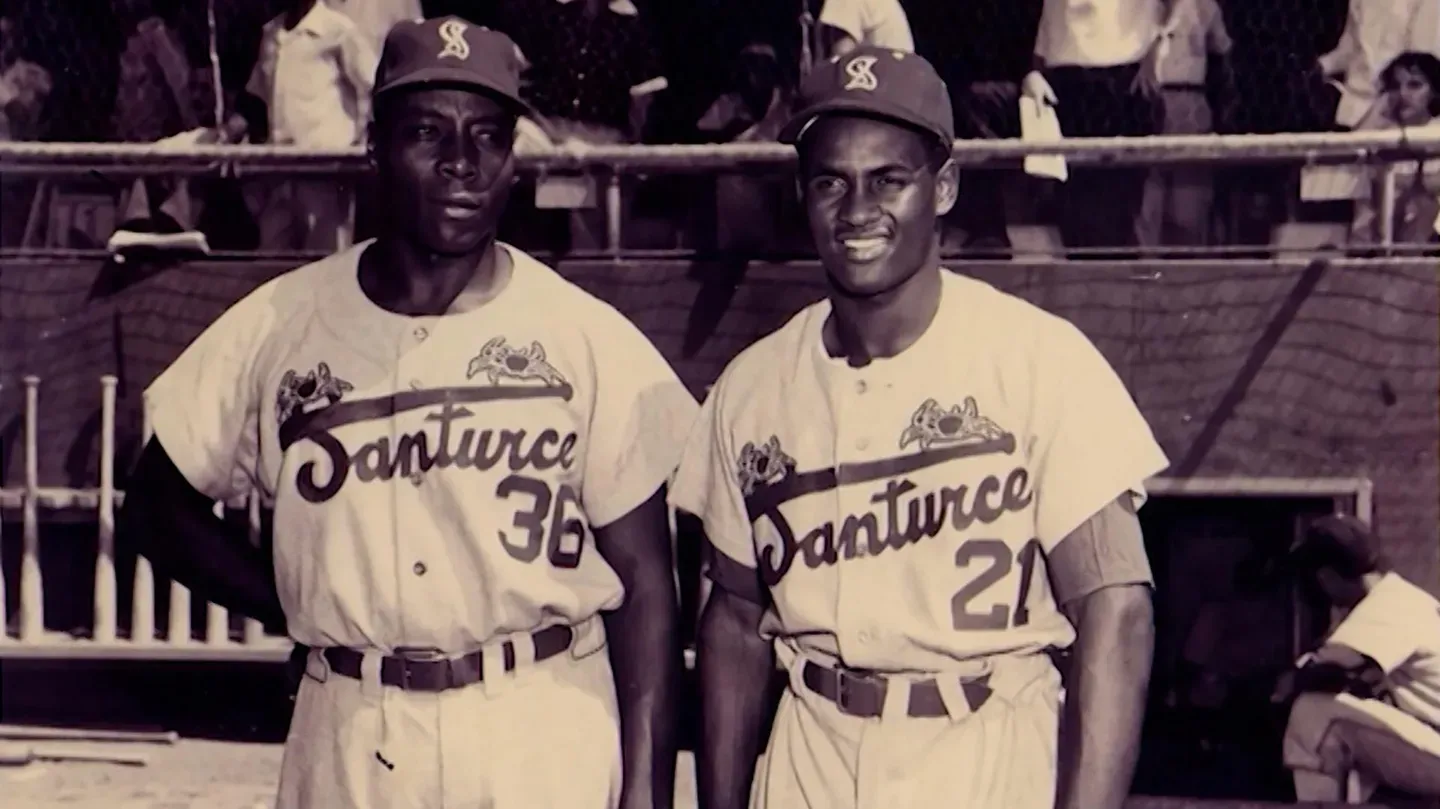
Béisbol: The Legends of Puerto Rico
Special | 51m 14sVideo has Closed Captions
Dive into the rich origins of baseball on the island, its stars, and U.S. Negro League players.
Explore the rich origins of baseball on the island. From the 1920s to the 1960s, U.S. Negro League players found a home in Puerto Rico—far from the harsh realities of racism in America. Their presence and impact would go on to inspire the island’s future baseball legends like Roberto Clemente and Orlando Cepeda. Featuring Perucho “The Bull” Cepeda, Hiram Bithorn, Josh Gibson, Satchel Paige.
Problems playing video? | Closed Captioning Feedback
Problems playing video? | Closed Captioning Feedback
WLIW21 Specials is a local public television program presented by WLIW PBS
WLIW21 Specials
Béisbol: The Legends of Puerto Rico
Special | 51m 14sVideo has Closed Captions
Explore the rich origins of baseball on the island. From the 1920s to the 1960s, U.S. Negro League players found a home in Puerto Rico—far from the harsh realities of racism in America. Their presence and impact would go on to inspire the island’s future baseball legends like Roberto Clemente and Orlando Cepeda. Featuring Perucho “The Bull” Cepeda, Hiram Bithorn, Josh Gibson, Satchel Paige.
Problems playing video? | Closed Captioning Feedback
Where to Watch WLIW21 Specials
WLIW21 Specials is available to stream on pbs.org and the PBS app.
(gentle pensive music) (pensive music continues) (pensive music continues) (pensive music continues) (pensive music continues) (pensive music continues) (pensive music continues) (pensive music fades) (gentle music) - [Matino] Orlando Cepeda.
Hall of Fame.
Roberto Clemente.
Hall of Fame.
Tony Perez.
Hall of Fame.
Bob Gibson.
Hall of Fame.
Trucutu Gibson.
Hall of Fame.
(Matino speaking in Spanish) (gentle reflective music) - One thing in life is that you can be afraid.
You can be scared.
I look back on everything.
I can see everything so clear now.
It's a picture in front of me.
It's a long time ago.
I remember everything.
(reflective music) (audience cheering) It never came to my mind that a kid from Puerto Rico at the age of 17 coming to the State and try a new venture in life.
(reflective music) I'm a very lucky person to be born with the skills to play baseball, through baseball, escaped poverty, through baseball, I built a name for myself.
Through baseball, I opened the gate for more Puerto Rican, Black Puerto Rican to come to this country and play ball for a living.
Today, (bright music) I represent my country of Puerto.
(bright reflective music) (gentle reflective music) (gentle reflective music fades) - The love that I have for my country, it wasn't taught in school.
I develop it because of the ball players.
Those are the people that taught almost every Puerto Rican to love their country.
That's the importance of Roberto Clemente and Orlando Cepeda in the big leagues.
It made us feel so proud of being Puerto Rican.
We needed that.
(audience murmuring) - [Announcer] That is hit well!
(audience cheering) A Clemente home run and the Pirates lead one to nothing.
(audience cheering) - [Announcer] Looks like he had a break.
(dialogue fades) That's his 12th hit.
(audience cheering) He's one short... - Baseball is a way of leaving.
Every young kid, the first thing that they get put in their hands is your glove and ball.
When I was growing up, I always remember waiting for the September, October months.
I did my homework faster than anybody because I knew when my father come in, we're going straight to the stadium.
(Matino speaking in Spanish) (Matino continues speaking in Spanish) (Matino continues speaking in Spanish) (Matino continues speaking in Spanish) (Matino continues speaking in Spanish) (bright music) - Puerto Rican baseball history is not well-documented.
From 1898 to 1936, it is a very obscure period.
We don't have books, we only have the newspapers.
After the United States took control of Puerto Rico, good teams of the Caribbean and the Negro League came to Puerto Rico in winter.
And we had Lincoln Giants, New York Black Yankees, and Alex Pompez Cuban Stars.
Negro League teams came to Puerto Rico because their season ended in the United States and then they can earn some money playing in the Caribbean.
Good players came to Puerto Rico, Cristobal Torriente, Jose de la Caridad Mendez.
And you see Joshua Gibson, Monte Irvin, Hall of Famers.
And it was very significant because you learn a lot with players better than you.
And that's what happened.
There were a great competition for our teams and our ball players with that experience kept developing.
And Puerto Ricans got to see ball players of international name big stars, and then against our stars like Francisco Coimbre, Emilio Navarro, Perucho Cepeda.
(gentle music) (audience cheering) - I grew up in the game of baseball.
And I know Perucho Cepeda son, because my father was a legend.
Looking back, it was amazing.
Wherever he go, somebody knew my dad.
You know, we used to have dinner and someone, I'd go to pay, somebody paid for the bill.
I enjoyed that.
Everybody knew my dad.
I told my mom, "I wanna be like my dad."
My mom said, "Well, it won't be too easy."
My father worked so hard, especially with a player making so much money today.
He used to work a regular job.
He used to come home and get ready and drive like three hours for $30 a month and he never complained.
(Matino speaking in Spanish) (Matino continues speaking Spanish) (reflective music) - Some Puerto Ricans wanted to play in the Negro Leagues because they saw those Negro Leagues in Puerto Rican and say, "We can do that too."
And they went to the State and now Emilio Navarro and Ramon "Monchile" Concepcion, they're big leaguers.
Those were really, the pioneers.
(gentle somber music) - Few Puerto Rican player used to come to the State to play ball.
And they have such a bad experience.
My father, when he come to the State, he said that if somebody tell me "You can't come in here because you are Black," I want to fight him.
- When they came to play to the United States, they were there because they were very good players, but they had something that they had to keep in mind.
They were Puerto Rican, they were not white people.
Some of them were Black, some of them were mulattoes, you know, so they were looked at differently.
So you had to excel in the field to show what you were made of.
Not only in your abilities, but that you had mental toughness, you were strong to be able to put that aside and perform the best way, you know, in the ball game.
- In 1938, Governor Blanton Winship designated Julio Enrique Monagas the sports director of Puerto Rico.
And the first thing he said was, "We are gonna have a professional league in Puerto Rico.
San Juan, Guayama, Caguas, Mayaguez, Ponce, and Humacao.
Six major cities.
And they were allowed to bring three reinforcement by team.
And in October of that year, La Liga de Beisbol Semiprofessional de Puerto Rico was born.
It was a huge success.
In 1939, Santurce and Aguadilla asked for a franchise.
(Matino speaking in Spanish) (Matino continues speaking in Spanish) (Matino continues speaking in Spanish) (Matino continues speaking in Spanish) (bright music) Coliseo Pedrin Zorilla was a man who loved baseball.
He was born in Hato Rey and he studied in United States.
He got that baseball flavor of the big leagues of the main league.
What he saw in the State, he wanted to bring that to Puerto Rico.
He wanted to send a message.
"I didn't want this franchise to just compete.
I'm gonna be good and I wanna win championships."
And he brought Josh Gibson.
(Matino speaking in Spanish) (Matino continues speaking in Spanish) - So imagine bringing Joshua Gibson as manager.
He was a huge star.
And he brought that year Billy Byrd, a great pitcher, and Dick Seay, those was the three important players that he brought.
And the three of them were Negro Leaguers.
(reflective music) - I remember the first day I went to San Juan, to Escobar, where my father play for Santurce.
When I saw Josh Gibson, when I saw Leon Day, the whole town came out to greet them.
I said to myself, "Someday I will be like that."
I wanna be a ball player.
I'll never forget that day.
(reflective music) - When World War II finished from 1946 to 1953, that was the golden era of the Puerto Rico Baseball League.
We're talking about Willard Brown, Bob Thurman, Luscious Easter, Artie Wilson, Wilmer Fields, Johnny Davis, Monte Irvin, Larry Doby, so many players that came in that era was a great, great time for Puerto Rico, for our league.
And there was a special bond between Negro Leagues and the Puerto Rico fans.
Very special.
(Matino speaking in Spanish) (Matino continues speaking in Spanish) (Matino continues speaking in Spanish) (Matino speaking in Spanish) (Matino speaking in Spanish) (Matino speaking in Spanish) (Matino speaking in Spanish) (reflective music) - Black players were discriminated in the United States.
And that's a fact.
And it was very, very difficult for them to play a difficult game and being the point of all discrimination.
So they had to be really good, you know.
But when they came down here to Puerto Rico, they were treated as human beings.
They wanted to come down to play here not only n Puerto Rico, in Cuba, Venezuela, Panama.
It was a different ball game in the Caribbean.
- You know, they wanted to come back every year.
Thurman and Willard Brown, had 10 year careers here in Puerto Rico, 10 years coming to Puerto Rico.
They loved Puerto Rico and they felt love.
One of the activities that the governor did, he invited all the All-Stars to the governor's mansion and they had a big dinner and all those Negro Leaguers were invited.
And I'm sure that none of those Negro Leaguers were invited in their native State to the governor's mansion.
But here, every year, they went there and had dinner with the governor.
- Sometimes they could end a ball game hit and home run.
They would walk down the street, go by a restaurant and they didn't have to pay.
So they felt they were being treated as human beings, not because they were Black or white.
- For four, five months in Puerto Rico, they were our heroes.
They went to restaurant, they stayed in their best hotels, they can walk with anyone, no segregation.
And then when the season finished, they have to return to the State, to their home, to all those Jim Crow laws.
That's the extremes.
Here, I am a king, I'm here in this paradise and now I'm returning to reality.
(reflective music) - Santurce was the team that everybody wants to play because Pedrin used to come to the State and visit all the Negro League players, you know, and not everybody did that.
And then when they come to Puerto Rico, he treat them... So good and he gave them so much love.
He used to bring them to the house and spread, you know that Pedrin was a guy that we should trust, that Black people should trust and they trust him because Pedrin was white, real white, and he treat everybody equal.
Puerto Rican ball player, oh American ball player.
They come to Puerto Rico, not just to play ball, just to see Pedrin.
- They didn't call him boss, you know, they call him Pete.
And my father, when he used to go trying to contract to play for the Crabbers, he used to go with the Black players and the buses and everything when they traveled from town to town and he was part of them and he was accepted by the Black players.
There was a ball player by the name of Dick Seay.
He used to come down here to play with the Santurce Crabbers.
One time my father was traveling with "Guigo" Otero Suro who was the lawyer of the ball club and they were traveling with Dick Seay.
and they stopped in some restaurant on the road, I think was in South Carolina.
And nobody came to serve them.
And my father just stood up, "Hey listen, we're sitting there waiting for service."
And said, "Okay, I don't have trouble treating you or the other guy, but the Black guy has to go."
So my father got so mad.
My father wanted to fight for Dick Seay.
and the lawyer, being a lawyer, "Hey, listen Pete, stay put.
We might do good here, but down the line, five minutes away, we're gonna have a roadblock and we're gonna be put in jail."
(tense reflective music) - Anybody who played for Pedrin like Dick Seay, they were Pedrin's friend forever.
Forever.
If Pedrin find out that some of the people who play for Pedrin, he find out they was sick, Pedrin fly, no matter where, he fly to be there with them.
- There wasn't one winter that Willard Brown didn't come to Puerto Rico and Pedrin got worried and he tried to call him and no answer.
And he took a plane and went over to Willard Brown's home in the States.
He had some health problems and Pedrin brought him to Puerto Rico and give him medical care.
- And when you treat somebody with love, you gonna get it in return.
There's nobody like him.
Pedrin was a rich man, but he had such a big heart.
Not only me, to all the people.
It's hard to forget him.
So many great Black players, he really cared for.
- There was a player by the name of Jose Pagan.
He used to play with Roberto in Pittsburgh.
He had been signed already.
He was a great ball player, great shortstop.
And he called my father and started crying, "I'm gonna go back home, I don't like this."
So my father grabbed a plane and he went there and told him, "You're gonna stay here.
You're gonna eat dirt, you're gonna play as hard as you can because you're so good, but you have two things against you.
You are Puerto Rican, and you're not white, and you have to do things better every time and you have to show these guys what you're made of."
And he stayed there and he made it to the majors.
- Pedrin created an environment of a family in which he was the dad and everybody else followed his lead.
He always related to the people in the neighborhood and he created the standards for the players to relate to the community.
And I think everybody expects that if you wear the Santurce uniform, you would relate to the Santurce community in a way that it becomes the Santurce team and the Puerto Rico team.
(reflective music) Pedrin brought Roy Campanella, he brought the best of the best but still took him years to win.
And you can see year over year how he was grinding, even though he had these great teams, he was not able to finally win.
- That first championship in 1951, they had, not a very good team.
They finished fourth, I think, they standing, and they got to the semifinals and then they played the Caguas Criollos who had won that year by a landslide.
And they were not favorite at all.
And they got to the seventh game, it was tied at the bottom of the ninth, two outs.
And came up, this Pepe Lucas, which was a Dominican ball player.
He hit a fast forward in the left center field and they won the game.
(audience cheering) It was called the "Pepelucazo."
And the pitcher was Mike Clark for the Caguas Criollos.
He was an American white pitcher.
And he got so mad that he threw the glove at the stands and that's probably, that was the most exciting and emotional because he had the team for 11 years and he had better ball clubs years before, but they were not able to win.
- It was important for Pedrin to win the first championship, the second championship and the third championship.
Not for Pedrin but for Puerto Rico.
Because it gave us that pride.
Pedrin taught us that we were as good as the other countries in the Caribbean.
Cuba was the best.
But he taught us we can do the same things as the Cubans.
And he was the first owner in the Caribbean to win the Caribbean series.
- Once he won in 1950, '51, from that point on, it was Santurce, one of the best because at the end, my goal is to win.
And my goal is to create an organization that will be remembered years over years after he's left and that's the case.
(pensive music) Pedrin tried to bring the best players available always to wear the uniform Santurce.
For example, I believe Pedrin, when he brought Willie Mays here, Pedrin brought the National League most valuable player to play winter ball.
Think about that for a minute.
He convinced the New York Giants to allow their most valuable player to play Winter League in Puerto Rico.
And that by itself tells you how much influential he was, but also the vision that he had on what the impact of Willie Mays was gonna have in Puerto Rican baseball.
And we know the story.
- So Pedrin won the Caribbean series in 1953.
In the season '53, '54, he came last and then came '54, '55 and he said "No, I wanna win the championship again."
He wanted the best.
And Willie Mays was the best.
Willie Mays met Pedrin in the minor leagues because Pedrin worked with the New York Giants and he knew all the personnel in the minor leagues of the Giants.
He was a very good friend of Horace Stoneham.
- The owner of the Giant, Horace Stoneham, and Pedrin was very close.
So Pedrin asked Horace Stoneham and because Pedrin had a reputation to be so good to the players, especially Black players, Stoneham said, "Yeah, take him."
- Horace Stoneham was really whipped by the writers letting a player like Willie Mays come down to play Puerto Rico.
He might get an injury or something like that.
But my father had very good relationships with the owners because of his personality, his relationship with the baseball people in North America and they were able to see that he was knowledgeable man of the game.
And he was very respected.
(Matino speaking in Spanish) (Matino continues speaking in Spanish) (Matino continues speaking in Spanish) - Willie Mays.
(reflective music) The best player who ever lived.
I was playing class A before singing with Santurce.
Then after the game was over with me, Class A, we went to the ballpark, where Willie played.
I remembered, he hit the ball to the right center.
It was gonna be a triple and Willie make it a single.
Willie was, you know, so quick.
(exclaims) I remember that, you know.
And then when I started working out with Santurce, I saw Willie every single day.
I learned watching him because he used to read stories to the poor, you know?
He did so many things.
He make it look so easy, because you can't do what he would do.
You know, I was very lucky because Willie could have, you know, played for some other team.
Willie took on every morning with Clemente, and help him to run and throw that, but that's amazing, it's special.
Him and Roberto Clemente are the best players ever.
- Roberto Clemente, to play with Willie Mays, a season, he learned a lot.
As a matter of fact, Clemente was drafted by Pittsburgh.
Branch Rickey wrote a letter to Roberto Clemente giving him the welcome to Pirate's organization.
"We need you to work in two things.
You take two steps to throw the ball and you open when you're running the bases."
And Willie Mays, Luis Ormo, Herman Franks, and Orlando Cepeda, every morning at 11 o'clock, practice with Roberto Clemente to throw because he had a strong arm but he took two steps and that play that makes Clemente, comes running and takes his here and throws, that was taught by Willie Mays.
(Matino speaking in Spanish) (Matino continues speaking in Spanish) (Matino continues speaking in Spanish) (Matino continues speaking in Spanish) (Matino continues speaking in Spanish) (Matino continues speaking in Spanish) (reflective music) - Willie Mays loved Pedrin.
As a matter of fact, one day I was in Cooperstown, Willie Mays was in the hotel and was coming down to the lobby and the son of the Roberto Clemente told Willie May, said, "Willie, you know that it's not going to be baseball in Puerto Rico this winter."
That was 2006.
You know what Willie Mays said?
And I heard it.
"If Pedrin was alive, that wouldn't happen."
I said, "What?"
That was in 2006.
Pedrin died in 1981 and that Willie Mays remembered Pedrin Zorrilla in that way, "If Pedrin was alive, that wouldn't happen."
(bright reflective music) (Matino speaking in Spanish) (Matino continues speaking in Spanish) (Matino continues speaking in Spanish) (Matino continues speaking in Spanish) - The effects of Willie Mays playing for Santurce is the legacy.
I think he created a team that was never seen before and you had a lineup like Willie Mays, Roberto Clemente, Buster Clarkson, George Crowe, Don Zimmer, it's an amazing group of players that he put together that not only won in Puerto Rico but also won in the Caribbean series and established a pattern of Santurce and the legacy that's still with us.
(gentle music) (gentle music fades) - Playing baseball, everything you do is so natural.
You don't know how good you are until somebody says, "Yeah, you're a good ball player."
I didn't know how well I was.
I was playing amateur ball in Puerto Rico before I turned pro.
When we won the championship and this guy ran next to me.
He said, "You're son of Perucho.
You're not a ball player."
You know, right in my face.
People told me, "You won't be like your father, You won't be like him."
When Pedrin saw me play, everything changed.
They all knew my dad in Puerto Rico and they say, "Well, bring Orlando to played too," and I went with him because he was kinda ill.
He was kind of sick, my dad.
And I did well and Pedrin Zorrilla was there, too.
And Pedrin said, "Who's that kid playing third base?"
"That's Perucho's son."
And then right after the game, Pedrin came to him and say, "Rucho, your son is a pretty good ball player.
I'm gonna have him coming over to start to work out with us at Santurce (indistinct).
"If you want my son, you can have him," because him and Pedrin, they were very close and that was the turning point in life.
- My father had been very good friends with Orlando's father, Perucho.
And when Perucho got sick, you know, he told my father, "Please, I want you to take care of Orlando."
And Orlando was received at my home like a brother, you know?
And my father used to take care of him.
He was really like a son.
- I remember when they gave me the uniform and Pedrin say to me, "You know, you should be very proud because you wear, you have the same number that your father had when he played for me."
When I went to my locker I saw a brand new glove and everything.
It's unique.
(reflective music) - What I always hear is Pedrin provide the platform that allows players like Clemente to become what they become.
But I think it's not only Clemente, how between Clemente and Pedrin convinced Orlando Cepeda's dad to allow him to go to the State to play baseball.
- My mother was against me coming to the State you know because "He's brown skin and don't speak English.
He going to suffer.
They're going to hurt his son."
I remember Roberto Clemente came a year before in Pittsburgh and had to live in Black people home because he couldn't find even a hotel who give you a room.
(Matino speaking in Spanish) (Matino continues speaking in Spanish) (Matino continues speaking in Spanish) (Matino continues speaking in Spanish) - Because I don't have an idea about being Black in Puerto Rico.
We don't have that.
So if I knew about it, I wouldn't go because I don't have (indistinct) the thing that I have to be ball player because I was comfortable with my mother even though we were poor.
But destiny pushed me.
(exclaims) - People like Clemente, people like Pedrin, provided assurances that, "Hey, this is the right move."
He has the making to succeed and he has the vision and the goal to be successful and to be a great player.
And even today, I think Orlando is about 84-years-old.
He remembers what happened in 1955 when he was making that tough decision to go after his dream.
- Roberto told my dad.
"Let him go.
I'm gonna make sure that I be okay."
Zorrilla had to convince my mother and she convince my dad and my dad said, "Go ahead."
As soon as I land in the State, trouble start coming, was so hard at the Greyhound station.
They won't let me in.
It was horrible.
I remember Roberto was there too, but he knew.
He said, "No, you go with me wherever you go, but don't let those people, they're a bunch of sick people."
And I said, "Why Roberto is always nice to us, nice to me?"
I didn't know he talked to my dad.
You know, that's the way he was.
And he loved my dad.
And Roberto loved Pedrin, too.
Roberto was a great man.
(gentle music) (Matino speaking in Spanish) (Matino continues speaking in Spanish) (Matino continues speaking in Spanish) (Matino continues speaking in Spanish) - And imagine how hard that could be.
You're a person with darker skin going to United States in 1955, not knowing the language, not knowing how to order your meal.
It take a certain special human being to be able to succeed and making sure that he's resilient enough to not let anything deviate from his goal until he's achieved it.
And you could see that trend in Clemente, you can see the trend in Orlando, and all the others that have succeeded because they have leaders like Pedrin that instilled that search for excellence mentality in them.
- If it wasn't for Pedrin, I wouldn't be playing ball.
John didn't want me.
We went there for a tryout.
I wanted to come home.
I missed my mom.
And then my father was very ill.
Pedrin find out.
He say, "No way."
So he flew here.
He told my mom, I have a friend of mine who owns a team, it's an independent team.
He's a guy named Gene Conard.
He was an umpire in the Winter League in Puerto Rico.
He owned the team, Kokomo Giants and "Whatever I can do for you, Pedrin, lemme know," so Pedrin say okay, "This kid is a good ball player."
He said, "Well, bring him over."
So they signed me in Kokomo Giants.
So Pedrin followed through, you know.
It's amazing.
Pedrin Zorrilla, a great man.
- He did what he could to make Puerto Rican baseball develop and he was able to help many people, many ball players through the game of baseball.
He came all natural.
You can imagine how proud I feel.
It's just amazing.
He was very lucky in the sense that he was at the right time, at the right place.
He had an opportunity to get at bat and he was able to perform but not because he wanted to perform to excel because he loved so much this game.
(reflective music) - My father passed away.
So I want to come home to be with my mother and forget baseball.
When I went to my house, all the players in Puerto Rico and Pedrin was there for my mother.
Pedrin called my mother every week.
"Whatever you need," he told my mother.
I have never forget what he did to us.
And I was supposed to start the season March 15.
I don't want to come back to the State.
Pedrin push me.
Push.
"You gotta do it.
Come on, keep on going."
I would be nothing without him.
I couldn't have been playing ball without him.
People like to Pedrin, is in my heart.
I loved him.
Santurce is the team that everybody wants to play for because of Pedrin.
- My father and me, we were staying at the New York Hills in New York.
We went to New Jersey to Lenny Pearson's place.
Leonard Pearson had been a ball player that came to play down here in Puerto Rico.
And he had a bar and we got there.
A lot of people there, all of them Black, the only white fellows there was my father and me.
There was Buck Leonard, Monte Irvin, many other ball players.
And I was looking at some guys playing pool and all of a sudden this guy comes up and stands beside me and put the stick of the game.
"You're gonna play pool then."
"I know nothing about pool."
I was so scared.
"Well, you're gonna learn tonight."
When we came back to New York, George Scales was sitting right beside me on the car and he had a few shots.
And when I went to get out of the car, he grabs me, he pulls him and he gives me a kiss right here, sweaty and everything.
And I say, "What's this?"
You know I'm 14-years-old, 15-years-old.
"What's this?
A man's kissing me."
And he tells me, "Never forget this.
I love your dad."
And then he pushed me away.
A story that summarizes who he was, in baseball, especially with the Black players and me learning all of those things, I guess I'm just very, very lucky.
I'm very proud.
- Pedrin's legacy is creating an organization the way he wanted with the vision that he wanted that represent excellence in execution every single time.
Pedrin created this aura that we missed when he left.
But luckily for Santurce, people like Ivan Cueva, people like Reynaldo "Pantoja" Rodriguez, people like Miguel Sosa.
And now that I'm in this role, understood very clearly what it means.
And for me it's the the reason why Santurce is what it is.
And for me, why Santurce is the number one team in this league.
(reflective music) - My first base hit was a home run for the Giants, was a change out.
When I'm running the bases, I said to myself, "Look like I've been here before."
Same thing with Santurce.
My first hit was a home run, too.
I remember when I was the MVP and I remember 1961, I led the number of RBIs and Roberto from Puerto Rico and Willard Brown.
And that made my mother so happy.
When my dad did and my mother did for me.
We're here right now because of them.
Sandy Alomar, Ellie Rodriguez, all those guys, say we owe everything to Orlando and Roberto.
In Puerto Rico still today, they don't know how great Clemente was.
They only know that Roberto crashed in the plane.
But they don't know Roberto's greatness was on the field.
(announcer dialogue drowned out by audience cheering) (audience cheering) - I say this in English, I will say especially for my mother and father in Spanish.
(Roberto speaking in Spanish) - Mr.
and Mrs.
Clemente, we love him, too.
- That's why my goal is to go to Puerto Rico and go to the school and tell them to never give up because it's hard.
It's very hard to do what we did because it could have been so easy to give up.
And I don't say that because I'm Latin recognition because I was very lucky.
But some other great players in Puerto Rico, like Luis Marquez, that was my idol, came to the State, Black.
The things that he went through was amazing.
And today nobody knows that.
Those names disappear.
I'd like to go to a place where I can say loud, mention those names.
I believe that you should be proud where you coming from.
Very proud to come from Puerto Rico where so many great ball players (audio fades) came to this country and built a name for themself.
(bright music) (reflective music) I'm a very blessed human being.
And please, right now, I'd like to say some word in Spanish, if you don't mind.
(Orlando speaking in Spanish) (Orlando continues speaking in Spanish) (Orlando continues speaking in Spanish) (Orlando continues speaking in Spanish) (Orlando continues speaking in Spanish) I'm proud to be a Puerto Rican and I'm very proud that I was a baseball player and that I'm here today.
Thank you very much.
(audience cheering) (reflective music) (gentle music) (gentle music continues) (gentle music continues) (gentle music continues) (gentle music continues) (gentle music continues) (gentle music continues) (bright music) (bright music continues) (bright music continues) (bright music continues) (bright music continues) (bright music continues) (bright music continues) (bright music continues) (bright music continues) (bright music continues) (bright music continues) (gentle music) (gentle music continues) (gentle pensive music continues) (gentle pensive music continues) (gentle pensive music continues) (upbeat music) (upbeat music continues) (upbeat music continues) (upbeat music continues) (upbeat music continues) (upbeat music continues) (upbeat music fades)











Support for PBS provided by:
WLIW21 Specials is a local public television program presented by WLIW PBS