
Blender's Gardens
7/29/2021 | 26m 55sVideo has Closed Captions
The Blender farm, northwest of Macomb, has been in the family for generations.
The Blender farm, northwest of Macomb, has been in the family for generations. About 25 years ago Jim Blender began to transform the livestock area into formal gardens. The results are stunning
Problems playing video? | Closed Captioning Feedback
Problems playing video? | Closed Captioning Feedback
Illinois Stories is a local public television program presented by WSIU
Illinois Stories is sponsored by CPB, Illinois Arts Council Agency, and Viewers like You. Illinois Stories is a production of WSIU Public Broadcasting.
Support provided by:


Blender's Gardens
7/29/2021 | 26m 55sVideo has Closed Captions
The Blender farm, northwest of Macomb, has been in the family for generations. About 25 years ago Jim Blender began to transform the livestock area into formal gardens. The results are stunning
Problems playing video? | Closed Captioning Feedback
How to Watch Illinois Stories
Illinois Stories is available to stream on pbs.org and the free PBS App, available on iPhone, Apple TV, Android TV, Android smartphones, Amazon Fire TV, Amazon Fire Tablet, Roku, Samsung Smart TV, and Vizio.
Illinois Stories
Join Mark McDonald as he explores the people, places, and events in Central Illinois. From the Decatur Celebration; from Lincoln’s footsteps in Springfield and New Salem to the historic barns of the Macomb area; from the river heritage of Quincy & Hannibal to the bounty of the richest farmland on earth.Providing Support for PBS.org
Learn Moreabout PBS online sponsorship(upbeat music) - [Announcer] Illinois stories is brought to you by the Corporation for Public Broadcasting, Illinois Arts Council Agency, and by the support of viewers like you.
Thank you.
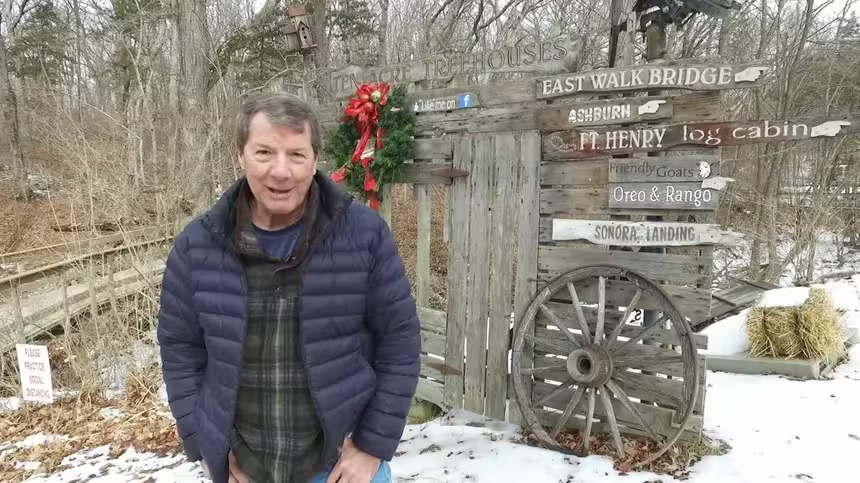
- [Mark] Hello, welcome to Illinois Stories.
I'm Mark McDonald in Henderson County, just northwest of Macomb with Jim Blender, who has the most impressive gardens.
I found out about this from one of our viewers who came here with a group trip.
They came to tour the gardens and she said- - [Jim] About a month ago.
- [Mark] Yeah, you gotta meet Jim Blender.
He owns a florist shop and he has his gardens.
They are the most impressive gardens and I have to agree with her from what little I've seen, but we're gonna see the whole thing with our viewers today, okay?
Let's go on down here, Jim, because I wanna start with one of the highlights, or what I think is a highlight.
I love water features and you don't see many like this.
This is a real beautiful mountain stream like.
Let's come out this way and let's walk up there a little bit.
How did you put, I'm looking at all this river rock that you had to haul in here.
How did you do this?
- [Jim] Well, I had truckloads of it brought and then we have a little John Deere tractor that with a bucket and we loaded it up and bring it down and do it and just lay 'em in there.
And then I keep Roundup on 'em to keep the weeds down.
- [Mark] I'm hoping that our microphones can pick up the sound because we've recently had some rains and your creek is running nice and full and you can really hear it, it's beautiful.
- [Jim] Yeah, and then there's my Japanese covered bridge.
A friend of mine made that for me.
- [Mark] You have a lot of Japanese features here too.
You really liked Japanese garden, don't ya?
- [Jim] Right.
- [Mark] Okay, we got a chance to see those.
And we might also point out some of the, well, there's a feature right here.
Jim, let's go up here.
- [Jim] Okay.
- [Mark] Why don't you lead the way.
- This has kinda overgrown with my trees, but I've got, here's a beautiful evergreen tree, arborvitae type.
These are all rhododendrons in through here.
- I'll bet in May it's stunning, isn't it?
- Yeah, those are Henry Red, they're are solid red.
They're beautiful.
- And those back there are also rhododendrons, are they not?
- Yeah, they're lipatoads, they're called.
These are elipatoads, those are lipatoads and those are all white back in there when they bloom.
And this is a Japanese maple.
- [Mark] You can share some pictures with us 'cause you do take pictures every spring, don't you?
- Yeah, too many.
- Too many, yeah, probably.
- [Jim] If you wanna get the sound.
- Yeah, there's the culvert where it comes out.
So what's the source of your creek?
- [Jim] Just tile and I have a pond over here, you know, on the other side.
It will dry up in August if we have a real dry August.
- [Mark] I just saw a big frog jump in there.
And yeah, I can see you've got fish in there too, so you do have a population of fish.
- [Jim] Yeah.
- [Mark] I bet the kids love that, don't they?
- [Jim] Yeah.
- What's this giant?
Is that an arborvitae?
- Yeah, it's arborvitae, but it's golden.
And I don't know, I can't remember the name of it.
- Beautiful.
And this has the Japanese effect too.
- Yeah.
This is a, oh, I'll think of it.
- [Mark] Did you forget?
It's okay.
- [Jim] I can't remember all of 'em.
- I'm going to ask you about 1,000 questions, so you may not know the answer to all of them.
- I think this is a neat.
- [Mark] That is, it looks like a cedar.
- [Jim] Uh-huh, I got that in Rushville.
- You do a lot of you do a lot of shopping in Illinois, don't you, for your?
Oh, you've got some quartz back here.
- [Jim] Yep.
- [Mark] And you love your begonias, don't ya?
- [Jim] Yes, and hostas.
I had, when I started this, I had every on of my hostas named and I had a stick in 'em, but through the years, as I've had people help me weed and stuff, the names get pitched.
I liked Japanese lanterns too.
- [Mark] Oh, they're beautiful.
- [Jim] And that is a Cornus dogwood there.
- [Mark] And you're talking about the one with the white.
Okay, now those bloom really late, don't they?
- [Jim] Oh yeah, really, really late.
- [Mark] And they don't have that brilliant white that the flowering dogwood has, but they do keep their blooms on, don't they?
- That's been blooming for probably two weeks and the bloom is smaller.
It's not as big as a regular dogwood.
- And again, these rhododendrons are just everywhere.
This just must be banks of colors.
- Right.
And there's a Japanese maple.
- And more rock.
Rock and wood chips.
You're big on rock and wood chips, aren't ya?
- [Jim] It helps keep the weeds down.
- [Mark] Can we go back up in here?
Is this one of your Japanese gardens?
Or where do you wanna go?
- [Jim] This is Japanese.
- Okay, let's go up there, let's go up there.
- Okay.
I have a table.
I get my coffee cup and I'll come out here and sit and just look around.
- There's a lot to look at.
- And I kind of like ferns too.
Look at all the different ferns I have here.
- [Mark] They do really well in this environment, don't they, because they can stay, keep them out of the sun and it stays kind of moisture in here.
- [Jim] Right.
- [Jim] Back over here, more of the hostas that you're talking about.
- [Jim] Yeah, that's Great Expectations.
- [Mark] That's what that's called, you mean the lower one?
- [Jim] No, the yellow one.
- [Mark] The high one, Great Expectations.
- [Jim] And the lower one is Patriot.
I do know remember that, yeah.
Those are the two.
- [Mark] Wow.
Well, Jim, this was a family farm.
It's been in your family for a long time.
- [Jim] 1939.
- It still is.
I see the beans growing up there on the hill.
Where we're standing used to be at the pasture and when you got a little older, you determined more than 20 years ago you were gonna make a garden out of this and this was where you started with our hosta beds, right?
- Right.
- In the pasture.
- In the pasture.
- Okay, so you weren't afraid of the cows and everything stopped stamping on them.
- Well, we didn't have cows then.
- Didn't have any.
- No, and I planted all these pine, they weren't here.
I planted all these trees too.
- [Mark] They're big, they're big now, wow.
- Most of the trees and stuff has been planted.
The only trees that we had on this was mulberry and wild cherry and so I got rid of all that.
- And everything else that we see here is something you planted.
- Planted.
- Wow, well, that's just about everything.
- Yeah.
- Well, Jim, let's go back to part of the Japanese garden again.
We didn't really get to see a lot, but there's so many little, after you, sir.
There's so many little cul-de-sacs in here that you kind of have to watch where you're going.
- [Jim] Right, the plants have gotten bigger than what I thought they were going to.
- Well, isn't that always the way of it?
You don't really know how to space things, do you, because and you don't know, you think you're living forever, you know, so you're thinking well, for 20 years probably.
- [Jim] That's Sum and Substance hosta, those big ones.
I planted three on each side, but see the three on the other side haven't done near what these three have.
- [Mark] Is it because of the sun, you think?
- [Jim] I think so.
- So they like the sun.
Everybody thinks hostas are shade lover, but these guys like that light, don't they?
- They must because they get so much bigger.
- Now you've got these features like this gazebo or whatever this is called.
How did you come up with that idea?
- [Jim] Out of a Japanese garden book, I saw those, and then I had the Amish build it for me.
- [Mark] And then these, you've got lanterns and statues.
How do you find these things?
- [Jim] I go up to the gardens in Freeport, not Freeport, in, oh boy.
I'm sorry, I can't remember the name of it.
I will, and just different gardens around wherever I go.
- [Mark] Buddhas and temples.
- [Jim] I think that's a pretty scene down through there.
- [Mark] It's gorgeous.
- [Jim] With the Japanese, look at that Japanese maple there, that fern lace.
- [Mark] Is it this or brownish one here?
Is that the fern lace?
- [Jim] Yeah, that's a Japanese and those two are Japanese red ones back there.
- [Mark] And now will those change color in the fall or will they stay?
- [Jim] These will get bright red.
That one is more of a golden yellow.
- [Mark] Oh, the green one?
Okay.
- [Jim] Oh, and there's another hydrangea back there.
- [Mark] Yeah, it's flowering now.
That's not the oak leaf, but it is flowering now.
- [Jim] With that one, remember Hoerr's Greenhouse in Galesburg?
- I've never been up there.
- [Jim] Oh, well, they're not there any longer, but they had this at the entrance to their thing and I was up there when it was blooming like this and I said, huh, I'd like to have that so that's where I got that plant.
- And it's fine where it is too.
It doesn't get much sun, but it's fine where it is.
And you can see these trees are big and you, all these trees were trees you planted.
Look how big they've gotten.
- [Jim] I know.
- [Mark] Remarkable.
And there's that dogwood again, that late-flowering dogwood that we were talking about.
And then you've got your, like you say, you love ground cover, so you've got even some of these evergreens are very low-growing.
- [Jim] Right.
- [Mark] Beautiful.
- Gardening changes as the years go by.
I mean, you know, you plant something and then after 10 or 15 years you decided you don't want that anymore so you have to get rid of it.
- I just noticed, do you like this up at night because I seen electric line.
- [Jim] I used to but I haven't lately.
- [Mark] Will it light up for you if you want to?
- [Jim] Yeah.
- [Mark] Well, that'd be dramatic.
- Yeah, it is beautiful.
- [Mark] Maybe we'll have to come back.
- [Jim] There, see that Japanese round thing there?
The Amish built that for me too.
- [Mark] Is that just an entryway, it's a doorway?
- Yeah, it's kind of to they just showed it in this Japanese garden book and I thought, oh, well, I'll get that made.
- [Mark] And actually, let's let's keep going out here because, (wind chime tinkling) there's a wind chime, down at the bottom here is an opening and you can actually have events down here, can't you?
- [Jim] Yes, we've had several weddings here and we put an arch up and stuff in here.
- [Mark] Oh, this is beautiful, just beautiful.
- And they put chairs and stuff there.
Let's move this way.
- [Mark] Hey, Jim, a wise man told you that every garden had to have one of these arborvitaes, right?
- Yes.
- [Mark] Show it to us, will you?
- Okay, these are Degroot, D-E-G-R-O-O-T arborvitaes and a nursery, I got these up by Chicago from a nursery and he told me every garden needed one.
- Well, they are striking and they don't take up a lot of room, either.
It's kind of nice, they go straight up.
- [Jim] Columnar.
- Yeah, and you don't have to trim 'em to death, do you?
- [Jim] Never touch 'em.
- Oh, that's great.
Now this is a very interesting looking, I don't think I've ever seen one of these before.
- [Jim] That, they told me when I bought that, is the evergreen that's around the Kremlin in Russia, but I cannot guarantee that.
- [Mark] So it goes okay with bitter cold temperatures.
It does fine here in the wintertime.
- [Jim] Oh yeah.
- [Mark] Does it stay green?
It stays green all year.
- [Jim] It's an evergreen-type plant.
- [Mark] Then up above it, you see, I think those are, are those trumpet flowers or trumpet plants?
- [Jim] Yes, trumpet vine.
- [Mark] Trumpet vine, okay.
And you planted that intentionally.
It looks like it's taken over.
- [Jim] Right.
- [Mark] You want it to take over too?
- [Jim] See, I got a thing that's coming up on it.
- [Mark] Oh, yeah, okay, is that what it's growing up?
- [Jim] Yeah, that's where it's growing up but it's kind of growing right into my arborvitae.
- [Mark] You don't seem to mind, though.
- [Jim] No, I think it's okay, it looks okay.
- [Mark] These ornamental grasses are very pretty in there.
- [Jim] That's Morning Light ornamental grass.
- [Mark] That's beautiful.
And more, I don't know if these arborvitaes.
- [Jim] Yeah, this is an arborvitaes, this isn't Degroot.
- [Mark] No, but it is an arborvitae, right?
- [Jim] Yeah, it's an arborvitae.
- [Mark] This also, I love this because we've got the creek now, we've got the creek on our left.
Boy, you hauled a lot of rock in, my goodness.
And then we've got, this looks like a Japanese something.
- This is a Tiger Eyes.
It's called Tiger Eyes.
It'll get orange in the fall.
It spreads, though.
- [Mark] It's daylily season, isn't it?
- [Jim] Here's a cameo sipra.
- [Mark] A cameo what?
- [Jim] Sipra, they're called.
They're an evergreen.
I really liked them too.
- [Mark] You planted that one not too long ago, huh?
- [Jim] Well, probably 10 years ago.
They don't grow very fast.
- [Mark] They're grow very slowly.
- [Jim] Very slowly.
- [Mark] And then your lilies up above that are just beautiful and you have a lot of daylilies?
- [Jim] Yup.
- That was what I started this garden years ago when we first started.
I started three rows of daylilies through here and then here's some more beautiful daylilies.
- [Mark] Yeah, I love that deep red color.
- [Jim] And that's an azalea bed across the creek there and in the spring it's got a lot of color.
- [Mark] And I love the way these hostas are on the bank, growing on the bank.
- I'm worried they might slide off.
I don't know what I'd do.
- [Mark] They got pretty deep roots.
- [Jim] Yeah, oh yeah.
This is one of my favorite here, Alaskan fir.
And in the winter it's absolutely beautiful.
- [Mark] Oh, when it has snow on it, oh yeah.
- [Jim] And it's gorgeous.
- [Mark] And look off over there into that beautiful hillside there, that little knoll, isn't it sweet?
Jim, you have two memorial gardens in your big garden here.
One is named for your wife, Sammy.
She helped you start this garden, didn't she?
- [Jim] Yes, she did.
- [Mark] Tell me how y'all got going.
- Well, this was, like I said, a pasture and we pulled many, many mulberry and wild cherry trees for years and then we, like I said, we just started planting and she helped me oh the first, I'd say 20 years, but then her health got where she couldn't, you know, work out and she loved to mow though, so she still mowed as long as she could.
- But bending and pulling and cutting was not for her.
- No.
- Now this is an interesting plant and there's a reason that's here, isn't there?
- Yes, this is O isami, it's a Japanese maple and I got it in, down by Springfield at Davidson's.
- [Mark] They sort of specialize in Japanese plants.
- Right.
If you want a Japanese maple, that's the place to go.
They got greenhouse after greenhouse of 'em.
- We've done a story with them.
And what about the statue?
- [Jim] That statue, Sammy's friend, she taught in Burlington for years, for 25 years, and her friend, Rama, and her husband and we were couples, we paid pitch and everything for years together.
And one year they rode with us up to Hornbaker's at Princeton and she saw that and she wanted it so she bought it.
Rama did, and she put it in her garden.
She was a gardener too.
She loved to garden.
And anyway, we got, she passed away a year after my wife did in '20 and so I had had my eye on that for years.
And I asked her family if they'd sell it to me, so they did.
So I think it's real appropriate that- - It belongs there.
- Rama is here where Sammy.
- It belongs there, that's nice, that's a nice touch.
You have another garden here that's in memoriam to your great-grandchild who you're wife of course was very close to.
- [Jim] Yeah.
- [Mark] What was her name, the child?
- [Jim] Aubrey, A-U-B-R-E-Y.
You can hardly see her stone in there.
- If you look right in the middle, you can see the stone with Aubrey's name on it.
And how did she die, Jim?
- She choked one Sunday morning.
She come running out to the kitchen to my granddaughter and she was choking and she couldn't, of course, Brandy did everything she could and she couldn't get an ambulance and she finally had a police.
She was doing police work then and she called this policeman who come over and took her to the ambulance, but her brain was dead and they pronounced, and they donated her organs.
They're still in contact with the one that got her kidneys.
- [Mark] And you kind of feel like maybe Sammy, she may have died as a result of mourning for her great-granddaughter.
- Well, we think it because while we were all in the hospital there for the week, Sammy kept saying that, you know, I'll be following you soon.
Well, 10 days later, she had this massive stroke and that was it.
- [Mark] Well, Aubrey and Sammy are in a beautiful place.
- [Jim] Yeah.
They're better off, they say.
Yeah, isn't this gorgeous?
- [Mark] Mm-hmm, what is that?
- [Jim] That's a hydrangea.
- [Mark] You know what, this is really pretty too.
I don't think I've ever seen one, is this a Japanese?
- [Jim] No.
That's a tri-color beech.
- [Mark] A beech.
Wow.
- [Jim] They're terrible expensive.
- [Mark] Oh, they are expensive, huh?
- [Jim] Yeah, I'll show you one over here that's bigger.
But anyway, that is one of those Cornus dogwoods.
- [Mark] Oh, yeah.
- [Jim] Brandy's friends gave that to her for Aubrey and she had me plant it out here.
- [Mark] It's not blooming yet.
- [Jim] No, it won't be for three or four years.
It takes forever.
- [Mark] Well, Jim, I guess every season has its high points, right?
I mean, right now you've got the lilies blooming.
Your roses just quit blooming.
And of course in the spring you had your azaleas and your rhododendrons, and as we look down the creek now, the meandering creek, we see a big pink tree and that looks very unusual to me.
What is that?
- [Jim] That's a tri-colored beech, it's called.
- [Mark] And is that the color all year?
- [Jim] Yep, it's beautiful.
It's really outstanding when the sun hits it.
- [Mark] We're here on kind of a gray day which is kind of fortunate.
I mean, the sun is nice, but it also gives you a lot of shadows, it can make it kind of tricky.
But boy, this is just a beautiful sight.
The next thing I want to see is I want to see these enormous banks or rhododendrons.
I know they're not in blue now, but you can share some pictures with us that show what it's like in the springtime.
- [Jim] Sure.
- [Mark] Okay, Jim, we've been here.
This is the area where you can host weddings.
This is a nice little open area, surrounded by, for the most part, rhododendrons.
- [Jim] Correct.
- [Mark] And in the spring, what's it look like in this spring?
- [Jim] Beautiful pinks, purples, reds, and lavenders is the main color.
- [Mark] How long would it be in full color?
- [Jim] Almost three to four weeks because each rhododendron blooms at a different time.
- [Mark] Oh, is that right?
- [Jim] Yeah.
Like the P.J.M.
's bloom earlier in the year.
And then like Henry's Red is a later bloomer and the purple ones up on over the hill here are really late, so they bloom late so there to four weeks is good.
If the weather's cool, it's a lot better.
If it's hot, they don't last as long.
- [Mark] How long does it take for them to get this big?
- [Jim] 20.
- 20 years.
These are some of the early things you can plant are those rhododendrons.
Wow, in spring, it must be a showcase in the spring.
- It is.
I'll show you some pictures of it.
I didn't mention my witch hazel.
- [Mark] Oh, all right.
- [Jim] They bloom in February.
- [Mark] Now kidding?
And you know, they smell really sweet, don't they?
- [Jim] Uh-huh.
I'm always anxious to see them bloom because that means spring's coming.
- [Mark] Beautiful.
- [Jim] Yeah.
- [Mark] Well, Jim, let's walk out the way we walked in.
- [Jim] Okay.
- [Mark] I love this lined with begonias here, but I wanted to show this garden because this is not part of your formal gardens in there, but it's the first thing you see when you get out of your car here and it's really special, especially I think right now because these cone flowers over here are pretty much at their peak, aren't they?
- [Jim] Yes, they're just doing real good.
- [Mark] And you got some really handsome butterflies.
- [Jim] That's a monarch.
- [Mark] That's a monarch and right on that red or that pink.
I think we can see it in the camera.
He's got his wings wide open and there might be hanging out early.
Now you did plant milkweed though, so they, you know, they've got caterpillar's here.
That's very, very pretty.
I see the ornamental grasses and everything.
What else do we have here besides the coneflowers?
- [Jim] I've got some roses.
- [Mark] Oh, and they're done.
The roses are done.
- [Jim] Well, they're in between blooms.
There'll be coming back.
- [Mark] What about these purplish?
- [Jim] This is balsam.
It comes up every year, it seeds and comes up volunteer every year.
And then I've got some daylilies in here and I've got Asiatic lilies.
- [Mark] Does the balsam do anything for you except just look pretty?
I mean, does it control anything?
- [Jim] Well, my weeds.
- [Mark] Okay, the weeds have nowhere to go 'cause it's full of balsam.
- [Jim] The balsam would probably be prettier if I pulled half of 'em, you know what I mean?
But then I'd get weeds and then you'd have to pull them.
- [Mark] And what about up the hill there, that bluish, the purple-ish?
- [Jim] That's blue salvia.
That plant is an annual and I plant every year up in here and that one lived through the winter and came, why it's so big, it lived through the winter and came back this spring.
- [Mark] What about the pink in the middle there?
- [Jim] The pink is poppy.
- [Mark] Oh, it's poppies.
- [Jim] Yeah, it's like a carnation.
The bloom is just like a pink carnation, but it's a poppy and they come up every year there as well.
- Well, Jim, it's remarkable.
It's just remarkable and like I said, I don't know how one man does it, but you have a little bit of help, thank goodness.
- Yeah, right.
- And you do like to share it and I'd like to tell the audience in closing, I want to thank you for allowing us.
- You're welcome.
- 'Cause you had a lot of work to do for us before we could come here, a lot of weeds to pull before we came.
But I found out about Jim Blender's Gardens from one of our viewers who came here with a group from her church and she sent me some pictures and I said, "Well, we gotta do this."
Well, this is also available to your group if you'd like to call Jim and, you know, make an appointment to bring your group here.
He likes to lead people through and share the beauty of this beautiful Blender's Gardens just northwestern Macomb.
With another Illinois Story near Raritan, I'm Mark McDonald.
Thanks for watching.
(upbeat music) - [Announcer] Illinois Stories is brought to you by the Corporation for Public Broadcasting, Illinois Arts Council Agency, and by the support of viewers like you.
Thank you.
(upbeat music) (gentle tone music)


- Arts and Music
The Best of the Joy of Painting with Bob Ross
A pop icon, Bob Ross offers soothing words of wisdom as he paints captivating landscapes.












Support for PBS provided by:
Illinois Stories is a local public television program presented by WSIU
Illinois Stories is sponsored by CPB, Illinois Arts Council Agency, and Viewers like You. Illinois Stories is a production of WSIU Public Broadcasting.