
Bob Gurr: Living by Design
7/17/2026 | 1h 27m 44sVideo has Closed Captions
A celebration of the life and legacy of Disney Legend and theme park designer Bob Gurr.
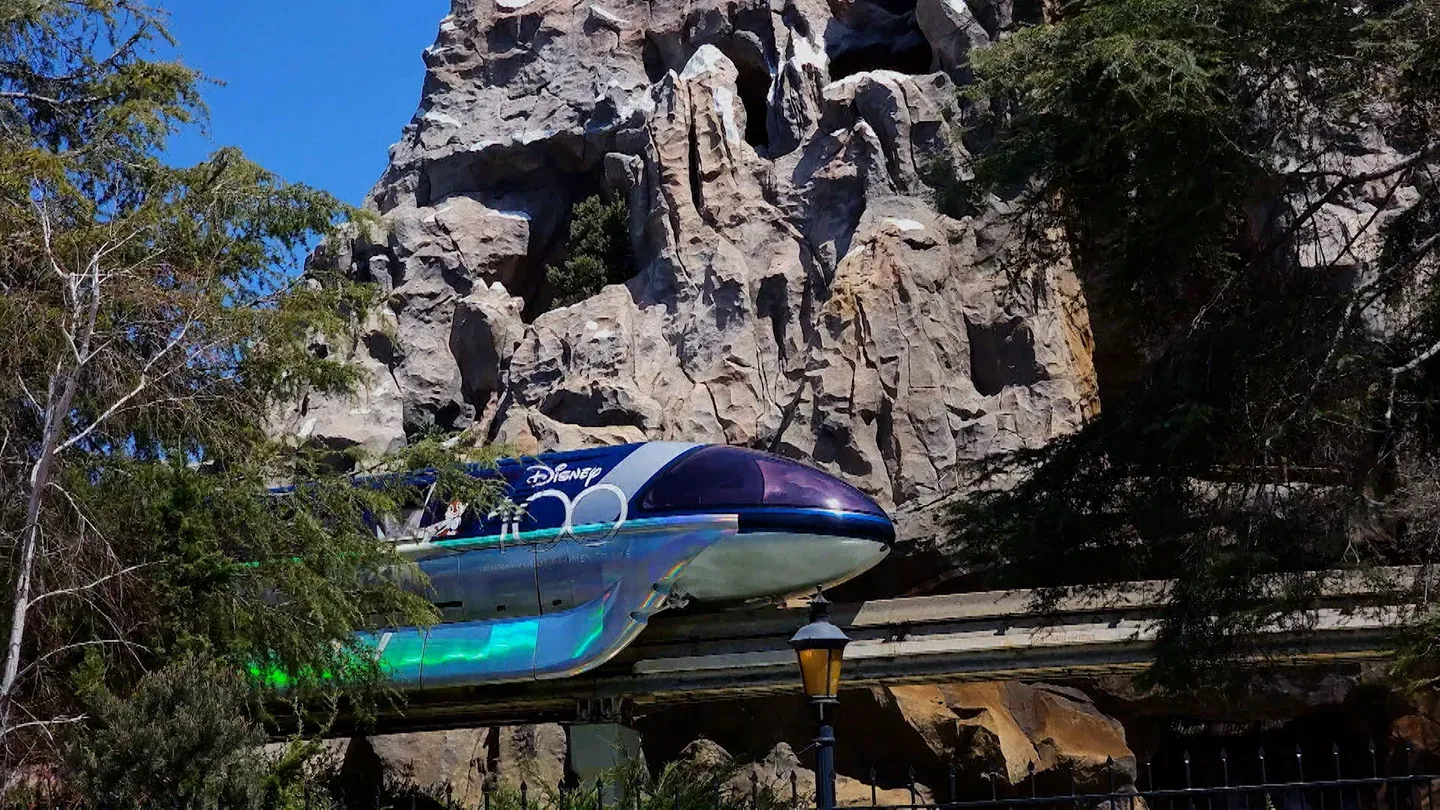
Delve into the remarkable life of Bob Gurr, who was part of the original design team that built Disneyland with Walt Disney. Gurr's designs are among the most influential in theme park history, including Disneyland's Autopia cars, Monorail, and Universal's King Kong Encounter. This documentary offers a glimpse into the inspirations and philosphies that continue to drive Gurr throughout his life.
Problems playing video? | Closed Captioning Feedback
Problems playing video? | Closed Captioning Feedback
Bob Gurr: Living by Design is a local public television program presented by PBS SoCal
Bob Gurr: Living by Design
7/17/2026 | 1h 27m 44sVideo has Closed Captions
Delve into the remarkable life of Bob Gurr, who was part of the original design team that built Disneyland with Walt Disney. Gurr's designs are among the most influential in theme park history, including Disneyland's Autopia cars, Monorail, and Universal's King Kong Encounter. This documentary offers a glimpse into the inspirations and philosphies that continue to drive Gurr throughout his life.
Problems playing video? | Closed Captioning Feedback
Where to Watch Bob Gurr: Living by Design
Bob Gurr: Living by Design is available to stream on pbs.org and the PBS app.
Bob Gurr: Sound, five, four, three, two, one.
One, two, three, four, five.
Uno, dos, tres, cuatro, cinco, seis.
male: Can you hear?
male: Yeah.
[engine rumbling] [engine revving] [engine revving] ♪♪♪ ♪♪♪ ♪♪♪ ♪♪♪ ♪♪♪ Bob Gurr: Ding dong, I heard the doorbell.
Oh, who's out there?
Oh, it's Tom.
Come on in.
Oh my gosh, we got a lot to show you here today.
♪♪♪ ♪♪♪ Tom Morris: Is that Mr.
Lincoln?
Bob Gurr: Yes, that's Mr.
Lincoln with his skin missing.
You can see all the mechanical innards there.
Abraham Lincoln: Let us have faith that right makes might.
interviewer: What's your favorite Bob Gurr design?
female: I'd say Autopia.
female: Yes, that's mine too.
female: I would have to say the Matterhorn.
Yeah, that's definitely a must-do every trip.
interviewer: Now, do you both have a favorite Bob Gurr ride?
female: Yes, what's yours?
boy: Autopia.
interviewer: Autopia?
female: And mine's Haunted Mansion.
interviewer: Oh, okay, what do you like about Autopia?
boy: What's Autopia again?
female: It's the one with the cars, where you drive it.
boy: Oh.
Tom Morris: Wow!
Bob Gurr: We have cars, we have ships.
We have monorail-- Tom Morris: Let's go to this beautiful rendering here.
Bob Gurr: Okay, this was done in 1951 when I was a student at the Art Center School.
This was an industrial design class, but I had my heart set on drawing cars anytime I could do that.
So this one is more car than it is building, but I did--I did do the assignment as far as the building.
Tom Morris: And it's a nice building.
Bob Gurr: Yeah, well, it's a nicer car, yeah.
female: What a wonderful man Bob is, how he shares of himself, how he gives of himself and makes us happy today.
female: Thank you.
female: Just the love that he had for Walt and Disneyland, like it's like a heartfelt thing.
That's how it is for us too as fans, like it's because we love it.
Tom Morris: Oh, the archives.
Bob Gurr: Oh yeah, this is the famous--the back room archives.
Tom Morris: Yeah, and this is the Gurr library.
Bob Gurr: I have a curious mind, and what that means is you automatically are always searching for something, even if you're never gonna use it.
Stuff like earthquakes, I need to know about earthquakes, but I don't need to.
Tom Morris: You need to.
Bob Gurr: Well, I need to know about earth science.
Almost any subject you pick, there's cabinet making, all this kind of stuff, it was important to know how everything worked.
That started with, you know, your father buys you a toy, and then you play with it, and then you take it apart.
I want to know how it's made inside.
Unfortunately, I don't always get them to go back together.
♪♪♪ ♪♪♪ male: And now the man who needs no introduction, please help me welcome to the stage legendary Disney Imagineer, Bob Gurr.
♪♪♪ ♪♪♪ Bob Gurr: I like the word designer better than engineer because if you say the word engineer, somebody's eyes will roll, "Oh, some trained engineer."
If you say artist, "Oh, some flippant person, maybe this is not gonna work."
But if you say designer, that has a little bit more solidity and a little bit more flexibility.
Then you could use whatever comma you want after that, designer lighting, designer audio, designer paint, designer machine, designer electric.
And so I'd just be called designer.
And because usually what I do is so big and mechanical, there's no point saying mechanical, they just say Gurr's the designer.
I do so many things.
You gotta remember there's 250 basic jobs I did, and I never did anything over.
How in the world would you find 250 commas to fit designer to tell somebody, and accurately, what did you do?
Bob Gurr: "Sound advancement and automobile design over present trends depends on the younger generation, the designers of tomorrow.
For young men sincerely intent on designing cars as a vocation, there is unlimited opportunity amongst those individuals who show talent and willingness to continue their learning without end."
♪♪♪ ♪♪♪ Bob Gurr: Seventy-four years ago, I went to the Art Center College of Design, known as Art Center School.
And there was a stellar teacher there who was so strict, I really didn't like him.
I didn't like his strictness because I wanted to draw a car, but he said, "No, you're gonna take a Thayer & Chandler airbrush," which we use to make illustrations, "and you're gonna write script lettering."
I'm left-handed, you can't do script in the correct direction, so I did not like it.
But then one day I casually said, "Mr.
MacMinn, do you actually like cars?"
And he acted like I shot him.
Then I found out he was such a solid teacher of the best way to design a car.
You had to know the history of cars.
You had to understand shapes, proportion, all these things are terribly important for a good designer to know, but Mac wanted to make sure all these new students were getting that kind of historic ideas and background in order to design their cars.
And we became dear friends all the way till his passing.
These are examples of the Art Center School.
We've got a '59 Buick out here and the kids are all on the grass.
And you'll notice there's lines, lines that define the scope of the car.
This is called surface development.
This is the technique whereby you have an idea and you're gonna make a drawing, three-view drawing in those days, no computer, no 3D.
And you're gonna understand how you're gonna develop a surface that's supposed to be very beautiful, very graceful, but you're gonna do it with pencil and paper with a top view, front view, and a side view.
When you've done that, if you look at a surface, the lines would not waver or do it, they would gracefully follow all of the edges.
In other words, the sculpting should be a progression of logical shapes rather than jagged nothings, which a lot of cars are today.
When you look at a car, most people look at the shape of the car.
But what you're seeing, cars, up until recently, they're all shiny, they are mirrors.
The car is reflecting to your eye the entire environment that it's in.
It has sky.
It has horizon.
It has ground.
All of these reflect light and color in a different manner, and you want them to be organized.
You don't want a car to be the victim of a distorted mirror in a fun house.
Here's another picture of students around 1961, in which they will build scale models.
Now you see you can appreciate how highlights will behave and how light behaves on a car.
And he continued to hammer home why you do that.
Ask the students to sculpt their little model and then looking at it in daylight to see what it's doing.
Now they understand surface development of car design.
Now, right in front of me is a car that illustrates this kind of surface.
This is made by Ghia, it's a Ferrari.
Carrozzeria Ghia Torino, sounds very good.
But you'll notice it's got all of the surface development, all the lighting.
Look, this car's got its wheels hidden.
You're not supposed to do that.
But in the interest of having long, sleek grace, a designer would say, okay, for once we'll ignore the wheels.
That's an example of what you can get away with.
Mac thrived on teaching.
But at one point in his life, about 1958 or so, he thought, I'm going to design my own car beyond just the styling part.
He wanted to have a car that actually was a running, driving car.
He was an enthusiast about sports cars and sports cars of the future.
He wanted his car to be the sports car of the future, so he started the design of a car, the Le Mans Coupe.
In those eras, we had sports car racing.
One of the big sports car races internationally is in the city of Le Mans.
So this was a project that Mac put his heart into for years and years and years.
And that is a picture of the side view of this car.
I inherited that from the estate of Strother MacMinn.
One of the cars did exist.
You can see it, it is there.
But later this year, at the famed Pebble Beach Concours d'Elegance, a Strother MacMinn Le Mans Coupe body--with a beautiful chassis and working interior--has been invited to be shown this year for its very first time.
Strother MacMinn for years was the chief judge at Pebble Beach and set the stage for proper car judging on top of proper car design, so the circle is now complete.
One of these finally lived and got completed, and it's going to be on display for everyone to finally see a Le Mans Coupe.
Bob Gurr: Well, you know, when I was in high school, literally every day I would draw my own cars that don't even exist.
You have an imagination, you can draw cars.
Then it turns out later in life, especially with my instructor Strother MacMinn, we just sit around, just draw cars just for the heck of it.
It's just what car designers do.
We just sit around and draw for our own entertainment.
One of the things a designer needs to be aware of, you're not just a standalone person in a given year drawing a car for maybe some future year, you have to have the context that the cars you would be drawing that would be a future car is part of a long line of cars.
In order to appreciate that, you have to have a knowledge going way, way back from cars that were rudimentary and strictly functional, with no idea given to appearance.
And by the mid-1930s, cars began to be designed more for the appearance than the function.
If you have that background, you automatically know what you're going to do that is part of that continuum of automobile design, hopefully, understanding the good parts and following those with your own pencil.
♪♪♪ Jay Leno: Duesenbergs were fast and powerful, and the people who bought them were mostly men.
♪♪♪ I always felt sorry for a lot of the designers in those days because the customer would come in with his own idea of what he thought the car should look like, and there were a lot of really horrible-looking Duesenbergs because the customer wanted this and in their eyes--and the designer, "Well, this isn't gonna work," and from, well, the customer is always right, so.
Bob Gurr: This is so sexy.
The lean-back radiator, more of a pointy front, and these really great big pontoon fenders with the built-in lights, La Salle bumper, and then the chrome scroll down the front, which a lot of people picked up later, like with Pontiacs.
Tell me about this one.
Jay Leno: This was designed for Josiah Lilly, you know, Eli Lilly Pharmaceutical.
This was the most expensive body Duesenberg ever built up to this point.
If you look at it, it was really just meant to run over poor people.
That's what it looks like.
It's the middle of the depression.
You--every time you pull up in this, it's so sinister.
You look like you're collecting the rent.
"Come on, lady, give me the rent."
"Oh, please, please."
"Get your stuff out on the street," and then you drive off with a big cigar in this thing.
Randy Ema: Lilly went to Duesenberg, wanted it to make an aerodynamic statement.
Jay Leno: In actuality, this is more streamlined.
But what the eye thinks is streamlined is not what it really is.
So to this, the air will go over here.
And when you go to the back of the car and you look at the bumpers, you see they're knife edge, so the air comes down and goes off to the side.
Bob Gurr: Well, the proof would have been after a rainstorm, and then you stop and look at where the drop--where the streaks all went.
That'll tell you exactly what's good.
♪♪♪ ♪♪♪ Jay Leno: This is a Merlin engine built by Rolls-Royce, although this was built by Packard.
When we entered the war, we liked the Merlin engine, but these were hand-built in England, and they were built to British standard, which is not a thread we have in this country.
So when they came to America, all the threads had to be converted, and this is before computers or anything.
It was a wonderful collaboration of English ingenuity and American sort of ambition and precision, you know.
Yeah, but this thing runs great.
We went through the whole motor.
It's not airworthy, but it's fine to run on a stand to run.
Bob Gurr: It must be a lot of fun every time you run it.
Jay Leno: Oh yeah, yeah, it is.
And I said, since this is an airplane engine, we put this in a car, and I thought you'd get a kick out of seeing this.
So come on, I'll show you.
Bob Gurr: What kind of car you got it in?
Jay Leno: You kids all gotta rush everything.
Let's go over there and take a look.
Bob Gurr: All right.
Jay Leno: Well, this is the car I was talking about.
This is a 1934 Rolls P2 chassis.
I thought you'd appreciate that we designed this car here and built it at the garage.
It's all Rolls-Royce, including the engine.
We had to put beefier spokes in it to make it a little bit stronger.
Here, let me show you the engine.
The engine is the 27-liter Merlin that you just saw down there.
We used our 3D printer to make the intake manifold so we could run the Weber carburetors on.
It's mounted propeller side into the transmission, so instead of--the part that spins it isn't in the front, it's in the back, and instead of spinning the propeller, it goes into the transmission.
It's fun because you're always taxing, like you're in the Merlin, you know, and when you--and when you--you don't pass cars on the freeway, you strafe them as you go by.
You want me to fire it up?
You wanna hear it run?
Bob Gurr: Really?
Jay Leno: Yeah, yeah, sure, sure.
Bob Gurr: Oh, what a treat!
Jay Leno: Sure, sure, here we go, here we go.
All right, well, let me pre-oil it.
Okay, starting mag, left mag, right mag.
[engine rumbling] Bob Gurr: Oh, oh.
[engine rumbling] [engine rumbling] [engine rumbling] [engine rumbling] [engine turns off] Bob Gurr: Oh my gosh!
Jay Leno: Well, I'll give you some idea.
Okay, you owe me 20 bucks for gas.
That was 20 bucks worth of gas probably.
Bob Gurr: "Henry Gurr, a graduate of the Art Center School in Los Angeles, is now a professional motor car designer with one of the country's largest companies.
His rare combination of outstanding designing and rendering ability, coupled with engineering comprehension, assures his future as a resident of Southern Michigan."
Well, that never worked.
Bob Gurr: But here's a curious thing, you know, I had my heart set on going to General Motors.
It was a big dream from early in high school.
Due to some strange circumstances, I got raided into the Ford Motor Company the day before I was supposed to go to General Motors.
But it gave me a clue as to how cars were designed in those days because I was put into the advanced design studio at Ford and then shortly, within about maybe two weeks, into the Lincoln studio.
And to be told, "Bob, you're gonna draw hood ornaments all day."
Next week it was, Okay, "Bob, we need hubcaps, you're gonna draw hubcaps."
I had a picture in my mind.
I made a fatal mistake to be a car designer and go to Detroit because I saw Detroit as a dark dead end.
I'm sorry, but that's what it was.
Returned to California, decided to goof off for a year and a half and figure out, well, now what?
I got this education, I'm never going to use it.
And I got a call from the Walt Disney Company saying we need a designer who can design a body to fit a little chassis for a new park they're going to build called Disneyland.
That job turned into a gold mine because the way Walt Disney worked was he inspired people to do stuff and he turned them loose and just let them take off.
♪♪♪ ♪♪♪ ♪♪♪ Walt wanted this little body on a car called Autopia.
It's a smallish car, but you could have a kid in it, but you have to put an adult in the same way.
But my opinion was amusement cars are really crummy looking stuff, and I didn't want to be caught designing an amusement car.
I said, "We've got to have beautiful proportions first, the surface development, you've got to have that in the design of this car."
And one of the cars that intrigued me most was a yellow Ferrari on the cover of "Road & Track."
Ken Gross: I remember that car, 1954-- Bob Gurr: That car--that car was utter simplicity, and the surfaces were all convex surfaces, and all the highlights went from one place to another like they're supposed to.
And I wanted to make a little car like that.
Company let me make a custom special for Walt Disney, so I actually wound up in the shop, with the boss looking the other way, I designed a custom fiberglass one-of-a-kind car with a custom interior, custom instrument panel, custom wheel knockoffs, and even a Pontiac bumper bar on it.
That's my first fiberglass car, so there!
♪♪♪ ♪♪♪ Walt Disney: To all who come to this happy place, welcome.
♪♪♪ Bob Gurr: The Mark 1 was the first job that Walt Disney gave me for the opening of Disneyland.
♪♪♪ The Mark 2 was the improved version because the 1 was not very good, remember that was our first time out.
The Mark 2 was a test vehicle that showed us the direction we ought to go.
The Mark 3 was another version that was even worse, and that brought us to the Mark 4.
Now, the Mark 4 was the successful car that ran for a number of years.
The Mark 5 was by far the worst of the bunch because it incorporated all the ideas of operations, "Hey Bob, do this," and "Oh, we're going to add that."
"Oh, we need one of these."
"Oh, we need to do it that way."
"Okay, I'll draw--I'll draw that stuff up and I'll do it."
The car was 1100 pounds, so heavy it was knocking the curbs out of the ground.
Arrow Development came along with the Mark 6, which was a lightweight car and had the center guide, so it's now a very safe car.
But the car in being lightweight to overcome the weight of the Mark 5, the car itself broke apart.
And finally, the company suggested to me, what are you gonna do, Bob?
And I gave some deep thought for quite a long time and I came up with the principles of the Mark 7, radically different, very expensive, but intermediate weight, and the Mark 7 chassis had, in my opinion, the best body I ever designed on a vehicle.
And that chassis in 2000 when Chevron came along and sponsored it and later Honda sponsored it, they changed the bodies and kept the chassis, but the basic structural heart of the car can stand all the smashing and crashing and never break.
That's--and basic Mark 7 are still used in Walt Disney World, for example.
After 2000, the Mark 7 bodies were sold off.
Disney did an auction.
Now today, there is a Mark 7 owner fee.
Guys build electric and gasoline versions of their own chassis just to fit the body of the Mark 7.
And that's a 1968 car.
♪♪♪ Jay Leno: This is a 1910 Mercedes chassis with a 1914 Benz aero engine, so it's a Benz Mercedes.
They didn't come Mercedes Benz till 1924.
Bob Gurr: You know, engines are all enclosed nowadays, but this type of engine, you've got little oiler cups-- Jay Leno: You see you had a little--had a little pipe that drip.
Now what we've done is here we take that pipe out of there and we put sealed bearings in here because you'd just be like--you'd look like a coal miner when you come out and you have so much oil in your face.
You wanna hear it run?
Bob Gurr: Oh, can you start this one too?
Jay Leno: Yeah, it's a car, we drive them!
Bob Gurr: Oh my God!
Okay.
[engine rumbling] This engine's got the whole car by the neck.
Jay Leno: I know.
Bob Gurr: It's shaking it.
Jay Leno: But it's fun watching all of them.
Bob Gurr: Yes, all those rockers going... Look at that, oh my God.
Oh my God.
Jay Leno: That's what people did before Netflix.
You just come out in the garage and watch the engine go up and down.
Bob Gurr: Well, thank you again.
That's just a--that's a treatment for the ears, perfect.
Jay Leno: It's not often you see vehicles that are older than you are.
Bob Gurr: Yeah, be nice, be nice.
I am the age of-- Jay Leno: These vehicle's going, "How old is that guy?"
Bob Gurr: Yeah, no, I tell people, I says--"Bob, how old are you?"
I says, "I'm an unrestored 1931 Buick, well, well cared for."
Jay Leno: Oh, so you're born in '31?
Bob Gurr: '31.
Jay Leno: '31, okay.
Bob Gurr: '31, yeah.
Jay Leno: So you're not as old as sliced bread.
Sliced bread came out in '27.
Bob Gurr: Okay, I'm younger, I'm younger.
I'm younger than something-- Jay Leno: Younger than sliced bread.
How about that?
♪♪♪ ♪♪♪ ♪♪♪ ♪♪♪ ♪♪♪ ♪♪♪ Bob Gurr: You know, I used to live here.
That's 1021 Davis.
Oh, I'll be darned.
I used to stand right here, right--right about here, when--in my short pants when I'm like five years old, getting ready to go to kindergarten, 1937, September.
I was mortified.
All the boys had pants.
My father misjudged, he sent me like that.
I was crying my head off, and I left the school and I walked all the way home.
I never got sent to school in short pants ever again.
We had a great big palm tree right here, real pretty.
They just flared out all over this place.
And in those days, here's the funny thing, sometimes kind of European style, you'd have a harness on a small child and a big leash.
Truly, that's what they did.
And my sister was a runaround, she was 19 months younger.
One day, my mother tied her to the tree with a leash with a harness, and then all of a sudden there was a big commotion in the front yard.
She got in, she took off all her clothes and ran around the palm tree like it was--like it was a maypole, and Nancy never had to suffer that way again.
But you know, thinking in the early 1930s, things were a little--a little bit different.
I'm gonna--I'm going to go up and knock on the door.
I'm gonna have to find out if there's anybody here.
Artin Derohanian: Hi.
Bob Gurr: I'm sorry to bother you, but 85 years ago I used to live here, at this very house.
Artin Derohanian: Really?
Bob Gurr: Oh, I remember this house and the neighborhood so well.
Is there any way I could come in and visit?
I mean, do you let strangers in?
Artin Derohanian: Well, you've lived here before.
Bob Gurr: Yeah, okay.
Artin Derohanian: Welcome home.
Bob Gurr: Well, well, okay, well, thank you very, very much.
Oh, you got all your family here.
Hi, how you doing?
female: Hi.
Bob Gurr: How you doing?
Okay, my name's Bob.
Artin Derohanian: Hi, Artin.
Bob Gurr: Bob Gurr.
Artin Derohanian: Oh wow!
Bob Gurr: Yeah, I'm kind of famous, can I come in?
Artin Derohanian: Come on in.
Bob Gurr: Oh, all right.
Well, thank you, thank you very kindly.
Oh, it's just the way I remembered it.
It's--the skin's off, of course.
Look at that.
Oh, we used to have--put the Christmas tree right there.
♪♪♪ And of course, we always had Christmas dinner things here and this was--this was over here.
This was the dining room, which to me it was sort of like--almost like a breakfast nook because in the morning, the light would come in over here.
But I do remember I would always sit on that side and I can't remember quite which parents sat where, but I do remember the meals I hated.
One day they insisted I'm going to have Brussels sprouts and I said, no, and I just threw up all over the table.
And I never got Brussels sprouts again.
So little Robert was probably troublesome.
female: Robert Gurr, Thomas Jefferson Kindergarten, 1937.
"Plays well with others, has good ideas for work and for building, is original and can cooperate very nicely according to the mood, which needs managing at times.
Has good keen interest in everything, is quick to notice all actions.
Takes part in all activities constructively.
Does nice handwork, has many original ideas, and enjoys working them out into expression."
interviewer: You had a reputation for being a troublemaker.
Not just in school but elsewhere as well.
How do you think you earned that reputation?
Bob Gurr: I know that third grade, the teacher really disliked me and made sure I got expelled.
My grandmother immediately made arrangements for me to move to a military academy in Burbank next to the Lockheed Aircraft Company.
And I think over time, because I got expelled two more times, I was used to enjoying trouble.
I think all the reprimanding I ever got and all the punishment I ever got, I thought, yeah, but look at the fun I got away with.
The memories of my early years, I'd have to say, in hindsight, I could understand it was not what I saw when I visited the homes of my other friends.
I do remember one of my first impressions of my father, which was a good one.
I remember being up high in the air, obviously being held, and we were looking at the Good Humor truck coming down the street with a little bell in the front of it ringing, which meant that's ice cream, we're gonna have ice cream.
The next strongest memory was he was angry for something, had an argument with my mother and his hand, he hit the wall next to a door so hard the plaster came off and fell to the floor.
I wanted to hide.
I didn't want to get hit like that.
I think my mother was--I don't think she felt like a professional mother.
I think she was in like a situation where, yeah, she's the mother, he's the father.
But there wasn't something right, in a way.
But the fun days were any time one or the other of the grandparents would show up, now that's--that was a fun day.
My grandmother was highly opinionated, very church-like, but she was always showing me something.
She was always explaining something to me.
I think I spent way more time riding in a car with my grandmother than my father, which was interesting because the trips were longer and there was things to see and things to be explained.
Little things like we'd be driving down the road in Moreno Valley and there'd be a big dust storm going up in the air waving around.
I was like all eyes and she says, "Oh, Robert, that's a dust devil."
Well, how is the dust of it?
Oh, she says, "The hot air rises and the dirt goes up."
Another time, on the same road, there was a gigantic airplane, and I was probably ten by that time, and she would slow down and point out, "That's the Douglas B-19, the largest airplane in the world."
So thereafter when we would be driving in the Riverside area, I'd say, "Grandma, are we going to go down and see the plane again?"
I am really fascinated with the idea of why do people do what they do?
Why do they behave the way they do?
Which part is their nature?
What part was the nurture part or the absence of the nurture?
Going back to when I was a little kid, usually around five, somewhere in that area, whatever my father bought me, I either broke it or took it apart, and then there was no more toy.
It got solved very, very nicely.
He bought me a Tinker toy set.
Remember the little wooden thing with the sticks?
Okay, little Robert can take it--take it apart, put it together many times as he wants, fine, problem solved.
The following year was an erector set, a metal box with the wheels and all the metal parts, screws, nuts, and bolts.
This was perfect.
I get to configure stuff my way.
Guess what?
Some years later, I get called out to a Walt Disney studio where a guy wants stuff made that doesn't exist.
I was already primed.
Bob Gurr: Thank you very much.
female: Thanks, Bob.
Bob Gurr: All right, bye bye.
♪♪♪ ♪♪♪ Bob Gurr: This is the Grand Central Air Terminal.
This building and this location have so many memories for me, going all the way back to 1934.
I first became aware of this building when our family moved from Los Feliz area to Glendale.
When I started kindergarten, the airplanes were flying right over the top of the school.
I would walk down here when I was eight or nine years old, all by myself, and then I could observe all these people to do with air travel.
Visualize this as before LAX, closer to the Hollywood area where all the movie stars were.
And of course, the movie stars were the first people that had the money to actually go to New York on an airplane from here.
♪♪♪ Well, all the people would come in here and I go right behind them, right through those doors, the main entrance.
I would go in there and the first thing I saw was this beautiful Curtiss-Wright aircraft engine.
That engine to me was a gigantic thing when you're about this high.
That was the first thing I noticed about things that are mechanical.
I was so enamored with stopping and looking that engine every time.
Well, obviously that's the control tower to control all the flow of aircraft on the runway here.
The airplanes will be right at the edge of this grass.
All this area was filled with spectators.
Unlike airports today, anybody could walk up here and walk around and enjoy the flow of people and airplanes.
Absolutely stunning alive place in its time.
♪♪♪ During World War II, this airport was operated by the US Army.
And this was a place that you could have primary training, pilots would come in here who weren't pilots yet.
They were like 18 year olds, 19 year olds.
They would go up with an instructor and learn to fly the airplane all around the San Fernando Valley where I lived in North Hollywood.
Occasionally I'd be on my paper route and there'd be one of them in the field upside down because at the end it would stop and the pilot landed but didn't do too good and the airplane fell over on its back.
It was a common thing, so, you know, you didn't call the cops every time an airplane came down.
And the fella came over and thumbed a ride to get back to this airport.
This was in a way a very crazy informal thing, but it was deadly serious training.
These pilots had to learn.
This was the primary place.
Right after World War II, this became the Curtiss-Wright Technical Institute, which is the school that I wanted to go to and learn to be an aeronautical engineer.
My math was not good enough to enter here, so that put me off into car design.
In later years, of course, this building was my office.
In my last year at Disney, in 1981, I was not a designer anymore, I was a supervisor of draftsmen.
These draftsmen, their primary job was designing the mechanical details of many of the attractions for the upcoming EPCOT.
Over here on the south corner of the building was my office.
You'll notice there's a pair of trees.
These are the two famous timeline palm trees that will show up in a lot of images in the history of this airport.
They were a little bit smaller in the '30s.
They become bigger in World War II.
They were bigger when I was here with Disney.
I can't help but look at them and say, there's my twin timelines, those two big old palm trees.
Working for Disney, the final year, that was sort of the end of an era, I think, for a relationship with the Grand Central Air Terminal.
But not yet, Disney decided to restore this building along with the city of Glendale, and I was part of the docent team to answer a few questions what this was like because the company found out I'm the only person alive that ever was in this building and remember what it was like to begin with.
So we made several visits to watch the restoration, making it back to what it was, basically original in its details, color, the tile.
This is as exact as they could make it, and it just goes back into my memory in exactly the same way.
This building lives like it did when I was eight or nine years old, but all these interim stops and visitings here, it feels like I'm a part of this building.
This is my building in a way 'cause I had a corner of it out of all this history.
It's a wistful moment.
♪♪♪ ♪♪♪ ♪♪♪ ♪♪♪ Bob Gurr: In World War II, they offer a civil air patrol.
That means kids in high school can go out to an airport, do what we call a proficiency mission, and then if we do things like do guard duty at midnight, they'll give us a free airplane ride.
Justin Scarred: Really?
Bob Gurr: Yes, and it was very official.
I still have my Civil Air Patrol training manual, which are basically teaching teenagers how to fly an airplane, how navigation works, all the things that a young pilot in the military would be told.
Justin Scarred: So that was the payday?
Bob Gurr: That's the payday.
Justin Scarred: Free airplane rides.
Bob Gurr: I got several of them, yes, over those years, yeah.
Justin Scarred: It's weird because you're known as the car guy and everybody thinks of you as the car guy, but your first love was airplanes.
Bob Gurr: I was five years old in Glendale, California, and one day there was an air show which featured gliders doing loop-de-loops, and I was like, oh my gosh, I wanna do that.
But it was still another six years before I got to Orange County in 1961 where there was a glider club.
Now I'm way up in my 20s.
The glider club had three gliders.
That is one of the types of gliders that we had.
Justin Scarred: No kidding.
Bob Gurr: That's called a Schweizer TG-2 training glider for two people.
So I did that for a number of years, being trained in gliders like that, and within maybe one year and a half years I'm an instructor.
Justin Scarred: No kidding.
Bob Gurr: So now I spend my time in the glider club.
Remember, a glider club is a co-op.
Everybody helps in maintenance, getting the aircraft out, getting ready to go.
male: Right now we're sustaining altitude, cruising at 11,300 at 65 knots, using no power.
Bob Gurr: The glider actually is easier to fly than an airplane because you're dealing only with the aerodynamic flight of the aircraft.
You can--you can feel the air.
Justin Scarred: You're just floating and steering.
Bob Gurr: Floating and steering, basically.
You're not dealing with an engine or electricity or anything like that.
male: And this is all free energy, it's here to be used.
It's a great enjoyment.
Although some people, I don't think, would like going around in those circles and eating lunch at the same time.
But to me, that's great relaxation.
I really like that.
A very ideal soaring day.
Bob Gurr: Typically a person who learns to fly basically in a glider makes a very good airplane pilot because you understand why the wing flies, why it stays in the air.
A power pilot thinks, oh, it's the engines keeping them in the air, and they don't understand the full aerodynamics.
The glider pilots know that.
Justin Scarred: I love that you called him a power pilot.
I didn't know you guys had terminology-- Bob Gurr: There is a difference between a power pilot, but I always had a dream of being a power pilot.
Justin Scarred: I thought you were gonna say, "This is how I got started in aviation, here with the Wright brothers."
I know you're not that old.
♪♪♪ ♪♪♪ ♪♪♪ Justin Scarred: Bob, this wasn't Walt Disney's first airplane, was it?
Bob Gurr: Oh no, he had two airplanes before that, and at some point in time, this was the highest utilization rate G1 in the entire world.
Justin Scarred: Okay, Bob, I know Walt Disney sat in the back, and all the passengers sat in the back.
The pilot and the co-pilot sat up here.
So where did you sit on this plane?
Bob Gurr: Oh, always for a takeoff and a landing, because remember I'm the glider pilot, I'm the extra eyes that pilots want looking out the windows.
This is a jump seat right here.
You pull this out, there's the latch for it.
It comes out to here and then the seat back flips up, has its own seatbelt, real secure latch, and then I can sit right here and look past the pilots, look out the windshield.
Justin Scarred: You know, I noticed though, there are no seats on this plane except the jump seat.
Look at that.
The cushion is still there.
Bob Gurr: My jump seat is still there, yes.
Justin Scarred: So your rear was on this cushion and this is your-- Bob Gurr: In a manner of speaking, yes.
Justin Scarred: That's your seatbelt.
Your seat is the only seat that survived in this plane.
Bob Gurr: And it was--and it was a thrill to be of help, not only for my curiosity of flying, learning more about flying, but helping the safety of air traffic control.
Almost always I found the traffic before they did, and they liked that attitude.
They got the instruments.
I don't need them.
They need to see an airplane that might be a hazard.
And I catch it because on a glider pilot, I got everything going around me, I'm used to looking all the time.
This airplane was put to work for the New York World's Fair.
♪♪♪ ♪♪♪ Later for Walt Disney World.
♪♪♪ Justin Scarred: So all of this travel with the company and going back and forth and seeing different cities, is that what made you the go see do guy?
Did that inspire all this Bob Gurr world traveler?
Bob Gurr: Well, especially, I got sent twice to Europe-- Justin Scarred: Really?
Bob Gurr: On regular scheduled airlines, first class, to go--have an assignment, go do something, sometimes in Switzerland, another time in Germany.
I saw that, when I retired from the company, oh boy, I want to keep doing that, only now I pay.
♪♪♪ ♪♪♪ Bob Gurr: All explanation is futile, don't even try to describe Burning Man.
♪♪♪ ♪♪♪ Bob Gurr: Oh, yeah, baby, come on, give me some family.
Oh, oh, it's too much, it's too much.
♪♪♪ ♪♪♪ ♪♪♪ ♪♪♪ ♪♪♪ ♪♪♪ ♪♪♪ ♪♪♪ ♪♪♪ Bob Gurr: The way Walt worked with people, he would have people who already had a craft or an experience.
He'd ask them to do something they'd never done, because he only was interested in people that have their own curiosity.
They were self-starters.
They do their own research.
Basically, Walt did not have requirements for something.
He expected you to figure out what he needed and what would be the best.
♪♪♪ ♪♪♪ ♪♪♪ Bob Gurr: Oh, it's so crazy fun after all these years.
♪♪♪ Still running, a lot of fun.
Look at that.
♪♪♪ There you have it, a yellow submarine.
It used to be a gray submarine.
When the company wanted to put in a submarine ride, I thought, ah, the styling, so clean, so sleek, so I designed that literally as one drawing.
Admiral Fowler took it to Todd Shipyards in Long Beach and delivered a submarine.
Sometimes when you have a design that's so simple, it's that easy to do it.
male: This is the tracking procedure of an adventure through inner space.
Bob Gurr: The Haunted Mansion is one of my favorites.
male: Welcome, foolish mortals.
Bob Gurr: There's the Matterhorn.
There's where StarJet used to be.
Where I'm standing is where the flying saucer used to be.
male: Let's take a ride on the PeopleMover.
Bob Gurr: That's where the PeopleMover used to be, but it's not here anymore.
Well, you know, the monorail went right by here, but, you know, long before the monorail was here, there was a little Viewliner train.
It came and went really quick.
It's kind of a secret one now.
male: This is the Santa Fe and Disneyland Viewliner.
Bob Gurr: It was right near a lake.
Oh, there's the lake, it was right here.
But it's not here anymore, but I think I know there's a little spot I can find it.
♪♪♪ Bob Gurr: The Viewliner, it's here.
It's been remembered.
Oh, you can play games on this table with the old Viewliner.
It's actually a 1948 Oldsmobile, you know.
male: Welcome aboard the Disneyland Monorail.
We're now approaching the Tomorrowland monorail station.
Please remain seated until the monorail comes to a complete stop.
Bob Gurr: There it is.
You know, I'm father of the monorail.
♪♪♪ Bob Gurr: Walt would walk around every day and see what you're doing and then pretty soon he says, "Bob, we are going to work with a monorail company in Germany.
But it doesn't look very good, and I want you to get started on ours right away."
He walked out and left me, that was the total instruction.
Stop and think, you're a car designer.
I have a piece of paper.
I have the pencil.
I can design that car my way, and I design a monorail my way, including all of the mechanical engineering you figure out to do, supervising manufacturing, and then when we get to test the train on the track, I'm the test driver.
Don Hahn: There's some stories in Disney iconography that are legendary, and one of them is the monorail story.
Tom Morris: Oh my God, that story about the monorail and Nixon.
Jason Schultz: I've known Bob for over 25 years and been friends with him for 20 years.
We've been camping, we've been on road trips, and I've heard the monorail tale from him more times than I can count.
Tom Morris: I've heard that so many times, I don't even know what the right story is because I think he's told it differently.
Don Hahn: 1959 was a huge leap for Disneyland.
The submarine arrived, the Matterhorn, and of course, the monorail.
Jason Schultz: The first thing to understand about the monorail dedication on June 14, 1959, that the monorail hadn't made a complete loop around the track until the day before.
Don Hahn: This machine has only run on the rails for a couple of times, maybe for 48 hours.
Tom Morris: Maybe it didn't make it all the way around the lagoon, or maybe it caught fire a little bit or something.
There was some issue, so Bob was there that morning and was hoping to make a first run.
But lo and behold, here's Walt and the Nixon family, and at the time, Nixon was the vice president of the United States under Dwight Eisenhower, and as a matter of fact, he was a local Orange County boy from Yorba Linda.
Don Hahn: So Walt says, "Hey, would you like to go for a spin?"
And of course the Nixons are like, oh yes.
Walt yells to Bob to get up in the bubble and drive this thing.
He built it, you drive it.
Jason Schultz: And so Bob and Walt and the Nixon family were in the cab, and the Nixon daughters, Tricia and Julie, were eager for a ride, and Bob obeyed Walt's instruction to take off.
Don Hahn: Bob steps on the gas, he takes off.
What he doesn't realize is he has the Vice President of the United States of America in the bubble with his family and no Secret Service.
Jason Schultz: And there's a great part of the monorail track layout where the train circles back and everyone on the monorail can see the station.
It was at this point that Walt and Bob saw some commotion at the station, and they realized that the Secret Service detail had inadvertently been left behind and that they had kidnapped the Vice President of the United States.
Don Hahn: It's alleged that Mr.
Nixon was cursing and that the air was blue.
Tom Morris: And Bob was sweating bullets and probably much more.
Jason Schultz: But Tricia and Julie really wanted to go around again, and so despite the Secret Service agents trying to board the moving train as it sped through the station, they went around for a second time.
Don Hahn: It breeds the question, was Nixon angry at the monorail ride?
I don't think so.
Was he angry that the Secret Service were not following?
I don't think so.
Nixon liked it, and Bob did not get arrested or carted away by the Secret Service.
Jason Schultz: The Nixon family disembarked and when they got to the bottom of the exit speed ramp, Vice President Nixon looked up and shook his head in disbelief as his Secret Service detail was now dutifully seated on the otherwise empty monorail.
Tom Morris: The Secret Service agents were probably beside themselves, but I guess, according to Bob, even more beside himself was a representative from the German company Alweg.
Bob Gurr: There was a German engineer that used to come over and help me a lot.
His name was Conrad Deller.
And at the end of that, after everybody walked away, this man was just furious.
He was saying words to me to effect, he said, "Mr.
Bob, in Germany, this Alweg company, we spent seven years to get our train to run and we never put the public on it.
You get yours running one day and you put your vice president on it."
And I said, "Well, Conrad, that's the Disney way."
♪♪♪ ♪♪♪ Bob Gurr: I'll start a fire, you wanna put it out?
♪♪♪ Boy, what a treat each time getting a ride in my car.
♪♪♪ ♪♪♪ This is a 1903 car built in 1955.
Designing and building a little car in 1955 is much better than trying to buy an antique car and restore it and use it in a public park.
I'm going to explain how simple building a car is.
Number one, you have a chassis which has a ladder frame made out of rectangular tubing.
On that frame, underneath this bodywork, we have what's called a powertrain, radiator, fan, two-cylinder engine, flywheel, flywheel housing, T6 transmission for a taxi, drive shaft, rear axle, all store bought, some of it from a junkyard.
On the front here instead of a brass radiator, I used a Renault, little French car, 1903 design with a little champers here, but this has a characteristic look about 1903.
Same way with the headlights, these are a little smaller headlamps.
You know, the Omnibus had great big headlamps.
So all is authentic and of course, we have a crank down there which doesn't do anything except be authentic.
If you look at the steering column, that is a 1954 Chrysler Imperial steering gear 'cause it had the right ratio that I wanted.
The gear shift, that is a Warner T9 taxicab transmission, which you can never wear out.
These were used in New York City in the 1930s.
I designed brass hubcaps, very special.
These are rims that bolt to a cast aluminum wheel copied from a Model T Ford wooden spoke wheels.
Disneyland loves this car so much, along with the yellow car, they maintain this and keep it like brand new ever since 1955.
Actually, when this car was built originally, I just about finished it at the studio, and Ron Miller, who later became president of the company, was a producer and he wanted to have a little truck.
So we took the body off and he built it into a truck, and they put great big ugly tires on it for a movie and he says, "Let me use it for two weeks and I'll give it back to you."
So that meant when that car drove around on the lot, the engine was already broken in.
The yellow car, we didn't drive it down and that one took a while to get that engine to break in, a little step.
I delivered this on July 8 with--there's a fire engine coming, don't get hit by that.
You'll put a dent in my fire engine.
female: Never mind that.
Bob Gurr: I delivered the fire engine on July 8, 1958.
1958, I got a moving permit and I drove it down here.
We built that in our--in the Disney studio.
Guess how I went home after I delivered it?
female: You did not take a car?
Bob Gurr: By helicopter.
We had a helicopter airport right here, and you could ride the LA Airways helicopter.
It makes a stop at LAX, Van Nuys, North Hollywood, and the North Hollywood was a half a mile from my house and my wife was waiting.
female: You should build us a helicopter.
male: The helipad used to be just outside here?
Bob Gurr: Yeah, yeah, yeah.
Then they had a bigger helicopter over by the hotel later.
Oh, Disney's got all this history they never teach you, yeah.
♪♪♪ ♪♪♪ ♪♪♪ Bob Gurr: Having worked for Disney and designed some of the iconic rides at Disneyland, the longest in the world, the fan clubs came along in the early '80s and they continue to expand.
And they seek out anybody who had anything to do with Disney design at that time.
Well, nowadays, in my 90s, I find out people are more interested in what I do today and the fun that I'm having, compared to all the important things I thought I'd done as a career designer.
It's a kind of a weird, weird situation.
♪♪♪ ♪♪♪ ♪♪♪ ♪♪♪ ♪♪♪ ♪♪♪ Bob Gurr: Oh my God!
Abraham Lincoln: The world has never had a good definition of the word liberty.
And the American people just now are much in want of one.
Bob Gurr: Hey, Garner, I got one of my favorite artifacts.
Garner Holt: Oh, look at that.
Bob Gurr: You know what that is?
Garner Holt: You know what?
I recognize that.
That's the World's Fair Lincoln hip joint.
Bob Gurr: That's right, you have a good memory saying that.
Garner Holt: I've seen the blueprints, so.
Bob Gurr: When I was designing the Abraham Lincoln animated figure, just the body structure, the hip joint was going to have tremendous loads going up to the body and the arms and everything, and particularly getting up out of the chair.
Garner Holt: Standing up.
Bob Gurr: So I designed this part first.
Now we put it in a test rig and now we can put a big load and look at the deflection.
Because the reason for that is when Walt asked me to get started on designing this Lincoln, he said something cryptic like, "My animators, some of them drink a lot.
And I can tell because their head moves around a little bit, and I don't want the President Lincoln to move around at all."
And I thought, oh, this means we'll have cantilever loads in all directions, so the stiffness of this part is absolutely crucial.
Garner Holt: The Lincoln figure, that was really the forerunner of theme park animatronics today.
I graffitied and drew two things in school, trains and robots.
I picked up a National Geographic and I opened it up and here's this mechanical Lincoln without his skin, and I'm like--it just floored me.
I was like, this is my dream.
I put that in my notebook and I carried it around in high school.
My notebook never not had that article in it, so the Lincoln is really a major piece of my history and why I'm here today.
Bob Gurr: In 1981, I completed a large amount of work for Tokyo Disneyland, helping the designers there to understand the ethics and the thoughts of a Walt Disney, so that the Japanese could do a beautiful job on their part.
At that time, I was quite uncomfortable because I had been instructed, not being an engineer, a licensed engineer, I was not allowed to design anything anymore.
So there was a year or so of disappointment and oddly enough, the day that I was fired, it was a great relief and an invitation--this may sound crazy--to be a joyous day that I'm asked to leave.
It didn't take me long.
The end of the day, I stopped at a bookstore and bought a book how to incorporate myself, and on day 13 of the 14 days that they give you before you leave, I was--had created a new corporation, the Gurr Design Company Incorporated, and I had hired myself.
You could not have done that had you not been given the incentive to leave by just being fired.
♪♪♪ ♪♪♪ ♪♪♪ male: Designed by a man named Bob Gurr.
Bob Gurr: My philosophy of design, when I look at structure that I've never done before, it's a simple philosophy, T L A R, that looks about right.
So you and I had the same kind of philosophy.
And of course later years, they got all the computers now and you got a lot of people to help with it and you can continue to refine that, but I think you still drive things by it, it's got to look good to your eye.
♪♪♪ ♪♪♪ ♪♪♪ Bob Gurr: The King Kong animated figure was one of my early favorites because no one had the guts to build an animated figure 30 feet tall.
This was just an astounding idea.
It was Universal's idea to be 30 foot tall and I just thought, it is so outrageous, I would love to do it just because the idea--I'd love to see something like that, even if I'm the guy that gets to design it.
And I did design it, and it was a very straightforward project.
♪♪♪ ♪♪♪ ♪♪♪ The audience reaction was what was really startling.
The world was not ready to be riding in a tram car that was tipping over and falling into the mouth of King Kong.
It was show business in the highest order, and I was tickled pink, and still am, that I designed the very first giant creature that just scared the daylights out of all the little kids every day.
In the course of watching the themed entertainment industry, it was now creeping into Las Vegas.
Steve Wynn, who had had a hotel where he put a volcano instead of a bunch of neon lights, was now prepared to build yet another casino, and it would feature two ships getting in a fight.
I heard about this project on the street and I wondered, oh, what poor soul's going to get stuck with that one, and it turned out within a couple of months, two other fellows and myself became the three poor souls that took this thing on.
Bob Gurr: Well, it sinks, Ken, but what do we do now?
Is it gonna come back up?
Hey, this is a new experience, unsinking a ship.
Bob Gurr: We had a very short conversation with Steve Wynn, less than two hours.
And he says, "Fellas, you got the job.
Go home and give me a preliminary price on Friday, goodbye."
No contract, no proposal, no nothing, just a belief with Steve that his story actually could be, and there were three guys said, "Yeah, we could do it," and we did it.
Garner Holt: I remember the first time that we met, I found your name in the phone book and I thought, well, here it goes, I'll just give it a shot and call Bob and say, you know, "Hey, I'm a kid starting up an animatronics business and I'm struggling along."
You were generous enough to talk to me for actually quite some time, and I think I invited you out to the shop.
Bob Gurr: And all I saw was like Chuck E. Cheeses everywhere, everywhere around that shop.
And then you showed a picture of something that was going to be built in Korea, 40-foot tall-- Garner Holt: Yeah, 40 foot tall, it rotated.
Bob Gurr: It's gonna open, it's going to be big.
Garner Holt: Rotated in different directions and it expanded out on itself.
It was a big monstrous piece and a little bit afraid of that one.
I said yes, but I was like I'd never built anything bigger than this, you know.
So that's when I--after we had met and I mentioned that to you and I said, "Boy, this is a real toughie," and you started to chat with me about, you know, how that could be done.
I never could get you to accept an invoice from me, and you said, "Well, just take me to Mimi's and buy me a bowl of soup."
So I took you to Mimi's and bought you a bowl of soup, that was all you'd accept.
As time went on, when I had a struggling problem, I'd say, "Bob, can I buy you a bowl of soup?"
And you'd always say yes, and I always appreciated that.
Bob Gurr: We still do it.
Garner Holt: Yeah, we still do.
That's many bowls of soup ago.
♪♪♪ ♪♪♪ Bob Gurr: Yeah, and the funny thing, I look around your company here today and everything that you've built for clients all over the world, and then I look back at all the stuff that I did, you know, that people point out, from King Kong, sinking ships and monorails and all that stuff, the fact that neither one of us are licensed to do any of this, yeah.
When I was going to school in 1943 during World War II, I was working in a shop, wood shop, metal shop, auto shop, that gave me a connection automatically.
Garner Holt: It's funny that--the similarities in a way, you know, you never had formal education and the same with me.
Without those shops, I wouldn't be sitting here today.
We get kids in here sometimes when we have events and we'll ask them to pick up a screwdriver or a Phillips screwdriver or a pliers and they're like, "What is that?
I don't know what that is."
And I'm just floored by that, that these kids, all they've done is do this with their phone for their entire lives and they have never held a tool.
Bob Gurr: That's what started me, back around 2004, to form my endowment fund, strictly for education of practical arts in the Riverside Unified School District.
I talked to the superintendent of schools.
She drove me to every major school in the district so I could see, what do they really need?
And then from that, I created this endowment fund called the Bob Gurr Grant, and I used to love to come out here and watch to see where that money would be spent.
One day the money had gone to buy materials to put on the play "Cinderella."
The fact that those kids took those raw materials that the state and the city cannot afford and I thought, oh my gosh, this really, really works because now you're engaging everybody for a large purpose, which is a show, which is exactly what you do here, this idea of education through imagination, and reaching down into literally the fifth grade to engage young students who might have an interest in creative type of stuff.
Garner Holt: An animatronic figure in a classroom is a way to bring the whole class together.
And they get to do the whole thing, voiceover, script writing, you know, all kinds of artistic things, and they learn about maybe 25 different career paths in an Animaker Space.
It's a STEAM learning thing.
Garner Holt: Well, here we are, Bob, in a piece of one of our Animaker Spaces and we have some students here building a tiki bird.
Here's an example of a chassis for the bird.
It's laser cut, ready to have motors mounted.
So the students are able to learn all different methods of fabrication.
Yeah, that's exactly what it is.
They designed those on the computers with SolidWorks.
Bob Gurr: And it's all identified, look at this part goes here, that part goes there.
Garner Holt: Exactly.
♪♪♪ All right, Bob, well, here we have a couple of students that are kind of mid-range in putting their birds together.
You can see how some of the motors have gone on here.
She can actually make it move, the controllers are hooked up.
Bob Gurr: Does your beak move?
Do you talk?
Garner Holt: Oh yeah.
Bob Gurr: Oh, you talk, oh yeah.
Oh, can I give you a cracker, what?
Oh, you are cute.
Look at that.
I was born 90 years too soon.
Look what the average students can do-- Garner Holt: I'd like to have this in school myself-- Bob Gurr: Oh my gosh.
♪♪♪ Garner Holt: So Bob, we're at the final stages of putting bird together.
This is the figure finishing part.
So we have a young lad here painting the top of the head and the beak.
We have the feathers and wings and everything going together over here.
That puts the A in STEAM, that's the arts part of the STEAM education.
This animatronics is a combination, as you know, of art and technology to make the illusion of life.
And here we have over here a completed bird.
This is an albatross bird.
The name is Albert Ross, and this young lady is operating the controls and doing some of the movements here.
Mr.
Albert Ross: Hello, my name is Mr.
Albert Ross, and you guessed it, I'm a bird.
I have one of the longest wingspans of any bird in the world, and I am very, very endangered.
I can't even take off without a running start.
As a creature of the skies, you can imagine I have many predators like sharks, cats, and even rats.
You ever seen a flying shark?
Woof, terrifying.
Well, that's all for today.
Thanks for listening.
See you later.
Garner Holt: So isn't that great?
So, good job.
Bob Gurr: Is yours gonna be like that one?
male: It will be, better.
Bob Gurr: Better, that's the right answer right there, thank you.
Bob Gurr: All the way from this, ahh!
That's an amazing loop.
Garner Holt: You better hang on to that.
Don't leave it laying around or you won't-- Bob Gurr: Hang on to this.
Well, thank you, Garner, appreciate it.
♪♪♪ ♪♪♪ ♪♪♪ ♪♪♪ ♪♪♪ male: This is the 72nd Pebble Beach Concours d'Elegance.
♪♪♪ ♪♪♪ Bob Gurr: Well, Dennis, how are you doing?
Dennis Kazmerowski: Hey, Bob, what a pleasure.
Bob Gurr: This is--you finally have this car finished, the Strother MacMinn Le Mans Coupe.
Now that I see it in its flesh, knowing that I saw this when it was modeled, being built.
Dennis Kazmerowski: I found this body behind a barn out in California.
It was basically just a shell.
When I got it home, I thought, wow, I really outdid myself this time.
I'm not too sure I can do this.
Interestingly enough, his design called for a suicide door, and I cut the body out as a suicide door, and I couldn't get in and I couldn't get out.
So what I did was I made it a gullwing door, which was like Alton Johnson's car, and it made it so much easier to get in and out.
And the scallops, I made those, you know, I tried to bring them back to its originality.
You can build this any way you want, as long as you don't change the basic shape.
Bob Gurr: Right, and that's exactly what you've done with the interior, the powertrain, running gear, wheels, and a very good sounding engine, I understand.
This is a Chevy with a good solid-- Dennis Kazmerowski: There's nothing like the sound of a V8.
Bob Gurr: A V8 wrap, yeah, so it goes with the car.
Dennis Kazmerowski: Yeah, absolutely.
The color is a black cherry metallic.
The color really lends itself to what Mac wanted.
Mac wanted--said, "You have to see color off of certain corners and design."
Bob Gurr: He wanted to make a car that not only was an idea for a long scoop, but it was going to be a teaching object, let's say, of proper surface development.
And one of the things Mac always talked about, which you've noticed in your car, yes, you see the car, but you know what you're really seeing?
The environment of the car from the ground.
Look, see how there's grass up here.
We've got highlights.
We've got sky.
We've got the clouds-- Dennis Kazmerowski: It reflects so many colors.
Bob Gurr: Everything, so now you and I can sit here and enjoy MacMinn's lessons.
Dennis Kazmerowski: It's been such a pleasure for me to bring this car back to life again.
It's been a lot of work.
I got close to 3000 hours in this car, but the real pleasure has been my opportunity to meet Bob Gurr.
This man's passion and love for cars, and for this particular car, has been outstanding.
Bob Gurr: Oh, that picks up the color, ahh.
Look, the car has expanded from this to what you've got, and look at this, and it all looks exactly the same.
Look at this.
Dennis Kazmerowski: I just took this model and blew it up.
Bob Gurr: That's all, just blew it up like that.
Oh my, what a moment with you, to hold this out here at Pebble Beach.
Dennis Kazmerowski: Yeah, it is.
Bob Gurr: Mac's dream, and you completed it.
Dennis Kazmerowski: Well, it's been your dream too to see it, hasn't it?
Bob Gurr: It certainly has.
♪♪♪ male: That's amazing.
♪♪♪ ♪♪♪ ♪♪♪ ♪♪♪ Bob Gurr: The philosophy of life, that is my prime interest today, and it's mostly the thinking of the Buddha.
The Buddha went out, took a long hike, came back and had some ideas, and those ideas, I apply today.
It's very simple, and I have a good day.
I've just almost got anger completely gone, right to the point that I jokingly tell people that a few months ago I was on the 405 facing seven lanes of stop and start driving home and I thought, I'm not going to get mad.
I am going to enjoy taillight design.
And the funny thing was I got all the way to the 118 where I had to speed up and I thought, this was pretty good.
I saw more new taillights than I've seen in a long time, and I was so relaxed when I got home.
Your unhappiness is only your improper reaction to a piece of reality.
Recognizing the reality as an unchanging thing that I can't wish away or wish it didn't happen.
It's already happened, buddy, it's--and you're gonna deal with that.
Stop trying to react to it and respond with a logical plan.
And then you get used to it, and then you'll act like me today.
♪♪♪ ♪♪♪ Bob Gurr: Well, as most people know, I enjoy cruising the world on ships.
I've been on 43 sea cruises to 56 different countries.
This is an example of our Mexican trip, which I have every October for my birthday.
♪ Blow the whistle ♪ ♪ Blow the whistle ♪ I'll come back in a week and you will not believe what I got away with, see you.
♪♪♪ ♪♪♪ ♪♪♪ ♪♪♪ ♪♪♪ ♪♪♪ ♪♪♪ ♪♪♪
 New Episode
- Arts and Music

Innovative musicians from every genre perform live in the longest-running music series.

- Arts and Music
The Best of the Joy of Painting with Bob Ross
A pop icon, Bob Ross offers soothing words of wisdom as he paints captivating landscapes.
 New Season







 New Episode
 New Episode
Support for PBS provided by:
Bob Gurr: Living by Design is a local public television program presented by PBS SoCal