Lost Louisiana
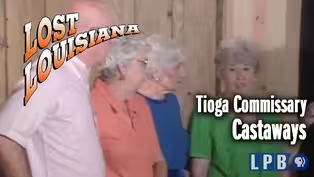
Castaways | Lost Louisiana
Episode 12 | 43m 49sVideo has Closed Captions
Castaways | Lost Louisiana
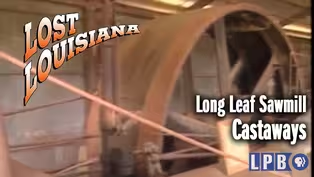
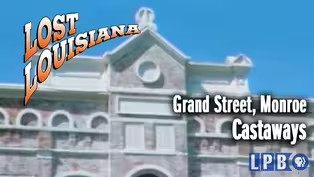
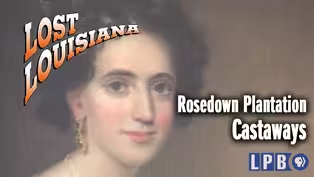
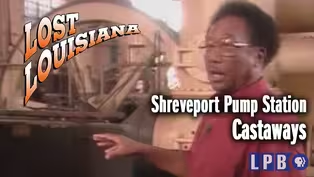
Using a Louisiana Preservation Alliance list, we tour Monroe’s Grand Street, St. Francisville’s Rosedown Plantation, Bunkie’s Bennett Store, a sawmill at Long Leaf and Shreveport’s Pump Station.
Problems playing video? | Closed Captioning Feedback
Problems playing video? | Closed Captioning Feedback
Lost Louisiana is a local public television program presented by LPB
Lost Louisiana
Castaways | Lost Louisiana
Episode 12 | 43m 49sVideo has Closed Captions
Using a Louisiana Preservation Alliance list, we tour Monroe’s Grand Street, St. Francisville’s Rosedown Plantation, Bunkie’s Bennett Store, a sawmill at Long Leaf and Shreveport’s Pump Station.
Problems playing video? | Closed Captioning Feedback
How to Watch Lost Louisiana
Lost Louisiana is available to stream on pbs.org and the free PBS App, available on iPhone, Apple TV, Android TV, Android smartphones, Amazon Fire TV, Amazon Fire Tablet, Roku, Samsung Smart TV, and Vizio.
Providing Support for PBS.org
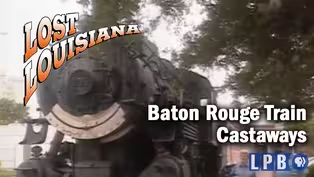
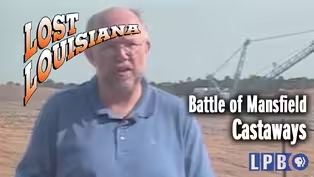
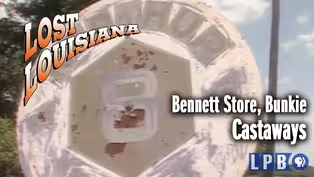
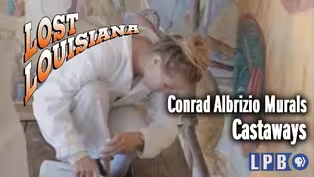
Learn Moreabout PBS online sponsorshipthe fields of Tallulah are dry today the only moisture this afternoon Falls it a mist from crop dusters they land empty fill up and take off again from a strip right next to the Tallulah airport well what used to be the airport in the early 1920s this was a sleek headquarters for the daring fly boys today you can only find it if you're looking for it might there be a story in every dried-out landmark you know better than to ask this journey wouldn't be much fun if there wasn't [Music] in 1930 the same group of investors who built this airport terminal in Tallulah built a similar one in Monroe now that Enterprise starting out small as a crop dusting service Delta crop dusting their operation eventually became highly successful and known as Delta Airlines but this is the home of aerial application prop dusting August 1922 this is undeniably an important historic landmark in the history of aviation I'm Jeff D way and you and I are going on another journey in search of lost Louisiana but this time were packing something of a roadmap each year a statewide organization called the Louisiana Preservation Alliance publishes a list of the top ten most endangered historic sites the Tallulah Airport terminus on that list now we're gonna be taking our cues as to where to visit from that list for this our latest installment in lost Louisiana we'll call this one castaways [Music] the Tallulah airport is number 12th nearby and still in the heart of the arc Lamas Delta downtown Monroe holds number 11 if you're walking downtown in Monroe you should take a look up the brickwork on some of the buildings is something sweet to notice arched Italian style windows take the eye back to a stylish past when the old center of banking and nightlife is right here along Grand Street naturally right along the banks of the Washita River Douglas Breckinridge is a Monroe architect and advises the historic Commission these were primarily Italianate buildings and they were reflections on the Italianate style which arrived in the United States a probable death 1840s 1850s I believe Andrew Jackson downing or some gentlemen like that introduced the pattern books from England originated in England primarily these photos are some of Breckenridge's cherished mementos especially since some of the buildings captured in them have literally fallen to ruin if the owner can prove that it's economically unfeasible to to keep the building up then they could tear it down so it's it's a pretty big gap in there and and sometimes sometimes we talk people into into into saving old buildings sometimes we can't you know we it's they literally have the ability to tear them down we've been perfectly honest with you we haven't had so many purposely torn down in the last a couple of years there has there has been a certain enlightenment in the community towards the older buildings most of them were torn down our fell down you know 10 years or so ago certainly someone must own these remains of a fine day Tony Rispoli has recently consolidated his ownership of several of the remaining strips on Grand Street and far from finding him neglectful we found him renovating they we do have some problems here for instance garbage collection it's difficult - for someone to move in a building when you cannot park in front of the buildings nor do you have made arrangements for garbage collection that is a concern I've had and made my concerns known to both the city and to those people powers that may and I'm not getting very much results another problem is lighting so it's difficult if you can't talk in front of your place unload groceries to unload laundry to unload furniture and so that's one of the obstacles that I'm trying to overcome now the tension here is they either make a condominium or a commercial type restaurant or a place where people can meet and have weddings parties and this is the space you could rent overlooking the Washita River if Tony Rispoli dream for the grand old buildings of Grand Street can be made real and renovated and they're there they're interesting windows in the top come down where they busted out you never busted out as downtrodden as things have looked for decades maybe will soon look up again with appreciation for the brickwork of Grand Street [Music] down the Mississippi to st. Francisville number nine in no particular order of the dozen most endangered Louisiana landmarks in fact this one has a happy ending what have you 350 350 last call to get the 350 going once going twice 325 you weigh the sticker with the number on it means this item is for sale a pair of 1850 urns flanking the entrance to one of America's most intact antebellum homes ago items from Rose down plantation hit the auction block this is Rose downs from perfume bottles to hundreds of wine bottles the intoxication one discontinued for two days these were the personal items of the Turnbull family who built rose down in 1835 scattered now these fragile remnants had rested safely here for a century and a half the last private owner had been quietly selling the contents but this was his last and most public exchange an older guidebook rose down shows what the Henry Clay bedroom suite looks like it was made for the White House anticipating Henry Clay would sleep in it when he wasn't elected president the first family of rose down bought the whole huge set a Dallas Museum paid half a million dollars for the bed alone will Mangum worked Marketing rose down to travel agents before the last owner bought it this house was the most elegant house between Natchez and New Orleans it still is and it was the most complete wasn't it it was very complete because the family the same family that built it and their descendants stayed living here even during the War Between the States and the austere years after and they kept everything the family was so proud they would not sell the furnishings they would not sell the land and so when we're talking receipts for the furniture everything like that yes Dwight Landry no heads Louisiana State Park system which fortunately bought the house and a tenth of the original ground we went through and we selected those items that we thought that were valuable to the story as those items that will offer to us for sale and those items that we could afford to fob the rows down Baptist Church is on the edge of the property and dates to 1850 or so some of its faithful are descended from slaves who worshiped in this very building when that previous private owner bought the big house he wanted to tear down their church and fill in their baptismal pool in 1994 an anonymous benefactor saved the day and freed the church from the threat of destruction come get me pray for this church you'd be safe I was thinking he was a very bad man there's an example of children's shoes over there that are just exquisite kidlat doctor ever williams is a textile expert at LSU she came to shop this auction for things too personally save and maybe donate back to the state this is a great example of a piece of trapunto it is a very fine fine hand done stitches in a pattern and then each of the rows are filled with probably lamb's wool a new page has been turned in the history of rows down now that State Parks has care of rows down the depletion of artifacts has not only stopped but people from all over are stepping forward now to return original items Travel Louisiana's highway 1 through bunkie and just north of town on the left is a beautiful old farmhouse on the right across the street you can barely make out the gingerbread trim of Bennett's store it's number 8 sue Eakins is a local historian with a passion for telling the story of Bennett's Ville almost all throughout the south and certainly through Louisiana and through here there was a store that was the center of the settlement and they the way it grew now this was a very mote section it was on the Bible it's Beth here and both below monkey yeah but the French they buff yeah but the Bible was narrow and it no steam ships could come in so they had keel boats and flatboats and Irishmen manned them it was not slaves because I'm stead said they said that they could use Irishmen they didn't have to pay farm if they drowned Ekans convinced the state to erect signs marking the trail of solomon northrup the author of the book twelve years a slave the tragic personal narrative of a free man forced into slavery the book was widely read and fueled abolitionist sympathy this is an important stop on the northrup trail and solomon northrup tell me about solomon northrup Oh Solomon Northup was a kidnapped slave who was in this area and he was brought down here and made a slave for 1841 he was kidnapped and he was sold to William Prince forward a Baptist minister who had a plantation right across well adjoining this property all right now it's just a very readable story the man that wrote it was a writer and he wrote well and he embellished this story with abolitionist sentiment which was common in that day what's the what's the Civil War was the have worn top was the wartime story of this area it was totally devastated the the commerce was stopped on the by bare so that stopped the store and Paul Ezra I have some of his sheets then we just stood riding his name all the way across he must have nearly gone most is mine [Music] south of Alexandria between Woodworth and Glen Mora there's a hidden sight to behold what would you say if you came upon a complete turn-of-the-century lumber mill complex in the pine forest abandoned for decades like me you'd say of number seven what in the world is it it's a skidder now you got to tell me what that is a skidder skidded love it actually they would cut the logs down cut the limbs off and this machine would drag them as far as 1,000 feet on either side of the track since it closed in 1969 Don Powell dreamed of turning longleaf mill into a museum complex although it's not as well-known as such a petrified wonder deserves tour groups are booking more visits to the museum that time rusted frozen you're not exactly in deep trouble here and this isn't falling down you're fixing it we're no longer in danger we can go to they're almost to the bottom of the list I have enough flooring here to complete the floor we do that with volunteer help and the new roof that's some of the extra room this is the extra material that was left over which will go on another building that we're gonna work on soon mm-hmm but this building which was built in 1910 of course it's on the National Register of Historic Places they made products here that are practically unheard of now beaded ceiling 105 dropped siding that was the outside exterior for many many millions of homes in the United States they also made bar rail chair rail crown mold shoe mold all that this is the molding machine right here and they would ship it out and they're a little small specialty pieces but primarily they made what we call dimension lumber which is two inches thick two befores to six to eight to ten to the twelve ordinary things are most appointment at the longleaf mill at Disneyland they scatter old train parts alongside the track of the little train here giant rusted gears from the steam era actually laid beside the track who knows how long and it would pull him the table and tongs would hook to the ends of the log or choker cables and they would drag him up here stack him alongside the track and as they fill them up clean the area out didn't move on down it was self-propelled they wouldn't move fast he moved it in a distance you'd hook it in the train now there were $2,000 made and and how many are left not like yours here that oh I mean how many are left in the world that thousand men once this is it this is the last one of them we know of a piece of one in West Virginia but we cannot find any other evidence or anything of one because in those days those drums were valuable the in steam engine was valuable normally they would tear them apart and supplements and salvage the last salento this is out of 2,000 this is the last one left but just to show you something that these people never threw anything away we've got the parts catalog that came with this machine on this play in 1919 is when we got it this landmark is haunted by real working hands full of feeling in the everyday being named to the top endangered sites has helped Don Powell raise money for a new roof over the planer mill so this too is a success story in the works on to Shreveport and number six of Shreveport smen each arms this is one that you might not think of as a tourist draw but there are enough steam enthusiasts in the world to make the McNeil Street pumping station a better known landmark Bob Hopkins belongs to a dedicated group of Shreveport errs trying to turn the town's abandoned waterworks around it pumped its last gallon in 1980 this is what a fourteen foot diameter flywheel that this is a crank and flywheel pumping engine that was installed in 1921 here at the planet so it's a were they manufactured by Worthington standpoint they're still using steam yes they use steam here up until 1980 Wow this was probably the last operating water purification plant that operated in steam in the United States what is the level of local interest as engaging it's not as high as we would like we've got a lot of people that are that are interested not interested to the point where they want to get actively involved we've got a relatively small core of what we call fanatics who are really interested in and work on it all the time keep it up yes and the city is variant they they back us up very strongly and what we're doing but they don't have an awful lot of money to put into it so they're relying on us [Music] the Red River flows from New Mexico all the way to the Mississippi it's awfully pretty but it was never much good for drinking silty and salty it is so the town built these settling and cleansing tanks for the public good that was 1880 we take good water for granted our ancestors a hundred years ago didn't take anything for granted Billy ivory began work here in the early 1950s at 99 cents an hour he retired from city water nearly 40 years later when I first came to work here this pump is running and the steam engines it was was blue steel and everything else around it was stainless steel oh that must be looking nice it was just simply beautiful and they're all everything there the pipes and everything was brass and on Friday I didn't kill what's he'll job title of you polished brass because all of it had to be kept up and and you just didn't wipe away gore and she polished it it's time it's time the bridge the point of city pride what's wrong his prime and why first kind of work here it wasn't their money being made and I see what these guys so crazy about this plant that's water plant fun but every man here wanted to send the best gallon of water out to the city that he could possibly make and they made sure did they do their job and that's the way we're here and I'd look I just don't understand why he's so crazy about this place now they all gone and I'm still here so it's trying to save it that's right sighted this is one of the highest service pumps one of the first ones that was put in this was installed in 1900 there was actually another one right over here to the side it was exactly like it this pump operated it until 1980 so you're talking about 80 years of equipment you just don't see that in equipment that is manufactured nowadays and that's that's not only a tribute to the quality of the equipment manufacturers who kept it out there guys kept it up like Billy here this is always the case when it comes to steam power locomotives paddle wheelers anything steam driven these Victorian steam driven pump engines they were living things to their tenders as steady as lungs as powerful as a beating heart you have children come here and now I think that's what really keeps me here you might I have 15 tools that I would take given a tool but 15 students and bar they be really really intercede am their eyes light up when they see this place and what is this board what is that for and actually become a part of you you wants to see it operate and you also see the operate right you want to see it still looking pretty and and you they don't do that I hit hurts me to see it looking like this forever I'm living with it now but when I used to have to before I retired from here I retired in 90 from the city I would bring a crew over him keep it uh well six seven year later I came back and they had retired when I was here active oh and I turned that big flower over the water laughed I left there was no one here knew how to do their pastoring hit was stuck we had to get it to lose [Music] we don't decorate engines these days we hide them like something out of Jules Verne the giant gears remind us that these machines were public servants that city leaders were proud of industrial contrivance 'as as signs of wealth in progress three of the steam pumps at the McNeil station are the only three left in America of their design they've all sat idle these 20 years since they ran smoothly for 90 years Bob Hopkins and Billy ivory say it wouldn't take much more than some oil a crank and a few men who know how to treat them and they might just breathe again lost Louisiana castaways will continue [Music] at a conference each year the Louisiana Preservation Alliance announces the winners of its most endangered award it's not a flattering distinction singled out because your property is in disrepair but owners and local preservationist always attend because any attention is good when you're trying to save pieces of lost Louisiana the chairman of the committee assembling the list is David Campbell they're irreplaceable you can't build otherwise you're building a Disneyland you're building a rebuilding a Williamsburg but that's what it is they're museums and I mean some of these we hope can be a museum in unto itself number one it helps if the present trustees or stewards of the land are interested in committed and in our case that's true of most of all the needs vary they vary from as you may have even heard a little this morning from funds funds are always important but sometimes they vary just to need it publicity public response our list is called in no particular order from the group's years of annual surveys at number five we call attention to the Tioga commissary Jimmy Lewis wants people to enjoy it again you're working to clean it for one thing but also try to make sure the roof is in good condition so you're yeah but I'm gonna try to put what in here well right now we're just really going to try to restore it and just you know a lot of people have especially my age and older they're they've got a lot of antiques and things that are memorabilia from this community and and our kids don't want this stuff you know let's face it you know it's so they're looking for a place to put their there yeah valuable every timbering town had such a store that's why around here they still call this the commissary it was the proverbial company store you know the sort that paid workers and tokens that could only be spent at the company store when you wouldn't waiting on somebody you was stocking groceries in themselves you know murtis Netherland staff the commissary in the 1940s and this was the grocery side yeah this was all groceries in here back up in there was the shoes and material and so in threading all that kind of stuff that you use that women folks use and men men's shoes and shirts and then the furnace was in the middle right in the middle of the thing this was just a little Walmart so tyover that's what it was it was a little Walmart for cows I hope they keep it here for landmark it's been here for so many years and I don't see that it's hurting anything they could keep it for I guess the good it has done for a while it was a military surplus store appropriate because just across town were headquarters for the big world war two proving grounds the Louisiana maneuvers the Train has always run through I noticed you were on that list of the ten most endangered sites right do you feel like that was deserve it oh yes this year huh you were happy to have that dubious distinction right as you can see it has been just it's not been used at all and you know 15 or 20 years and if something's not done quickly it's going to just keep on decaying and we know that you know the there are some pilings underneath the building that's got to be replaced and fairly quickly the paint on the outside has got to be redone you know or it's gonna you know it's going to cause the the wood to just start decaying the the steps here you know I've just got before anyone can be allowed and we've got to have to replace these steps so it seems like you're just in time you know I hope so if they're all excited about it because like I was you know we passed by here and just thank you why someone doesn't do something with this whole store the latest is that the store was donated to the Tioga Historical Commission and it stands now beside the railroad tracks in Tioga the railroad brings us to number four on our list of the neglected in downtown Baton Rouge something pretty is rusting Winnie Bird thinks that's a shame this is the old locomotive and the coal car number 333 Illinois Central Railroad and it actually goes back to let's see 1918 oh that's that's older than the actual depot yes it is it's a six wheel switching type locomotive built by the American locomotive company in July of 1980 [Music] the train assembled here for the Louisiana Arts and Science Museum suffers for lack of funds to preserve it Winnie Byrd hopes landing on the preservation alliances list will wake people to its outcast State and what we have here is a collection of cars all right not just the locomotive and the coal car but we have the one that the children like best of all is the old post office car which is second right behind the fancy office car has a balcony out back add some patriotic bunting and you can imagine Woodrow Wilson whipping up the crowds about the League of Nations it's that sort of abuse his call was very luxurious it was a very fancy dining area for him alone bedroom bath beautifully appointed we had to take all of those nice things out because of the leakage and the deterioration of the car itself [Music] coming in at number three is the happier Shreveport story of depression-era murals that have been saved each of the four works is 16 feet tall physically monumental and more artistically important than ever since they were cast they've adorned the entrance of the Louisiana State exhibit Museum in Shreveport [Music] since 1938 and the opening of the museum the weather his chip haled cracked and popped the murals of konrad al breezy oh but now after a decade of rummaging for funds to restore them the Secretary of State's office said they needed some TLC his first project was he was invited first as an architect at the Capitol and then as an artist and began working there and from there he did frescoes throughout federal buildings in the in the state Alysse grandeur is an expert at applying patience originally from Baton Rouge he lives in Italy restoring rare masterpieces of a now rarer art form fresco it was really his medium fresco I think it partly because of his architectural background because fresco is so ideal for the decoration of architecture he was particularly and even in moist Louisiana would have survived if not had these frescoes been indoors they would be in perfect mint condition right now had they not been exposed to rain sweeping in and to pollution and we have the same problem in Europe of course Tabernacles outdoors in fresco those have held up for centuries sculptures but this century particularly with pollution and acid rain we're having the same problem all over the world many people know about the Mexican muralists that began in the 1930s to work in the United States we made our also goes to Karros but a grito was an American he worked all over the state and outside of it as well black and white and all colors actually working together I'll reach you in fact shows people of ever he was from New York originally but consider himself from Louisiana because his whole career unfolded here but he painted many black people with blue eyes every combination you can imagine because that's what he saw murals at the State Capitol celebrate more mystical or spiritual plays in the past few years new light has literally fallen upon them as restorers here adjusted the spotlights to bright what al breezy Oh mural at the State Capitol was rescued in 1998 from obscurity it spent decades behind a paneled wall others surround and Huey Long's office were chiseled out by Vulgarian Eisenhower era decorators we've been here steadily for five months there's an irony here because he's celebrating Louisiana industry in these murals and some of the pollution is going to decay them isn't it Elysee in Charles grannie era finally finished their work but don't call it a touching up they didn't erase anything but nature's damage and our own foolish neglect of an important Louisiana artist coming up at number two on our list of endangered sites as a personal favorite [Music] [Music] along Bayou Bluff there's an unforgettable sign of peace and constancy Trinity Church in Cheney buildings worshipers first gathered under this roof on January 1st 1861 caretaker Richard Moriarty everything you see here with the exception of the floor of the sanctuary is the original construction so the pews the altar yes the lighting fixtures even they used to be gas they were kerosene these are the real what they're the original fixtures themselves and Lear's themselves now that's something that you've got to say that that's just remarkable 1860 it is remarkable it's 140 years old and instead of service in this church every Sunday since January 1861 you're kidding right oh that's just terrific that's terrific you have an upstairs gallery too I understand that's where the slave said yeah that's right it was recall it the slave gallery the slaves came the house servants of the plantation owners who came to the service but they came to the same certain came to the same service participated in the service for an integral part of the service but a lot of folks don't realize is when the church was first built in Bishop Polk who consecrated this church cane there were 12 white and 31 but of colored who were confirmed at that service as another indication in the register of the church we're on a Sunday in the end in 1863 there were 51 children slave children who were baptized in one day in one the plantations the rebels kept a lookout in the bell tower the Yanks shot across Bayou puff there's a bullet hole in the front door they'll not be taking that out but overall Trinity needs some fixing that's the battle here now to save the church that witnessed the Civil War to hold up a quiet landmark that doesn't ask much only to serve see there's not much money coming into the plate now that the congregation some Sunday's can be counted on one hand no ahead two or three hours for Richard and them came we didn't have two minutes sometimes they were one or two here Ruth Stafford attended this episcopal treasurer for 23 years do you remember a time when there were a lot of people that came here no I really can't well you know that where that he said wherever two or more are gathered in my name that's right it's not about the number of people is it that very minute we keep keep on going two years ago we set a rough estimate $250,000 as it as he go in the restoration the restoration of the church and what's really involved there is a faculty the out of courses of brick on the surface for stuccoed back in the late 18-hundreds to try to prevent the moisture from penetrating the bridge the problem that we have now is that stucco is starting to separate from the brick and allowing moisture to come in that's the big dollar costume it's been estimated cost about one hundred and thirty thousand dollars just to fix that the other problem are the windows themselves which are original to the church the glass is imported from england in 1860 and is no longer available to us and you'll notice in some of the pink areas particularly there are white areas which are plain glass have been places lastly been broken that's gonna be a big dollar cost quite honestly I think the final cost of construction is gonna run greater than the 250 but we won't know that into the architect gives us some figures you've raised $230,000 in about two years and you only have ten or twenty people at this church we have ten members we have an average attendance of eighteen people on a Sunday did you see that's so remarkable he's remarkable because it was raised primarily from amongst individual contributors saving Trinity Church in chained evil won't take much more fundraising the few caretakers here count on 140 years of inclusion and deep community roots to help will leave the little Church along the Bayou to visit another hallowed ground it's my selection for number one for Shreveport historian Gary joiner Mansfield has always been a joy to visit there executing their right to dig to mine but they are digging on holy ground on hallowed ground but lately the LSU teacher has found this final resting place for Civil War dead hardly restful that's because we're only now truly working on what's called the FIBA or the forward edge of the battle area I've just completed it and that's in the middle now there's no trees there's nothing taller than grass is where the Union made their final stand on the night of April 8 1864 and where the Confederates pushed them back across the water holding the only water for 10 miles sealing the fate of the Union column to retreat to Pleasant Hill the sounds of mining for lignite coal can be heard from the state park here in less than a mile away the giant mining operation comes into view although the park is protected its fences only the most contested areas of this war hallowed ground beyond the famous rail fence line a power company with interest nationwide digs for coal to make electricity this is one of the world's largest scooping cranes powerful enough to lift this house sized bucket and the tens of tons of dirt it can scrape at one time from the hills of DeSoto Parish among these hills are 5,000 acres historians call the greater site of the Battle of Mansfield they are pushing into the edge of the battlefield itself they have already destroyed the final phase the third phase which is all Union there are no true Confederate positions in there and by destroyed you mean that on theyve there is a giant hole in the ground which has been filled up you can't save everything just because something's old doesn't make it important it doesn't have a property called historicity it's historically important so what you do is you save the most vital areas of each piece and you save them in the place there anything to save them Institute yeah in the place and you say this is it nobody touches it nobody puts in buildings nobody does mining no taco stands you know and the model for that is what happened to get ass burn but that hasn't happened here yet has it has not happened here yet and yet a version of it has and it's behind me there's dispute here over where the edge of the battlefield is yes and they perfectly happily chopped up where they said it wasn't but everybody else knows that it was when you find artifacts in a place you had a battle once surrounded by trees the Allen house stands against a stark backdrop of strip mining built around 1840 this was a headquarters and field hospital for Union general Nathaniel banks led the unsuccessful charge up the Red River he was turned around here in the Confederacy's last victory west of the Mississippi 50 feet behind the house the huge bucket churns day and night stripping 60 feet of dirt from Hills that joiner suspects contain the remains of United States soldiers power company spokesman Scott McCloud restricting development in this area which would include the Dola Hills mining opportunities would restrict economic development opportunities for the mainsville area and surrounding areas and possibly deny low-cost energy to the customers of this region state archaeologist Tom Eubanks you'll dig up the interesting things you'll map it out you'll get an understanding of its importance but then the mining still continues right the National Historic Preservation Act does not stop the project as before it's a certain amount of protection to sites through this day let me look at this right but then you can still mine it you can still mine [Music] that's our list of endangered sites there are so many more that aren't getting anyone's attention this old train depot in Eid garb has half collapsed and no one has means to save it the most endangered landmarks are the ones like this that we've yet to worry about of the 12 we've found today this is the real symbol of worry the landmarks we've yet to notice vanishing across the state the Edgard Depot is at least on the preservation alliance's list of most endangered sites what are you worried about in your neighborhood oh it's locked but you and I will meet again in our search for lost Louisiana because I'm sure there are many more castaways that need rescuing on the road ahead [Music]

Providing Support for PBS.org
Learn Moreabout PBS online sponsorship












Support for PBS provided by:
Lost Louisiana is a local public television program presented by LPB