
Center for English as a Second Language – Part 1
7/12/2022 | 26m 46sVideo has Closed Captions
Fred Martino interviews Siti Hajaroh from Indonesia and Destin Deoudum from Chad.
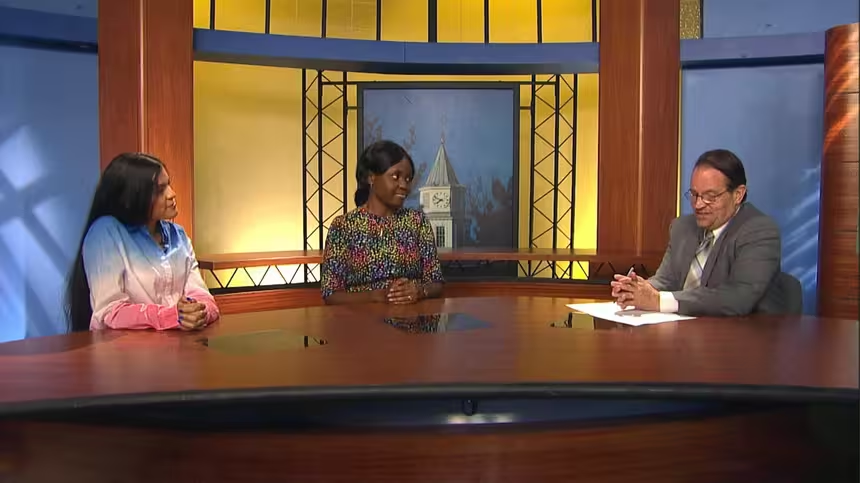
The Center for English as a Second Language at Southern Illinois University Carbondale has resumed in-person learning. In this episode, host Fred Martino interviews two students of the immersive English language program: Siti Hajaroh from Indonesia and Destin Deoudum from Chad.
Problems playing video? | Closed Captioning Feedback
Problems playing video? | Closed Captioning Feedback
Eye on Education is a local public television program presented by WSIU
Center for English as a Second Language – Part 1
7/12/2022 | 26m 46sVideo has Closed Captions
The Center for English as a Second Language at Southern Illinois University Carbondale has resumed in-person learning. In this episode, host Fred Martino interviews two students of the immersive English language program: Siti Hajaroh from Indonesia and Destin Deoudum from Chad.
Problems playing video? | Closed Captioning Feedback
How to Watch Eye on Education
Eye on Education is available to stream on pbs.org and the free PBS App, available on iPhone, Apple TV, Android TV, Android smartphones, Amazon Fire TV, Amazon Fire Tablet, Roku, Samsung Smart TV, and Vizio.
Eye on Education
Eye on Education features interviews with people making a difference in all facets of learning. From Pre-K through higher education, we highlight efforts to prepare students to become the world's future leaders in every discipline.Providing Support for PBS.org
Learn Moreabout PBS online sponsorship(mid-tempo music) (camera lens clicking) (dramatic music) - "Eye on Education," I'm Fred Martino.
The Center for English as a Second Language at Southern Illinois University Carbondale has resumed in-person learning.
Today, we're talking about an eight-week program that enrolls students from across the globe.
It's one of the oldest certified intensive English language programs in the United States, and it's been offered for more than 50 years.
Today, we have two people benefiting from the program.
Siti Hajaroh is from Indonesia, and Destin Deoudum comes to us from Chad.
Destin and Siti, thank you both for being with us today.
- Thank you.
- You're welcome.
- You're welcome.
- Good to have you here.
Destin, I'm gonna start with you.
Tell me a little about yourself and your decision to apply for this program.
- Yeah, my background is water and sanitation engineering.
I decided to apply to Center for English as a Second Language because I think it's a better place to learn.
By applying to this center, I will improve my English skills, my academic skills, and then my professional and networking skills.
Last but not least, I have time to enjoy myself with other cultures.
- Yeah, and getting to see the Midwest.
I know that before long, you're gonna be using this experience of learning English here and getting the chance to experience more English language here in intensive way in Florida, because you're gonna be going to graduate school in Florida.
- Yeah, I'm going to Gainesville, Florida, for sustainable infrastructure and environment.
And I see that now, with this intensive English program, a lot of things are changing in my writing, my speaking, my reading, and then the way I see things.
I see things differently now compared to who I was in the past.
- It makes a difference to hear English all of the time, right?
- Yeah.
- Siti, how about you?
- Oh, sure.
- Tell me about your background and deciding to apply.
- Sure, okay.
My name is Siti Hajaroh and I come from Indonesia, and we are Fulbright Scholars, and I'm currently studying English at CESL SIU Carbondale.
And why I'm taking this, because I want to improve my English.
I'm an English teacher back then in my country, and I established my own English center or English school.
So, I take TESL for my master's degree program, but before that, I need to prepare myself, so that's why I'm here at CESL as SIU Carbondale.
- And I know you, as well, are going to be doing more graduate work in Florida.
- Yes.
- [Fred] Like Destin.
- Yes.
Yes.
- That's very exciting.
This program, I guess, has been really helpful to kind of prepare for that.
- Exactly.
Yes.
Because in the class, we learned pronunciation, we learned writing, TOEFL, so I guess all of these programs, I mean, all of these classes or courses have helped me improve and prepare myself to go to further, or to go to my graduate studies in Florida.
- [Fred] Yeah.
- Yeah.
- And we should point out this is why this is so, I think, successful.
This immersive experience learning more English, practicing more English.
Because it's not just in a classroom, it's out in the community.
And I understand you've been volunteering in the community, right?
- Yes.
- Tell me about that.
- Yes.
Okay.
So, so far we have visited three places actually, but we have volunteered for two places.
The first is Haran House of Hope.
And then the second one is the Voyage Senior Living.
And I did enjoy volunteering in these two places.
We helped them, sorry, we helped Haran House of Hope to serve food for needy people.
And then the second one, the Voyage Senior Living, we interacted with the elderly.
And I know that it's not easy to, you know, to deal with them, to take care of the elderly.
It's challenging, but I think the staff there is doing a very good job, and-- - Yeah, so you learn more about the area, you learn more, you get a chance to meet more people.
- Yes.
- And then continue that immersive experience in English.
- Yes, yes, I know I did from them.
- What was this like for you, Destin?
The Haran House of Hope and and the senior living facility?
- Those two places were very special to me.
At Haran House of Hope, I learned something I never did before.
I served as a running person.
In my country, I never had an opportunity to play such a role.
And then-- - [Fred] That must have felt good.
- Yeah.
I felt happy when I was there because I was in touch with many different people.
And then, there is one thing they are doing.
They are giving hope to people who are struggling, struggling for life.
- Yeah.
- So I really enjoyed this opportunity.
And then, when it is about the Voyage Senior Living, I was in touch with elderly persons.
I was really feeling very happy because we had some hobbies, some entertainment activities with them and then it helped them relax, get rid of some stresses.
In addition, we draw some abstract arts.
So it was really helpful, too.
- Arts?
- Yeah.
Not only to them, but also to us.
- [Fred] To you as well.
- Yeah.
- That must have been very rewarding.
You know, one of the things that I'm passionate about in doing this program today, and we're gonna be talking with two more students on another program, is that being bilingual or multilingual is an incredible benefit.
Tell me how it's helped you personally and in the future, I'm sure, professionally as well.
- Yeah.
Speaking many languages is something very interesting.
And then when you speak many languages, it increases your career opportunities.
As an example, I speak French and English.
So when I apply for a job, I can take a clear advantage over a monolingual applicant in this field.
- [Fred] Yeah.
- It's something very different.
And then when you speak many languages, you are offered many opportunities.
Instead of being narrow minded, you have a lot of opportunities.
You can even learn to multitask.
So it's something very special.
- And the cultural exchange.
You benefit from that exchange with other people, I guess.
- [Siti] Yeah.
- Yeah.
Whenever you travel, you meet new people, you learn new things.
You can even rid yourself of ignorance of other nations.
- [Fred] Yeah.
- Via an exposure to different cultures.
- [Fred] Yeah.
- You can broaden your horizons.
You can challenge some concepts you previously held to be immutable.
- [Fred] Yeah.
- So it's something very-- - And that's why we're sharing this today.
We wanna open those doors for people.
Siti, tell me your thoughts on this, this powerful and incredible thing to become multilingual.
And this is something you're obviously passionate about because you're gonna do this as a career, teach English.
- Yes.
Okay, so, I would love to share one thing.
For me, personally, English has affected me both in personal and professional life.
Why?
Back then in my country, I had an opportunity to be an interpreter or a translator for a student from Oxford University back then in 2017 and 2018.
And I was happy working with them, of course.
I helped them with their research.
And then, so it, I mean, it was great for me to be, you know, to be advancing my career not only in teaching English but also in translation and interpretation.
So, yeah.
- [Fred] That's great.
- It's one of the benefits of being a bilingual or multilingual.
- Multilingual, yeah.
- Yes.
- So how would you say the program here at Southern Illinois University Carbondale has helped you continue to grow these skills?
- Okay.
So here, we, I mean, not only in the classroom but also, we also learn English in the community.
So, in the community we speak with the speakers who speak their normal speed in English, and it's not easy for me personally to, you know, to adjust myself listening to their English.
- Sure.
- In the classroom, we kind of understand what teachers say because they speak, how do you say?
In maybe-- - [Destin] A normal pace.
- Normal, no.
I mean, they know how to adjust themselves to the students.
- Yeah.
The pacing is different.
- [Siti] Exactly.
Yes.
- So you have to get used to the natural pacing, which can be much faster.
- Exactly, yes, yes.
That's what I mean.
Yeah, so.
- Especially when they speak faster.
So they are, the way they speak, they try to adjust to our understanding of the language.
- [Siti] Exactly.
Yes.
- [Fred] I see.
- [Siti] That's what I mean.
- Destin, let me ask you about this.
Tell me about your experience in becoming multilingual.
You mentioned already that you also speak French as well.
- Yeah.
- Tell me about that and how that developed for you and why it was so important.
- This is an interesting question to me because I first started learning English in 2008.
When I decided to learn English, I said to myself that I have to do something because I would like to exchange with educated people around the globe.
So I set a plan to go to an American language center in my country.
It was under U.S. Embassy's cover in my country.
So once I decided to go to that center, I bought CDs.
I listened to music, especially those for Michael Jackson.
- [Fred] Okay.
- Chris Brown, and then a lot of them.
But there was one thing.
Instead of just listening to music, I bought some books.
I go to English clubs to practice.
Because if you are learning a language, you have to practice.
If you don't practice, the language will go.
- [Fred] Yeah.
- Or will die.
- Yeah.
- So I did everything.
And then once at the center, the first thing I did was relying on USA for Africa song, "We Are the World."
- "We Are the World."
- [Destin] Yeah, "We Are the World."
- I remember it well.
Powerful.
- Yeah.
Written by Michael Jackson and Lionel Richie, to learn some words before getting in touch with some professor at the center.
And then it was really very interesting.
So-- - So music touched you, but you continued your work and studies because you really saw the value in cultural exchange, meeting people from different countries, learning more about other countries.
- Yeah.
When you speak many languages, you have a lot of opportunities.
- Do they.
- A lot of perspectives.
So it's really a very special.
- Yeah.
Siti, how about you?
What was your motivation, and then your continuing motivation to teach English?
- Yes.
Okay.
So, I had a very big dream.
In the past, I wanted to go abroad.
I wanted to work or study abroad.
And then I noticed that English is one of the doors to open or to make my dream come true.
So it started from that dream.
I studied English.
I encouraged myself to study English because my surrounding didn't really support that.
What I mean is, I did not really have enough English exposure, so I kind of made my own English environment or English atmosphere.
So-- - And where did that drive come from?
Where did that motivation come from?
Why was it that you felt this was something you needed to do?
- I don't know.
I'm just into education.
So I want-- - [Fred] Learning.
- Yes, yes.
I really love education and doing this, I can improve myself in terms of many things, including English, and I also can help other people to improve their English, so, yes.
- Now, I wanna ask you a question.
Not everyone goes to a school or has a teacher who encourages them to learn another language.
So with that in mind, what do you think parents can do to encourage their children to learn another language?
- Okay.
So parents, in this case, they can send their kids maybe to English schools or English centers, and then they can introduce maybe other countries other than their own country so that-- - Maybe media too, in the home.
I mean, Destin is an example, mentioned music, so.
- Mm-hmm, music.
Maybe through educational games, educational things.
- [Fred] Games as well.
- Yes.
At home, they can do that.
If the parents speak English, it'll be great.
- [Fred] Yeah.
- So that they can encourage their-- - Encourage it as well.
- [Siti] Yeah, their kids, yes.
- Destin, what are your thoughts on this, on ways parents or other influences for young people can encourage young people to learn English?
- [Destin] Yeah, I think-- - Or learn another language?
- Yeah, I think there is a lot to do for parents.
First, they can even speak the language with their kids.
They can study with them.
They can get them to join a language course.
If they want their children to speak Spanish, they have to get them join a Spanish course.
In addition, there are apps and online tools to help them learn English.
- [Siti] Yeah.
- [Fred] Yeah.
- So-- - Yeah.
You mentioned you listened to-- - [Destin] Music.
- Music.
- [Destin] Yeah.
- Did you have anyone who encouraged you in this journey to continue to learn more English?
- Yeah, yeah.
I had someone as a model, but it's, it was one of my cousin and, but he passed away.
He told me if you'd like to be with people around the world, you have first to learn English.
He did it.
- He had done it.
- Yeah, he did it before me.
- So you had an example.
- Yeah.
He was an example for me.
He had to be hired by an American company.
And then as he started learning English, he got the job easily.
And then he said, follow my examples, go to that center and then learn English.
I have some materials for you.
Take those materials, and then if you want, if you can, buy others to complete your English education, your English learning.
And then I did it.
Today, I'm in the U.S. because I followed his example.
- [Fred] And you're sharing your story.
- [Destin] Yeah, I'm sharing my story.
- This is really powerful.
- Yeah.
- Siti.
- Yes.
- You're gonna teach, you're gonna teach English.
So, how important do you think this is to have models, to have other people who can serve as a model, can serve as an encouragement as well?
- Yes, okay.
So I'm telling you this.
So I also have a role model.
- [Fred] You do, too.
- Yes.
He is my English teacher and he speaks very good English, of course.
Then, I want to be like him and I want to, I wanted to be like him, of course.
And then I think in this case, model is very, role model is very important because if, I mean, how can student have a motivation to learn English if their model is maybe not a very good role model.
So it's kind of hard for them to be inspired or to be motivated.
- [Fred] Yeah, yeah.
- And in this case, I also have other role models other than my English teacher.
Most of my friends in Indonesia are great youth and they got scholarships from around the world, including the U.S., and they had a chance to, you know, to have experience or cultural exchange, let's say in the U.S., in the U.S. or Australia or the UK, something like that.
So I was inspired by those role models.
Then I did the same thing, what they did in my country.
- Let's talk about cultural exchange.
- [Siti] Yes, okay.
- Because Destin talked about this as a motivator for him.
- Yes.
- You know, we grow so much through travel and cultural exchange.
Tell me how you've benefited from that, from visiting other countries and learning and growing with other people.
- Okay.
So I guess we can learn not only their languages but also their cultures, their mindset, they, their perspectives about life and other positive things in their own industries or in their own fields.
For example, here, maybe we come from, there are 14 Fulbrighters in our class and we-- - 14-- - [Siti] 14.
- Fulbright scholars.
- Fulbright scholars, yes.
- [Fred] How amazing.
- And they come from different countries, so we share our cultures with each other.
- It's energizing, isn't it?
- [Siti] Yes, yes.
- Oh, that's wonderful.
- [Siti] It is fun.
- It's so amazing.
- [Siti] Yes.
- Destin, I could feel your passion talking about the chance to volunteer here in Southern Illinois.
And I could tell you had a real, the word I would use is reverence.
You had a reverence for the experience, the fact that you've had a chance to do this, that it's been enriching to you personally.
- [Destin] Yeah.
- To get a chance to volunteer and to learn about people in the culture here.
- Yeah.
It's, it really is.
I think volunteering is very interesting, very special to me.
And then by being in touch with people, I learn from their experience, their culture, the way things are done.
There is an American culture here.
Instead of crossing your arms, stay like this, staying like this, like what we are used to in my country, it's really different here.
You don't have to cross your arms and then stay.
You have to think and then act.
That's really something I'm learning through volunteering.
Yeah.
- What other differences stood out to you about the United States as compared to Chad where you're from?
- Yeah, my country, in my country we are really lazy.
(Fred laughing) We don't want to work.
- So, and you see a lot of people with-- - Yeah, I see a lot of people with different ideas, with very special projects in mind.
So with my experience here, I hope to change things.
Because when you stay like this, you don't wanna act, good things will never happen to you.
- [Fred] Interesting.
- Yeah.
- You know, I found this really interesting when I was preparing to do this show.
I am told that 80% of graduates in this English as a Second Language program go on to degree programs here at SIU.
Tell me your thoughts about the role of programs like this in encouraging people to have more education.
- Okay.
- Could be formal education like going to college for another degree, but it could be other forms of education, too.
- Yeah.
But that is something very good about SIU and NCESL.
We have outstanding teachers, lecturers.
The way they teach is really something we like.
- [Fred] Oh, that's great.
- Yeah.
We are not-- - That makes all the difference.
- Yeah.
That makes all the difference.
And then we are not only dedicated to academic things.
We learn a lot in the community by going to sites, by participating to different activities.
And this is something very special.
- It's certainly is.
Siti, I want you to have the last word on this because I'm sure it's very important to you to encourage through programs like this people to explore all sorts of other educational opportunities.
- Okay.
It's also about the programs at CESL also, right?
Yeah.
So to me, this kind of program is very important because not all of us are ready to go to graduate studies.
And by taking this kind of program at, let's say CESL, SIU Carbondale, we hope that we will be mentally and academically prepared for our great grad lives in our future university.
In this case, for me, I have to be ready for my TESL degree in the University of Central Florida.
So yeah, I think this program is very, very very important for us.
- Yeah.
You'll be at, in Orlando-- - [Siti] Orlando.
- And you're gonna be in Gainesville, right?
- [Destin] Yes, yes.
- [Siti] Okay.
- And what did you wanna say to close this out?
- Yeah.
I just wanna add that it's the same thing for all of us, all of the 14 students.
We are really doing good things to be okay, to be ready for our academic studies.
- Well, I am so delighted that you got to share a little bit of your experience here at SIU Carbondale with the region through this program, and thrilled to have met both of you.
And I wish you the very best of luck in Florida.
- [Destin] Thank you.
- Thank you.
- Thank you both for joining us, and thank you at home for being with us.
For everyone at WSIU, I'm Fred Martino.
Have a great week.
(dramatic music)














Support for PBS provided by:
Eye on Education is a local public television program presented by WSIU