Washington Grown
Cherries from Washington
Season 11 Episode 1114 | 26m 46sVideo has Closed Captions
Val is visiting a cherry orchard during harvest plus a special cook at Feast World Kitchen
Washington cherries are the best in the world. Val is visiting a cherry orchard during harvest, plus we're visiting a special cook at Feast World Kitchen in Spokane.
Problems playing video? | Closed Captioning Feedback
Problems playing video? | Closed Captioning Feedback
Washington Grown is a local public television program presented by KSPS PBS
Washington Grown
Cherries from Washington
Season 11 Episode 1114 | 26m 46sVideo has Closed Captions
Washington cherries are the best in the world. Val is visiting a cherry orchard during harvest, plus we're visiting a special cook at Feast World Kitchen in Spokane.
Problems playing video? | Closed Captioning Feedback
How to Watch Washington Grown
Washington Grown is available to stream on pbs.org and the free PBS App, available on iPhone, Apple TV, Android TV, Android smartphones, Amazon Fire TV, Amazon Fire Tablet, Roku, Samsung Smart TV, and Vizio.
Providing Support for PBS.org
Learn Moreabout PBS online sponsorship- Washington Grown is made possible by funding from the Washington State Department of Agriculture and the USDA Specialty Crop Block Grant Program.
And by The Potato Farmers of Washington.
Learn why Washington is home to the world's most productive potato fields and farmers by visiting potatoes.com.
[light music] - On this special season of "Washington Grown", we're following Washington produce around the world.
Here we go.
- I mean there is just stuff happening everywhere.
- Breakfast, lunch, or dinner.
- Breakfast, lunch, or dinner.
[Kristi laughs] I'm doing all the work over here.
- That's a Tomás deluxe.
All good things are better shared right?
- Cheers my friend.
- Cheers.
[Val laughs] - I can't even walk.
Hot diggety dog!
- We got a lot to explore and a lot to do.
So let's get to it.
- To Washington.
- To Washington.
- Washington.
- Hi everyone, I'm Kristi Gorenson, and welcome to "Washington Grown."
When cherry season hits, the world goes crazy for Washington cherries.
And that's because they're delicious fresh off the tree or used in yummy baked goods.
In this episode, we're learning why our cherries are so amazing.
Val is visiting Griggs Farms during cherry harvest.
- I got it in a really low gear, so alls you gotta do is push forward.
- Okay.
- But now you're rolling.
- Hot diggity-dog!
- And I'm making a special Mexican pastry at Feast World Kitchen in Spokane.
Look at that.
- Nice fold, like that.
- It's a little package of butter love right there.
Then Tomás is trying a pulled pork sandwich with a special ingredient at El Fat Cat Grill.
- This is my half, but I'm gonna get another one.
[chuckles] - All this and more today on "Washington Grown."
If you're looking to travel the world without leaving Spokane, it's time to visit Feast World Kitchen.
Here, they're empowering refugee and immigrant chefs, giving them a kitchen to serve their food, and with a rotating list of chefs and so many flavors to try, you know you've gotta come back hungry for more.
- We cover five continents.
From Africa, you have five, six countries, Mediterranean, also five, six countries.
Asian, we have a lot.
- Co-executive director, Maisa Abudayha, wants Feast to help chefs from around the world get a good start in Spokane.
Here, empowerment is the name of the game.
- In the beginning, Feast was like created to help those people who want to involve and be entrepreneur in a business, like they have the talent to be a chef.
Our mission in the beginning was to help those people to open their businesses, but we don't wanna push anyone to this step until they are really a hundred percent ready for it.
- Today's chef is Maria Varela from Mexico.
From the pastries to street tacos, her unique Mexican flavors cover everything a customer might be craving.
- She is amazing.
She's just cooking with us a couple of times.
- The first time I was here at Feast cooking, it was an amazing day because everybody wants to meet the chef.
You know, like, that means I was doing a good job.
- Absolutely.
- It was amazing.
- Yeah, well, they wanna meet the chef.
That means something.
- Yeah.
- Like actually it was easy.
She was professional in the kitchen.
- Her experience here at Feast and cooking in other places in Spokane has allowed her to work toward her ultimate goal.
- I would love to open a place.
That's one of my goals.
We are trying to figure out what to do because we still have little ones seven days a week.
- How many children do you have?
- We have seven.
Yes, we have seven.
[both laugh] - And you wanna open a restaurant?
- Yes, I want to open a restaurant one day.
I have, you know.
- You go girl.
- Yes.
[chuckles] - Don't miss later in the show when Chef Maria and I make her mom's special Mexican pastry recipe with Washington grown cherries, - Kind of like a diaper.
Kinda.
- Kind of like a diaper?
[both chuckling] Very tasty one.
[both chuckling] [upbeat music] - Washington grown cherries are one of my favorite treats during the summer.
But did you know that there are a ton of different varieties?
How many different varieties of cherries can you name?
- So we grow Titan, Santina, Black Pearl, Skeena, Sweetheart, Rainiers, Orondo Rubies, Bings.
- Here at Griggs Farms in Orondo, John Griggs is continuing a family legacy of growing incredible cherries of all different types.
- There's a lot of pressure, and there's not a lot of farms that are fifth generation.
It's a long time.
- So that was your great-great- great-great grandfather?
- Yeah, three greats, I think.
- Okay, three greats.
- Yeah.
- Why is Washington such a great place to grow cherries?
- I think it's our little micro climates.
The weather here is great.
We live in a rain shadow so we don't get a lot of rain.
We're on the Columbia River, so it keeps it a little bit cooler during the day and not as much wind here.
It's just a good place to grow.
- Now John is going to let me drive a tractor.
- So you want to drive this?
- Yes.
- Okay, well go in front of me.
- All right.
- I got it in a really low gear.
So alls you gotta do is push forward.
- Okay.
[chuckles] - Now you're rolling.
- Hot diggity-dog.
Oh my goodness.
- Look at that, huh?
- Okay.
- Val, you're farming.
[both laugh] Look at that.
And then you just set that brake again.
Like an old brake.
Easy peasy.
[Val laughing] - Now I'm following the cherries to the packing shed.
Ray Schmitten is the CEO and president of Blue Bird Inc., who works with Washington cherry growers to pack these fresh cherries.
- The way we packed 40 years ago was in a 40 pound box, 44 pound box, something like that.
We called it a bushel box.
- Mm-hmm.
- We'd send it to the retailer, and they would figure out what to do with it, right?
They had professionals, right?
They had people that knew how to handle the fruit.
- Right, they'd stage the fruit.
- Right, but as time has gone on, it's become more apparent that the consumer wants something a little handier, and the retailer wants to use less people in the stores, right?
- Mm-hmm.
- So we've gone from 44 pound boxes to two and three and four pound bags.
So it's changed.
It's changed the way we do things.
- But one thing that hasn't changed is how fresh these cherries really are.
- They'll go right from the orchard into a semi-truck that is cold.
It comes here that next day.
Once they're chilled, we will pack the fruit, put it in boxes, and within the next six days, no later than two weeks, it will be on the market.
These were picked in Mattawa, Washington.
So they go into a chlorine bath.
- Oh, okay.
- Yep.
- So they still have their leaves and all the extra stuff on 'em.
- Yep.
The pickers will pick them, and they'll end up with several cherries on one.
Those cherries have to be lifted up and then separated.
- Wow.
- They go through this cluster cutter.
- So they, this is the cluster cutter?
- Yep.
Cluster cutter.
- So if they're in a cluster, they get cut.
- Yep.
- I got it.
- That'll teach 'em.
From here, they go through the camera system.
See now you can see each cherry's riding.
See how fast they're going?
- Wow.
- You hear the air?
- Yes.
- Every little sound you hear is a cherry being shot.
- Into an appropriate bin, size bin.
- Right, right.
We're packing both red cherries and Rainiers here today.
- It's just mesmerizing.
- Yeah, they're gorgeous.
Stems are good.
See, the stems are nice and green.
That tells you they're fresh.
It's an exciting time of the year for all of us.
- Oh my gosh.
But it's so intense.
- It is very intense.
- So these are cherries that were picked when then?
- Yesterday.
- They were picked yesterday.
- Yeah.
- And so they're being processed today and boxed.
- Yep.
- And they'll go out then - Tomorrow.
- tomorrow.
- Yeah.
- That's amazing.
- Coming up, I'm making a special Mexican pastry with Chef Maria at Feast World Kitchen.
- Kind of like a diaper.
Kind of.
- Kind of like a diaper?
Very tasty one.
[both chuckling] [upbeat music] - We're back at Feast World Kitchen in Spokane.
Aside from the amazing varieties of flavors coming hot from the kitchen, the reason to walk through the door is to empower talented people from all around the world.
But don't take my word for it.
- Feast is helping to empower immigrants and refugees to feel at home in Spokane, to make a livelihood here, to hopefully help them feel welcomed in this community that we have through food and culture.
- Chef Maria Varela has worked with Feast doing catering and cooking through the organization.
For her, it allows her to get ready for what it would be like to have a restaurant of her own.
- The day you're here, it's your day, and you're on your own.
And that's, you know, the rush.
You know how it's everything, the pressure, everything.
You get exhausted at the end of the day, but at the same time, it's really grateful because you hear people say it was amazing.
Thank you, chef.
It was, so that makes it like, oh, okay.
It's like, you know, it's worth it.
- One of Maria's favorite things to make comes straight from her mother.
- I've been in the kitchen my whole life.
- Yeah.
- Since day one.
- Yeah.
- Because my mom was a chef.
What we are gonna prepare today, that's something that I learned from her.
- Oh, okay.
- It was the volovanes.
When she come like about four years ago before she passed, she told me like, this is something that I want you to learn and pass it to your kids one day.
My mom was so, like she say, I'm so proud of you because I think you did good.
You learned really good.
- Yes.
Yeah, it's a great way of honoring her.
- Yes, it is.
- Yeah.
- And it's really delicious, it's crunchy and creamy and fruity all at once.
- And I really like how the fruit gives it kind of a sharper taste.
And then the cream cheese gives it that creaminess.
- Nice light touch to the end of the meal.
- It all goes together really nicely.
It's a delight to eat.
- I think it's a little bit different because we made it from scratch.
I think that's what it makes it special and more fresh and you know, and the love we put into it.
Because I put a lot of love when I bake, when I cook.
- Yeah.
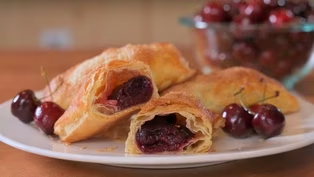
Time to make volovanes filled with fresh Washington cherries.
- It's a piece of bread filled with whatever, you can fill it with whatever you want.
This time we're gonna fill it with cherries.
- Gorgeous looking cherries.
And I know for a fact that these came from our friends at Stemilt, the farm handpicked cherries, Washington grown.
It's gonna be delicious, I think.
- Yes.
- We start by mixing some ice water into flour, then add a little sugar and salt.
Tell me the reason why it has to be cold.
It has to do with the butter, right?
- It has to do with the butter.
So the butter doesn't melt when we are rolling.
So that way we can get the consistent and give it that this dough the texture we need.
When it bakes, it gets all the layers open.
- That makes it delicious.
- Can you put some in my hand so we can get all this dough off?
Thank you.
- I'm your flour girl.
[both chuckling] Once the dough is the consistency we want, we roll it out.
Then it's time for the butter.
So I see why these are light and crispy and delicious.
Because we have - A lot of butter.
- a lot of butter.
[both chuckling] Next we fold the dough.
- Kind of like a diaper.
Kind of.
- Kind of like a diaper?
A very tasty one.
[both laugh] - Last fold.
We flip it.
- It's a little package of butter love right there.
We flip it, fold it, and roll it, then put it in the refrigerator for half an hour.
- You bring it out again after like half an hour, and you roll it again.
- Do it one more time.
- You gotta do it like four times.
- Four times.
- Yes.
- So a lot of love and time goes into this.
- Yes.
Mm-hmm.
- Once it's been rolled and folded enough, we cut the dough into squares and roll it out one last time.
Now it's time to add the cherries, which have been cooked down with sugar, cinnamon, and lime.
We use water to seal the dough, brush an egg wash on, sprinkle on some sugar, and put it in the oven for 10 minutes.
[upbeat music] I didn't expect 'em to be so puffy, I guess.
They look awesome.
Oh, no way.
Look at all those layers.
- Mm-hmm.
- That's a good produce.
- Yes.
Oh, these are delicious.
- What I love about this is they're not too sweet.
- Awesome.
I love the crunch and the flakiness of the dough.
And the cherries are delicious.
- You still taste the fruit, and you taste the dough, like, you do.
Like it's not blended.
Like it goes together really good.
- Thank you so much.
- Thank you.
- Thank you.
Thank you.
[chuckles] I love it.
To get the recipe for Chef Maria's Cherry Volovanes, visit wagrown.com.
- Here in Orlando at the Global Produce and Floral Trade Show, it felt a little like being in an oversized grocery store with tons of recognizable brands, colorful displays, and delicious foods we've all come to know and love.
Now, I may be a bit biased, but I think the best was the Washington Grown booth.
Here, all kinds of Washington brands came to Florida to share the bounty of our state with the rest of the world.
- We love to come out to all of these shows.
That's when we are here in Florida, and we just like to tell people about Washington potatoes.
We actually have some of the best potatoes in Washington.
And again, those, especially potatoes, folks are looking for those reds, those yellows.
- Right.
The purples.
- Yeah, the purples and the french fries.
- Let's see what else Washington state has to offer.
- A lot of times we don't see these people that we do business with very often.
Most of it's done over the phone or over the computer.
So, a convention like this gives us an opportunity to meet with these people occasionally in person.
It's a great opportunity to network together.
- The asparagus in Washington is strongly considered to be the best in the world.
- Okay.
- Because of the volcanic soil and the climate that we live in.
- Are there other asparagus commissions here?
- I've talked to the local people here, like just in these booths here about their asparagus.
- It's a neighborly community, isn't it?
- Yeah.
Yeah, I mean, I'd burn 'em down if I could, [Tomás laughs] but I try to be neighborly.
- We're here to talk about Turfgrass seed and, you know, hopefully make some contacts.
So 90% of the Kentucky bluegrass is grown in the Pacific Northwest.
- Okay.
- And a lot of that is grown in Washington state.
So the seed itself, yeah, is being exported all over the world.
- Next up is Landon Rowley of Rowley and Hawkins Fruit Farms.
Today, he's talking about their tart cherries.
- You can, you'll find that in your pies.
You'll find that in your Pop-Tarts or ice creams, or juices.
That's most commonly you're flavoring for medicines and other different things.
- Ah, okay.
- So that's when you, when you see cherries on something, most of the time, it's tart cherries.
- Oh, okay.
Tart Cherry juice concentrate right here.
Woo.
And then there's the cherry.
Mm.
Wow.
- So there is about 60 cherries that you just ate.
- That's just 60 cherries right there?
- Just 60.
Just 60.
- I've been able to talk with potential customers from all over the world, from Japan to Korea to Taiwan.
- You meet so many fun people, and the fact that everyone is excited about potatoes makes me excited about what I do.
- A lot of the big name brands from all over the US are here.
And so for us, it's really cool to be part of that.
- And I think making those contacts to be able to sell our products.
You know, Washington, again, produces over 300 crops, and we've gotta find buyers for 'em.
- That message of eat local, there's more to it.
It's about knowing your producer and knowing where your food is coming from.
And at a show like this, we're able to make that connection.
- Coming up, Tomás is trying a pulled pork sandwich with a special ingredient.
- This is my half, but I'm gonna get another one.
[chuckles] - And we're in The Kitchen at Second Harvest, trying Chef Laurent's Asian chicken and cherry lettuce wrap.
[upbeat music] [lively music] - Hey, let's go.
[energetic music] - Mexican food, Asian curries, delicious burgers, if you crave it, they've got it.
Here at El Fat Cat Grill in Kennewick, robust flavors and mouthwatering dishes create long lines of hungry customers just waiting for something special.
And today, I'm talking with the Fat Cat himself, owner Felix Sanchez.
- So the name, it was really my sister's, you know?
They were like, you know, I was always eating, you know, and cooking and everything, and they just called me, you know, Fat Cat.
They were like, but you're not fat.
But I could eat.
And so I'd just like eat and cook and eat and cook.
- Right.
- You know?
- The key to the amazing flavors coming outta this kitchen, surprise surprise.
It's the Washington grown produce.
- In Washington, we're known kind of for cherries and apples and everything, right?
- Yeah.
- And I live kind of out in the country, so.
- Gotcha.
- I'm surrounded by cherry farms, peach farms, apple.
As soon as harvest comes, I'm like, hey, let's go.
- And the fat cat isn't kidding around either.
Today, we've got a pulled pork sandwich topped with Washington apples and sweet cherries.
Just look at this, look at the cherries that we've got in that sandwich here.
- Fresh cherries.
Yes sir.
It's pork adovada, right?
- Okay.
- But I charred everything so it gives it the charred flavor to it.
- Nice.
- So it's more like a pulled pork.
And then we did a bing cherry mole for it.
- Okay.
- And then a granny smith apple slaw.
- Let's try this.
- Let's dig in.
- Let's see what this is all about, Felix.
- All right.
- All right, here we go.
- Cheers.
- Cheers brother.
- All right.
- That pork is juicy as all get out.
It's so good.
Those cherries are perfect in this sandwich.
Perfect pop of sweetness.
- Sweetness, a little tartness in there.
That's it.
- Yeah.
This is my half, - Yeah.
- but I'm gonna get another one.
[chuckles] Let's see what the people of Kennewick think about cherries on a pulled pork sandwich.
[lively music] - That's super good.
I'd order two of these if I could.
- That's the perfect mix.
You get like the meat flavor and then you get like the sweetness of the fruit too.
- Starts out sweet.
You get the hit of the cherries, and then that pulled pork just comes in, nice smoky flavor, that barbecue sauce and the coleslaw coming in.
- It is very juicy.
Probably the most juicy pulled pork I've had in my entire life.
- In his entire life.
- That's some good pulled pork right there.
- Nice.
- El Fat Cat has the best pulled pork ever.
- Okay, you know what?
You're the second person to tell me that today.
- I gotta go in for another bite.
- Do it.
I don't wanna stop you.
- And this is a half, huh?
- That's right.
- So I can get a whole one.
- [laughing] Yes you can.
- All right.
- There's just nothing quite like sitting down with a big bag of juicy Washington cherries during the summer.
But did you know that people all over the world celebrate Washington's cherry season?
Today, I'm down in Florida at the Global Produce and Floral Trade Show learning why Washington cherries are causing such a buzz.
- Cherries grown in Washington are unique because we have such a wonderful, high nitrogen, mountainous region, and it's a unique microclimate.
- BJ Thoromain is the manager of the Washington State Fruit Commission, and he's well aware that our cherries are special and that they're celebrated all over the world.
- In Washington alone, we produce close to 200,000 metric tons of cherries each year.
Our strongest marketing region for cherries is the greater Asian area, including China, Taiwan, Korea.
The reason that is, is because they don't grow or they can't grow cherries in Asia.
- My name is Pana Yotis, or just Yotis.
- Okay.
Yeah.
- And I'm here to source the best fruit from Washington.
- As a representative of Taiwan, Yotis is here to continue the trade relationship between Taiwan and US producers, like Washington cherry growers.
- We don't have cherries in Taiwan, so we have to source from other places all over the world.
We find the cherries from Washington is perhaps the best and one of the best in the world.
- A lot of our cherries end up in Korea.
A big market for us is also China.
- Willie Sosa is with the Sage Fruit company.
He knows that one of the main reasons people get so excited about cherries is that there's such a small window for them to be sold.
- I think it's one of those commodities that you can still only get a couple times out of the year.
It's one of those things that you have to plan for, you know?
You're not gonna have it all season long.
- Right.
- And people are waiting for 'em.
- All the way across North America in Mexico City, the excitement for Washington cherries is just as high.
Juan Carlos Moreira represents Northwest Cherry Fruit Growers in Mexico.
His task is simple and focused.
Make sure people know when cherry season is approaching so no one misses out.
- We have a PR campaign, where we declare the week of the 4th of July, Mexican National Cherry Week.
- Okay, that's good to know.
- Yes.
With Northwest cherries, we do the circus approach.
The circus comes into town - Yeah.
- and stays in town only for a few weeks.
With cherries, we're talking about from eight to 10 weeks a year.
- Oh, okay.
- It's truly seasonal.
- Right.
- So we have to tell everybody the circus is coming, the circus is coming.
Northwest cherries are gonna be here.
- It's a good way to do it.
The circus is coming.
- The circus is coming.
- And cherries are the stars.
- You know, our state alone is a wonderful state for growing agriculture.
And if you're the type of person that likes to have locally grown fruit, potatoes, produce, you're gonna be really happy because we grow the best in the world right here in our little corner of the world.
[upbeat music] - We are in The Kitchen at Second Harvest Food Bank in Spokane.
And I am with my lovely co-tasters today, where we get to try some wonderful food, some recipes.
And Chef Laurent Zirotti, thank you.
- Good to see you Kristi.
- Yeah.
Always good to see you.
- Yes.
- And Tomás, great to see you as well.
- I hope you're hungry.
- I know, I know.
- What a tough job.
- I hope we're all hungry.
- Yes.
- And these recipes have been developed by you, Laurent.
- Yes.
- So that's great.
Thank you so much for doing that.
- You're very welcome.
- Yes.
- If it's not good, just blame it on me.
- Just blame it on you.
- That's fine.
- I'm sure it'll be great.
- We'll see.
- You know, this season is all about international cuisine and experiencing different cultures and how Washington food plays a role in all that.
And it's just been so fun to see where our food ends up.
But also, where you can find international flavors - Yes.
- in your town.
- Yeah.
And we are very lucky here in town to have Feast World Kitchen.
- Yeah.
- I think it's a great non-profit restaurant that is run by true international cook.
- Absolutely.
- Mostly refugee.
We all eat in our world, right?
We try to eat - Absolutely.
- at least once a day.
- Yeah.
- And food is the, mostly, maybe the only union we have, and it groups, and it makes us close together right around the table.
- It's a great concept, isn't it?
- Right, yes.
- That I could just go and experience Ethiopian food one month, and then I can go to the same place, but now I'm experiencing - Sudanese.
- El Salvadorian.
- Exactly.
- Or Egyptian.
- Yes.
- It's just so, it's so cool.
- And original.
I mean, totally authentic.
- Authentic.
Yes.
- Authentic.
- So what are we going to make today?
- Well, we decided maybe to not do a dessert with cherry.
It's a chicken and cherry lettuce wrap.
- Ooh, that sounds really good.
- So, Asian flavors.
- Yeah.
- And all together with some crunchy nuts in there.
- Oh, I'm excited for that.
- It's gonna be good.
Yes.
- Okay.
All right, well our team is back in the kitchen right now putting it together.
Let's see how they make it.
[upbeat music] All right, well that looks amazing.
- That's looks gorgeous.
- Now it's here in front of us.
- Very well presented.
- So you eat this though, like.
- Yes, we're gonna make a mess.
- I'm just gonna roll it like a burrito here.
- And just roll it.
- The textures are great.
Mixing that chicken and the crunch of the nuts and the green onions.
- Texture is fantastic.
It's delicious.
- Good.
Very crunchy.
- It is.
- And the sauce is something I would expect.
It's got that nice Asian tang.
It's very good.
I want more cherries though.
- Mm-hmm.
- I want more cherries.
- What a fun way though - Wow.
- to get cherries into a dish that's not sweet.
- Yeah.
- Exactly.
- I love that.
- Savory dish.
- It's good to challenge ourselves, huh?
Take something that we typically would think of sweet, like an apple or a cherry, and add it into something a bit more savory.
- Nice job.
- Thank you very much.
Good job to the chef in the kitchen at Second Harvest.
- Yeah.
I love that.
I love our cooking team.
I think they have fun putting these together.
- They do.
I know.
- So if you wanna try this recipe, just go to our website at wagrown.com and give it a try.
- Gonna love it.
- We'd love to hear about it.
Like if you follow us on social media or something, give us a comment, let us know.
To get the recipe for Chef Laurent Zirotti's Asian Chicken and Cherry Lettuce Wrap, Visit us at wagrown.com.
Whether eaten fresh or baked into something sweet, cherries are always delicious, so make sure you grab a bag when you see them in the store.
That's it for this episode of "Washington Grown" we'll see you next time.
Video has Closed Captions
Preview: S11 Ep1114 | 30s | Val is visiting a cherry orchard during harvest plus a special cook at Feast World Kitchen (30s)
Providing Support for PBS.org
Learn Moreabout PBS online sponsorship
- Food
Christopher Kimball’s Milk Street Television
Transform home cooking with the editors of Christopher Kimball’s Milk Street Magazine.



Support for PBS provided by:
Washington Grown is a local public television program presented by KSPS PBS