
The 54th Massachusetts
Paid less and doubted by many, Black Union troops proved themselves at Fort Wagner and beyond.
From
The 54th Massachusetts
Clip: Episode 3 | 7m 49sVideo has Closed Captions
Paid less and doubted by many, Black Union troops proved themselves at Fort Wagner and beyond.
Though less than 1% of the North's population, Black men made up nearly one-tenth of the Union Army by war's end. Discover the 54th Massachusetts and its assault on Fort Wagner, where Sgt. William Carney saved the flag and earned the Medal of Honor. Hear the words of Frederick Douglass and his son Lewis, a sergeant in the regiment. From Ken Burns's The Civil War.
From
Problems playing video? | Closed Captioning Feedback
Problems playing video? | Closed Captioning Feedback
Production made possible by grants from General Motors Corporation, National Endowment for the Humanities, Corporation for Public Broadcasting, The Arthur Vining Davis Foundations, John D and Catherine T MacArthur Foundation
The 54th Massachusetts
Clip: Episode 3 | 7m 49sVideo has Closed Captions
Though less than 1% of the North's population, Black men made up nearly one-tenth of the Union Army by war's end. Discover the 54th Massachusetts and its assault on Fort Wagner, where Sgt. William Carney saved the flag and earned the Medal of Honor. Hear the words of Frederick Douglass and his son Lewis, a sergeant in the regiment. From Ken Burns's The Civil War.
From
Problems playing video? | Closed Captioning Feedback
Where to Watch The Civil War
The Civil War is available to stream on pbs.org and the PBS app.
Buy Now
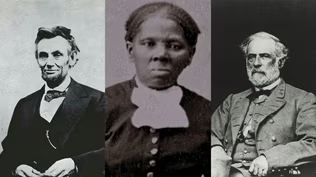
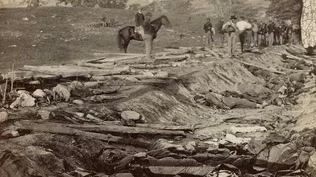
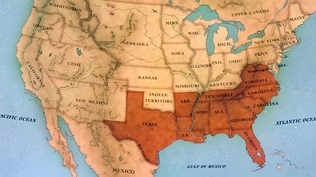

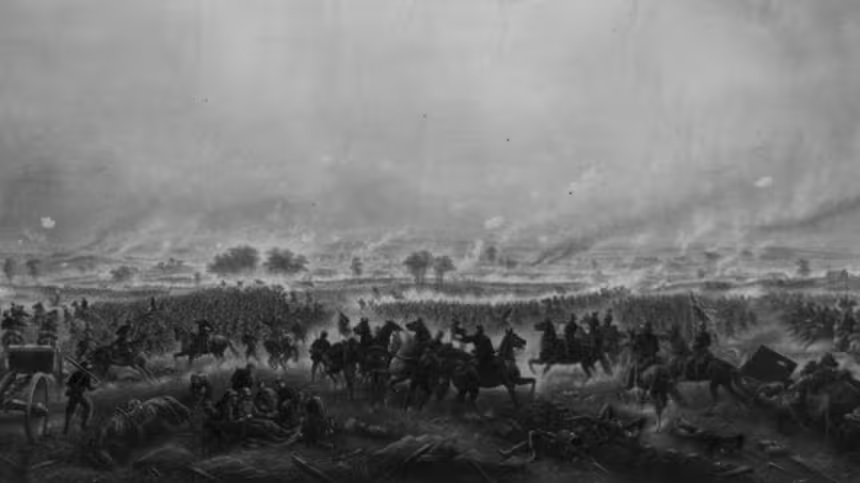
The Civil War | Timeline
Explore a multimedia timeline that is a companion to Ken Burns's acclaimed documentary series, The Civil War. The timeline provides a comprehensive overview of the war, from its political origins to its social and military consequences.Providing Support for PBS.org
Learn Moreabout PBS online sponsorship
Video has Closed Captions
Clip: Ep3 | 8m 21s | 13,000 Confederates marched into Union fire. Relive Pickett's Charge, the climax of Gettysburg. (8m 21s)
Providing Support for PBS.org
Learn Moreabout PBS online sponsorship








Support for PBS provided by:
Production made possible by grants from General Motors Corporation, National Endowment for the Humanities, Corporation for Public Broadcasting, The Arthur Vining Davis Foundations, John D and Catherine T MacArthur Foundation