
Cornwall
Episode 2 | 45m 35sVideo has Closed Captions
James and Galton Blackiston are in beautiful Cornwall.
James is joined by top chef Galton Blackiston. They're in beautiful Cornwall, with its stunning sandy beaches and amazing food producers. They visit the famous Newlyn Harbour, taste award-winning ice cream and buy some local fish to cook with on the pier. James informs Galton of his 4 a.m. start the next day to bid on fish at the famous Newlyn Harbour fish market.
Problems playing video? | Closed Captioning Feedback
Problems playing video? | Closed Captioning Feedback
Cornwall
Episode 2 | 45m 35sVideo has Closed Captions
James is joined by top chef Galton Blackiston. They're in beautiful Cornwall, with its stunning sandy beaches and amazing food producers. They visit the famous Newlyn Harbour, taste award-winning ice cream and buy some local fish to cook with on the pier. James informs Galton of his 4 a.m. start the next day to bid on fish at the famous Newlyn Harbour fish market.
Problems playing video? | Closed Captioning Feedback
Where to Watch James Martin's Islands to Highlands
James Martin's Islands to Highlands is available to stream on pbs.org and the PBS app.
Providing Support for PBS.org
Learn Moreabout PBS online sponsorship[music playing] Here we go!
JAMES (VOICEOVER): I'm going on my most ambitious British adventure yet.
- Yes!
- [laughs] JAMES (VOICEOVER): Meeting some of the finest chefs in the world.
And you've been sweating.
Oh, James, my poor James.
Oh.
JAMES (VOICEOVER): Cooking my way from the Far South-- Duck on a barbecue is just off the charts.
JAMES (VOICEOVER): --to the northernmost reaches of the land.
It's a magical experience.
You've gotta do this.
It's amazing.
JAMES (VOICEOVER): And using some of the best produce you'll find anywhere.
Come on, pigs.
Come on!
Come on, then.
Look.
Look at him.
How can you miss that mouth?
[laughter] JAMES: And some of the places require a little bit more effort to get to.
JAMES (VOICEOVER): I'll be traveling by land, air, and sea.
TONY SINGH: Yeah, look.
Look, dolphins.
TONY SINGH: Dolphins.
JAMES (VOICEOVER): So join me as I explore the British Isles, from islands to highlands.
[seagulls calling] [funky music] The next stop on my adventure is an old favorite of mine, the stunning county of Cornwall.
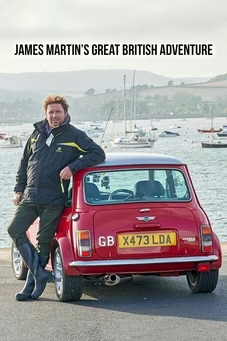
And I'm back in my trusty Mini.
Joining me again is a good mate and Michelin-starred chef Galton Blackiston, the well-traveled man that he is.
JAMES: So welcome to Cornwall.
Yes, first time down here.
First time for you, is it, really?
It is.
You've never been to Cornwall?
Well, I don't think I have.
You don't think you have.
Was it on a stag do or something?
No, as a kid.
I'm surprised you haven't brought your passport.
I have brought my passport.
[laughter] JAMES: I knew you'd bring your passport!
[relaxing music] JAMES (VOICEOVER): Cornwall, on the far southwest tip of England, is one of the UK's holiday hot spots.
And it's no wonder, with over 400 miles of coastline, amazing beaches, and rich fishing history.
Today, we're hugging the beautiful western coast, on our way to Newlyn.
- There, look.
- Oh, look at that.
See?
How beautiful is that?
GALTON: That is beautiful.
JAMES: So this is St.
Michael's Mount.
It's absolutely stunning.
At low tide, you can get access to it, but then, at high tide, you've had it.
Now, I would go on there.
This show is called Islands to Highlands, but I want to take you somewhere different because I know, like me, you like ice cream.
I'd love a Cornish ice cream.
Yeah, but this is pretty special Cornish ice cream.
OK.
What's so special?
Well, you're about to find out.
Newlyn is a classic Cornish fishing town with a busy harbor at its heart.
It's got the lot-- beautiful coastal views, gorgeous beaches, and tourists taking photos.
But in my mind, it's Jelbert's ice cream that's the sweetest treat in town.
Meet Jim Glover, father to Olympic gold-medal-winning rower Helen Glover.
And apparently, his ice cream is world-class, too.
Hello, sir.
Hello.
Hey, Jim.
Good to meet you.
This is Galton.
- Jim.
- Nice to see you.
Nice to meet you.
Normally, when you go to ice creams, there's a selection.
Yeah.
This, you just do one.
At present, we just do the one flavor.
And have done for how many years?
I've done it for nearly 40 years.
And before that, my uncle and grandfather did it for another 40 years.
JAMES: And has the recipe changed over the years?
JIM: Hasn't changed at all.
You won't tell us the recipe?
[chuckles] Of course not.
[laughter] - So, shall we?
Shall we have-- - Absolutely.
Better try one, then, really.
GALTON: Got to.
JAMES: Can we have two large ones with a flake?
GALTON: Yeah.
But also, you can have a-- Flake and cream.
40p, and cream.
JAMES: We gotta have that.
JIM: Cream and flake.
GALTON: Yes, please.
Two of each.
JIM: The cream definitely complements the ice cream.
GALTON: Look at that.
JAMES: Look at it.
GALTON: [laughs] I'll tell you what.
Look at that.
Thank you very much, Jim.
Cheers.
Thank you very much.
- Cheers.
- Good luck with everything.
- Cheers.
I've got the perfect spot to eat this.
Have you?
Yeah.
[cheery music] I love it.
It's not a bad place, is it?
I love the smell of it as well.
The smell of that sea and the smell of all the seaweed in there is beautiful.
Love it.
I'm more interested in this.
Yeah, this is good, to be fair.
This is fantastic, the clotted cream on top.
I can't get over it.
I'm blown away with this.
This is so ridiculous.
It's a lovely milk ice cream with a huge blob of clotted cream on top, and it changes the whole thing.
[laughter] It's just incredible, innit?
JAMES: Anyway, you've gotta enjoy this because you've got an early start.
I've organized something special for you.
Go on.
I like the sound of that.
You're going to Newlyn Fish Market, which is just there.
GALTON: Brilliant.
I like that.
JAMES: Problem is, you've gotta be up at 4:30.
What?
Tomorrow, I've gotta get up at 4:30?
You idiot.
I aren't getting up at that time.
You are.
Can I actually buy you any fish I want?
Get what do you want.
Look.
Look at him.
How can you miss that mouth?
How can you do that?
[laughter] JAMES: Off you go, then.
GALTON: All right, I'm off.
I'm off to bed.
[chuckles] Off another one of these.
They're ace.
[uplifting music] JAMES (VOICEOVER): So, while Galton turns in for some sleep, I'm gonna soak up some more of this scenery.
Newlyn is one of the largest fishing ports in the UK, and with a daily fish market here, too, it really doesn't get any fresher.
So I'm off to track down the local fishmongers.
♪ ♪ Fresh Cornish fish has been in the Tonkin family for generations, with Craig at the helm today.
Let's see what he recommends as the catch of the day.
♪ ♪ Hello.
- How you doing, boss?
You all right?
- I'm well, thank you.
Nice to meet you.
Well, this is pretty local, innit, really?
The market's just there.
20 yards from the market, yes.
Exactly.
So what do we have here, then?
We've got-- We've got a lovely selection landed this morning.
Good selection today.
We've got some great hake that's just come in.
Fabulous.
There's monkfish tails there.
We've got some lovely megrim soles.
JAMES: Do you know what?
I'm gonna take some of the megrim.
Can you fill it with a couple of these megrims?
- No problem at all.
- Are these very popular?
Because I love them.
They're a great-tasting fish.
But are they-- We get, possibly, 5 to 6 tons landed here a week, but 4.99 tons go to Spain.
Spanish love them.
It's just something that people just don't know.
The Spanish, for them, it's like chicken.
They eat it every day.
It's their staple food.
They absolutely adore them.
British don't really know it yet.
JAMES: Well, I'll have a couple of those, filleted.
That'll be great.
These are spectacular in these parts.
Look at this gurnard.
Got the massive fins on the side of it, and another one that's spectacular today, looking at the quality of it.
Look at these lemon sole.
You can tell how fresh they are.
I'm gonna take probably about four small tails of monkfish.
Some tails of monkfish.
Because they look really good.
Do you want me to fillet them for you?
No, actually.
Just take the skin off.
That's all right.
CRAIG: Best thing about all of these fish is that you don't have to do anything fancy to it.
Yeah, exactly.
That's the key to it, innit?
So I'll take some of that, probably a few of these mussels.
These are definitely Cornish mussels.
CRAIG: Yep.
The mussels are freshly harvested from the Helford River.
JAMES: And then, what about the scallops, then?
Where are these from?
CRAIG: Scallops were landed on Newlyn Market this morning.
Well, I'll have a few scallops, and that'll do me, I think.
CRAIG: Would you like me to cut them out, or do you want them in the shell?
JAMES: No, I'll leave them as they are.
CRAIG: As they are?
JAMES: That'd be great.
There you go, sir.
- Thank you very much, boss.
- All right.
There you go.
- Thank you.
I'll see you soon.
- Have a nice time in Cornwall.
Thank you.
Will do.
[pleasant music] JAMES (VOICEOVER): Right.
Now that I've got some wonderful fresh fish, it's time to cook, and I've found just the spot to do it.
♪ ♪ Now, there are many dishes that you can do with some fantastic fish like this, caught from these amazing fishermen that are out here.
But I thought I'd do something really simple.
And for that, you can look at tapas.
Look at the Spanish style of cooking.
And the reason why I want to do that was using some of this megrim sole, because, like the fishermen were saying, and the fishmonger, most of it-- in fact, nearly all of it, from here-- is sent over to Spain.
So I'm gonna do this fantastic little sort of tapas-style thing, really simple, with a nice little dressing.
So the first thing we do is get a little bit of white wine to cook some simple little mussels.
No shallots, no thyme, nothing.
Just some white wine.
Throw in these wonderful local mussels, and we're gonna cook these just simply, because it's the juice that I want from this.
It's the important bit that's gonna create part of our sort of little batter.
Now, running on to the fish.
This is this wonderful little megrim sole.
You can tell from the color it's megrim because it's just lighter.
But all sort of sole have this particular thing called a skirt.
So just take a knife, and cut the outside of this off.
You can leave it on if you wanted to, but it's nicer, actually, if you just take it off, like that.
I've got this beautiful monkfish here.
The same thing applies to this, really.
So monkfish-- we're just gonna trim this.
Either side, they call this the bone, but it's basically just a little bit of cartilage that sits in the center, like that.
So we've got these nice chunks of fish, really, which is perfect.
All the while, my mussels are cooking away nicely.
They just want a couple of minutes.
Lose our board.
Wash your hands.
Gotta do that myself, like this.
Now, the mussels are just starting to open up.
So we don't want to overcook these, because I'm gonna deep-fry this entire dish, really.
And rather than create a batter, I thought I'd deep-fry it in just a simple combination.
I've got in here a semolina flour, mixed together with a bit of plain flour.
Now, you can spice this up if you wanted to.
Just a touch of cayenne pepper, like that.
And this is really the coating for our fish, but what we need is the glue.
And the glue for the coating comes in the form of this.
These mussels-- they're ready now, so we'll just lift this off.
And then, just to keep the oil nice and hot, I'll pop this back on.
But I want this mussel juice, so we're gonna take a little bit of the juice out, like this.
And then, simply, all I'm gonna do, really, with this is just pick the mussels.
Now, while I'm doing this, the director likes to cut away to pretty things.
So off you go.
I'll see you in a minute.
[relaxing music] ♪ ♪ All right, sorted.
Mussels are all done.
So I'll leave this to one side.
Meanwhile, into this, I'm just gonna add an egg.
So just take a little bit of egg.
This is the glue part of it.
And then all we're gonna do is take our monkfish.
That's gonna go in.
And then grab our semolina and flour mixture.
So you're using the muscle juice, and you just roll in your nice pieces of monkfish, like that.
And you can do this with any fish, really.
Pop your lovely megrim sole in.
And you get so much flavor from this juice, from the mussels.
So I'll wash my hands again, and then we get the nice, hot pan.
And it is really, really hot.
At home, deep-fat fryer is best.
So the fish is just gonna get popped in the deep-fat fryer.
We're gonna cook this for a couple of more minutes.
Now, while our fish is cooking, I'm gonna do the same thing with the mussels and coat them all.
[pleasant music] ♪ ♪ So this monkfish looks about there.
Take this out.
It's a good idea, this, even if you've got an electric fryer at home, to do this in batches.
Otherwise, the minute you put anything in it, just the temperature decreases.
The oil for this is about 190, 200 degrees.
So finally, we'll pop some of this amazing megrim sole straight in, straight in the fryer.
Another piece.
And then, in there, I add the mussels.
Now, it's important, because the mussels are cooked, to make sure the oil is really hot.
This is gonna take about a minute now.
♪ ♪ So the fish we can just simply lift out.
Because the megrim sole is so thin, the cooking of it is so quick, but particularly the mussels.
You see there, you don't want to overcook these mussels.
They've already been cooked once.
Otherwise, it's like chewing on bullets.
Lift it all out, and then we can turn our attention to the dressing for this.
Now, I'm not going to Spain for this dressing.
I'm not going for the UK.
I'm actually gonna go a little bit of Mexico for this one.
This is just creme fraiche and chipotle chili, which is like a smoked-dried chili, like that.
Mix it all up.
A bit of black pepper, bit of salt, bit of salt on the fish, but that's it.
And then, to serve it-- we're by the seafront, so we've gotta use The Cornishman.
"Pasty scheme is driving us around the bend!"
You've got to have fish like this in newspaper.
You can take me to Spain, but you have to have fried fish in newspaper.
Bit of that, and then just a little bit of this creamy dressing.
And then, just to finish this, deep-fried parsley and a little bit of lime.
Now, the idea of this is not to wash the parsley before you start filming.
[pleasant music] ♪ ♪ It's the reason why-- suede jacket.
So we deep-fry the parsley, and what happens to it?
It goes, like, a little translucent.
And then, finally, we'll grab some lemon or lime.
It's up to you.
But just a little bit of lime zest, I think, over the top.
It's so good with this.
It makes it taste fantastic.
A few wedges of lime.
Why not, in amongst it?
This parsley, when it goes translucent, it goes crispy.
♪ ♪ We can take our crispy fried parsley over the top.
And there you have it, a little taste of Spain, via Mexico, in Newlyn, cooked by a Yorkshireman.
Confused?
So am I.
♪ ♪ JAMES (VOICEOVER): But it's a combination that works perfectly.
My super fresh seafood tapas with chipotle dressing.
Seaside bliss!
♪ ♪ [upbeat music] I'm in Cornwall, where, so far, my travel companion, Galton Blackiston, and I have been sampling some fine Cornish cuisine.
Look.
Look at him.
How can you miss that mouth?
[laughter] JAMES (VOICEOVER): But while I cooked up some fantastic seafood tapas, Galton was already in bed, because, very early the next morning, Galton is off on a mission to find the freshest fish from the famous Newlyn Fish Market.
It's great what mates will do for you, right?
[quaint music] GALTON: So here I am, crack of dawn, Newlyn Harbour Fish Market.
And I'm here to meet Rob, who's a harbormaster who's gonna show me around the fish auction, where tons of fish are bought and sold every day.
I'm really looking forward to this, quite excited.
♪ ♪ [seagulls calling] Hello, Rob.
- Morning.
What a pleasure to meet you.
Welcome to Newlyn Harbor.
I believe you're gonna show me around the fish market and the auction?
- Yes.
Yes, I am.
But first things first.
I've gotta get you dressed, so let's go and get you rigged up.
- Have I got to get in that?
- You have.
Sorry, mate.
- Brilliant.
Come on, then.
Let's go.
[seagulls calling] And you've got your wellies.
Oh, do I need a hat?
Yes, you do.
I'm gonna take you inside.
I think the market's just about to start, so let's get going.
Come on.
[chatter] Wow, look at this.
ROB: Well, there you go.
As you can see, there's an auction, actually, taking place behind me.
But we have had the fish landed here from as early as the 15th century.
So, as you can see here, we have a varied amount of species.
Dogfish, we've got dogfish, yeah.
You've got some cod, some John Dory.
- What have we got here?
- Turbot.
- These are all turbot?
- Yeah.
GALTON: Crikey, there's some money's worth in this lot.
These are brill.
ROB: Brill.
That's correct, yeah.
I quite like brill, because they're cheaper.
[laughs] A monkfish.
ROB: More monkfish, yeah.
More rays.
GALTON: Wow.
You've got so many different varieties of fish here.
ROB: Absolutely huge.
GALTON: So how do you go about buying some?
Firstly, like me, keep your hands in your pockets.
I'm going to.
I am gonna do exactly that.
ROB: So basically, what you've got, the auctioneer there.
He's looking around to all the buyers, and the buyers know what they want.
They've already worked it out before the auction starts.
So basically, they're trying to play it cool so they don't look like they really want it.
But then, what they're doing, as the auctioneers worked out the price from the average over the week, or what they set the price in, they're looking for people to bid.
Then you get the nod or the wave of the hand.
And then, basically, if they win, then they get to put a tally on it.
Well, you can see it's all going quite quickly this morning, so the best thing to do is go and stick your hand up.
- What, really?
- Yeah.
Do you want to give it a go?
I would love to.
Come on, let's do it.
AUCTIONEER: Right.
Here we go, then, the Charisma.
We've got 16 kilo of large cod there, then.
Price on those to start?
3.
3.
310?
- We'll have more.
- 310.
320?
- Yeah.
320.
330?
Yeah, yeah.
[shouting] 5.
510?
Yeah, yeah.
JAMES (VOICEOVER): Steady on, Galton.
That's my money you're spending.
550.
560, 570?
- Yeah.
- 570.
580?
580.
590?
590.
590 is set.
Yeah.
No, no.
You're in at 590, Galton's prime fish, 16 kilo.
Come on.
James will love that.
- He better do.
You paid enough.
Did I?
Did I?
Did I pay top whack for that?
Quality.
GALTON: It is quality.
You can see it's quality.
I don't mind paying money for quality.
So I've got myself a fish.
What do I do?
Can I just grab hold of it and take it away, or what?
Well, that's it.
Normally, people have what is called draggers.
But you don't have one, so it's just me and you.
GALTON: That is a heavy.
Come on.
Got myself really good cod.
James is gonna love this.
Just make sure he doesn't mess it up when he cooks it.
Keep an eye on him.
Yeah, I will.
[cheery music] JAMES (VOICEOVER): Charming.
I'll take that as a challenge, Galton.
And I've got just the dish for some of that cod.
Do you know what's quite interesting with this, is when you give Galton the ability to buy anything, what you end up with is slightly different.
16 and 1/2 kilos of prime Newlyn cod.
All I've got is this, two portions.
That's it.
The rest of it, I'm sure, has gone up to Norfolk.
But I'm gonna do this wonderful dish of this line-caught cod with a gorgeous, warm tartar sauce and some deep-fried oysters.
So, to cook the cod is quite straightforward.
A hot pan to start off with.
Then you take a little bit of oil-- and I use veg oil for this-- and then season the fish.
Now, I always turn the fish over and season the underside because I like the top bit not to have any pepper on it.
So a little bit of black pepper, some salt.
And the real key to cooking fish like this is to simply cook it.
So, while that's happening, I'll quickly wash my hands.
[soothing music] Now, the temptation whenever you're cooking fish is to get the dreaded fish slice and start scraping the bottom of the pan.
You kind of leave it alone.
And once you get to this stage, we can regulate the temperature.
Just turn it down a little bit, and then we add just a touch of butter.
Now, what the butter's gonna do is start to go this nut-brown color.
You can see.
Look.
The fish is now loosened up from the pan.
But also, on a prime piece of fish like this, you can actually see it cooking halfway up the side.
Then and only then, when it gets halfway, do we turn it over.
You can see the massive flakes in there.
You don't want to overcook it.
Otherwise, those flakes are gonna start to break up.
Nice, thick piece of cod like this-- I've set the oven about 180.
This is going to go in the oven for only a couple of minutes-- two, three minutes, maximum.
We'll just set that in there and kind of forget about it.
Now, our sauce is a classic tartar sauce.
We've got a few shallots, gherkin, some of these gorgeous little capers, and then some dill and some parsley, a combination of the two.
When you've got that and the mayonnaise, a touch of cream, you almost got your sauce done.
But back on to our cod.
It's already dead.
We don't need to kill it again.
Pan back on the heat, so now we can take a little bit more butter.
And this is really the key to finishing off a piece of fish, is to nappé the fish.
And this makes the difference between one that you'll have in a nice restaurant and another one.
But you do this off the heat, but look at the color.
Look at this beautiful glaze you got over the top.
Then we just leave that off to one side.
The residual heat from that pan will continue to cook it.
So the sauce itself, we just pop the shallots in.
Take a touch of the oil.
The most important bit is this pan is not too hot.
If it's too hot, it just splits everything.
So, as soon as the onions are soft, which they are, you can turn the heat down.
You can add the mayonnaise.
Now, it's important to use the fresh mayonnaise for this one.
Not the stuff that's white.
You know the stuff.
So, as soon as it warms up like that, you can stabilize this with just a touch of cream.
In we go with the dill and parsley.
In we go with the capers and the gherkins.
And then just a nice squeeze of lemon juice, black pepper, and a pinch of salt.
♪ ♪ We'll leave that off to one side.
But I thought I'd serve it with these wonderful little oysters as well.
Now, a lot of people don't like the thought of eating it raw.
This is a great way to try them for the first time, by making it into a simple little fritter.
Plain flour, good pinch of salt, and then fizzy water.
And we mix this to a paste first, and then to a lightish batter.
[cheery music] That is the texture that you want.
And the oysters themselves, just pop them straight in.
Now, if you didn't want to do this with a batter, you could do this with breadcrumbs.
But, by cooking the oysters, you may like them.
This oil is about 190 degrees, but no more than about 30 seconds.
Now, at home, I would use a deep-fat fryer for this one, a touch of salt over the top, and then, really, we're ready to serve.
A lovely warm tartar sauce.
Take our nice piece of fish.
It's a little cheffy tip.
Put it on a bit of kitchen paper first, just to drain it off slightly.
Lift off your fish.
Place it on there.
And then, of course, deep-fried Cornish oyster.
So there you have it, Newlyn cod with a Cornish oyster and a warm tartar sauce.
Cheers.
♪ ♪ JAMES (VOICEOVER): This has to be the perfect way to enjoy this fresh fish, simple but unbeatable.
♪ ♪ [upbeat music] I'm in wonderful Cornwall, and it's time to explore some more.
♪ ♪ JAMES: I'm heading about 10 miles along the East Coast to visit a chef that I've heard about, who's got an interesting past.
He first came to the UK back in 1996 from New Zealand.
And he's half Chinese-Malay, half Maori, and he's brought his influences to Cornwall.
♪ ♪ JAMES (VOICEOVER): Porthleven is tipped to be the next Cornish foodie hotspot, and Jude Kereama is one of the chefs making a big impact, and he's in good company.
♪ ♪ JAMES: How are you doing?
- Hi, James.
I'm here at last.
I've always wanted to come here.
Oh, brilliant.
You're welcome.
How long has this place been here?
Because this is one of two you've got.
It is.
So Kota Kai has been here for eight years now.
And the other place, Kota, has been 13 years.
So how do you find it, putting your style of food in this neck of the woods, then?
Because it must have been a challenge to start off with.
Well, 15 years ago, actually, when we first moved here, it was jalapeno chilies.
There were lots of different Asian ingredients.
I thought, oh my god, this is just crazy.
It's not gonna work down here.
But I think the UK has just become just a foodie Mecca.
And along with that, our suppliers have just got better and better.
And especially here in Cornwall, the produce is just like a stamp of approval.
If you've got Cornwall on there, it's just fantastic.
So let's face it.
It's not a bad view for these guys, is it, really?
JUDE: These guys love it.
And I think it's quite inspiring, the view out there.
And so they are lucky, yeah.
It's inspiring you to cook a dish for me.
- It is.
- What's this one called?
This dish is called the rockpool.
It was inspired by my son and I. When we love to have some time off, we go down to the rock pools.
And we go and we'll pick seaweeds, and we'll go foraging.
This is just a reflection of what I like to do.
I'm looking forward to it, then.
I'm gonna grab a seat, and yeah.
No pressure for me, then.
JAMES: Well, I don't know about that.
Thank you.
JAMES (VOICEOVER): This certainly is a dish with plenty of ingredients.
So here we've got a lovely piece of hake that's gonna be pan-fried.
And then here, because it is East meets West, I've got my dashi stock.
And that gives me this real great base.
What I do, like, which is not usual-- just add a little bit of cream.
And that just smooths it out a little bit.
I've got some lovely mussels going in.
I've got some lovely seasonal veg that I like to use.
So, in here, I've got some asparagus stalks.
I've got some cavolo nero.
It's all good stuff.
All right, just gotta put in my clams now.
[exciting music] So on with the scallop.
That's gonna go on the side here.
Season with a little bit of Cornish sea salt.
So the fish is going into the oven.
♪ ♪ And here we've got a squid-ink crab ravioli.
So I'm gonna pop those in to blanche.
Just gonna check my little scallops.
They don't need too much of a cook.
They're lovely and fresh.
I add a few shiitake mushrooms to the sauce, get another little oomph of umami in there.
And also, if it's gonna look like a rock pool, it's gotta have some seaweed in there.
So this is red dulse that we're putting in here.
We've got some samphire.
We've got rock samphire.
We've got some sea beets.
Got some asparagus, all very munchy, and the kale.
Just coating it with a little bit of butter.
We don't use too much butter here, really, to be honest.
So we've got a nice piece of hake.
Look at that.
It's beautiful.
And we'll baste it.
Underneath, I have a lovely golden color.
For me, that's just cooked.
Right, here we go.
JAMES (VOICEOVER): This dish is definitely gonna tantalize my taste buds.
The combination of the Japanese broth and local flavors of the sea looks delicious, and I can't wait to try it.
Here we go, James.
I'm looking forward to this.
JUDE: It's the rockpool.
I hope you enjoy it.
[overlapping speech] Thank you very much.
Well, it certainly looks spectacular.
It smells great.
And you just know it's gonna taste great because, let's face it, look where it's come from.
[upbeat music] ♪ ♪ I love dishes like this.
It's so light.
There's tons of flavor.
Every single mouth is a different taste.
It's delicious.
The people here are very, very lucky to have this fella cooking on the doorstep.
Well, actually, there's Rick Stein as well, so they've got two.
♪ ♪ See, this is what I love about cooking in the UK.
Who'd have thought it?
Flavors of the Orient, right here in a little sleepy fishing village in Cornwall.
[soothing music] JAMES (VOICEOVER): Time now to satisfy my sweet tooth again.
And I've got just the recipe in mind, inspired by Cornwall.
Now, hopefully you'll like this dish, because it utilizes that amazing combination of ice cream and clotted cream that I tried earlier on, but into a homemade dessert served with simple biscuits, with aerated chocolate.
This is fabulous.
Dark chocolate is what you need.
It must be good-quality dark chocolate.
Now, these look like sort of milk chocolate buttons, but this is cocoa butter, pure cocoa butter.
And flavor it with just a touch of peppermint, so really good-quality peppermint essence.
You can get that online.
And that stays at 50 degrees for about 15 minutes, like that.
Just allow that to melt nicely.
So, while that's on the go here, we can turn our attention to the biscuit side of this.
So we've got some plain flour, icing sugar, butter.
Now, this butter is at room temperature.
You can melt this if you wanted to.
And then we grab some egg white.
Three egg whites-- that makes the biscuit pliable.
Just mix this all together.
What you'll end up with is a nice little smooth texture, you can see there.
Comes together really, really quickly.
So leave that in the fridge, and I've got a mixture already made here, and we can start to cook these.
Now, these, I like to use a little bit of one of these nonstick mats really, rather than greaseproof paper, because, so often, greaseproof can actually stick to this.
I'm just gonna keep it really simple and create a nice little circle.
You don't have to be too perfect with it.
The idea is that it's sort of nice and thin.
You can then spread it into long pieces, like this, and then, when you're happy, you just pop it in the oven.
Now, the oven itself-- try not to make it too hot, because you don't want it over 200 degrees.
Otherwise, you're gonna burn the edge of the biscuit before the central part of it cooks.
Once you get to that stage, pop it in the oven, and keep your eye on it.
Now, this gives me enough time to turn my attention to this.
I'll just lose this out of the way.
So, after about 15 minutes, 50 degrees, I've got some chocolate here in a bag.
Now, the reason why I put it in a bag-- it's easier for me to handle, really.
And this is where you can go shopping on t'internet and get yourself one of these.
But you then warm this up-- it's like a warm thermos, really-- like that.
And then you can take your chocolate mixture and pour it into there.
[groovy music] Now, this is a bit Willy Wonka, this bit, but it does work.
What I like to do as well is just keep this warm.
Sit it in the warm bath as well.
Keeps the chocolate from setting.
And then you need to charge this.
And by "charging it," I mean, use these little gas canisters, these.
Pop these in here, and you'll hear it.
[hissing] There we go.
That's one.
And we charge it with another one.
And once we get to the second one, we shake.
♪ ♪ Problem is, when you get older-- parts you shake that shouldn't shake.
Right, there you go.
Then, once it's charged, you then squeeze it.
♪ ♪ [hissing] You see, straight away.
Look what's happened.
It's aerating this chocolate.
Quickly, before it starts to collapse, pop that in there.
This needs to go in the fridge, ideally overnight, to set.
And what you end up with is a massive bit of aerated chocolate.
Look.
And I'm just gonna leave that to one side because what you don't want to be doing is burning these biscuits.
♪ ♪ So, while it's still warm, you can then mold this around a cone.
Hold it in position like that.
And you'll see very, very quickly, if I lift out this, what you end up with is a solid biscuit straight away.
We can then grab yourself a bowl and take this.
Tip it over your bowl.
If you haven't got a bowl, apple, anything, to get the shape.
When it's warm, it's pliable.
When it's cold, it turns into this great little biscuit.
Pop that on the plate.
A bit of ice cream, real Cornish ice cream.
And you can tell because this amazing color.
Look at it.
You've gotta try this, ice cream and clotted cream.
Mm.
Often, with a lot of food, you go "less is more."
But not in this game, because we're gonna take a few bits of strawberries, a few bits of raspberries.
Put at least five different varieties, so that's part of your five a day.
And then I couldn't resist this red sauce.
Now, I know what's gonna happen.
[slams] That biscuit, you can do.
That ice cream, you can do.
The clotted cream, you can do.
The fruit-- you can do that as well.
But, as for making one of these, I reckon, just go to a shop and buy it, I reckon.
JAMES (VOICEOVER): But however you make this dessert, trust me, you won't be disappointed.
Clotted cream and ice cream?
Thank you, Cornwall.
♪ ♪ [pleasant music] Today I'm in Cornwall with my mate and fellow chef Galton Blackiston.
We've sampled many of the delights this coastal county has to offer, but our trip wouldn't be complete without heading to the beach-- Sennen Beach, to be precise.
JAMES: Now, I know you love the coast.
You don't live very far away from it.
I haven't just brought you here to admire this.
And it is spectacular.
GALTON: It is.
JAMES: I've set up a little challenge.
I've organized a fantastic lady to teach us how to paint, because we're gonna paint this landscape-- OK.
JAMES: --and have a little bit of a competition.
GALTON: I'm not really good at art.
I'm not.
Well, it's either that or a jet ski.
Well, to be honest with you, I don't know.
Maybe we'll do the art.
- OK.
Good.
JAMES (VOICEOVER): Amanda Hoskin is from the Newlyn School of Art, and today she'll be helping us swap our chefs' knives for palette knives.
- Amanda.
- Hiya.
- Nice to meet you.
- Hiya.
Nice to meet you.
All right, thank you.
It's looking pretty good so far.
Look at that.
- So far, so good.
Tell me about why Cornwall.
I mean, beautiful as it is.
I mean, that's probably the reason why it's so popular, is it, for the artists?
It is.
It's just so inspiring everywhere.
And there's so many different views and different places to go in Cornwall.
For centuries, it's been famous for artists.
It has, yeah.
I mean, you had the Newlyn School of Art, sort of, 100 years ago.
And now you've got the more contemporary artists working and teaching and inspiring, hopefully, other people to carry on.
Do you do crash courses, like, in about 10 minutes?
Yes.
Well, we're gonna try, aren't we?
We're gonna give it a go.
So can you give us any tips, really?
The thing is, first of all, is to think about what you're gonna paint.
So don't try and paint everything.
- OK.
- Bring it down.
Make it more simplified.
So this is oils?
Yeah.
You're working in oils, with a palette knife and brushes.
You can use both.
All right?
But that is with a brush.
That is with my hands in a palette knife.
Your hands and a palette knife?
Quite like that.
AMANDA: Yeah.
With oil paint, you can really sort of get into it.
JAMES: Shall we crack on?
GALTON: Yeah, come on.
Go on, then.
You're all set up, ready to go.
All right.
Good luck.
Thank you.
We're gonna need it.
Hold on.
I've got something for you.
[playful music] You've gotta look the part, you see?
Hey, look.
I spent most of my early career with this.
I know you did.
Put it on.
Go on.
Potentially, I was gonna take this quite seriously.
Then you-- I've got paint on me.
Look.
JAMES: Already?
How did I do that?
[laughs] Oh.
JAMES: You look like a bank robber.
[laughter] Why do I agree to do these jobs with you?
I'll tell you, I've got a reputation for being quite a good chef, and you just-- oh!
JAMES: Right.
Shall we go for this?
GALTON: Right.
Yeah, come on.
Quite liking this.
JAMES: There's something very therapeutic about it, you see?
GALTON: I was gonna call Amanda over, but the truth be known, I'm making rather a good job of this.
JAMES (VOICEOVER): Pretty soon, though, we both need Amanda's help.
JAMES: Amanda, have you got any more white?
Amanda, can I have some-- can I have some grey, please?
AMANDA: Some grey?
I've got grey.
This is looking all right, isn't it, Amanda?
- That's all right.
- Thank you.
She didn't really compliment yours, James.
I saw that.
It was noted, Gal.
It's quite moody, Chef.
It is moody, but that's what that is out there.
It's moody.
What are you doing?
There's no blue sky out there.
No wonder you only got a C grade at art.
JAMES (VOICEOVER): To be honest, we could both use some artistic direction.
You could use some of your viridian green in the sea-- In the sea.
--that's coming nearer.
Whack that in.
Quite-- yeah, that's it.
Got it.
That's all right, actually.
It's coming on.
[laughter] See that?
Wow, this is all right as well.
This is OK.
- Do you think so?
- Yeah, definitely.
- Thank you.
You know what you need?
A bit of titanium buff.
GALTON: Yeah, I knew that's what I needed.
That's a really nice color.
That'd be nice for your rocks.
GALTON: Yeah.
I don't know how to do a rock.
♪ ♪ - Are you done?
- I think we're nearly there.
I think you're nearly there.
Look at that!
AMANDA: [laughs] JAMES (VOICEOVER): Let the judging commence.
[playful music] Go on, then.
Which one would you buy?
Which one would I buy?
If it was in a gallery.
AMANDA: Oh, yeah, that's really mean.
This is tough.
Have I really gotta choose?
Come on, Amanda.
Tell us the truth.
Tell us the truth.
Don't be biased.
Which one would you probably-- probably the one that would sell the quickest?
That probably would sell the quickest.
Why?
AMANDA: I don't know.
It just-- you know, the colors.
Actually, what works quite well is the green in-- What, without the rocks?
AMANDA: But the rocks are nice.
You know, it's 50/50.
It's really close.
It's a draw.
Can I say a draw?
- Nah.
You've already said it.
AMANDA: Well done.
That was good.
JAMES: Thank you.
Right, we'll leave you to finish off yours.
I'll carry on.
I'll just carry on.
I'll see you later.
See you later.
You are quite bitter over it, are you?
No.
To be fair, she said it was 50/50.
JAMES: No, she didn't say it was 50.
She said that mine would sell the first.
And as I told you, that's because it would be cheaper.
That's why.
[laughs] Look at the state of me.
How did you not get it all over you?
[pleasant music] JAMES (VOICEOVER): All that painting and banter has given us an appetite, so there's just time for one last treat on this fantastic beach.
Right.
While Galton finishes off his little masterpiece, which will be for sale on eBay-- you can guarantee it-- I thought I'd do a wonderful little dish, a really simple little dish, my version of surf and turf, really.
I've got some beautiful Cornish sirloin of beef, which I've just diced up.
I have some lovely scallops, which I got at the market earlier.
And then I'm gonna flavor this with different spices.
I've got some cinnamon.
I've got some cumin.
And then the two real distinct spices for this are ras el hanout.
Ras el hanout is a blend of spice.
It's like a floral spice.
It contains-- the little bits in it here are rose petals, dried rose petals.
And then this one over here is called Baharat, which contains cassia bark.
This is really, really important to our little spices.
And I'm gonna marinade this and serve it charred on the barbecue.
So the first thing we do is take our yogurt.
So I've got some really good, quality yogurt.
Grab your spices, and throw a few of those in here.
Once you've got to that stage, get yourself some ginger, and keep the skins on the ginger because, if you actually grate this with the skin on, you get a really distinct warmth with it.
So a little bit of ginger going in here.
Give this a quick mix, like that.
And you get this nice combination of spices and the ginger.
So, once we get to that stage, throw in your scallops.
Got some beautiful, hand-dived local scallops from here, and then this gorgeous sirloin of beef.
Give this a quick mix, and you're done.
Then what you do to skewer this up-- instead of using metal skewers, I've got some wooden ones here, which are basically soaked in water.
So you take your skewers, and you skewer up your beef, together with, every now and then, a nice scallop.
Now, you don't have to do this with scallops, of course.
You can do this with shrimp, prawns.
It's entirely up to you.
But once you get to that stage, we're just gonna put these straight on the barbie.
You can see, quite quickly, this will start to color nicely on the coals.
[groovy music] It's definitely coming in, that tide.
It's definitely coming in.
♪ ♪ JAMES (VOICEOVER): At least the incoming tide means I haven't got too far to go to wash my hands-- or my feet, for that matter.
♪ ♪ So, as your beef and your scallops are cooking away nicely, you can just turn them every now and then.
They're doing fine.
They look all right, actually.
And then I thought I'd do a little salad with this, so we'll get some nice red cabbage over here.
Now, the thing about this-- with salad, you can either have it just raw-- it's fabulous-- but pickled ever so slightly is also brilliant.
So, for that, you've gotta cut it quite thin.
Now, you can use red cabbage for this, or hispi cabbage is another good one.
So we're just gonna thinly, thinly slice it, like that.
Now that can go in your bowl.
We can take the same idea with the ginger as well, getting a little heat from the ginger.
Just grate it.
Touch of chili.
It depends how much chili you want to put in.
Touch of that, some coriander, some mint, just ripped up.
Salt-- Cornish salt, of course.
Black pepper.
Some white wine vinegar.
And what we want to do is just mix this together and just leave it, and the salt and the vinegar will do its thing and slightly wilt this cabbage down.
To the moment, it's quite raw.
Give it another five minutes.
That's gonna be perfect.
[pleasant music] Now, to simply serve this, I've just got some flatbreads here.
You could use pitas for this as well.
A bit more yogurt, just spread down the middle.
Now, if you're thinking why I'm doing this so quickly at the end, the tide is definitely coming in, definitely.
You've got this nice salad.
And see, if you just leave it just for long enough, it just wilts down a little bit, goes nice and soft.
And we take our piece of meat off, and our scallops.
You get rid of the skewers.
And just take the meat with the scallops.
Slide it all off.
And then, finally, a bit more coriander and a bit more mint.
And there you have it, my version of surf and turf, all using those amazing scallops and Cornish beef.
Done.
♪ ♪ JAMES (VOICEOVER): Not only is this the perfect beach barbecue dish.
It's also as pretty as a picture-- well, one of my pictures, anyway.
[groovy music] I have to say, fella, it's been a pleasure.
Thank you.
It's your first time to Cornwall.
Well, I've never experienced anything like this, going so far down south.
[laughs] It's stunning.
The produce has been amazing.
JAMES: That ice cream, particularly, with the clotted cream on the top.
Fish market was amazing.
GALTON: Yeah, it was.
JAMES: Newlyn Fish Market.
The great thing is to see a really good, working fishing environment.
JAMES: And lots of fish.
GALTON: And lots of fish.
JAMES: Lots of variety of fish as well.
It's been a pleasure to do this journey with you, sir.
Thank you.
This is all right.
- It's all right, isn't it?
- I like it.
[cheering] [laughter] [theme music] ♪ ♪ ♪ ♪ ♪ ♪ ♪ ♪
 New Episode
- Food
Christopher Kimball’s Milk Street Television
Transform home cooking with the editors of Christopher Kimball’s Milk Street Magazine.
 New Episode
 New Episode



Support for PBS provided by: