
December 24, 2024
12/24/2024 | 55m 32sVideo has Closed Captions
Afua Hirsch; Peter Frankopan; Ben Macintyre; Chris Evert; Martina Navratilova; Bill Weir
Afua Hirsch and Peter Frankopan discuss their podcast “Legacy.” Ben Macintyre on his book “The Siege.” Christiane sat down with tennis legends Chris Evert and Martina Navratilova to explore their rivalry and their profound friendship. Bill Weir on his book "Life as We Know It (Can Be)."
Problems playing video? | Closed Captioning Feedback
Problems playing video? | Closed Captioning Feedback
December 24, 2024
12/24/2024 | 55m 32sVideo has Closed Captions
Afua Hirsch and Peter Frankopan discuss their podcast “Legacy.” Ben Macintyre on his book “The Siege.” Christiane sat down with tennis legends Chris Evert and Martina Navratilova to explore their rivalry and their profound friendship. Bill Weir on his book "Life as We Know It (Can Be)."
Problems playing video? | Closed Captioning Feedback
Where to Watch Amanpour and Company
Amanpour and Company is available to stream on pbs.org and the PBS app.
Watch Amanpour and Company on PBS
PBS and WNET, in collaboration with CNN, launched Amanpour and Company in September 2018. The series features wide-ranging, in-depth conversations with global thought leaders and cultural influencers on issues impacting the world each day, from politics, business, technology and arts, to science and sports.Providing Support for PBS.org
Learn Moreabout PBS online sponsorship(upbeat music) - Hello everyone and welcome to Amanpour & Company.
Here's what's coming up.
- I think it is so important for us to be honest about the legacy of these people and it's actually more interesting.
- A fresh look at some of history's most famous figures from Gorbachev to Nina Simone.
Posts of the podcast Legacy ask, have we got their stories right?
Then, it's really a story about ordinary people who get caught up in this appalling situation that they can't control.
"The Siege" author Ben McIntyre takes us back 40 years to the storming of Iran's embassy in London and the dramatic hostage rescue captured on live television.
Plus.
- We were the only ones left in the locker room every Sunday during the finals and we would look at each other and we finally figured out, you know, we're not only competitors, we're people.
- I talk decades of rivalry, friendship and shared illness with tennis legends Martina Navratilova and Chris Evert.
Also ahead, how to stay hopeful amid climate despair.
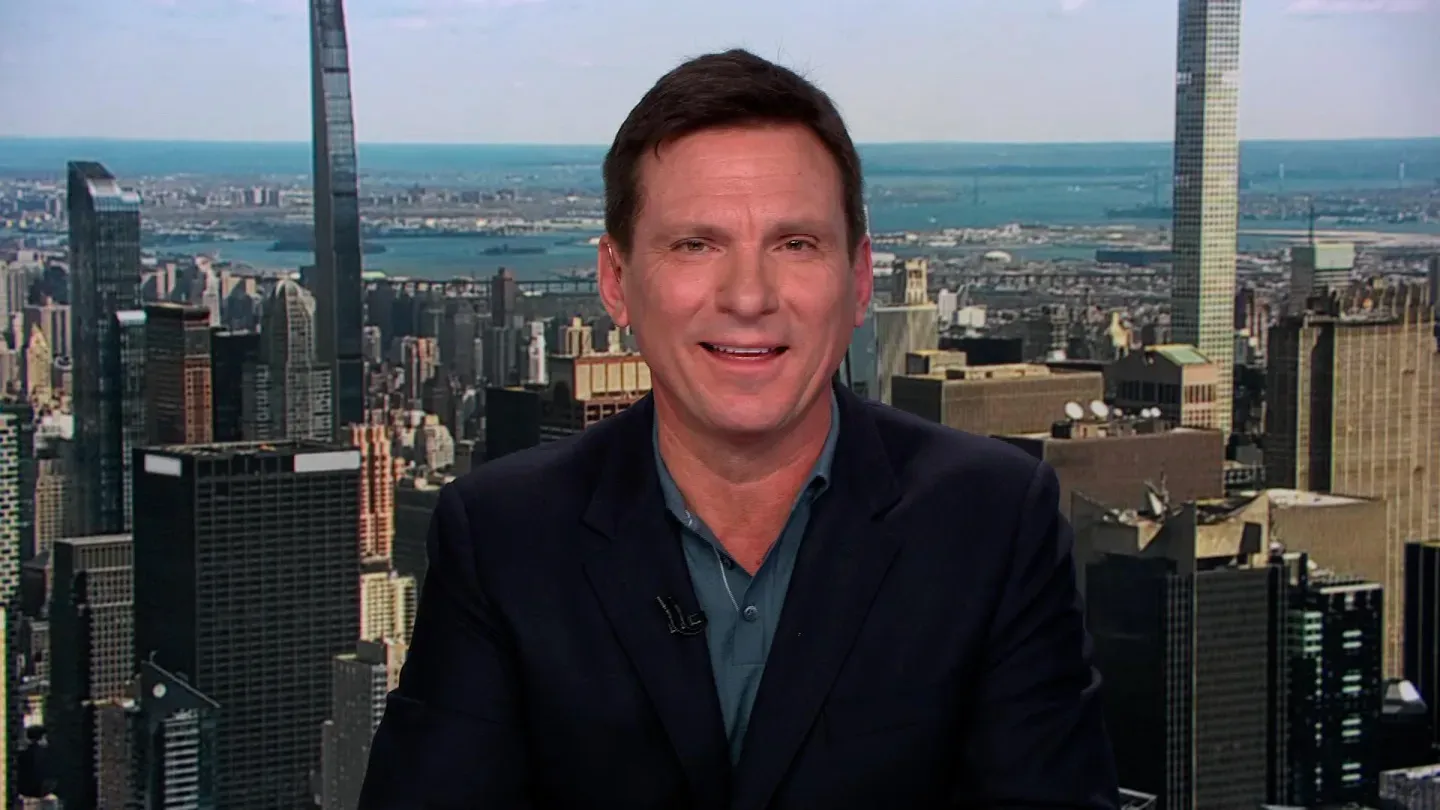
CNN's chief climate correspondent, Bill Weir, shares lessons from years of traveling the world.
(upbeat music) - Amanpour & Company is made possible by the Anderson Family Endowment, Jim Atwood and Leslie Williams, Candace King Weir, the Sylvia A. and Simon B. Poyta Programming Endowment to Fight Antisemitism, the Family Foundation of Layla and Mickey Straus, Mark J. Blechner, the Filomen M. D'Agostino Foundation, Seton J. Melvin, the Peter G. Peterson and Joan Ganz Cooney Fund, Charles Rosenblum, Koo and Patricia Yuen, Committed to Bridging Cultural Differences in Our Communities, Barbara Hope Zuckerberg, Jeffrey Katz and Beth Rogers.
And by contributions to your PBS station from viewers like you.
Thank you.
- Welcome to the program, everyone.
I'm Christiane Amanpour in London.
As the year comes to an end, many people like to look back and reflect.
But the legacy, so to speak, of 2024 will look different to everyone depending on their experience.
How we understand the past often shapes the present.
And tonight, we begin with two guests who think deeply about that process itself.
Historian Peter Frankopan and writer and broadcaster Afua Hirsch co-host the podcast, "Legacy," which questions the way we remember some of history's most revered and feared figures and everyone in between.
From Napoleon Bonaparte to Marilyn Monroe, Picasso to Cleopatra.
When the pair joined me here in London, we discussed whether it's time to rethink some of our historical perspectives and maybe even prejudices.
Welcome to the program.
- Thank you.
- So this is really interesting.
What was the sort of origin story?
Why did you decide and how did you decide to get together to do this?
Let me ask you first.
- Well, I'm not an academic historian.
Peter is, and I've been an admirer of his work for many years.
But my interest in history and the reason why I write and speak a lot about it is because of the way it shapes our contemporary reality.
The impacts of some of these heroes, titans, legends who live on in our curricula, in our films, in our contemporary storytelling, it's very real.
Whether you look at race, class, education, our sense of our identity in the world, you can trace much of it to the ideas we have about these people.
And I think it is so important for us to be honest about the legacy of these people.
And it's actually more interesting, the kind of hagiographies that we are used to seeing.
So for me, this was a chance to speak to someone who I hugely admire and respect, but with whom I share a slightly different worldview.
- Well, that's kind of interesting because I understand that when you first met to talk and discuss, you didn't exactly agree.
- Well, but we can still be very polite.
In today's world, the politicians shouting at each other, having different perspectives is not just okay, it's a really good thing.
You learn from people who see things from different points of view.
So some of the people we've looked at so far, like Napoleon and Cecil Rhodes, are hugely complicated, but history is always about legacy.
I mean, here you know that better than anyone, Christiane here on CNN.
When we think about how do we evaluate any person or event from the past, those things start to shift over time.
So after we did something, the first event we did many years ago was about whether statues should be taken down.
And I learned a lot actually.
It wasn't that we disagreed, it was listening to someone who's eloquent, clever, smart about how they see things and what matters to them.
It's a hugely important educational process.
- So then let's talk, 'cause you talk about the statues.
I will talk about Napoleon in a moment 'cause that was your first inquiry.
But the Cecil Rhodes statue is a big deal.
You're both Oxford knicks, if I can say.
You're a current professor, you were a student at Oxford, and Cecil Rhodes is on a plinth there at one of the colleges.
Now he was taken down in South Africa, but not here in the UK.
You wrote, I think you wrote a very famous Guardian column about all of this, statues, whether it was Nelson or Cecil Rhodes.
What is your feeling today, after all the Black Lives Matter, all the attempts to sort of recalibrate our look at history, today, all these years later, about the fact that it's still up there?
What would you discuss?
- I think we should listen more to the voices of people who want statues taken down.
And that the idea that removing statues is somehow destroying history is profoundly dishonest.
Actually, many of these statues were built long after the events they depict and were acts of political propaganda that served a political purpose.
They're not some kind of perfect, pristine monument to history.
And Cecil Rhodes, and the reason why it's great to do a podcast like this, he was actually profoundly controversial in his time.
Many of the most imperialist, patriotic Brits at the time thought he was ruining the name of imperialism through his corruption, greed, but he was also a very complex and flawed person.
And I think it's in the nuance that it's actually useful.
And it's not just to remember the past, but it tells us something about society today.
Who gets a platform to speak?
Who gets silenced?
And I think the way many of these protesters were actually attacked by the institutions that should have been looking into the claims they were making is an example of how unresolved a lot of this is.
And that's something we discuss in the episode.
- Well, you could make the case that a statue goes up and its aim is to fall one day.
It's who takes it down and where and why.
- That's novel.
- Well, all those statues of the Roman emperors, they all got replaced all the time.
In fact, lots had heads that you'd screw off and put somebody's head back on.
And mostly that's how it worked.
You were great and the good.
Those things kept on changing.
And if you could keep your statue up for centuries, you'd either done something really right or something really wrong.
So, when we talked about it, we stood outside by the Bicester Road statue.
And we kind of went, Oxford is filled with statues and no one bothers to pay any attention to them, including really important ones right in front of the Bodleian Library.
Most of the students who go in there will never think twice about who that might be.
And so, statues only become important when we need them and want them to become important.
And the Road statue became a kind of a cipher and a signifier for something really important because of Black Lives Matter.
- I mean, if Rhodes spent money on monuments to be named after him so people could remember him, I think the protests against Rhodes and the demands for Rhodes must all have been the best gift he could have asked for.
Because I don't think we'd have been talking about him today if it wasn't for that movement.
- And what about Napoleon?
Because, you know, I don't know, I think the research says that more books have been written about Napoleon than Jesus Christ or the Prophet Muhammad.
I mean, what is it about him?
Ridley Scott has just done a biopic.
I don't know whether it's a hagiography, but it's multiple hours.
And you have chosen him as one of your characters.
- Well, I think the whole point of someone like Napoleon is that even in France today, it's hugely contradictory and difficult.
We just spoke about that, about how, you know, is Napoleon the champion of France or the destroyer of lives across Europe?
You know, he was on the one hand, restored France's dignity after the revolution, but replaced the king with an emperor, unleashed hell across the whole of a continent, in fact, across wholes of continents.
- And if you look at the very fraught conversations about race that are happening in France, a lot of that is centred on whether Napoleon should be celebrated or vilified.
He reintroduced slavery in the French empire, affecting the lives of hundreds of thousands of people of African heritage.
And the way that these historical figures is contested is really a proxy for something deeper that we're trying to resolve today about the reason we have the kind of inequity that we have, the reason that we struggle to talk about history and identity, the reason some people feel they belong and some feel excluded.
It's so intimately linked to these histories and the way we talk about them.
And I don't think we can progress unless we're more honest, unless we're willing to lean into the uncomfortable conversation, because you can't progress by being comfortable all the time.
And we're really, I think, trying to embody that in our conversations.
- Well, and you have unbelievable figures like Nina Simone and Pablo Picasso, which probably fall into slightly different, I mean, they didn't, well, they did move worlds, obviously, but in different ways.
But I guess I want to ask you about your own writings on legacy.
You've just, well, recently published a major book on basically on the climate, haven't you?
And it's huge, and it's about our legacy for the future.
And there has been so little civilized dialogue for too many decades.
Where do you stand?
I mean, if that was one of your podcast subjects, the climate, how would our conversation about it, our examination of legacy and the future fall down, do you think?
- Well, I guess it probably would start with, why did we forget about the natural world?
You know, I think before the Enlightenment, biblical texts, every religion thinks about humans' relationship with the natural weather, whether that's to do with animals, with food, with plants, with water, with drought and famine, floods.
And I think that we sort of allowed ourselves to think that we could beat everything with innovation, with science and with money.
And so some of that question I think today is why have we gone through so many red traffic lights?
So, you know, we're now 35 years on from James Hansen giving his warning in 1988 that we had to really deal with a changing natural environment around us, and particularly with global warming.
And when we go back through all the different accords in Paris, in Rio, et cetera, it all feels like open goals that we've kept on missing.
So some of that I think is what we try to do with this podcast is you start by educating.
So when you listen to our four episodes about Picasso, you learn a lot more.
I mean, it's been such an education for me to spend much more time thinking about Cecil Rhodes' life than I ever thought I would want to do.
But then you sort of, the more you can ingest, the more you can learn, the more nuanced your answers are gonna be.
So I think with the natural world, it's how do we find ourselves at this place where scientists are talking about biodiversity collapse and existential problems for us as a species?
How can that suddenly be our world in 2024?
And how do we miss all the warning signals before?
- And your most recent book, "Decolonizing My Body" comes after "British," where you're essentially exploring your own history and what you want to tell your daughter.
So tell me what inspired you to write that.
Again, it is about legacy.
It's about how you were raised to think about your body, yourself as a middle-class English person, versus what families and communities are going through in one of the countries of your birth, Ghana.
- Actually, listening to Peter speak about his book, they're so closely related because one of the things that's happened to the world is the destruction and erasure of so many indigenous knowledge systems.
And that's been catastrophic for the climate because indigenous cultures understood living in harmony, avoiding excessive accumulation, understanding we are part of the natural world, but also for somebody like me with African heritage, it had a very deep psychological effect because I was growing up in a world that told me that my African indigenous history was savage, was backward, that becoming more European and colonized was progress.
And that legacy is so powerful.
Britain couldn't have maintained its empire through military might.
It relied on programming and brainwashing colonial subjects into believing that being British, being Christian, being European, being capitalist was better.
And we're so far from having unpicked that brainwashing and being able to see objectively the choices that we've made as cultures and communities.
I think the climate crisis is one of the ways we're waking up to the fact that many of those choices were bad, were catastrophic.
And for me, it's also about being a woman, being a woman in the public eye, getting older and realizing I come from a culture that celebrates aging and women, that regards it as incredible success, becoming more beautiful, having more status.
- Wisdom.
- Wisdom, power, use in the community.
And actually I live in a society that tells me that aging is bad, that you become less desirable, less attractive, less useful.
And when I really realized that I kind of had a choice, which of these mindsets I would embody as I grow older, it was a complete no-brainer.
I thought, would I choose the culture that tells me I'm useless and unattractive or the one that celebrates me?
And so that really helped accelerate my journey.
And that's what I write about really honestly in the book.
- What are some of the other characters who you're looking at, your favorites, for instance?
I mentioned Nina Simone and Picasso.
Have you done those already?
- We're recording them just next week, but then Gorbachev as well.
Again, here in the West as a hero, we see him as the man who helped bring down the Soviet Union rather than how we see it in Russia, let alone in China as the man who destroyed everything.
And Gorbachev was trying to save communism, not to open it up.
So we've had a lot of discussions.
I mean, it's one of the fun bits than sitting with Afua and going through our list of who we'd like to do in the future, people like Kissinger.
The list is enormous through to religious figures.
What Afua says is really important that we can't just focus on men from Europe.
It's about how do we make that world more diverse?
And these episodes we do, there are four in each series.
So there's a lot of information, a lot of learning.
- Afua Hirsch, Peter Frank, and thank you so much.
Next to an extraordinary moment in modern history that reads like today's headlines.
Four decades ago, right here in London, six gunmen stormed the Iranian embassy and held 26 people captive.
The hijackers were opposed to the Ayatollah and hoped that these actions would lead to autonomy for Khuzestan.
It's an oil-rich region of Southwest Iran.
The crisis gripped the world's attention as it unfolded live on national television.
Author Ben Macintyre has the inside story in his new book, "The Siege," and he told me all about this riveting tale.
Ben McIntyre, welcome back to the program.
- Thank you so much.
- With yet another rollicking true story that you've turned into an amazing book called "The Siege."
What is "The Siege?"
- On the morning of the 30th of April, 1980, six armed gunmen burst into the Iranian embassy and took 26 hostages.
- Here in London?
- Here in London, right in central London, overlooking Hyde Park, a beautiful, huge 56-room Georgian townhouse.
And there, they held these hostages for six days.
And it was absolutely on every news channel, every newspaper.
It was the biggest terrorist incident that had ever happened in the UK.
But if you ask people what that was about, that story today, most people will think that it was something to do with Islamic fundamentalism, because 1979, as you know, had been the Iranian Revolution.
A new government was in place.
In fact, these six gunmen were Arabs opposed to the Iranian government.
They were fighting- - They were anti-Ayatollah.
- They were anti-Ayatollah.
And what's more, they were bankrolled and armed and trained by Saddam Hussein.
- Who wanted to overthrow the Ayatollahs?
- He wanted to destabilize the Iranian regime.
This was really the first battle, if you like, in the Iran-Iraq War, which would erupt a few months later.
- Okay, so let's just go back a little bit.
So we know who the hostage-takers were, the terror group.
Who were the actual hostages?
There were 26 hostages inside that embassy for six days.
- They were an extraordinary mixture.
Some of them were Iranian diplomats, newly appointed by the Islamic Republic, hardliners for the most part, ideologues, people who backed the Ayatollah.
Then there were Iranians who were employees from the previous regime who had supported the Shah, and they were nothing like the fundamentalist lot.
And then there were people who just happened to be in the wrong place at the wrong time.
There were two journalists, two BBC journalists, Chris Cramer and Sim Harris.
Chris Cramer, you might know.
- Oh, I know him very well because many years later, he became president of CNN International.
- That's right.
- And I remember him telling that story, and he really quite suffered from the anxiety of it for a long time afterwards.
- He did, he felt a real guilt, actually, because he was one of the very few who were released early, and he felt that he had kind of inveigled his way out.
So it hung over him for a long time.
But there were other people who simply had been passing and happened to be in the waiting room.
There was a carpet salesman.
There was a man called Ron Morris, who was the major domo in the building, who sort of looked after it all his life.
And in a way, that's what I found fascinating about this book.
It's really a story about ordinary people who get caught up in this appalling situation that they can't control.
- You really get a sense that there's so much, I don't know if this is the right word, humanity about it.
The hostages themselves, I mean, I know there's the Stockholm syndrome, and then you talked about another syndrome, the Lima syndrome.
In other words, there was a relationship that developed between them.
- Very much so.
I mean, you get this a lot in hostage situations, where the captors and the captives develop a kind of bond.
The gunman would give long lectures to these hostages about why they were doing it and why, you know, Arabistan mattered.
And by the end of it, even some of the hardline Iranians were saying, well, they've got a point.
They've become a philosopher.
- You also talk about things that I'd never heard of before, how the hostage, the captors, gave their captives Valium to sort of de-stress them at night, sort of canvass them about what kind of food they should order in to keep them alive.
- Yes, they'd arrived with medicines that were intended to keep their captives calm.
That's not what you associate with sort of terrorism.
They weren't there to, in a way I've tried to avoid the word terrorist because it's such a loaded word.
These were men of violence, don't get me wrong, and I'm not defending them, but they did not intend to instill terrible terror in the local population.
They thought they would be able to take these hostages, barter them for political prisoners held in Iran, and then they believed they were going to go home.
But they demanded that, as you say, of this new British prime minister, Maggie Thatcher, who had to prove herself in this case.
And you write and others wrote that this, the way she behaved was what made her the Iron Lady, what gave her that nickname.
So tell me what her instructions were to her forces, to her government.
- This incident showed both the best, and you could argue the worst of Maggie Thatcher.
I mean, she was incredibly resolute.
I mean, she made it absolutely clear that these gunmen were not going to get what they were demanding.
They were not going to be given a plane and simply flown back to the Middle East.
On the other hand, she was also extraordinarily kind of... She was also quite pig-headed in her way, and she just, she didn't give the police much to negotiate with.
And the lead gunman, who was no fool, quickly realised that he was in an impossible situation, and the tension began to ratchet up almost impossibly.
So they had not factored in one important, crucial element, which was Margaret Thatcher.
This was before the absolute kind of clamp down on no negotiations with terrorists, but it did also inform Thatcher's attitude towards terrorism generally.
I mean, the IRA situation was then critical, and from this moment on, she had absolutely no intention of negotiating with any kind of terrorists, but it was a real gamble on her part.
I mean, had it gone wrong, and she was warned before the final assault took place on the building by the SAS, she was warned there would be 40% casualties if they were lucky.
If that had happened, that would have been the end of Thatcher's regime.
And that, if they were lucky, in the event, they had almost total success.
So let's go back to what launched the assault by the SAS.
What was the criterion that they had agreed, that if such and such happens, we're going to go in?
Thatcher had laid down a rule that if one hostage was killed, negotiations could continue for a time, because it might be an accident, there might be some explanation for it.
If two hostages were killed, the SAS would go in.
And the SAS, bear in mind, had been waiting in the next door building since the first hours.
And they'd been listening, right?
They'd planted listening devices.
They drilled holes through the building and lowered listening devices down the chimney.
Every food packet that went in was also a bugging device.
So they had a pretty good idea, or thought they did, of where everybody was in the building.
But so she said, if they start killing hostages, plural, we go in.
Now, there was brewing tension inside that building between the extremist gunmen, but also extremists on the Iranian side.
There was one particular character called Abbas Lavassani, who was a member of the Revolutionary Guard.
He's a hostage.
He was a hostage.
But he was also there, he was really a spy inside the embassy to maintain ideological control over the other people employed by that.
So he was a really hard line.
In a way, he was just as hard line as the gunmen.
They came to conflict.
They came into direct conflict.
And he was murdered.
In the final closing moments of this extraordinary scene, he was killed.
And his body was rolled out of the front door.
But there had been another set-- there'd been a separate set of volley of shots, which was interpreted by the police as being another hostage had been killed.
And so when Thatcher heard that, she triggered what they called Operation Nimrod, which was a full-scale military assault on the building.
And the extraordinary-- one of the extraordinary factors here is that the BBC, the British Broadcasting Corporation, broke into it live programming.
Apparently, the first time this had happened.
First time it had happened.
And in the midst of a very important snooker match.
I was one of 14 million people watching that snooker match as a teenager.
I was 17 years old, and I was-- we were glued to the final frames of a snooker match.
And it was Hurricane Higgins against Cliff Thorburn.
It was as exciting as snooker ever gets.
And we were on the edge of our seats.
And suddenly, without warning, it moved straight over to live footage of men in balaclava helmets with machine guns breaking into this building, throwing bombs-- what appeared to be bombs-- inside, and then sort of dashing inside.
It was the most dramatic television anyone had ever seen.
There had been footage of extraordinary events-- the killing of JFK and the moon landing-- but never live television that entered everybody's sitting room at the same time.
Not just on the BBC.
On all three channels-- and there were three whole channels then-- all three of them broke live to this day.
And the result was what?
Of all the hostages who had been taken, how many were rescued?
All but one.
So there was Lavas Lavasani, the revolutionary guard who was killed.
Another hostage was killed in the crossfire.
But all the other hostages were rescued.
It was an astonishing military achievement.
And it catapulted the SAS to prominence.
They became a sensation.
People queued up.
I mean, young men began queuing up outside recruitment centers saying, give me a balaclava and a machine gun, and I'll go and do this.
And in a way, the SAS has struggled with that ever since-- the tension between the celebrity of this secret unit and the need for secrecy.
It's hard to be both.
Of the captors, of the group that started this, how many of them survived?
One.
Five of them were killed by the SAS.
The one survivor-- and we were talking about Stockholm syndrome-- concealed himself among the women hostages inside.
Of course, we didn't talk about the women.
There were six women inside this building whose stories have never been told before.
Why?
They were secretaries.
They were people who'd served the old regime.
They'd been there under the Shah's regime.
And there's one particular woman called Roya Kagachi, who was extraordinary.
I mean, she was the senior secretary in the embassy.
And as anybody knows, in an embassy, the most important person running the whole place is the senior secretary.
She knew exactly how the whole building ran.
And she managed to keep everybody calm.
But as they were taking out the one surviving gunman, he hid among the hostages as they were being taken out.
And they protected him.
Some willingly, clearly, clustered around him to try to protect him.
And he survived.
He served a long, long sentence in Britain.
He served for terrorism offenses.
So all that happened.
What was the result of that?
It was a moment when hostage-taking had become-- and particularly hostage-taking inside diplomatic premises-- had become a kind of rage, if you like, with terrorists.
It was the sort of fashion of the day.
After this, it barely happened again.
It's very interesting.
It had a complete deterrent.
In fact, it didn't stop terrorism at all.
But it meant that the sort of, as it were, the plates of terrorism were beginning to shift.
The IRA were also watching television that bank holiday Monday.
They were paying very close attention to what was happening.
Again, they didn't really take hostages again after this.
It had an extraordinary deterrent effect.
Thatcher, as we said, was at the beginning of her premiership.
The Falklands conflict erupted quite soon afterwards.
And there is an argument to say that it was Thatcher's experience with the military, this highly successful operation, that rather shaped her attitude towards that conflict.
Some of her sort of rather gung-ho attitude towards that emerged.
And ever afterwards, she would be pictured by newspaper cartoonists in sort of full combat gear, abseiling down the outside of Big Ben.
It became a motif for her premiership.
And she was incredibly proud of it.
There was another hostage who also worked in the embassy.
He was the guard.
P.C.
Trevor Lock He was part of the diplomatic security detail.
And he was one of those, obviously, kept and kept captive.
But he had a gun in his coat, or under his arm, attached to his body, that he never revealed.
Tell me about that.
Well, this was an era, 1980, when British policemen, on the whole, were not armed.
I mean, the ordinary beat policeman didn't carry guns.
But if you were a protection officer, you carried a revolver.
He did not want to be a kind of front line cop.
He wanted to have a quiet life.
And yet, he is, in a way, the hero of this whole story.
Because when the gunmen attacked, he was supposed to be standing guard outside.
Standing guard is a rather energetic word for what Trevor was doing.
Trevor was having a cup of coffee inside.
And as they burst through, firing machine guns, the glass from the shattered security door went straight into his face.
So he was covered in blood.
But as he staggered back, he managed to press the emergency button on his lapel.
They began-- the gunmen began searching everyone they could see.
But they didn't find his gun, which he kept under his tunic.
He kept it under his tunic for the next six days.
Why?
Why didn't he use it?
Because he calculated that, had he pulled it out, he would have been shot dead.
They would all have been shot dead.
These guys had machine guns and hand grenades.
That against a pistol, a .38 Smith & Wesson.
On the other hand, he did pull the gun in the end.
I'm not going to give away-- No, don't.
--how he pulled the gun.
Spoiler alert.
But like Chekhov's gun, it plays a very important part in the very final denouement of this story.
And Trevor's an extraordinary man.
I mean, he was awarded the George Cross for what he'd done.
But this gives you a measure of him.
He immediately lost it because he put it in his wife's sewing basket and forgot where he'd put it.
Do you know what happened to that group or to the rights of that group in Iran?
This is one of the sort of ironies of this story, really, which is that that campaign, that attempt to win autonomy for that oil-rich part of Iran, is as obscure and forgotten today as it was 43 years ago.
Terrorism doesn't work in that context.
It didn't achieve what they wanted.
The Arab minority is still a thoroughly second-class group within Iranian society.
In fact, many people have never heard of the Arab minority in Iran.
It comes as complete news to them.
And but for an accident of history, "Arabistan," as they called it, would have been another Kuwait, another Qatar.
It would have been a very, very oil, small, oil-rich state.
So this is the way history works.
And yes, I mean, in a way, the whole episode achieved nothing.
Ben Macintyre, thank you so much.
"The Siege."
Thank you.
Well, while some history might be forgotten, other stories are etched into the record books.
That's certainly the case for my next guest.
Tennis stars Chris Evert and Martina Navratilova had one of the great sporting rivalries of all time, each holding the top spot as world number one, each winning 18 major singles titles.
Fierce competition then became close friendship.
And that took on a whole new dynamic when they were each diagnosed with different forms of cancer.
I spoke to them earlier this year about the twists and turns of their journey together.
Chris Evert, Martina Navratilova, welcome to the program.
I want you to take me back just for a moment to the finals of the French Open when you both presented in a joint capacity, the female trophy.
It was to Iga Swiatek as she had won.
You know, it was an honor.
I have to say, I have to be honest, I was not on the roster to present that trophy on this big 50th for me.
Martina was on the roster.
And when Martina heard that it was my 50th anniversary, she quickly went to the French Federation and said, "No, no, no, no, no, no.
Chrissy has to present this with me.
It's her day too."
So that's how generous of a friend she was.
And we both got to present it, which was great.
So it kind of was glorifying, you know, not only the fact that it was my 50th, but also of our rivalry, you know, over all those years and somehow some of our most interesting matches were at the French Open.
So it was quite a thrill.
And, you know, we're so far away from that time period of competing that you feel like kind of a little bit of a stranger when you're walking on that red clay court.
- Martina, that's an incredible anecdote that you, you know, suggested that Chrissy join you.
But it does talk about your relationship, your friendship, your rivalry.
And I just want to first ask you about the epic battles you fought across the net at Roland Garros.
What stands out to you about some of those matches?
- Oh my goodness, there's so many.
There's a few, but let me just say, for me, it was more about not the 50th, 40 year anniversary, although it was that, but it was that we were still both there after our epic battles with cancer.
So it was more symbolic on that front for me rather than the anniversaries.
But the matches, I mean, I lost to Chris in '75 in the finals and then we played doubles together and we warmed up for the final together because we were the only people left there.
And we were such good friends.
We were like, okay, we'll just warm up for the final together.
- Okay, so- - And then she of course wiped the court with me.
- Oh, but that's amazing because when you hear that, you think, oh my God, they practiced together.
They were meeting each other in the final.
And I hear you also had lunch together beforehand.
Tell me about how that was.
I mean, the two of you, does that even happen now?
Do players have that kind of relationship now?
- Yes, I mean, in our day, it wasn't big business, Christiane and there wasn't a lot of prize money and it was just start, Women's Tennis was just forming, so we all had camaraderie and we traveled together like in a pack and now it's big business.
I mean, you're talking millions and millions and millions of dollars, prize money, endorsements, appearances, and these teams are constructed of like five or six people now with the physio and the hitting partner and the coach and the psychologist.
And it's just so different.
Everyone really sticks to themselves now.
So it can't be done now, no.
- So you mentioned the money.
I mean, Martina, you're known for having been the first to win a million dollars in prize money in one year.
By 1986, I think you had won 10 million.
You broke all sorts of earnings records.
- Well, the growth was really exponential because I think it was 1971 when Billie Jean won $100,000 in a year and she won 19 out of like 31 tournaments that she played in.
That's what it took to win 100,000.
So, 15 years later, I won a million and now they're getting 3 million for winning one tournament.
And on top of that, we were not getting equal prize money with the men at the majors other than the US Open.
So it's just been an amazing growth, obviously, particularly for the women.
And we've been leading the way for women to ask for more money, better salaries because of what they see on the tennis tour.
So we've been kind of paving the way for women everywhere, not just in sports.
- Yeah, and of course, you mentioned Billie Jean, your friend, occasionally, and more often, she played against both of you and she was the early forerunner for this equal pay.
What was it like when you two first met each other?
I mean, Christy, when you came on the stage, you were a teenager, you had this straight hair pulled in a ponytail, the first with the double-handed backhand and lots of young girls looked up to you and I guess were inspired to come into the game.
But what was it like sort of blazing that path?
- Well, I mean, gosh, I had my first, I was a top junior player and then I had my first big win over number one in the world, Margaret Court, when I was 15 years old.
And that's probably when it all started.
And I think that Martina and Billie Jean, I was in the era of two very strong, strong women, but I think if I had one thing that I can remember the most was that I brought, I think I helped to bring a lot of young girls into the sport and say, okay, it's okay, it's okay to sweat, it's okay to have muscles, it's okay to get mad on the court, it's okay to be strong.
And, but I went out of my way, Christiane and I have to admit, I wore the pigtails with the ribbons and I wore the ruffles on my bloomers and I wore nail polish and I mean, I still wanted to be a teenage girl.
So there's always a little push and pull of, I wanna be a high school girl and I wanna go out on dates, but I still wanna be this tough competitor on the court.
And now I think that was something that I think nowadays, look what's happened now, these women tennis players, they have the most beautiful, strong, muscular bodies, they're tough on the court, they're smart.
And this is what has come to from the last 50 years of progression.
Martina, you're the one who pioneered, right?
The tough, strong body, the muscles, the diet, the training, right?
No, yeah, for women's tennis, for sure.
Well, yeah, I took it to a different level, but I mean, Billie Jean and Margaret Corr, they were training hard, but I think I took it to another level, off court training and the diet as well.
But I think nowadays, some of the players are wearing more mascara than Chris ever did, anyhow, but they are definitely in better shape because they have to be, everybody's hitting the ball bigger, harder, the rackets enable you to swing bigger and you have to be in better shape, you have to be fast.
But yeah, the mascara is still there.
Chrissy was the epitome of an athlete that was feminine, I was just an athlete, I was never feminine, never felt that way, but always a woman and competing the best that I could.
And my mom used to tell me wear long sleeves so I would hide my muscles, but at the end of the day, I'm like, this is what it is and I wore sleeveless, so here we are.
- And of course, because you had come from, at that time, the communist bloc, Czechoslovakia, they called you a commie, they criticized your muscles, you were openly gay when you came out, I think it was in 1981 and you got criticism for that or some backlash at the time.
Can I just ask you to take us back to what it took to defect?
What made you decide at that young age, you're a teenager, to leave your home and know that you couldn't go back except under risk of prison and arrest?
- Yeah, that was the hardest and biggest decision of my life.
I realized that summer in 1975 that I was not free to make my own choices, that I was always going to be at the beck and call of the Federation or some guy that would decide whether I can or cannot go to the US Open or the Wimbledon or wherever.
So that's when I decided I can't be beholden to someone and I needed to be free to pursue my dream.
And I knew it was the one way ticket from my home country.
It was brutal, but I knew that I would be okay, I knew my family would be okay, and that one day we would hopefully be together again, but I knew that was the only way for me to move forward and not just disappear into the communist pit hole.
- And Chrissy, you talk about when Martina did go back, when you both played in the Fed Cup in Prague, it was the first time Martina had been back since her defection and the media was banned from talking about her and officials didn't mention her name.
What do you remember of that?
- I remember when Martina called me to ask me to play and for her to say, "It would mean a lot to me if you were on the team with me, but I can't guarantee your safety."
I was like, "Oh, whoa, no, no."
But I jumped at the chance to be with my friend and I was really curious to see how they would react.
And as soon as we landed, as soon as we got out there on the court before our first match, there was a standing ovation for Martina and women were crying.
Women were crying because Martina did what they always would dream about doing, but were too afraid to do.
Martina defected from a country and found her freedom in America.
So they were very, very, very supportive of Martina, even in the finals when we played Czechoslovakia.
Ironically, we played, at that time it was Czechoslovakia, now it's the Czech Republic, and the crowd was 100% for Martina, even against Hanna, who was from that country.
And even the officials, the government officials who were watching who never uttered her name and never saw her name in print, at the end, everybody gave Martina a standing ovation.
So, I mean, it really surpassed anything sports.
I mean, it went into human life.
You know, that transformed into a whole 'nother area of politics and life and love and the purity of what sports can do.
Martina, it must have been really moving and vindicating for you.
It was amazing.
It was so bittersweet, you know, because I missed all those years of my family, I missed all those years of being in my country, but now I was showing people what can be done and kind of showing up to the government.
I saw my grandmother for the last time when I was going back to the airport when she passed away about two months later, but at least I got to see her one more time.
And then I cried when the plane took off because I could leave, but the 13 million people in the country couldn't leave.
So, but at the same time, we kind of uplifted the people that did come to see us play.
And they did end up writing about me in the newspaper.
They just couldn't not write about it.
Your rivalry, your friendship also crystallized and took a whole different turn, I think, when the both of you got cancer practically at the same time.
It is an extraordinary story.
You've done one major interview about it, and it's incredibly, incredibly moving.
Chris, walk us through a little bit of your part of this story, how you both were diagnosed, what it meant to your friendship.
I, you know, I have to say before I start that journey, I have to say that I think the last few years of our rivalry is when we really, really got tight.
Because, because Christiane, we were the only ones left in the locker room every Sunday during the finals.
And we would look at each other, and we finally figured out, you know, we're not only competitors, we're people.
And Martina had feelings, and Martina had a private life, and Martina had emotions, and so did I.
And we were very vulnerable with each other those last Sundays that we played in the finals.
So, I mean, I think that's what started the ball rolling.
And then ironically, you know, Martina got cancer first, but I mean, I can only tell you about my journey was having ovarian cancer.
My sister Jeannie died from it, and I found out that I had the BRCA gene.
So, you know, I went in for preventive surgery to basically get a hysterectomy, because I had a 40% chance of getting ovarian cancer.
And they found out that I did have ovarian cancer, and I wasn't feeling anything.
I mean, that's why this ovarian cancer is so insidious and so sneaky, 'cause you don't feel anything.
But I was stage one, I was lucky.
So I went in, had the hysterectomy, they had to go in more to see if it had spread.
It hadn't spread.
So I had my chemotherapy, and unbeknownst to me, two years later, Christiana, it returned into my pelvic area.
So I had to go through the whole thing again, the surgery and chemo.
And meanwhile, Martina was fighting her own battles with breast cancer twice, I believe, and throat cancer.
And so we were going through, you know, she was going through radiation and chemo, I was going through chemo, but we were staying in touch and just thinking about how ironic our life has been, things are happening to us the same, things are happening to us simultaneously.
And that's really how we got so close.
- It really is an extraordinary story.
And Martina, you also talk about telling Chris and how Chris called you and told you.
What did your friendship mean in terms of, you know, the support that you needed to get through this?
- Well, you know, Chris was one of those few people, maybe two or three people that I knew, and I've said this for decades, she's the one, one of the three people that I know I could call at three in the morning and say, "I need you."
And she would ask, "Where are you?"
And I'm on my way.
And I was obviously the same for her.
So we had this connection for a long time, but this cancer really, in a lousy way, brought us even closer together because we had so much empathy for each other for such a long time.
And now we were fighting for each other instead of against each other.
And so that support was, I think, that much more meaningful and strong.
And Chris went, my cancer in 2010 was nothing compared to what Chris went through two years ago.
And then mine went last year.
And then Chris returned again this year.
So she kind of bookended me.
And we kind of had that inner radar of when to call or when to text and say, "How are you doing?
"How's it going?
"What can I do?"
It was quite extraordinary.
It was almost like twins.
And at my lowest, when I felt the worst, there was Chris calling or texting and just pick me up right up.
And I try to do the same for her.
- You've both been public about it, which is great for other people who are also trying to figure out how to get through these kinds of huge trials.
But you're also both still working.
I mean, you're in your late 60s and you're still working a lot because the TV work that you both do around all the majors is a lot.
It's a lot of work.
What does work to you mean today, Chris?
- I wanna keep busy.
I want to, I mean, after that second bout of cancer, I think I realized I better start living the life, the best life that I could ever live.
And at that point, I've been so privileged to be in a sport like tennis, where I gained so much that I just wanna give now.
And I wanted to, you know, I have my tennis academy.
I work for ESPN.
I work for the USDA Foundation, the charitable side of it.
And I'm still a mom.
And I think, you know, I just wanna keep working and keep busy and keep my mind going because I don't know, you know, we live day to day, by the way.
I mean, Marti and I are getting CAT scans every three months.
You know, that's the telltale sign.
So we're just trying to make the best of each day that we have.
And that is, I don't wanna be one of those women who, you know, has their nails done and has their hair done and just, you know, walks around the block.
I wanna be vital and I wanna be useful, useful.
And I wanna tell women also, I wanna be an advocate to go out and get genetic testing and take care of your body and know your family history.
You know, I think Martina and I are both wanna get those messages out.
- And on the personal side, Martina, both of you have great personal news because you have, with your wife, adopted, I believe, Martina, two young boys.
Chrissy, you've just become a grandmother for the first time.
What does that mean to you, Marti?
I mean, almost, why now?
Why now?
- I'm just trying to follow in Chrissy's footsteps.
I don't think I've done that in my life.
Our lives are so parallel, but now she's a grandma and a mom.
Let's see, I need to get my roots done.
I haven't had a chance to do that the last couple of weeks because of those two boys, but it's been an amazing experience.
And yeah, and for me, working and doing the commentary means, as Chrissy said, staying current.
I like to share my love for this sport and try to give people something that they can learn watching the comments.
And it's nice to be connected to the sport.
My checkups are only every six months.
And in fact, during the SOPA, I'll be doing my throat cancer checkup.
So you're always holding your breath, but then you get the all clear and you just breathe freely for a while and appreciate every single day that you have.
- Fantastic to talk to you both, Martina Navratilova, Chris Evatt, thank you for joining us.
- Thank you, Christiane.
- Thank you.
- And finally tonight, we've discussed legacies and histories, but we want to finish by looking forward.
Climate correspondent, Bill Weir, has spent years reporting on the impacts of warming temperatures, but amid much despair, he is still hopeful for the future.
His book, "Life As We Know It Can Be," looks at some of the solutions to climate change, which he told me about when he joined me from New York.
Bill Weir, welcome to the program.
- Great to be with you.
- And I just want to ask you, 'cause it's so important to give people hope and to focus on things that actually go right.
So just this, as I said, you've been covering it for so long, what now gives you hope?
- Well, what gives me hope, Christiane, is that we are really just made of stories.
Everything in our lives are stories we agree on in the moment, and those stories are under constant revision.
We are going through sort of an invisible industrial revolution right now as the world electrifies.
Texas, maybe the reddest state in the United States, leads the country in green energy, way more than California and Florida.
They're putting more solar online because the economics just make sense.
For the first time in human history, our cheapest fuels are not the ones we have to burn.
The cheapest fuels are now solar plus battery and onshore wind, and the economics are trumping the ideology and sort of the political resistance in places like Texas right now.
And so in this book, I'm trying to impart to my kids both a warning about the world we built for them by mistake, but all these amazing doers and dreamers and helpers who are trying to find a better future for everybody.
- You know, you talk about your kids and dedicating this book to them, and even in the book apologizing for our generation's failure.
Nonetheless, we're trying to do what we can.
But you also say that none of this that you've just said, the successes, the movement, would have happened without young people.
- Exactly, exactly.
That it wouldn't have happened without Greta Thunberg, one young person who decided to start skipping school and have this lonely climate strike, and that caught the imagination of her peers around the world and of one of the plus sides of social media, a CanCreate community, that then when they went out into the streets and camped out into the halls of the Senate on Congress and shouted down the corridors of power, absolutely helped move the needle on the most ambitious climate legislation, not only here but around the world.
And we can argue over the strengths or weaknesses of that policy, but those kids deserve some credit, I think.
- And not just young people, but old people, elderly people.
I don't know what you thought about the success in Europe in a Swiss court, the Swiss grannies basically taking their human rights not to be overheated to court and winning.
- Exactly.
That is sort of the other end of the age spectrum from the kids in Montana who won a climate case there, the first constitutional right to a healthful environment.
Other states now trying to add that in.
There are dozens of cases in American courts where municipalities, states, tribes are suing big oil companies for essentially lying to the public for generations about the harm they knew that their product would cause.
It is those grannies turning their anxiety into action in a peaceful, systematic way, and we'll see if that catches fire anyway.
Ultimately though, Christian, they're up against the richest companies in human history who not only are enjoying the most biggest profits in human history, but are still getting billions in direct and indirect subsidies.
So the social license of our fossil fuel lives, very few people pick at gas stations.
They go after pipelines, but until the consumption piece of this is sorted out, but ultimately the decision makers who could shift their business model to a much more sustainable direction as some in Europe have done, you could fit these guys, the C-Sweeters, in a few big buses.
So while it's important, I think, for our kids and our families to understand each decision has a cost, the decision makers now more than ever are the ones that are gonna move the needle.
- Indeed, and of course, that means it's not just individual citizens, good citizens, recycling and maybe cutting down on meat and doing everything they possibly can.
It does take, as you say, these corporations.
I don't know, maybe a little bit like the pharmaceutical industry was challenged.
Maybe like the tobacco industry was challenged.
I don't know what you think about that.
But tell me a little bit about being the correspondent covering this.
You've been doing this for years now, and obviously you have hope, but what have you seen that just drives you nuts, particularly in partisan divides and reluctant communities?
- What drives me nuts are the people who know better, sowing doubt or getting in the way, either for power or profit or platform, whatever the case may be.
The defense forever was we didn't know.
We learned along the science along with everyone else.
Well, now you know, so what are you doing next?
But Christiane, I remember when we were together during Fukushima back in ABC News days, and I cut my teeth on Hurricane Katrina in New Orleans and really got a master class at the sort of collision between nature and human nature.
Then when I got the Wonder List at CNN, I was able to go to the other side and visit the happiest, healthiest, most resilient people around the planet, and sort of take those ideas, cautionary tales from other disasters, and hopefully we're learning from these and we're able to fortify our communities and connect with each other now when the skies are relatively blue, because there's a lot of pain that is baked into our future, and we need to get our kids in love with nature, what's there to save.
There's so much left to save, but also understand they can't take certain things for granted the way we did, like air, water, temperature, food, and shelter.
- Exactly, and I do think it's extraordinary that you have done the whole sort of world tour, so to speak, of seeing the great stuff, seeing the not so great stuff, and coming to these conclusions.
But I wonder what you think about the messaging and the storytelling.
I remember Christiana Figueres, who was the wonderful UN climate rep who basically shepherded through the 2015 climate, you know, treaty back in Paris.
She was always telling us, "Don't just focus on the doom and gloom."
"You must give people hope.
"You must tell them about the successes."
Do you think we do that enough?
- No, I don't, and I've learned this on the job, you know, as the first sort of chief climate correspondent of any network.
We're sort of making it up as we go, and it's tempting to lean on the fear and warning button, 'cause there's plenty of reason for that.
But we resonate with stories because there's an arc, and there's always a hopeful arc.
The person who taught me the best tip for covering climate was Mr. Rogers, who said when he saw something scary on TV, his mother would say, "Look for the helpers."
There's always helpers rushing into disasters.
And so now I get to go meet helpers who are building thermal battery plants, or are figuring out ways to use nature-based solutions to pull carbon out of the sea and sky.
And they are imagining a better world for their kids.
And I think the more we share that, it's sort of a double-edged coin.
You gotta hold sort of fear and hope in your head at the same time.
- Bill Weir, our correspondent and author of "Life "as We Know It Can Be," thank you so much.
- Thank you, Christiane.
- And it is important to maintain that hope.
That is it for now.
Thank you for watching, and goodbye from London.
(upbeat music) - "Amanpour & Company" is made possible by the Anderson Family Endowment, Jim Atwood and Leslie Williams, Candace King Weir, the Sylvia A. and Simon B. Poyta Programming Endowment to Fight Antisemitism, the Family Foundation of Layla and Nikki Straus, Mark J. Blechner, the Filomen M. D'Agostino Foundation, Seton J. Melvin, the Peter G. Peterson and Joan Ganz Cooney Fund, Charles Rosenblum, Koo and Patricia Yuen, Committed to Bridging Cultural Differences in Our Communities, Barbara Hope Zuckerberg, Jeffrey Katz, and Beth Rogers, and by contributions to your PBS station from viewers like you.
Thank you.
(upbeat music) - You're watching PBS.
[MUSIC PLAYING]
 New Episode
- News and Public Affairs

Top journalists deliver compelling original analysis of the hour's headlines.
 New Episode
- News and Public Affairs

Today's top journalists discuss Washington's current political events and public affairs.
 New Episode
 New Episode
 New Episode
 New Episode
 New Episode
 New Episode
 New Episode
 New Episode
Support for PBS provided by: