
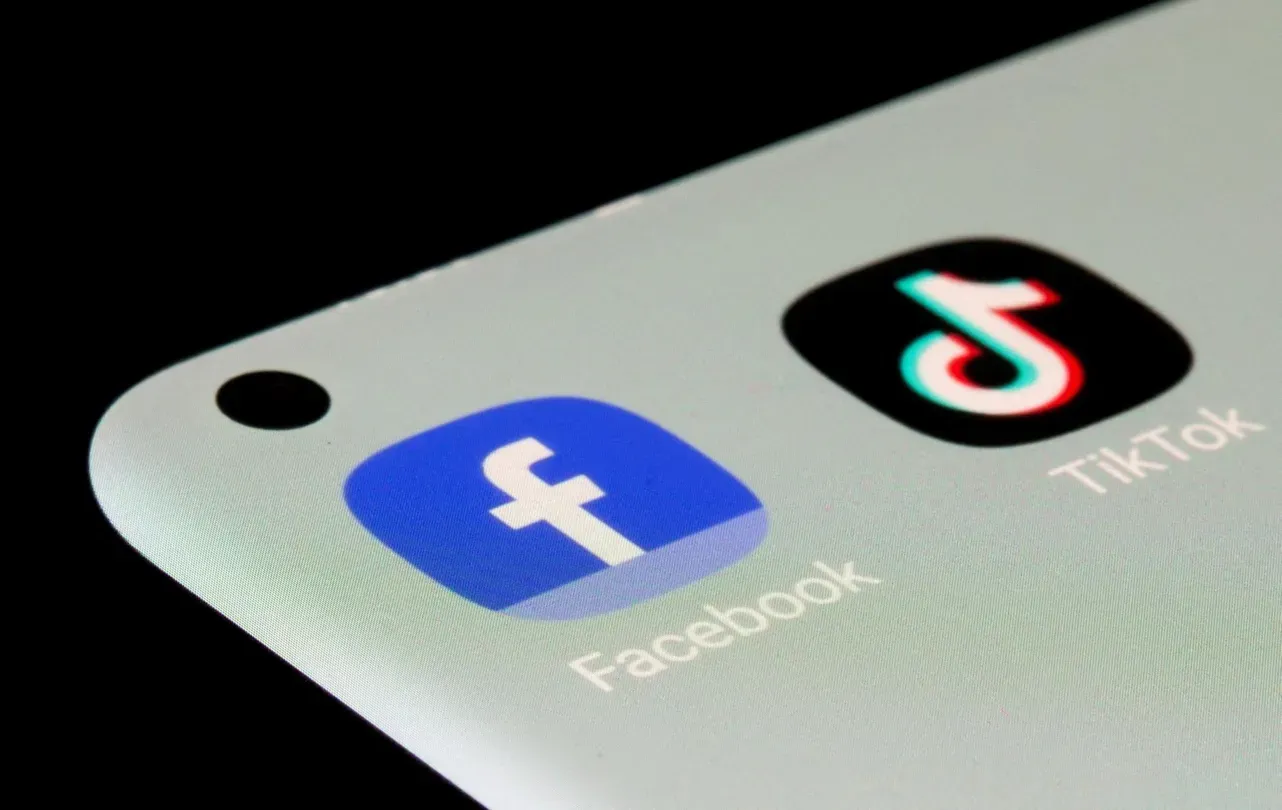
December 28, 2024 - PBS News Weekend full episode
12/28/2024 | 26m 45sVideo has Closed Captions
December 28, 2024 - PBS News Weekend full episode
Saturday on PBS News Weekend, President-elect Trump makes a plea to the Supreme Court for the future of the wildly popular social media platform TikTok. Then, a look back at the devastating Indian Ocean tsunami that claimed more than 200,000 lives 20 years ago this week. Plus, as the year winds down, what music and which artists got our toes tapping in 2024.
Problems playing video? | Closed Captioning Feedback
Problems playing video? | Closed Captioning Feedback
Major corporate funding for the PBS News Hour is provided by BDO, BNSF, Consumer Cellular, American Cruise Lines, and Raymond James. Funding for the PBS NewsHour Weekend is provided by...
December 28, 2024 - PBS News Weekend full episode
12/28/2024 | 26m 45sVideo has Closed Captions
Saturday on PBS News Weekend, President-elect Trump makes a plea to the Supreme Court for the future of the wildly popular social media platform TikTok. Then, a look back at the devastating Indian Ocean tsunami that claimed more than 200,000 lives 20 years ago this week. Plus, as the year winds down, what music and which artists got our toes tapping in 2024.
Problems playing video? | Closed Captioning Feedback
Where to Watch PBS News Hour
PBS News Hour is available to stream on pbs.org and the PBS app.
Providing Support for PBS.org
Learn Moreabout PBS online sponsorshipALI ROGIN: Tonight on PBS News Weekend, President-elect Trump makes a plea to the Supreme Court for the future of the wildly popular social media platform TikTok.
Then, looking back on the devastating Indian Ocean tsunami that claimed more than 200,000 lives 20 years ago this week.
MAN: From the perspective of survivors, when you go minute by minute, their experience, it's almost like a horror film because you don't really understand what's happening and it's all incredibly unpredictable.
ALI ROGIN: And as the year winds down, what music and which artists got our toes tapping in 2024.
(BREAK) ALI ROGIN: Good evening.
I'm Ali Rogan.
John Yang is away.
President-elect Donald Trump has urged the Supreme Court to block a law that would force the popular social media app TikTok to be sold or shut down.
It's set to take effect the day before his inauguration.
The app has over a billion monthly active users.
TikTok has said more than 150 million are in the US.
But the Biden administration says TikTok poses grave national security threats because its China based parent company, ByteDance, is subject to the will of the Chinese Communist Party.
In a legal filing last night, Trump told the justices that a delay would allow his administration to negotiate a resolution to save the platform while addressing national security concerns.
Bobby Allyn is a technology correspondent for NPR.
Bobby, thank you so much for being here.
Let's remind folks, this law, this TikTok law just passed earlier this year.
Why did proponents of the law want to see it passed and how did TikTok respond?
BOBBY ALLYN, Technology Correspondent, NPR: So TikTok's problem has always been China.
Since the app surged in popularity in the pandemic, lawmakers in Washington have been really concerned because TikTok has ties to Beijing.
Its parent company is based in ByteDance.
And the fear has always been that the Chinese Communist Party can try to influence the app, right, by using the app to collect Americans data or to try to shape Americans views about the world.
So this law was passed that is forcing TikTok to shed its Beijing parent company or be banned nationwide.
ByteDance says TikTok isn't for sale.
So the law is set to take effect January 19th.
ALI ROGIN: And of course, we are now in this protracted legal battle get us up to speed on how that has been playing out and how this got to the Supreme Court so relatively quickly.
BOBBY ALLYN: So soon after the law was signed by President Biden in April, TikTok appealed and they made a First Amendment case, saying the Americans who use the app will have their free speech suppressed if this app is put out of business.
But the appeals court came back and said, you know what?
The national security case against TikTok is really compelling.
We're also very worried about China.
This law is valid.
So then TikTok appealed to the Supreme Court, and the Supreme Court looked at the appeal court -- appeals court decision and said, you know what?
This needs review.
And the Supreme Court set an emergency hearing on a lightning fast deadline.
So in a matter of weeks, the Department of Justice and lawyers for TikTok will be meeting in the Supreme Court to decide the fate of this app.
ALI ROGIN: And now, of course, President Elect Trump is getting involved with this letter.
What exactly is he asking for?
BOBBY ALLYN: It was a really stunning letter that surprised lots of legal observers across the political spectrum.
Basically, you know, Trump wrote a letter to the court saying, hey, Supreme Court, maybe you should hold off on your ruling and give me some time as President-elect to come into the White House and broker a deal that could result in the selling of TikTok.
It's a pretty extraordinary request given that Trump, right now, he is president-elect, but right now he's filing this motion as a private citizen.
Right.
He doesn't have any kind of legal authority to make this request, but he made it nonetheless.
And inside TikTok, they are thrilled because it was always a dice roll in terms of what would happen at the surprise Supreme Court.
But now we have the president elect saying, TikTok, don't worry, I'm going to rescue the app one way or another.
ALI ROGIN: So the president-elect has evolved on TikTok.
He wanted to ban it during his first administration.
Why now the reversal?
BOBBY ALLYN: So Trump has said publicly that TikTok helped turn out the youth vote.
But behind the scenes, something else has been happening.
There's a hedge fund manager named Jeff Yass in the Philadelphia area.
He and his company, Susquehanna International Group, have a $30 billion stake in ByteDance, the owner of TikTok.
And advisors close to Yass have been pushing Trump to see TikTok a little differently.
There is this big meeting between Trump and Yass in Florida in March, and shortly after, Trump started changing his tune.
ALI ROGIN: Very quickly, Bobby, do we have any indication of whether or not the Supreme Court's going to take this into account and respond to it?
BOBBY ALLYN: It's really hard to get inside the minds of the justices and know what might happen.
But regardless of what the Supreme Court decides, Trump is going to have a lot of power over TikTok.
Because if it is -- if the Supreme Court decides to reverse the law, well, then Trump can just say, fine, TikTok lives to see another day.
If the court decides to uphold the law, the law gives Trump tons of latitude to interpret it, and he might just interpret it in a way that never bans TikTok at all.
ALI ROGIN: That's NPR's Bobby Allyn.
Thank you so much for your insights.
BOBBY ALLYN: Thanks for having me.
ALI ROGIN: Russian President Vladimir Putin issued a rare apology today following the deadly plane crash of an Azerbaijani airliner earlier this week.
Putin spoke with the leaders of Azerbaijan and Kazakhstan to send his condolences following the crash that killed at least 38 people.
But he stopped short of taking responsibility.
The flight was en route to the Chechen capital of Grozny when it crash landed Wednesday.
The Kremlin said Ukrainian drones were attacking the area and Russian air defense systems were firing near the airport, but did not say those systems hit the plane.
White House officials said this week early indications point to the possibility that the Russian air defense system brought down the plane.
The investigation is ongoing.
The head of one of the last functioning hospitals in northern Gaza is now in the custody of the Israeli military.
The Gaza Health Ministry says the director was forcibly arrested by the IDF one day after troops stormed the hospital.
The IDF says Hamas used the hospital to conduct operations but provided no evidence.
In central Gaza, an Israeli airstrike hit a home overnight, killing nine people.
Witnesses say four children were among those killed.
There are fears more victims could be stuck beneath the rubble.
One lucky person in California will be going into the new year as a Mega Millions jackpot winner.
A winning ticket was sold at a convenience store in Cottonwood, California.
That's about 130 miles north of Sacramento.
The ticket is worth an estimated $1.2 billion, or a cash payout of 549 million before taxes.
And Olivia Hussey, the star of the 1963 film Romeo and Juliet, has died.
Hussey was 15 when she was cast as Juliet opposite 16 year old British actor Leonard Whiting.
She won a Golden Globe for best new actress and the film won two Oscars.
Decades later, Hussey and Whiting sued Paramount Pictures, alleging they were forced to act in the nude as minors.
The suit was dismissed.
Hussey also starred in several horror films, including Black Christmas.
Hussey was 73 years old.
Up next on PBS News Weekend, remembering the victims and survivors of the Indian Ocean tsunami 20 years ago this week and the chart toppers and breakthrough artists that had us tuning in this year in music.
(BREAK) ALI ROGIN: Marks 20 years since one of the worst natural disasters in modern history.
In 2004, a 9.1 magnitude earthquake off the island of Sumatra in western Indonesia triggered a tsunami in the Indian Ocean that killed around 230,000 people across 12 countries.
ALI ROGIN (voice-over): The wall of water swept up nearly everything in its path, cars, buildings and people.
Six-year-old Siddiq was one of them.
The wave ripped him from his mother sow does arms.
His body has never been recovered and she's found it impossible to move on.
SAUDAH, Tsunami Survivor (through translator): If Siddiq is still alive and I'm still alive, I want him to come home and for us to see each other before I die.
But if he is gone, I wholeheartedly accept that is God's will.
But I still believe he is alive.
ALI ROGIN (voice-over): Outside her home in Banda Aceh, Indonesia, neighborhood life goes on around the wreckage of two Coast Guard ships that washed up 20 years ago.
A daily reminder to residents of the disaster.
Saudah's story is not unique.
In communities across the Indian Ocean, the devastation was unlike anything the world had seen.
As the weeks wore on and the search for survivors dwindled, the loss of life ticked upwards until the death toll ultimately stood near 230,000.
At memorial sites for the victims around the region this week, survivors and loved ones marked the anniversary.
URAI SIRISUK (through translator): I felt that the waves took my daughter away.
I was so mad at the sea.
I cannot bring myself near it and not even have my feet in the sand.
I wouldn't come around here if necessary.
Never.
The sea took my daughter from me.
ALI ROGIN (voice-over): And in Banda Aceh, the sea produced waves of up to 100 feet.
Yet there were no warning sirens, resulting in the deaths of nearly 130,000 people here.
Now the city has a new quake detection and tsunami warning system, which its residents hope will remain ready but unused.
ALI ROGIN: Earlier this week, I spoke with Daniel Bogado, the director and executive producer of a new documentary called "Tsunami: Race Against Time."
Why is it important to look back on this tsunami 20 years on?
DANIEL BOGADO, Executive Producer, "Tsunami: Race Against Time: Well, I think it's exactly, precisely because of the amount of time that has passed.
20 years is a long period of time.
So it means there's a whole generation of adults who have no living memory of the tsunami.
A lot of people learned a lot of information about what tsunamis are.
What are the warning signs from the event itself.
We wanted to create a historical document and also memorial for the lives that were lost.
But it also serves a bit of an educational purpose.
ALI ROGIN: You uncovered an enormous amount of video and tracked down many survivors, got some really harrowing recollections.
One really struck us.
This is a man describing how he got hold of his brother and they ran away as a wall of approach.
MAN: Them and everyone was rushing in the other direction away from the sea.
And Theo and I just joined the rush.
As were running, were holding hands.
I do recall Theo saying, what about Mum and Dad?
And I didn't have answer, really.
ALI ROGIN: What did survivors tell you that surprised you the most?
DANIEL BOGADO: You know, I think a lot of us have a lot of wrong notions about what a tsunami looks like.
You know, in the films, it looks like this giant wave, and it's actually much more like a wall of water.
And it's misleading.
It's so misleading that a lot of people would see the water go back and they would just stand, curiously looking, not realizing the danger they were in.
And so a lot of the contributors have absolutely harrowing stories that come from that, not knowing exactly what was happening.
Even once the first wave came, often there was a second wave or a third wave, or even a fourth wave in which people were caught up because they didn't know that's what happens.
And so, from the perspective of survivors, when you go minute by minute, their experience, it's almost like a horror film, because you don't really understand what's happening.
And it's all incredibly unpredictable.
ALI ROGIN: Many of the people describe what it was like to be hit by the tsunami, including this woman who described the sheer force of it.
WOMAN: I was underwater and I had no air.
I remember the feeling of the wave passing on my face and trying to tear up my nostrils and opening my eyelids like immense force.
ALI ROGIN: How have people coped with the trauma of this 20 years on?
DANIEL BOGADO: Oh, it's different for everybody.
I did a series on September 11, and it was a similar situation that we're approaching people 20 years later, you track them down and you're a bit afraid that when you call them, they'll be angry at you for bringing up the worst day of their life.
But actually that I don't think that ever happened.
People were just incredibly gracious, incredibly kind, and not in every case, but in most cases, very willing to share their story.
They felt that something powerful had happened to them.
There was a certain level of wisdom about the things they experienced, the things they saw with their own eyes.
ALI ROGIN: How much better are we equipped to predict a natural disaster like this one now?
DANIEL BOGADO: With tsunamis in particular, we're much better equipped than were 20 years ago.
Part of the problem was that there was no tsunami warning center in the Indian Ocean.
And the series follows a group of scientists who realize that there's been a massive earthquake, that there's a very likely tsunami, but they don't have anybody they can contact any to warn, to evacuate the beaches.
So all of that now has changed.
Now there's tsunami warning centers in every major ocean basin.
We were able to get word out much, much quicker than were able 20 years ago.
But I think the lesson of the tsunami really is not just about the tsunami, for disasters in general or things that people might see are on the horizon.
We always wait for it to happen before we respond.
That's the real lesson of the tsunami, that we should be thinking forward about the challenges that we have and do things before thousands of lives are lost or afterwards.
ALI ROGIN: You've talked to so many people who have been through unimaginable trauma, not just after the tsunami, but other worldwide tragedies as well.
What have these interviews, particularly as it relates to the tsunami, taught you about the human condition?
DANIEL BOGADO: When people get very close to this line separating life from death, people are always thinking about very similar things.
They're thinking about their loved ones, they're thinking about getting home to their family.
Wherever you look after that, you see people coming together to want to help each other.
And you saw that on tsunami in every country, you know.
And so I think it does say something about the human condition that, you know, we are social animals.
We do want to help.
We do want to do good.
But it's actually one of these ironies that it's this incredible, unique situations, these huge tragedies where they really show these, you know, brighter side of the human condition.
ALI ROGIN: Daniel Bogado, whose new documentary is "Tsunami: Race Against Time."
Thank you so much for joining us.
DANIEL BOGADO: Thank you very much for having me.
ALI ROGIN: However, you listened to music this year, streaming on an app or the old fashioned way on the radio, 2024 was a year that saw breakthrough artists, chart topping hits and a return of some top tier legacy performers.
Stephanie Sy takes a look at the music that had us hitting repeat this year.
STEPHANIE SY: 2024 saw people flock to music festivals in growing numbers across the country to see their favorite performers and female artists took over the airwaves as well as our playlists, boosted by chart topping hits from the likes of Beyonce Supreme, Sabrina Carpenter, Billie Eilish, Chapel Rowan and Taylor Swift.
While British pop artist Charli XCX had a breakout year thanks to her massive album Brat that took social media by storm.
At the same time, the impact of AI tech this year took some by surprise, presenting a new threat to the income and livelihood of music creators.
To unpack the year in music, we've got Maura Johnston, a freelance music writer and critic, and Candace McDuffie, a senior writer at the Root.
Maura and Candace, it's great to see you.
I hope you've had a good year.
Before we drill down into the big music news this year, I just want to get both of you to give your quick takes on the best music we saw in 2024.
Candace, why don't we start with you?
CANDACE MCDUFFIE, Senior Writer, The Root: I think in 2024 two albums really stood out to me.
One of them was Beyonce's "Cowboy Carter."
It was released I believe in March and with it she became the first black woman top Billboard's Top Country Albums chart since the chart debuted in 1964.
There were great collaborations.
She really put a spotlight on black women in country and she really broke down some barriers while having really good conversation about what it means to be a black country artist.
Another album that stood out to me was Kendrick Lamar's "GNX."
He not only reaffirmed his position as a great, talented and just really amazing emcee, but he also wrote a love letter to the west coast and that hip hop scene as well.
STEPHANIE SY: Maura, what about you?
What was the best music that came out this year in your view?
MAURA JOHNSTON, Freelance Music Writer and Critic: Well, both of Candace's picks are great.
I really loved the debut full length by the British band English Teacher who are doing a sort of post punk thing.
It's a lot of really tense, striving, sort of like desperate music with grooves and jagged guitars.
Their record was called "This Could Be Texas."
And I also really loved Billie Eilish's "Hit Me Hard and Soft."
And this record was very compact, which is -- which kind of flies in the face streaming era long albums.
And it was also really beautiful.
But it, you know, it had some of the best vocal performances of her career.
STEPHANIE SY: You know, in that sort of pop genre, you also had Chappell Roan and you had Sabrina Carpenter with a lot of hits as well.
I mean, how would you describe that drama?
Some of it feels very throwback to me.
And yet these artists are topping the charts.
MAURA JOHNSTON: Yeah, I think that, you know, there was definitely a lot of movement on the chart earlier this year with a lot of new artists and a lot of exciting songs breaking through.
Chappell Roan, who, you know, her record last year, "The Rise and Fall of Midwest Princess," that was like, top of my list last year.
You know, I think that she and Sabrina Carpenter, they I think, represented a new era where, like, pop stars could have fun again.
Because there was a lot of just like po-face ness going on, I think, in pop for the past.
Certainly the 2010s were like, very, very depressing.
Right.
I feel like there is definitely a new spirit in pop music that a lot of these artists and songs that broke through this year are representing.
STEPHANIE SY: Candace, in your realm and you cover a lot of black musicians and black music.
Where did you see sort of genres evolve and maybe, you know, the.
The synthesis of the old and the new?
CANDACE MCDUFFIE: I think Shaboozey also had a fantastic year for him to make history by tying Lil Nas X for the longest running number one single.
And the history of the Billboard Hot 100 was a really big deal.
And that song, "A Bar Song, Tipsy."
It was hip hop inspired.
It was the interpolation of J-Kwon's 2004 single "Tipsy" which was a big college anthem, you know, because I'm a little on the older side.
His album "Where I've Been, Isn't Where I'm Going," there's a lot of hip hop infusion on that project, and it was just so brilliantly done.
So I feel like black artists and country had a lot of visibility this year, and it felt like a breath of fresh air.
I think their personas and their looks and, you know, mixing all these beats was just so unpredictable and so exciting in that genre.
STEPHANIE SY: I want to talk a little bit about live performance.
Apparently Lollapalooza is still a thing.
And of course, Taylor Swift ending her Eras Tour.
For both of you, what were standout live performances?
Maura?
MAURA JOHNSTON: I saw Kacey Musgraves, who had a really great record come out this year called "Deeper Well," that I liked quite a bit.
And Billie Eilish, she had a sort of in the round set where she was just this kind of ball of energy constantly.
It was this rush of energy in the room.
It was really special.
STEPHANIE SY: That's cool.
Candace, what about you?
Any live performances that stood out to you this year?
CANDACE MCDUFFIE: I think Dochi had several live performances that were not only just groundbreaking in the presentation, but just went viral online.
Her performance at Camp Flog Gnaw, which is a music festival in California held by Tyler the Creator, she wrapped the entire set, no backing tracks.
She took her shoes off like she was just so magnetic on stage.
We also saw her perform on the Late Show with Stephen Colbert.
And then there was the NPR Tiny Desk concert performance.
It really celebrated not just blackness, but what it means to be a dark skinned black woman in this industry.
STEPHANIE SY: All right, my final question, and I know would not be easy for me to answer, but favorite song of the year?
Maura, you go first.
MAURA JOHNSTON: My favorite song was by this woman named Jade.
She was a member of the British girl group Little Mix, and she put out her solo single earlier this year called "Angel of My Dreams."
And it's just kind of this fever dream of pop music and house music.
And her voice is fantastic, but it's also kind of a very pointed critique of the star making system that she came out of because Little Mix was a product of the X Factor, the British TV show that also produced One Direction.
And it's one of those songs that when you listen to it closer, you're like, oh, she's really talking about, you know, something kind of important and almost harrowing.
But yeah, it's a great single.
STEPHANIE SY: Candace, what about you favorite song?
CANDACE MCDUFFIE: Megan Thee Stallion's "Bigger in Texas."
It's one of the best songs she's ever made.
I think the video was a beautiful ode to Houston.
She looks amazing in it.
Her body crazy.
Makeup perfect.
Like dancing around celebrating everything she's accomplished despite everything she's been through.
And I thought it was just really a great way for her to end out the year.
STEPHANIE SY: Candace McDuffie and Maura Johnston, what a pleasure.
Thank you so much.
MAURA JOHNSTON: Thank you.
CANDACE MCDUFFIE: Thank you.
ALI ROGIN: And that's our program for tonight.
I'm Ali Rogin.
For all of my colleagues, thanks for joining us.
See you tomorrow.
The chart-toppers and breakthrough music artists of 2024
Video has Closed Captions
The chart-topping hits and breakthrough music artists of 2024 (8m 13s)
A look back at deadly Indian Ocean tsunami 20 years later
Video has Closed Captions
Looking back at the devastating Indian Ocean tsunami 20 years later (7m 55s)
Trump asks Supreme Court to delay TikTok ban. What’s next?
Video has Closed Captions
Why Trump asked the Supreme Court to delay TikTok ban and what’s next (5m 8s)
Providing Support for PBS.org
Learn Moreabout PBS online sponsorship
- News and Public Affairs

FRONTLINE is investigative journalism that questions, explains and changes our world.
 New Episode
- News and Public Affairs

Today's top journalists discuss Washington's current political events and public affairs.
 New Episode
 New Episode
 New Episode
 New Episode
 New Episode
 New Episode
 New Episode
 New Episode
 New Episode
Support for PBS provided by:
Major corporate funding for the PBS News Hour is provided by BDO, BNSF, Consumer Cellular, American Cruise Lines, and Raymond James. Funding for the PBS NewsHour Weekend is provided by...