Charlotte Cooks
Dry Aged Duck with Buttermilk Polenta | Charlotte Cooks
Season 7 Episode 2 | 26m 29sVideo has Closed Captions
Dry Aged Duck with Buttermilk Polenta
Chef Pamela Roberts and Chef Sam Diminich prepares Dry Aged Duck with Buttermilk Polenta, Shishito, Peach, Miso – Cipollini Jus
Problems playing video? | Closed Captioning Feedback
Problems playing video? | Closed Captioning Feedback
Charlotte Cooks is a local public television program presented by PBS Charlotte
Charlotte Cooks
Dry Aged Duck with Buttermilk Polenta | Charlotte Cooks
Season 7 Episode 2 | 26m 29sVideo has Closed Captions
Chef Pamela Roberts and Chef Sam Diminich prepares Dry Aged Duck with Buttermilk Polenta, Shishito, Peach, Miso – Cipollini Jus
Problems playing video? | Closed Captioning Feedback
How to Watch Charlotte Cooks
Charlotte Cooks is available to stream on pbs.org and the free PBS App, available on iPhone, Apple TV, Android TV, Android smartphones, Amazon Fire TV, Amazon Fire Tablet, Roku, Samsung Smart TV, and Vizio.
Providing Support for PBS.org
Learn Moreabout PBS online sponsorship- [Announcer] This is a production of PBS Charlotte.
- [Narrator] The following episode of "Charlotte Cooks" is brought to you by Central Piedmont Community College and viewers like you.
Thank you.
- Coming up on the next episode of "Charlotte Cooks," we're cooking dry-aged duck, a peach relish, and shishito peppers.
(lively music) Welcome to this episode of "Charlotte Cooks".
I'm Chef Pamela Roberts, and joining me in the kitchen today is Chef Sam Diminich.
Sam, I'm so glad to have you back again.
- So good to be here.
- [Pamela] This is your third time with us, isn't it?
- Yeah.
- And today we are doing something pretty special.
What are we making?
- So we're gonna make a preview of restaurant Constance's potential entree, and it's a dry-aged duck, buttermilk polenta.
We have some seasonal peaches here, freestone, they're beautiful.
We're gonna make a relish with those and shishitos.
- All right, and then we're gonna use duck jus and kind of make a little variation on Demi, miso, and cipollini onion sauce for the duck.
- Oh, it sounds delicious, and I know we've been playing with all the ingredients all morning and can't wait to get started.
So we're gonna start with the polenta first, right?
- I think so.
- A buttermilk polenta, which is gonna be a really nice flavor, isn't it?
- Yeah, yeah, yeah.
- Yeah.
- Absolutely, and buttermilk adds that little bit of tang to it, I think it'll brighten it up and lighten it up.
So we're gonna use some milk first.
- And could you use half-and-half if you didn't have any milk?
- [Sam] Absolutely.
- [Pamela] Does it, would you have to make any adjustments?
- It just depends on what you like in your grits and your polenta.
Sometimes we use chicken stock in the kitchen.
- [Pamela] Yeah.
- Sometimes we use vegetable stock.
Here we're gonna start with milk and finish with buttermilk.
So we have some local polenta here, you know, at your farm share table.
We love to celebrate our local suppliers.
- [Pamela] Absolutely.
- [Sam] And we're gonna be weaving those celebrations in and out of this dish throughout the morning.
- It's really amazing how much is truly available here in North Carolina.
You don't have to go very far to get just about everything, and I really love the feeling of being able to support local farmers and all of our local people doing so many wonderful things with food these days.
- It is, it is.
You know, I tell my crew at the restaurant, it's like farmers market dopamine, right?
- Yeah, right.
- It just feels good.
- [Pamela] It does, doesn't it?
- It feels good going there.
Yeah, and, you know, and kind of exchange ideas and get to know the people behind the food.
Those are the true heroes.
Yeah, I know we've talked about this in the past, but I keep saying it.
- [Pamela] A lot, yeah.
- Those are the true heroes in the culinary scene.
And so anyway, so any time we get a chance to use our voice to tell their story, we're gonna do it.
- I think it's wonderful to go to the farmer's market and find something I'm not familiar with and say, Hey, what is this?
And what would you do with it?
And they're always so happy to share, and they're just overjoyed to help you figure out what you're gonna do with it when you take it home.
- Yeah.
- They want you to buy it.
They want you to take it with you so you can explore something new, and that's the fun thing about going out to the farmer's market.
You get what you're familiar with and then come home with something that's fun and new and different.
- Love it.
Yeah.
- It's fun.
- Love all that.
Absolutely.
Absolutely.
You know what I mean, is, and it's one of those things, especially like being here in a, you know, in a school, a culinary school, you know, I think it's really, really important for people, students, you know, to have an under- like, we learn about sauteing, we learn about grilling, we learn about braising.
Today we're gonna learn about using acids and umami, but I think it's equally important to understand where your food comes from.
- Absolutely it is.
Absolutely.
- You know, and how to support the system in which your food comes from.
- Absolutely, cause nothing stands alone.
We are all interconnected in every way, shape, and form.
- Yeah.
So much has changed too!
- Yeah, absolutely, it has.
- You know, I was, I go to Matthew's Farmer's Market every Saturday morning, and I saw artichokes at Matthew's Community Farmer's Market, you know what I mean?
Which is like, that was breakthrough material for me.
- [Pamela] Yeah!
- And you know, and I can remember it seems like, you know, just yesterday it was like a thing to wear a badge of honor for a chef to import vegetables, say artichoke hearts, from Napa Valley.
- Right.
Right.
- You know what I mean?
And that was like, their insignia of, you know, and their measuring stick for how good the restaurant would be, and now we don't have to do that anymore.
- And nowadays it's all local.
That's our measuring stick nowadays, and that is wonderful.
- It is.
It is.
It is.
It even, you know, gives even more of a reason to celebrate.
Okay, cool.
So our milk is coming up to a simmer, so we're gonna slowly whisk in our polenta.
(whisk spins in pan) (polenta pours) - And this may look a little different than the polenta you buy in the grocery store because it's a course ground polenta.
You're gonna see some of the chunks.
It's almost looking like a course ground grit almost, isn't it?
- Yeah, yeah.
- But it has so much flavor.
These are so flavorful.
- Yeah.
And that's exactly, like the course ground I love so much, because you get so many different, it's almost like a flavor journey in your polenta.
- It is.
It really is.
It really is.
(polenta pours) - [Sam] So if I were at home, or according to your recipe, you wanna go four parts liquid to one part polenta, obviously.
- [Pamela] So you don't really have to measure, yeah.
- We're eyeballing it a little bit here because I've made it a bunch of times, but - Right.
- and so I can look at it and kind of tell if it needs a little bit more, it needs a little bit less, but, here we are.
Okay, so we can let that simmer.
- And how long is that gonna take to cook, Sam?
- That's gonna take about ten minutes.
- Oh really?
Okay.
- Yeah.
Ten, twelve minutes.
- That doesn't take long at all.
- Not at all.
Not long at all.
(whisk turns in pot) - [Pamela] And at the end, we're gonna stir some other ingredients into it, aren't we?
- Gotta have butter.
- It's like, yeah.
- We need some type of cheese, right?
- Yeah, right!
Right?
- Some type of cheese, right?
Yeah, and in this case, we have two different kinds, varieties of cheese.
- I remember when I first made grits for my husband, he's used to having grits with water and salt, and that was it.
And I made them and I put cheese and herbs and stuff like that, and he was like, "What did you do to these grits?
They're wonderful!"
And I was like, just put flavor in them.
That's it.
- That's it.
That's it.
- That's pretty much what this is.
It's just another variety of grit.
- So we have a, - These are big duck breasts.
- Yeah.
A variety of duck called magret.
All right.
So we, so this is a hybrid of two different breeds.
Long Island Pekin and Muscovy.
Right?
- Oh, nice, okay.
- So it has a super like yummy, like killer fat cap.
It's got a lot of fat on there, which we utilize to develop flavor, but also a very meaty, meaty flavor, (whisk turns in pot) but without the marbling.
- Oh, okay.
- Right?
And so we're gonna talk about how we do this at the restaurant, you know, and some of the techniques that we use.
All right.
So your recipe calls for dry aged duck, right?
We have a technique.
You know, I've been studying Japanese food for a while, right?
- [Pamela] Yes, you have.
- Cool, so we've been, so part of what I've learned is their use of koji.
Koji is a spore.
Koji is a spore that interacts with the enzymes within the protein that we have here.
Although on a side note, we use it for vegetables as well.
We're gonna use it for grits today.
- Oh, well, good, good.
(whisk turns in pot) - Yep.
And so what we're gonna, what we basically do is just use a wire rack, right?
Have one of these handy.
The rack is to maintain airflow.
- [Pamela] Okay.
- Most of the breasts that you get nowadays are like 90% prepped, all right?
- Yes.
- So here's your final 10%.
So there's gonna be a little bit of a vein right here.
we're gonna cut out, right?
And there's a little bit of silver skin right here that we're gonna cut out.
- [Pamela] And you wanna cut that silver skin out because it's gonna shrink and take your breast and make it all weird-shaped.
- Yeah.
Yeah, and it won't, we can't digest it.
Our next step is, I'm gonna pull this tenderloin off.
- [Pamela] Wow.
Big old tenderloin.
- We'll save that for later.
It is.
Yep.
And you're gonna see like a little strap right here.
So if we don't trim that up, it'll actually curl up.
It will not cook evenly.
All right.
So I'm gonna take a little bit of this off right here.
Save that, because duck fat is magic.
- Duck fat is magic.
- Yep, and then I'm gonna run my knife two ways.
We're gonna create diamonds.
All right.
- [Pamela] And that's just to help release the fat from the skin, right?
As it's cooking?
- Well, we're gonna do a couple things here, right?
We're gonna facilitate the rendering process, but also offer an opportunity to get more airflow between the fat and the breast itself, and create an opportunity for even cooking.
(meat hits cutting board) All right.
- I'm gonna go ahead and turn this down a little bit.
Sam, what do you think?
- Let's do that.
(whisk turns in pot) Okay, good.
I'm gonna step over here and grab some milk.
All right.
That's good.
Okay, so our next step with the duck.
So, we have a cleaned and scored duck breast.
What we do at the restaurant, and what I'm gonna do today is I'm gonna take some of this inoculated koji.
Inoculated means liquified.
All right.
We're just gonna rub it in.
- [Pamela] It smells wonderful.
- [Sam] It really is.
It's amazing.
- [Pamela] It reminds me of something.
I can't put my finger on.
It probably reminds me of Koji.
(both laugh) - Yeah.
Yeah.
And so anyway, so that is our pre-prepped duck breast.
Right?
Right.
So what we do at the restaurant, what I highly recommend, is at least 24 hours, if not 48 to 72.
- Oh, really?
- Just tuck it away in your walk-in, uncovered.
- So it dries out a little bit?
- Of course label and date it.
Yes.
Yep.
Right.
And we'll dry it out and age it.
All right.
Proteins are made with 90% water, right?
All right, so what happens in the aging process, some of the water is lost and the flavor is emphasized.
Right?
We use the Koji to facilitate that process - Nice.
- and implement some of the umami flavor that we all love so much.
- Very nice.
- All right.
So time to cook the duck.
- Yay!
- So we're gonna season.
Always season both sides.
- And you're seasoning with just salt and pepper?
- [Sam] Just salt and pepper.
Yeah.
(meat sears) - There's that.
A couple talking points about rendering out duck, right?
Especially since we're here in a culinary school, you know, we talk about sauteing, we talk about searing.
So this is a process called rendering, right?
And so what we want to do is melt the fat and create this really, really crispy crust.
One of my pet peeves cooking duck, and we see it all the time, right?
Cause you'll see this beautiful duck that somebody has spent an entire season raising.
It's butchered, it's brought to a restaurant, it's cooked, it's plated, and it's served, and it has an un-rendered out fat cap on top, right?
- [Pamela] Yes, yes.
- And so not only is that like, an incorrect cooking technique when it comes down to rendering, but it also affects your palate.
- [Pamela] Yes!
Absolutely.
- How you taste food.
If you have a big bottle of wine with that, it's gonna affect how you taste wine.
So many, many reasons to emphasize technique during the cooking process.
When it comes down to duck, you know, I just think it's really, really important to stay true to what we know.
You know, and that's rendering out to duck fat and get it nice and crispy.
It takes as long as it takes, right?
- Yes.
- Can't really rush it.
- And you really just started off with a dry saute pan too.
You don't, you heat your pan up.
We're using a cast iron skillet because that has the most, even, most, really great heat for duck.
- We're gonna forget about this for the next five to ten minutes, - [Pamela] Okay.
- While that renders out, we might have to pour off some of the duck fat, and that's another reason why you gotta go so, so low on the heat, so you don't burn the duck fat that you want to save, right?
- [Pamela] Right, right.
- All right.
So our duck's working.
Polenta is working.
- That polenta looks amazing.
- [Sam] Yeah.
- I can't believe how fast it's thickened up.
That's great.
- [Sam] Beautiful.
Right?
- [Pamela] Yeah!
- We're gonna finish with two cheeses, butter, and buttermilk.
- We've got the polenta, it's in a holding pattern.
We've got our duck that's rendering the fat.
Next we're going to work on a- - Miso cippolini jus.
- [Pamela] Cippolini jus.
- Yeah.
- Which is basically a sauce.
- Yeah.
- [Pamela] And so tell us about the onions.
- [Sam] Okay.
- [Pamela] And then we'll talk about the miso.
- So we, we have our demis right?
We have our stocks made from whatever protein we're working with.
In this case, we made a really rich demi from the duck bones.
That's our mother sauce.
Right?
In this case, we're gonna make a variation on that.
And we're gonna use a couple of ingredients to influence the flavor.
First and foremost, we're gonna use mirin, which is a sweet wine, so there's our sweet.
- [Pamela] Okay.
Yes.
- [Sam] All right.
We need soy, which is our salt.
- [Pamela] Would you use low sodium or just regular?
- You can use both, really.
You know, it just depends on, you know, what you like.
In this case, I use regular.
It's actually an aged soy, so the flavor's a bit emphasized.
So anyway, so think like gastrique.
- Yes, oh yes.
Yes, okay.
- In in terms of sauce making, right?
All right, so you have your sweet and you have your salty.
All right.
We're gonna use cippolinis, like a baby vidalia, but what I love about this onion is that you can use a whole onion preparation.
- Yeah.
- Which we'll show here in a minute.
Sweet in flavor, you know, small, round, looks good on the eye.
It's gonna look good on this plate, I think.
We're gonna use red miso for this.
- [Pamela] Okay.
- All right.
So here we have 2 different variations on miso, which we can talk about: soybeans and rice.
This is a shorter fermentation time, more soybeans, longer fermentation time, deeper flavor, deeper color.
- And that's the difference between the colors, is just longer fermentation time.
- Yeah.
- [Pamela] And the more intense flavor.
- Yeah.
So we're gonna add our buttermilk.
- This is gonna finish our polenta, isn't it?
- Yeah, it's gonna finish our polenta.
So we're gonna add our buttermilk.
(pot sizzles) - [Pamela] And this is to give it that lovely tang.
- Yeah, got to elevate our flavor a little bit, right?
Carefully give it a whisk.
- [Pamela] So now to prep those onions.
- Yeah.
- You're gonna take them.
- Yep.
For this preparation, I'm gonna take off both ends and just give them a quick peel.
- [Pamela] Okay.
(knife slices) - [Sam] It's everybody's favorite job, isn't it?
- I know.
Peeling shrimp, peeling onions, peeling garlic.
Everybody loves those jobs in the kitchen.
- Grunt work.
(Pamela laughs) - So I have a couple that I've already prepped up, right?
Pretty much pre caramelized, all right?
So we're gonna add those here.
(pan sizzles) So those are gonna sizzle away a little bit.
All right.
So for the foundation of our sauce, right?
So we're gonna add sweet wine.
(pot sizzles) - [Pamela] Which is the mirin.
- Mirin, yep.
Equal parts.
(pot sizzles) - So yeah, equal parts, soy and mirin.
Obviously we talked about it before.
It's sweet and salt, all right?
So that's gonna be the foundation of our flavor for the salt here.
And at this point, we can go ahead and add our miso, right?
For amount this much, I'm gonna use about a half teaspoon.
- So you don't use a whole lot of miso.
It's got a nice flavor.
- It's prominent, yeah.
The flavor's pretty prominent.
All right, so I'm gonna leave that there.
All right, and then we have our thyme here, which I'm gonna go ahead and pick.
But this is something, this is an herb that we're gonna finish the sauce with.
- So you don't put it in right away.
- I don't put it in right away.
I put it right at the end so that the oil is really, really kind of like, - [Pamela] Yes.
- You know what I mean?
They have that, their moment.
- There's that moment.
Thyme has that aroma that is, - It does, it does.
It does, yeah.
- [Pamela] And there it is.
I smell it right now.
It is.
- Yeah.
I feel like it needs to go out, right whenever we finish the sauce and that way we have, you know, the greatest impact from a flavor standpoint in the herb.
All right, So I'm gonna step up here.
I'm gonna check our duck again.
(duck sizzles) It's getting there.
- [Pamela] That looks great.
- It's getting there.
All right.
And I'm gonna take a moment, right?
I have this beautiful Japanese eggplant that we got from a farm called Wild Hope down at Matthew's Community Farmer's Market.
- So these are being grown locally.
That's fabulous.
- Yep.
- That's fabulous.
- And so what we're gonna do, yeah.
So what we're gonna do is we're gonna cook these in that, in the duck fat.
- In the duck fat.
Brilliant.
Absolutely brilliant.
- [Sam] Super simple.
I'm just gonna quarter them.
- I bet a lot of people aren't familiar with these Japanese eggplant.
- They're my favorite.
- They're so nice.
- Yeah, they're my favorite.
- You don't have to salt them, you don't have to seed them.
You could just cook them.
- Yeah, straight up like we're doing today.
Oops.
- Put them right into the fat.
That rendered duck fat is gonna make them so delicious, cause you know, eggplant will absorb just about anything they come close to.
- It really is.
- So they're going to absorb all that beautiful duck fat.
- Okay, so our sauce base has been reduced.
It's reduced down to a glaze.
And so it's time to add the stock.
(pot sizzles) - [Pamela] Really good stock takes time.
- [Sam] Yeah, it does.
- [Pamela] So now we're gonna talk a little bit about these peppers, right?
- Yeah, we are.
I'm gonna put some here and then we're gonna just talk about where I get them and the flavor profiles, and how about like one in ten will light you up.
(both laugh) - Yeah, they will.
They can.
- I don't know.
You know, they kind of came around and became trendy, you know, I guess five, six, seven years ago, something like that.
- [Pamela] Yeah, yeah, yeah.
- And you know, and again, it's like a tribute to our local suppliers, right?
Somebody, my buddy Isaac grows these at- - Nice.
- Harmony Ridge and, you know what I mean?
So he's listening to us, you know, we're having a conversation with the people, you know, on the farms and so anyway, so instead of importing these, you know, via US foods or some broadband supplier, we have them here locally.
- [Pamela] That's fantastic.
- They were on my list this morning.
(pan sizzles) All right, so moving on over to our eggplant.
(pan sizzles) - And so you can almost like just tap on it, right?
- [Pamela] Yeah.
- [Sam] And hear how crispy it is.
- That's crispy, crispy, crispy.
- And even though, like, I'm not sure how this is showing up on the camera, but it might look a little bit like it has a deep char, but whenever you taste it, you won't taste char.
It'll just be deeply roasted.
- [Pamela] Duck is one of those special things that way, isn't it?
- [Sam] Yeah, it is.
- [Pamela] I love duck.
- [Sam] We're gonna let those veggies roast with a breast.
The breast is almost done.
I'm gonna turn this up just a little bit.
Oh, that's my front burner.
- So what temperature do you serve your duck?
- The breasts, right at medium rare.
- [Pamela] Okay.
- Yeah, people don't really understand the thing about chicken and salmonella and undercooking chicken, most of the salmonella, like the poisoning process takes place in the handling.
- [Pamela] Yes.
- You know, not the birds themselves.
You know what I mean?
So like, no, I'm not saying like, go get a chicken and cook it medium rare.
(Pam laughs) I'm just saying like, you know what I mean, like, educate yourselves on you know, on why we cook things the way we cook them.
- [Pamela] Yep.
And you'll have a better understanding.
And then again, like, not to beat the dead horse, but you know, like Sammy from Newtown Farms, he grows, he raises chickens humanely on Mother Nature's timeline, and it's a beautiful experience.
Had one last night.
- [Pamela] I bet it was delicious too.
- Mhmm.
- So now Sam, look at those vegetables.
Oh, is that good?
Is it done?
- Almost.
- [Pamela] All right.
- [Sam] So what we're gonna do is we're gonna pull the veggies off and give them a quick drain, drain some of this fat off of there.
And so that whenever we plate up and we actually eat it, it's not as fatty as it is right now.
And it's just a great way to present food, right?
Like, it's just one of the steps of refinement that we use as we plate up and serve our guests.
All right, so the duck is finished roasting.
All right.
So anytime you roast a meat, particularly one you're gonna slice on presentation, it needs to rest.
- It's been working hard, it needs to rest.
(Sam laughs) - Yep, yep.
- [Pamela] Take a rest, little duck.
- All right, so I'm gonna slide these peppers over to the hot side of the pan.
By the time we plate it up, they're gonna be perfect.
They're gonna be ready.
So I'm gonna slide over here with Chef Pam.
All right.
- Let's see how we're doing with this polenta.
- Just taste.
We do not want spackle.
(Pam laughs) - But we do want it done.
- We do want it done.
- Is it good?
- Mhmm.
Let's cheese it.
- And butter.
You want me to stir while you add?
- Shall we?
- Sure!
- Yeah.
Dream team.
Boom.
All right.
So we have white cheddar, we have parm, (Pamela laughs) That much.
That's how we measure, isn't it?
- Yep.
That's how we measure.
Makes it good.
- So butter, cube that up.
- Only little bit of butter, right?
- A little bit better.
Yeah.
Maybe two more.
- [Pamela] There we go.
- Okay, so we've got polenta done, duck is done and resting.
- Yes.
- Eggplant, ready to rock and roll.
- Yeah.
- And our shishito peppers all grilled, and, not grilled, but you know, blistered and whatever.
- [Sam] Yep.
- We're gonna put these into a wonderful peach relish, right?
- That's right.
Yeah.
- All right, so show us how to do that peach relish.
- Okay, great.
So we're talking about a relish, right?
And so it, basically what I do for my recipes is I'll use vinegar and I'll use sugar, right?
So that'll be my base.
That's my template, right?
In this case I'll use four parts vinegar, one part sugar.
- [Pamela] Okay.
- All right.
And then I'll flavor that liquid with different aromatics.
Sometimes I'll use ginger, sometimes I'll use rosemary.
In this case, we're gonna use cinnamon stick, star anise, and coriander.
- [Pamela] Okay.
- Right, we have miso, we have, you know what I mean?
There's a little bit, we have a little bit of homage to, you know, some Asian-oriented cooking.
And so we're gonna influence the peach relish with some Asian-oriented flavor profiles.
- Nice.
- Right?
- Very nice.
- And so basically what I did, so I have some finished product here, but what I did was I put these on the grill.
So, if this grill was on right here, we'd put it on here.
It only takes a few minutes to grill them.
It's almost like roasting a big red pepper, only this is tiny.
- And we don't wanna peel these?
- I didn't peel these, no, I didn't peel these.
I want the charred flavor.
- [Pamela] Yes.
- I want a little bit of bitter in with the relish.
All right.
And so that was my starter here.
With the peaches, we talked about having freestone peaches earlier.
All right.
So this is basically our equator.
- Yes.
- Right?
So that's what I'm looking for right here.
So I'm gonna break this peach down by first cutting in half.
I simply gave it a score all the way around.
All right.
- [Pamela] Opened it.
- And then I gave it a twist and that pulled it apart.
- Yeah.
- Right.
And so that's what we refer to as freestone peaches.
And you know, we mentioned earlier we're filming in July.
All right, so this is basically peak peach season.
- Yeah, it is, and the freestones come in later than the clingstones.
- That's right.
- So the first peaches you see in the season will usually be the clingstone peaches.
- We're gonna manipulate it slightly.
So we would have a pot like this.
We would bring our vinegar and sugar down, right?
Almost by 75%.
- Okay.
Make a nice syrup.
- Yeah, we would add our aromatics and let that sit, almost let the flavors marry and then drain it off about 45 minutes later on.
Right, put it back in the same pot.
I would cut this down.
- [Pamela] And are you gonna cut that into a small dice?
- [Sam] Small dice.
Yeah.
Correct.
- [Pamela] And you know, I'm always emphasizing to the students, learn your knife skills, learn your knife skills, learn your cuts, and practice, practice, practice, practice, practice, practice, practice.
Cause you're gonna use it all the time.
- So we talked about the peaches, we talked about the knife cuts, we talked about bringing the liquid down.
So when a fruit like a peach is at peak season, peak flavor, it doesn't require a lot of cooking.
It's already super tender, all right.
So basically what I did with the one that I have here, I just brought my liquid back up to a simmer, added the peaches and turned it off and just kinda let it steep.
Same thing with the peppers.
Just gave them a quick dice, which I'll demonstrate now.
- [Pamela] Do you worry about taking any seeds out of these peppers?
- [Sam] Mm, not particularly, no.
- [Pamela] Because you kind of want the heat even if it lights you up.
- [Sam] That's right.
That's right.
(both laugh) That's right.
Yeah, so that's basically what we're working with right there.
And again, like to kind of circle back on the point of making this relish, the liquid is sour, the peaches are sweet, and then the shishitos have a little bit of smoke to them.
Sometimes they have a little bit of fire to them right?
- [Pamela] Yeah.
- And so you have a lot of dynamics in there in just this little condiment, right?
We're serving duck, we're serving polenta.
- Yes.
Yes.
- Cream butter, cheese, right?
- Yeah.
- So we need something that's gonna elevate the dish.
I think this is gonna do a good job of it.
- [Pamela] Absolutely.
- I think our next step is to finish off the sauce.
- Okay.
- Is that okay?
- And what do we need to do to finish off that sauce?
- We're gonna add just a little bit of this thyme.
- [Pamela] Okay.
- [Sam] Let me give it a rough chop.
- So this is the duck stock, the cippolini, the mirin, and - Soy.
- the soy sauce that is reduced now down to a glaze.
- It is.
I add that at the end, you know, as we already know, herbs and the flavors found in the herbs are in the oils of the herbs themselves, right?
All right, so a little bit of heat releases the oils, oils release the flavor.
We're gonna do it at the very end.
And there's, that's our house and that's our wise, all right.
- Sam, let's plate this up.
- We're gonna slice our duck.
So one tip on slicing duck: we talked about scoring earlier, right?
All right, so I just follow the lines in which I scored and make those my slices.
So first and foremost, I'm gonna cut it down the center.
(knife slices) - [Pamela] So you cut it in nice, thin slices.
- [Sam] Yeah.
- [Pamela] Oh, look at that.
How beautiful that is.
- Yeah, okay and you can see where there's very little fat remaining, right?
- [Pamela] Yes!
- And so what you have is this really, really beautiful crust that we developed flavor and texture with.
- [Pamela] Yes, absolutely.
- All right, so I'm gonna slide over here.
- All right.
Right, right.
- We're gonna add some polenta.
Onto our veg.
We can just kind of take turns with the eggplant and the shishito.
Have to remember the cippolinis, right?
- Mhmm.
You wanna fish those out I bet.
- Yeah.
- [Pamela] Oh yes!
- [Sam] They've almost been candied.
- [Pamela] Yeah, right?
Yes.
- [Sam] All right, and we have one more element and then we're done.
- [Pamela] That is beautiful.
- [Sam] Fall of 2022.
- Look at this.
This is fantastic.
And look at this plate.
This is a beautiful plate.
We've got buttermilk polenta, rendered dry aged duck breast, peach relish, Japanese eggplant, and shishito peppers that have been cooked in the duck fat, beautiful cippolini onions that have been simmered in mirin and soy sauce.
If you want the recipes, send me an email at pamela.roberts@cpcc.edu and I'll be happy to send you a link to all of our recipes that we have.
Sam, thank you for being here.
- So happy to be here.
- And it's always a joy to have you here and just, just wonderful.
Thank you.
- Can't wait to do it again.
- We'll do it again.
So thank you for watching this episode of "Charlotte Cooks" and we'll catch you next time.
(lively music) - [Announcer] A production of PBS Charlotte.
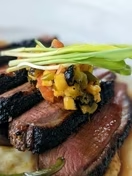
Charlotte Cooks: Dry Aged Duck Preview
Preview: S7 Ep2 | 59s | Chef Pam as she and Chef Sam Diminich prepare an amazing Duck recipe! (59s)
Providing Support for PBS.org
Learn Moreabout PBS online sponsorship







Support for PBS provided by:
Charlotte Cooks is a local public television program presented by PBS Charlotte