At Issue with Mark Welp
Election Day: What Voters Need to Know
Season 4 Episode 8 | 26m 10sVideo has Closed Captions
Local election officials explain voting options and what to know before Election Day.
Mark Welp talks with election officials Will Nesbitt of Bloomington and Jess Joseph of Peoria County about preparing to vote. They explain early and mail-in voting, ballot tracking, equipment testing, voter registration after a move, and what happens when a voter leaves a race blank. The conversation also covers election misinformation and the work that goes into running local elections.
Problems playing video? | Closed Captioning Feedback
Problems playing video? | Closed Captioning Feedback
At Issue with Mark Welp is a local public television program presented by WTVP
At Issue with Mark Welp
Election Day: What Voters Need to Know
Season 4 Episode 8 | 26m 10sVideo has Closed Captions
Mark Welp talks with election officials Will Nesbitt of Bloomington and Jess Joseph of Peoria County about preparing to vote. They explain early and mail-in voting, ballot tracking, equipment testing, voter registration after a move, and what happens when a voter leaves a race blank. The conversation also covers election misinformation and the work that goes into running local elections.
Problems playing video? | Closed Captioning Feedback
Where to Watch At Issue with Mark Welp
At Issue with Mark Welp is available to stream on pbs.org and the PBS app.
Providing Support for PBS.org
Learn Moreabout PBS online sponsorship(bright music) (bright music continues) (bright upbeat music) (bright upbeat music continues) - Election day is less than two weeks away, and there's some big races that will be decided, including all of Illinois's statewide offices.
Who will take Dick Durbin's US Senate seat and a lot of local and regional offices?
Joining me to talk about everything you need to know before November 3rd are Will Nesbitt, the executive director of the Bloomington Board of Election Commissioners, and Jess Joseph, executive director of the Peoria County Election Commission.
Thanks for coming in.
I know you guys are busy this time of year.
- Thanks for having us.
- Yeah, thank you.
- Happy to be here.
- Appreciate you taking the time.
Will, let's start with you and I want people to understand exactly what your offices do and they're a little bit different, but Will, you're solely the city of Bloomington.
So the question is, I guess, why does McLean County have two different election authorities?
- Yeah, so it's like back in the early 1900s, if you're a home rural community, you had the option to put it on the ballot to have your citizens decide if they wanted to have their own election commission, and that's why we still have it.
- Okay.
And Jess, tell us how Peoria County works.
- Yeah, so we are a countywide election commission.
Like Will, Peoria used to be a city election commission, but in 2015, a county board initiated referendum switched us to a countywide election commission.
So we handle all local, state, and federal elections for Peoria County, as well as voter registration.
- Okay.
Let's talk about election day, like we said, less than two weeks away.
How are things going, Jess, in terms of getting election judges and making sure the polls are ready?
- We are always recruiting election judges in Peoria County.
So if you're on the fence or interested, please reach out.
We still have election judge training classes, but things have been going so well so far.
Turnout has been great in our office.
We've had over 3,500 early voters and our vote by mail ballots are continuing to come back.
So I'm liking how things are looking so far.
- And how about you, Will?
How's Bloomington looking?
- So we've had about 2,000 early voters so far as of today and about 3,500 vote by mails have come back.
Everything's going good.
We're all staffed up for election day, but obviously we could use more, but we have everything kind of lined up, so, mm-hmm.
- Jess, recently, the Peoria City Council approved a new policy that would provide qualifying employees with eight hours of their regular city pay for serving as an election judge, plus what you pay.
What kind of a difference has that made or has it made so far?
- Yeah, I'm really excited about this election judge time policy that the city of Peoria Council, the City Council for Peoria, approved.
We already have this in place at Peoria County and we have about 10 folks that serve.
So far, I think we have two City of Peoria employees who have taken that offer up, but essentially, it gives those City of Peoria or County of Peoria employees a chance to work election day and still get their regular eight hours of wages and not have to take a vacation day or sick day.
And then they also get our compensation, which in Peoria County is $250, and that's kind of a bonus for them, I guess.
Keep in mind, it's a 15-hour day, so it's not really like a vacation day for those people that are working.
So we're really excited to have this policy in place.
- Not backbreaking labor, but definitely time intensive.
- Our election equipment is a bit heavy, so maybe a little bit backbreaking.
(group laughs) - Just a smidge.
I'm trying to help you out here.
Okay, well, you talked about mail-in ballots and I want to talk a little bit about, some people may be confused about what's happening.
President Trump was fighting with the Supreme Court about these ballots.
He wanted to let the US Postal Service screen them, but the Supreme Court on September 14th struck that down.
Do you find people are asking questions about mail-in ballots and what was really going on?
- I can take that one, so I would say I have noticed that voters are a little bit more nervous about using the mail.
And that even stems back to just last year when they announced that postmark change, items are no longer being postmarked the same day that they're being dropped in the mail.
We're noticing more use of our drop boxes.
In Peoria County, we have three locations.
We have our office, North Branch Library, and then at the Neighborhood House.
So there's a little bit more uncertainty.
In Peoria County, we are telling our voters, voting by mail is still secure, safe, accessible.
If that's how you prefer to vote, continue to do so.
- Will, do you agree?
- Yeah.
I've seen a lot more people using the drop boxes as well and just kind of asking questions, "Did you get my ballot yet?"
So people are just a little nervous.
- Yeah.
Is there a way for people to find out if you did get their ballot and what's the way to do that?
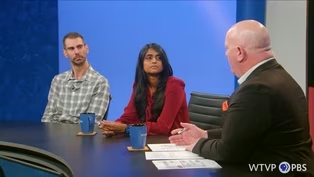
- Yeah, so we have a ballot tracker system, so people can just look up their address and their name and it'll tell them if we've gotten their ballot yet or not.
- And we have the same in Peoria County.
It's a service we provide to all of our vote by mail voters called Ballot Tracks.
And every vote by mail ballot comes with an insert telling them how they can sign up.
So optional service, completely free, and it gives you status updates on your ballot.
- Besides obviously not having to go to the polls on election day, are there any other benefits to doing a mail-in ballot?
- It does allow those voters more time to possibly research your candidates because you have that ballot in front of you at your kitchen table.
You can look up the candidates versus in-person voting, you arrive at the voting booth and you have to make your selections then and there.
So you get a little bit more time with your ballot.
So some people prefer it for that reason.
- And what's the deadline on mail-in ballots?
When do they have to be postmarked?
- Postmarked on or before the election day, the third.
- Okay.
Gotcha.
Let's talk a little bit about some of the races that are going on.
We don't have a presidential election, but we certainly have a lot of important elections.
What kind of feeling do you have?
Do you have any gut feeling on voter turnout or can you look at the numbers that you already have with mail-in ballots and things like that and kind of determine what might be going on on election day?
- Well, I don't really like to take out my crystal ball, but I'm hoping for, I'd say, I would really like to see maybe 60% turnout.
I think we'll be in between 50 and 60 and I'd be thrilled if we were over 60.
- Yep.
And I'm thinking about 50 or 60% as well.
- And what do we typically see, say, in a presidential election year?
What kind of turnout do we see there?
- In Bloomington, it's about 70, 75%.
- Okay.
- Same in Peoria County.
- Sure.
Well, let's talk about it, with the governorship up for grabs, JB Pritzker and Darren Bailey and Collin Corbett, we've seen, and I don't want you guys to get political because I know you're not, but we've seen a lot of bad mouthing between the things.
And when you look at these elections, can you kind of determine by the attitude of the candidates or how the voters are feeling as to how things might go on election day?
Not who's gonna win, but who's gonna vote?
Do people get riled up at certain things and say, "I'm definitely gonna vote this election cycle"?
- I would say that we are seeing a lot of anticipation this cycle.
There's a lot of voter excitement, just a push to get people out to the polls.
We're seeing good numbers for early voting and I think that will translate to election day as well.
- Mm-hmm.
- Yep.
And we're seeing like 150 people a day at least right now in Bloomington.
So we'll probably have about seven, 8,000 vote early, so.
- And with the US Senate seat, we know that for the first time in a few decades, we're gonna have someone who is not Dick Durbin serving.
So it would seem to me, and from people I've talked to, they're excited about it on both sides.
We can keep this Democrat, or for the first time in forever, we can have a Republican in the seat.
So I think that'll probably get a lot of people out too.
The last few years we've talked about voting machines.
I want to talk a little bit about your feelings this time around on how these are working, if people are still worried about the integrity of the voting machines, and if they are still worried, what their other options are.
- So I actually used to work for an election vendor before I came to Bloomington, so I have a lot of background on that.
I'm not really hearing people say anything anymore.
That was kind of like a 2016 thing, but there's still a little bit of hesitancy on certain groups, but it's not as bad as it was.
- And if people don't want to mess with the voting machine, can they still do a handwritten ballot?
- Yeah, so for early voting we do, they use the ballot marketing device, but then they also get a printout.
But if they want a full paper ballot, they can get one as well.
- We're an entirely paper-based system in Peoria County and we have found that our voters really like that.
And speaking of election equipment, I want to add that our election equipment is certified at the state and federal level, so it's gone through fairly stringent testing.
And I always recommend voters that are hesitant or unsure about the process, we are very transparent as election administrators.
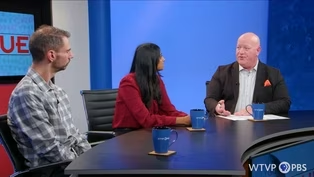
One of the things we do as a public test of our voting equipment, we essentially create a public test deck so we know what the results will be.
Every candidate in contest gets one vote, and then we show the public that our voting equipment is tabulating as it should.
And that's a public process.
The media is invited to attend as well, and they actually did attend this time.
And so that can give voters a good idea of what the behind the scenes looks like.
And again, we're always looking for election judges, so if you are hesitant about the process but you want to learn more, serving as an election judge is a great way to learn more.
- You mentioned 2016 and some of the issues we had then with voting machines.
Another issue that we've had since then is misinformation on social media, things like that.
How are we looking this time around?
Has that gotten any better?
Is it the same?
Is it worse?
What do you think?
- I think it's getting a little bit better.
Like Jess said, that we're really transparent about everything, so we're inviting people to come in to get more knowledge and so they're not just seeing something on Facebook or whatever and thinking it's real.
So I think we're trying to do a little bit of public education too.
- Sure.
- And I would add there is a lot of misinformation through social media and part of the problem stems from folks having a national conversation about elections when elections are run differently in different states.
And so we always encourage our voters, if you have questions, go to your election authority, whoever that may be.
So in Illinois, it's your local election official at the county level or even at the city level.
So we recommend that voters reach out directly to their election authority when they have questions.
- In addition to misinformation, what are some of the things that voters may be just, what are they continually confused about, no matter what the year is or in terms of the voting process or how they vote?
What are some things that you think might need to be cleared up for folks?
- A lot of times, so when people vote, they won't hit print and they think that the machine is counting, like the old machines that we had in Georgia and that was from 2016.
So we're just having a little bit more education on using the machines themselves.
Other than that, I can't really think of anything else.
- Is that something that the election judges can help out with too the day of?
- Yes, absolutely.
- If they have questions.
- Yep.
- Has anything changed, I know you're both young, but you've been in this industry for a while.
You're both new at their jobs this year, so congratulations on that.
Is there anything that you've seen change over the last, I don't know, 10 years or so in terms of the way people vote and what they're doing when they come to the polls and things like that?
- I mean, vote by mail has really changed our turnout in Illinois.
I mean, permanent vote by mail was introduced in Illinois in 2021, really came into fruition in 2022.
That allows a voter to fill out one application and continue to receive ballots in future elections.
It's a great option if you're in your forever home and you prefer to vote by mail.
We now have, I mean, we sent out over, we're just under 22,000 vote by mail ballots that have gone out in our office.
And 10 years ago, that was probably less than a couple thousand.
So vote by mail has really increased and it will likely continue to.
So that's one thing.
- Yep, and also with that, early voting too.
I mean, I'm seeing a lot more people do early voting in person as well.
They have a 40-day window, so they can kind of go at their leisure.
We're seeing, you know, in a presidential year, we could have 13,000 in Bloomington vote early.
And we have two sites now.
We just opened our second site yesterday.
- And what do you have to do to vote early?
- Just have to come in, give your name and address, and get checked in.
- Okay.
No ID or anything like that?
- No ID, but we do check signature.
- Okay.
And with voting early, I mean, how does it work?
Are they tabulated before election day or they wait until after, or election day, to do that?
- Yeah, so the ballot is put in the machine, but we don't close it out and see the results until after seven o'clock on election day.
And same with vote by mail ballots as well.
- I was telling a friend that I was gonna be doing this interview and he asked with early voting and vote by mail and all this stuff, are we ever gonna get to a point, you think, in your opinion, where we can vote online or is that still too risky?
- I don't see that happening anytime soon, truthfully.
I do think we'll continue to have vote by mail, early voting, and then in-person voting, but I don't see that.
- Do you agree?
- Yeah, I don't see the online anytime soon, but there are questions about that every once in a while.
- Yeah.
Lots of unknowns out there still.
Fair enough.
Well, let's talk about the rules on election day.
And we see political signs everywhere and we will continue to see them, unfortunately, after election day.
Sometimes they aren't picked up very fast.
But tell us about the rules for signs around election polling locations and if people are out there and they're trying to sway people one way or another, do they have to stay a certain distance away from the polling place?
Will, why don't you take that one first?
- Yeah, so from the entrance of the door, they need to be at least 100 feet away from the polling place.
And polling places can decide if they want to be a campaign free zone.
So if they decide that they're a campaign free zone, no signs.
- Do most of them do that or?
- It's hit or miss.
I think we have about half in Bloomington that are campaign free.
- Mm-hmm.
What about Peoria County?
- So the law requires that only churches or private schools can elect to have a no campaign zone.
So the majority of our places stick to that 100 feet zone.
I think we only have a couple that extend the no campaign zone to their entire property.
But yeah, we are seeing a lot of signs out there, and while they're maybe an eyesore, I do think it kind of helps with turnout in some ways because you start seeing the signs and then you know time to go vote.
- Yeah.
Let's talk about people who maybe have moved since the last election.
And when you're moving, maybe voting is the last thing on your mind, but all of a sudden, "Hey, it's less than two weeks till election day.
I want to vote."
What does someone have to do, let's say, if they moved from Peoria to Bloomington?
- So if they move within 30 days or less, they can actually still vote at their old address.
But if not, if it's past 30 days, then they can do grace period registration, where they come in, show two forms of ID.
One has to have their current address on it and they would have to be required to vote at the same time they do that change.
- And whenever you're moving county to county in Illinois, you're re-registering in your new county.
So it's a little bit different than if you're moving within county.
So in that case, that voter would be re-registering in the city of Bloomington.
- And how do you go about re-registering?
- Exactly what he mentioned.
Through that grace period voting, you have to show two forms of identification, one with your current address, and the judges will get you sorted.
- Okay.
So tell me, what is it like the day in the life of Will and Jess?
I mean, especially leading up to election day.
What are you guys doing between now and November 3rd to get ready for all this?
- Yeah, so I always kind of think like, election day is like a big party that you're kind of planning.
So you're always trying to think of the little things that you're maybe not forgetting, but you're not thinking of.
I talk to the state board of elections almost every day just with questions.
We have different scenarios that come up and just making sure that we're all on the same page.
- What about you?
- I like to say we're running three kind of types of voting at the same time, vote by mail, early voting, and then prepping for election day.
So we are starting to go to our different satellite sites as well as our office every day.
So we prep for our satellite site and then we're prepping for our office, making sure that our staffing is up.
Unfortunately, we do get a lot of no call, no shows, and so then we have to redo our staffing for the day.
And then with vote by mail processing, there's a lot behind the scenes there that happens.
In Illinois, no matter how you vote, your signature is getting verified.
So when it's through the vote by mail process, we have a bipartisan team of judges come to our office three times a week for several hours to go through our vote by mail ballots.
- Okay.
You mentioned no shows.
You talking about election judges?
- Yeah, and sometimes it's just schedule, schedule conflicts, but we do have judges that work early voting and vote by mail processing.
So we're staying staffed for early voting, vote by mail, and then also prepping for election day, which is, like Will said, the big party.
- Yep.
Sure, so like on election day, how many judges do you need per polling location?
What's ideal, I guess?
- It kind of depends on how you're set up, if you're set up by precinct or a vote center.
We do vote center, so we have about eight, eight-ish per location.
So we'll have like three precincts at one location, but we kind of treat it as one big location.
So precincts one, two, and three vote there, they just have one check in there.
So we kind of take care of all of them in one spot.
But we normally try to get about seven or eight.
- Okay, and let's say on election day, things are humming along smoothly and then they're not.
One of your voting machines starts smoking.
(laughs) What do you do?
What's the game plan there?
- So luckily for me, I used to work for the company that we have that- - [Mark] Are you gonna go out and fix it yourself?
- Yeah, I can do it myself.
(group laughs) Yep, I sure can, so.
- Let's say you didn't know how to do that.
What would you do?
Would you go to like written ballots at that polling location?
- Oh yeah.
So we would have paper ballots and it has an auxiliary bin, so it'd be like a locked storage unit on the machine itself.
So we would just hold those ballots until we could get that machine up and running again or replaced.
- Okay.
And you said Peoria County has no machines?
- We have voting equipment, but we're a paper-based system.
So all of our voters fill out a paper ballot and it's printed on demand.
We have vote centers in Peoria County too.
So on election day, you can vote at any of our 56 locations, which is very convenient.
And we also have backup equipment ready on the off chance that something does go down.
- Do you have any advice for folks who they're gonna vote on election day and they want to get in and out.
Can you say a time of day that's best or they obviously don't get to pick their location, but what do you see in terms of when people are voting the most?
- I'm seeing first thing in the morning, like when the poll opens, it's about 7:30, and then when people get off work.
So I'd say, and don't do lunch either, because that's when everybody else will be doing it.
- Yeah, don't do lunch.
- So I'd say mid-morning, mid-afternoon probably be kind of the down times, so.
- Excellent.
- And you mentioned, again in Peoria, and it sounds like in Bloomington too, your voters can go to any location.
You're not limited to that one assigned location anymore.
- Oh, okay.
- So on election day, if you have a polling place that's closer to your job, you go to that one.
- That's good to know.
I didn't know that.
Okay.
- Yeah, and I'll just clarify, for the Bloomington, we do have assigned locations, but it's like the precincts one, two, and three vote there.
It's just one.
It's like a mini vote center.
We have one check-in there, not three individual check-ins.
- Gotcha.
Okay.
Any other advice for folks on election day, in terms of filling out their ballot?
And do people, when you look at the ballots, obviously, we've got one here.
It goes US senator, governor, the statewide offices, and then the general assembly all the way down to dog catcher.
I don't think there's any dog catchers anymore, but do people ever get to the end and they say, "I don't know who these people even are," and just not mark it?
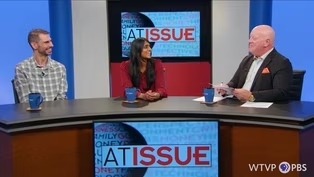
- Yeah, and it's perfectly okay to under vote.
So that's what that means, to choose to not vote in a race.
So if you don't like either candidate or you don't like the one candidate or you don't enjoy how the question is phrased, you're not required to vote in all contests.
- What are the rules about, can you lean over to the guy in the next thing and say, "Hey, who is this?
Who should I vote for?"
- Yeah, no, that's not really allowed.
That would be a little bit of electioneering.
But also with what Jess said, if people accidentally voted for two candidates and it's a vote for one, only that race would not get counted as well.
So even if people do make a mistake or don't want to vote for something, the rest of their ballot is still counted.
- Okay.
And as far as election night, when do we typically start seeing results?
- So the polls close at 7:00 PM.
I would say we'll hope to have our first results out around 8:00 or 8:30.
- Okay.
- And my goal is, we'll have all of our vote by mails counted and early voting.
So by 7:30, at least have the early and vote by mail, just waiting for the polls to come back.
- I'm curious with Bloomington working the way it does, how many folks that you have potentially that could vote compared to the rest of McLean County?
- So we have about 56,000 registered voters and the county has about 60,000.
So we're about half and half.
- Okay.
Half and half, great.
Well, I hope that you're able to get some more election judges and we make sure that everyone's fully staffed.
With those election judges, do you try and get them obviously to come back again and again?
I know they don't sign contracts or anything, but do you encourage them to come every election cycle?
- Yes.
That makes scheduling a lot easier.
- That's the goal.
And so when you serve as an election judge, you get appointed as an officer of the circuit court.
Technically, it's supposed to be a two-year appointment.
Of course, elections fall at different times throughout the year.
So during our spring elections, we have a lot of people on spring break, but yeah, the goal is to keep them.
And we are so appreciative of our election judges.
Today is actually Election Heroes Day.
So I would love to take a moment to just really thank our election judges.
We can't do elections without our election judges.
They are the backbone of our democracy.
- Absolutely.
- So incredibly thankful for what they do.
- All right.
Well, you guys better go buy your cards today.
- Yep.
Stop at the card store.
- Start sending those out.
Well, we appreciate your time and I hope election day runs smoothly.
And I don't know if you're already looking towards the springtime, but we're gonna have another one coming up right around the corner.
- I'm filing this week, yes.
- This week?
- This week, correct.
- Yep.
Yesterday, yes.
- Wow, unbelievable.
All right.
Well, again, this has been Will Nesbitt, the executive director of the Bloomington Board of Election Commissioners, and Jess Joseph, the executive director of the Peoria County Election Commission.
Happy Election Day.
Hope everything goes well for you.
- Thanks for having us.
- Thank you so much.
- Thank you.
- All right, thanks for coming in, we appreciate it.
And thanks you for joining us.
You can share this with a friend or family member.
Just go to wtvp.org.
Have a good night.
(bright upbeat music)
 New
Can You Leave a Race Blank on Your Ballot?
Video has Closed Captions
Clip: S4 Ep8 | 1m 10s | Do you have to vote in every race? Local election officials explain your options. (1m 10s)
 New
How Do You Know Your Mail Ballot Arrived?
Video has Closed Captions
Clip: S4 Ep8 | 1m 7s | Local election officials explain how voters can track their mail-in ballots. (1m 7s)
 New
How Is Voting Equipment Tested?
Video has Closed Captions
Clip: S4 Ep8 | 1m 22s | Jess Joseph explains how public testing helps voters understand election equipment. (1m 22s)
Providing Support for PBS.org
Learn Moreabout PBS online sponsorship New Episode
- News and Public Affairs

Top journalists deliver compelling original analysis of the hour's headlines.

- News and Public Affairs

Today's top journalists discuss Washington's current political events and public affairs.

 New Episode


 New Episode



 New Episode



Support for PBS provided by:
At Issue with Mark Welp is a local public television program presented by WTVP