Empowering Seniors
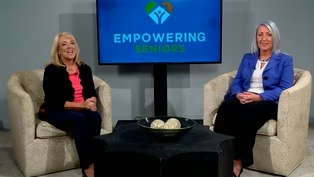
Empowering Seniors Episode 612
Season 6 Episode 12 | 27m 30sVideo has Closed Captions
Empowering Seniors with Katherine Ambrose Fridays at 8:30pm
Empowering Seniors with Katherine Ambrose Fridays at 8:30pm
Problems playing video? | Closed Captioning Feedback
Problems playing video? | Closed Captioning Feedback
Empowering Seniors is a local public television program presented by PBS Kansas Channel 8
Empowering Seniors
Empowering Seniors Episode 612
Season 6 Episode 12 | 27m 30sVideo has Closed Captions
Empowering Seniors with Katherine Ambrose Fridays at 8:30pm
Problems playing video? | Closed Captioning Feedback
Where to Watch Empowering Seniors
Empowering Seniors is available to stream on pbs.org and the PBS app.
Providing Support for PBS.org
Learn Moreabout PBS online sponsorshipFrom the Alvin and Rosalie Sara Check studio PBS Kansas presents Empowering Seniors Welcome to empowering seniors I'm your host Katherine Ambrose And today we're talking about the future of aging Meet Sara Partlow with stay your Way Sara thank you so much for being on the show Thanks for having me Super excited to be here Well I'm intrigued because what you are talking about what you're educating on is something that I had never heard of before And I'm supposed to be a national expert on aging And so I'm like I've got to know about this Absolutely It is so different And we know you could quote different stats You could say 88% 93% You can throw a big number out there A large percentage of especially homeowners want to stay in their current home Absolutely And I would think it's like 93% or so is of older adults don't even want to consider moving to senior living or a retirement community And they're like this is our home We're staying here And so one of the biggest concerns is people being disempowered and losing their agency losing control And you have a way to look at it That's the difference And you're with a nonprofit called Stay Your Way What?
Tell us what Stay Your Way is about So we are the first and only continuing care at home membership program in the state of Kansas currently But programs like ours in the industry they're called CCH is for short and they've been around for about 30 years Okay CCH so what does that stand for?
Continuing care at home okay So you can kind of remember that that to me that's easy because I talk about that all the time that you need to think about your continuum of care plan and you need a care plan To really take care of yourself the way you want to And if there's a time when you're not able to take care of yourself even if it's for a short time you might want somebody know how to make sure coffee whether you want socks on your feet whether you want lotion or no lotion you know to know these things Tell us about how your company has a nonprofit and companies like this are able to empower people that just want to stay So typically you know when people are staying they are they're pushing through They're doing it out of sheer stubbornness or you know just desire to stay in control But what it's actually happening is then they end up losing control And other people have to make those decisions for them So in being proactive with a program like this which by the way there are about 42 programs currently in the United States like ours So you can look into that as well and see if there's one in your area But it's so important to be proactive because if you don't have a plan in place then someone else is going to have to make that plan for you later And we know statistically by history that 70% of older adults need long term care during their lifetime or some type of senior care during their lifetime The other 30% have a caregiver like maybe a spouse or a child who has been able to keep them at home And I expect that that number will start to dwindle as the majority of families have to have both spouses working Okay so you're saying that this is a proven statistic that people can look up 70% are going to need some type of physical or cognitive hands on care Yeah When we're talking about senior care specifically we're talking about when you have aged and declined as happened far enough along to where you're needing help with those activities of daily living or what the industry calls ADLs Okay And so those are when you reach the point of needing help with toileting dressing yourself showering feeding yourself And then of course mobility issues that people sometimes need help transferring from sitting to standing or getting in their bed Those types of things are what we're talking about when we talk about senior care And nobody wants to think about this You want to think about yourself as you are right now and you don't want to think about has we age that that could happen?
And you're saying it happens to 70% that they need outside help And the only reason the other 30% don't need outside help is because they got inside help They got family helping them So are you saying like almost 100% of people might end up needing some kind of hands on care?
Absolutely Really?
Absolutely It's staggering I that's well I'm going to look into that more because that's alarming Yeah The number of people that are blessed you know to be able to just pass peacefully in their sleep although that's what most of us would want if we could choose that It's very very low number And and most older adults do need care And even if it's just from their family members we're just getting harder and harder to do as we as we mentioned And so you know we know this to be empowered to keep your agency in control you want to make your own decisions and really have everything planned out to the point of telling people this is how I want my coffee Like these things should be documented that what your organization does is it says what we will Yeah we join members on their journey and they get benefits from day one Essentially our job is to keep them strong and healthy and independent as long as possible If we can be proactive in their aging process then we can help Hopefully lengthen their independence and even potentially eliminate the need or a longer need for the care that they will eventually need Okay so how do people find out about the program and what does it look to enroll?
Like what does this mean So it is a private pay service So if you are if someone is already financially destitute they most likely will not qualify financially But we have made the program to where it does suit the majority of people Even middle aged middle income folks as well So okay so you're evaluating them to see if they qualify for your program So what does it mean to qualify?
They do have to be just 55 or older And I believe that for my generation that younger age is going to be a good alternative to long term care insurance This is a good a good plan that is not an insurance product but it is similar in a lot of ways It's a promissory note to help keep you at home for life which is what most people want And I you know I know that oftentimes it looks like that might not be a safe place And so that's important to consider too But for our program home is wherever you hang your hat as long as you're in our service area which is currently 100 miles from Hutchinson Kansas But there are other programs in other states as well And so you can actually go to the website my house my homecom and look up some of those programs to see if there is a program like this in your state And there might there might be some programs that aren't listed because you're not on there yet And that's just because you're newer Yep And it's just like where are you going to invest your money right now?
So you're just not on the website yet for that reason but that you're already sending people there so they can maybe find one so this is kind of a promise that we're going to provide you home care at home so that you don't have to come out of pocket because home care can cost 300000 a year if you need 24 hour care Yes And I think there's a there's a lack of knowledge and really a financial unpreparedness for most older adults unless they've lived it with their parents or grandparents they have sticker shock You know when they do look into care in a in a senior living community especially when you're talking about skilled nursing and memory care right now in Kansas that can be upwards of 12 to $13000 a month And so you know at least about $120000 a year And then if you tried to do private duty home care on your own it can we and we know some people here that do offer that And it's it's upwards of 350 They said once you reach the 24 hour Wow So if you do reach that 24 hour care need it can be more than double the cost of a facility Okay So more than double the cost So that's why there's kind of a switch costs Like you can stay at home and get home care out of pocket And then at some point you might think about moving into senior living because now you're going to save money live amongst cohorts You can mix and mingle when you want or you can stay in your apartment but you've got nutrition exercise lots of invitations to do a lot of things And then sometimes they're you need extra care So you might have to pay for care there And if they're all in your program you could even care for them in senior living Yeah If they're an independent living then they can be on our program as well And we actually have three members that have done that already You know they've gone through the downsizing They they have gotten rid of things that they love and they have the most important things in their duplex or their apartment and they don't want to move again You know they've already done the hard work and they're happy where there are And they they want to remain in that place for the remainder of their life okay And mostly stay in control That is really when when you start really digging in you think well most people just want to stay at their home but it's not always their homestead Sometimes people are able to downsize to a slab home or like we mentioned moved to independent living where it would be better for them And that's perfectly fine But it really I think comes down to control And that's what people really want is they want to make their own choices for their own future and fully stay in control But if you fail to plan then you are planning to fail One of the things I like about this is that they can tell their kids you don't need to worry about it I've arranged for all that home care that I might need all the help with my ADLs activities of daily living that I might need That's handled in advance And I have a plan So putting a plan together is really important This is a way to maybe you know weigh it out See can I save potentially a lot of money here?
You really can And so we like to say that essentially with a program like ours you are prepaying for your senior care and you're locking it in in today's dollars and today's rates which is very important because overall the national inflation for long term care or senior care has been on average 54% But since Covid we've been seeing much larger increases like anywhere from 10 to 12% year over year And we don't expect that to get better because of the silver tsunami and that supply and demand issue that we are facing We like to call it the aging care crisis Okay But I also like to say with this being the future of aging quote unquote the baby boomers you know they they are strong and they are smart and they are not going to go down without a fight Right?
And they do want to stay in control And I also think that they don't want to burden their children in that way And sometimes would think oh it's not a burden This is the honor of my life that for most adult kids it's impossible to sell their business close their business hire somebody to run the business or leave their job or take time off And this could be crippling their ability to retire and afford care for themselves And so this kind of a generational impact when you have a parent that hasn't prepared for care you know in every circumstance is different And we know that a lot of families just come up for the challenge and things are handled Yes But then you know we have 30% of a population that has nobody They're so low and they don't have anyone I want to go back to what you said about the silver tsunami And we know some people don't like that term That term has been around for decades because Financial Gerontologist could see this coming And so it's not about older people being a burden It's about resources Are there enough beds?
Are there enough beds?
Are there enough places for people to go to?
Right now?
It's very scary The numbers So currently there are 76 million baby boomers in the United States Statistical need for long term care is 70% right?
So 70% of the baby boomers that's 53 million Well when you then look at how many assisted living and skilled nursing beds are there which it fluctuates of course but it is less than 3 million beds So we are looking at a 51 million bed deficit to the statistical need based off of history And that's that's scary I'm so glad to hear you be able to get those statistics out because when I tell people you need to plan you need to get on a waitlist You need to know where you're going to go That's why Yeah because there's not enough for everybody There's definitely not And I think that it's really important to have a plan in place Not only so that you can potentially spend less I mean it's a makes a great financial planning tool for sure because again you're paying for it You're locking it in at those rates and truly at a fraction of the cost I like to use an example of one of our members He's still working he's 68 years old and he was able to qualify for our program Thankfully even though he couldn't qualify for long term care insurance But we did quick figures on his entrance fee a one time entrance fee plus ten years of his monthly membership fees was less than one year in a facility So it's huge The savings that you could be looking at now do we wish we had a crystal ball?
Yeah but we don't we don't know for sure And the financial planners and the attorneys we're talking to are loving this because normally they have big red question marks for days How much do I earmark for this person's care?
But because we don't know and every person's different it's hard to know what what you should earmark for that But with this our members are able to know to the penny what they're going to spend on their senior care which is great because it allows them to be able to invest the rest or spend the rest whatever they'd like to do they would never have to worry about a medicaid spend down This is maybe the only way you could have a crystal ball is because you've locked it in Yes and you have a nonprofit now responsible to take care of your ADLs And that pretty much what you do is you help people with activities of daily living So that's a great question So actually there are benefits from day one which is really our wellness navigator So each member gets their own personal wellness navigator that acts as like their own concierge per se for all things health and wellness And wellness is one of those concepts that really means something different to every person But that's the beauty of our program is that people are able to utilize the program benefits how they want to They're still fully in control They get to have their own doctors make all their own choices and they are actually getting you know they're working with their wellness navigator to say this is what I like This is what I want this is what I need And what we love about the Wellness Navigator is it's really the first person in their life that their job solely exists to keep them out of the nursing home Yeah And really were our own first wellness navigator Well true And then then you have one that is consulting with you and keeping notes and all that I mean that that's awesome And having someone to navigate that is huge So we have one member right now that just got a new diagnosis of cancer And you know we're helping him to figure out what treatment options are out there What are the pros and cons He's also this is a different one He's still working as well And he needs to be able to still work So we're helping him find doctors and and just navigate the health care system which can be really challenging as can be very challenging It's very taxing on people especially has we age to be able to navigate those tough systems and know how to get resources beyond what you might just find On the surface level you really have to be a detective and What do you think about wealth transfer?
Where do you think money is going to go?
I think that they stand to lose the largest amount of generational wealth in history And why am I saying that they're going to lose it right It's because all it takes is one long term care crisis to complete neatly and utterly demolish or obliterate that generational wealth And so that that's really if you want to pass that generational wealth on to the next you know to your family then you have to have a plan in place because it absolutely can be gone like that You can burn through your money and then start burning through theirs Yeah And so it's not just the baby boomers that stand you know they could lose it two ways If their parents are still living and they don't have a plan they could lose it to the they will have nothing from their parents or if they don't have their care often times Right Absolutely That definitely happens as well And so just figuring out how to care for people as we age And we want people to be healthy as long as possible to have healthy longevity So I'm glad that you factor that into like how can we stay Well all right And the wellness piece is so important because we're not just looking at our members health We're looking at their social needs their emotional mental intellectual and even spiritual needs for some And everybody is going to be different Right And that is again the beauty of this program is that we can truly join the members on their journey support them in the way they want to be supported keep them at home for life and do all of that for a fraction of the cost You know it's possible that a member may not need you know they might be one of the ones who passes away peacefully in their sleep We don't know But if they have a plan in place then they have that peace of mind This is taken care of I know that my kids can just be my kids and I love telling a story about my grandma about that because she's one of our members and she had already gone through downsizing She lives in independent living and she loves her duplex She lost her husband unfortunately about a year and a half ago And and it's just been a perfect match for her because she doesn't want to downsize anymore She doesn't want to have to go into the nursing facility And now she has a way to get that care She needs to keep her safely and successfully in independent living for the rest of her life So I went to present to my uncle and I talked to him about the program He's for power of attorney And we got to the end you know and she said what do you think?
She was excited and he said it sounds pretty good But you know he had that hesitation and I was wondering what is he thinking?
And she didn't even have to ask She knew exactly what he was thinking because he's she has a big family She has six kids and I'm the oldest of 32 grandchildren And so she's got a large family and most of them are nearby and would do anything for her anything we could And she said listen I know that you guys would drop everything and take care of me if needed but I don't want you to She said We're talking about my dignity And I hadn't even thought about that piece of this program yet I really was just thinking about man this is smart financially and people can stay at home which is what they want But the dignity piece is huge too you know because she said listen we're talking about my senior care We're talking about potentially having to toilet me feed me dress me she said You guys have your own lives I don't want to have to have you do that for me And so then you know I think the reality of what that actually looks like people often don't think about what that looks like And I have lived it I did tours at the retirement community and the people that were coming in were the ones who were trying It's the families They're trying They're coming in in tears They're saying I can't do it anymore It's too hard now especially when it gets up to that heavy 24 hour care need You know I'm out of PTO I can't I can't quit my job So the adult kids were coming to you crying and saying we don't We want we wanted We intended to help care for them at home but we can't do it anymore And they're distraught Totally So sad to see And then it's also hard to see the financial piece of it as well And what that looks like for people if they don't have a plan because even those with really nice nest egg you know they a crisis situation comes They they have they're forced to move in And they are spending down that money at 12 plus thousand dollars a month you know that is busting through the nest egg so quick Yeah And then what the reality looks like for people is a real life switch It's kind of their last last little shred of independence Is their money right And so when they have no more money and then they have to get on Medicaid and the state then that is one way that the state will pay for your senior care or long term care is if you do become financially destitute That's the way that works And then they take your Social Security to and they give you $62 a month That's it So $62 a month to pay for your fund money your hair care clothes everything $62 So I see what you mean about dignity That it's a quality of life shift for those people You know it's it's just like man I don't even have I worked so hard all my life and now I don't even have my money It's just really hard and sad to see people go through that because they didn't have a plan in place So there are professionals in all different fields within the aging space that can help people plan and a lot of different ways And this is just one of the options and it's unique because I hadn't heard of it before But it's it's interesting to see that these continued care at home have been around for a while Yeah about 30 years Primarily on the East Coast We're actually the ninth program west of the Mississippi And the first and only in the state of Kansas So it's pretty exciting that is exciting Well it's it's good to learn about the different options And so best way you can empower yourself is try to be as healthy as you can be Absolutely And get up and move Move your body Stay social stay engaged What are some of the things that you think people could do to stay healthier and age better?
You know it's all about being proactive even not just plans for your finances and programs like ours but plans for what are you going to do every single day?
You know are you just going to sit on your couch and let life happen to you?
We are looking for members who are fiercely independent and want to stay strong and healthy and independent And they do that by being proactive you know having a plan You know maybe you're an introvert but you still have to have things that give you joy right?
You know a lot of times when we think about social things we think about extroverts But even introverts can have social events that they enjoy and that are very beneficial to them And we actually take a whole person approach to wellness and to making sure that our members are staying healthy and truly thriving not just staying home That's not that's the goal right?
People want to stay home but we want to make sure that they're truly thriving and enjoying that retirement instead of feeling like invisible and like they have no purpose and like they're a burden to their family You know so it's it's exciting to see that there's a new option that can help both the ourselves and our family Okay So I'm going to ask Your personal perspectives Having worked in senior living and now working in this continuing care at home program What are your personal perspectives about aging?
What are you doing to keep yourself healthy?
What's your plan?
That's a great question And I I immediately started feeling like when we got this program launched like I need to do something for myself I need to start taking better care of myself So you know making sure that you're getting into the gym I have done a lot of research on weightlifting and I have I was a hairdresser prior to this role for 22 years full time and I gave a lot of tours to memory care for past hairdressers And so that's obviously a concern of mine and chemicals chemicals all the exposure I've had you know so trying to find new clean ways of living and you know less chemicals on my body and then supporting myself through getting into the gym eating healthier you know drinking the water with the electrolytes which I found out can be a big help too because sometimes without those extra electrolytes you can't really get that full absorption like you need And so just you know find somebody And that's one thing If you're on our program your wellness navigator can be that person for you because you can drink water but your cells might not absorb it Right And so how can we get better absorption from the water we drink?
I'm glad you mentioned weightlifting because I really believe that's a huge answer For a lot of us to age better is we need muscle And you know you don't have to be intimidated by it because you can actually it's really more it's very good to focus on your form So start with lower weight You don't have to start super super heavy Start with the lower weight focus on your form get that right and then you can increasingly build on the weight part But get yourself moving That's good for your brain too because you're learning something new So you're having to be a student of that learning something new So well thank you for everything that you're doing to help people age well and to be a part of to know what it's going to look like and to do some planning So fantastic Thanks for being on the show Thanks for having me And thank you for watching If you have questions about continued care home or anything we cover on our program reach out to us at EmpoweringSeniors@kpts.org I'm Katherine Ambrose and I'll see you on the next Empowering Seniors
Empowering Seniors Episode 612
Preview: S6 Ep12 | 30s | Empowering Seniors with Katherine Ambrose Fridays at 8:30pm (30s)
Providing Support for PBS.org
Learn Moreabout PBS online sponsorship New Episode
- News and Public Affairs

Top journalists deliver compelling original analysis of the hour's headlines.
 New Episode
- News and Public Affairs

Today's top journalists discuss Washington's current political events and public affairs.
 New Episode
 New Episode
 New Episode
 New Episode
 New Episode


 New Episode
 New Episode

Support for PBS provided by:
Empowering Seniors is a local public television program presented by PBS Kansas Channel 8