Washington Grown
Flowers & Tulips
Season 10 Episode 1002 | 26m 46sVideo has Closed Captions
Skagit Valley: Mossy Gate Flower Farm and Roozengarde, Beacon Hill’s Flora Bakehouse
This episode is all about flowers in The Skagit Valley. Join us on a tour of Mossy Gate Flower Farm and Roozengarde during the annual Tulip Festival. Bake floral berry danishes at Beacon Hill’s Flora Bakehouse. Learn about Voluntary Stewardship Programs conserving precious water, soil, and more.
Problems playing video? | Closed Captioning Feedback
Problems playing video? | Closed Captioning Feedback
Washington Grown is a local public television program presented by KSPS PBS
Washington Grown
Flowers & Tulips
Season 10 Episode 1002 | 26m 46sVideo has Closed Captions
This episode is all about flowers in The Skagit Valley. Join us on a tour of Mossy Gate Flower Farm and Roozengarde during the annual Tulip Festival. Bake floral berry danishes at Beacon Hill’s Flora Bakehouse. Learn about Voluntary Stewardship Programs conserving precious water, soil, and more.
Problems playing video? | Closed Captioning Feedback
How to Watch Washington Grown
Washington Grown is available to stream on pbs.org and the free PBS App, available on iPhone, Apple TV, Android TV, Android smartphones, Amazon Fire TV, Amazon Fire Tablet, Roku, Samsung Smart TV, and Vizio.
Providing Support for PBS.org
Learn Moreabout PBS online sponsorshipWashington Grown is made possible by funding from the Washington State Department of Agriculture and the USDA Specialty Crop Block Grant Program.
And by The Potato Farmers of Washington.
Learn why Washington is home to the world's most productive potato fields and farmers by visiting potatoes.com.
- Hi, everyone I'm Kristi Gorenson and welcome to Washington Grown.
Flowers just aren't for springtime, and they aren't just for the bees either.
Here in Washington, an abundance of flowers are grown in open fields and greenhouses all over the state.
Val's visiting Mossy Gate Flower Farm in the Skagit Valley.
- I love Skagit.
- Oh, that's wonderful.
- Yeah.
- And I'm making a fresh berry and flower Danish at Flora Bakehouse.
- Just kind of accent on the top with just a few little bits.
And they're all gonna be just a little bit different.
Just something fun.
- Oh, this is my favorite part.
This is so fun.
- Plus, Val's at the Skagit Valley Tulip Festival.
- We've got lots of Instagrammable photo-ops for them.
On sunny days, you can see Mount Baker, the trolley ride.
- A day at the farm.
- A day at the farm.
- All this and more today on Washington Grown.
[upbeat music] - This is my favorite part of the day.
You gave me this job just to keep me occupied, didn't you?
This is what fine dining is all about, right here.
[Tomás barking] [dog barking] - I could eat these all day.
[both laugh] - You all make this look so simple and easy.
- Cheers to that.
[Tomás laughing] - I only hang out in pretty potato fields.
[Kristi laughs] [plane engine whirring] - Visiting Seattle and looking for a special sweet treat?
Pop on over to Beacon Hill and head into Flora Bakehouse.
Here, the name matches both the food and the decor, with all kinds of flowers grown right on the rooftop, an interior that feels like springtime in the Northwest.
- It's very homey, you know?
And like people here are very friendly.
Sometimes, people connect through table like it is just a very welcoming space.
- It feels very airy and feminine.
- Just the aesthetic inside is so beautiful.
- I just love it here.
- For us, really, it's about creating that moment of joy in your day.
- Owner, Nat Stratton-Clarke, wants The Bakehouse to bring customers a special breath of fresh air.
From the coffee to the pastries, to the setting.
Everything about Flora feels comfortable and homey.
- It's to get that moment where you can leave your house and come to a beautiful space, get a delicious pastry that just brightens your day, have a gorgeous coffee, and then sit on our roof deck, look at Mount Rainier.
I mean, you really can't ask for more than that.
- You get to watch the process.
- As I walked by, I could see everybody cooking.
I thought it was really cool while standing in line.
- I feel like it's really lovely to watch that happening.
And it's usually like right in the window right there.
- I think so often, kitchens are tucked in the back of a bakery.
You never see the person that's actually making the food you're eating.
These people are are artisans.
They're craftspeople.
It's so fun to see these kids kind of plastered up against the window watching -- - Or me.
- Right?
Or just watching the magic.
Just take butter and flour and turn it into a chocolate croissant.
Again, as an adult, I think it's magic.
- Don't miss later in the show, when baker, Leslie and I, make Flora's Danish with fresh berries and flowers.
- How can you go wrong with something that's basically like this beautiful bowl of fruit with this crunchy pastry with that custard in there?
[upbeat music] [cheerful music] - Bright colors bloom in the Skagit Valley, home to the famous Skagit Valley Tulip Festival and Mossy Gate Flower Farm.
- These will be used in bouquets.
- Jesalyn Pettigrew first broke soil in 2015 as she transitioned into a new stage of life.
- I got to gardening.
I bought a bag of dahlias at Costco, and I found every evening that no matter how bad my day or how tired I was, I kept going out and taking care of them.
- Quickly, her newfound passion flourished.
- I started researching, finding out that one person could handle an acre and make a living.
And I thought, "Oh my God, my kids could be on my hips and I could be doing stuff.
And we're all together.
This might be something."
- What do you think it is about Northwest Washington that makes it such a great place to grow flowers and other crops?
- Well, one of the main benefits is that we can grow for an extended period of time.
And we can be growing year-round, depending on the crop that we have.
The other benefit is, particularly in Skagit, the soil here is a glacial soil.
It's full of minerals.
It's world-renowned.
You have a certain makeup here that you can't find in anywhere else.
So, I love Skagit.
[both laughs] - Oh, that's wonderful.
- Yeah.
- To bring balance to the farm and local environment, Mossy Gate works with the regional conservation district.
- They have funded for me cover crops which help keep the soil contained, return nutrients.
They also have funded hedgerows to put in native plants that will be a barrier for wind, insecticide, pesticide, herbicides.
- Legislation is in discussion to see barriers like hedgerows double in size.
- So, this is an official hedgerow?
- Yes.
- What's on the other side?
- So on the other side of this particular property is a slew.
- This is a great buffer, but how much taller, wider can you allow it to go before it starts impacting your farm land?
- If this were to go wider, it impacts my already small acre, and I would have to, at great cost, figure out a new way to farm within the shade structure that that wide buffer uses.
- Amazing.
- Yeah, it would be tricky.
It would be really tricky.
- At the end of the day, Jesalyn showed me which flowers make the cut in one of her beautiful bouquets.
- So when you're harvesting Sweet Peas, what you want is a stem that has multi-heads and one that's still kind of closed.
And this guy would be perfect to cut.
And you just wanna snip it right down, right at the base next to that vine.
- At the base, all right.
Because you want as much length as you can get.
- Yep.
- So you'll be cutting along and then you will make sure that the tops all go together.
- Okay.
- And then at the end, you'll do a quick snip on the bottom and now they match.
- Oh, okay.
So you cut them, you band them and then -- - Yep.
They go right into a bucket of cold water.
I put a flower food holding solution in my water and then they go right into a cooler until ready to transport.
- Well, thank you.
- Yeah.
- For growing these beautiful, beautiful, beautiful flowers.
I'm enjoying them.
[both chuckle] - Usually I'm searching for a cool food truck or unique walkup for something delicious to try.
But as I was exploring Capitol Hill in the heart of Seattle, I stumbled upon a hidden gem that I just couldn't resist.
- You know, there's a a little birdie in town telling me you got the best ramen in town.
Is that true?
- I don't know about that.
- No?
- We do our best, in town.
- Okay.
- As Chong Boon Ooi and I take a seat in his restaurant, Ooink, the bowl of ramen his wife places in front of me looks incredible.
And the aromas are just soothing, warm, and inviting.
- Look at that.
That's beautiful.
- Thank you.
Everything, these take a lot of time.
It's a labor of love.
I don't do the magic.
It's the time that makes the magic.
Right?
You just need to be patient.
- Why do you cook such amazing food?
What does that mean to you?
- I like to eat.
- You like to eat?
- I really do.
- So it's just about your own stomach?
- Mm, this is not coming from nothing.
[both laugh] If we don't have business, at least I have noodle to eat and alcohol to drink.
So I'm good for a long time.
- I love it.
- I'm fine with that.
Cheers for that.
- In the Chinese and Malaysian cultures, Chong and his wife share, it's a sign of respect to slurp your ramen, letting the artist behind the bowl know that it tastes as good as it looks.
- So, what's next for you, Chong?
- My own ramen give me goosebumps.
[laughs] It's been five and a half year though myself.
- But you're working on it.
Well, I don't know what you're talking about because this is amazing, and this is giving me goosebumps.
- I'm happy with what I do.
I'm happy with what I share.
- Well, with flavors like this I, I can see why.
This stuff's amazing, dude.
So thank you.
- Thank you.
- Cheers.
[soft melodic music] - Many flowers are poisonous like these Sweet Peas.
You don't want to eat them, but there's quite a few that are edible.
I'll tell you about those after the break.
- Coming up, I'm making a berry and flower Danish at Flora Bake House.
- How can you go wrong with something that's basically like this beautiful bowl of fruit.
- Right?
- With this crunchy pastry?
- Yeah - With that custard in there.
- And we're in The Kitchen at Second Harvest, trying out some Lemon and Lavender Scones.
- So Violas are edible.
You use just the flower.
They're great in ice cubes.
Sweet Williams, the little flowers are edible on those and so are Dahlia Tubers, the little thing that you put in the ground, you can cook 'em just like a potato.
- We're back at Flora Bakehouse in Seattle with bread, croissants, pastries, and more on the menu.
The rave reviews from customers prove that anything you get is going to be delicious.
- Usually walk out with a baguette 'cause they're like the best I've had in Seattle.
- I mean, their pastries and their coffee is great.
- My favorite is the Smoked Cheddar Cheese and Chive Scone.
- Their Chocolate Chip Cookies are great too.
- You kind of can't go wrong.
- I have my favorites.
- One of the things that we love is highlighting seasonal produce.
- Owner Nat Stratton Clark makes sure everything is made with the freshest ingredients.
Infusing the best of Washington farms in every bite.
- Every week we're bringing in new things from the farm.
Especially in summer.
We have our, our seasonal danish, which is such a perfect moment to highlight all of the amazing fruit that comes out of Washington.
I mean, we're so lucky to live where we live.
It's just the variety in berries we get, we have berries that no one's ever heard of.
- Yeah.
- It'll be like, oh, peaches are in season.
And they'll like make special pastries with peaches.
- If you looked at my credit card statement, I'm here probably like four times a week.
- Love to come by and sit outside on the porch.
They have lots of flowers.
The design inside is just gorgeous.
- So I get to bake with your pastry chef.
Right?
- You are baking with our amazing pastry chef.
- Okay.
- Leslie Pettigrew is just, is is a true magician.
A true genius when it comes to pastry.
You're gonna be working on the Danish because -- - Okay.
- It's, it's, again, it's that perfect place to highlight the bounty of the Northwest.
The incredible produce we have here in Washington.
- I can't wait to make it and eat it.
- Absolutely.
- Thank you.
- Yeah.
- Today we are gonna make our Summer Berry Danish.
Has some bay leaf pastry cream, summer berry jam.
And then we're gonna garnish it with blackberries, blueberries and raspberries and some edible flowers and herbs.
- Some edible flowers.
So tell me about the flowers here 'cause they're so pretty.
So these are some things that we grow upstairs on our roof deck.
They're a little bit of color and a little bit of fun, but they're also delicious and they add some flavor to our items as well.
- We start with our cardamom danish dough after it's been proofed.
- One of the reasons I love working with this dough is you get that kind of nice little hint of cardamom as you're working.
- You kind of see the little.
- That's what the little speckles are.
Yeah.
And you can see the layers are starting to separate.
Those are all layers of butter and dough, so.
- And I love the shape that they're in.
- This one was really fun because the berries in the center make it almost look like a flower.
- Oh, beautiful.
- So that's kind of a fun shape.
- We start by making a small opening in the pinwheels.
I'm making my little opening bigger so you can put more stuff in it.
- There you go.
Exactly.
We change the fruit throughout the year.
- Uh huh.
Sure.
- And it's really fun to come up with the different flavor combinations.
- Next we egg wash the danish, put some bay leaf pastry cream in the middle, and put them in the oven to bake.
Then we move on to making the summer berry jam.
We start by mashing up half of our berries.
- This is what's gonna kind of make the sauce a little bit thicker.
- Okay.
- And it's gonna just speed up the process 'cause it takes a long time for this kind of berry to break down just from heat alone.
And this sauce is nice 'cause it's not just something for the danish.
You can put it on ice cream, you can put it on cheesecake, you can put it on yogurt.
- Eat it with a spoon.
- You can eat it with a spoon.
Yeah.
It's really, really delicious.
- Next we add the rest of the berries, some sugar and lemon juice and give it a stir.
Then we cook it until it thickens up.
Once our pinwheels are finished baking, we're ready for the really fun part.
Wow.
These are amazing!
Look at how big they got and how toasty brown they are.
- Yeah.
And it's kind of fun 'cause you get the little crunchy edges, but it's tender in the middle, so it's a good contrast.
- We scoop the summer berry jam into the middle, then top it off with fresh berries.
You really load these up.
- We really do.
How can you go wrong with something that's basically like this beautiful bowl of fruit.
- With this crunchy pastry.
- Yeah.
Next come the edible flowers.
- Just kind of accent on the top with just like a few little bits.
And they're all gonna be just a little bit different.
Just something fun.
- Oh.
This is my favorite part.
This is so fun.
To finish it off, we sprinkle on some powdered sugar.
- I always think it's kind of magical, that powdered sugar, it's like a fresh snowfall.
- It is, I know.
- It just makes everything so pretty.
[light guitar music] - It's so tender inside.
- I like the contrast 'cause you've got that crunchy outside and I love the little bit of cardamom that you get.
And then it's the bite in the middle with all of the stuff is the best.
- It hits the spot.
Lovely berries.
It's beautiful flowers.
Gorgeous pastry.
Yum.
For more recipes, farms, food, and fun visit wagrown.com.
- Farmers are great stewards of the environment, and here in Skagit County, farmers work hard to protect our waterways.
In order to create farm friendly options that benefit our environment, the Washington legislature created the Voluntary Stewardship Program.
- The history of this program was done as a compromise.
- CJ Jones is the Voluntary Stewardship Program Coordinator for Skagit County.
He and his team encourage farmers to implement conservation practices on their farms, like planting native shrubs along a stream bed or using cover crops to keep soil healthy.
Allowing farmers to reach conservation goals on their own, gives them a voice and lets them have a say in how we can protect Washington waterways.
- The whole idea is to prevent any kind of farming activity from negatively affecting our waterways.
And a lot of farmers are very cognizant about that anyways.
But this gives them a framework to help protect these watersheds.
Doing so on a voluntary basis is better than anything else and forcing folks to do it.
- Skagit Conservation District is a, we like to joke that it's a well kept secret.
- Emmett Wild is a senior planner for the Skagit County Conservation District.
Today, he's showing me how the district helped one farmer use cover crops to improve the land.
- Her primary goals were to reduce soil erosion and to suppress weeds.
We helped her choose an organic Rye Vetch mix, which helps to suppress those weeds from germinating.
- Wow.
Looks like they've...
I don't see a lot of weeds out here.
- Yeah.
Looks like it's working.
- That's a good thing.
- Yeah.
Cover crops are not always something that you see a real short term benefit in, especially financially.
It's an added cost at the end of the season, right?
So if we can help through VSP or other cost share programs, cover that seed cost, we can still get a great environmental benefit and a good long-term benefit for the farmer.
- Farming is very hard work and a lot of farmers are very devoted to what they do and are very proud of how they manage the landscape.
And so being able to provide tools to allow farming to continue to be prosperous for the long term is good.
Not only good for the soil, it's good for the environment, it's good for people.
And we're talking about things like climate change.
The longer the supply chain is, the harder it's gonna be, the more expensive it's going to be.
We help support our local farmers right here in Western Washington.
That's good for everybody.
- Absolutely.
And it's a delicious thing when we can all work together.
- Absolutely yeah.
- Coming up, Val's visiting the Skagit Valley Tulip Festival.
- People come in our office and they're asking for directions and they're just like, 'we're here to see tulips.
How do we do this?'
[upbeat music] [acoustic guitar riff] - Flowers at your house, they just make everything better.
Everyone should grow at least a few flowers.
Trust me, you'll be glad that you did.
They are so pretty.
This is from a local farm, daisies in May, and we are going to talk about flowers today and how to make a beautiful arrangement with them.
When you do an arrangement, you're going to want to start with your focal flower, the one that just is the stunner of the whole thing.
And we're just gonna start adding in some other flowers to compliment and highlight this one.
Now, at the beginning, it's gonna look kind of sad, but you have to just work through that part.
So you just keep going.
Again, you cannot do this wrong.
Usually with these ones too, you wanna grab 'em when they're maybe not quite the full way open, when they're really, really close, because that's gonna provide longevity too.
If you get 'em when they're already completely full bloom, then your bouquet is not gonna last near as long.
The biggest thing you wanna fight is the fungus and stuff.
The molds and things that can get in there and kind of ruin the stems and turn the water and make it all stinky.
So the best thing to do for that is going to be some vodka and baking soda.
So they kind of act as an anti-fungal.
And then you're just gonna take it and you're just gonna swish a little bit so it gets all around and it just kinda stirs it up a little.
And then you're gonna set it there and you have your beautiful center display for barbecue, or just because.
I usually like just because you should always have fresh flowers in your home.
- One of Washington's biggest events of the year is the annual Tulip Festival.
Every April, people from all over head to the Skagit Valley to see row after row, after row of gorgeous flowers.
Here at RoozenGaarde, all sorts of flowers are in bloom.
- RoozenGaarde here is owned and ran by Washington Bulb Company.
- Cindy Verge is the executive director of the Tulip Festival.
Her goal is to introduce visitors from all over to the beauty of the Skagit Valley.
- If you look at where we're at on the global map, that's what we're about at the same level as Holland.
- Holland.
- The Roozens.
They're the third generation here in Washington, but their family's been growing tulips in the Netherlands, in Holland, much, much longer.
- Tulips are obviously synonymous with the name Roozen.
- As a third generation tulip farmer, Brent Roozen works hard to bring the festival to life here at RoozenGaarde.
- Interestingly enough, Roozen actually means rose in Dutch.
So yeah, there's some irony there.
[Val laughs] Fun fact is we grow more daffodils than we do tulips.
- Do you really?
- That's correct.
So we grow about 350 acres of tulips.
450 acres of daffodils, but tulips are the main show here in the Skagit Valley.
Tulips are a crop that needs a long rotation period.
So we're only planting tulips in the same location once every five to six years.
- Really?
Now we're headed to another popular festival spot.
Tuliptown!
Here Kristen Kelt showcases the best of the Northwest, making sure every visitor leaves with a smile.
- We've got lots of Instagramable photo-ops for them.
On sunny days you can see Mount Baker, the trolley rides.
We've got a beer and wine garden, a cafe, retail shopping.
- A day at the farm.
- A day at the farm.
- Oh my gosh.
They're gorgeous.
And you've got even more over here.
- We've got more inside.
Yes.
We've got about 70 varieties in the display garden and several live bouquets inside.
- Whoa, this is fun.
- Anything with tulips on it, you wanna buy, you can probably find it in there.
- Oh, this is beautiful.
- Thank you.
- Just spectacular.
I love the clouds and the rain drops.
- Yeah, it's beautiful.
- Not only does the Tulip Festival bring thousands of people to see local flower farms, it also boosts local economies.
Towns like Mount Vernon, hold street fairs where visitors can bring home a small piece of the Northwest.
- You know, this is an economic engine for our little downtown.
We bring, depending on the weather in the year, anywhere from 15 to 40,000 visitors over this weekend.
It has a positive effect on our community.
And plus, everybody's in a great mood.
- Our whole community works together.
That collaboration is stupendous and it makes it possible.
- You know, there's a lot to offer here in the valley.
So we want the people who come up to enjoy the tulips, to then enjoy the rest of the community as well.
- People come in our office and they're asking for directions and they're just like, 'we we're here to see tulips.
How do we do this?'
And just to see the joy on their faces from coming to see this glorious tulips.
[acoustic guitar tune] - Welcome back.
We are in The Kitchen at Second Harvest Food Bank in Spokane, and I'm joined by my sidekick, Tomás.
Thanks for being here.
- It's always good to be back.
- As well as Laurent Zirotti, bonjour!
- Bonjour, Kristi!
Bonjour, Tomás.
- Bonjour.
- Laurent is a chef and a teacher of culinary art.
So we always love to have you.
Thanks for being here.
- Thank you very much.
Yeah, it's a good day because I'm here today with you, so.
- Exactly.
And we get to taste some lovely food.
Today is Lemon Lavender Scones.
- Oh, nice.
- And of course this is a oh nice flower episode.
- Ooh.
- And you, you got to enjoy the Tulip Festival in this episode, I love that.
- I did.
It was an amazing experience.
You know, it's one of those places that you don't even realize is real until you actually go there.
I mean, it's the type of place my mom would've just loved 'cause there's just flowers as far as the eye can see.
It was great to get some, some cool shots there and -- - Oh yeah.
- And to meet all the people that were just enjoying just the beautiful colors.
- So beautiful.
So Laurent hasn't been, you need to give that a try one of these days.
- I need to get there, yes, yes I love flowers.
- Yes.
And cooking with flowers.
- I think so.
I mean like even decoration, but you know, you can always eat pansies, orchids.
But don't be afraid also in the, in the late spring, beginning of summer when you have all your herbs in flower.
Use those flower as garish and flavor also -- - Absolutely.
- In salads.
Beautiful and it's just great flavor.
- So Lemon Lavender Scones is what we're going to be making today and I can't wait to try it.
- Me, me too.
- Let's get to it.
[cheery upbeat music] - Yeah.
It looks delicious.
Lemon and lavender Scones by Marilyn.
And they smell amazing.
- Yes.
It's so fragrant.
Just that lavender and lemon is a just an amazing combination.
- Delicious.
And so Marilyn says, these lovely old fashioned scones are very light and they literally melt in your mouth.
- Let's find out.
- Sorry, I couldn't, I couldn't wait.
- I already dropped mine.
- Right?
The lavender is really subtle.
- Yes.
And that's very important when you cook with lavender, you have to be very careful.
If you put too much lavender, well, it's gonna taste like soap and -- - It will, it'll taste like soap.
- It does, so you gotta be very careful.
Measure well your lavender.
- Flowers are one of those ingredients that we just don't cook with enough.
It's just, in our busy, hectic, crazy lives.
It's hard to find the right research to figure out what can and can I not eat.
- Wait and smell the roses?
Or wait and cook with the roses.
- Yeah, cook with the lavender.
Smell the lavender.
So we have some comments.
And these recipes are from allrecipes.com.
And Suzan says, 'I didn't make any changes, but if I make them again, I would add more lemon zest because I like stronger lemon flavor'.
And then Pamela says, 'I made a lemon drizzle to pour over it and then scattered lavender seeds on top', which is what we did here.
It's very good.
And if you happen to recreate this recipe or any of our recipes, make sure you tag us on social media.
So Facebook, Instagram, and show us your creations.
We'd love to see it.
To get the recipe for Lemon and Lavender scones, visit wagrown.com.
I don't know about you, but fresh flowers, always put a smile on my face.
And the pollinators like them too.
That's it for this episode of Washington Grown.
We'll see you next time.
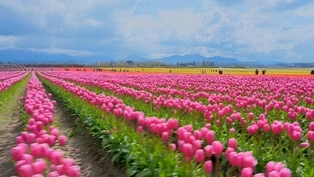
Preview: S10 Ep1002 | 30s | The Skagit Valley Tulip Festival; Beacon Hill’s Flora Bakehouse; Mossy Gate Flower Farm (30s)
Providing Support for PBS.org
Learn Moreabout PBS online sponsorship

- Food
Christopher Kimball’s Milk Street Television
Transform home cooking with the editors of Christopher Kimball’s Milk Street Magazine.



Support for PBS provided by:
Washington Grown is a local public television program presented by KSPS PBS