Washington Grown
Growing The Perfect Potato
Season 10 Episode 1001 | 27sVideo has Closed Captions
How ice age floods impact farming today. Oddfellows cafe in Seattle for skillet spuds
Featuring Washington Potatoes this episode, we learn how ice age floods impact farming today. We visit Oddfellows cafe in Seattle and make tasty skillet potatoes. Plus we make Garden-stuffed baked potatoes at 2nd Harvest in Spokane.
Problems playing video? | Closed Captioning Feedback
Problems playing video? | Closed Captioning Feedback
Washington Grown is a local public television program presented by KSPS PBS
Washington Grown
Growing The Perfect Potato
Season 10 Episode 1001 | 27sVideo has Closed Captions
Featuring Washington Potatoes this episode, we learn how ice age floods impact farming today. We visit Oddfellows cafe in Seattle and make tasty skillet potatoes. Plus we make Garden-stuffed baked potatoes at 2nd Harvest in Spokane.
Problems playing video? | Closed Captioning Feedback
How to Watch Washington Grown
Washington Grown is available to stream on pbs.org and the free PBS App, available on iPhone, Apple TV, Android TV, Android smartphones, Amazon Fire TV, Amazon Fire Tablet, Roku, Samsung Smart TV, and Vizio.
Providing Support for PBS.org
Learn Moreabout PBS online sponsorshipWashington Grown is made possible by funding from the Washington State Department of Agriculture and the USDA Specialty Crop Block Grant Program.
- Hi everyone, I'm Kristi Gorenson, and welcome to "Washington Grown."
It's no secret that people love potatoes.
The average American eats about 140 pounds of these tasty tubers every year.
In this episode, we're gonna show you even more to love about potatoes and the folks who grow them right here in Washington.
I'm visiting potato farmer, Jordan Reed, to see his family farm.
- I love to be able to raise a crop that I can walk into a restaurant and say, "Hey, there's a good chance we raised that.
You know, there's a possibility these came from our field."
That's neat to me.
- And I'm making a French potato dish at Oddfellows in Seattle.
That's it?
- That's it.
- Wow, that was easy.
- And we're gonna do one more layer.
- Oh, one more layer.
Oh, okay.
[both laughing] Then Tomás is learning how Grand Coulee Dam is bringing water to farms that need it across the state.
- If you're not farming for the future, you're not doing it, man.
- All this and more today on "Washington Grown."
[upbeat music] This is my favorite part of the day.
You gave me this job just to keep me occupied, didn't you?
This is what fine dining is all about right here.
[Tomás barking] [dog barking] - I could eat these all day.
[laughs] - You all make this look so simple and easy.
Cheers to that.
[glasses clink] - I only hang out in pretty potato fields.
[laughs] [plane zooming] [upbeat music] Historic, beautiful, delicious.
Here at Oddfellows on Capitol Hill, there are so many reasons to love this special restaurant.
From the comfortable yet vibrant environment, to the eye-catching culinary delights, Oddfellows holds a special place in the hearts of the neighborhood.
- It feels like a place that's been here awhile.
- Historical time capsule in the neighborhood.
We walked in kind of wondering what the story was behind this place, 'cause it feels like it has one.
- We call it the Capitol Hill's living room.
- Chef Sam Thompson and her team want to embrace the natural atmosphere of the restaurant.
With locally sourced cuisine and an energetic yet comfortable atmosphere, guests should feel right at home.
- Then you enter our restaurant, and it's just open and it's airy.
It is a cool space.
And it's a very old building as well.
So there is a lot of character that comes with dining at Oddfellows.
- It just feels cozy.
- It kind of has a little bit of an industrial feel, which I like.
- When I think of Seattle, I feel like it's one of these just iconic locations that you just have to come to and bring people that you're visiting with at least once.
- It's a staple of the neighborhood.
- It feels like a living room.
It feels like somewhere you can just sit down, and have a cup of coffee and just relax.
- Coming up later in the show, Chef Sam and I will be making a special French dish called Pommes Anna.
Is that good?
- Perfect.
- I think you're just saying that, actually.
- I might be.
[both laughing] - I knew it.
[upbeat music] - In all the years we've done this show, we have learned that farmers have a special type of spirit.
And to grow the perfect potato, that spirit seems to be genetic.
On a farm near Pasco, you'll find second generation farmer, Jordan Reed, who was born to farm.
- As soon as I was old enough to go, I wanted to go.
I'd sleep in the pickup, I'd sleep in the tractor.
It didn't matter what, I was going.
He wasn't leaving me behind.
- Yeah, you were born a farmer.
- I love the dirt.
- That love of the dirt has turned into his life's passion and now Jordan and his wife, Mia, are raising the next generation of farmers with that same love of the land.
- I like working with my dad, and I get to drive a lot of stuff like tractors and his pickup.
- So cool.
- To help moving equipment.
- What is something that you don't like?
- For me, there's really nothing I don't like about it.
- Oh, that's so good.
How's that make you feel, when they really love it, obviously?
- Well, obviously we haven't worked them hard enough.
- These potatoes are harvested and sent to area processors finally ending up on our plates at home.
- Everything we do is direct delivery.
So we'll start planting the first week of March, usually have everything wrapped up and out of the ground mid-September.
- And direct delivery, what exactly does that mean?
- So we don't take anything that comes out of our field and store it.
It all goes right to the plant.
The plant puts in an order the day before they want their 40 semis in a 12-hour window, and we make that happen, deliver it to them, and then within another 12 hours, they've got 'em made into french fries, hash brown, form product, whatever they're gonna do.
I love to be able to raise a crop that I can walk into a restaurant and say, "Hey, there's a good chance we raised that."
Take the kids to McDonald's and dump out the french fries and say, "Hey, there's a possibility these came from our field."
That's neat to me.
- Do you know what the perfect potato looks like?
- You wanna go dig one up and see?
- Let's see what we can find.
It all starts with the perfect plant.
- Step on it.
Okay, pull it back.
So there's some future french fries.
- Future french fries, those look pretty amazing, huh?
- All right, see if I can not cut my finger off.
You hear that snap, that means you got what I'd like to think good solids and a clean white potato right in the center there.
So there's no problems, no brown spot, nothing.
That's when you get that- - So that snap is good too we heard.
- Yep.
- How do you like to eat potatoes?
- I don't like potatoes.
[laugher] - Really?
You don't like french fries?
- I like french fries.
- So where do you like the french fry comes from.
- A potato.
- That's awesome.
I love it.
- I always tell my friends at school 'cause you're like, don't your dad grow potatoes?
I'm like, yeah, and they're like, so he ships them to McDonald's.
I'm like, yeah.
And they're like, well, tell him his potatoes are doing really well.
- That's right, well, that's a good compliment.
- Yeah, exactly.
- Hey, let's go.
Are you visiting Pike Place Market and looking for something warm, comforting and delicious?
Well, you found the spot here at Piroshky Piroshky.
This popular walk in is serving up special baked goods to any hungry tourist that comes their way.
- We are eastern European Americanized inspired bakery.
- The owner of Piroshky Piroshky, Olga, is bringing well-known Russian Street cuisine to the streets of Seattle.
- You go here, you get a hot dog, right, on the street.
- Gotcha.
- In Russia, you will get piroshky.
- I see.
So what can I expect inside of a piroshky?
What's a typical piroshky like?
- You can expect anything from our traditional potato mushrooms to beef and onion to now our northwest most popular one smoked salmon and beef and cheese.
- Okay, all right.
Today we're trying their special potato cheese piroshky with potatoes straight from a Othello.
- You do not need fork.
You do not need knife.
- Okay.
- This is a handheld food.
- That's it.
- And how we share it is you break it apart.
- Just like that.
- You can see all the little gooey stuff in here.
- It's so doughy and warm and comforting.
- Yeah.
The best food to eat your feelings.
I'm telling you, I've been doing it for 20 years.
- So now, let's see what the people at Pike Place Market think of these piroshkies.
Look inside.
- Oh that's beautiful.
- I like this.
- It's delicious.
- It's savory.
- Very soft bread, very moist.
- It's not heavy, overpowering on the cheese or the onions.
- Soft, savory, salty, delicious.
- You don't need a fork.
You don't need a plate.
- Just need a napkin.
- And off you go.
How could you go wrong with potatoes and cheese, right?
- This is really good.
- Incredible.
- Have you ever wondered where potatoes came from?
Find out after the break.
- Coming up, I'm making Pommes Anna at Oddfellows in Seattle.
Is that good?
- Perfect.
- I think you just saying that actually.
- I might be.
[laughing] - I knew it.
And we're in The Kitchen at Second Harvest trying out some Garden Stuffed Baked Potatoes.
- The first ever potatoes were were made in Peru in 8,000 BC.
- But the best potatoes are grown here in Washington.
- We're back at Oddfellows on Capitol Hill.
Whether you are here for a special occasion or just brunch with a friend, it's easy to be enchanted by the delicious and eye-catching food coming hot from the kitchen.
- The food is just really fresh.
It's clearly made with love.
- We're just splitting everything so that we can try more - The vibe is just so fun.
It feels like local and just like homey and the food is fantastic.
- You can't go wrong eating here.
- Chef Sam Thompson uses her French culinary training and her love of Italian cuisine to create delightful dishes for everyone to enjoy.
- It's cozy and warming and pretty but not pretentious in any way.
- That's my favorite kind of food.
- Mine too.
- Yeah.
Pretty, but unpretentious.
- Exactly.
- I love it.
- When you want a cozy place to start the morning somewhere that feels very homey, like a very just like iconic neighborhood location, this is the place to be.
- I love Washington produce.
Washington has so many different climates in this one little package.
- Yeah.
- And we can get so much beautiful produce from this state, from stone fruits to potatoes to anything and everything in between.
- What are we gonna make today?
- Sure, today we're gonna be making Pommes Anna.
And pomme is... - French for potatoes.
- Potatoes, of course.
- Yeah.
So what is that exactly?
- So this is a dish that we slice potatoes really nice and thin, layered with butter and salt and cooked until super crispy on the outside and nice and soft and creamy and delicious on the inside.
- Sounds like, like a dish that I would dream of.
- Yes.
- You know, I can't wait.
- It's gonna be delicious.
- Yes, awesome.
So we're making Pommes Anna today.
- Pommes Anna.
- Yes.
- Okay, and that's French obviously.
- It is French, yes, and it's potatoes and butter.
What's better than that honestly?
- There's nothing better than that, there's nothing.
- These are yukon golds.
- Okay.
- So they're a little bit butterier.
They have a little bit more of a creaminess to 'em.
They'll crisp up really, really nice which is, it's one of my favorites.
- Yeah.
I started peeling some potatoes while chef picks some thyme.
This area is super cute in the back of the restaurant.
- Yeah.
- People dine here too?
- They do, yeah.
So we call this our little secret garden.
- I love it.
- We chop the thyme and then slice the potatoes into layers.
I brush some butter onto a cold pan and sprinkle it with salt.
- And then the way that I do the layers is I start in the center so that it looks pretty and it stays flat.
And then I do circles around it like that.
- We put on another layer of butter and salt over the potatoes and sprinkle on some thyme.
- And then we just keep on layering.
- Okay.
All right.
- It's easy.
- Let's do it.
- Let's do another little layer of salt and more thyme.
- That's it?
- That's it.
- Wow, that was easy.
- And we're gonna do one more layer.
- Oh, one more layer, oh, okay.
And I haven't been skimping on the butter, I hope that's okay.
- Oh gosh, you cannot skimp butter in this.
- This is buttered up.
- Now we'll turn on the heat.
Whoa, hello.
- There go my eyebrows.
- I know, right.
- While the potatoes cook, we butter some foil and flip it onto the potatoes.
Then we top the foil with some dry rice.
- And that's gonna, whoops, push down all the potatoes and thin it out a little bit.
So it's all kind of one nice even layer.
And then we just go like this and pop it in the oven.
- While the potatoes cook, we zest some lemon over some creme fresh the chef prepared, then add some chives.
Is that good?
- Perfect.
- I think you're just saying that actually.
I might be.
- I knew it.
That looks delicious.
- Isn't it?
- I love how brown it is, and it got really flat.
- It got really flat.
- It got really flat.
- Yeah.
So I'm gonna flip it out because the bottom is the prettiest in my opinion.
- This is a good way to easily impress your guests.
- That's right.
You know, you're like, ooh, look at this fancy trick I know.
All right, ready?
Golden brown... - That is beautiful - And crispy... Let's taste it.
- My favorite part of my job, right here.
- It's crispy and salty.
It's not greasy from all the butter though.
And then the creme fresh is like- - It's very lemony, - And fresh and delicious.
- I love the crunchiness of the potatoes.
- Right?
- Like you said, they're still creamy on the inside.
- Right?
- Crispy and delicious, Look at that.
- Oh yeah.
- It's almost like a potato chip.
- It's a chip.
- To get the recipe for Oddfellows' Pommes Anna, visit wagrown.com Did you know that in a weird way, some of our amazing Washington-grown food is actually thanks in part to Montana and Idaho?
Well, maybe that's a stretch, but we do have a pretty deep connection to our neighbors.
The amazing soils that grow our local crops actually started in Montana, but don't take our word for it.
- My name's David McWalter, and in Washington State Parks, I am a what you would call an interpretive park ranger.
- During the last ice age, a chunk of ice, at least a half mile high, blocked the Clark Fork River near the present day Idaho and Montana border.
This natural ice dam created an enormous natural reservoir, Glacial Lake Missoula.
This ice dam failed over and over and over, sending inconceivable volumes of water, ice and dirt across the land.
- The water that was flowing through here was going about 60 to 65 miles per hour.
- What's left is what we know is the Grand Coulee and Eastern Washington's prime soil and farmland.
- I thought it'd be kind of cool to recreate a special mix of what it takes to have good soil.
This would be current day Lake Pend Oreille or Rathdrum Prairie.
Water, okay, this is our flood.
[screams] Look at that.
This kind of sits there, but then you have the wind-blown loess right?
And wind-blown loess just doesn't come out.
It, it gets dumped out in different ways sometime.
Look at that.
So this is what farmers love.
This is what is needed for that soil to come alive.
This is the secret sauce, okay?
All right, this is my catastrophic ice-stage flood coming over dry falls behind us here.
We have a wall of water 350 feet up.
[grunting] It was rolling.
It was shaking.
It was doing this back and forth.
And then, it would sit.
Water that came through here, it looked muddy.
It wasn't clear.
It was in a solution of rocks and mud, lichen and all that.
Rolling and tumbling through here.
They went as far south, again like the Willamette Valley.
But here in Washington, the cool spots it stopped the Pasco Basin, the Quincy Basin, Yakima Valley, all those lovely sweet things you can eat in the summer that are just yum, cherries, peaches, berries, those kind of things.
Those are all from soil that came from here.
And that soil came out of solution, meaning that it slowly settled over time.
And over multiple times, it would build up into layers and layers and layers of soil.
- So thank you to our neighbors in the East for making anything Washington grown, the very best.
Coming up, Tomás is learning how water from Grand Coulee Dam is changing things for eastern Washington farmers.
- We're finally receiving water that my great-grandfather signed up for.
- Really?
- Yeah.
This is water that he signed up for in the twenties.
If you're not farming for the future, you're not doing it, man.
[upbeat music] - Friends, today we are talking potatoes.
So we have here the russets, the golds and the reds.
And so the difference between these, if you're gonna be cooking with them, is the russets are a more starchy potato.
So they're really great for baked potatoes.
They're great for fries because the starch helps them expand, so they get really fluffy when you bake with them and cook.
Now the reds are more denser.
They have less starch and more sugar in them, and so they're gonna hold their shape better.
So now the yukons are kind of a multipurpose.
And so if you don't know what to do, just grab one of these and use that.
So when you bring your amazing potatoes home from the store, where are you going to store them?
They do need some air, so just make sure you have airflow in them.
But a paper bag is a really, really great way, and pretty much everyone has these in your house.
You simply put them on the bottom.
Don't stack them up too high, 'cause again, you want that airflow in there and then you just set them in your pantry, a cool dry place is nice.
And then just check 'em every so often to make sure that they're good and that is it.
Potatoes are so easy, so versatile and perfect to store in your pantry.
Great for any dish.
And there you go, friends.
This is the perfect way to store and use all your potatoes that you get from this amazing state and the different varieties that you can play with in your kitchen.
- Out here in eastern Washington, there is an abundance of farmlands that cover the landscape with lush green crops.
But before Grand Coulee Dam, the landscape looked quite different.
Today, we're at Franz Farms Limited talking with Dennis Swinger Jr., or as everyone around here calls him, JR. - The Columbia Basin Irrigation Project is a federal project that brings water from behind the Grand Coulee Dam, pumps it into Banks Lake, and then brings it down to Columbia Basin to our area.
And that's what makes the desert here bloom.
- This project was so massive, that the government split it into two parts, completing the first half of the 1950s supplying irrigation water to more than 600,000 acres in Central Washington, but more than 300,000 acres still remain dry.
Farmers were guaranteed the water, so they waited.
Nate Andreini is the assistant manager for technical services at the East Columbia Basin Irrigation District.
- All these guys out here are part of the second half and they have been waiting for water after being told that they were gonna get water since the 1940s.
- Tremendous soil, we've got tremendous climate to make this happen, but it needs water.
- So you need some irrigation help.
- We need irrigation to make these high-value crops happen.
- But farmers have a reason to celebrate today.
- This is a positive pressure pump plant, which means we're pushing water uphill.
- Caleb Vance is a ditch rider for the East Columbia Basin Irrigation District.
He mans the first operational pump plant in the area called the 47.5.
This pumps water from the Columbia Basin Project up to farmers, allowing them to stop using well water from the aquifer and finally start using water from the dam so many years later.
- Currently, we're moving about 80 feet of water, 220 feet up a hill and delivering it to farmers on-demand.
It can deliver the exact amount of water they need with no waste.
All of the pumps are so big that they had to have custom skylights in the ceiling so they could lower them in with a crane into their place.
We currently only have four pumps actually running.
As it gets hotter or the potatoes get more mature, farmers need more water, on demand, we can give them more.
Now this is the main line, the output for the whole pump plant goes into the ground and then way up over the hill, it goes about nine miles to the end of the line.
I think it's got 113,000 feet of water in it, which is many millions of gallons.
- But what does this water allow farmers to do?
- Produce more potatoes than anywhere else in the nation.
- We're finally receiving water than my great-grandfather signed up for.
- Really?
- Yeah, this is water that he signed up for in the twenties.
- It seems so like forward thinking 'cause he didn't get to see the benefits of this, did he?
- No, no, not at all.
But that's, that's farming.
If you're not farming for the future, you're not doing it, man.
- It was pretty emotional for the guys who'd been waiting forever to see that water hit their land for the first time.
And it's neat to, you know, to see that happen and and be a part of it.
- Washington agriculture is an incredible economic engine.
If I'm growing a high-value crop as opposed to dry-land wheat, I'm using more inputs.
I'm employing more people.
We want food security.
We've got incredible food security.
Washington State produces some over 300 different crops.
Where if I'm producing something that doesn't have to come through a port, and maybe we can access locally, that's a little bit more secure.
- And we get it quicker and we get it fresher.
- Exactly.
- Welcome back.
We are in The Kitchen at Second Harvest for our first episode of Washington Grown of the season.
So we're very glad you're here.
And this is where we get to taste some food.
So I have my cohorts with me today, my tasters.
I have Laurent Zirotti.
Thank you for joining us, we're so glad you're here.
- Thank you so much, I appreciate.
- And of course Tomás.
- And of course, Tomás.
- Well we can't do this without Tomás, my partner in crime.
- It's good to see you, and it's good to see everybody at home.
Thanks for tuning it in for yet another season.
We got a lot of cool stuff happening this year, don't we, Kristi?
- Oh yes.
So, potatoes, one of my favorite foods of all time.
And today we're doing garden baked potatoes and the recipe is by Hallie.
And Hallie says that this is an excellent side dish that goes with basically any dinner.
Of course potatoes are filling, and the this sounds delicious.
We love our potato farmers and the families that support them.
Oddfellows Cafe, that was a really fun place too.
- That was a gorgeous place.
Yeah, that restaurant, as soon as you walk in, you just know there's something special happening 'cause there's so much activity, there's so much hustle and bustle, and those are the kind of places you go, yeah, I want to eat here.
- And that dish was amazing with the crispy layered potatoes.
I kind of dream about that.
It was so good.
It was so good.
So I'm excited to try garden baked potatoes by Hallie.
- All right, let's do it.
♪ - Delicious, it smells amazing.
I wish you could smell this.
- Has got the onions.
I can smell the onions.
- Yeah, it's got lots of vegetables in there.
And you actually end up with quite a bit of leftover potato inside, so you can do something different with that like just make a casserole.
- Oh, it's nice and steamy, ooh.
- It's hard to not enjoy a baked potato, but being able to add in some of these awesome vegetables like broccoli, oh, that's very nice, very filling.
- You know, if you have a large table, let's say you have a, guest of 8, 10, 12 people, and you know, it's always hard to plate that kind of dish where you have the starch, the vegetable.
Here you have the starch and the vegetable- - Right.
- In the same side dish.
- Easy.
- It's very easy, exactly.
- Yeah, easy as you're the chef and the host of the dinner party.
- Yes.
- So one of the comments, Lisa says that this is a good way to get your non vegetable eating teens to actually like their vegetables.
I love that.
And then she also added crumbled bacon to the mix.
- There you go.
- And a half cup of cheddar cheese before baking it the second time, so that sounds pretty amazing.
- Sometime we talk about having a dish as the meal, right?
But if you have a large enough potato, you can- - Oh very filling.
- Do it as a meal.
You add some country style sausage, some bacon, ground turkey, some chicken, anything you want, and make it a meal out of it.
- So follow us on Facebook and Instagram if you want some of these recipes.
- Very nice, yes.
- Our first episode, glad you're here.
- Welcome back.
- To Get the Recipe for garden stuffed baked potatoes, visit wagrown.com.
Without thoughtful management practices and a commitment to sustainability, farming in Washington wouldn't be possible.
Thankfully, our potato growers are leading the charge.
That's it for this episode of Washington Grown.
We'll see you next time.
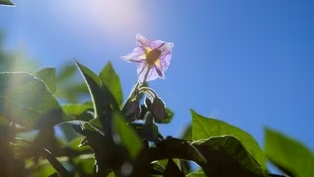
Preview: S10 Ep1001 | 30s | How ice age floods impact farming today. Oddfellows cafe in Seattle for skillet spuds (30s)
Providing Support for PBS.org
Learn Moreabout PBS online sponsorship
- Food
Christopher Kimball’s Milk Street Television
Transform home cooking with the editors of Christopher Kimball’s Milk Street Magazine.




Support for PBS provided by:
Washington Grown is a local public television program presented by KSPS PBS