
Harlan Hubbard Experience
Clip: Season 32 Episode 4 | 6m 37sVideo has Closed Captions
Explore Harlan Hubbard’s art, love of the Ohio River and life at Payne Hollow.
In January 2016, Harlan Hubbard was inducted into the Kentucky Writer’s Hall of Fame. It is perhaps with his paintings that Hubbard defined his commitment to the transcendental movement of our country. Through these paintings, he shared his lifelong passion for the Ohio River as he and his wife Anna floated on their Shantyboat, and settled at Payne Hollow, Kentucky.
Problems playing video? | Closed Captioning Feedback
Problems playing video? | Closed Captioning Feedback
Kentucky Life is a local public television program presented by KET
You give every Kentuckian the opportunity to explore new ideas and new worlds through KET. Visit the Kentucky Life website.
Harlan Hubbard Experience
Clip: Season 32 Episode 4 | 6m 37sVideo has Closed Captions
In January 2016, Harlan Hubbard was inducted into the Kentucky Writer’s Hall of Fame. It is perhaps with his paintings that Hubbard defined his commitment to the transcendental movement of our country. Through these paintings, he shared his lifelong passion for the Ohio River as he and his wife Anna floated on their Shantyboat, and settled at Payne Hollow, Kentucky.
Problems playing video? | Closed Captioning Feedback
Where to Watch Kentucky Life
Kentucky Life is available to stream on pbs.org and the PBS app.
Providing Support for PBS.org
Learn Moreabout PBS online sponsorshipIn January 2016, Harlan Hubbard was inducted into the Kentucky Writers Hall of Fame.
While recognized for his writings such as "Driftwood," it's perhaps his paintings where Hubbard defined his commitment to the transcendental movement of our country, often identified with other great Americans like Henry David Thoreau and Ralph Waldo Emerson.
Just like his novel “Driftwood,” his art would surround his love for the Ohio River.
[music playing] [music playing] The life and artwork of Harlan Hubbard can be divided into three parts, each involving a different location, but always related to the Ohio River.
Both his life and paintings were guided by his philosophical thoughts concerning what he saw as industrial development interfering with the growth of nature and the need for a simpler life.
Harlan Hubbard really was very ahead of his time in terms of what we now recognize as the sustainability environmentalist movement of caring for one's land and of caring for one's place.
All of his art and his writing ties back to that idea of sustainability and caring for the world around you.
Born in Bellevue, his family left Kentucky for a short time, but would return to reside in Fort Thomas, another northern Kentucky community where the Ohio River bends.
Here, the landscapes and steamboats stimulated his imagination with the nature of the river, and Hubbard developed his initial style as an artist.
Harlan Hubbard, during his early northern Kentucky years as an artist, was trying to find not only his personal voice, but also trying to find his artistic voice, trying to find the techniques and that recognizable hand in what he was doing on canvas, what he was doing on paper.
It was also during this time that Hubbard began a journal, recording his thoughts on the desire for sustainability and self-reliance that grew inside him.
“So that I may come to this river as I do today and not find it cluttered with emotions and thoughts of former days or its shores lined with drift of cities, I must see the elements as they are, earth, water, sun.
I am animal foraging about as much a part of the earth as the birds singing overhead.
Even in the city streets and buildings, I am still on the frontier.” In northern Kentucky, Hubbard would meet Anna Eikenhout, a librarian from Cincinnati.
They would marry, and their lives would build upon each other.
Harlan Hubbard, of course, is known as the artist, the writer.
Anna always said Harlan was the creative one.
But of course, Anna brought incredible creativity to their life in other ways that haven't been talked about quite as much.
She was ultimately the catalyst for everything that happened in the second half of their lives.
It was her idea that they were going to finally do the shanty boat journey that Harlan had always wanted to do.
A shanty boat is of a simple design.
It has no industrial motor but rather floats on a river, guided only by oars and poles.
The basic living quarters added to the simple life that both Harlan and Anna sought.
For eight years, they drifted down the Ohio and then the Mississippi, all the way to New Orleans.
As they shared this life, Harlan Hubbard painted scenes reflecting his thoughts as he mused about his existence.
[music playing] "The river tugs at whatever is within reach, trying to set it afloat and carry it downstream.
Living trees are undermined and washed away.
No piece of driftwood is safe, though stranded high up on the bank.
The river will rise to it, and away it will go.
The river extends this power of drawing all things with it, even to the imagination of those who live on its banks.
Who can long watch the ceaseless lapsing of a river's current without conceiving a desire to set himself adrift, and like the driftwood which glides past, float with the stream clear to the final ocean?” [music playing] After their shanty boat stage of life, the couple found land overlooking the Ohio River at Payne Hollow in Trimble County.
Just as with the shanty boat, they sought the self-reliance of building a cabin and the sustainability of deriving their existence from the land.
They raised goats, they grew all their own food.
Of course, Harlan painted, Anna cooked, the both of them played music together.
It was a wonderful combination of all of these creative elements that had been coming together in the first two pieces that then made the third piece, this incredible explosion of creative energy and joy.
Here, Harlan Hubbard entered his third stage of artwork, all the while looking out onto the river that molded his life.
“Our house adjusts to the seasons, opening in the summer and closing against the winter's cold.
The time of our getting up in the morning depends on when the sun rises.
Who would want to lie in bed in summer dawn when the air is filled with birdsong?
On the other hand, there's not much use getting up in the dark even during the shortest days of winter.
Yet often I do so, assisted in extending the day by a late rising moon, which furnishes light enough for woodcutting even when it shines through a layer of cloud.” Anna would die in 1986, and Harlan would pass two years later.
Two lifetimes of love and sharing and providing Kentuckians with the prolific collection of artwork of life with the Ohio River.
[music playing]
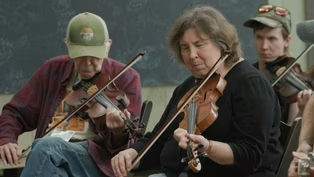
Cowan Creek Mountain Music School
Video has Closed Captions
Clip: S32 Ep4 | 7m 9s | Experience old-time music and Kentucky tradition at Cowan Creek Mountain Music School. (7m 9s)
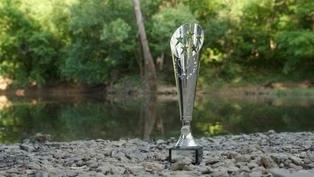
Video has Closed Captions
Clip: S32 Ep4 | 7m 1s | A Kentuckian becomes the first American World Stone Skimming Champion in Scotland. (7m 1s)
Providing Support for PBS.org
Learn Moreabout PBS online sponsorship










Support for PBS provided by:
Kentucky Life is a local public television program presented by KET
You give every Kentuckian the opportunity to explore new ideas and new worlds through KET. Visit the Kentucky Life website.