
Hillary Esser, Executive Director – Cedarhurst Center
1/26/2023 | 27m 6sVideo has Closed Captions
Hillary Esser, Executive Director – Cedarhurst Center for the Arts
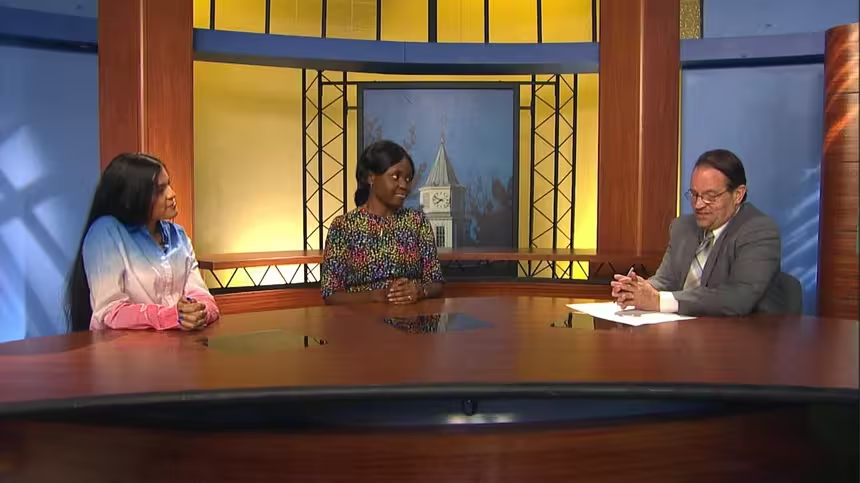
Fred Martino talks with Hillary Esser, Executive Director – Cedarhurst Center for the Arts in Mount Vernon, Illinois.
Problems playing video? | Closed Captioning Feedback
Problems playing video? | Closed Captioning Feedback
Eye on Education is a local public television program presented by WSIU
Hillary Esser, Executive Director – Cedarhurst Center
1/26/2023 | 27m 6sVideo has Closed Captions
Fred Martino talks with Hillary Esser, Executive Director – Cedarhurst Center for the Arts in Mount Vernon, Illinois.
Problems playing video? | Closed Captioning Feedback
How to Watch Eye on Education
Eye on Education is available to stream on pbs.org and the free PBS App, available on iPhone, Apple TV, Android TV, Android smartphones, Amazon Fire TV, Amazon Fire Tablet, Roku, Samsung Smart TV, and Vizio.
Eye on Education
Eye on Education features interviews with people making a difference in all facets of learning. From Pre-K through higher education, we highlight efforts to prepare students to become the world's future leaders in every discipline.Providing Support for PBS.org
Learn Moreabout PBS online sponsorship(inquisitive music) (intriguing music) - "Eye on Education."
I'm Fred Martino.
From art classes and exhibits to incredible outdoor sculpture, the Cedarhurst Center for the Arts is an amazing place in Mount Vernon.
Here's a closer look at the WSIU partner thanks to this video produced by Cedarhurst.
(warm music) - I often think about our founders, John and Eleanor, and about how this place was started, and I think about how amazed they would be to see how the museum has grown, how Cedarhurst has evolved.
Today, Cedarhurst is a place to learn, a place to grow, a place to celebrate.
But most importantly, I think, is that Cedarhurst is a place to connect.
Cedarhurst is really where our community comes together.
- In the beginning, even though it was a wonderful space, it really wasn't accepted by the community.
They didn't feel welcome.
And so those are the things that have been changed over the years as we have grown, added programs that appealed to more people.
And I think that it has become a real resource for Mount Vernon and the surrounding area.
The capital campaign and the expansion was a real game changer for Cedarhurst.
We realized, actually back in 2002, that we had several things happening in one weekend, just like we do now, except that then we had one gallery to do it in.
We told the architects when we finally hired them in 2005, "We want this place to be more welcoming."
- Cedarhurst is such a blessing and a resource to Mount Vernon and to the surrounding area.
You know, a lot of times you hear people say, "I can't believe this is in Mount Vernon."
And so often, you know, working here at Cedarhurst, we are proud to hear that, and we're also thankful for people to realize how much we bring to the community.
- I had the pleasure of being a part of a local hospital recruiting effort to nursing and physicians, and there's other reasons to come to this area, and what would they be?
And sitting at the table, talking about the museum and the things that we do at the museum, and it's 12 month a year programming.
It's not just a few summer events, it's 12 months a year.
And getting in a car with them and driving them to the property, you can see their faces like, "Wow, this is really cool.
And you have this here?"
And so those are how I think, professionally, this place is vital to not just Jefferson County but to the region.
- We do so much programming, such diverse programming, and that really helps us to fill so many roles for this community.
And that's one of the things that's so rewarding about working here and being here and supporting the things that happen here.
In the past two years alone, since coming out of the pandemic, we have hosted hundreds of programs.
We've served more than 10,000 students.
We've impacted more than 65,000 people with high quality engaging programs, everything from exhibits, to concerts, to tours, to theatrical performances and special events like Thursday Night Live and the Craft Fair.
The lights are just one more layer of that evolution, and one that we hope lifts up this community as a whole and brings joy to the people who live here and who work here.
- You would be amazed at how the arts can cater to so many different people, so many different learning styles, and so many different lessons.
We are nurturing tomorrow's leaders, instilling self-confidence and teaching lessons that reach far beyond the classroom.
We're broaching the difficult conversations and bringing new perspective to the table, opening people up to new ideas.
We're helping people find peace and healing, moments of quiet and reflection in a crazy and loud world.
And we're generating the biggest smiles, helping people find joy and enlightenment, and in some cases to simply find each other.
- We hope you will be an ambassador and spread the word about Cedarhurst and tell everybody about the many opportunities that we have here.
- Become a part of Cedarhurst, become a member.
Enjoy all Cedarhurst has to offer and be a part of our future.
- Come visit Cedarhurst and experience all of the things that Cedarhurst has to offer.
- Whether it's through time, talent, or financial contribution, you are part of the reason that Cedarhurst is what it is today.
Together we are making our community a better place, a more creative place, a more welcoming place.
We thank you for helping us bring our community together through the arts.
- And I'm so pleased to have with us the executive director of the Cedarhurst Center for the Arts, Hillary Esser.
Hillary, thank you so much for joining us today.
- Thank you for having me.
I always love to visit the SIU campus and of course our friends at WSIU.
- Well, it is great to have you here today.
The video gave us a good taste of Cedarhurst.
I had a chance to visit with you there, get a wonderful tour of Cedarhurst, and I had forgotten that you are approaching an amazing milestone, a half a century, 50 years- - [Hillary] I know, eh?
- Of this organization, which is really, it's an unusual organization for a city the size of Mount Vernon.
- Yes, I always tell people, you know, Cedarhurst is really what sets Mount Vernon apart from other small towns, you know, because it is very unusual for a town of 14, 15,000 people to have a facility like Cedarhurst and to have such a variety of programming like what we offer.
And I just think our story is so, so interesting.
You know, in the video I mentioned our founders, you know, John and Eleanor Mitchell, and I always think that the history of Cedarhurst is one of the most interesting parts about the organization because it was founded by a local couple, you know, John and Eleanor Mitchell, who were very suave businesspeople.
You know, they really kind of amassed a short amount, or they amassed a great amount of wealth during their lifetime.
And then as they got older, you know, they really earned an appreciation for the arts.
They traveled a lot and realized how art really kind of represents different cultures and things like that.
And so it was after one of their big trips that they came home and they decided that they wanted to start collecting art.
And they engaged several of the, you know, premier art dealers in New York City to kind of help them with this endeavor, and they wanted to collect American artists to represent kind of their culture and American history.
And so our permanent collection is a collection of late 19th and early 20th century American Impressionist paintings.
That's really the crux of our collection.
We've obviously added to that over the years.
But that's really how it all started.
And so to think of John and Eleanor and to think of how Cedarhurst has grown and evolved over the years, you know, I do think that they would be proud of what the organization is today.
And 50 years, you know, we'll kind of kick off our 50 year anniversary in November of 2023, and so just thinking about how we're gonna celebrate that all year long and really kind of pay homage to the Mitchells and thank them, you know, for what they've provided for our region.
It's great to see, you know, how their legacy still exists today.
- Yeah, and part of that legacy that is so important to emphasize is learning.
There is so much learning always going on at Cedarhurst.
I know you encourage, for example, young people to get into the arts because you're a regional affiliate of the National Scholastic Art Awards.
Let's start there.
- Okay, so yes, you know, our mission is directly related to education.
Eleanor was a teacher.
You know, she actually started the art program at Mount Vernon Township High School.
And so when they wrote the trust document, you know, when they were outlining the mission of Cedarhurst, they wanted it to be an educational resource for Southern Illinois.
And so we opened our doors in November of 1973, and it was just two years later that we really reached out to the National Scholastics Program about becoming one of their regional affiliates to kind of represent that program in Southern Illinois.
And so we have been doing this now for, you know, almost 50 years because it's been almost the entirety of our existence.
It was one of the first programs that we really sunk our teeth into, and it's because we knew that this would be a way to cultivate the arts, to engage young people from throughout Southern Illinois.
And so what we do, you know, there are I think 180, close to 180 regional affiliates throughout the country that kind of represent the National Scholastic Art Awards program.
And so we, as the regional affiliate, you know, we work with 27 counties in Southern Illinois.
We reach out to the schools, we tell them about the program, we invite their submissions of artwork, and we kind of help the teachers, the educators, make sure that they follow the national guidelines.
And then we're in charge of facilitating the judging process, which can be very difficult because there are years that we have, you know, over a thousand submissions of artwork, and we have to par that down to, you know, what we can show in our galleries.
There have been years that we've shown over 200 works of art.
- Wow.
- You know, we usually average about 125 to 150.
I would say the Scholastics exhibit that we showcase every year is probably our largest show.
You know, we really try to showcase as much of the student artwork as we can.
But it's such a wonderful representation of how the arts are being nurtured, you know, in Southern Illinois.
And so the Scholastics program has actually been around since 1923, I believe, and when you look at some of the names, you know, that have gone through and received recognition through the program, it's really amazing.
Like Andy Warhol, you know, he was a Scholastic success story.
Ken Burns, you know, he was a Scholastic success story.
Robert Redford, the actor and producer.
There are some really, you know, household names that have benefited from this program.
- I did not know that.
And many of our viewers will be familiar with Ken Burns from the documentaries on PBS, of course.
- [Hillary] Absolutely.
- You know, beyond programs like the Scholastic Art Awards, one of the things that really stood out to me when I was with you at Cedarhurst and you provided the wonderful tour, was the fact that Cedarhurst also has in-school art programs, because not all schools, of course, have art programs.
What an incredible thing that is.
Tell me about that.
- So we have a director of education on our paid staff.
We do have a very limited staff of only 16, 17 people, but one of those positions, actually two, are devoted to education.
One is directly devoted to education within the schools.
And she travels, you know, several days a week throughout Southern Illinois to actually take art lessons into the schools.
You know, we know that, like you said, a lot of schools don't have the resources to pay art and music instructors.
You know, if they don't have the money to pay those instructors, they oftentimes don't have the funds to bus their students to Cedarhurst for some of our onsite programs.
And so it's really a way for us to make sure that the arts are being cultivated, you know, they're being emphasized within the schools.
And so we have, you know, a list of like 15, 16 kind of pre-packaged, you know, art lessons that come with a hands-on activity that she can really go in and do for the schools.
Then of course, if they are studying something in particular and want like a specific program, we can develop that for them.
And so over the years, you know, we've done a lot of work to really build relationships with schools throughout Southern Illinois, and so, you know, really finding out what's in their annual curriculum and then developing our programs to kind of supplement that, you know, so that we can really tie that back to what they're learning in their other subject areas.
Because obviously, you know, it's proven that students learn different ways, all kinds of different ways.
And so while they might be reading a text about, you know, the Navajo Indians and tribes, you know, like that may not resonate for some students.
But then if you take in a hands-on activity, you know, and let them actually get their their hands dirty and kind of learn about it that way, that might help them retain part of that curriculum that they were learning in social studies or in history, you know?
- [Fred] Yeah, it works.
- And so trying to develop that well-rounded education so that all students are getting the most out of their classroom experience.
- Yeah, and of course, even if students do not have the benefit of this in school, if they're in driving distance of Cedarhurst you have art classes for both young people and adults.
- [Hillary] Yes.
- Tell us about that because I think it's so important to emphasize.
It's a great thing for parents to get their young children involved in, and not so young children and adults can get involved too.
- Well, that's really kind of the second part of our educational team is really facilitating then our hands-on classes and programs that we offer on site.
And so, you know, we are of the mindset at Cedarhurst that you're never too old to stop learning, you know?
And so we do have classes catered to, you know, ages 1 through 100.
- [Fred] Oh my gosh.
- And so we start with early childhood programs.
We call it ABCs & Art, where the students actually come, they attend with their parent.
My daughter is actually, you know, a proud graduate of the ABCs & Art program.
But it's wonderful.
We start with a story time activity, and then they move in and there's like a hands-on art project.
They learn about different artists there.
And then, you know, from ABCs & Art, they graduate into our Art Time after school program.
So once they actually are enrolled in school, you know, we offer like an after school option where they can sign up by the month.
Each month focuses on a different medium, a different theme, a different artist.
And so they come, you know, once a week after school and they learn about those things.
We actually display artwork from the afterschool program once a year in conjunction with the Scholastic show.
So there's a time period every year, it's like our January/February exhibition slot, where we have the, you know, after school, the elementary school artwork on display in our Beck Gallery, and then we have the junior high and high school artwork displayed as part of Scholastics in our Beal Gallery and our New Semantics gallery.
And so we really focus on student artwork and showcasing that because when you put it in a gallery, and when you frame it properly, it really elevates the status of what they're doing.
And so the kids can come in and see their artwork, and the pride that they feel and the pride that they have from that is really incredible and encourages them to kind of keep nurturing, you know, those talents and those opportunities.
And so we've found that that's a really good pairing to do those exhibitions at the same time.
And then in our fourth temporary gallery, which is the Regenhardt gallery in our hands-on art center, we try to display artwork from a regional artist, do kind of like a regional spotlight, because then that offers the students, while they're there viewing their own artwork, an opportunity to see what the professionals are doing.
Oftentimes since it's a regional artist, they'll be at the opening, and so students will have the opportunity to interact with that artist.
And it's just a really great learning experience, you know, and an example of how we try to really coordinate a lot of the different programming that's happening on the Cedarhurst campus so that we can get the most out of it and give people the best experiences from that.
- Well, speaking of programming, art is for everyone, and I know that Cedarhurst has many, many events, and I wanna start with Kids Day, which is an event with WSIU.
- Yes, we love, love, love partnering with WSIU, and that is a very well-attended event, draws people from throughout the region.
As you know, we usually pick a different kind of PBS show to highlight each year to theme the day around.
And so from that, we develop a lot of different activities that the kids can do.
You know, one year we had Daniel Tiger, you know?
And so we had kind of a scavenger hunt that the kids could do around the campus.
They had different craft activities that they could do.
I think last year we focused on Bubbles and Splash, the fish characters.
So we had, you know, a big bubble maker come in, and there was a lot of like play for the kids to do.
And so just bringing the children and their families to the Cedarhurst campus, you know, we really can cater different art activities, different performance opportunities around the theme that year.
And then it really exposes people to the Cedarhurst campus.
We have a hands-on family center that is open and available to the public, you know, six days a week, and it's free.
And so, you know, I have a young daughter, and so when we're kind of charting out what we're gonna do for the weekend, you know, we're never afraid to drive 30 minutes, an hour, you know, somewhere in Southern Illinois to find some really cool experience to do with her on the weekends.
And our family center, you know, and the Cedarhurst campus, you know, we have 80 acres with walking trails and things like that is a great outing for a family to kind of embark on for, you know, a weekend adventure to do together.
So just getting people to our campus and trying to get them to know the depth of everything that we do, you know, that's been one of the biggest benefits, I think, of partnering with WSIU is that it brings new people to the campus and then obviously gives those families such a wonderful experience and shows them that they're welcome to come back any other time.
- And I love the idea that if a family were to attend Kids Day, they might then decide that, you know, their children can be involved in art by working with Cedarhurst, doing a program at Cedarhurst, again, even if it's not available in their school, that they can go to Cedarhurst and gain that appreciation for art, which is an important element.
Even if they don't decide to take up art as a hobby or a profession, gaining that appreciation when you're young has an enormous impact.
I know it did for me.
- Yes, and so much of what we're doing now, and what we have really been doing for the past decade, is trying to break down a lot of the stereotypes that come with museums.
You know, if you're not raised, you know, going to museums and being exposed to these different opportunities in the arts, it really is a lot harder to walk through the doors of a museum and feel comfortable there.
And so, you know, we've really been beefing up a lot of our children's programming to give them that exposure early so that they have that comfort level throughout their entire lives, but then on a different level really trying to create opportunities for adults that might allow them to come into the museum and not feel so inhibited.
You know, we have a program during the summer called Thursday Night Live that really kind of captures that mentality.
It's a very casual program.
You know, you don't have to be dressed up to come to a museum.
You know, you don't have to be afraid to ask questions.
We want people to ask questions in the museum.
But they come in their shorts and their t-shirts and they bring their lawn chairs and sit out, you know, in the beautiful sculpture park.
And we have live music every Thursday evening.
And the point of that really in the beginning was just to open the doors up to our community, you know, and to show them that you don't have to be an art person to enjoy a Cedarhurst experience.
- And art is for everyone.
Everyone.
- Yes, yes, yes, yes.
And so just finding different ways to convey that and to make people comfortable in a museum setting because what we've found is, if they come to Thursday Night Live and they think, "Okay, this isn't as scary as I thought it was going to be," you know, then they may come back to one of our other programs.
And so really breaking it down for people, getting them to think about art differently, you know, has been a main focus for us in the past, you know, five to 10 years.
And we are seeing that working, you know?
The level of engagement we're seeing from our community is definitely increasing.
And that's exciting for us, you know, because we know we're exposing them to the arts, you know?
They don't always realize that.
And so, you know, it's a wonderful experience for our staff.
- Well, we're almost out of time, and I don't want to end the show without talking about one of your biggest efforts of the year, the Art & Craft Fair, and a way that a lot of people watching right now would be familiar with Cedarhurst.
- Yes, you know, the Art & Craft Fair is another one of our very longtime programs.
We started that just a few years after we opened our doors in 1973.
And it's a wonderful, wonderful resource because we invite artisans from throughout the country to come to the Cedarhurst campus, you know, set up a booth, and they really get to sell their wares.
And so the Craft Fair draws people from throughout Southern Illinois.
It's a wonderful shopping weekend.
It takes place every year the weekend after Labor Day.
And so I think, you know, September of '23 will be our 47th year.
- [Fred] Wow!
- I know.
It's crazy to think about that.
And it draws, you know, 5-8,000 people during the weekend to really shop and just experience the arts, you know, enjoy the Cedarhurst campus.
And, you know, ultimately, like that's what we're trying to do.
We're promoting artists, you know, helping them make a livelihood through, you know, their artistic careers, and then allowing the public to enjoy that as well.
- Okay.
How did you get involved with Cedarhurst?
- Well, honestly, as a child, I went to Cedarhurst for field trips.
- [Fred] Oh, okay.
- I was lucky to be close enough that, you know, my school could, you know, drive the bus in.
And I remember as a very young child going to watch the live performance of "The Diary of Anne Frank" as part of our school performing arts program, which Cedarhurst still does today.
And then as I grew older, my brother actually went through the Scholastics program.
He was involved in art classes in high school and he was shown as part of the Scholastic show.
I'm not really artistically inclined, so I wasn't, you know, part of the Scholastics program myself, but that was a wonderful experience for him and watching that happen.
- [Fred] And who would've known at that time- - I know!
- [Fred] One day you'd be the executive director?
- That one day, I'd be back there, you know?
And so, you know, I got older, I went to school, I moved up to the Chicagoland area, and then I was really looking to relocate back to Southern Illinois.
I missed the charm of, you know, the rural area.
And so my dad, you know, my parents have been involved with the museum over the years, and he reached out and said, "You know, there's a job position at Cedarhurst.
Is that something that you would consider?"
And I reached out, I applied.
You know, the executive director at that time, Sharon Bradham, who was in our video, you know, she hired me and the rest is history.
I mean, it has been the best decision of my life.
- Raised money for Cedarhurst for many years and then became the executive director.
- Yes, yes, and so, you know, it's wonderful because we do different programming every day, and so there's a great variety.
You know, I go into work every day and we're, you know, focusing on something different, the exposure to art, you know, being in a workplace with beautiful surroundings is just, it's really gratifying, and so I consider myself lucky for sure.
- Well, Hillary, thank you so much for joining us today.
- [Hillary] My pleasure.
- Great to have you here.
My guest was Hillary Esser.
She is executive director at the Cedarhurst Center for the Arts in Mount Vernon.
That's "Eye on Education."
For all of us at WSIU, I'm Fred Martino, have a great evening.
(resonant music)













Support for PBS provided by:
Eye on Education is a local public television program presented by WSIU