Lost Louisiana
Homefront | Lost Louisiana
Episode 11 | 43m 1sVideo has Closed Captions
Homefront | Lost Louisiana
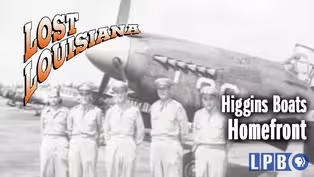
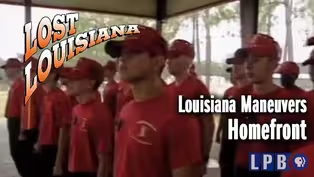
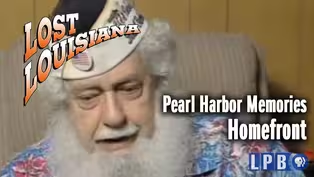
We present a scrapbook of stories from World War II, including Pineville’s Louisiana Maneuvers, our memories of Pearl Harbor, Louisiana’s Fighting Tigers and Higgins’ Boats.
Problems playing video? | Closed Captioning Feedback
Problems playing video? | Closed Captioning Feedback
Lost Louisiana is a local public television program presented by LPB
Lost Louisiana
Homefront | Lost Louisiana
Episode 11 | 43m 1sVideo has Closed Captions
We present a scrapbook of stories from World War II, including Pineville’s Louisiana Maneuvers, our memories of Pearl Harbor, Louisiana’s Fighting Tigers and Higgins’ Boats.
Problems playing video? | Closed Captioning Feedback
How to Watch Lost Louisiana
Lost Louisiana is available to stream on pbs.org and the free PBS App, available on iPhone, Apple TV, Android TV, Android smartphones, Amazon Fire TV, Amazon Fire Tablet, Roku, Samsung Smart TV, and Vizio.
Providing Support for PBS.org
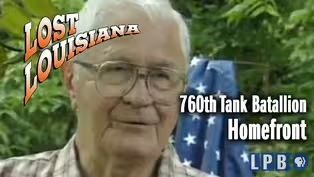
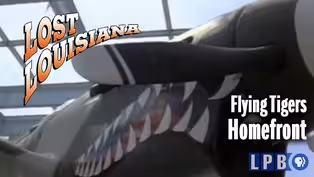
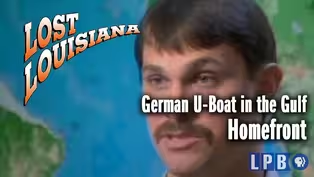
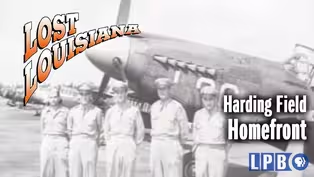
Learn Moreabout PBS online sponsorship[Music] this is a lost city in the louisiana forest 14 miles north of alexandria it waits for someone to pass through and ask what is this amazing huge deserted place the ruins of barracks and mess halls peek through the piney woods between tioga and ball more so for its current condition the ruins of camp livingston are quite the site before world war ii on 48 000 acres the war department set aside this rifle and artillery range america might soon be drawn into the war in europe and the pacific and america simply wasn't ready so in march of 41 the government took possession of 708 buildings here among a sea of 6765 tents connected by 22 miles of these concrete streets there were nine 400-foot water wells and 340 fire hydrants the hospital had 1 320 beds 63 470 soldiers trained here and by the end of the war 1350 german prisoners were guarded here now look at it we shudder to say it's forgotten more than any abandoned landmark in louisiana these deserted training camps bring out a faded memory of the second world war but that's why you're here you and i in this search for lost louisiana at a time when a perspective on war is in order this is our home front and we begin with a range that's still operating just south of here camp beauregard reece today the national guard disciplines young people to straighten out their future at camp beauregard in pineville these teens signed up for a kind of boot camp 60 years ago a real close order drill was practiced on this same earth the camp's louisiana maneuvers museum honors a long local history of such discipline lieutenant richard moran is curator at first it was very hard very very spartan conditions you're talking about it best a squad level tent eight men sleeping in a tent and uh it was quite the improvement when you finally got a wooden floor to that compared to you know some of the living i'm sure they had done as a civilian the the citizen soldiers the national guard they were probably a little more used to that type of training because they you know they had to do it on a more regular basis but the army had or the country had instituted its first peacetime draft heard from him today his wasteland's getting back to normal now here's what he had to say germany's invasion of poland in 1939 had american strategists worried if we had to join the fight in europe how could we battle the nazis brutal and all-out assaults we had to think fast and work out maneuvers to beat hitler's blitzkrieg lightning warfare congress had just authorized expanding america's army to 210 000 the president wanted another 17 000. everyone knew a huge number of our boys were untested so the war department authorized massive practice maneuvers louisiana would host these tests and in fact the day that the 1940 maneuvers ended here in louisiana france had fallen so uh it became very much a uh a very you know expedition right correct got people's fever up at that that's right so uh by 1941 the army had had risen to such a strength they said okay now it's time for an army versus army exercise so they once again looked around and they said louisiana has the best you know best location for it so uh 472 thousand men descended upon louisiana they were within a 50 mile radius of camp borgard kent borgard was a headquarters for the maneuvers and they commenced training by august 1940 camp beauregard headquartered more than 2 million acres of complicated troop shuffles mock battle supply line test a shakedown that reached across the sabine river into texas some of the commanders are household names today general eisenhower or well at that point he was just a lieutenant colonel you had a colonel patton later one star general patton when the men were furloughed from this dress rehearsal for war they took in the site look at it it's got to be circa 1940 an abandoned bridge from world war ii here near tioga camp livingston this enormous place that's abandoned but we hope not forgotten it's an immense reminder of the immense contribution that louisiana made to the efforts of world war ii [Music] even before america entered the war some of our men joined the asian fight against invaders early in the pacific conflict their target was not japan's bases or bombers some of the first american shots were fired by louisianans in the skies over china flying tigers were an american volunteer group of americans who volunteered to serve with general chanel in china waterproof native and u.s army general claire chennault was under contract to the chinese government he led a band of former american aviators who had resigned their commissions to fight in china as sort of soldiers of fortune baton rouge's uss kidd naval museum exhibits artifacts from the tigers mari drummond his curator the country was basically overrun by the japanese prior to america's involvement or the declaration of war against japan but they had a lot to do to stem so someone to stem the tide but to protect as many roads and bridges and escape routes and things like that for refugees and things of that nature the flying tigers were called fei wu in chinese they drew a line in the sky between invading japanese and the grateful chinese these men who flew these aircraft uh were so talented and so courageous because of their involvement they saved millions of people's lives just because of the support that they gave shanghai one of the kids prizes is a replica of a flying tiger the original was piloted by a louisiana son wilts segura also known as flash he named his plane after his fiancee joy she still lives in the new iberia home where she and flash settled after he came home from the war well he enjoyed every minute that he was over there it was you know a new experience to him and uh it's a part of his life that he never forgot joy says flash didn't tell her about the risk he faced in the chinese skies until it was all over still she worried the whole time he was there he was shot down twice behind enemy lines but walked back each time one time they carried him over the mountains maybe in a sedan chair because his legs were injured and all of that was a very unusual experience segura went to china in 1942 after america entered the war in the pacific and the tigers became a regulation squadron of the army air corps and of course then general chanel was still there and he was their overall commander in chief general chanel and all the men who flew with the flying tigers were heroes in china many years later some 20 20 some odd years ago the uh republic of taiwan uh donated this statue you see behind us here uh to the state of louisiana uh of general chanel the bronze statue of the general uh in there for their appreciation for what would what the general did and all the men who flew for it the flying tigers heroic missions had louisiana boys fighting japan even before pearl harbor loves her sailor and he loves her too then it began with the day fdr said would live in infamy to understand it our generation might liken the shock of pearl harbor to the september 11th attack on new york that size shock and outrage louisiana boys were eyewitness fighters and victims after pearl they joined up out of patriotism and for other reasons after all these were bad times all around don't you know each cloud contains that he's from heaven there was no money so it was all border if somebody went out and got a whole bunch of oysters each one of them would get so many oysters and they swapped horses put potatoes and so forth and milk willie grow remembers what life was like in south louisiana it swapped milk for bread it was mostly swamp john zanka's father ran a grocery delivering bread to point a lahash my daddy used to sell bread for a nickel a loaf and some people couldn't even afford that they'd ask for the day-old bread which he could sell to him a three cents a loaf ed jones was living in an orphanage nobody had any jobs my mother died my dad left town you know the desperation and depression led many louisiana boys to join the navy the navy paid well you got clothes furnished and three meals a day sound very good too i hope the united states will keep out of this war i believe that it will in september of 1940 america's pacific fleet was moved to hawaii along with many louisiana sailors ed jones was on the california first in a string of battleships tied together you could see the when the planes came in they were flying very low and i could see the bombs leaving the plane hitting the buildings blowing them up we didn't know what was happening because we wasn't at war willie gross also was on battleship row tied up next to the oklahoma we watched the two bombs come out the bottom of the plane like that and hit and this hanger just blew up and fishy said oh my god they're gonna to court-martial everybody on that island somebody forgot to take the warheads out the bomb john zenko was across the harbor a louisiana eyewitness to the infamy i heard this bugle call that sounded rather strange it was like one long note and i thought to myself now what the heck is he trying to play and then i heard him howling the japs were attacking i'll tell you what i could actually see that pilot looking right at me like that that's how close he was we only had a single hull picture yourself in a large steel drum and somebody on the outside with a massive hammer we could see at ships we could see that shores we had couldn't shoot at an airplane oklahoma was alongside of us well the first time she was hit she rocked back and forth like this and then she started over and she wasn't coming back and just as she got about 15 degrees torpedoes hit again and she come back up and she rocked and rolled for a while and then she started over the third time and they hit her again and she come back up again but by this time she went all the way over but seven torpedoes hit the oklahoma when we took our first torpedo it knocked out our electricity and the ammunition hoist to send us up the ammunition wouldn't work and the ventilators that get the fresh air to the men below wouldn't work so everybody was down below was getting affixiated i saw what i imagined dante envisioned when he said inferno there was smoke hanging all over the harbor the battleships and other ships burning you could see fire all over there was fire in the water we could see the boats running around trying to find people in the water and picking up survivors picking still picking up survivors and still picking up dead bodies sunday night was was trying to get the men the injured the ones that were still in the water the men coming out of the oklahoma and they was running everything from the maryland to cutting into the bottom of the oklahoma there were so many men in there hitting on the steel that it sounded like a million views all you could do was we were talking to them on phones if any of us have trouble imagining the horror ask any of these louisiana vets how shocked was our generation after terrorist attacks on new york and washington 60 years ago they felt the same that's how shocked the nation was then america woke up that day and the men who survived fought on with fresh fortitude and a whole new commitment constant louisiana business snapped to attention to support the war ship builders welders cooks and oil workers we all felt like we were in the fight the navy maintained huge steel and timber floating dry docks along the coast 605 vessels were outfitted or repaired in south louisiana and another five thousand ships serviced across the river from new orleans and algiers twenty thousand men and women served in the navy at the pontchartrain lakefront andrew higgins was a marine architect and industrialist working on shallow craft to help our boys take the beaches he was learning some lessons from louisianans who really know boats the cajuns by the time the fifth army landed in italy and douglas macarthur landed in new guinea the american navy had fourteen thousand vessels thirteen thousand were designed and nine thousand built by a louisiana firm called higgins industries down in new orleans we built for d-day for two and a half years historian stephen ambrose the united states army in 1940 had 160 000 men in it it ranked 16th in the world right behind romania four years later it was an army of 8 million very well equipped men they went across in 6 000 ships of all types including the higgins modes none of which had existed in 1940. just miraculous what american industry did above all she's built to take punishment to work without let up for days on end in an operation that may be a thousand miles away from a repair shop at the start of the assembly line frames are fitted into jigs and the boat begins to take shape bottom side up if andy higgins hadn't designed and built those landing crafts we never could have gone in over an open beach so he's the man who won the war for us in an old warehouse near the lakefront a group of craftsmen are working to build a replica of a higgins boat some of them built the real things in their day every weekend the men talk about how higgins and his inspired louisiana workers turned the tide in the second world war make the deadline jerry strahan was a history student of ambrose he's written about louisiana's shipbuilder higgins and the people who made the boats that won the war in the 1930s andrew jackson higgins owned a small shipbuilding company in downtown new orleans they specialized in building boats for oilfield companies and for trappers they needed shallow draft boats that could navigate the bayous of louisiana it's because of these boats that he later built what is known as an lcvp the early day uh work boat the eureka evolved into the landing craft that totally changed the strategy of modern warfare and that was designed and built here in the bayous of louisiana 92 percent of the entire u.s navy was designed and built in louisiana graham haddock keeps a close eye on the mahogany replica he could say if it's right because he was one of the original designers well let's say i'm a consultant on it we're trying to build it as closely as we can to the last contract that higgins had andrew higgins not only built boats but trained men to use them properly richard mcderby headed the boat school so two months before pearl harbor my first class i'm senior instructor in charge of school but i'm the only instructor and we trained at i trained at that time 25 marines first class carabao florida they lost 23 men one night drowned so they called ms higgins he got me over there immediately because a lot of these boys were getting ready to go over overseas this was his uh philosophy uh let everybody do what the best they can and as long as they're doing that let them do it as important as the higgins boats were to war landings the world over historians generally overlook this louisiana man's contribution they're forgotten heroes in every beach but in industry he's the one person that at the end of the war that everyone tended to overlook the marine corps thought that there would never come a day when higgins would not be praised that day has come but people now are learning about him generations have forgotten about him for so long when they finally finished the last of their higgins replica these men donated the boat to the national d-day museum in new orleans where it can be appreciated today uh it's a way of saying thanks the younger people who have shown up to work on this project uh have decided in my opinion that it's a way of saying thanks to an earlier generation that literally gave up their childhood and fought this war lost louisiana home front will continue we did it before [Music] in louisiana many towns boast traces of a valiant home front effort in world war ii the state had 10 airfields from barksdale up north down to houma on the coast where aircraft patrolled the gulf for submarines we didn't hear much about it on the radio at the time all news of military work was hushed to some degree stories are only now surfacing of all the training done in our backyards in baton rouge harding field launched skilled pilots some called them barnstarmers because they showed such bravado hardingfield was born of necessity just before the outbreak of world war ii the government and the military here were poised ready for action because hitler was running rampaging through europe with these nazis the japanese were running rampant through china and asia burma and so just to be prepared they started building a military airport here the main purpose primarily at first was just to safeguard the industrial corridor in this area all the plants along the river the refinery and refinery of course and then it evolved into a fighter bomber training base and grew historian billy spidell has written heroes of harding field a book about one pilot training ground in baton rouge the headquarters was established in the old state capitol building downtown until the base was finished so that was where it all began and the building where the south seceded from the nation they named it after a world war after a louisiana war hero who is william wadley harding native of shreveport a young lieutenant that was killed on maneuvers just prior to pearl harbor one of the pilots who trained here is quentin anderson you don't forget a day like d-day and that was my first combat mission i hardly knew what was going on except that as i looked down as we crossed the english channel and our point of target was over point du hawk which is famous where the rangers scaled the cliffs omaha beach was right to our left as i looked down and saw that massive channel filled with ships and looked around me in the sky and saw planes all over and all i was trying to do was hold my wing position follow my leader turn my gun switches on at the right time arm my bombs watch out that i didn't fly into anyone you would never forget that it was scary but it was a moment in history that i wouldn't have missed for anything as long as it had to be spidell remembers being 10 years old and watching pilots train over baton rouge it was exciting for a boy but too often he witnessed tragedy which it was common back then crashes they crashed everywhere one p 47 meter a belly landing on the baker high school football field right up the middle they fell everywhere in the river across the river most of them are forced landings 2b17 four engine bombers collided and i saw that one i watched him going through the death throws in the air with smoke trailing from this four engine b17 saw the three parachutes in the air and i saw something coming down real slow it looked like a falling leaf didn't know what it was but i ran toward it with some of my buddies we crossed fences and lawns and yards and got to it it was the tail section complete tail section of a b17 bomber huge it blew my mind it was so big and it landed luckily right behind the house it almost hit the house right right behind the back porch of a house on plank road with the skills he learned at harding field and some luck quentin anderson made it through the war in europe i wrote a farewell letter this was in late june of 1944 and i loading been only been in combat for about six weeks but it was apparent that already the law of averages was coming up on me i wrote it after one of my close friends bailed out after he had been hit by flak he bailed out on our side of the lines and his parachute didn't open and we watched him fall 8 000 feet so when i got back to my tent that night i sat down and wrote two farewell letters i left instructions with my friends that if i were killed these letters were to be mailed we all did that the sad thing about it is that i had three different people set up to mail my farewell letters if and when i was killed i ended up mailing all of theirs all three of them were killed so finally i just left almost to whom it may concern if i'm killed male ease [Music] anderson was one of more than 325 000 louisianans serving in military ranks of course not everyone racked up such honors honors can be slow in coming take for example the case of the men aboard one patrol boat out in the gulf of mexico escorting a ship called the robert e lee in 1942 until 2001 we had their story wrong you see a german u-boat attacked the ship they were protecting escorting the patrolmen fought back with explosives but they were never sure if they got the germans two days later a plane dropped charges on a german sub and that crew got the credit for sinking u166 but now the full story can finally be laid to rest 60 years after it went down marine archaeologists have found u166 five thousand feet of dark salt water is a cold tune even with the best array of sensors and computer enhancements this ghost is barely visible there it is just a grainy shadow of what was once an evil menace it's appropriate that after 50 years we still have only a peak its victims may not have gotten even that a german unter seaboat the high-tech stealth fighter of the second world war i i think my first reaction was disbelief because i saw it and it was supposed to have been another wreck that we that had been it would previously been identified as a freighter of a very large freighter about seven thousand ton freighter and when i first saw the image i'm like you know kind of like that doesn't look right the chance of us actually finding it was a long shot robert church and dan warren are marine archaeologists with cnc technologies the lafayette company is a leader in underwater mapping for oil companies who want to know what's on the sea floor shell and british petroleum wanted to know if the bottom of the gulf near the mouth of the mississippi was clear for a pipeline cnc sent down this probe their best remote scanner actually dan and i were kidding each other that that evening that we did see these images on the sonar first was i had to leave early and dan was going to look through the data and he was kidding around with me saying you know i'm gonna i'm gonna see this u-boat when you walk out of here give you a call tonight and you have to come running back up for the office and that's almost exactly what happened so he did call me i didn't believe him and then the next morning when i came into work i had an image sitting there that i mean anyone else could have looked at that image and said okay it's a sonar contact but it it had the right the right shape for a u-boat i'm looking actually for the report of the german captain for nearly 40 years cj crist of houma has amassed a huge personal collection of microfilm nazi naval records commercial shipping logs nearly all there is to know about america's other war in the gulf the one hitler launched from france you can see 166 was a large submarine 252 feet long 22 feet wide and they were submerged along the route of the robbery the robert e lee was a commercial freighter pressed into american war service it was carrying 268 passengers from trinidad to new orleans when its military escort may have made a grave mistake ever since the day before when the robbery lead tried to get into tampa the robbery has been using their radio and so has their escart been using their radio asking for a pilot to get into the harbor than being refused to pilot or not available and then the robbery called their escort and said would you now escort me to new orleans and the escort answers back well i'll have to call headquarters and get permission so then they call headquarters headquarters calls back and says you have permission so the pc 566 the escort says follow me to new orleans and robert z says okay we'll follow you know you know all of this going on on the 500 meter or 600 meter band that all you both listen to in a flash u-166 made its run and pulled the trigger and so when he cited the robert e lee i'm sure he started uh into the attack position and when his range and bearing and torpedo depth and so forth was right in his estimation he said loss and he fired the captain of the robert e lee's military escort was eventually reprimanded it wasn't known at the time that he is the one who did in u-166 he realizes that the submarine the captain is not looking at him or looking around for anything he is watching the robert e lee sink so he goes around and comes up on the on the submarine and he puts out five depth charges two of which are fired from the deck the four deck and three of which are rolled off the stern the pattern of wreckage of the german boat on the sea floor indicates it was killed by a depth charge that very day and by this time 407 people are in the water and he opts to start picking up survivors rather than make another run and we started across the sea floor and it it took a little while the very first thing we come to is all of a sudden this wall of iron and we didn't know initially what we were looking at until the rov pilot started panning up and then we realized what we're looking at is the side of the conning tower and you can just see the lip of the conning tower and that was moved around to the front of the cone tower and you see all that splash guard and everything is in great shape right there in the center that's where where the periscope would come up here's the aft portion of the conning tower this is the railing that goes around what they call the vendor garden which is uh and there's the 20 millimeter anti-aircraft gun there on that on that vendor garden now there's a lot of suspension in the water as you can see and a lot of plankton so it wasn't probably the best for for filming but it was good enough for what we needed to do and that was to go down and confirm that this was a 9c german u-boat in u-166 [Music] in the year they applied the golf 17 u-boats sank 56 ships in our search for lost louisiana we've always found the simple stories to be the most poignant louisiana's contribution to the effort of world war ii may best be explained by simple things like these abandoned roads at the old camp tioga it can be best explained perhaps one contribution at a time in new roads we'll find a reunion of one band of louisiana boys the 760th tank battalion company c ivy labitude of new roads is hosting a reunion of longtime friends he's 79 now and most of his comrades are about that they go back a good bit back to when sergeant labitude was 19 years old franklin stanton from winter bridge boxing new york lived in norfolk from connecticut in new york now all in yankees and they had me as a driver from new roads louisiana right here and that's a picture i took it wrong the soldiers of the 760th tank battalion come from all over the country but 80-year-old sergeant robert richard only had to drive from shreveport 60 years ago he signed up in plain dealing i decided to join the army so at first my mother wasn't going to let me and i told her i said either i joined the army and you know where i'm at or i'm gonna go and join and you won't know where i'm at so she decided she wanted to know where i was at how old were you i was uh 19. the 7th 60th they joined from plain dealing louisiana to muskegon michigan the home of tank driver george karen did you do it out of patriotism or did you do it out of when i heard pearl harbor i was damn mad i went right down to sign up the next day yeah a lot of guys did didn't that's right the army trained many of them together first at camp bowie texas and then at fort benning georgia they thought they might be sent to england but when some pamphlets teaching arabic phrases arrived they all knew they were headed to north africa we were solely there to keep as many german troops as possible down there so that they could make the big invasion of france and if that was so that's we did that we were burning cork from off the cork trees cooking some eggs that we'd buy from arabs besides mauling and invading most of europe germany had helped italy conquer oil fields and shipping routes across the middle east the boys of the 760th like tens of thousands of ours crossed the atlantic and crowded troop carriers wary of u-boat attacks but in high spirits and they've been hauling prisoners on that thing and they had one fellow with us from tennessee there he was harry as a gorilla from tennessee when he shaved he had to separate it from down here to just draw a line and separate it and so both volume pool got a well i don't know if i should mention that on that way if you don't know what i want to say is all right yeah that's all right glenn the full racquet had crab lights and he had them all over him so we laid him down on a shelter half and we shared him as clean as a wiener arab ports will quickly confiscated and american supplies and arms began pouring in the 760th faced the germans best tank the mark vi tiger with an 88 millimeter gun it was 1942. sergeant and tank commander ray hutchins the hand-to-hand fighting of the infantry was the most unusual experience that i've seen we actually got involved in that you know they was doing hand-to-hand fighting and that's rough sergeant and tank commander harry schroeder of wisconsin and tank driver carl tedder of georgia by the door there was an old lady sitting there standing there about 80 years old i was a little girl there about six years old i was standing in front of them and they let that shell go and i don't know this day where that shall hit that woman in the boat of the two women though the old lady and the kid were both dead it pulled me off the ground but i don't know how far but i left there the sidewalk i went up they have caught me in the leg and the scare was a great i underneath the tank and i laid there and i looked out when it cleared when the dust cleared away there was italians laying all over the circle and i couldn't get by them i had to sit there and they zeroed in on me at german 88 millimeter that's what got me how much damage fortified took 45 pieces of shrapnel out of me at one time that finger shot through the nose all the way through up down this side in this arm 45 piece of shrapnel at one time that's the worst thing i went to the hospital right after that they kept me in the hospital third day and sent me back through blinding sand temperatures inside those old tanks of 140 degrees through setbacks and every day picking up straggling and surrendering german and italian soldiers they pushed through north africa then across the mediterranean and up through italy across pontoon bridges through land mines the gruesome battle for casino and after unimaginable struggle and unbearable loss on to rome we were just a gh2 tank battalion that could be put in the line anywhere to beef up the lines where they expected an attack or anything like that that was our purpose do you think about sometimes the men in the company who didn't come back yeah not urge the 760th tank battalion had been on duty for four years and three months two years nine months they served overseas it was not all dire struggle though the men had their laughs too they still tell the story of the missing can of fruit cocktail when the job was done they came home to plane dealing and new roads and everywhere else but they never forgot their friends in the early 1960s they began a tradition that last to this day these reunions are held at the homes of their comrades nearly every year home movies prove the camaraderie they've always enjoyed but the reunions have become more infrequent each year there are fewer friends to visit you know we have a feeling of closeness and when we walk by those that are here we remember those that are not and we're always sitting with memories lingering in our minds people ask us you know well what was war like and all of these things it's something one of those things you can't describe it's one of those things that you remember incidents now and again but incidents you don't really want to comment on theirs is one more louisiana story we can count among this our meager sampling of war tales thousands of stories of thousands of men who risked their lives to save millions can be found anywhere in louisiana our latest search for lost louisiana has turned up only a scattering of these stories these few tales offer good reason though why we'd best be proud of our louisiana home front and our louisiana heroes um you
Providing Support for PBS.org
Learn Moreabout PBS online sponsorship












Support for PBS provided by:
Lost Louisiana is a local public television program presented by LPB