
Antigone in Ferguson
Season 1 Episode 1 | 57m 16sVideo has Closed Captions
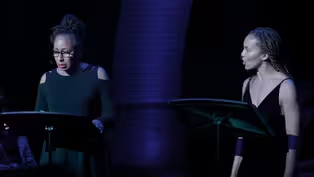
House Seats: Antigone in Ferguson features an all-star performance of the Greek tragedy.
Experience a powerful fusion of Sophocles’ classic tragedy, Antigone, with live music from a contemporary gospel choir and highly personal community discussion. This multifaceted production explores themes of tragedy, trauma and social justice, and shows us that a 2500-year-old play is still relevant today. The all-star ensemble of actors includes Samira Wiley, Chris Noth and Tamara Tunie.
Problems playing video? | Closed Captioning Feedback
Problems playing video? | Closed Captioning Feedback
House Seats is a local public television program presented by WLIW PBS
Antigone in Ferguson
Season 1 Episode 1 | 57m 16sVideo has Closed Captions
Experience a powerful fusion of Sophocles’ classic tragedy, Antigone, with live music from a contemporary gospel choir and highly personal community discussion. This multifaceted production explores themes of tragedy, trauma and social justice, and shows us that a 2500-year-old play is still relevant today. The all-star ensemble of actors includes Samira Wiley, Chris Noth and Tamara Tunie.
Problems playing video? | Closed Captioning Feedback
Where to Watch House Seats
House Seats is available to stream on pbs.org and the PBS app.
Providing Support for PBS.org
Learn Moreabout PBS online sponsorship♪♪ Man: We can move seats, right?
Places, everyone.
Hello, everyone.
My name is Bryan Carter, and I'm a jazz musician.
Now, normally I'm known as a drummer and a singer touring around the world with my band, The Young Swangers, or maybe even teaching in New York City Public Schools, but today I'll be an audience member here at Harlem Stage to see "Antigone in Ferguson."
Now, I first heard about the show maybe about a year ago from my former Julliard classmate Samira Wiley, and I really love the way that they were using a Greek tragedy to tackle modern social issues, so let's go check it out.
Since the death of our father Oedipus, it seems like the gods have set aside only shame and suffering for us survivors.
Sister, have you heard?
I'm not sure I can take anymore bad news.
Well, I wanted you to hear it from me first.
That's why I brought you outside.
You seem really upset.
What is it, Antigone?
Creon has declared only one of our brothers worthy of burial.
Eteocles will be laid beneath the earth with proper honors, but as for Polynices, Creon has proclaimed that no one may touch his body.
He has been left for the birds!
I am sorry to hear that.
The punishment for anyone who violates this law will be execution by public stoning.
Creon is serious.
So am I.
"Antigone in Ferguson" is a social-justice project that presents readings and performances of Sophocles' "Antigone" as a catalyst for powerful audience and community-driven dialogue about social issues like racialized violence, police brutality, misogyny, structures of oppression in communities across the country that have skin in the game.
Will you honor your family's name or reject it?
You lost me there.
-Will you help me?
-Help you what?
Move the body.
Do you mean bury it when it has been forbidden by law?
Of course I mean bury it.
He was my brother and yours.
Where is your loyalty?!
Creon is our king now.
I am loyal to him.
Creon may not keep me from my family.
Do you remember how our father died, Antigone?
He gouged out his eyes with hairpins before walking blindly into the wilderness.
His mother and wife, who was one and the same, hung herself with a twisted noose.
And just yesterday, our two brothers brutally murdered one another.
If we violate Creon's law, we will only be added to the list.
Our performances are structured in such a way where the actors and choir deliver a 1-hour adaptation of "Antigone," and then as soon as that's over, then we open it up for a kind of town-hall-style audience discussion.
It reminds me... Antigone, whom we typically cast as an actress of color, asks her sister, Esmene, to help her bury the body of her brother and, in effect, defy the law of Creon, the newly untested king.
We are the last in the line of Oedipus, and we no longer rule this land.
Not to mention that we are women, too weak to defend ourselves against men.
We must do as we are told.
We must perform acts far worse than this, so seeing as I have no choice, I will ask our family's forgiveness and obey those who have authority.
I wouldn't bother asking.
You will not receive it.
I'll bury him alone if I have to.
If love is my crime, I shall plead guilty and pay the penalty with my life.
You may stay behind and dishonor your family if you like.
Dishonor them?
I don't want to dishonor them.
I just don't see the good in disobeying the law.
Then let that be your excuse.
I'm going to bury my brother.
Oh, sister, I am afraid for you.
Worry about yourself.
Promise me one thing -- Let this be our secret.
I will not tell a soul.
Say it loud!
I shall hate you all the more if you don't.
Then you are resolved to do this thing?
I am.
And what if you don't have the strength?
Then I shall die trying.
Antigone, you fool!
You are your father's daughter!
♪♪ ♪♪ ♪ Oh, light ♪ ♪ Light of the sun ♪ ♪ That raises the gated city♪ [ Singing indistinctly ] ♪♪ ♪ Breaking upon the waters ♪ ♪ Shimmering across the shield of soldiers ♪ ♪ Polynices, let them against us ♪ ♪ With hatred for our people ♪ Theater of War Productions is a social-impact company that uses theater as a catalyst for addressing public-health and social issues.
We got our start with the U.S.
military.
That was our first client, and Theater of War presents ancient Greek war plays for contemporary military audiences as a catalyst for discussions about the visible and invisible wounds of war.
We can bring together a room of 500 to 1,000 marines, and sure they'd be resistant in the beginning, but 15 to 20 minutes in, we would disappear, and they would move forward in their seats, and then by an hour in, these marines would be sharing their stories.
We knew we'd stumbled across something incredibly powerful, so we've been applying that idea to other social and public-health issues.
On the heels of touring this project all over the country and the world, we started looking about for a partner that would get our values and would help us take the project deeper into New York City and a place where people come to see mostly actors and performers of color perform really take this project to a whole new level.
And Harlem Stage was the place that we needed to do this.
When you listen to Bryan talk about the piece, there's no doubt that you sort of see the connections between this ancient Greek play and contemporary society today.
And it fits in almost perfectly with our mission and, you know, we, as an organization, look to identify and support artists and works that address contemporary social issues.
And Bryan talked about specifically reaching out to people who might not otherwise think this was part of their "wheelhouse."
It's not something they would do automatically.
That's something we wanted to do, and we saw it as an opportunity to engage people who are right here beside us, who don't feel like they can cross our threshold.
♪ Oh, light of the sun ♪ I am Samira Wiley.
I originated the role of Antigone in Ferguson, Missouri, when we first did "Antigone in Ferguson."
These men would all agree with me.
Antigone is in this dilemma because their kingdom has been at war, and her brothers fought on two different sides.
It saddens me to report that the line of Oedipus is no more.
Patricide has begotten fratricide.
Yesterday morning, his two sons killed each other in battle.
-No.
-What?
I am now your king!
[ Scattered applause ] They live under this king who has... I mean, he's a tyrant, honestly.
He's going to kill anyone who goes against what he says just because it's, you know, at his whim.
Our country is the ship on which we sail.
She must remain upright and steady for us to coast safely into harbor.
It is with this in mind that I make my first proclamation.
Eteocles, who died fighting for this city, shall be buried tomorrow afternoon with full honors.
-Yes!
-Good.
Polynices, who returned from exile to burn our city down, shall rot unburied on stony ground, a five-course meal for vultures.
That is my decree.
Death will be the punishment for anyone who violates this law.
Lord?
[ Panting ] You are out of breath.
What's the hurry?
I am out of breath, sir, not from running but from fear.
What makes you so fearful?
First, let me say, I didn't do it, and I don't know who did.
-Yes?
-So it wouldn't be fair to punish me for delivering this news.
You're hedging.
You must be guilty of something.
Someone has buried the corpse.
-Yes.
-What?
What are you saying?
What man would dare do this?
-I do not know, sir.
-I see.
No footprints, no claw marks, no divots in the ground.
There was no sign of the culprit anywhere.
And when we finally found the body, it was only lightly covered with dust, not entombed.
Maybe it was the work of the gods.
Do not insult my intelligence!
Woman: Sit back down.
You, with Zeus as my witness, I now swear this oath.
If you do not find and produce the perpetrator of this crime, you will wish for a quick death but never receive it.
I will have your extremities removed one by one until you reveal the criminal's name!
Wiley: There are many parallels, I think, between the show "Antigone in Ferguson" and exactly what happened in Ferguson in 2014.
Of course, the most blaring one is that Polynices' body is laid in the street for hours, and sort of his humanity is forgotten, and he's seen as not a he anymore but as a thing, and that is exactly, I think, what happened to Mike Brown.
I had taught Michael Brown seventh grade.
I was his speech and drama teacher, and I taught him 12th grade.
I was his music appreciation teacher.
He ran my recording studio, and August 9th came about, and he had just graduated summer school.
And that day, I was sitting at home, and my Facebook started going crazy, and then someone said, "Big Mike got killed," and I just completely kind of went into a state of shock.
It wasn't until that police force left the body of Michael Brown on the streets of Ferguson for over four hours in the hot August heat that people left their homes and went to the streets.
We did poems, and we had songs, and people prayed and people spoke and it was beautiful.
And then one of my other students came up to me about two hours later and said, "Yo, Foster.
You kind of should go ahead and leave because it's about to get crazy around here."
I'm like, "Okay."
Doerries: And then they were met with a militarized police response, an overwhelming show of force, which escalated into the uprising.
And on the news, you could see the QuickTrip was on fire, and all this pandemonium was going on, and that was... If you were to start a movie, that would be the beginning of the movie, and then the credits would come up, "Ferguson."
The story tracks the play "Antigone" because it's the desecration of a body.
It's the desecration of a natural law, that no matter what someone has done or hasn't done, we do not have the right as human beings to necessarily take life, and we certainly don't have the right to desecrate bodies.
A man should never swear oaths.
For nothing, it seems, is ever certain.
I have come, although I swore I wouldn't, to bring you this girl who was caught digging a grave.
This girl, how and where did you find her?
She was burying a man.
What more do you need to know?
Do you know what you're saying?
Yes, sir.
I saw this girl burying the corpse which you said must not be buried.
Am I making myself clear?
You saw her in the act?
When I returned to the body, your threat still ringing in my ears, I dusted it off carefully and climbed a nearby hill to keep watch.
Soon thereafter I heard a piercing cry, the shrill note of a bird when it returns to find an empty nest.
It was she.
Upon seeing the naked corpse, she pounced upon it with fistfuls of dirt, scratching the surrounding soil with her fingernails.
I rushed down and charged her with the crime.
She denied nothing, a response which both relieved and tortured me at the same time.
You there, bowing your head.
Do you admit or deny having done these things?
I say that I did these things, and I do not deny it.
[ Crowd murmuring ] You may go.
Tell me, and be careful with your words, were you aware of my proclamation forbidding the body to be buried?
Yes.
I knew it was a crime.
And you still dared to break the law?
I didn't know your laws were more powerful than divine laws, Creon.
Did Zeus make a proclamation, too?
I wasn't about to break an unwritten rule of the gods on account of one man's whim.
Of course, I knew I would someday die, and if that day is today, then I count myself lucky.
It is better to die an early death than live a long life surrounded by evil men.
So don't expect me to get upset when you sentence me to death.
If I had allowed my own brother to remain unburied, then you might see me grieving.
What's wrong?
You seem puzzled.
Perhaps you think I've rushed to action without considering the consequences?
Well, maybe it's you who has rushed to action.
See, either way, the question remains -- Do you have the guts to follow through?
[ Crowd murmuring ] Well, I see you've inherited your father's charm.
-Yes.
-Citizens!
I say that she is a man, and I am not if she gets away with breaking the law and boasting about her crime.
Man #2: Mm-hmm.
I don't care if she's my niece.
She and her sister will both be put to death... -No.
-...for I hold her sister equally responsible for planning this burial.
Call her!
She's right inside.
I just saw her running around the palace in hysterics.
Woman #2: That's not fair.
You won't torture me first and make an example of me?
No, I think not.
Then what's taking you so long?
I'm tired of listening to your insipid voice.
If you're such a man, why don't you do it right now?
-Oh!
-Wow.
Is it because you know that burying my brother was an honorable act?
These men would all agree with me if they weren't afraid to speak.
You are the only person here who thinks that.
They only keep their mouths shut for you.
Why don't you join them?
Because there is nothing shameful in loyalty to a brother.
And what about loyalty to your other brother?
He would've done the same.
He would've honored his enemy?
It was his brother who died, not a slave.
One died seeking to destroy this city while the other died defending it!
-That's right.
-The dead all have rights.
But what about justice?!
Who knows what is just in the world below.
An enemy is never a friend even in death.
I was not born to hate but to love.
Then love in the world below.
No woman will ever tell me what to do as long as I live.
Here she is, Creon.
Here is Esmene.
We found her crying tears for her sister inside the palace.
Oh, you little snake.
All this time you were secretly plotting behind my back!
Do you deny it?!
As long as she agrees, I accept the blame.
No.
I will not let you.
Tell him.
You tried to stop me.
Do not deny it.
But, Antigone, I want to go with you.
You had your chance.
Sister, do not refuse me the right to die with you and honor the dead.
You may not share in things in which you played no part.
My death is enough.
And what will I do without you?
Ask Creon.
He is your king, remember?
Why are you being so cruel to me?
Save yourself.
I won't hold it against you.
-I want to die, too.
-Be brave, sister.
It is your turn to live and mine to die.
Well, it seems you've both gone insane.
Wiley: It's called "Antigone in Ferguson."
It's not...Mike Brown's name is not in the title because I think it's about what happened to that city as a result of what happened to that young man, which is exactly what "Antigone" is about.
It's about what happens to the city of Thebes.
It's looking at something that is really critical right now in America, this idea that there is a confrontation between law enforcement and communities, particularly communities of color, the black community, young black men, the idea of a body being left in the street and what that represents to the community.
All these things tied together from this piece that was created 2,500 years ago.
When we were approached by some community members in Ferguson who heard and knew about our work, I had this idea that if we could simply present "Antigone" to the community in Ferguson, something powerful would happen.
Something healing and constructive could take place.
Honestly, I was, like, "Oh, yeah.
Here comes another person coming in trying to save Ferguson with, you know, something that's going to get us engaged and talking, but they don't know what's really going on here.
They don't have skin in the game."
That was my initial reaction.
But I knew that we couldn't do it building a choir that would preach to the choir.
We couldn't do it with just complete liberal sanctimony about our position in all of this even if we feel morally justified because many other people on the other side feel equally morally justified.
Lo and behold, when Bryan came in and started really talking about why he was doing this, the tables turned because I realized that he really had a vested interest in getting people to talk, not just talk and leave but talk and find solutions.
We knew it had to be a collaboration, and that's what led us to look for a composer and conductor and choir director who could unite multiple choirs, police, activists, youth, members of the faith community, educators, and that led us to Phil Woodmore, and we asked him to compose 45 minutes of music in 30 days.
What we arrived to in Ferguson was a community that had taken complete ownership of the play and had written this music that kind of made us bystanders to their creation.
Foster: Phil is a perfectionist.
He was like, "I would like to do this somewhere else first before we do it for the Ferguson audience."
I said, "Well, hey, we have a little theater at Normandy High School, you know?"
He was like, "Michael Brown went to Normandy."
I'm like, "Yes, and he graduated in the little theater, and it would be really cool, like, paying kind of honor to him."
And one thing led to the other and we premiered it at Normandy High School on September 17th.
Doerries: We didn't tell the actors about the choir, and we didn't rehearse it together.
So in a side room, I rehearsed the actors and Phil rehearsed his choir, and then we brought them together for the first time on the stage.
Because there is nothing shameful in loyalty to a brother.
Wiley: We'd never done it together before at all, so sort of, like, the first time we were ever doing it in front of people was the first time I was ever experiencing it, so it just, really to me, felt like a learning experience.
We just knew that we had songs that we learned, and we knew that four people were going to read from the script.
That was it.
We had never married the two.
We all came in with our sort of cynical presumptions about the other people who were going to be performing and what could possibly happen, but this thing happened that just shook the rafters.
Woman #3: [ Singing indistinctly ] Foster: Rewind back to August 9, 2014, when I went into that little state of shock, that was my first time reacting and mourning, and when I say mourning, not just the tears but the anger, the frustration, the questions and then looking at my other students and feeling a sense of helplessness, of this can possibly happen to them, all those things just surfaced that day after that first performance.
It's been the fuel of this production ever since.
♪ Destiny may be avoided ♪ ♪ But cannot be escaped ♪ Doerries: Our choir is a really diverse group of people by design because we wanted to model for the audiences for whom we performed the diversity of positions that we knew we'd want to elicit and bring into the room in the audience.
So we have members of the law-enforcement community.
In this production, we have a number of people who were Michael Brown's educators and teachers from Normandy High School.
We have people who identify as activists, and we have mental-health professionals.
It took us two years of touring the project for them to have, backstage, the hard conversations about what this project actually means to them and to really wrestle with their positions which are, sometimes, extremely oppositional.
Foster: So we have police officers in the choir, and initially, I had a big problem with it.
♪ I'm covered ♪ ♪ I'm covered ♪ Foster: We sing this song in the show called "I'm covered."
♪ I'm covered ♪ ♪ I'm covered ♪ Foster: Prior to singing that song, Bryan had a police officer come out to the audience and give an explanation for the song, and during her explanation, she says the song was dedicated to the members of the St.
Louis Police Department.
And so initially, we were like, "This is not a good way to end the show," and we had an issue with it, and we went back to the hotel lobby, and when I say that we talked from 11:30 to 4:30 in the morning, and we got a whole lot out.
I talked about the times that I've been pulled over.
I talked about the times that my mother has been pulled over and brothers, and we got everything out, but they also talked to us about what they've been dealing with in the communities and how they deal with issues within their own ranks of trying to get people to understand that you cannot police in a community effectively if you don't know the people.
And so just having that dialogue with them, and honestly, the magic of singing and performing with them, it kind of made it a little bit more cohesive, so we started understanding their plight, and they understood our plight, and it's completely on a different level now.
I have a different sense of respect for what they do, and they have a lot more enlightening ideal of what we go through as laypeople.
Doerries: Even if we can't agree on anything, we've made the commitment as a group to sing together, and that's the core idea of the play.
♪ My rock in who ♪ What the Greeks did in the 5th century BC, especially Sophocles, was create plays in which all of the characters felt morally justified in their positions, and someone is going to ultimately be sacrificed or die, and to me, that's the question of the moment we're living through.
We've lived through it many times before, but in particular and acutely right now, we're living through a moment where our country couldn't be more polarized and where everyone feels in their own right sanctimoniously, morally justified in their own position, and we have 300 million weapons on our streets, a militarized police, a president who has absolutely no regard for what happens when he speaks and encourages violence, and we're on a powder keg.
Citizens of my fatherland, you are seeing me now for the last time.
There will be no wedding, no shower.
Death will be my bridegroom.
We will honor you like a goddess after you're gone, Antigone.
[ Crowd murmuring ] Do not mock me, gentlemen.
Why don't you wait until I am dead to insult me.
Oh, you wealthy men!
Shame on all of you.
Not one of you will do anything to save me, and you dare to say you will worship me.
You have stumbled against the law, Antigone.
There is nothing we can do.
Perhaps you were meant to pay your father's debt.
Why do you remind me of such painful things?
My poor father and my mother's bed polluted by incest.
These are the kind of parents that produce such a wretched daughter as me, and so I go to join them in their misery unmarried, alone.
Woman #4: You knew Creon's temper.
You did it to yourself.
[ Crowd murmurs in agreement ] Stripped of both family and friends, you lead me to this hole in the earth where you will wall me up and never allow me to see the light again.
Take her away!
She has said enough.
Bury her alive as I've instructed, and let her decide whether she wishes to die quickly or waste away in the darkness.
I wash my hands of her life and death.
Tomb, bridal chamber and prison all in one.
That's where I now go to join my family in the world below.
I hope they will welcome me.
For when my mother and father died, I washed and dressed their bodies and poured libations at their graves, and now, after doing the same for my brother Polynices, death will be my reward.
I know there are still some people who believe I did the right thing, but what divine law did I transgress?
If the gods think this is right, then I defer to their judgment.
But if these people are doing wrong in the eyes of the gods, then may they experience nothing less than what they unjustly do to me.
City of Thebes, land of my ancestors, I am being led away to my death without delay.
Citizens, rulers of this country, witness my unjust suffering at the hands of these men for showing reverence for what is right and what is sacred.
King Creon had completely and totally banished Antigone to the cave to be killed, and Tiresias, the prophet, has just descended upon Creon and basically said, "Look, man.
If you don't bury Polynices, any sacrifice that you do from this point on won't really matter."
You are standing on the razor's edge.
What do you mean, old man?
Listen and learn.
As I sat down in the ancient seat of Argory, I heard birds in an evil frenzy.
I listened more closely and realized they were tearing each other to pieces with sharp talons.
At once, I made burnt offerings to all the gods, but wet slime oozed from the thigh bones of these animals and their entrails exploded in all directions.
Make no mistake, Creon.
It is you who bears responsibility for this evil omen.
Man #3: That's right.
For our altars have all been defiled by birds with carrion from the son of Oedipus who still lies rotting above the earth.
And the gods no longer accept sacrifices from us for these animals have all consumed of a dead man's blood.
Woman #5: Mm-hmm.
Consider this, Creon, before you respond.
Everyone screws up... -That's right.
-...especially kings.
-That's right.
-But when someone screws up, it is important that he fix what he has broken.
-Yeah!
-That's it.
That's it.
Stubbornness is just another sign of stupidity.
Man #4: That's right.
Where is the power in rekilling the dead?
-That's right.
-Wow.
You must bury the son of Oedipus and atone for your errors.
-Mm-hmm.
-That's right.
We've known each other for a long time, Tiresias.
Mm-hmm.
But I never thought it would come to this.
Hmm.
Go ahead, make money by attacking me if you want to, but know this.
You will never put that body in the ground even if Zeus's eagle should lift it up and carry it to a grave.
I would not allow it to be buried for I know that no man has the power to pollute the gods.
Does any man know?
Does any many consider... -Consider what?
What pithy aphorism do you have for us all now?
Are you calling me a false prophet?
[ Laughs ] All prophets love money.
Then all kings love dishonest gain.
Do you know the man that you are slandering is your ruler?
I know that it's because of me that you saved this city and now rule it.
You may be a skillful seer, but you are fond of doing wrong with your gift.
You will drive me to reveal terrible secrets!
Really?
How much is it going to cost?
Corpse for corpse, son for son.
In a matter of hours, you will have sacrificed your offspring on the altar of your own arrogance.
See if in a few hours, you still think I said this for money.
Boy, take me home.
He is gone, but his dreadful prophecy still lingers.
In all my years, I have never heard him utter a word that wasn't true.
I know this, too, and it troubles me deeply.
It is not easy for a king to admit when he is wrong, but I cannot live with the guilt of what he has predicted.
Woman #6: You are wise to say this, Creon.
Well, what should I do?
Man #5: Release the girl from the tomb and bury the body.
-Is this really your advice?
-Yeah.
You think I should go back on my word?
Yes, lord, as quickly as possible before it's too late.
I will obey.
Go then, and do these things yourself.
Do not entrust them to others.
I shall go and release her myself.
Servants!
Servants, follow me with picks and shovels.
We must hurry and hope that in our swiftness, we appease the gods' anger.
♪ The people of Thebes ♪ ♪ Call out to you ♪ My solo is "Purify the City."
♪ Purify ♪ ♪ Can't you see us in the streets ♪ ♪ Throwing back our heads ♪ ♪ And raising our voices ♪ ♪ Antigone will be wed ♪ ♪ Come to us now appearing ♪ [ Singing indistinctly ] ♪ And cure the land of sickness ♪ ♪ Deliver us from the violence ♪ I'm happy because I'm going to go out and tell everybody that Antigone is going to get married.
Everything is going to be fine.
Let's just...We're going to clean up everything.
We're going to wipe away all the unholy pollution.
♪ Let's purify ♪ ♪ Yeah ♪ -♪ Purify ♪ -♪ Yeah ♪ -♪ Purify ♪ -♪ Yeah, yeah ♪ ♪ Purify ♪ ♪ Whoa, can't you see us in the streets ♪ ♪ Throwing back our heads ♪ ♪ And raising our voices ♪ ♪ Antigone will be wed ♪ ♪ Come to us now appearing ♪ [ Singing indistinctly ] ♪ And cure our land of sickness ♪ ♪ Deliver us from the violence ♪ The only way that we, as the Greek community that I am in in the play, the only way that we can get Antigone back is if we atone for our sins for not supporting her when we should have, for not sticking up and fighting against the law that we knew was working against her.
But it's too little and too late.
♪ And you ♪ -♪ Purify ♪ -♪ And you ♪ -♪ Purify ♪ -♪ Yeah ♪ -♪ Purify ♪ -♪ Come on, yes ♪ -♪ Purify ♪ -♪ Come on, yes ♪ -♪ Purify ♪ -♪ Come on, yes ♪ -♪ Purify ♪ ♪ Purify ♪ ♪ Purify the city ♪ ♪ Purify the city ♪ ♪ Purify the city ♪ ♪ Purify the city ♪ ♪ Oh ♪ So it's a celebratory song, but it's really basically predicting the doom that Antigone ultimately deals with.
Gentlemen, I was on my way to the Temple of Athena with gifts and supplications when I overheard your conversation.
I caught some of what you just said but not all.
Please, tell me everything you know and don't hold back because I am a woman.
Dear mistress, I accompanied your husband in search for Polynices' body.
When we found it, we prayed to Pluto, god of the dead.
Then we tended to the body, washing it, dressing it and burning it with fresh branches.
Finally, we built a burial mound and laid Polynices to rest.
Next, we sprinted for the outskirts of town.
From a distance, one of us heard the shrill sound of wailing.
When we got closer, Creon heard it, too, and all of a sudden cried, "Now I am a prophet, for I know that voice all too well.
It is my son."
And so we pulled away the rocks.
In the depths of the cave, we saw Antigone hanging from a noose and your son clinging to her waist and sobbing.
Creon, seeing his boy inside the cave called out to him, "Son, what are you doing?
Come out!
I beg you."
But the boy glared at his father with a murderous glare, spit on the ground and withdrew his sword.
Creon barely escaped with his life.
Haemon, looking sadly upon his bride, laid her body down gently upon the cavern floor and then fell upon his sword, plunging its sharp blade deep into his side.
He held onto his lover with feeble hands, coughing up blood which stained her cheeks, and there they lie, corpse upon corpse, a marriage of sorts deep in the house of Hades.
What do you suppose this means?
She ran inside without saying a word.
I am surprised.
I hope it is because she does not think it proper to mourn in public.
-I don't know.
Silence can be as ominous as wailing.
You're right.
There's something strange about her reaction.
I'll go inside and check on her.
Here comes the king himself carrying his son's body.
Oh.
Oh.
My son.
My son!
It's all my fault.
I am to blame for your death.
It seems you have learned too late.
I have learned nothing but misery.
Oh, it is terrible to be a man!
Sir, your troubles have only just begun.
Something worse awaits you in the palace.
What could be worse?
What could be worse than to murder a son?
Your wife is dead.
-Oh.
-Oh.
You have killed me twice, messenger.
Death upon death surrounds me.
See for yourself, sir.
[ Crying ] I... I... I have just held my son's dead body and now his poor mother.
She impaled herself upon a sharp sword, sticking it deep inside her belly, charging you with the murder of her son.
Why hasn't someone cut me open?!
Stab me in my heart!
Please, ease my pain.
I killed her.
I am a monster.
Servants, lead me out of this city.
I must never look upon another man again.
Man #6: Those are wise words, Creon.
Lead me out of sight, please.
I am a foolish man.
There's blood on my hands.
I killed my wife and child.
I am crushed.
I have been crushed by fate.
Wisdom is the greatest gift to mortals.
The grand words of proud men are punished with great blows.
That is wisdom.
♪♪ ♪ And may we never forget ♪ ♪ What happened here ♪ Doerries: If you ask De-Rance Blaylock, who's our singer of the song "I'm Covered" at the end of the play what she feels when she's singing the final song, she will tell you, as she's said at many performances, "I am covering the body of my student Michael Brown."
♪ I'm covered ♪ Doerries: And that's what connects the two parts of this play.
The first scene and the last song are about the covering of a body.
♪ Hmm, I'm covered ♪ ♪ I'm covered ♪ ♪ I'm covered ♪ ♪ I'm covered ♪ ♪ I'm covered ♪ ♪ I'm covered ♪ ♪ I'm covered in the precious blood of the lamb ♪ ♪ In the precious blood of the lamb ♪ ♪ My God, my rock ♪ ♪ In whom I trust ♪ ♪ I take refuge in you ♪ ♪ You are my shield, my savior ♪ ♪ I will call upon the lord ♪ ♪ Who is worthy to be praised ♪ ♪ And he saves me from my enemies ♪ ♪ Ooh, I'm covered ♪ ♪ I'm covered ♪ ♪ I'm covered ♪ ♪ I'm covered ♪ ♪ I'm covered ♪ ♪ I'm covered ♪ ♪ I'm covered in the precious blood of the lamb ♪ ♪ In the precious blood of the lamb ♪ King: For me, the music represents the community that Michael Brown came from, and so this idea that there is a, sort of, religious overtone to the music... It has a very gospel feel, but it also has a really emotional impact on you no matter who you are.
♪ Ahh ♪ ♪ I'm covered ♪ ♪ I'm covered ♪ ♪ I'm covered ♪ ♪ I'm covered ♪ -♪ I'm covered ♪ -♪ I'm covered ♪ ♪ Thank you, God ♪ ♪ I thank you, God ♪ ♪ I'm covered ♪ ♪ I'm covered ♪ ♪ I'm covered ♪ ♪ Yeah ♪ ♪ In the precious blood of the lamb ♪ ♪ Watch him wash away my sins ♪ ♪ In the precious blood of the lamb ♪ ♪ Watch him make me whole again ♪ ♪ In the precious blood of the lamb ♪ ♪ Hey, no other thing I know ♪ ♪ In the precious blood of the lamb ♪ ♪ That makes me white as snow ♪ ♪ In the precious blood of the lamb ♪ ♪ Yeah, said there's power in the blood ♪ ♪ In the precious blood of the lamb ♪ ♪ Said there's power in the blood, yeah ♪ ♪ In the precious blood of the lamb ♪ ♪ Said there's wonder working, wonder-working power, yeah ♪ ♪ In the precious blood of the lamb ♪ ♪ Said there's wonder working, wonder-working power ♪ ♪ In the precious blood ♪ ♪ Oh-h-h-h-h-h ♪ ♪ Of the lamb ♪ ♪ Of the lamb ♪ Doerries: "Antigone in Ferguson" is both a performance and a discussion, and the first element of the performance is a 1-hour adaptation of Sophocles' "Antigone," and then the second part of the evening is a discussion.
So I think that's the way that we honor the dead in this way for Mike Brown.
I think the play was amazing.
I think everyone did a really good job.
The actual show with, like, the singing and the play is, like, probably about an hour, but the evening lasts about 2 or 2 1/2 hours because people are just sitting there pouring their hearts out afterward.
-I'm tired.
-Yes!
-Yes!
-You should be.
But at the same time, I feel so refreshed.
Woman #7: Yes.
"Death upon death surrounds me."
"Death upon death surrounds me."
Creon says this after realizing that he has lost both his son and his wife.
And although I was jokingly saying, "I'm tired," emotionally, mentally, I'm tired of going onto social media, looking at the news, seeing these pictures of these dead black and brown unarmed men and women.
I'm tired of the list of victims continuing to grow from Michael Brown to Eric Garner to Botham Jean to Akai Gurley to Sandra Bland to Tamir Rice to Trayvon Martin, John Crawford, Amadou Diallo, Sean Bell, so many names, so many names, so many names.
So many names!
And I'm tired of seeing my people dying at the hands of people who are supposed to serve and protect us.
I'm tired, but at the same time, there is still a glimmer of hope.
Antigone's passion in her unwavering, just, ambition and just standing firm in what she believed in, it kind of was, like, comforting.
Obviously it's a play, but, you know, like I said, I've just been triggered a lot lately with everything that's been going on in society, and it was just really refreshing to just see something that makes you feel like, "Okay, yes, this is going on, but, like, somebody understands."
What, for me, has been really powerful is to see these young people in the audience feeling like they had a voice.
And I think that the end of the play captures the essence of what it feels like when it happens to you.
Death begets death, right?
So it's like now you're feeling it because it's your family.
How can I put aside my own ego and humble myself to be an ally for someone else?
How can I silence myself, even though I want to go out and I want to talk about the injustice of black men in this country, or I want to talk about those things, but how can I silence myself, humble myself to let someone else share their story and let someone else's voice be heard?
I just want to give a shout-out to everybody here that's actually doing the same work and pushing forward on things that actually matter in the world.
King: What happens through the course of the evening is that a space is created where everybody feels safe, and everybody feels open, and so for me, the performance of "Antigone" the play is just that entry point into the bigger discussion, and that's where the change happens.
You guys have so inspired me to go back and continue fighting, and I love how you looked at "Antigone" for this message.
Because trust me, when Michael Brown died, we felt it in Antigua.
The real risk is when someone gets up and shares something they've never shared in private let alone in public about some harrowing personal story that somehow relates to the play in a very direct way.
It gets in your psyche that staties are on this road.
If you are young and black after a certain time of night, you take local streets, and you just don't take the highway.
That was something that I had to leave to go back and look at to be like, "It is not normal that we are conditioned to retrain what is and is not safe."
The lesson was not to protest.
The lesson was... What we learned from our elders was, "Stay safe, baby, and just drive around."
That's not right.
We cannot excuse the inexcusable.
Normalization under the guise of safety or anything else is wrong, and we need to view ourself, our surroundings and our intersectionality differently.
We want to hold onto this image that America is beautiful and equal and just, but that's not really true.
-And greedy.
-Amen.
Because the check of justice and equality has yet to be cashed by this country.
[ Applause ] And so -- and so we need to be humble.
We need that humility in order to do better and to stop rekilling those who are dead and instead lift up their voices and make sure that justice is due for them.
What I get out of this show is, honestly, it's an opportunity to lay Michael Brown to rest in a proper way.
It's to not erase, but it's to create a sense of atonement for what his body was going through on that day, the disrespect of his body on that day.
Every time I do this show, I feel like this is an opportunity to have his name have meaning.
Wiley: When audience members come to see this show, I hope they're shocked.
I hope they're surprised.
I hope they gasp.
I hope that the show can show people who come and experience it how much closer they are to the person sitting next to them, the person across the room, how much closer they are to them than far apart.
Doerries: We see it as a door, and so we try to provide as many doors to healing and to activism and to constructive paths as possible with the idea that once people are open, they might be willing to walk down those paths and through those doors.
If love is my crime, I shall plead guilty and pay the penalty with my life.
You may stay behind and dishonor your family if you like.
Dishonor them?
I don't want to dishonor them.
I just don't see the good in disobeying the law.
Then let that be your excuse.
I'm going to bury my brother.
So I just finished "Antigone in Ferguson," and I can say that it is a truly remarkable and profound piece of theater.
Even though it was written 2,500 years ago, it still makes you really think about things like police brutality, misogyny, the way that we treat others and interact with others in our community.
Seeing it now in this context, it takes on a new meaning for me, and it makes me want to have a conversation with other people about what I saw.
And the people who I was with inside the theater, we now have this shared experience.
I know that it sparked a conversation here in the theater, and hopefully it sparks one with you at home.
I'm Bryan Carter, and thank you for joining us for "Antigone in Ferguson."
-♪ Thank you, Lord ♪ -♪ Thank you, Lord ♪ -♪ Thank you ♪ -♪ Thank you ♪ ♪ Come on, y'all, thank you, Lord ♪ -♪ Thank you, Lord ♪ -♪ Thank you, Lord ♪ -♪ Thank you, Lord ♪ -♪ Thank you, Lord ♪ ♪ Thank you, Lord ♪ -♪ Thank you ♪ -♪ Thank you ♪ ♪ I dare you to say thank you, Lord ♪ -♪ Thank you, Lord ♪ -♪ Say, thank you, Lord ♪ ♪ Thank you, Lord ♪ -♪ Thank you, Lord ♪ -♪ Thank you, Lord ♪ -♪ Hey, thank you ♪ -♪ Thank you ♪ -♪ Come on, thank you, Lord ♪ -♪ Thank you, Lord ♪ -♪ Thank you, Lord ♪ -♪ Thank you, Lord ♪ -♪ Thank you, Jesus ♪ -♪ Thank you, Lord ♪ -♪ Thank you ♪ -♪ Thank you ♪ ♪♪
Preview: S1 Ep1 | 41s | House Seats: Antigone in Ferguson features an all-star performance of the Greek tragedy. (41s)
Providing Support for PBS.org
Learn Moreabout PBS online sponsorship New Episode
- Arts and Music

Innovative musicians from every genre perform live in the longest-running music series.
- Arts and Music

Intimate portraits of six of the most influential and celebrated classical music artists.


 New Episode




 New Episode
 New Episode
 New Episode
Support for PBS provided by:
House Seats is a local public television program presented by WLIW PBS