
July 17, 2026
7/17/2026 | 55m 43sVideo has Closed Captions
Mikie Sherrill' Anthony Hopkins; Rashad Robinson
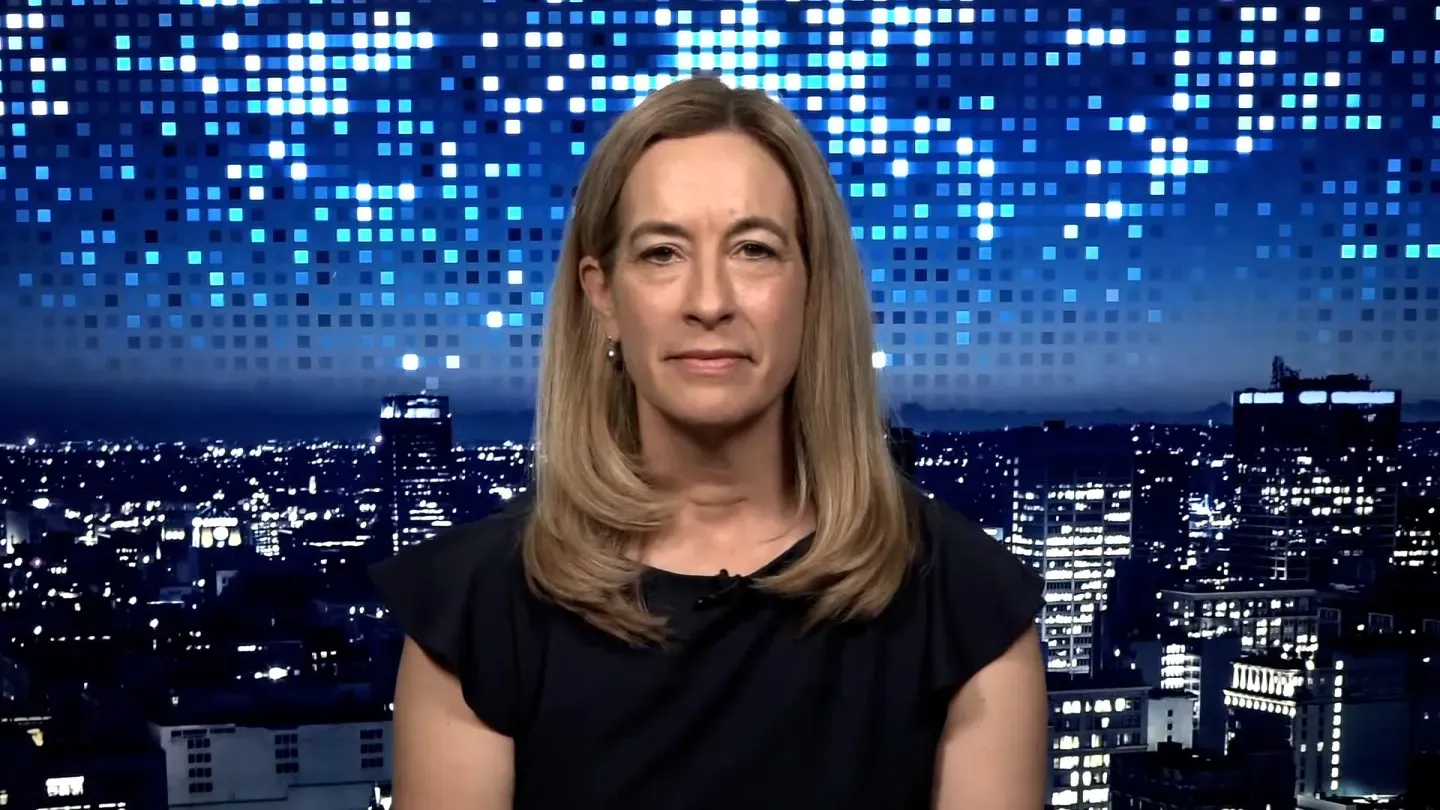
New Jersey Gov. Mikie Sherrill previews the 2026 FIFA World Cup final happening in her state amid the White House's intensifying immigration crackdown. We return to Christiane's 2018 interview with Anthony Hopkins as he releases his debut album as a classical composer. Strategist Rashad Robinson discusses social justice campaigns in his new book "From Presence to Power."
Problems playing video? | Closed Captioning Feedback
Problems playing video? | Closed Captioning Feedback
July 17, 2026
7/17/2026 | 55m 43sVideo has Closed Captions
New Jersey Gov. Mikie Sherrill previews the 2026 FIFA World Cup final happening in her state amid the White House's intensifying immigration crackdown. We return to Christiane's 2018 interview with Anthony Hopkins as he releases his debut album as a classical composer. Strategist Rashad Robinson discusses social justice campaigns in his new book "From Presence to Power."
Problems playing video? | Closed Captioning Feedback
Where to Watch Amanpour and Company
Amanpour and Company is available to stream on pbs.org and the PBS app.
Watch Amanpour and Company on PBS
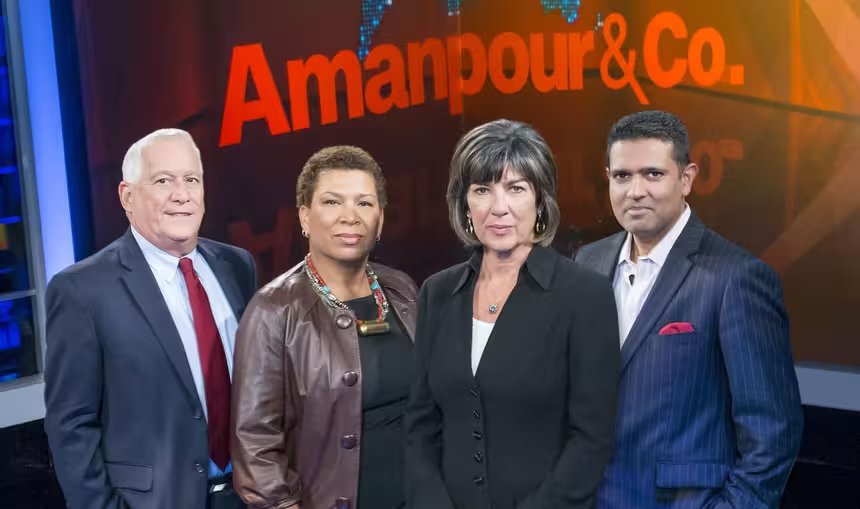
PBS and WNET, in collaboration with CNN, launched Amanpour and Company in September 2018. The series features wide-ranging, in-depth conversations with global thought leaders and cultural influencers on issues impacting the world each day, from politics, business, technology and arts, to science and sports.Providing Support for PBS.org
Learn Moreabout PBS online sponsorship[ Music ] >> Hello everyone and welcome to Amanpour and Company.
Here's what's coming up.
[ Cheering ] The eyes of the world turn to New Jersey for the final of the World Cup on Sunday.
But beyond the excitement, America's divisions are showing in stark relief.
New Jersey Governor Mikey Sherrill joins me then.
I wanted to be a musician.
I wanted to be a pianist and a composer.
Realizing your dreams at age 88, ahead of the release of his debut classical album, a look back at my interview with the award-winning actor Anthony Hopkins.
>> If we push in this direction or we push in that direction, we can pass policies.
We can make society more fair and more equitable.
>> Transforming public support into victories that last.
Rashad Robinson, one of America's top social justice strategists, tells Michel Martin what he's learned through his years spent fighting for change.
- [Announcer] Amenpour & Company is made possible by the Anderson Family Endowment, Jim Attwood and Leslie Williams, Candace King Weir, the Sylvia A. and Simon B. Poyta Programming Endowment to Fight Antisemitism, the Strauss Family Foundation, the Peter G. Peterson and Joan Gantz Cooney Fund, Charles Rosenblum, Monique Schoen-Warschau, Kou and Patricia Ewan, committed to bridging cultural differences in our communities.
Barbara Hope Zuckerberg, and by contributions to your PBS station from viewers like you.
Thank you.
- Welcome to the program, everyone.
I'm Christiane Amanpour in London.
This weekend, the US hosts the hotly anticipated World Cup Final between the defending champions Argentina and Spain.
It's the end of a tournament that's tested the game's norms and brought millions of visitors from around the world.
At the same time, though, a swell of discontent has been sweeping America.
Federal agents have killed two people in Maine and Texas as Trump's immigration crackdown ratchets back up.
And Trump himself is again taking aim at America's electoral checks and balances as the midterms approach.
So, in the face of mounting public anger and with Trump's approval rating at near record lows, can Democrats seize the day?
This week, the answer seemed to be a resounding no, as Democratic candidate Graham Plattner pulled out of the main Senate race amid a raft of scandals.
It's another badly timed misstep which could have dire consequences.
Uniquely placed to discuss all of this is Mikey Sherrill, the Democratic governor of New Jersey, whose state is hosting this weekend's FIFA World Cup final.
We spoke when she told me about her expectations ahead of the game.
Governor Mikey Sherrill, welcome to our program.
Let's just start by what's bound to be a joyous occasion, the final of that global cultural phenomenon, the World Cup happening in your state this Sunday.
What do you expect?
How has it been, the whole World Cup for states like yours?
Well, this will be our eighth World Cup game and it has been really fantastic.
It's been an honor.
We've had Norwegians rowing.
We've had the Brazilian community out in force.
It just has been a wonderful event.
I often say we have people from every corner of the globe here in New Jersey.
So welcoming the world to New Jersey.
Some people have compared it to having your cousins over and your mom lets you stay up late.
We've opened the bars and restaurants late.
And it's really been an amazing experience.
Can I ask you, because a lot of the difficult circumstances in the run-up led a lot of foreigners to sort of cancel their plans, and some states and cities are saying it's not been quite the financial boon they expected.
Can you tell me about -- have you reaped the financial benefits from this onslaught of fans?
That has been my goal from day one.
So, we, of course, came in in January.
That's when I started my administration, and we took a deep dive into the economics of this World Cup.
At the time, it didn't look very good.
So, we built 34 fan zones across the state, so small businesses can come out and make some money.
We've had about 5,000 people plus at some of our fan zones.
We've done it across the state because, as you might remember, at the northern part of our state, we're hosting at MetLife Stadium, but Philly's hosting down in the southern part of our state or was hosting.
We have these games and we've been able to take advantage of it throughout the state.
VRBOs, Airbnbs are up tremendously.
Individuals are making a lot of money and we're still charting out some of the hotels and how they're doing.
We're really taking a deep dive economically to see if you can make this work for a state like ours.
It's very, very difficult.
It takes a lot of work.
I will tell you, working with FIFA has not been the most pleasant experience.
For an organization that intends to make $11 billion off of this event, they're not a good partner.
You could see a world where they could have really engaged and grown U.S.
soccer in a tremendous way, building FIFA fields across the nation.
Instead, they've chosen to just really kind of line their pockets and really at the expense, I think, of a lot of fans.
Gosh, I mean, that's quite a sort of a dressing down of FIFA, and there have been many, many complaints I know, including you said that you were angry that FIFA had upped the transportation costs and that you were not going to allow New Jersey taxpayers to foot that bill.
We had agreed to move people at cost, which was $150 a ticket on the train.
Just that's how much it was going to cost us to move people.
And we really, you know, we went to people and said, look, I think, you know, we can work on this so we can get people in and out of the stadium quickly, efficiently and, you know, cheaply.
Unfortunately, they basically did not want to engage.
So, what we did is we went out to corporate partners.
Because at the end of the day, this should not be the tax payers of New Jersey that are paying to move people to and from a game.
So we went out to our car, corporate partners.
We got it under $100.
And I have to say, shout out to New Jersey Transit.
I've spoken to hundreds and hundreds of riders.
It's been a great experience.
We're actually now moving people in and out of our stadium faster than at a Giants or Jets game.
So that's been wonderful.
I think the fan zones have been tremendous and the experience in the stadium.
I will tell everyone who's not familiar with MetLife Stadium, nobody has ever given a design award.
It's never been seen as a beautiful stadium, but inside that stadium right now, it's one of our largest.
I've had all of our visitors say just how beautiful it is.
About 80,000 fans.
Many times you come in and you have, you know, the zone with one side with colors and the other colors and the tremendous energy inside that stadium has been wonderful.
The energy that our guests have brought across the state has been amazing.
This is sort of the first time in a long time I think people remember why it's so awesome to be part of the world community that we have so much in common and it's been wonderful for New Jersey to really welcome the world.
And certainly sitting here in the UK all these ripples have gone out from your state, your nation around the world as well.
But let me ask you about energy of a different sort and that is in the Democratic Party itself.
Democrats have spent all this time trying to build a path back after the last presidential election.
You won in a politically divided state.
You ran a moderate campaign focused on affordability issues.
Do you think that is a template that other Democrats could use and follow?
I've had this conversation with so many people.
You know, I think there, I think in the, the, the press often and insiders, they always want to chart out where people fall on a political spectrum and how we're going to win, et cetera.
And I keep saying over and over, for most voters, they don't say, here's the political spectrum.
I fall here, here, here.
They have issues they care about, and what they want to hear from people running for office is that you get their issues and that you're going to address them immediately.
Not write a 10-year plan, not write a strongly worded letter.
They want to see real results.
They want to see fighters.
They want to see somebody who's going to address the many, many challenges this nation has.
So that's what I did.
Not only did I run that campaign with those commitments, but then got into office.
And on day one, in the middle of my inaugural address, I stopped.
I signed orders so that we declared a state of emergency on utility costs, froze rate hikes.
And with the work we've done on solar, on battery storage, on nuclear, and the charting out on how we're going to handle data centers and putting guardrails in place, we have now, according to an independent study, saved the people of New Jersey about a billion dollars already, and we're just getting started.
Well, I mean, look, that really does sound like a great record.
But when you talk about labels and divisions and this and that, you just saw what happened in Maine, where somebody, Graham Platner, who was viewed as, well, is a progressive and won handily in his primary against the much more established candidate.
He won handily.
And most people say, apparently, even a good load of moderates, that they liked his policies, but it was the person who hadn't been apparently properly vetted or didn't have enough experience that came crashing down.
What do you have to say about that?
Is that an indictment of progressive agenda, or is it a complete mistake in terms of pushing an inexperienced candidate who hadn't been properly vetted?
How do you assess what happened there?
I think as far as the policies and what people were hearing, I think it's an indictment of the fact that for too long we haven't seen a strong enough plan and strategy to take on the challenges of this nation and the Democratic Party.
We continue to see rights and freedoms being eroded, affordability issues across the country.
And here we are, the party that fights for working people, that fights for middle-class families, and middle-class families have been losing out in the economy that we've seen.
And so what people across the country want to see are new ideas.
They want to see somebody addressing their key concerns and how you're going to fight back and how you're going to carry that forward.
And so on one hand, I think what we're seeing is a whole new generation of leaders who are coming forward from all parts of the party, from all different areas, saying, I've got new ideas.
I'm going to address this differently.
I'm not going to wait for permission.
I'm not going to wait for 20 studies on whether or not it's politically tested.
I'm moving forward and I'm addressing the key issues of the people that I serve.
And that's critically important.
On the other side, you're exactly right.
We can't just have these, you know, people that have good social media profiles.
You have to vet them.
You have to be a person of character.
You have to be someone that's going to be fighting for the right people and can credibly say, "Look, I've got your back, and here's my record, and here's why you can trust me to do what I say I'm going to do."
You know, I hear all that, but let's take next door, and that is the mayor of New York, Zoran Mamdani.
He was not politically part of the establishment, but he is the Democratic Socialist of America, and he ran on the same issues that you did, affordability, but has a slightly different spectrum of views on that issue.
And he seems to be doing well, despite the fact that he was also inexperienced.
It is a very interesting moment right now.
How do you think Michigan is going to do?
They have an election coming up, a primary in the Democratic Party, between a populist and a more established moderate.
How do you think that's going to end up and what signal will that send?
Because Mamdani, when he endorsed a load of more leftists, more progressives, they all won.
I think again, when people see someone who they feel is a fighter, I just heard an endorsement of a candidate saying, "This is the person that's going to fight."
I hear that over and over and over again.
So again, I think when we had a six-way primary here in New Jersey, we had people from every part of the political spectrum.
And it really was, I think, this campaign we built to say we were going to take on entrenched interests.
We were going to take on people who historically had controlled the politics of New Jersey, had controlled what you were able to vote on or not vote on, and I was going to stand independently and take that on.
And I myself, I've said, I don't feel comfortable with any label.
I don't feel comfortable in the moderate wing of the party because that to me represents a wing of the party that has not done enough to make change and ensure that we have a good place forward, a good strategy going forward for middle class families.
I don't feel comfortable in the far left of the party because some of the things they say are contrary to the things I fought for in the military on the House Armed Services Committee at the U.S.
Attorney's Office my whole life.
And so what I have is an independent vision in many cases, but based on those democratic values, and I mean the Democratic Party and democratic values, of fighting for working people, making sure everybody has a seat at the table.
Right now we have a president of the United States who is making it so it's just himself and his cronies who are lining their pockets with billions of dollars while working people see their gas prices go up because of Iran, their grocery store prices going up because of Trump's illegal tariff regime, who see ICE agents on the street killing people because he's forming the secret police state with no accountability.
At every turn you're seeing somebody in power that is so contrary to our American values, we are building out a party that's taking on new ideas.
And we're going to implement ideas that are going to make sure that middle class families have opportunity and a path forward.
You talked about the war on Iran and that Americans do not want another one of these wars and Trump himself has found his polls dropping because of it, including because of the affordability issue that you and others talk about.
Do you think now President Trump is on the way to his own forever war?
You were in the Navy, you were a Navy pilot, I believe, and you have, you know, you have the credentials.
Is he about to land America into another forever war?
We are right in the middle of one of the most inexplicable wars that we've conducted.
And we certainly don't have a clean record in making good choices all the time.
But right now, the president can't even, couldn't even say at the beginning of this why he was going to war.
He made some, you know, he's had some discussions of getting rid of the nuclear program in Iran, getting rid of their missile program, having regime change.
None of that's happened.
I guess you could say he did make sure we had regime change, but unfortunately changing to a regime that is more extremist and more anti-American than the one that was in place.
He set back the idea of the grassroots campaign for democracy in Iran by decades.
He has done so much harm in the region, it's hard to calculate, not to mention is costing the United States hundreds of billions of dollars.
Much of our infrastructure in the region has been bombed, high-end bases that will be very costly to rebuild.
We've gone through munitions at a rapid rate that we'll have to replenish.
The taking care of veterans will cost us a lot of money.
Again and again and again, you turn to these huge costs going up.
So now you see the administration asking for $1.5 trillion for the defense budget when they have cut funding for innovation, cut funding for quality and affordable health care, cut funding for education.
I mean, at every turn, they are cutting back on the things that really puts us in such a solid place for middle-class families that can grow the jobs of the future as we're going through tremendous changes with AI.
At every turn, they are making decisions that are harming American families.
And at the same time, I can't say it enough, Trump is making billions and billions of dollars through his self-dealing.
- As a former lieutenant in the Navy, I'm sure you, and you were on the Armed Services Committee, you're very concerned about America's military posture, its readiness, its strength.
That is what Pete Hegseth says that he is trying to ramp up to get the force fighting fit, to make sure, as he says, people are promoted due to their abilities and not any other reasons.
What do you make of what he has done so far in terms of has it strengthened the U.S.
military?
And of course, the latest is that he's saying that he's going to let me just get this absolutely straight.
He is going to recommend tests for testosterone deficiency amongst troops.
Pete Hexeth is the most incompetent secretary of defense this nation has ever had.
He is somebody that failed at every job he had coming into leading our military and now is failing at that job tremendously in every single way, by every single measure, not the least of which is getting us into a war that we can't seem to get out of while costing American lives billions of dollars and really has no agenda or strategy, simply has made us less safe.
So at this point, he needs to be impeached.
He needs to be removed from office because he's dangerous, because he's taking our fighting force, which has been the pride of America, a fighting force I served in, which I was very proud to serve in because it was so professional, because we upheld some of the highest standards of humanitarian law and the Geneva Conventions.
And now we've seen that eroded year over year over year.
Part of the reason I got out of the military was because I wanted to go into law.
I went to law school because of my concerns about torture and rendition that were undermining our military.
And Pete Hegseth goes so far beyond some of these things, you know, giving awards to war criminals, saying that war crimes aren't crimes, suggesting that women and black people can't serve.
If he really wants to have the strongest fighting force with the most capable people, then he wouldn't have cleared out the flag ranks, the admiral and general ranks of women and black people who have served honorably for decades, who have the most experience, who the force at the military personnel command put up for more stars because they thought they were so very good.
And I think when you see, people have said to me, doesn't Trump have anyone advising him who is competent, who is capable, who's good, who's going to help chart this pathway out of Iran.
And I said, not, no, because Pete Hickseth is clearing all of those people out of every command.
It is a debacle.
It is infuriating.
It is offensive.
And it is contrary to the values of the United States of America.
It's really interesting to hear your perspective, given your experience in the military and now as the governor of the state of New Jersey.
Mikey Sherrill, thank you very much indeed for being with us.
quick quick quick who's your pick to win the final?
oh that's a tough one I I gotta go with what feels sort of like the hometown team with Messi so I'm gonna go with Argentina.
all right probably a good bet Messi is they call him the goat.
thanks so much governor.
thank you so much have a great one.
he's known for acting performances that can be truly chilling portraying humanity's darkest villains in films like the silence of the lambs but now at age 88 Anthony Hopkins is returning to his first love music the Oscar and Emmy Award winning actor is releasing his debut album as a classical composer recorded with the Philharmonia Orchestra and the world renowned conductor Gustavo Dudamel.
It is called Life is a Dream and Hopkins has been working on the songs for nearly six decades.
Here's a short excerpt from his first single, Bracken Road, inspired by memories of growing up in Port Talbot, Wales.
♪♪ I spoke to Hopkins back in 2018 around the release of a film adaptation of "King Lear," in which he played the title role, of course.
He told me about his musical ambitions back then, which back then were only just a dream.
Anthony Hopkins, welcome to the program.
You know, we are all so familiar with your massive body of work.
And it just strikes me as a really interesting question to ask you, that you didn't really want to be an actor.
You've said music and art were your first loves.
And you sort of stumbled into acting by mistake.
How so?
I wanted to be a musician.
I wanted to be a pianist and a composer.
I played the piano ever since I was a kid, six years of age.
Anyway, I was 17 and I was at a loss.
I was in school, not qualified to do anything, hopeless at everything academically, no sports, nothing like that.
So I didn't know what I was going to do.
And suddenly there was a scholarship for the Cardiff College of Music and Drama.
So I thought, well, maybe I'll go and try a scholarship as an actor and see if I can sneak into the music department.
Anyway, I'd never acted before in my life.
And I did a piece from Othello.
And I did the audition.
I didn't know what I was doing, but I did the audition full of sound and fury.
And they gave me the scholarship, much to my surprise.
So that's how I started out.
Well, there's beats working for a living, I sort of enjoyed it.
But I was, you know, I had no clue.
And I did two years there.
And then I came out of National Service, as they call it over here, the draft.
I was the last going in 1958, 1960.
And I came out, and I decided to follow a career in the acting business.
I abandoned music, although I still play the piano and all that.
And that's how I started.
on tours and in repertory companies.
I didn't fare too well in my first job.
I was fired because I was incompetent and dangerous on stage.
Well, let me ask you something, because it's really interesting to hear that 50 years ago, you got your big stage break by playing Sir Lord Lawrence Olivier's understudy in the Strindberg play.
And one day, as every actor dreams, the principal fell ill, couldn't play, and you stepped into the role.
And I just wonder, you know, what you think about that serendipity.
And what he then said, the great man himself, Olivier wrote, "A new young actor in the company of exceptional promise named Anthony Hopkins was understudying me and walked away with the part of Edgar, like a cat with a mouse between his teeth."
That's pretty amazing.
What did you think when you got that kind of validation?
I was an ambitious young kid, you know, I wanted to do everything and be everywhere.
But I was scared stiff and I was understudying Olivia.
He seemed to take a shine to me because I was very strong and he admired strong men, you know, because I was physically very strong and tough.
And I think he valued that in actors.
He said, "You have to be strong, very healthy and fit."
So he gave me an understudy part to understudy himself.
And he'd never been ill in his life.
Then he had cancer.
And it was in those days they had to burn it up with radium treatment, I think.
And I was told that I was phoned one morning saying, "You're on stage tonight."
I said, "You're kidding me."
And I thought they were joking.
And I went into the theater for rehearsal.
I'd learned the entire part.
That's my thing.
I always prepare.
I went into the rehearsal with Robert Stevens and Gerald McEwan and Glenn Byamshaw was directing.
And unfortunately, Olivia's costume and uniform fitted me.
Anyway, the play started and I got a huge round of applause at the end of it and apparently I was told I was very good.
I was far too young.
But Olivia had come out of hospital.
He'd visited the theatre.
He was in a bathrobe or something, dressed up with his overcoat on and stood at the back of the theatre to watch me.
And he phoned me next day.
He said, "How do you feel?"
I said, "Well, I was scared."
He said, "I bet you were.
You did very well, dear boy."
And he said, "Any problems?"
I said, "Well, I went through about three shirts.
I was so wet with perspiration and sweat."
He said, "Well, that's tension."
I said, "How long will it take to get rid of that?"
He said, "About 25 years."
That's pretty-- that is a great story, and particularly that he got out of his sickbed, basically, and came to watch you.
It is an amazing story.
I want to play, just for a moment-- I know I'm leapfrogging a lot, but so many people know you for so many things, but especially the younger generation for the Hannibal Lecter.
And I want to play how kind of awful a psychotic you are in this performance, and what an amazing impact it's had.
We're just going to play a clip for a moment.
Oh, agents darling, you think you can dissect me with this blunt little tool?
No, I thought that your knowledge... You're so ambitious, aren't you?
Do you know what you look like to me with your good bag and your cheap shoes?
You look like a rube, a well scrubbed hustling rube with a little taste.
Good nutrition has given you some length of bone, but you're not more than one generation from poor white trash, are you, Agent Starling?
And that accent you've tried so desperately to shed, pure West Virginia.
Is your father dear?
Is he a coal miner?
Does he stink of the land?
You know how quickly the boys found you.
All those tedious, sticky fumblings in the back seats of cars, while you could only dream of getting out, getting anywhere, getting all the way to the end of the line.
I mean, it's chilling even today as we watch it.
I wonder what your reaction to that is.
You got an Oscar for playing that role.
And I wonder how your acting life changed after that role.
My agent phoned one afternoon.
I was in the theater early.
I was there early, you know, getting ready to go on.
And there was a long run in this and I was getting tired and bored, wanting to break out.
My agent sent me a script.
He said, "Are you going to..." He said, "I want you to read a script called 'The Silence of the Lambs'."
And I thought it was a... I said, "Is it children's stories?"
"No, it's with Jodie Foster, and you play part of Hannibal Lecter.
"They're very interested in you playing it."
So the script came, I read part of it, I phoned him up, I said, "Is this an offer or not?"
And he said, "Well, it's not an offer.
They're very interested.
"But I don't want to read any more.
"This is one of the best parts I've ever read."
So he phoned back an hour later, he said, Jonathan Demme, the director, is coming to see you tomorrow night.
You're on.
I said, OK.
And I knew how to play it.
I don't know why, but I know how to play these parts.
It's a strange feeling, but it's in my muscles and in my nature, I guess.
I guess I'm an actor by freaky chance.
I don't know why.
I'm not an intellectual.
I'm not an educated person, but I have this instinct for it.
And a certain toughness and rawness in my nature.
You know, you've described your toughness and not being a gentle actor.
And you did say to, you know, the TV movie critic Barry Norman back in 1993, the British critic, you know, after playing, you know, Lector, Nixon, Hitler, all of those dark roles, you said, it's the certainty within them that's attractive, the unblinkered look into the darkness.
I think I understand that for some reason.
It's a pretty big admission that.
Yes.
And I quite can't quite understand anything about what I meant by that.
I still don't get it, you know, but I've always had that instinct ever since I was a kid.
Of the certainty of that life is tough and hard.
And I came from a background.
My father was a hardworking man.
So was my grandfather.
But there was a certain toughness about them.
They didn't mince words.
They weren't very touchy feely.
And I think that's what I did.
It was beyond ego.
It was just an instinct that forced me to look at life as it is.
For example, in The Lear.
Can I jump to that for a moment?
You can, but I want to play, I want to play, I want to ask you about that because I'm going to play a clip.
So, you know, you mentioned Lear and, you know, we're circling all the way back in your career to Shakespeare.
And of course, it's been played by many, many greats.
Your old buddy, Sir Ian McKellen, is doing it in the West End in Britain right now.
The other great British actress is about to take on King Lear on Broadway.
And now you're taking the film version.
And it's a more modernistic, unusual adaptation of Lear.
And this is the scene, you just talked about Cordelia and how you treated her like a boy.
In this scene, you're kind of disowning her.
Let's just play it.
Better thou hadst not been born, than not to have pleased me better.
My lord of Burgundy, what say you to the lady?
Will you have her?
Give but that portion which you yourself propose, and I will make Cordelia Duchess of Burgundy.
Nothing I have sworn.
I'm firm.
I am sorry then.
You have so lost a father that you must lose a husband.
Peace be with Burgundy.
Since let respect and fortunes are his love, I shall not be his wife.
First, Cordelia, thee and thy virtues.
Here I seize upon.
The haster, king.
Let it be thine.
For we have no such daughter, nor shall ever see that face of hers again.
Therefore be gone without her grace, her love, her Benison.
Come!
How do you feel when you look at that clip?
Well I saw it recently.
I was in Rome and I saw the film.
I was moved not by my own performance, I was moved by the nature of that scene because it's very Welsh.
It's very part of my own life.
It sounds weird to say that because I don't know quite what I mean, but there's something I know about this, something in my nature I know.
Maybe through experience with my parents, my father, my grandfather.
There's a darkness that - I don't want to make it sound mysterious, but there is something in there that moves me about the finality of love, about the finality of betrayal, and finally, you know, they are not long the days of wine and roses.
Off we go into the darkness.
There's a wonderful scene in Citizen Kane where Joseph Cotton is taken in the hospital back into the darkness towards death.
That really preoccupies me as I'm getting older but not in the morbid sense.
I hope I have some many years left and I'll go on working because I'm in good shape and I'm tough and I'm strong.
But there's something that moves me about that kind of, you know, I found it, well actually I'll make a boast, I found Lear very easy to play this time, dead easy to play, didn't find it difficult at all, whether people like it or not.
It was my Lear and I found it really easy to play and a great cast, a great cast and a great director.
And so that's, I give everyone credit for that.
It was the easiest part I've ever played.
It sounds weird but it really was.
Do you now or when did you feel that acting was not a mistake.
Oh.
Just recently.
Recently I was thinking, my goodness, I've had a long life.
I've had an amazing life.
I've had a great life.
I've worked with some extraordinary people and I am what I am today and I look out of my window and I think, how on earth did I get here?
And I can't really account for any of it.
It was all chance.
I was given so many breaks and I've made many, many mistakes.
But I've managed to pull myself up again by the bootstraps and go on with it.
So I know it's the only thing I can do.
I have other hobbies.
I paint and I play the piano and I compose music.
But this is the one thing that I do and I love and I relish.
And I hope I go on doing a few more things like that.
But it's been the best life and there was no mistake made.
And I look back with a kind of strange nostalgia to those early days when I was a kid.
You know, my father said, I don't know what's going to happen to you.
He's hopeless at school and all that.
Anyway, so I became what I am today.
But one, I will say one last thing.
The happiest time of my life is now because I've given, get rid of self consciousness, being free of self consciousness, being free to not to realize that I'm not that important.
None of us are that hot.
[LAUGH] For a very limited time.
When we think we are important, think again because we are not.
And not important at all.
And that's the great freedom I feel now.
Instead of no big deal.
And I have a mantra which is, you know, it's none of my business what people say of me or think of me.
I am what I am and I do what I do because I love doing it.
It's all in the game.
Game of life upon life.
No sweat.
No big deal.
There are no big deals.
And that's what I like and enjoy about my life now.
It's no big deal.
And to have a great sense of humor about it all, because it waits for us at the end of it all.
There's no escape.
Life is terminal.
I like that.
Sounds like gallows humor, but I like that.
And on that gallows humor note, it's been a pleasure speaking to you, Sir Anthony Hopkins.
Thank you for joining me.
Thank you very much.
Thank you.
We turn now to the fight for social justice in America, tougher than ever as Trump doubles down on his anti-DEI agenda.
Rashad Robinson is a top strategist who spent his career campaigning for change.
In his new book, he argues that progressives are confusing visibility with actual power and undermining what could be significant wins.
He speaks to Michelle Martin about how he believes power really works in politics and how it can be harnessed.
Thanks, Christian.
Rashad Robinson, thank you so much for talking with us.
Thanks for having me.
You know, you've been described as an activist, as an organizer.
For people who don't know what you do, what do you do?
Every day I try to find ways to help win more social change.
I build campaigns.
I identify the stories that hopefully move more people into feeling like they can make change.
And also look for the openings, the possibilities that if we push in this direction or we push in that direction, we can pass policies, we can make society more fair and more equitable.
That's what I've been doing for the last several decades.
I've been doing it inside of organizations.
I've been doing it through public speaking and I've been doing it by trying to bring people together.
You have worked with existing organizations like GLAAD that existed before you got involved with them, focused on LGBTQ rights, not just rights, but also sort of presence in society.
And then you also have sort of helped build organizations like Color of Change.
Would it be fair to say that the reason you wrote this book is that your side is losing more than it's winning?
I absolutely wrote this book because we're losing more than we're winning, and I'm tired of losing.
And every day when I see losses, I see things like magical thinking or a misunderstanding of power, how power operates.
And you can continue to sort of operate inside the context, continue to try to build campaigns, or you can step back and think about sort of how do I disrupt the current set of thinking, the current conventional wisdom, and give us a new way of thinking about power that is modern, that is updated, and moves us in a different direction.
So when did you start to feel this way?
Because it's not exactly a secret that a lot of the progressive initiatives and goals have really seen a setback in the current moment.
I mean, you could trace it to President Trump's first election, but it's not just his election per se.
It's just the rapidity with which that he and his and his allies have been able to achieve legislative gains to sort of normalize certain language that was considered unacceptable in the public sphere.
So I'm just wondering what was what was it was there like a eureka moment for you where you just said, wow, we are really losing here.
They've been so consequential in what they've done.
And I think the moment when I knew I had to write this book was right after Trump's first victory.
I went to the White House shortly after his victory as he started to name his cabinet officials.
I also went and met with folks like Senator Schumer.
And in each of those conversations, I felt like I was in a different universe.
I was also inside lots of conversations inside of the sort of the progressive or the left movement, as we might talk about it in the United States.
And in each of those conversations, people were either treating his victory, Trump's victory, like, "Oh, this is, we'll do, we'll negotiate and we'll set up our structures the same way we did during the Bush administration."
Or I would hear folks talk about things like, "We've made so much progress on things like criminal justice.
The country has changed.
Many of those policies are things that we can count on continuing to move forward."
I recognized that in that moment, people had really misread what was happening, misread Trump, misread power, misread what was going to happen next.
And it's really hard to run and build campaigns in that context.
And I knew that I had to do something different besides just the day in and day out of trying to run campaigns that sometimes win and sometimes lose.
So that was 10 years ago, though.
What have you been doing to respond to that moment since then?
Every day I've been working and fighting and building.
During the Trump years, I led campaigns to force corporations to quit Trump's business council, led campaigns that forced corporations to stop processing fees for white nationalist groups, led one of the largest boycotts in American history, taking on Facebook and big tech.
And along the way, have had wins and losses and continue to try to write this book.
But you gotta, in some ways, step back.
It's really hard to run the campaigns and to do the sort of thinking about how to bring all of these stories together in ways that are going to be useful for people and are going to help people not just have the context and the analysis that they need, but are going to help people apply it.
And that's what this book really is.
This book is not just a set of stories and not just a set of principles, but it's a guide.
The first thing you say that people are confused about the difference between presence and power is that they're not the same thing.
isn't about how many people we mobilize to take action.
It's about who we mobilize and what actions they take and whether those actions create the kind of leverage necessary to force change.
So say a little bit more about that.
And I think I need to say specifically, you're talking about people on the left, because I think part of your analysis is people on the right are not confused.
- I don't think people on the right are confused the way we are.
I think there's a incentive structure in society around retweets, shout outs from the stage, visibility, getting your story on the front page of the paper.
Presence is not bad.
But we mistake presence for power.
We can think something has happened that hasn't actually happened.
We can confuse a black president for thinking that we are post-racial.
We can think that a black celebrity who announces that she's pregnant on the internet stops means that America is as comfortable with monetizing and celebrating black culture as they are with black people.
And those two things are different.
Power is the ability to change the rules.
It's the written rules of policy, the unwritten rules of culture.
And when we mistake presence for power, it's one of those fundamental things that sort of traps us into celebrating things that are not actually wins.
Celebrating a bunch of people showing up to a protest, but not actually getting to a place where we've made change.
Like an example being what?
The Women's March?
Yeah, an example is a lot of our marches.
And so, you know, the thing about a lot of our marches is that they are steps sometimes on the road.
They are about getting people together, sometimes getting people socialized.
But over this current period, we're going to have to direct our marches to places where we actually build leverage, continuing to show up at state capitals or Capitol Hill, where it's almost like choreography.
Those were technologies and tools that worked during a different era.
But if we are not placing the right energy and the right focus on corporations, on the forces that are enabling what is happening in our society, I think what ends up happening is that we don't build the necessary leverage to force something different to happen.
We force sort of a choreography of the left is outraged, we march in a certain place, the march is over, everything gets cleaned up, people go home, and nothing actually gets forced.
No one is nervous about disappointing us.
The other thing that has happened is that our opponents have changed their tactics because nothing is static.
And so what has really happened is on the right is that they have made their engagement almost like the spectators are on the field in a new way.
You go to the gym and people are turning on Fox News or conservative TV in the gym.
You go out in the streets and people are wearing their red caps.
They're wearing their jerseys.
It's almost like a lifestyle.
And I hear a lot of people on the left say things like when we win.
When we win, all these things will happen.
And you hear folks on the right never talk about when they win.
And it's sort of like if you follow Marvel or you watch, you know, any of like an action movie, it's hard to be in a battle with someone that never thinks the war is going to end and you think the war is going to end.
The right is on the field every day.
And we have to think very differently.
So yes, our marches are not necessarily a bad thing, but they are presence and they are just presence alone.
And unless we actually force that energy to the places that we can build leverage to force those in power to be nervous about disappointing us, then we're not going to actually move that energy of people showing up into something different.
As an example of what you say, sort of turning belief into action or sort of turning narrative into action.
After the murder of Trayvon Martin, which was just a traumatic and seminal event in the lives of many people, Trayvon Martin, who went out to the store to get some snacks for his little brother and was shot by a vigilante on his way home.
You said instead of focusing only on the shooter or prosecution, you trace the issue to ALEC, a powerful network that brings corporations and state lawmakers together to kind of write and promote legislation, legislation that's already drafted, you sort of hand it to your preferred legislators and they can sort of move it through the legislative process.
And you wanted to focus on stand your ground laws.
So how did you make the sort of the pivot from people are outraged about this thing, they understand what that thing is, to moving to a strategy around something that they may not even know exists?
Yeah, and this attention economy, it's something that I talk about is respond, build, pivot and scale.
Responding to moments that exist in the world, helping people understand what's at stake.
And so in that moment, of course, we fought for justice for Trayvon and we called on the Department of Justice and we tried to get folks involved.
But we recognize that if you're just fighting these individual moments and not raising the floor on what's acceptable and pushing up the ceiling on what's possible, you're almost playing whack-a-mole.
So we wanted to both fight for justice for Trayvon and also deal with the fact that we were living in a society where there would continue to be more Trayvons.
And so we looked at how the Stand Your Ground policy got in place.
And it came in place through the American Legislative Exchange Council, which at the time, most of its money came from the biggest corporations in the country, corporations that came to black communities and said, buy our products or use our services.
And we began communicating with them behind the scenes, really helping them understand what was at stake.
And we built enough of a campaign by understanding what they would say back to us, that by the time we went public, we were able to force over a hundred corporations to divest from ALEC, forcing a different conversation about the role that those corporations were playing on these racial justice issues, not letting them hide behind the other reasons they may have been part of ALEC.
And that also opened up a different narrative story that allowed us to go into Hollywood and have a conversation about representation in the media and crime TV shows.
My goal sort of in all of this is how do you make these issues as salient to as many people as possible?
How do you help tell a full story to people about why things are happening the way they are?
And how do you help people understand not just who's behind it, but who's enabling it?
You have all kinds of nuggets in this book.
I mean, too many to name, but one of the ones that stood out to me is name the villain.
If you don't tell people whom to blame, they are going to blame you.
Say more about that.
I mean, every year, sort of during the Biden years, I would talk to the folks at the domestic policy shop and I would say things like, "You've got to be really clear with us during these speeches around why we haven't gotten the George Floyd Act, why we haven't gotten the John Lewis Voting Rights Act, why some of these other things that we need, that folks voted for are not happening.
We've got to name the corporations, the police unions.
We've got to name the forces that are sort of standing in the way on the other side.
People have to understand that story and understand the pain.
And I would often get pushback.
Well, that's not really the way we like to do things.
But on the other side, Trump is constantly naming a villain.
And he's naming, you know, in his own way, he's naming, you know, trans kids.
He's naming black people and women's equality and immigrants and all of these folks.
He's naming and he's telling a story that has a hero and a villain.
And on our side, we're talking about Republicans versus Democrats in the right versus the left and not being clear and specific with people.
We have to tell stories that make sense, help people understand what's in the way of change.
And then we also have to run campaigns to take those forces on, give people real things to do.
That's part of what actually has to change if we're really serious about winning victories that matter and being in a position to enforce them and make them stick.
One of the central arguments of the Democratic Socialists movement in the United States is that it's money.
It's basically corporate money that both parties are fueled and funded by the same people.
You know, to your point, you say, OK, well, so the Democrats get one third of the pot and the Republicans get two third.
But the Democrats are happy with that one third.
And the real issue is that they're still funded by all the same.
It's really the money.
Do you think that's true?
I think a piece of that is true.
And when I talk about it in the profiteering section, I think profiteering is about money.
But profiteering is also about a different type of hierarchy.
I think of Stephen Miller, who works for Trump, as a profiteer.
And I don't think Stephen Miller is in it for the money the way that Elon Musk is in it for the money.
I think Stephen Miller wants his kids to have access to certain type of opportunities and not many other kids.
I think he wants it to be a hierarchy of how men are treated in society versus women.
And I think that there are many folks that we are battling that are in the sort of profit are profiteers, but operate from a hierarchy perspective.
If I think if we only see it as money, then we say things like, you know, those working class white people are voting against their interest, and not like fully thinking about well, maybe their interests are a multitude of things.
And so racial and gender hierarchy and sort of the ways in which society is structured so some people get the benefits and the rewards and other people don't is also part of profiteering.
So yes, it is about the money.
But I think if we only think about it as money, then we miss so much of how this country was built and formed, how its laws developed, and how the money was made in the first place.
So before I let you go, you still seem like a happy warrior.
I mean, if you really take this book on its whole, this is actually a pretty damning testimony.
That the left has invested a great deal of money, time, and energy in sort of pointless strategies, however worthy the goal from their perspective.
And I'm just wondering, as a person who's been at this for 20 years, how are you sitting with this?
And how is it that you still seem to be so optimistic?
I am optimistic.
I believe in change and I do this work because I believe in the possibility of change.
The last, the conclusion, the last chapter, the end of the book is about backlash and hope.
That's how I think about it.
And backlash only happens when you've won some things.
The backlash is to your wins.
And it's when your opponents develop forces, they get better at predicting what you're doing next and they disrupt your wins.
But you also have to recognize that we've won some things.
We've pushed things forward.
Things are different.
My life and the life I get to live and the life that so many people get to live is fundamentally different than the life of the generations before us.
But I also don't wanna be Pollyanna-ish.
I don't wanna just talk about these possibilities in flowery ways.
I want to really be clear that we are losing and it doesn't have to be that way.
And part of why we are losing is because we want things to be true that simply aren't.
We want them to be true about our opponents, they want them to be true about ourselves, we want them to be true about the corporations and the brands that we give our money to.
And if we can get more honest about all of those things, then we can make better decisions about the path forward.
And this is my both invitation, and it's gonna be my work to help us disrupt magical thinking and to, you know, in some ways, not just mistake presence for power, but actually translate presence into power.
- Rashad Robinson, thank you so much.
- Thank you.
- And finally, the Football World Cup, or Soccer to You Americans, wraps up in New Jersey on Sunday with Spain taking on Argentina.
And it's certainly been a memorable tournament, not just on the pitch, but off too.
So let's look back at some of those fun fan moments.
Norway was the unexpected fair weather fan favorite in many ways, thanks to that iconic Viking row and their enigmatic star striker Erling Harland.
They may have fallen in the quarterfinals to England, but they still received a hero's welcome back home with fans gathering in Oslo for a special parade and one final Viking row.
Then there was the Tartan army.
It was the first time Scotland's legendary fans got to grace a World Cup in 28 years, and they really made their impact on America.
Placing cones on top of statues might feel random, but eventually even Boston's mayor got involved.
And what about Merlin the Duck, Mexico's quacky mascot, who even received presidential approval from Claudia Scheinbaum?
And not forgetting Japanese fans and their philosophy of meiwaku, the habit of showing respect to the venue and the hosts.
Japanese fans are often spotted cleaning up litter in the stadiums.
The players even tidy their dressing rooms.
From Curacao as lovable underdogs to Cape Verde defying expectations.
Truly there are too many to mention.
So may the best fans win on Sunday.
And that's it for our program tonight.
If you want to find out what's coming up on the show every night, sign up for our newsletter at pbs.org/amanpour.
Thank you for watching and goodbye from London.
[music]
“Losing More Than We're Winning:” How the Left Confused Presence with Power
Video has Closed Captions
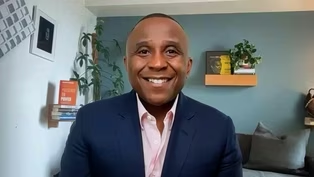
Strategist Rashad Robinson discusses his new book "From Presence to Power." (17m 23s)
Providing Support for PBS.org
Learn Moreabout PBS online sponsorship New Episode
- News and Public Affairs

Top journalists deliver compelling original analysis of the hour's headlines.

- News and Public Affairs

FRONTLINE is investigative journalism that questions, explains and changes our world.
 New Episode
 New Episode
 New Episode
 New Episode
 New Episode
 New Episode
 New Episode

 New Episode
 New Episode
Support for PBS provided by: