
July 9, 2024 - PBS News Hour full episode
7/9/2024 | 57m 46sVideo has Closed Captions
July 9, 2024 - PBS News Hour full episode
July 9, 2024 - PBS News Hour full episode
Problems playing video? | Closed Captioning Feedback
Problems playing video? | Closed Captioning Feedback
Major corporate funding for the PBS News Hour is provided by BDO, BNSF, Consumer Cellular, American Cruise Lines, and Raymond James. Funding for the PBS NewsHour Weekend is provided by...
July 9, 2024 - PBS News Hour full episode
7/9/2024 | 57m 46sVideo has Closed Captions
July 9, 2024 - PBS News Hour full episode
Problems playing video? | Closed Captioning Feedback
Where to Watch PBS News Hour
PBS News Hour is available to stream on pbs.org and the PBS app.
Providing Support for PBS.org
Learn Moreabout PBS online sponsorshipGEOFF BENNETT: Good evening.
I'm Geoff Bennett.
AMNA NAWAZ: And I'm Amna Nawaz.
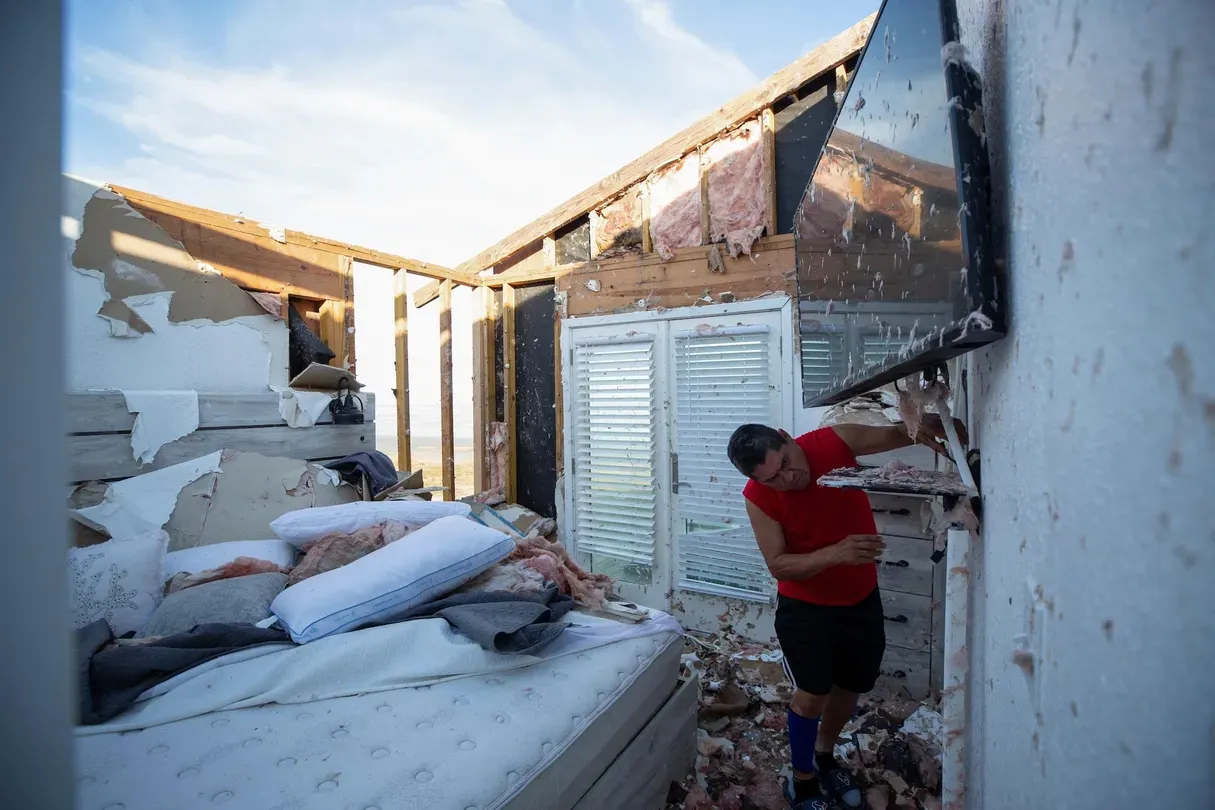
On the "News Hour" tonight: the aftermath of Hurricane Beryl.
Millions of Texans are left without power amid dangerous, scorching heat.
MAN: Joe Biden all the way.
MAN: He just has to step down.
GEOFF BENNETT: Democratic lawmakers navigate the divisive party politics around President Biden's reelection bid, as he tries to quell concerns about his age.
AMNA NAWAZ: And NATO leaders gather in Washington, D.C., to try to safeguard the future of Ukraine and the alliance itself.
(BREAK) AMNA NAWAZ: Welcome to the "News Hour."
We have two major stories tonight, one the political hurricane of sorts, as the partisan winds whip through Washington over Joe Biden's future at the top of the Democratic ticket.
More on that in a moment.
GEOFF BENNETT: First, the aftermath from what was Hurricane Beryl.
It's now a smaller storm, but it has led to at least seven deaths in the U.S. AMNA NAWAZ: More than two million customers remain without power during a stretch of extreme heat.
That heat is also connected to at least five deaths in the West this week.
Stephanie Sy has our report.
STEPHANIE SY: Beryl blasted ashore early Monday as a Category 1 hurricane, unleashing fierce winds, torrential rains and dangerous storm surges on the coast.
The hurricane battered downtown Houston.
It quickly flooded roads and highways in the area, prompting crews to rescue drivers in the height of the storm.
After the worst moved through, Texans emerged from their homes to find destruction.
DESI LITTLETON, Bay City, Texas, Resident: I heard a big boom.
I just thought it was a limb.
I didn't know it was a whole tree.
STEPHANIE SY: In downtown Houston, some residents went out to check if people were still stranded.
DEVANTE WALKER, Houston, Texas, Resident: If you all need anything, there are people out here, you know what I mean?
We come together as a city, so... STEPHANIE SY: Among the victims, an elderly woman in Houston killed when a tree fell into her second-story bedroom.
And Beryl's wrath is not over.
It's moving north now as a weaker storm, but still forecasts to bring heavy wind, rain and possible tornadoes to parts of the Midwest this week.
Now, in battered Southeast Texas, a heat wave has moved in, bringing humidity that could make it feel like 105 degrees.
Officials warned today it may take days to restore power to the millions of Texans that were sweltering in the dark as of this morning.
NIM KIDD, Texas Division of Emergency Management Chief: Power, again, is our number one priority.
Secondary to that is establishing cooling centers and helping with generators at cooling centers if we need.
STEPHANIE SY: The extreme temperatures extend beyond Texas.
Western states from Idaho to Oregon to California are experiencing record-shattering heat.
Las Vegas hit 120 degrees Sunday, an all-time record.
MAN: One thirty-one.
STEPHANIE SY: In Death Valley, tourists posed by a thermometer reading 131 degrees.
Official readings were slightly lower.
All that heat is acting as fuel for wildfires that are already burning tens of thousands of acres in several Western states.
For the PBS "News Hour," I'm Stephanie Sy.
AMNA NAWAZ: Now to our other major story.
House Democrats met behind closed doors today as the party weighs whether to support President Joe Biden's reelection bid or call for him to step aside.
GEOFF BENNETT: Our Lisa Desjardins has more on the party's internal struggle.
LISA DESJARDINS: Outside the Democratic National Committee, the pressure was visible, but barely voiced.
A few House members were Biden-forward.
MAN: Joe Biden all the way.
LISA DESJARDINS: A few signaled acceptance.
REP. AYANNA PRESSLEY (D-MA): Joe Biden is the nominee.
LISA DESJARDINS: One openly said Biden must step aside.
REP. MIKE QUIGLEY (D-IL): He just has to step down because he can't win.
LISA DESJARDINS: But many, many...
QUESTION: Congressman, is President Biden the right man for the job?
QUESTION: Should the president step aside?
LISA DESJARDINS: ... avoided saying anything about it at all.
MAN: Go, Celtics.
LISA DESJARDINS: As a herd of reporters waited and sweated outside, the political heat was inside.
Members spent nearly two hours on the future of the presidential ticket, including whether Biden's debate performance means he cannot win.
"PBS News Hour" was told that a group of members said they think Vice President Harris may have a better chance.
LISA DESJARDINS: Congressman, what do you think about Vice President Harris?
I understand she came up in there.
REP. GLENN IVEY (D-MD): I'm sorry?
LISA DESJARDINS: Vice President Harris.
And there are people that are saying maybe she's a better option.
What do you think about that?
REP. GLENN IVEY: Well, there's a lot of positive comments about the vice president.
I don't know that I'd say there's a consensus one way or another about all of that.
LISA DESJARDINS: But as members exited, those behind Biden stayed there.
QUESTION: Do you think Biden will win in November?
REP. JAMES CLYBURN (D-SC): Absolutely.
MAN: Staying with papa.
LISA DESJARDINS: And those who want someone else still do.
REP. LLOYD DOGGETT (D-TX): My position has not changed.
LISA DESJARDINS: But hovering over it, former President Donald Trump and Democratic concern over his agenda and the Project 2025 agenda associated with many close to him.
REP. AYANNA PRESSLEY: I am not distracted by a 90-minute debate.
I am focused on guarding against 90 years of harm if Project 2025 becomes a reality.
LISA DESJARDINS: Also hovering, the fact that Democrats are struggling.
House Judiciary Chairman Jerry Nadler reversed his call for Biden to step aside.
QUESTION: Do you think he's the best candidate?
REP. JERROLD NADLER (D-NY): Yes, at this point he's the best candidate.
He's the only candidate.
LISA DESJARDINS: At best, many are accepting, rather than cheering for Biden.
REP. RO KHANNA (D-CA): Until the president says otherwise, the assumption is he's the nominee.
The majority of people who I have talked to believe that it's his decision and that he has made it very clear that he's going to be the nominee.
And, at this point, we have got to focus on winning.
LISA DESJARDINS: On the other side of the Capitol, Democratic senators were even more disciplined, with few answering questions, though some Biden loyalists did speak.
SEN. CHUCK SCHUMER (D-NY): As I have said before, I'm with Joe.
SEN. JOHN FETTERMAN (D-PA): Joe Biden is a great president, and he's the only guy that kicked Trump's ass in an election.
LISA DESJARDINS: But for most Democrats, far less resolve, or even clarity, on the next step.
How do you make this decision?
REP. HANK JOHNSON (D-GA): This decision has not been made yet.
I don't know how our leadership will handle this, but I do know that we will be making a decision, a collective decision, and then we will move forward.
AMNA NAWAZ: And Lisa joins us live now from Capitol Hill.
So, Lisa, we saw what lawmakers are willing to say on camera there.
What are your sources telling you off camera?
LISA DESJARDINS: Democrats are in a stutter step moment.
Now, for the last day, it has been clear that President Biden has gained some momentum here at the Capitol, as there have been fewer and fewer voices coming out publicly against him, not zero, but fewer.
And behind the scenes, more and more Democrats have said they feel leery of coming out against him.
This is in part due to the Congressional Black Caucus and also leaders of the Congressional Hispanic Caucus last night backing him up, saying he has to remain as the nominee.
But I will say, it's interesting.
The few people that I -- were able to speak publicly did say some interesting things on the record.
Senator Dick Durbin, of the -- who is the number two Democrat in the Senate, told me off camera -- I asked him, should Biden step aside?
He said "That remains to be seen."
This was just a couple of hours ago.
He said: "Biden is putting together a campaign that will demonstrate whether he is ready to beat Donald Trump."
We need to see what that campaign is.
Clearly, the president is trying to get out more, but he is also trying to contact more people in the Democratic Party.
Laura Barron-Lopez reports that he will be meeting virtually with Democratic mayors tonight and will take their questions.
But even as the Biden campaign tells me they feel things are swinging in their direction, there are others who are going the other way, like Mikie Sherrill, a representative from New Jersey, a key moderate, someone who has potentially greater ambitions ahead, is someone who came out with a statement today saying that she thinks Biden should step aside.
AMNA NAWAZ: Lisa, for those Democrats who are now calling for President Biden to step aside, what's their plan B?
What do they want to see happen?
LISA DESJARDINS: There is, in fact, a plan B developing, but nearly every Democrat will say it is up to Joe Biden to step aside.
They do not believe, they do not see a way to force him out.
But that plan B developing is Vice President Harris.
In fact, there are some that are -- said openly, I'm told, in today's House meeting that Harris would be better against Donald Trump than Joe Biden.
That is a disagreement.
Not everyone agrees on that.
There are others who go even farther, saying that they would like to see Harris put on a ticket with a Midwestern governor.
Some names mentioned there are Michigan's Gretchen Whitmer.
Harris herself was on the campaign trail today for Biden, but she spoke a lot about Trump, which is what Democrats want to hear more of.
AMNA NAWAZ: Meanwhile, what's the latest that we're hearing today in response to all this from the White House and from the Biden campaign?
LISA DESJARDINS: That's right.
The White House and Biden campaign are both saying, full steam ahead.
They say they are contacting more and more lawmakers, like the mayors that we talked about earlier.
The chairwoman of the Progressive Caucus, Pramila Jayapal, says she expects to have a face-to-face meeting with Biden as well.
So it's a full-court press, basically.
And they do believe that momentum will keep swinging this way.
They know that the time is short for Democrats to try and effectively move Biden or pressure him to be out of the nomination.
AMNA NAWAZ: And, Lisa, for the Democrats who continue to stand with President Biden, are they essentially saying, we're not sure he's the best candidate, but he's the candidate we have, so we have to unify behind him?
LISA DESJARDINS: Almost in those exact words, Amna.
It's a strange position Democrats are in here.
They are saying, literally, we support our nominee.
That's sentence one.
And then second sentence will be, right now, that nominee is Joe Biden.
What the Biden campaign needs to happen is for Democrats to take out that phrase right now.
More and more Democrats on the fence have been communicating with me, lawmakers saying that they think he will be able to survive this.
But the Biden campaign says he's not quite there yet.
AMNA NAWAZ: In the less than a minute we have left, the big question is, what happens next?
LISA DESJARDINS: Right.
Well, there will be more meetings here at the Capitol.
On Thursday, Senate Democrats meet in their caucus.
But to be honest, there really is no clear way to make this decision for Democrats.
They are watching every single tick on the campaign trail, everything the president and his campaign does.
They are also watching other pieces of news, like, for instance, this one that happened just in the last few hours.
The Cook Political Report with our own Amy Walter, friend of the "News Hour," of course, came out and said, because of the environment now, they are predicting that more states are leaning Republican, moving more towards Trump.
That includes three battleground states that were toss-ups that they now say will be lean Republican, Arizona, Georgia and Nevada.
That is something Democrats I talked to just now really are hearing and listening and worried about in terms of how they see President Biden.
AMNA NAWAZ: Our Lisa Desjardins live on Capitol Hill.
Lisa, thank you.
GEOFF BENNETT: And let's turn now to Democratic Congresswoman Jasmine Crockett of Texas, who has defended President Biden amid concerns about his age and calls that he withdrawal from the race.
I spoke with her earlier today.
Congresswoman Jasmine Crockett, welcome to the "News Hour."
REP. JASMINE CROCKETT (D-TX): Thank you so much for having me.
GEOFF BENNETT: When you hear your Democratic colleagues like Congressman Mike Quigley say that President Biden just has to step down because he can't win or Congressman Adam Smith say the president is an ineffective messenger, as Smith said on this program last night, what's your reaction?
What's your response?
REP. JASMINE CROCKETT: My reaction is that President Biden is the Democratic nominee, and nothing that they say is going to change that.
Listen, when it comes down to it, we have a democratic process.
And he was duly elected as our nominee.
He has said that he's not stepping down, and at the end of the day, he has a record to run on.
Now, if he is an ineffective messenger to certain people, then maybe they should get out and spread the good news.
That's what I have been doing.
I have been working hard to make sure that people understand why it matters to have this president in office, to make sure that they understand that, if we are still allowed to have history books, that he will go down in history as one of the most effective presidents that we have ever had in the United States.
So, instead of complaining, what I need my colleagues to do is to put on their big girl and big boy pants and decide that they're going to do the work, because this is bigger than whatever five minutes of fame that they're going to have.
We are supposed to be working on behalf of the American people and let them know about the dangers of Project 2025, let them know about the dangers of MAGA and the fact that right now they don't want to feed people in this country.
Let them know about the fact that they are pushing for a national abortion ban.
Let them know about the fact that they are trying to invoke loyalists as the only people that can work in the federal government.
Let them know about the fact that he is going to go after those political enemies that he perceives.
Let them know that this is all about him staying out of prison and it has nothing to do with delivering to the American people.
That's what we need to focus on.
GEOFF BENNETT: So far, no congressional Black Democrat has called on President Biden to withdraw from the race.
The Congressional Black Caucus, the CBC, has really rallied to his side.
Why?
What accounts for that level of support?
REP. JASMINE CROCKETT: I don't know if there was ever a consensus, but I can tell you that, as a Black woman living in this country, I understand the harm that will be felt if Donald Trump is back in office.
And I think that what we as Black Caucus members understand is that Black people will be the first ones harmed and we will be the most harshly harmed.
And so, for us, this is about doing what is right and recognizing what this president has done.
Even if it hasn't said, oh, this was for the Black folk, we can tell you that he has done a lot specifically for the Black community, whether we're talking about the debt relief that has been sustained as a result of the student loan debts, or whether we're talking about the fact that he has decided that those that had felony convictions or federal convictions as relates to marijuana, making sure that he could clear that up.
There is so much that he's done, whether we're talking about putting the first Supreme Court justice that is a Black woman on the Supreme Court or appointing more African Americans to our benches as a whole or investing over $14 billion in HBCUs, a number that has never been had.
In fact, the previous administration did about $253 million.
So let me tell you, we understand what this president has done and is willing to do specifically for our community.
We know that we will be the hardest-hit if Trump is allowed to take the White House back.
And we also know that this president has specifically delivered for the Black community.
GEOFF BENNETT: Would the Democratic Party have a better chance of beating Donald Trump with another nominee?
REP. JASMINE CROCKETT: I absolutely don't believe that that's true.
First of all, your question presupposes the fact that there could be another nominee.
Listen, we are in the last quarter.
This is not time to play fantasy president.
That's not what we do in this country.
We have a democratic process.
And so you don't decide that, because somebody is polling bad, that you're going to withdraw and subvert the will of the people in the primary.
If somebody felt like he was a problem, then they should have ran and they should have beat him in the primary.
They didn't do that.
So, at the end of the day, he has a record that spans not only his presidential career, but spans approximately a total of 50 years.
That is what he can run on.
And what people need to understand is that, even though the Supreme Court has decided that we will anoint presidents and make them kings, we don't have that currently.
We have a democracy.
And so it's bigger than just the president.
So, at this point, I just want to keep it real with everybody.
This isn't about having the perfect candidate.
What we need to focus on is the threat that's on the other side and the fact that the Republicans have not asked a convicted criminal who has 34 felony convictions and still has more pending against him to step down.
If he can run for office, I can guarantee you this man who actually has a record of success can run for office, and he can win.
GEOFF BENNETT: Final question.
How much longer can this open debate in the party about President Biden's fitness go on and how much damage do you think it has done to the ticket?
REP. JASMINE CROCKETT: I don't think that there is an open debate.
I think there's a lot of people -- and I don't even know if it's a lot of people.
There are people that are yapping their gums.
But what is there to debate when there is no mechanism for having another nominee?
The president has been very clear.
He has said it over and over and over.
Whether people want to accept it or not, the president has said that he is not stepping aside.
So there is nothing to debate.
There is nothing that can be done.
So, essentially, they have to decide, do they want Donald Trump to end up back in office or do they want to go out and tell the good news of what this president and what this administration has accomplished?
So, at this point, I don't know why we're even saying that it's a debate.
You have people that are out there expressing their feelings, but there is no debate.
The president has shut that down by saying that he is running and that he's going to win.
GEOFF BENNETT: That is Democratic Congresswoman Jasmine Crockett of Texas.
Thank you for being with us this evening.
We appreciate it.
REP. JASMINE CROCKETT: Thank you.
AMNA NAWAZ: In the day's other headlines: Palestinian health officials say that an apparent Israeli airstrike on a school-turned-shelter in the Southern Gaza City of Khan Yunis has killed at least 25 people.
Dozens more were wounded and rushed to this local hospital.
There was no immediate comment from Israel's military.
The latest strike comes as U.S. officials say they will reinstall a pier along the Gaza coast for a few days before it's dismantled permanently.
The pier was first used to deliver much-needed aid in May, but it's been plagued by bad weather and security concerns.
Ukraine is mourning its dead from yesterday's Russian missile attacks across several cities and cleaning up the wreckage left behind.
Flags in Kyiv flew at half-mass today for the 42 people killed and nearly 200 injured.
The strike on a major children's hospital has sparked international outrage.
The Kremlin has denied responsibility, blaming Ukrainian missiles instead.
But at an emergency meeting of the U.N. Security Council today, the U.S. ambassador pointed the finger squarely at Vladimir Putin.
LINDA THOMAS-GREENFIELD, U.S.
Ambassador to the United Nations: Yesterday's attack makes abundantly clear Putin is not interested in peace.
He's committed to wreaking death and destruction in pursuit of his war of aggression.
AMNA NAWAZ: Meanwhile, Indian Prime Minister Narendra Modi met with President Putin in Moscow today, as the two countries seek closer ties, a relationship complicated by Russia's increasingly strong connection with China.
Modi even alluded to yesterday's Russian attack in Ukraine, telling Putin -- quote -- "When we see innocent children dying, then the heart pains."
Separately, a court in Moscow issued an arrest warrant today for the widow of Russia's late opposition leader Alexei Navalny.
The court accused Yulia Navalnaya, who left Russia in 2021, of -- quote -- "participating in an extremist community."
She would face arrest if she ever returned.
That comes five months after Navalny died while serving a sentence in an Arctic prison charges that were widely seen as politically motivated.
Navalnaya has publicly accused Vladimir Putin of murder and has vowed to continue her late husband's work.
Hunter Biden has withdrawn a motion seeking a new trial on federal gun charges.
His lawyers requested a new trial last month, citing a technicality with an earlier appeal.
Hunter Biden was convicted last month on all three felony counts related to his lying about drug use when he bought a handgun in 2018.
He has denied wrongdoing.
Nikki Haley is releasing the 97 delegates she won during this year's Republican primary season and urging them to back Donald Trump at next week's convention.
In a statement, the former South Carolina governor said -- quote -- "The nominating convention is a time for Republican unity.
Joe Biden is not competent to serve a second term and Kamala Harris would be a disaster for America."
Haley was a thorn in Trump's side throughout the primary and the last major rival to drop out of the race.
A spokesperson says she won't attend next week's convention in Milwaukee.
Federal Reserve Chairman Jerome Powell hinted today that the Central Bank is moving closer to cutting interest rates.
In his testimony before a Senate panel, Powell said that the Fed had made -- quote -- "considerable progress" toward its goal of bringing inflation down from four-decade highs.
And he acknowledged that a cooling job market and persistently high prices mean the Fed is walking a thin line when it comes to getting it right on rates.
JEROME POWELL, Federal Reserve Chairman: If we loosen policy too late or too little, we could hurt economic activity.
If we loosen policy too much or too soon, then we could undermine the progress on inflation.
So we're very much balancing those two risks, and that's really the essence of what we're thinking about these days."
AMNA NAWAZ: In separate testimony before the House, Treasury Secretary Janet Yellen said she believes consumer prices will continue to fall, but blamed rent and housing costs for keeping inflation high.
All eyes now turn to inflation and consumer sentiment data, which is due out later this week.
On Wall Street today, stocks ended mostly flat following those comments from Powell.
The Dow Jones industrial average slipped about 50 points.
The Nasdaq notched a new record, adding 25 points.
The S&P 500 also ended at an all-time high.
And a passing of note.
Former Oklahoma Senator Jim Inhofe has died.
His family said he suffered a stroke over the Fourth of July holiday.
Inhofe was a conservative fixture in the U.S. Senate for nearly 30 years.
An Army veteran with five military installations in his state, he was a strong advocate for defense spending.
He was also a staunch denier of climate change.
FMR.
SEN. JAMES INHOFE (R-OK): I asked the chair, you know what this is?
It's a snowball.
AMNA NAWAZ: Known for his bullish personality, Inhofe famously went to the Senate floor in 2015 with a clump of snow as evidence to refute global warming.
Flags will fly at half-staff in Oklahoma through tomorrow.
Inhofe was 89 years old.
Still to come on the "News Hour": a plan to overhaul the government and give Trump more control if he's elected; skin care products see a boom in demand from tween girls; and artists in San Jose use their creative talents to help the city reduce its carbon footprint.
GEOFF BENNETT: Tonight in Washington, D.C., the 32 members of the North Atlantic Treaty Organization and allies from around the world are celebrating the alliance's 75th anniversary.
AMNA NAWAZ: NATO was born in the same room where President Biden spoke this evening, calling it -- quote -- "the single greatest offensive alliance in the history of the world."
The focus of his remarks fell on the alliance's work to prop up a non-member, Ukraine, in its war to repel Russia.
JOE BIDEN, President of the United States: We know Putin won't stop at Ukraine, but make no mistake.
Ukraine can and will stop Putin.
And Kyiv, remember, fellows and ladies, was supposed to fall in five days, remember?
Well, it's still standing two-and-a-half years later and will continue to stand.
(APPLAUSE) AMNA NAWAZ: The president concentrated his remarks on Ukraine, but the president himself and his political future are also very much a part of this summit, as is the possibility of a second Trump administration.
GEOFF BENNETT: Here's Nick Schifrin.
NICK SCHIFRIN: While questions around President Biden and former President Trump loom over the summit, the primary effort is Ukraine.
NATO members will announce they are sending new air defense systems one day after one of the worst attacks on Kyiv in years that destroyed a children's hospital and killed more than 40.
NATO will offer what its leaders call a bridge to Ukraine's membership, including a new command based in Germany led by a three-star general.
NATO is taking over what has been a U.S.-led effort to coordinate weapons assistance.
NATO will offer more training and financial assistance.
And diplomats tell me the document will declare Ukraine's path toward membership is -- quote -- "irreversible."
Poland has been one of Ukraine's primary supporters.
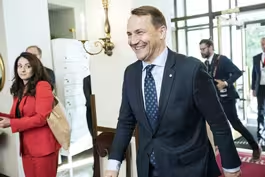
And its foreign minister, Radek Sikorski, is in Washington and joins me now.
Foreign Minister Sikorski, thanks very much.
Welcome back to the "News Hour."
I just laid out how NATO will support Ukraine.
(CROSSTALK) NICK SCHIFRIN: First of all, do you believe that NATO is supporting Ukraine enough?
RADOSLAW SIKORSKI, Polish Foreign Minister: Well, we have made a big effort, Europe and the United States together, about $300 billion so far, most of it from Europe.
So we are not free riders on this one.
The U.S. package has arrived at the battlefield.
Poland is an important hub.
Putin has threatened us, so we are now spending real money.
Poland has been spending 2 percent for 20 years.
Others are also doing that.
I believe 23 of the 32 members will now pass the threshold.
We are at 4 percent, going on 5.
But, yes, Ukraine desperately needs anti-aircraft defenses so that outrages like the one today should not happen in future and so that Putin understands that he can't win it.
NICK SCHIFRIN: But there is nothing binding in this document.
And, of course, there is ongoing European and even American resistance to offering Ukraine a concrete invitation to membership.
So, in fact, isn't much of this document reversible?
RADOSLAW SIKORSKI: Well, membership would mean that we would need to join the war against Russia.
And there is no appetite among Western publics for that.
But Ukraine is getting a lot.
And, remember, the Russian economy is suffering badly.
They are running out of their national reserve fund.
They are running out of Soviet-era tanks to refurbish.
Inflation is high.
Interest rates are very high.
In a year or two, Putin will be like Wilhelmine Germany.
He will run out of resources to continue.
NICK SCHIFRIN: Could the steps that NATO is taking this week be reversed by former President Trump if he became president again and oppose the steps that you're taking this week?
RADOSLAW SIKORSKI: Well, give credit where credit is due.
President Trump was right to call on NATO to spend more on some member states.
And I would even give him a pass on his inimitable style, because, when previous presidents said the same with traditional American politeness, it didn't work.
But we want to have the best possible relations with whoever is in charge.
NICK SCHIFRIN: You are a diplomat, of course, sir.
And with all due respect to your diplomatic answer, let me ask you about something that aides to former President Trump say they are proposing to him should he become president again, including going to Ukraine and threatening Kyiv with cutting off all U.S. weapons if it didn't go to the negotiating table, and then threatening Russia with flooding weapons to Ukraine if it didn't go to the negotiating table.
Is that a workable solution?
RADOSLAW SIKORSKI: Well, I like the second part more than the first part, because, remember, Russia can end this war in five minutes or in one day, as President Trump proposes it, but Ukraine can't, because it's just a victim resisting aggression.
So, yes, if they want to persuade Putin to give up by threatening him an escalation of support for Ukraine, that actually sounds to me like a good idea.
NICK SCHIFRIN: Another option, as floated by these aides, would be essentially creating two-tiers within NATO, and that Article 5 would only apply to countries paying more than 2 percent.
Is that a workable solution?
RADOSLAW SIKORSKI: Well, military alliances are not neighborhood security companies.
If you don't pay your bill, we take down your defenses.
You never know when you might need your allies.
These are -- this is an insurance policy for an emergency you cannot predict.
And allies are useful in all kinds of ways.
Allies should spend more, no question about it.
But to treat it this commercially would, I think, be a mistake.
NICK SCHIFRIN: Last week, you tweeted the following -- quote -- "Marcus Aurelius was a great emperor, but he screwed up his succession by passing the baton to his feckless son, Commodus, he from 'The Gladiator,' whose disastrous rule started Rome's decline.
It's important to manage one's ride into the sunset."
Are you saying that President Biden should drop out of the race?
RADOSLAW SIKORSKI: I'm saying that Marcus Aurelius screwed up his succession.
Look, we had a summit with President Biden in March, our president, our prime minister.
I was there.
An hour-and-a-half with President Biden was strategic focused and actually quite humorous.
But I'm not going to go into your internal politics.
NICK SCHIFRIN: There is, as you acknowledged, an enormous debate in this country about President Biden and his future.
Straight-ahead question here, is that debate overshadowing the summit here in Washington and your work, especially focused on Ukraine?
RADOSLAW SIKORSKI: Well, you are the most important country in NATO.
You account for a huge proportion of the defense expenditure.
So, of course, we follow American politics with attention and sometimes anxiety.
But we will determine -- we will work with whoever is president of the United States.
NICK SCHIFRIN: This week, Poland signed a security agreement with Ukraine that includes looking into the possibility of - - quote -- "intercepting in Ukraine's airspace missiles and UAVs fired in the direction of the territory of Poland."
Are you, a member of NATO, considering shooting down Russian missiles?
RADOSLAW SIKORSKI: Well, look, Russian missiles cross into Polish and therefore NATO airspace all the time.
I live in Western Poland, 500 kilometers away from the Ukrainian border, and yet a Russian missile landed 10 kilometers from my house.
Therefore, I think, legally, and also on commonsense ground, it would make sense to intercept them before they reach our airspace from inside our own airspace.
Those are the ideas that are doing the rounds, but we need to make decisions in the alliance.
NICK SCHIFRIN: If Polish interceptors, if NATO interceptors were used to interdict Russian UAVs or missiles over Ukraine's airspace, would that make those interceptors a legitimate target for Russian forces, and, therefore, does that risk escalation?
RADOSLAW SIKORSKI: No, Ukraine has been designated by the General Assembly of the United Nations as a victim of aggression.
We actually have a duty to help the victim defend herself.
Those UAVs and Russian missiles have no business being over Ukraine and murdering innocent people.
And when they come close to the NATO border, we have every right to defend ourselves too.
NICK SCHIFRIN: Polish Foreign Minister Radek Sikorski, thank you very much.
RADOSLAW SIKORSKI: Thank you.
AMNA NAWAZ: Former President Donald Trump has distanced himself from Project 2025, the handbook for a new conservative government written by several right-wing think tanks.
The presumptive Republican nominee said on TRUTH Social that he knows -- quote -- "nothing" about Project 2025 and has no idea who's behind it.
That comes as Democrats double down on their messaging, tying Trump directly to the playbook ahead of the November election.
Our White House correspondent, Laura Barron-Lopez, has been covering this and joins me now.
So, Laura, former President Trump, denies he knows anyone behind Project 2025.
Your reporting shows he's actually connected to some of the architects behind it.
What have you found?
LAURA BARRON-LOPEZ: That's right, Amna.
So, Project 2025, we're talking about this more-than-900-page blueprint that was crafted by Heritage Foundation in coordination with other right-wing think tanks for a future Donald Trump presidency.
And now, despite Donald Trump's denials that he knows who these people are, he is deeply connected to key authors of Project 2025, which include Paul Dans, Roger Severino, Ken Cuccinelli, Christopher Miller, and Russ Vought.
All of these people served in Trump's administration and are considered serious contenders for top positions in any second Trump term if he were to win office.
Also, Russ Vought and Ed Martin, who helped craft Project 2025, are authors also of the new Republican Party platform.
So they're deeply connected to the party apparatus, and as well as Stephen Miller.
He is someone who was a top adviser to President Trump when he was in the White House and still remains a top adviser to Trump.
And he's tried to distance himself as well from Project 2025, but the facts are, Amna, that his group, America First Legal, is a part of Project 2025's advisory board.
AMNA NAWAZ: And you have been reporting one of their biggest goals, this group's been a part of the White House biggest goals is to reshape the Justice Department?
Tell us about that.
LAURA BARRON-LOPEZ: That's right.
Project 2025 proposes placing the Justice Department squarely under Donald Trump's authority, doing away with any traditional independence that we usually see for the Justice Department and the attorney general.
They want Donald Trump to install a loyal attorney general, install loyal lawyers across the board, and Trump himself has repeatedly said that he wants to do this.
DONALD TRUMP, Former President of the United States (R) and Current U.S. Presidential Candidate: We will restore law and order in our country.
(CHEERING AND APPLAUSE) DONALD TRUMP: And I will direct a completely overhauled DOJ to investigate every radical out-of-control prosecutor in America for their illegal, racist and reverse enforcement of the law.
(CHEERING AND APPLAUSE) DONALD TRUMP: There is no law.
LAURA BARRON-LOPEZ: That, Amna, is a regular part of Donald Trump's stump speeches.
So it's not just Project 2025 proposing this.
It's also the former president himself.
And Russ Vought, again, that person, the -- who worked in Donald Trump's first administration, likely going to be into any second Donald Trump administration, has said that the Justice Department is not an independent agency.
He has said this publicly, and that if anyone were to try to say that they are independent in a second potential Trump term, that he would kick them out of the White House.
AMNA NAWAZ: So reshaping the Justice Department seems to be just one part of a larger plan to change the federal government, including gutting career civil servants.
What has your reporting found on that?
LAURA BARRON-LOPEZ: The Project 2025 blueprint proposes abolishing the Department of Education, transforming the FBI into a political task force, reinstituting what's known as Schedule F. That's an executive authority that would be instituted by Trump to grow the number of political appointees across the civil service.
And they also want to install roughly 20,000 loyal civil servants across agencies.
And they have been preparing for this.
Project 2025 leaders have called those loyalists -- quote -- "conservative warriors."
They have called them an army.
They have called -- of weaponized conservatives.
And they want to essentially make lawyers across all federal agencies, not just the Justice Department, any legal counsel, they want to make them loyal Trump -- loyal -- loyalists to Trump.
And I spoke to Don Moynihan.
He's a professor of public policy at Georgetown University, who said that changes like this would be radical to American government, the biggest changes that we have seen to the American bureaucracy since the civil service was created in the 1880s.
DONALD MOYNIHAN, Georgetown University: I do think this would add measurably to the risks of corruption in American government.
President Trump talks a lot about the deep state.
Again, that is very similar to what authoritarians in other countries have tended to do to justify taking more direct control over civil service systems.
So I think there is a dangerous pattern here, where it would not just reduce the quality of government.
It would also open the door for abuses of political power.
LAURA BARRON-LOPEZ: And to guard against this, Amna, we should note that President Joe Biden tried to institute protections for civil servants, protecting them from firing if Donald Trump were to win in November.
But, ultimately, a regulation like that could be undone by a Donald Trump presidency within the first year he takes office.
AMNA NAWAZ: Well, Laura, what about the necessary context here?
That is the recent Supreme Court decision deciding that President Trump, any president, has some immunity from criminal prosecution for official acts.
What does all that mean for how easy the policy plans in Project 2025 would be to implement?
LAURA BARRON-LOPEZ: It could potentially make it easier, Amna.
And constitutional scholars that I have spoken to have said that the decision, that Supreme Court decision, could strengthen the basis of Project 2025, which is known as the unitary executive theory, which essentially says that the president has total control over the executive branch, over all the federal agencies.
And the president of The Heritage Foundation, Kevin Roberts, praised that Supreme Court ruling, calling it vital, and said that it was part of a wider conservative reawakening.
KEVIN ROBERTS, President, Heritage Foundation: We are in the process of the second American revolution, which will remain bloodless, if the left allows it to be.
LAURA BARRON-LOPEZ: Professor Moynihan added, Amna, that ultimately the Supreme Court decision could help any future president justify getting rid of longstanding independence of the Justice Department or other agencies that are known to be independent, that it could allow them to justify totally doing away with that.
AMNA NAWAZ: That's our White House correspondent, Laura Barron-Lopez, with a look at what a second Trump administration could bring.
Laura, thank you.
LAURA BARRON-LOPEZ: Thank you.
AMNA NAWAZ: It's the latest craze among some preteens.
Ask many tweens what's at the top of their wish list, and there's a good chance the answer will be skin care products.
Special correspondent and Washington Post columnist Catherine Rampell has the story about the growth and concerns around this boom.
CATHERINE RAMPELL: One of Emma Scott's must-have skin care products is her glow recipe toner.
EMMA SCOTT, 10 Years Old: And if you smell it, it smells, like, really good.
CATHERINE RAMPELL: Oh, yes.
Sort of fruity?
EMMA SCOTT: Mm-hmm.
CATHERINE RAMPELL: The 10-year-old's preferred body butter, Sol de Janeiro.
EMMA SCOTT: This one is like a creamy consistency.
CATHERINE RAMPELL: In her skin care fridge.
EMMA SCOTT: I really like this Laneige sleeping mask.
CATHERINE RAMPELL: And for lip care, Summer Fridays' butter balm.
EMMA SCOTT: Because it's like a limited edition.
And I was like, oh, I really want this.
CATHERINE RAMPELL: Scott does a multistep skin care routine every morning and every evening.
EMMA SCOTT: In the morning, I will do a face wash, a toner, a moisturizer, and my ELF-tinted SPF.
CATHERINE RAMPELL: Why do you do it every day?
EMMA SCOTT: Because I feel like it's really hydrating for your skin and it feels good on my skin.
Normally, when I first wake up, I look like a really -- like a white ghost.
So, I like being a little bit tanner and glowier.
CATHERINE RAMPELL: Move over, Barbie.
Today's tweens are obsessed with expensive skin care, products usually marketed to a much older, wealthier clientele.
Households with tweens, aged 6 through 12, spent almost $2.5 billion facial skin care last year, an annual spending increase of 27 percent, more than double the average.
GIRL: I like that it's like kind of watery.
CATHERINE RAMPELL: This is Scott's skin care crew, a group of friends and fellow skin care enthusiasts who meet daily, usually online, to bond over their beauty regimes.
GIRL: I'm going to moisturize my hands.
CATHERINE RAMPELL: The girl's parents are still getting up to speed.
AMY SCOTT, Mother: I don't really use a whole lot of anything, so it's been very eye-opening for me.
CATHERINE RAMPELL: Amy Scott is Emma's mother.
AMY SCOTT: Sometimes, I get her leftovers, so I have started using a gel moisturizer that she has turned me on to.
CATHERINE RAMPELL: And you got her leftovers because she didn't like it?
AMY SCOTT: No, she was just sick of using it.
She always is looking for the newest thing.
GIRL: Get ready for the day.
CATHERINE RAMPELL: The newest thing, as seen on social media.
GIRL: First, I'm going to use these bronzer drops and then the oil.
Let's do it.
CATHERINE RAMPELL: YouTube and TikTok teem with so-called skinfluencer content.
GIRL: We're going to do a pump of that like this.
GIRL: And then I go in with a little bit of this (INAUDIBLE) moisturizer.
CATHERINE RAMPELL: There are get ready with me videos of step-by-step routines.
GIRL: I love that stuff.
It makes my skin feel so good after putting that stuff on.
CATHERINE RAMPELL: Unboxing videos and P.R.
hauls showcase the latest products...
GIRL: Glow recipe.
Look how this box opens.
Very unique.
CATHERINE RAMPELL: ... sent to influencers by brands for promotion.
This is the actual Plum Plump moisturizer.
Fabulous.
Thank you, Glow Recipe.
AMY SCOTT: She sees this person opening this product and it's like, oh, I have to try that.
It's very expensive.
So it's trying to say, let's talk about this.
Is it really worth it?
CATHERINE RAMPELL: The most popular place to shop for skin care, Sephora.
ALLIE ROSS, Influencer: First thing first, we need to see if they have the new Sol de Janeiro body cream.
EMMA SCOTT: There's this girl that I watch, Allie Ross.
And she goes to Sephora a lot.
ALLIE ROSS: Oh, my God.
You're kidding me.
EMMA SCOTT: And she will, like, buy all these products.
CATHERINE RAMPELL: The retailer is now notorious for packs of young shoppers or Sephora kids looking for viral skin care products.
Emma Scott goes at least once a week.
How much do you think Emma has spent this year?
AMY SCOTT: It's got to be hundreds.
GIRL: Do they have the pink one?
CATHERINE RAMPELL: We tagged along with the skin care crew on a recent visit as they browsed, tested, counted their money, and spent.
EMMA SCOTT: Thank you.
Amy Scott insists Emma use her own money or gift cards from her birthday and other holidays.
While this trend is certainly a boon for Sephora, others aren't totally sold.
DR. NAVA GREENFIELD, Schweiger Dermatology Group: We're seeing 10-, 11-, 12-year-old girls bringing a shopping bag of their 12-step routine that they're doing in the morning and their 10-step routine that they're doing at night.
CATHERINE RAMPELL: Nava Greenfield is a dermatologist in Manhattan.
DR. NAVA GREENFIELD: They might say, I want beautiful, flawless, perfect skin and I'm looking at them thinking, you already have that.
There are a few times in life where a skin is going to be more beautiful.
GIRL: Next up, my Glow recipe Firm Serum.
Got to keep those wrinkles away.
CATHERINE RAMPELL: Greenfield blames influencers for convincing tweens that they need lotions and potions containing anti-aging agents like retinol and other active ingredients that can be harmful to young skin.
GIRL: Ever since I told my mom's retinol and started using it, I swear I'm aging backwards.
I look so young.
DR. NAVA GREENFIELD: Just like adults will use Dr. Google to talk to me about their skin and about what they think is going on with their rash, adolescents do too.
CATHERINE RAMPELL: So, it's Dr. TikTok instead of Dr. Google.
DR. NAVA GREENFIELD: Exactly, yes.
GIRL: My friend's skin is gorgeous.
CATHERINE RAMPELL: Greenfield says it's not just young girls who think they need extensive skin care.
DR. NAVA GREENFIELD: I have adolescent boys coming in and asking about Botox.
CATHERINE RAMPELL: Really?
DR. NAVA GREENFIELD: Yes.
CATHERINE RAMPELL: What do you tell them?
DR. NAVA GREENFIELD: I tell them, you don't need Botox.
I'm very direct.
(LAUGHTER) DR. NAVA GREENFIELD: And I tell the girls too.
I say, you have perfect skin.
I can't help you.
SONIA RODRIGUES, Rutgers University: I think it's mostly just wanting to fit in and feeling connected to their friends and being a part of the new trend and craze.
CATHERINE RAMPELL: But psychotherapist Sonia Rodrigues says the high cost can be a stressor.
SONIA RODRIGUES: This is a huge issue because a lot of parents can't afford this, and the kids feel like, I can't keep up with my friends.
CATHERINE RAMPELL: Post-pandemic tweens are also hyper aware of how they look on camera.
SONIA RODRIGUES: A lot of kids were able to hide behind masks, and now there's no masks and there's also so much happening on their phones with their face front and center.
CATHERINE RAMPELL: Do you think that there's more focus on physical appearance today than was the case when you started out practicing?
SONIA RODRIGUES: Yes, absolutely.
I think now, with social media and the pressure that kids are constantly feeling with all of the products that they're seeing, how people are looking, the airbrushing, there's so much pressure on kids to look a certain way.
CATHERINE RAMPELL: Emma Scott says her primping routine is just a hobby.
EMMA SCOTT: Doing with my friends, it's really fun and I feel like it's really relaxing, and I can sit up here and, like, watch a movie and just have a face mask on to do all that fun stuff.
CATHERINE RAMPELL: Emma says she avoids ingredients that are bad for young skin.
Mom Amy keeps tabs on Emma and the rest of her crew.
AMY SCOTT: For all of them not to, like, compare themselves to these digital influencers, because a lot of them are very pretty, and, from my standpoint, always being involved and knowing that it's OK to say no.
CATHERINE RAMPELL: Amy makes sure her daughter carefully weighs each purchase.
AMY SCOTT: She will say, this is at Sephora, I want to go see what it is or I want to buy it.
Well, why would you want to buy it?
Because so-and-so has it.
Well, that's no reason to buy something.
CATHERINE RAMPELL: Dr. Greenfield admits there are some benefits to the skin care craze.
DR. NAVA GREENFIELD: It's wonderful from my perspective that people are thinking about their skin and people are taking the health of their skin very seriously, more so than we ever used to.
But it's important to strike a balance.
If their goal is to have healthy skin, well, then that's really just about a cleanser, moisturizer and sunscreen.
You really don't need anything more than that.
CATHERINE RAMPELL: Despite what you might hear from Dr. TikTok.
For the PBS "News Hour," I'm Catherine Rampell in Greensboro, North Carolina.
AMNA NAWAZ: The city of San Jose in California's Silicon Valley has made a pledge to go carbon-neutral by 2030.
To do this, leaders are enlisting help from an unlikely source, the arts sector, in a first-of-its-kind program in America.
Jeffrey Brown traveled to San Jose to see how artists could help a city meet its climate goals.
It's part of our ongoing coverage on the intersection of art and climate change and our series Canvas.
JEFFREY BROWN: It was the sixth annual San Jose Day.
Among the stalls of vendors and local artists lining the streets were city officials hoping to get the word out on a pressing issue the city is now confronting head on.
OMAR TORRES, San Jose, California, Councilman: We are tackling climate change here in our city of San Jose.
JEFFREY BROWN: And on the mind of Omar Torres, District 3 councilman, a perhaps unexpected connection between climate change and art.
OMAR TORRES: Who would have thought, right?
JEFFREY BROWN: You wouldn't have thought, climate policy and art?
OMAR TORRES: And it -- but it's an excellent idea and it's an excellent partnership and it's going to be a lasting movement.
JEFFREY BROWN: San Jose has set a goal to achieve citywide carbon neutrality six years from now, and it wants artists to help meet that deadline.
OMAR TORRES: I could tell you that when an artist posted on his social media or does a piece about climate change, I mean, it takes off.
And so we are creating a new generation of artists who care about climate change.
DANIELLE SIEMBIEDA, San Jose, California, Office of Economic Development and Cultural Affairs: Sustainability, environmental organization.
JEFFREY BROWN: The effort is led by Danielle Siembieda, an artist herself and senior arts manager for San Jose's Office of Economic Development and Cultural Affairs.
She noticed a missing component in the city's climate work, artists.
DANIELLE SIEMBIEDA: We're a part of the economic sector.
We contribute $300 million a year to the economy.
So if we can look at that economic impact, and we can think about how we can reduce how much energy that we're using, how much waste we're producing, how much water that we're using, then we will be part of that change.
We will create that shift.
JEFFREY BROWN: So she created the Climate Art Program, a three-part project that recruits artists and arts organizations in learning and demonstrating to others how to reduce their carbon footprint.
Artists like Rayos Magos are part of phase one, the Resilient Artist Cohort, a group of 15 artists who have learned and utilized ways they can reduce the carbon footprint in their work.
RAYOS MAGOS, Member, Resilient Artist Cohort: As an artist, I'm constantly working with materials, and so I think, for me, I'm always just aware of the amount of materials and usage and waste that I'm sort of consuming and the carbon footprint that I'm making.
It would just shine some more light on how we can lessen our carbon footprint and work together for a cleaner, green environment, especially here in San Jose.
JEFFREY BROWN: Magos and other artists will attend four workshops to measure their own carbon impact and learn techniques for reusing materials, sourcing products, and other green practices.
RAYOS MAGOS: We really want to take that information and share it, apply it maybe to the workshops they teach as well, that I can just sort of see the seeds that will be planted and the benefits of that and sort of sharing that information with others.
All that I'm seeing here, you had to redo?
You had to kind of remake the grounds?
JULIE SCOTT, Executive Director, Egyptian Museum: Yes.
Yes, it looked very different before we began our native plants project, and now just everything is so lush and the fragrance is so beautiful.
JEFFREY BROWN: This peaceful garden full of native plants is home to the Egyptian Museum in San Jose, created by the Rosicrucians, a philosophical order that dates back to 1614 and studies the laws of nature in order to live in harmony with them.
Julie Scott is the museum's executive director.
JULIE SCOTT: It just really transformed everything, in addition to needing very little water.
JEFFREY BROWN: So, there -- and, therefore, saving a lot of money?
JULIE SCOTT: And, therefore, saving a lot of money.
JEFFREY BROWN: Yes.
JULIE SCOTT: Yes, I count the $65,000 per year every year.
JEFFREY BROWN: Scott says the museum started down the carbon-neutral path beginning in 2017.
JULIE SCOTT: The Rosicrucian teachings encourage Rosicrucians to respect nature and to preserve it for future generations.
So we wanted to put our money where our mouth was.
We know the importance of sustainability.
So we looked at our energy use in what we could do for the environment here at Rosicrucian Park.
And we set our sights on achieving net zero carbon status.
JEFFREY BROWN: The museum replaced expensive grass with local plants, began using motion detector lights in the galleries, installed new windows, insulation, water tanks for the gardens, and then topped it all off with solar panels on the roof.
Amid rising utility costs, museum officials say they have already seen a return on investment, paying for the changes in less than half the estimated time, the next step, preparing a new space they hope to make LEED Platinum, the highest rating in green building.
The museum is one of some 20 buildings in the Carbon Neutral Creative Network, a group of San Jose arts organizations.
JULIE SCOTT: Climate Art Program in San Jose is new, and we were thrilled to be asked to participate in that, to show other museums and other arts groups how simple it can be.
We can't put this off any longer.
This is urgent, not just for us, but for future generations.
JEFFREY BROWN: Later this summer, Danielle Siembieda and her team will share results from the Resilient Artist Cohort and the Creative Network in an online resource guidebook.
DANIELLE SIEMBIEDA: We want to show this as an example, not just for San Jose, but we want to be able to show this as an example for the whole country, for the state of California.
So we are leading in this because we think artists are already our organic community leaders.
And this is helping us achieve our goals by adopting those particular values that help us lead to the - - being carbon-neutral by 2030.
JEFFREY BROWN: For now, a city and its artists setting a path for future change.
For the PBS "News Hour," I'm Jeffrey Brown in San Jose, California.
GEOFF BENNETT: And that is the "News Hour" for tonight.
I'm Geoff Bennett.
AMNA NAWAZ: And I'm Amna Nawaz.
On behalf of the entire "News Hour" team, thank you for joining us.

Artists use talents to help San Jose reduce carbon footprint
Video has Closed Captions
How artists are using their talents to help San Jose reduce its carbon footprint (6m 38s)
Beryl leaves millions without power amid scorching heat
Video has Closed Captions
Hurricane Beryl leaves millions in Texas without power amid scorching heat (2m 31s)
Democrats navigate divisions around supporting Biden
Video has Closed Captions
Democrats navigate divisions around supporting Biden or calling for him to step aside (7m 53s)
Poland's foreign minister on Ukraine's path to joining NATO
Video has Closed Captions
Poland's foreign minister on defending Ukraine and its path to NATO membership (8m 44s)

The Project 2025 plan and Trump's links to its authors
Video has Closed Captions
A look at the Project 2025 plan to reshape government and Trump's links to its authors (6m 48s)
Rep. Crockett defends Biden amid Democratic concerns
Video has Closed Captions
'He has a record to run on': Rep. Crockett defends Biden amid Democratic concerns (6m 34s)
What's behind the tween skincare obsession
Video has Closed Captions
Tween skincare obsession fuels industry boom and raises concerns (7m 59s)
Providing Support for PBS.org
Learn Moreabout PBS online sponsorship New Episode
- News and Public Affairs

Today's top journalists discuss Washington's current political events and public affairs.
 New Episode
- News and Public Affairs

FRONTLINE is investigative journalism that questions, explains and changes our world.
 New Episode
 New Episode
 New Episode
 New Episode
 New Episode


 New Episode
 New Episode
 New Episode
Support for PBS provided by:
Major corporate funding for the PBS News Hour is provided by BDO, BNSF, Consumer Cellular, American Cruise Lines, and Raymond James. Funding for the PBS NewsHour Weekend is provided by...