
June 27, 2024 - PBS NewsHour full episode
6/27/2024 | 57m 46sVideo has Closed Captions
June 27, 2024 - PBS NewsHour full episode
June 27, 2024 - PBS NewsHour full episode
Problems playing video? | Closed Captioning Feedback
Problems playing video? | Closed Captioning Feedback
Major corporate funding for the PBS News Hour is provided by BDO, BNSF, Consumer Cellular, American Cruise Lines, and Raymond James. Funding for the PBS NewsHour Weekend is provided by...
June 27, 2024 - PBS NewsHour full episode
6/27/2024 | 57m 46sVideo has Closed Captions
June 27, 2024 - PBS NewsHour full episode
Problems playing video? | Closed Captioning Feedback
Where to Watch PBS News Hour
PBS News Hour is available to stream on pbs.org and the PBS app.
Providing Support for PBS.org
Learn Moreabout PBS online sponsorshipGEOFF BENNETT: Good evening.
I'm Geoff Bennett.
AMNA NAWAZ: And I'm Amna Nawaz.
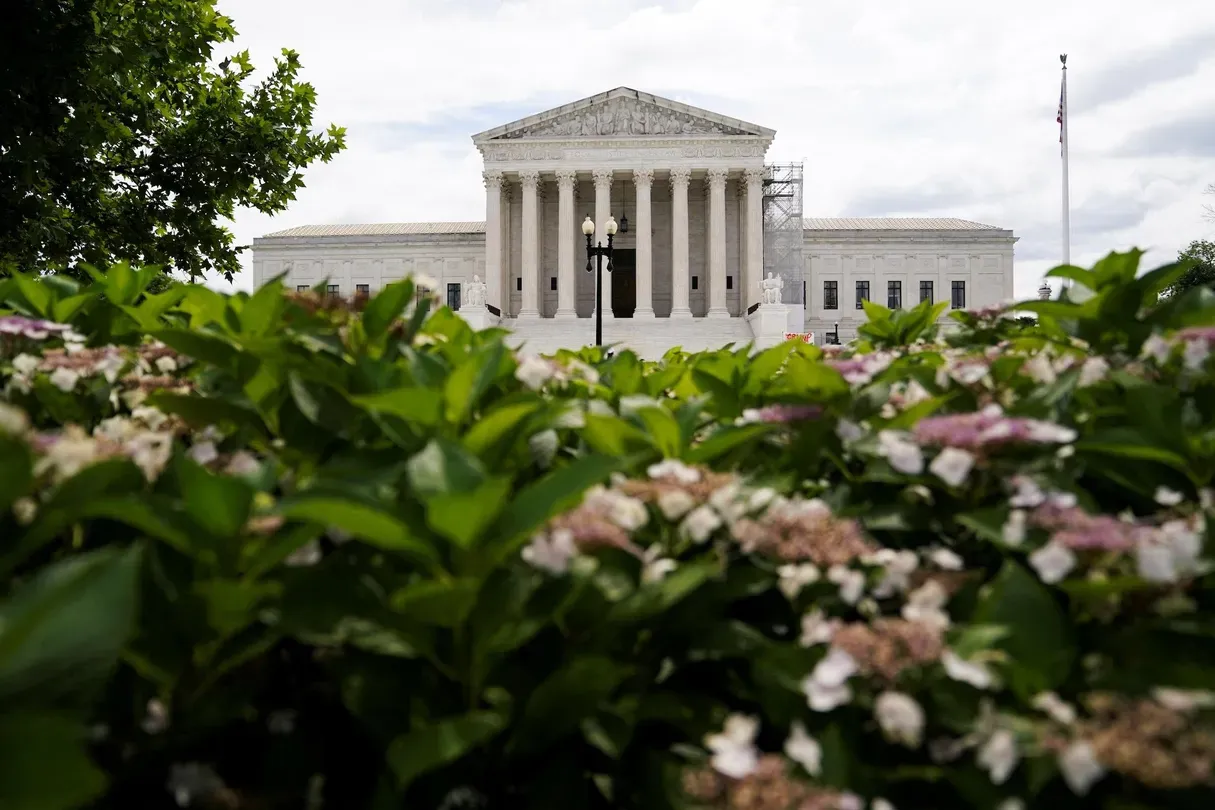
On the "News Hour" tonight: The Supreme Court issues major decisions on abortion, the environment and Purdue Pharma's opioid settlement.
GEOFF BENNETT: Our panel of experts previews tonight's CNN presidential debate.
AMNA NAWAZ: And saltwater from rising sea levels in the Chesapeake Bay disrupts the livelihood of farmers in coastal Maryland.
KATE TULLY, University of Maryland: When we have this concept of climate change, we kind of think of it as something that's going to happen.
And what we were saying is, it is happening.
(BREAK) GEOFF BENNETT: Welcome to the "News Hour."
The U.S. Supreme Court handed down rulings in a number of high-profile cases this morning.
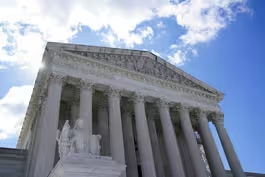
AMNA NAWAZ: The justices ripped up a controversial bankruptcy deal, one that would have provided billions of dollars to states devastated by the opioid epidemic and shielded the family accused of pushing painkillers in search of profits.
The justices also reinstated access to abortions for those facing medical emergencies in Idaho for now, and the court temporarily blocked a Biden environmental policy regulating air pollution from taking effect.
GEOFF BENNETT: To help unpack the details and significance of the rulings, we're joined first by John Yang, anchor of "PBS News Weekend," who also covers the Supreme Court for us.
It's good to see you again, John.
So let's start with this abortion case, because the Supreme Court, as you well know, formally dismissed an appeal over Idaho's strict abortion ban.
How did that ruling track with the case document that was mistakenly uploaded to the Supreme Court Web site yesterday?
JOHN YANG: It was essentially what we got the sneak preview of yesterday, Geoff.
The six -- 6-3 majority, rather, said this case isn't ready to decide yet, so they're going to allow emergency care abortions in Idaho while the Idaho law is challenged.
And to get that challenged, they're sending it back to the lower courts.
Now, this also means that there are a lot of unanswered questions and there's no guidance for lower courts about how to deal with similar laws around the country.
In Texas, for instance, an almost identical law is gone -- has gone into effect with the blessing of the Fifth Circuit Court of Appeals over the Biden administration's objections.
Now, here is Mary Ziegler.
She's a law professor at U.C.
Davis and she's written extensively on abortion.
MARY ZIEGLER, University of California, Davis: The impact in the short term is going to be pretty limited.
The court's ruling will have the effect of reinstating the injunction in the district court that allowed emergency abortions to continue in Idaho.
It doesn't really have any impact on any of the other states with narrow abortion bans or on any of the other litigation around these questions that's been proceeding in other courts.
So, for the most part, this is deferring a decision and kicking the cat down the road, although it will have immediate impacts in Idaho.
GEOFF BENNETT: So, what were the major differences between how the liberal justices and the conservative justices approached this case?
JOHN YANG: It was very interesting, because, essentially, this is an administrative order, but there were four written opinions.
The conservatives, the three most conservative justices, Justice Alito, who, of course, wrote the opinion overturning Roe two years ago, Justice Thomas and Justice Gorsuch, dissented.
They said that they could have decided the case now and they would have upheld the Idaho law.
The three liberal justices, Sonia Sotomayor, Elena Kagan, and Ketanji Brown Jackson, all sided with the Biden administration and indicated that they would overturn the Idaho law.
And, in fact, Justice Jackson said the court shouldn't have waited, the court should have decided this now.
She wrote an opinion.
And to show how strongly she felt, she took the unusual step of reading it from the bench this morning.
She wrote, in part: "This court had a chance to bring clarity and certainty to a tragic situation, and we have squandered it.
And for as long as we refuse to declare what the law requires, pregnant patients in Idaho, Texas, and elsewhere will be paying the price."
As for the other justices, Justice Barrett wrote an opinion in which she agreed that it should go back, that it wasn't ready, but she didn't tip her hand on the larger question.
And Chief John Roberts and Justice Kavanaugh didn't write at all, so we have no idea where they are.
GEOFF BENNETT: OK. Well, as Amna mentioned, the court also blocked an EPA regulation meant to protect states downwind from polluting neighbors.
Tell us about that ruling.
JOHN YANG: This is a plan called -- that the EPA calls Good Neighbors.
They wanted to work with the states to limit air pollution that drifts across state lines.
This was challenged by the state of Ohio and some corporate interests.
Today, in a 5-2 -- 5-4 decision, Justice Neil Gorsuch wrote that the challenges were unlikely -- I'm sorry -- the challengers were likely to prevail in the end because the EPA had not fully justified what they were doing.
GEOFF BENNETT: The EPA has lost a handful of cases before the court in recent years.
Is there a theme that connects these cases?
JOHN YANG: Oh, absolutely.
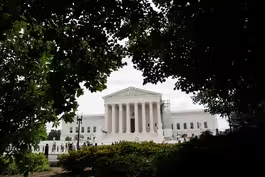
There is a -- this conservative majority in this court has really -- it's been consistent in trying to rein in what they call the administrative state.
They say -- they have said in case after case, not only in environmental law, but in other regulatory agencies, saying that the regulators can't do anything unless they're specifically authorized to do it by law.
Here's Coral Davenport, who covers environmental policy for The New York Times.
CORAL DAVENPORT, The New York Times: The broader theme of this is the court kind of really acting consistently in this very preliminary fashion to kind of shut down regulations before they even get on the books, before they're even hitting the American economy.
And that's a really striking new trend from the court.
We're really seeing it.
In particular, this is a court that doesn't like regulations, that doesn't like the administrative state, but the Environmental Protection Agency, environmental rules, in particular, are really kind of being hamstrung before they even get out the door.
JOHN YANG: And, in fact, today, the state -- the court took another swipe at a regulatory agency.
They said the SEC's use of internal panels, of administrative judges, to decide or to judge civil claims about securities fraud were unconstitutional because they violated the Seventh Amendment right to a jury trial.
GEOFF BENNETT: And lastly, John, there was this major ruling where the justices rejected this bankruptcy agreement that would have protected the personal finances of the family behind Purdue Pharma, the maker of OxyContin.
And there were a lot of states that were depending and they were expecting to get some of that money.
Why send this back to the negotiating table?
JOHN YANG: Well, the major issue here was the fact that this agreement, or what they originally agreed to, painstakingly negotiated over a series of months, protected the Sackler filing -- family, said they could not have -- that shielded them from civil lawsuits against them.
That made a lot of the families angry, but also some of the families wanted this to go forward, so they would get the money from this agreement, this settlement.
And also the states wanted to get the money from the settlement to fight opioid addiction.
But the -- there was another 5-4 decision, and Justice Neil Gorsuch said there was nothing in the bankruptcy law that allowed this, because the Sacklers weren't filing for bankruptcy themselves.
They were a third party, and you can't do that, according to how Justice Gorsuch interpreted the bankruptcy law.
GEOFF BENNETT: John Yang, thank you so much for walking us through all this.
We appreciate it.
JOHN YANG: Thanks.
GEOFF BENNETT: Amna.
AMNA NAWAZ: Thank you, Geoff.
Well, the decision to reject the opioid settlement is a major blow to states, to local governments, individuals, and tribes, all expecting more than $6 billion.
For more on the court's decision, we are joined now by Brian Mann, who covers this as NPR's national addiction correspondent.
Brian, it's worth underscoring here what you have reported on for a long time, that more than 300,000 Americans have died from opioid overdoses since the year 2000.
Just briefly remind us about the roles played by Purdue Pharma and the Sackler family in the making of that crisis.
BRIAN MANN, National Addiction Correspondent, National Public Radio: Yes, so when Purdue Pharma introduced OxyContin under the leadership of members of the Sackler family, they pushed hard and marketed this medication as lower-risk, something that more doctors, more dentists, more people across the medical industry could prescribe almost casually.
And it turns out OxyContin was highly addictive.
It opened the floodgate to this addiction and overdose death crisis that we're still in the middle of now.
We're seeing 100,000 opioid and drug deaths every year in the United States.
And a lot of public health experts say the opening gate of that was Purdue Pharma marketing of OxyContin.
AMNA NAWAZ: So the tribes, the states, the families who all wanted to see this deal go through, now it is not.
What are you hearing from them in the way of a reaction?
BRIAN MANN: There's a really complicated, mixed reaction out there.
A lot of these people say, yes, they want members of the Sackler family, who deny any wrongdoing, held accountable for their role in the opioid crisis.
But, at the same time, the family was offering this $6 billion chunk of cash out there.
(INAUDIBLE) AMNA NAWAZ: That's Brian Mann.
I apologize for the interruption.
I think we're having some problems with your connection.
Let me see if we can get a moment to sync back up here.
And I will take that time to ask you on this idea that the Sackler family is no longer shielded from litigation as part of this settlement that's not going forward now.
Does that mean we should expect to see lawsuits against the family in the weeks or months ahead?
BRIAN MANN: (INAUDIBLE) AMNA NAWAZ: Oh, I apologize to our viewers at home.
Brian, I'm so sorry.
We seem to have lost your audio.
We thank you so much for joining us tonight.
That's Brian Mann, NPR's national addiction correspondent.
Thank you.
In the day's other headlines: The National Transportation Safety Board sanctioned Boeing today after an executive disclosed nonpublic information in a media briefing.
That information was about the agency's probe into an Alaska Airlines door plug blowout.
The executive also speculated about its cause.
The NTSB will now revoke Boeing's access to investigative information and require Boeing to appear at an investigative hearing in August.
In the Middle East, around 20 critically ill children were cleared to leave Gaza today, along with dozens of their companions in what Palestinian officials say was the first medical evacuation since the Rafah border was shut down last month.
Among those evacuated, "News Hour" has learned, was 3-year-old Julia Abu-Zaiter, who suffers from a rare neurological disorder and whose story we brought you last month.
Dozens of parents, meanwhile, bid tearful goodbyes to their children outside Gaza's Nasser Hospital, among them, Kamela Abu Kwaik, whose 5-year-old son, Fayez, has cancer.
KAMELA ABU KWAIK, Mother of Child Evacuee (through translator): Tumors in his body have spread, and we don't know what the reason is.
How am I going to leave him?
He's only 5 years old.
I don't even know where he's going to, to which hospital.
We don't know.
Just get on the bus, and that's it.
It's all unknown.
AMNA NAWAZ: Meanwhile, Israel carried out another round of airstrikes in Gaza City.
Palestinian authorities say at least seven people were killed.
In Bolivia, more than a dozen military officers were arrested today after a failed coup attempt and could face up to 30 years in prison.
Army Chief Juan Jose Zuniga was taken into custody and removed from his post just hours after he led troops in storming the presidential palace.
In La Paz, an uneasy calm today, as security forces patrolled the streets, and supporters of President Luis Arce condemned the coup attempt.
ALICIA CHURA, La Paz, Bolivia, Resident (through translator): These soldiers who have come here and who want to kill us, who want to repress us, we're not afraid.
We will not allow it.
We are totally united.
Yesterday has strengthened us.
The entire Bolivian people are more united than ever.
AMNA NAWAZ: The coup attempt comes as Bolivia's 12 million people grapple with an economic slump and amid infighting within the president's Movement for Socialism Party.
International experts have provided new and grim details of the famine in war-torn Sudan.
According to Integrated Food Security Phase Classification, or IPC, some 755,000 people will face famine in the coming months; 8.5 million people are already experiencing extreme food shortages.
The World Food Program has called Sudan's hunger crisis the worst in the world.
It comes after 14 months of relentless fighting between rival generals.
European Union leaders signed security agreements with Ukraine today during a two-day summit in Brussels.
That extends the 27-nation- bloc's military and financial aid commitment to Kyiv that began after Russia's February 2022 invasion.
Ukrainian President Volodymyr Zelenskyy thanked the E.U., but stressed that time was of the essence.
VOLODYMYR ZELENSKYY, Ukrainian President: And, of course, the urgent things.
Air defense, that is one, and, of course, all the packages, thanks to all the partners, what we had, signed it or accepted, but we need them urgently on the battlefield.
AMNA NAWAZ: Zelenskyy also signed bilateral security agreements with Lithuania and Estonia today.
That follows a decade-long pact signed with the U.S. earlier this month.
Oklahoma's state superintendent is mandating that public schools teach the Bible in class.
It's the latest conservative push to introduce religion into public education.
Last week, Louisiana became the first state to require that the Ten Commandments be displayed in public school classrooms.
In making his announcement, Ryan Walters said -- quote -- "The Bible is a necessary historical document to teach our kids about the history of this country" -- end quote.
The Justice Department announced charges today against nearly 200 people in a nationwide crackdown on health care fraud schemes.
Doctors, nurse practitioners, and others are accused of filing false claims worth more than $2.7 billion.
The alleged scams include wholesalers distributing mislabeled HIV drugs from black market sources, facilities grossly overcharging terminally ill Medicare patients, and the unlawful distribution of millions of Adderall pills that weren't medically necessary.
In announcing the charges, Attorney General Merrick Garland said such crimes deserve punishment.
MERRICK GARLAND, U.S. Attorney General: I want to be clear.
It does not matter if you are a trafficker in a drug cartel or a corporate executive or medical professional employed by a health care company.
If you profit from the unlawful distribution of controlled substances, you will be held accountable.
AMNA NAWAZ: As part of the crackdown, officials seized over $230 million in assets, including cash, luxury cars and gold.
And stocks inched higher on Wall Street today, as investors wait for tomorrow's latest reading on inflation.
The Dow Jones barely budged, adding just 36 points.
The Nasdaq tacked on more than 50 points and the S&P 500 ended virtually unchanged.
Still to come on the "News Hour": a new study reveals infant mortality in Texas spiked after the state's restrictive abortion ban went into place; and as Pride Month continues, Detroit carves out a new international space for queer art.
GEOFF BENNETT: It is the biggest night of the 2024 presidential campaign so far.
President Joe Biden and former President Donald Trump will square off in Atlanta for their first debate of the year.
We have got a full table here in the studio - - hello to everybody -- for reporting on how the candidates are preparing and analysis of what's at stake.
Laura Barron-Lopez covers the Biden campaign and Lisa Desjardins covers the Trump campaign for us.
AMNA NAWAZ: And, of course, our panel of political analysts, Amy Walter of The Cook Political Report, Democratic strategist Guy Cecil, and Republican strategist Kevin Madden.
GEOFF BENNETT: But let's start with you first, Lisa and Laura.
Laura, how has President Biden been preparing for this debate tonight?
What is his campaign telling you?
LAURA BARRON-LOPEZ: President Biden has been at Camp David for most of the week, preparing in a very traditional manner.
He has a lot of his close aides, senior aides, around him.
They have held mock debates.
Some of them have played Donald Trump.
And he has been trying -- they have been trying to prepare him for whatever version of Donald Trump may show up at the debate, whether it's a calm one or a more aggressive one.
They really feel, the campaign does, is that this is a big moment for the president and that they will get a larger audience than they typically would.
The president really wants to strike a strong contrast with Donald Trump and really prove the point that, unlike in 2020, when they didn't pick Donald Trump that time, there's even more reason to.
Namely, he's going to focus on the January 6 insurrection and Donald Trump's efforts to overturn the 2020 election.
And he really wants to get across to voters that January 6 was a seismic event and that it was something that left a collective scar on the country and that it's something that they should reject Donald Trump over.
GEOFF BENNETT: And, Lisa, how does the Trump approach compare to the Biden approach to tonight's event?
LISA DESJARDINS: The debate hasn't started yet, and already we have a stark contrast.
The Trump campaign says he did not do any traditional preparation, there were not mock debates.
GEOFF BENNETT: That's what they say.
LISA DESJARDINS: That's what they say.
It is opaque, however.
We're not exactly clear what he's done.
Trump himself has said his preparation is his rallies, talk radio, interviews like that.
Really isn't clear.
We do know they are taking this seriously.
They're not blowing this off.
There is also an issue that they know he has to contend with, that he did not do well in the first debate against Biden in 2020.
He interrupted Biden more than 130 times.
If you talk to Trump campaigners and you also talk to his allies, they like that among the rules tonight is that his mic will be cut off when Biden is speaking.
They think that helps Trump, even if he doesn't like it, because they want the calm Trump that Laura was talking about.
They think that will help him more with voters.
We expect him to talk about issues, inflation, immigration.
And also one thing they're doing is, they're launching some ads attacking Biden.
This is one about issues.
NARRATOR: Are you financially better off since he became president?
Are you and your family safer since he became president?
Is our country more secure since he became president?
After four years of failure under Joe Biden, it's time to make America prosperous and strong again.
LISA DESJARDINS: I'm told that's playing in some swing states and in D.C. One other thing.
The Trump campaign is trying to set expectations.
As much as they try to say that Joe Biden is someone who can't actually be capable of being president, they say he's a great debater.
So, they don't -- they want to set that expectation.
And they are already attacking the moderators, setting up a possible, if it doesn't do well, he's going to blame it on them.
GEOFF BENNETT: So the Trump campaign is focused on immigration and crime.
Laura, what is the Biden campaign focused on in terms of policy?
LAURA BARRON-LOPEZ: Abortion is going to be a big one for President Biden.
And the campaign launched a number of ads this week marking the anniversary of the Dobbs decision, including one today that is going to run during the debate.
It features Dr. Lauren Miller, who is a high-risk pregnancy physician.
And she left Idaho because of their near-total abortion ban.
LAUREN MILLER, Forced to Flee Texas to Get Emergency Abortion Care: These laws are truly barbaric.
They are putting us back decades, if not centuries.
Donald Trump did this.
He put women's lives in danger.
This election is the most important election of my generation and my daughter's generation.
LAURA BARRON-LOPEZ: President Biden's campaign is going to be featuring a lot of voices like that, including some women who had to travel out of their state to get abortions, ones who felt as though they really almost died because they had trouble getting abortions since the fall of Roe.
And then, also, President Biden is expected to try to get out ahead of Donald Trump and counter his attacks that he may have on the economy, specifically pointing to leading economists, including some 16 Nobel laureates this week who had a warning about Donald Trump's second term.
They said that they believe that a second Trump term would have a negative impact on the U.S.' economic standing in the world, as well as a negative impact on the domestic economy.
And so President Biden is essentially going to warn that a second Trump term would actually increase inflation.
And then, of course, on immigration, he is going to try to beat back some of Donald Trump's attacks and really remind voters about the family separation policy under Trump's administration and point out the recent actions that he has taken, specifically, the crackdown on asylum seekers at the border, as well as his relief to undocumented spouses of U.S. citizens.
GEOFF BENNETT: You both have been speaking to voters across the country.
Lisa, what's your sense of whether or not people will tune in tonight and whether it really matters in terms of how they're going to cast their vote?
There has never been a debate this early in a presidential election cycle.
LISA DESJARDINS: Right.
Americans are planning to watch.
They are not happy about this election, but they're taking it very seriously.
We know this from polling about the planning to watch.
We also know this from talking to voters.
Laura and I have, dozens of voters over the past couple of weeks that we have been talking to as part of this project to contact discontented voters who really aren't comfortable with either candidate.
And when we talk to them, we wanted to pull a couple of sound bites from interviews we have been doing.
This is from one Republican and one Democrat about what they're wanting - - what they want to watch for tonight.
JESS, Utah Biden Voter: I want him to come across as the powerful leader that he is.
And I want him to overcome this feebleness narrative.
You look back at his State of the Union address and how moving that was, and I hope that he can tap into that again and move people to be excited about their government again, instead of annoyed or exhausted.
I think I have watched every presidential debate up until this point.
I'm not learning anything new about either of the candidates.
They have long since told us exactly who they are.
ZACH, Pennsylvania Undecided Voter We get like debate parties together and our families get together and we actually watch that.
And, like, this is the first year where I'm just not as excited as I would have been in the past.
For Trump, what I'm looking for is probably going to be just like a command of the issues.
Can he offer the specific policy proposals to say, OK, I see you have a command of this now?
If I see Biden be successful in standing up to Trump, and he can show me that he has the energy to go out there and fight, that might make a difference.
LISA DESJARDINS: Zach is exactly the kind of voter that Trump needs, someone who's not so sure.
No one thinks that this debate will determine the winner, but it could tell a pertinent question for people.
Which of these two men is going to be more stable in the future?
One other note for this potentially very weird debate.
Moderators are not doing fact-checking.
So folks who want to watch tonight, now is a good time to go online.
There are a lot of stories about things that we expect to come up, things that we know have been distorted in the past, and facts that are good to arm yourself with now as -- before the debate begins.
GEOFF BENNETT: Lisa Desjardins, Laura Barron-Lopez, our thanks to you both -- Amna.
AMNA NAWAZ: All right, let's turn now to our panel of analysts.
Guy and Kevin, I'm going to ask you to jump in here from your perspectives, because, as Lisa referenced, our poll has shown the majority of registered voters are unsatisfied with these two candidates, right?
And it's across both parties, 51 percent of Democrats, 42 percent of Republicans, 70 percent of independents.
Kevin, how much of tonight is about the candidates calming those concerns just within their own parties?
KEVIN MADDEN, Republican Strategist: Well, look, I think you probably have about 95 percent of the audience tonight is going to be tuning in with a rooting interest.
Like, even if they're not happy with the candidates and they wish somebody else was running, they're probably more inclined to already vote for -- if they already are leaning Republican or leaning Democrat.
And so this debate has more of an opportunity for that 4 to 5 percent that hasn't not yet made up their mind.
And while a lot of the candidates are going to be trying to juice their base and remind that -- as one voter said, like, remind everybody that they're the fighter and that they're the candidate that they need to get out for, we still have those voters that have not made up their mind.
And that is the issue sets that those voters care about.
These candidates now have an opportunity to talk directly to those voters about those issues.
For Trump, it's voters -- motivating these voters on immigration and inflation, things like the economic sentiments that they have right now, the anxiety that they have about the economy.
He has to speak very directly to those voters on those concerns.
And as we heard earlier, for Biden, I think a lot of this is reminding voters about the January 6 Donald Trump and the chaos that he brings and raising the stakes of the election, so that not only do his base voters get out, but those swing voters in suburban areas around this country take a second thought on whether or not they really want to support Trump.
And they can be reminded that Joe Biden is the candidate that has always put himself forward as the candidate of stability, somebody who can bring people together in the country.
And then, lastly, I think the issue of abortion.
This is an issue where Joe Biden feels he can draw the hardest contrast.
And it's also an issue where, right now, the Republicans are in disarray on this issue legislatively, with trying to find a cohesive message.
And I think drawing that contrast.
And some of these swing voters in the state where a lot of these debates about abortion are had against the backdrop of some -- what many voters would see as extreme policies, that's his best chance to really motivate those voters to get out on Election Day for him.
So this is a -- one of those moments where everything in the political world stops.
AMNA NAWAZ: Yes.
KEVIN MADDEN: And for one moment, one night, 90 minutes, you have the concentrated attention of these swing voters.
AMNA NAWAZ: Guy, how do you look at it?
What does President Biden have to do tonight?
GUY CECIL, Democratic Strategist: Yes, well, first of all, the calm Donald Trump may RSVP to the debate, but I think we all know he's probably not going to stay around very long.
(LAUGHTER) GUY CECIL: Then the other Donald Trump will show up.
But I think it's important for Joe Biden not to take the bait.
Joe Biden's job is to do two things, one, talk directly to the American people about what he's done as president, and, two, remind them of what Donald Trump has done as president.
We're in a unique situation.
We have two former -- we have a current president and a former president running against each other.
And I think it's Joe Biden's job to make sure they remind him, what was Donald Trump like as president of the United States?
And, more importantly, what will he do again?
So you will see them focus on the economy.
You will see them focus on abortion.
You will also see them focus on democracy and I think try to draw a very sharp contrast between what their two visions of American democracy looks like going forward.
Trump's job is really just to do one thing, to try to distract Joe Biden.
He may not be able to do it with a mic off, but he can certainly try to do it when the mic is on.
And so I think you will see a lot of the same debate performance that you saw from him in that first debate last time they both ran, which is attack, attack the family.
I think you will see a lot of attacks on the family.
I think you will see a lot of attacks on immigration issues.
And I think it's important that Joe Biden responds.
Remember, it was Donald Trump that killed the most recent immigration bill that was on the House floor, not Joe Biden, and so I think continuing to draw that contrast.
Finally, I think we all know it's important for Joe Biden to be strong in his presentation.
I mean, frankly, the two voters you interviewed could replace the two of us in terms of their debate analysis tonight.
(LAUGHTER) GUY CECIL: Because I think they really nailed what most Americans are going to be looking for.
AMNA NAWAZ: When you say strong, you mean in terms of presentation...
GUY CECIL: Yes, I think... AMNA NAWAZ: ... overcoming that feebleness narrative, as the voter said.
GUY CECIL: We saw the response in the State of the Union, right... AMNA NAWAZ: Yes.
GUY CECIL: ... when he was focused, he was talking to the American people.
He also, frankly, had the MAGA Republicans in the House to play off of... AMNA NAWAZ: Yes.
GUY CECIL: ... and their response to him.
He will have that again in Donald Trump.
In many ways, Trump is the perfect foil for Joe Biden's sort of steady approach to governing and politics.
AMNA NAWAZ: Amy, tell us more about the people who are tuning in.
We know there's a lot of interest.
AMY WALTER, The Cook Political Report: Yes.
AMNA NAWAZ: We know folks are unsatisfied with the candidates.
But who are they speaking to?
Are there people out there whose minds can be changed by tonight?
AMY WALTER: I don't know.
I think the key for this debate, especially if you're Biden -- because he is starting off behind in this race, according to where we are in the polling.
So he needs to change the trajectory of this race from one that is only about Joe Biden and what he's done for the last four years, and specifically where he has fallen short on inflation and on immigration, and put the focus onto this choice.
Make it less of a referendum, more of a choice between these two candidates, everything that Kevin and guy were just discussing about, the ways in which Donald Trump's personality can overwhelm the stage and remind people who had voted for Biden before why they voted for him.
To me, the group of people that are going to be the most important for this debate -- we're only in June -- are the people who voted for Joe Biden in 2020, but are on the fence about him right now.
Those are the folks who Joe Biden should be able to get back into his camp.
We know in polling that we have done, they make up about one in five voters right now in the swing state, so it's a not-insignificant group of people.
But they are more interested in hearing about the economy and also immigration.
So, while abortion, I think will be an issue and is something that President Biden has going for him, these are voters -- the reason I think they're sitting in undecided right now, they're not sticking with Biden is that they are frustrated with the cost of things.
And they need to hear from the president how he's going to make things better.
And Trump needs to do the same thing.
Remember, we -- this is the first time.
Have we ever had a candidate who was the challenger who's come into a debate without having any debate?
He didn't have any debates in the primary.
So, for many voters, they -- sure, they remember what he -- they may remember what he did back when he was president.
But he hasn't had to set out any of his policies, answer questions about what he was going to do in a new term.
AMNA NAWAZ: And to see them side by side for the first time.
AMY WALTER: That's right.
AMNA NAWAZ: Voters get to see them that way too.
AMY WALTER: Yes.
AMNA NAWAZ: We have got a minute-and-a-half or so left.
And I want to ask each of you, because you have been in these rooms.
You know what it is to get ready for this moment.
Everyone seems to know a lot about both of these candidates already.
They're not tuning in to learn something new.
So what is it that the campaigns are sending out with the candidates tonight in these final hours before they go before the American people?
Kevin, what's the message?
KEVIN MADDEN: Well, I think, first of all, there's two rules of any debate.
And it's you win or lose these in the first 30 minutes.
So it's really important to come out very strong.
I think, secondly, if you're not on offense, you're losing.
So, I expect both candidates will come out and be very aggressive against each other.
The last thing I'd say is that the candidate that wins presidential races is the candidate that answers the question affirmatively, is this candidate on my side?
That's the key sort of rhetorical sort of touchstone that the candidates, I think, are going to try to deploy in a lot of their efforts tonight.
GUY CECIL: And I think that's what you have seen the Biden campaign do.
Everything leading up to this debate in terms of campaign messaging has been about Joe Biden being on the side of the middle class and the working class and the American people, and Donald Trump being on the side of, well, himself and the very wealthy.
The fact that we have a presidential candidate that will arrive with more felony convictions than presidential debates or difficult interviews leading up to the first debate, I think, is going to be a pretty important point as they go back and forth.
AMNA NAWAZ: We're just hours away from the debate.
We will watch and we will see.
Kevin Madden, Guy Cecil, Amy Walter, thank you so much.
KEVIN MADDEN: Great to be with you.
GEOFF BENNETT: And to watch the simulcast of the CNN presidential debate, with more reporting and analysis to follow, be sure to tune into PBS tonight at 9:00 p.m. Eastern.
We will all be back.
AMNA NAWAZ: In the wake of today's Supreme Court ruling allowing Idaho hospitals to provide emergency abortions for now, questions remain about the impact of restrictions on access to abortion.
A new study focused on Texas looks at the year after its so-called Heartbeat Act went into effect banning all abortions after six weeks, with no exceptions for rape, incest or fetal abnormalities.
It found a significant increase in infant deaths, much higher than the rest of the country.
One of the authors of the study joins us now.
That's Professor Dr. Suzanne Bell of the Johns Hopkins Bloomberg School of Public Health.
Professor Bell, welcome.
Thanks for joining us.
DR. SUZANNE BELL, Department of Population, Family and Reproductive Health, Johns Hopkins Bloomberg School of Public Health: Thanks.
Happy to be here.
AMNA NAWAZ: So the study looks at a period from 2021 to 2022 after the Texas ban went into place,but before Roe v. Wade was overturned by the Supreme Court, we should point out.
And it found infant deaths in Texas rose nearly 13 percent compared to an increase of just 1.8 percent in the rest of the country.
What did your study show was driving that increase?
DR. SUZANNE BELL: Our findings regarding changes in the cause of death suggest deaths due to fetal anomalies that were incompatible with life were the largest source of the overall increase in infant mortality that we saw in Texas.
Death due to birth defects increased by 23 percent in Texas from 2021 to 2022, while, in the rest of the United States, they decreased by 3 percent.
And in the absence of an abortion ban, pregnant people that receive a diagnosis of a fetal anomaly would be counseled on the option to terminate, which is the choice many people make when the anomalies are incompatible with life or would cause significant suffering for the child.
AMNA NAWAZ: And so the key question here, right, is about correlation versus causation.
So, can you say for sure that you know the abortion ban that passed in Texas led to that increase in infant deaths?
DR. SUZANNE BELL: That's a great question, Amna.
So correlation means that two things are related to one another, that they may change in tandem, but it does not necessarily mean that a change in one leads to a change in the other.
We believe S.B.8 did in fact lead to an increase in infant deaths in Texas.
We used one of the strongest study designs for estimating causality, looking over time and across states to see if increases in infant mortality were above what we would have expected, given ongoing trends prior to the policy, which make us confident that the increase in infant mortality we observed in Texas during this period was a result of S.B.8.
And when we conducted these same analyses in other states, we did not see the same pattern we observed in Texas.
If the increase in infant mortality we saw in Texas following S.B.8 is not due to S.B.8, then those who don't think this is causal would need to come up with an alternative explanation that was unique to Texas in this post-S.B.8 period.
AMNA NAWAZ: And just to clarify, S.B.8 is, of course, the Heartbeat Act that we referred to earlier.
We should note, when the ban was passed in Texas, it was among one of the more restrictive bans in the entire country.
Now we have a number of states who have imposed similar bans.
Here's a look at a map that shows the 14 states that have a total ban and the seven states that have partial bans that ban abortion access up to about 18 weeks or so.
I guess, Professor Bell, the question is, are the findings in Texas indicative of what you would expect to find in other states with similar bans?
I mean, is that something you can extrapolate from what you saw in your study?
DR. SUZANNE BELL: We do expect to see potentially similar outcomes to what we have seen in Texas in other states that banned abortion after the Supreme Court's Dobbs decision.
The same potential mechanisms would lead us to suspect an increase in infant deaths via more live births, which would mean more infants at risk of death, and more live births specifically with congenital anomalies that have a higher risk of infant death.
AMNA NAWAZ: And tell me a little bit more about the impact of a fetal anomaly in this case.
And we were talking about the six-weeks ban in Texas is typically well before any kinds of tests to detect those anomalies are even carried out.
So, when those pregnancies are carried to term, what does it mean in terms of implications to consider, access to care, the level of support needed, the cost of care and so on?
DR. SUZANNE BELL: Fundamentally, these are really heartbreaking experiences for the pregnant person and the family who received this diagnosis and then is not able to receive evidence-based care in the state where they reside.
And we have stories from people like Kate Cox, who was forced to travel out of state to receive reproductive health care that she should have been able to receive at home in Texas.
And this causes incredible trauma to the birthing person and their family, with potential long-term consequences in terms of the health of the child if they do survive long-term care.
And then people may still be struggling in the aftermath of this horrible experience for those who have experienced an infant death.
AMNA NAWAZ: I mean, we look at the impact of these bans, and this gives us insight into one state in one moment in time.
I'm just curious from your perspective, as a researcher in this space, what other questions do you think we should be looking to answer right now, as we live in this patchwork of laws across the entire country?
DR. SUZANNE BELL: Researchers will be studying the impact of recent abortion bans for many years, as there's so many potential negative effects of these policies.
With regard to infant health outcomes specifically, we think infant mortality is likely just the tip of the iceberg.
We suspect abortion bans have also led to significant increases in infants born with serious complications, but who survived, with long-term care implications.
We have also seen increases in live births in relation to S.B.8 and in recently published work on the fertility impacts of abortion bans imposed following the Dobbs decision.
And we also anticipate and intend to study the potential effects of abortion bans on maternal morbidity, with more people forced to continue high-risk pregnancies, the heartbreaking stories of which we have heard about in the media.
And there are many other negative physical, mental and financial health impacts that we might expect to see in relation to not only the pregnant person, but also their partner and existing children.
AMNA NAWAZ: All right, that is Professor Dr. Suzanne Bell of the Johns Hopkins Bloomberg School of Public Health.
Professor Bell, thank you for joining us.
DR. SUZANNE BELL: Thank you.
GEOFF BENNETT: Near the Chesapeake Bay, farms have flourished for hundreds of years on the rich, fertile soil of coastal Maryland.
But as sea levels rise, driven in part by climate change, encroaching saltwater is quickly disrupting the lives and livelihoods of many farmers, a preview of what other farming areas near saltwater may soon be confronting.
William Brangham reports for our ongoing series on climate change and water, Tipping Point.
KEVIN ANDERSON, Somerset County, Maryland, Farmer: When I bought this farm, this field was perfect.
Now the tide comes in and out of here all the time.
WILLIAM BRANGHAM: Kevin Anderson's farm near Princess Anne, Maryland, is now plagued by saltwater.
KEVIN ANDERSON: And this area that we're standing here now, in the last 90 days, I would tell you it's had water on it at least half the time.
WILLIAM BRANGHAM: This cornfield is nestled near a creek connected to the Chesapeake Bay, and, a decade ago, he says that saltwater mostly stayed in the creek.
But now it's increasingly coming onshore, making some of his land completely unfarmable.
KEVIN ANDERSON: There's an acre of corn right here that cost $650 an acre to grow that I won't make a dime off of, because nothing productive will come from that.
WILLIAM BRANGHAM: About 30 miles away, a group of researchers who study sea level rise and saltwater intrusion, as this phenomenon is known, are trying to help farmers find solutions for what could be a potentially existential threat from all that saltwater.
The University of Maryland's Kate Tully is one of the conference organizers.
She studies the connections between agriculture and ecology.
KATE TULLY, University of Maryland: When we have this concept of climate change, we kind of think of it as something that's going to happen.
And what we were saying is, it is happening.
WILLIAM BRANGHAM: The Delmarva Peninsula, bordered by the Atlantic to the east and the Chesapeake Bay to the west, is experiencing sea level rise at three times the global average.
That's driven by climate change, but the land here is also slowly sinking.
As a result, low-lying farmland is being lost at an alarming rate, as saltwater continues to flow onto the land from storms and higher tides, and below the land as saltwater keeps infiltrating the groundwater.
In a study published last year, Tully and her colleagues showed how visible salt patches on land almost doubled from 2011 to 2017 and about 20,000 farmable acres were transformed into marsh.
KATE TULLY: So, that's pretty staggering, especially because the time period was small.
And so we're kind of this test bed.
So we don't have a lot of time.
And people are looking to this region for solutions, right,because we're kind of -- we might be a couple years, 10 years ahead of what folks are going to see in other parts of the world.
WILLIAM BRANGHAM: Perhaps the starkest example of what salt can do to this landscape is right here.
This is what they call a ghost forest, and 20 years ago, all those white stumps that you see behind me were living green pine trees.
As salty water crept into this forest, it poisoned all those trees, like it does to most crops.
It's the exact fate farmer Wendell Meekins is trying to avoid in his nearby fields.
WENDELL MEEKINS, Dorchester County, Maryland, Farmer: The soil structure has gone from a farmable, tillable soil, and it's changing into a marshland.
All of this now has become what you would essentially look at as a river bottom.
WILLIAM BRANGHAM: A massive tidal surge of saltwater last year killed 65 acres of corn that he'd planted on these fields.
WENDELL MEEKINS: I mean, it just devastated this whole crop.
It was a 100 percent loss.
WILLIAM BRANGHAM: Meekins says managing salty water in this low-lying region has always been a challenge.
The fields here are flanked by ditches designed to keep the tidal flows away from his crops.
This year, he built up more protection.
WENDELL MEEKINS: Well, this is a berm that we've tried to put up.
I'd say this is about three feet higher than your ditch bank here, trying to keep some of the tidal surge at bay.
WILLIAM BRANGHAM: But he acknowledges it's all just a Band-Aid.
WENDELL MEEKINS: If we see the water changes that I have seen in 2023 in 2024 and 2025, we're in big, big trouble here.
WILLIAM BRANGHAM: So you think its crystal clear that farming cannot continue over the long haul here?
WENDELL MEEKINS: Not here, nope, 100 percent over.
KATE TULLY: How has this salt patch, like, extended in your memory, like over time?
WILLIAM BRANGHAM: Researcher Kate Tully says there are some crops that might survive in saltier soil, like sorghum or even quinoa.
KATE TULLY: Some farmers will start planting sorghum or another crop that might be more salt-tolerant and have less inputs, but it's going to have a lower return on it.
I mean, it's a lower profit.
WILLIAM BRANGHAM: You don't get as much money out of that.
KATE TULLY: That you -- as you do out of corn.
But I will say that, in most cases, some of these farms where you see that salt damage, it's a little too late to really sort of remediate that property.
WILLIAM BRANGHAM: Fifth-generation farmer Kevin Anderson says he's desperate for some clear guidance.
KEVIN ANDERSON: We just don't know what to do.
There's not a program.
There's not a strategy.
We're just kind of left out here for each individual farmer to see what works and what doesn't work with our own time and our own money.
WILLIAM BRANGHAM: He too has considered building a barrier against the tide, but isn't sure if it's worth the investment.
KEVIN ANDERSON: We're looking for someone to help us draw a line in the sand and say, this elevation is where you need to protect.
And from this elevation below, in 20 years, it's not going to be here.
WILLIAM BRANGHAM: To help farmers get a handle on how their lands are changing, the University of Delaware's Jarrod Miller uses drones to photograph how crops are growing, and matches those with measurements of salinity in the soil.
JARROD MILLER, University of Delaware: A lot of times, with agricultural research, we might have yield at the end of the season, but what drones have provided us with is measurements of plant growth or correlations to plant growth throughout the season.
It's been another piece of information that's really helped us line up and make sure that our soil measurements we're taking match what we expected.
WILLIAM BRANGHAM: Miller says data like this can help farmers make tricky economic calculations.
JARROD MILLER: It's a tight margin on that grain.
So, every time you lose an acre, you lose yield.
And there's only so many acres left on Delmarva to make any money off of.
So, every time we lose this bit, you might be cutting into someone's bottom line or their survival.
WILLIAM BRANGHAM: But with sea level expected to rise nearly three feet in this region by 2100, a lot of current farmland will likely turn to salt marsh.
KATE TULLY: On the positive side, if we thoughtfully manage these agricultural fields as they are starting to be intruded, we could allow that to sort of transition into marsh, and that would store a lot of carbon underground.
And it actually can serve as a buffer for storm surge.
WILLIAM BRANGHAM: But for farmers like Wendell Meekins, finding ways to save agricultural land while he can is his top priority.
WENDELL MEEKINS: We need to protect what we have here now and find a use for it.
It's -- it really takes some thinking to do something the right way for future generations.
WILLIAM BRANGHAM: A future that will include higher sea levels in a region with more than 2,500 miles of coastline.
For the PBS "News Hour," I'm William Brangham on the Eastern Shore of Maryland.
AMNA NAWAZ: This Pride Month, the city of Detroit plays host to a pioneering exhibition, what's thought to be the first queer international art biennial.
Special correspondent Christopher Booker has the story part of our arts and culture series, Canvas.
CHRISTOPHER BOOKER: In his Detroit studio, artist Tylonn Sawyer works on his latest series, large-scale portraits of Black authors, including James Baldwin and Octavia Butler, on horseback.
TYLONN SAWYER, Artist: Traditionally, in art, equestrian portraits have been saved for, like, the rich, the high elite.
I'm taking it away from the aristocracy and more or less ascribing importance to people who are writers, who are intellects.
CHRISTOPHER BOOKER: History, race, and politics weave throughout much of sawyer's work, themes that he says explore what it means to be American.
That includes his most recent work, called Forever Young: Pulse Club 49, a collection of portraits, one for each victim of the 2016 mass shooting at a gay nightclub in Orlando.
TYLONN SAWYER: The fact that this happened in a gay club, which is supposed to be a safe space, it just was really tragic to me and really, really sort of, like, sent shockwaves through to my mind.
CHRISTOPHER BOOKER: Sawyer, who is gay, only used the colors of the Pride Flag for the piece, which covers an entire wall at Galerie Camille, a contemporary gallery in Detroit's Midtown.
TYLONN SAWYER: Yes, it's OK to remember the tragedy, in and of itself, but also enjoy the beauty of who these people are.
It's my goal that those two things are constantly butting up against each other.
CHRISTOPHER BOOKER: Forever Young is one of more than 800 works, part of what organizers describe as the first-ever major biennial of works by LGBTQ+ artists.
Entitled I'll Be Your Mirror: Reflections of the Contemporary Queer, the biennial was produced by Mighty Real/Queer Detroit, a nonprofit founded by artist and public schoolteacher, Patrick Burton.
PATRICK BURTON, Mighty Real/Queer Detroit: Not only are we celebrating with parades.
We want to reflect, we want to enlighten, we want to affirm our community.
We want to educate young people.
CHRISTOPHER BOOKER: The biennial features more than 170 artists representing over a century of queer self-expression, from early 20th Century German photographer Baron von Gloeden, one of the founders of modern gay iconography, to painter Hugh Steers, who captured everyday life under the specter of AIDS in 1980s New York, to contemporary artists, like Detroiter Bre'Ann White.
Oliver Ragsdale Jr. is director of The Carr Center, a key Detroit Black institution, one of 11 biennial venues.
OLIVER RAGSDALE, Director, The Carr Center: We were excited about the opportunity to show our support and recognize there are so many Black queer artists and others, to be -- and to welcome them into our house.
LAURA MAKAR, Manager, Elaine L. Jacob Gallery, Wayne State University: We have shown artists who have a queer background, but not a full exhibition of this scale.
CHRISTOPHER BOOKER: Laura Makar manages Wayne State University's Elaine L. Jacob Gallery.
She says pieces like In Darkness by Julie Shafer, which traces Matthew Shepard's last moments using long exposure photography, have taught students about queer history.
LAURA MAKAR: A lot of students that I talk to, they know about the Stonewall riots, but they don't know what happened necessarily in between.
CHRISTOPHER BOOKER: Other works, like these bricks by artist Peter McGough emblazoned with a homophobic slur, are intended to portray an act of defiance and resistance.
PATRICK BURTON: The word is something that's now just being introduced as an affirming word, a word to take back.
And I know that not everybody agrees with that idea.
So, there's a few pieces, I'm sure, that might shock or possibly challenge the viewer.
CHRISTOPHER BOOKER: The biennial is also a response to what Burton sees as a worsening political environment in this country for the queer community.
According to the American Civil Liberties Union, since January, more than 500 bills targeting LGBTQ rights have been introduced in local and state legislatures.
PATRICK BURTON: I would say I'm a queer civil servant.
I see the exhibition as a response, as a remedy, hopefully changing hearts and minds slowly, right?
LINDA SIMPSON, Photographer: We were mighty warriors.
Say it loud, gay and proud.
Ooh, I'm always so proud of myself when I time that with the music.
CHRISTOPHER BOOKER: Together with visual arts, the biennial includes events, like The Drag Explosion, a presentation by drag queen Linda Simpson of her photography documenting New York's underground drag scene in the 1980s.
LINDA SIMPSON: In the East Village, they were celebrating drag in sort of a tongue-in-cheek, it's so out that it's in, way, and that really intrigued me, because it had almost like an artsy feel to it and sort of punk rock.
CHRISTOPHER BOOKER: Simpson's candid photos captured the arc of this subculture through the early 1990s, when it exploded into the mainstream.
LINDA SIMPSON: The buzz was incredible.
CHRISTOPHER BOOKER: Her work features the early years of world-famous drag queen RuPaul and more obscure figures like transgender performance artist Page.
LINDA SIMPSON: If Page had wanted to, she could have blended into straight society.
But Page's loyalties were with the freaks and the outcasts and the drag queens like me.
CHRISTOPHER BOOKER: What do you hope people take away from seeing your show?
LINDA SIMPSON: Well, I hope they're entertained, first of all.
More than anything, my slideshow pays respect to these people.
They were part of a collective group.
CHRISTOPHER BOOKER: For artist Tylonn Sawyer, showing his work at the biennial places it in dialogue with the past and future of his community.
TYLONN SAWYER: Queer people are not all the same.
An exhibition like this shows that, and it's really important for me to be a part of it, because I'm not like this artist, right?
But this artist isn't like me.
But yet our work can sit in concert with one another.
And it's beautiful, and I think it works.
CHRISTOPHER BOOKER: An exhibition that organizers say will now become a regular fixture on Detroit's arts calendar.
For the PBS "News Hour," I'm Christopher Booker.
GEOFF BENNETT: And that is the "News Hour" for tonight.
I'm Geoff Bennett.
AMNA NAWAZ: And I'm Amna Nawaz.
We will see you back here at 9:00 p.m. Eastern for the presidential debate.
Thank you for joining us.

Detroit showcases queer art in pioneering exhibition
Video has Closed Captions
Detroit showcases queer art in pioneering exhibition (5m 50s)

How Biden and Trump are approaching debate preparations
Video has Closed Captions
How Biden and Trump are approaching preparations for the CNN Presidential Debate (7m 37s)
Rising sea levels threatens farming along Chesapeake Bay
Video has Closed Captions
Saltwater from rising sea levels threatens future of farming along Chesapeake Bay (8m 4s)
Strategists on what Biden, Trump need to do to win voters
Video has Closed Captions
Strategists on what Biden and Trump need to do in the CNN debate to win voters (8m 42s)
Study: Infant mortality spiked in Texas after abortion ban
Video has Closed Captions
Infant mortality spiked in Texas after abortion ban, study reveals (6m 17s)
Supreme Court blocks Purdue Pharma opioid settlement
Video has Closed Captions
Supreme Court blocks Purdue settlement in major blow to local governments fighting opioids (2m 1s)
Supreme Court majority takes aim at 'administrative state'
Video has Closed Captions
Conservative Supreme Court majority takes aim at 'administrative state' in latest rulings (6m 55s)
Providing Support for PBS.org
Learn Moreabout PBS online sponsorship
- News and Public Affairs

Today's top journalists discuss Washington's current political events and public affairs.

- News and Public Affairs

FRONTLINE is investigative journalism that questions, explains and changes our world.



 New Episode
 New Episode



 New Episode
Support for PBS provided by:
Major corporate funding for the PBS News Hour is provided by BDO, BNSF, Consumer Cellular, American Cruise Lines, and Raymond James. Funding for the PBS NewsHour Weekend is provided by...