
Kanahus Manuel
2/2/2022 | 25m 46sVideo has Closed Captions
Kanahus Manuel is revitalizing ancient tattoo practices that represent a connection to the land.
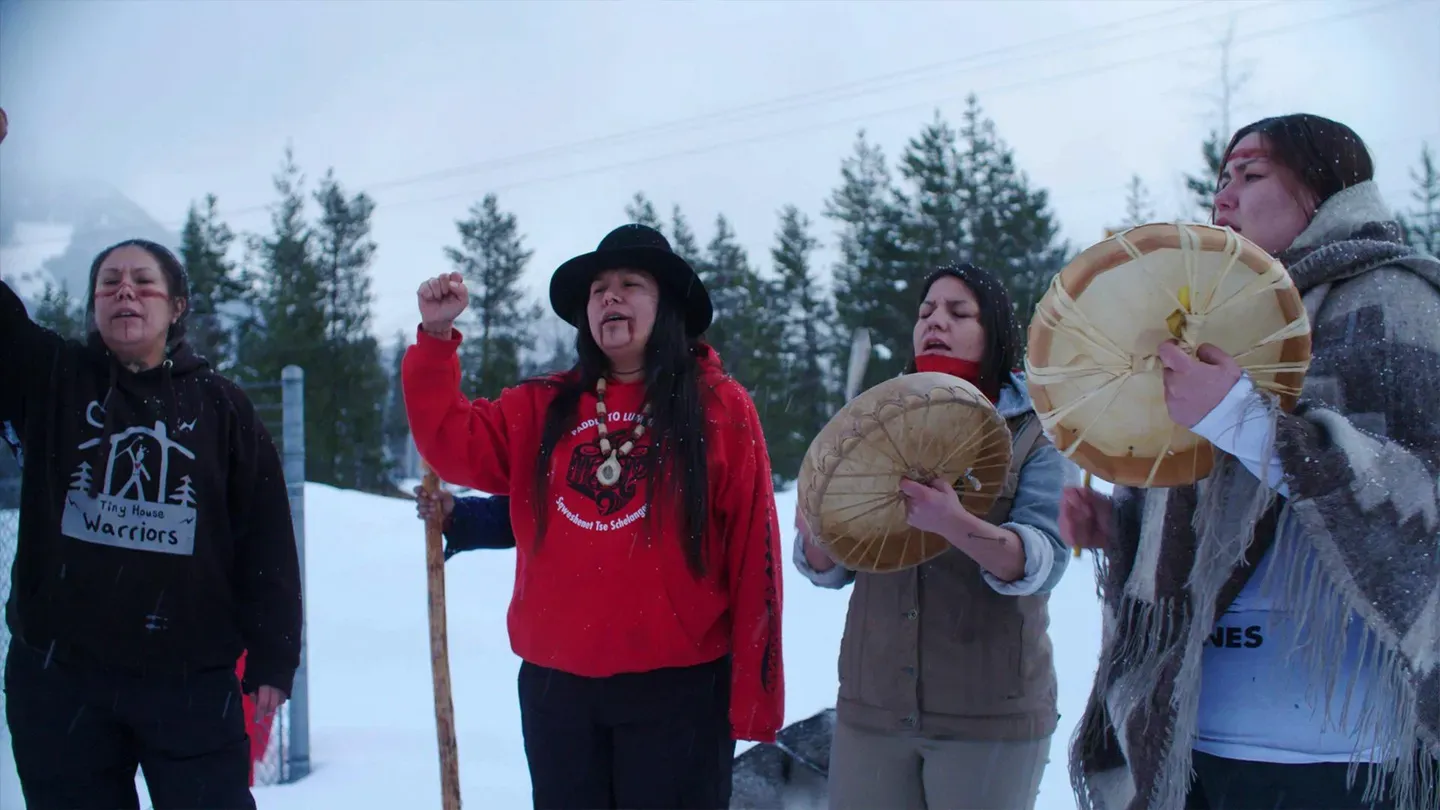
World-renowned land defender Kanahus Manuel, of the Secwepmc Nation in British Columbia is revitalizing ancient tattoo practices that she believes represent thousands of years of her people’s ancient connection to the land.
Problems playing video? | Closed Captioning Feedback
Problems playing video? | Closed Captioning Feedback
Skindigenous is presented by your local public television station.
Distributed nationally by American Public Television
Kanahus Manuel
2/2/2022 | 25m 46sVideo has Closed Captions
World-renowned land defender Kanahus Manuel, of the Secwepmc Nation in British Columbia is revitalizing ancient tattoo practices that she believes represent thousands of years of her people’s ancient connection to the land.
Problems playing video? | Closed Captioning Feedback
Where to Watch Skindigenous
Skindigenous is available to stream on pbs.org and the PBS app.
Providing Support for PBS.org
Learn Moreabout PBS online sponsorship-(Kanahus Manuel): Tattoo culture for me is reviving our indigenous culture; who we are as Secwepemc people.
Our symbols and our marks on our bodies and our tattooing has went dormant for over 200 years.
Now, with this resurgence, this decolonization, we are seeing these tattoos being brought back.
(theme music) ♪♪♪ -(narrator): The Secwepemc Nation resides within the mountain ranges of south-central British Columbia.
The area has been their homelands for thousands of years.
Kanahus Manuel is a proud member of this community.
She's a land defender, a birth keeper and an artist.
Kanahus has been on the frontlines when it comes to protecting the land and has been involved in various land defence movements in Canada and the US.
Kanahus is currently part of a group who are attempting to halt the construction of a pipeline through their territory near Blue River, B.C.
From a young age, Kanahus has known the importance of the land and the environment, as it's been part of the traditional way of life for her people.
Right at the heart of the territory is its pristine water, and she attributes her land defence obligations to protecting the resource for future generations.
Any damage or unbalance to it would be catastrophic.
-My name is Kanahus Manuel and I am from Secwepemc Ktunaxa Nation.
Over here in Blue River, it's here, in so-called British Columbia and we are here at a Tiny house warrior village.
This is where we have five Tiny houses on wheels.
This is a part of the Tiny House Warriors' mission and we are building a total of ten of these Tiny houses on wheels to stop the construction of the Trans Mountain pipeline and we launched this movement at our tattoo gathering, our indigenous tattooing gathering at Clearwater in North Thompson River Provincial Park.
We took this park over for a couple of weeks, but the first three days of this occupation was a tattoo gathering and we invited indigenous artists from all over to come and revive our tattooing and tattoo land defenders and warriors for those three days leading up to this launch of our Tiny House Warriors.
-(narrator): Kanahus has many different role models, but perhaps none are more important than her parents, Beverly and Arthur Manuel.
Both were and continue to be important figures when it comes to Indigenous rights and sovereignty.
Arthur Manuel passed away in 2017, but his legacy lives on in his children.
-My name is Beverly Manuel.
(speaking in native language) When Kanahus was young and all my other children, Arthur always did sit around talking to them about what was happening nationally and then later on in life internationally.
Arthur got involved with the 7th-generation organization.
He always let our children know what was going on.
Kanahus is up in Blue River right now at the Tiny House Warrior camp.
That's unceded Secwepmc territory.
I'm not concerned about Kanahus being up there.
I've been up there.
I've spent many times myself up there.
I feel at home up there.
There are times that I am up there that I don't want to come back down here, back to the reserve.
And in the summertime, we are closer to the berries.
When the twins were small, I could always tell them apart.
Kanahus had a wider chin than Niki.
But that one time, they really tricked me.
They switched their jackets around.
I used to always get them different colour.
Like the same kind of clothes, but one a different colour than the other and then, they switch their jackets around.
They really... They really tricked me that time.
-This dog's name is Bear and we got, we got this dog... It was a rescue puppy.
It was rescued with a bunch of other huskies.
When this dog got here, I painted the dog's face with the red ochre down this line.
For his protection, because he went to a lot of trauma, in his early years before he got to us.
-(narrator): Facial tattoos signify honour and must be earned in the Secwepcemc traditional system of governance.
For some, they can wait a lifetime before they've earned their facial tattoo, but today, we're being invited to join the ceremony for a fierce warrior woman.
-I will be tattooing my twin sister.
She's been waiting for the right time to get her chin tattoo and today is the day she is going to receive it.
It's something that, traditionally, we probably would have already received our chin tattoos at such a younger age.
I just got mine maybe four or five years ago.
But... We are going to see younger and younger women starting to reclaim this back.
My twin sister is gonna receive her chin tattoo today.
These are some of the needles I use, but I want to use a size nine, a round shader, and... for my sister's tattoo.
I was thinking about going smaller, but then she said she wanted a thicker line.
I tattoo with both the black and the red ink.
Those colours are really significant to our people.
The red is our protection.
So, a lot of times, when I do black ink, I like to also use the red.
-Now we're here, getting ready for my ceremony.
My sister is going to be doing the chin tattoo.
And we have our warriors' sisters here, Anishinaabe warriors.
They're going to sing some songs to help with the ceremony.
-My name is Eastern Thunder.
And I'm here to honour my sister as she gets her tattoo.
-So, my name is Rainbow Star Thunder Child and we are here to support our sister, my beautiful sister as she gets her tattoo and we're gonna sing a beautiful song for her.
-Do you want to show me which one that you were talking about?
That you... -That's the one I want.
-Okay.
The warrior woman tattoo?
-Yes, the warrior woman tattoo.
(slow drum beats) No, I didn't know, I was just thinking all the way down the bottom and little bit... like over?
-The hardest part about doing women's face tattoos is that native women are so beautiful and you just really want to make sure that their line is... perfectly straight... They're going to be living with it the rest of their life so that they're happy with it.
We heard the stories from our family and from our elders that talked about the women with the chin tattoos and that all of the women would have chin tattoos.
Especially our warrior women would wear the chin tattoo and so we knew it, but we've never seen it and it was now in this generation that we are seeing indigenous women starting to reclaim that.
-Dion Kaszas, a Nlaka'pamux tattoo artist.
He was instrumental in really gifting me with a lot of the symbols and knowledge that he was gaining in his journey to reclaim back indigenous tattooing.
So, he comes from a neighbouring nation of ours... It's interior Salish as well.
-(narrator): The symbolism of the ceremony goes beyond the markings as the receiver takes on a new chapter in their life.
In many ways, they are reaching a new state of being.
It is an event that is shared by close friends and important acquaintances.
(drumming and traditional singing) ♪♪♪ -Push it this way... I will push it this way... -Hum-hum.
-This is a tattoo that hasn't been tattooed on our women for hundreds of years.
So, this is bringing back these powerful symbols and resurrecting them into our living, you know, existence right now as indigenous people.
So yeah, it's really powerful.
♪♪♪ -I think it's to be fierce and to help connect you to the land.
Those are land lines.
So, we're defending the land and the mother earth right now.
So, it gives us strength and I feel like it will help with our voice and strengthening our voice.
When our young people see us, they see these marks of the land right on our faces.
So, when they look at us, in the eyes, they speak with us and hear our words, they know that we'll be speaking from the land.
(traditional singing) ♪♪♪ ♪♪♪ (women cheering) -(narrator): Kanahus became a voice for Indigenous issues when she became one of the founders of the Secwepmc Native youth movement.
Additionally, she put herself on the front lines at Standing Rock for nearly a year, so the Tiny House Community is not her first endeavour into the realm of political action.
She birthed her children in pit homes that were built on the side of mountains and she is adamant about maintaining a traditional way of life.
(fire crackling) -So now, this water comes right from Blue River.
And there's actually people that are stealing a lot of our water.
Bottling all the water from the creeks.
Oh, we want to do some more tattooing on her wrist because... -They're bare.
-Traditionally, our people would have, the women would have their wrist tattooed and when they come of age... the earth lines are really important for our people.
So the young woman would get their earth lines as their first initial tattoos when they came of age.
-Which ones do you have?
-I have the dentalium shell, the dentalium with the beads and the earth lines and the grizzly bear paw, and the bison and the arrows.
And of course, the bisons.
People seek me out.
Warriors do because I tattoo warriors and that's the main thing is that I tattoo warriors.
I'm not tattooing roses and skulls and you know, I am not tattooing Disney characters on people.
I'm tattooing ancient symbols of our people that we're reviving.
Bringing back the tattooing, we're also bringing back the thoughts and the ideas, and the customs and the culture and the protocols that we live with too, as indigenous people, so... We can't just bring back the tattooing or else, it's meaningless.
With it, we bring back the teachings of who we are And we're warriors.
These are warrior tattoos.
You can't just get these tattoos on and you don't uphold the responsibilities that we have to all of this.
So, it is really directly connected to our land defence.
It's directly connected to our lands.
Because as Indigenous people, we're not just living on the lands like 500 years ago, like our ancestors.
We're having to defend it now.
So this is the medicine that's there to help us too as we reclaim our place back into this world.
-We're getting help from our southern brother to help us learn a new recipe.
We are just really working at our stomachs being good.
Because it's hard to get vegetables here.
So here's the papaya and then, the sweet potato and then the squash.
So, they're all orange vegetables Then, we're gonna have our Anishinaabe sisters working on the wild rice.
-It is the plant that creator gave to the Secwepmc people to share with the rest of the world.
Not all the medicines they'll share with the rest of the world but this one they will.
So, that's why we can have it here.
How does it taste?
-It is really good!
It is almost sweet.
-Yeah, it is sweet.
-Very floral.
-(narrator): Southern B.C.
is known for having mild winters, but maintaining this community is tedious work.
They are self-sufficient and completely independent.
Daily chores include snow removal, chopping firewood and gathering glacier water.
Indigenous people from around the world visit for months at a time to contribute to the growth of the community and to reconnect to the land.
The community has provided solace for so many.
(indistinctive chatter) -Yeah, we caught wind what's going on in the Unistot'ten and as Anishnaabe Kwe it's our responsibility to protect water.
So, there was no thought.
No single thought about it, we just went.
We just feel the spirit bringing us out here.
We went to Wet'suwet'en territory.
We went to the first checkpoint and we knew the raid was coming, but we wanted to be there for the land, and, you know, not be afraid to get arrested.
It's not that big of deal, you know... but understanding that we need to hold this pressure and just be warriors, and not be afraid.
-(narrator): Despite the challenges of living in the Tiny House community, Kanahus is adamant about remaining on her traditional territory.
In many ways, it sends a message to the world that Indigenous peoples are still living in harmony with the land and that resource extraction is having a negative effect on their way of life.
(drumming and traditional singing) -When I first got here, and we first arrived here, I received a lot of racism because there is no reserve set up in this northern part of our land.
It is all in the southern part.
So very rarely do they see us.
We are on a major transportation corridor, the Yellowhead Highway.
But when I first arrived here and I wanted to go to the restaurant, there was a couple of restaurants here, I went into two and I was denied service at both... which is a shock!
Because, even though I grew up in the interior BC, we still didn't receive blatant racism and where they denied you from eating in restaurants.
(drumming and traditional singing) There is a lot of research that shows the link between industrial man camps and murdered and missing Indigenous women and girls.
They increase violence against Indigenous women and girls, including sexual attacks and rape that increase in and around man camps.
These man camps are industrial worker camps where they house workers for the industry whether it's the Alberta tar sands, or the Trans Mountain pipelines.
In here, they want to house 1,000 men.
At the end of the Coastal GasLink, they want to house 5,000 men.
Once you increase that ratio of men and women and it gets too high, that's when you start to see violence against our women and girls, and our girls aren't safe.
-I wanted to... Do you see how this is?
-(narrator): Mayuk is receiving a second tattoo, which will finalize her tattoo ceremony for the time being.
-That's is the one that I like... that one.
-It's starting to work with the shadows.
Do you see that?
-Hum-hum.
-It's like something in the middle.
(drumming) (traditional singing) ♪♪♪ These earth lines connect all of us too.
I have been giving earth lines to people all across the country, all across the continent that connect us as land defenders.
This is the base of what we are fighting for is the land that sustains all of us and has sustained all of us since the beginning of time.
-I need to get the earth line on to remind us of the land, every time we use our hands and doing the work that we have to do.
-Earth lines and not pipelines.
-Yeah.
-Okay.
-(narrator): Kanahus' tattoo work embodies the ancient knowledge of her people and acts as a reminder to recipients to uphold their duties and value to their people.
For her and the Tiny House Warriors, their efforts will be ongoing, and the intricate struggles of their daily life is a small sacrifice they are willing to make for future generations.
-Today, in honour of the murdered and missing Indigenous women and girls, we will be putting up a dress, that is really important because it was brought here by some young men that walked across Canada with this dress to bring attention to the red dress campaign to honour the murdered and the missing Indigenous women, bring some attention to what's happening in Canada.
(traditional singing) And we're gonna be putting it up and saying some prayers and sing some songs for the women that have lost their lives or that have been stolen or disappeared.
Some of them we're never going to ever find, but we pray for all of them.
(traditional singing) (cheering) -If you enjoyed Skindigenous and would like to see more clips about these artists or more about the locations featured in the show, head over to skindigenous.tv.
You can get everything you're looking for and more: biographies, videos, and even Skindigenous swag.
Come check it out!
skindigenous.tv.
Closed Captioning: Épilogue Technical Services Inc.













Support for PBS provided by:
Skindigenous is presented by your local public television station.
Distributed nationally by American Public Television