
Kentucky Cattle Farmers Discuss Dwindling Herds
Clip: Season 5 Episode 47 | 4m 5sVideo has Closed Captions
Kentucky cattle producers seek solutions to rebuild shrinking herds.
Kentucky cattle producers told lawmakers shrinking herds, farmland loss, and processor closures are creating challenges for the industry. The Kentucky Cattlemen's Association supports efforts to grow domestic production and retain farmers, including possible tax incentives. Some lawmakers say protecting farmland is critical to the industry's future.
Problems playing video? | Closed Captioning Feedback
Problems playing video? | Closed Captioning Feedback
Kentucky Edition is a local public television program presented by KET
Kentucky Cattle Farmers Discuss Dwindling Herds
Clip: Season 5 Episode 47 | 4m 5sVideo has Closed Captions
Kentucky cattle producers told lawmakers shrinking herds, farmland loss, and processor closures are creating challenges for the industry. The Kentucky Cattlemen's Association supports efforts to grow domestic production and retain farmers, including possible tax incentives. Some lawmakers say protecting farmland is critical to the industry's future.
Problems playing video? | Closed Captioning Feedback
Where to Watch Kentucky Edition
Kentucky Edition is available to stream on pbs.org and the PBS app.
Providing Support for PBS.org
Learn Moreabout PBS online sponsorshipKentucky's cattle herd, like those in much of the country, has dwindled in recent years.
The Kentucky Cattlemen's Association says it has to figure out how to rebuild the herd, and it's open to help from the General Assembly.
Our Emily Prince has more on the challenges facing cattle producers and why.
One lawmaker says the state is driving farmers away.
We've not only lost our some cow numbers, we've lost some producers to retirement and other things.
So it's kind of got us in a, in a in a precarious situation.
The Kentucky Cattlemen's Association says there are other shake ups to the industry contributing to that precarious situation.
Last month, the Trump administration announced a plan to import 300,000 metric tons of ground beef in an attempt to lower beef prices.
The Kentucky Cattlemen's Association was one of several groups across the country who made a statement disapproving of the plan, saying you would harm local beef farmers.
But the executive vice president says there are other factors that cattle farmers are dealing with, like the loss of farmland in the state and the closure of beef processors at Tyson plant in Illinois permanently closed at the end of August.
A lot of people fuss about a packer, but if you don't have a packer, where where do those cattle go?
Maples gave statistics on the dwindling cattle herd.
He said in 2020, the U.S.
had 31 million beef cows and Kentucky had more than a million.
Now, in 2026, there are about 27.6 million in the country and about 860,000 in the state.
He said beef imports are at a record high this year without considering the 300,000 metric tons the president wants to bring in.
Maples said the imported beef will likely be blended with domestic products and then sold to consumers.
A Lexington Democrat asked what the group's focus is going forward.
If you have an overwhelming supply of imports that are coming in versus domestic supply, that's shrinking.
Do we need to grow more domestically to blend that, to have the, I guess, the choices that people want to buy when they do go shopping?
The answer is the answer is yes, we do.
With what happened with the 300,000 metric tons coming in that just dumped a whole truckload of uncertainty in the market.
The market never likes it, especially the cattle market never likes uncertainty.
So what can be done to increase the cattle herd and incentivize farmers to stay in the business.
As the federal government goes?
There's a possibility, and I've heard some rumors of giving a tax credit or a tax benefit for holding heifers.
The Kentucky Cattlemen's Association representatives said they'd be in favor of that plan.
A LaRue County farmer raised a bigger concern during today's meeting.
The loss of farmland.
Data shows that over the last 15 years, all types of Kentucky farmland have seen a decrease, the biggest percentage being in pasture land, which is essential for grazing livestock and horses.
Every time we cover a piece of ground with concrete, blacktop or our roof line, we just lost a piece of farmland.
Until we change our priorities in this state and start trying to protect farmland.
We're going to drive people away.
Bevin said.
If consumers want a locally grown, high quality meat, they may have to pay more for it.
Everybody, they've always, when they went to the store, they want they want cheap food.
They don't want to pay for it.
But they're the first ones you'll see in Starbucks line buying a $9 coffee.
And some committee members wondered if having more local beef processors could help with the demand.
The presenter said they've seen an increase in local processors, but it can be difficult to maintain with the cost of labor, freezers and other equipment.
For Kentucky Edition.
I'm Emily Price.
Representative Bivens said many of the state's farmers are age 65 and older.
And he's worried that the cost of farming will prevent the next generation from getting involved.
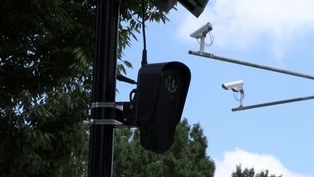
Lawmakers Question Flock About Mass Surveillance Concerns
Video has Closed Captions
Clip: S5 Ep47 | 4m 18s | Parties both for and against the cameras testified before lawmakers in Frankfort. (4m 18s)
Providing Support for PBS.org
Learn Moreabout PBS online sponsorship New Episode
- News and Public Affairs

Top journalists deliver compelling original analysis of the hour's headlines.

- News and Public Affairs

FRONTLINE is investigative journalism that questions, explains and changes our world.
 New Episode
 New Episode
 New Episode
 New Episode
 New Episode

 New Episode


 New Episode


Support for PBS provided by:
Kentucky Edition is a local public television program presented by KET