
August 19, 2026
Season 5 Episode 36 | 26m 30sVideo has Closed Captions
Sen. Rand Paul says he expects Sen. Mitch McConnell back on Senate floor soon.
U.S. Sen. Rand Paul says he thinks we will see Sen. Mitch McConnell back on the Senate floor soon. State lawmakers demand action to save rural health care in the commonwealth. President Trump nominates a federal judge for Eastern Kentucky. A University of Kentucky diplomacy expert discusses where the U.S. stands as the war with Iran nears the six-month mark.
Problems playing video? | Closed Captioning Feedback
Problems playing video? | Closed Captioning Feedback
Kentucky Edition is a local public television program presented by KET
August 19, 2026
Season 5 Episode 36 | 26m 30sVideo has Closed Captions
U.S. Sen. Rand Paul says he thinks we will see Sen. Mitch McConnell back on the Senate floor soon. State lawmakers demand action to save rural health care in the commonwealth. President Trump nominates a federal judge for Eastern Kentucky. A University of Kentucky diplomacy expert discusses where the U.S. stands as the war with Iran nears the six-month mark.
Problems playing video? | Closed Captioning Feedback
Where to Watch Kentucky Edition
Kentucky Edition is available to stream on pbs.org and the PBS app.
Providing Support for PBS.org
Learn Moreabout PBS online sponsorshipmusic >> I would be surprised if we don't see him when we go back in session after Labor Day.
[MUSIC] >> Senator Rand Paul thinks we'll see Mitch McConnell back on the Senate floor soon.
[MUSIC] >> When we talk about this threat of losing a rural hospital.
There's a lot of wringing of hands and gnashing of teeth.
But again, no sense of urgency of how critical it is.
>> One lawmaker demands action to save rural health care in Kentucky.
[MUSIC] >> But I think there's more than just adrenaline at work here for Avery.
>> Meet the Kentucky kid that acted well beyond his years.
[MUSIC] >> Production of Kentucky Edition is made possible in part by the KET Millennium Fund.
>> Good evening and welcome to Kentucky Edition for Wednesday, August 19th.
I'm Kelsey Starks and our KET Studios here in Louisville.
Thanks for joining us this evening.
Kentucky's junior senator is making his way around the Commonwealth now that the U.S.
Senate is in recess.
So what does Senator Rand Paul have to say about his colleague Mitch McConnell's health problems?
And what's next after his recommendation that Doctor Anthony Fauci be held in contempt of Congress?
Our Mackenzie Spink caught up with Kentucky's junior senator this week as he made stops around Central Kentucky.
>> During his visit to the Toyota manufacturing plant in Georgetown, Senator Rand Paul was asked his opinion on Senator Mitch McConnell's health challenges and extended absence from the Senate.
McConnell has been away from the Senate since June due to a fall.
He recently returned home from a rehabilitation center.
Paul says he doesn't understand the demand for more transparency.
>> People know he's had a fall.
People know he's been out, and I think that's just an individual decision that everybody has to make about, you know, exactly what they reveal about their own health condition when you're not showing up.
But he has he's told people he's he's had a fall on an injury.
So I would be surprised, like I say, if we don't see him back in Labor Day, he only has, you know, two months left in office.
>> In late July, Doctor Anthony Fauci, who largely led the country's response to the Covid 19 pandemic, testified in a Senate committee led by Senator Paul Doctor.
Fauci declined to answer the committee more than 100 times, pleading the Fifth Amendment under advice from his attorney after calls from Republican senators, including Doctor Paul.
A Senate committee voted to find Doctor Fauci in contempt of Congress, paving the way for a potential investigation into whether or not he used his Fifth Amendment right.
Appropriately.
>> We believe that Anthony Fauci could come, and as long as he's willing to tell the truth, wouldn't have any legal liability because he's been pardoned.
It'll be if the DOJ decides to pursue the case, a judge will have to decide whether the Fifth Amendment, whether it's appropriate to plead the Fifth Amendment when you have a pardon.
>> Paul says President Joe Biden's 2025 pardon allows Doctor Fauci to speak without fear of prosecution, and that there needs to be an honest conversation about Doctor Fauci's conduct in order for the country to move forward.
>> I think the the country needs to learn from this that we really shouldn't fund dangerous research in foreign countries.
We really shouldn't be doing dangerous research in our country, where we take an animal flu and try to make it more contagious for humans.
I think that's a death wish.
I think that's just a bad idea.
And we should have that debate out in the open.
And he could be part of the solution by admitting that it was a mistake to fund this research in China.
>> According to The Associated Press, before the hearing in July, Doctor Fauci claimed that Paul had a, quote, obvious obsession with calling for my prosecution, end quote.
It is unclear if the Justice Department will pursue an investigation.
Paul says he has not spoken to U.S.
Attorney General Todd Blanche since the hearing.
One of Senator Paul's last stops this week was the Secretary of State's office.
Secretary Michael Adams is preparing a time capsule in honor of the country's 250th birthday, and Doctor Paul contributed one of his books to the unique bourbon barrel capsule.
>> One of the things we've been hearing about is when they do polls of young people, that about half the young people think we ought to try socialism.
I think that would be a terrible idea.
And so my wife and I wrote a book a couple of years ago, The Case Against Socialism, and we're putting it in there.
And the inscription I wrote for those who will be here in 25 years, I might not make it back.
It says, written with the hope that America never succumbs to socialism.
And I hope when they open it up, we'll still be a great capitalist country with all kinds of prosperity.
>> For Kentucky edition, I'm Mackenzie Spink.
>> That time capsule that Doctor Paul contributed to will be kept at the Secretary of State's office and opened in 25 years from now.
So what is the state of rural health care in Kentucky?
That's what lawmakers in Frankfort sought to find out.
During a committee meeting yesterday.
They heard testimony about how many rural hospitals have taken out loans just to keep their facilities afloat.
And they heard a plea from one behavioral health group whose services are now in danger of being shut down.
Our Emily Prince has more on all of that from Frankfort.
>> When we talk about this threat of losing a rural hospital, there's a lot of wringing of hands and gnashing of teeth.
But again, no sense of urgency of how critical it is.
And when one starts to close, I think the reaction is, well, I'm glad that with my hospital, well, yours could be the next one.
>> Senator Stephen Meredith, co-chair of the interim Joint Health Services Committee, says everyone needs to be doing more to protect rural health care in the state.
One of the programs looking to do just that is the Kentucky Rural Hospital Loan Program.
Staff from the Kentucky Cabinet for Economic Development shared the impacts it could have on the economy.
If a rural hospital is forced to close.
>> They employ more than 87,000 employees.
They're often the largest employer in the community.
The facts are pretty obvious.
It's it would be catastrophic.
It'd be very devastating.
>> Through the Rural Hospital loan program, facilities can apply for a loan ranging from $25,000 up to $1 million per project.
Hospitals may not take out more than 2 million total every five years.
Right now, 12 loans have been given out.
Some facilities have taken out multiple loans, like in Ashland, KDE and Madisonville.
>> What folks don't realize if rural hospitals do close, you know, the economic impact that's going to have on the state.
And it puts an entire state in a death spiral.
>> The committee also heard a plea to save certified community behavioral health clinics in the state.
The clinics, called CC BHCS for short, specialize in mental health and substance use disorder treatment.
>> No other provider in Kentucky is required to do what a Cbq does serve everyone 24 hours a day, seven days a week across all of these service lines, regardless of their ability to pay.
>> The representative said.
Without legal action, Kentucky's program will end on December 31st of 2027.
>> So all of the infrastructure that's been put into place, predominantly from federal dollars, will go away.
Patients will go back to being on waitlists.
So we basically go back to a system that was failing our communities.
>> Co-Chair Representative Kim Moser said she was a supporter of CC BHCS and would like to work with the pair on legislation.
Finally, the committee heard from the state's rural health care institutes at the University of Kentucky.
The center was established in 1990 to address health care, worker shortages and poor health outcomes in rural Kentucky, co-chair Meredith said.
While they've had some success in certain areas, he doesn't feel like they're moving the needle across the entire state.
>> What do you need to be more successful?
>> We would need we would need to be able to have the staff to expand.
>> Well to that.
What are your charges under the original regulations to be advocates for rural health when it comes to budget?
I don't hear from you folks, and I understand you're funded in part by UK.
I think you got appropriation from the state for about 850,000 a year, I believe, but that was a reduction in the previous year, and I'm shocked at that, given the current landscape of rural health care, why we would do that and why y'all wouldn't come to say we need this money to to move the needle.
And we're not we're not doing that.
So you need to be more aggressive, need to be more assertive and be more specific about what can we do to address these issues that have been here for ages.
It seems like.
>> And with all due respect, I'm pretty confident that had we not produced all these community health workers and all these physical therapists and these medical providers out into the community, that the current health status would be a lot worse.
>> Lawmakers also heard about the Institute for Rural Health at Western Kentucky University has a similar mission for the rural western and south central parts of the state.
In Frankfort for Kentucky edition, I'm Emily Prince.
>> Every year, firefighters are killed when they're hit by vehicles while responding to roadside incidents.
But there are safety devices on the market that can help this situation.
They're called attenuator systems, and they hitch up to the back of trucks to absorb shock from crashes.
Today, in a legislative committee meeting, State Senator Matthew Deneen shared a rough draft of a bill that he says he plans to file next year that will help purchase these types of safety devices for fire departments across the state.
>> The bill that I'm proposing here is a is a public protection bill, but it's an emergency service bill, and that will protect lives of not only our motorists that are out there that do happen to come upon these accidents, but mainly our emergency responders that are out there working to save lives.
These attenuators that this bill would help purchase the safety devices will add a second layer of security that not only protects our workers out there, but it also protects the equipment that is used to serve our communities.
These devices are $30,000 and can be replaced overnight.
When one of our fire trucks are hit, it takes those fire trucks out of service of our communities for sometimes up to 2 to 3 years to replace a fire truck.
These devices can be replaced overnight at a much cheaper rate.
So it's not only saving lives, but it's also economical.
The bill is for $6 million.
That's $5 million for apparatus and $1 million to serve our firemen in training on how to go out and deploy these devices.
And so the funding is is available, it is there.
And we just really want to stress the importance that these are already being used by the highway department with a tremendous safety record.
And again, it saves lives.
>> Deneen also explained that the bill, in fact doesn't require any new funding, but it would pull from the existing fireman fund that comes from insurance surcharges that are paid already by Kentuckians.
Well, on July 1st, Avery Woolery saw an unconscious man in a Lexington apartment complex pool.
With the help of his dad, he pulled that man to safety, and CPR was administered at just 11 years old.
At the time, Avery is credited with saving that man's life.
So today, State Representative Chad Aull welcomed Avery and his family to the state Capitol and honored him for his bravery.
>> Avery said.
In that moment, that adrenaline kicked in.
It sure did.
But I think there's more than just adrenaline at work here.
For Avery, there was courage, there was quick thinking, and there was kindness.
When another person needs help, Avery's instinct was to act.
So today, the Kentucky House of Representatives officially is going to present Avery with a citation, because it's our job to recognize regular folks and constituents when they go above and beyond and help their neighbors.
And when they do something special.
That's the best of the Commonwealth.
I can't think of a better example than what Avery did that day that is deserving of a citation from the House of Representatives.
>> Try and be the best person you can be.
Whenever someone is in danger or someone just needs a friend.
Here.
>> Representative.
>> Great advice there and a well-deserved honor.
Avery's visit to Frankfort also included meeting Governor Beshear and getting to sit in on a committee meeting.
Well, the Jefferson County Clerk, David Yates, is taking action, he says, will help people who are confused by that contradictory information about where they live and where they're supposed to vote.
We told you here yesterday about this new election mapping system, because using up to date technology, it revealed some people who thought they lived in one county actually lived across the border in another county.
So, for example, more than 200 people who thought they lived in Oldham County are actually living in Jefferson County, and they've recently been notified about that by the state Board of Elections, even though they're being told to vote in Jefferson County, they still pay taxes in Oldham, their children still go to school in Oldham County.
Well, today, Yates filed a petition for a Declaration of Rights so the court can provide guidance to election officials and voters about how to handle all the confusion.
>> My hope by doing this Derek action is to bring all interested parties together so that we can get into a room.
They'll have the option to be able to opt in and grieve their differences, make their arguments, state their claims.
But ultimately, my hope is that we pump the brakes.
I think that we could introduce some type of agreement where we slow things down and figure things out, as the legislature needed to make sure there was a law of the land to lay out the boundaries if it relates to elections.
But I do believe that it has to be furthered, untangled as it relates to property taxes, where your children are in school, and it seems to me is arbitrary that you would vote in one area but do all these other things in another.
And so the hope is that we can give the legislature additional time to be able to work this out.
I testified yesterday at a legislative committee there.
There was a strong appetite to be able to help and work this out.
I pride myself on having relationships at the local level and the state level and the federal level.
I can tell you, in the past 24 hours that I've had many conversations with individuals and leaders who are wanting to help resolve this issue.
It's unfortunate that that unintended consequences happen whenever legislation has been passed, but I do think that it is important that the individuals affected have the opportunity to be heard.
>> And this is not just happening in Jefferson County.
During yesterday's committee meeting, lawmakers were told that in 2024, more than 200 people who thought they lived in Spencer County were actually residents of Shelby County.
Governor Andy Beshear has been talking about voting reform lately on Face the Nation.
Last Sunday, he talked about abolishing the Electoral College.
He discussed that other reforms and the success of some democratic socialist candidates when he appeared on CNN yesterday.
>> I'm in favor of a fix the darn country constitutional amendment.
It would outlaw partizan gerrymandering and enshrine parts of the Voting Rights Act right there in the Constitution.
It would set term limits not just for Congress but for the Supreme Court, too.
No more gaming those appointments.
It would overturn Citizens United and get corporate dollars out of our politics.
And I think it's time for direct election of the president and vice president.
So they've got to come to places like Kentucky, earn votes all over the country, and better reflect the country as a whole.
>> Yeah, I know you have been out there saying you want to get rid of the Electoral College and so forth, but just to drill down a little bit more on the DSA, do you believe that this is a blip on the radar for the Democratic Party, with these more progressive socialist candidates being elected, or do you think that this could be the future of the Democratic Party, and it could be changing before our eyes in the way the Republican Party changed with Trump?
What do you think?
>> I think the Democratic Party has to be a big tent party, where people can have different ideas on how we solve a problem.
As long as we agree that that problem exists.
I mean, right now the media is obsessed with differences in the Democratic Party when the differences between the Democratic Party and the Republican Party are so stark.
Yes, the DSA candidates and other Democrats may disagree on how to address hunger, but the big, ugly Bill the Republicans passed is causing it.
Now, DSA candidates and other Democrats may disagree on the best way to provide health care, but we all want it to be accessible.
While Republicans big, ugly Bill is shuttering rural hospitals.
And while they passed a tax break for the wealthy, they refused to extend tax subsidies to everyday Americans.
And so I know that the media wants to create this civil war inside the Democratic Party.
But the differences and you see it in the polling right now between Democrats and Republicans, are Democrats want to make your life easier.
And Republicans have made it a whole lot harder.
>> Just to be clear, we're not trying to cause a civil war.
>> During the interview, the governor predicted Democrats would take control of the U.S.
House in November's midterm elections and make a strong run at the U.S.
Senate.
He also predicted several new Democratic governors.
Beshear is chair of the Democratic Governors Association.
President Trump has nominated Daniel Beaulieu, a circuit court judge from southeastern Kentucky, to serve as a federal judge for Eastern Kentucky.
Belew is now judge for Kentucky's 34th judicial circuit that covers McCreary and Whitley counties.
Senator McConnell has not commented, but Senator Rand Paul has called Beaulieu a great American.
On social media.
Blue still needs confirmation by the U.S.
Senate.
That slot is open because of the resignation of Judge Gregory Van Tatenhove, who became dean of the University of Kentucky Law School recently.
Blue ran for the Kentucky Supreme Court in 2018, but lost to the current Chief justice, Deborah Lambert.
Well, Kelly Craft is headed to Harvard.
The Lexington Herald-Leader is reporting.
Craft will be a resident fellow at the Institute of Politics at Harvard's Kennedy School this fall.
That means she will live on campus, helping students learn about diplomacy and public policy.
As you may remember, craft was United Nations ambassador during the first Trump administration and then also ran for governor of Kentucky in 2023.
The DEA is calling it one of the biggest fentanyl busts in Kentucky history.
A three year investigation ended last week, with agents and police seizing more than 70 pounds of fentanyl.
Today in Louisville, U.S.
Attorney Kyle Bumgarner described the years of work that went into this and ended with those raids last week.
>> Federal agents learned in January of 2023 that the Andrews brothers were moving significant quantities of fentanyl in Louisville over the course of the next three and a half years.
DEA led an extensive investigation to identify the organization's source of supply and methods of supply.
LMPD and IRS stood by DEA side throughout that investigation.
Include included, excuse me, controlled purchases, pole cameras posted in front of places where we suspected drug trafficking to occur, wiretaps of traffickers, cell phones and residential search warrants.
As we presented in court earlier this week, those intercepted communications allegedly show that this drug trafficking organization was sourcing fentanyl from Mexican cartels through a middleman in New York, and then found its way here into the city of Louisville.
>> Bumgarner says those 70 pounds of fentanyl is enough to make 300,000 pills.
The bust led to eight arrests in Louisville, one in Detroit and another in the Dallas, Texas, area.
[MUSIC] Well, it has been nearly six months since the start of the United States and Iran war.
To learn more about that conflict, we caught up with a professor with the University of Kentucky who lectures on security and diplomacy.
>> Right now, we are in what is best described as a holding pattern with Iran.
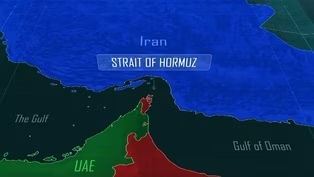
Iran is still blockading the Strait of Hormuz.
It's not exactly a blockade, but essentially they're threatening to fire upon any oil tanker that moves through the strait unless it pays a fee.
And many of them don't want to pay fees.
And so traffic is still choked right at the choke point in the strait.
Our response to that has been to install another blockade, a more distant blockade on Iranian ports, which are outside the Persian Gulf and outside the Strait of Hormuz.
So essentially, there is a double blockade on the Persian Gulf itself, and Iran is being blockaded.
And so essentially, what we're doing right now is we are waiting until one side suffers enough pain to cry, uncle.
And when that happens, we can hopefully have peace talks.
So this is the most contentious moment we have ever had with Iran, probably even more so than when the Iranian hostage crisis was taking place in the early 1980s.
And so what we're trying to do, and what we've been trying to do since the end of February, is get back to square one, right?
Get back to a situation where the oil is moving through and we can resume something that looks like peaceful relations on both sides.
And the economic impact of the war can be reduced and eventually can sort of phase out across the world.
So our strategic our strategic objectives have been a little bit confused since the beginning of the war.
The Trump administration has discussed a number of different possible objectives at different times.
Initially, when the war started, it was supposed to be about destroying the Iranian nuclear program, and very possibly, and there was a lot of talk about this in the administration causing regime change.
So essentially toppling the Iranian government.
And so that characterized why we blew up their supreme leader on the first day of the war, really the first morning of the war, and conducted a lot of other attacks on Iran.
We were really looking for maximalist objectives.
Wright the collapse of the Islamic Republic.
As the war has developed.
Our real core interest has become the Strait of Hormuz and opening the Strait of Hormuz.
And I want to be super, super clear about this because it's really important.
The Strait of Hormuz was open before February 28th, right?
So we are trying to get back to a place now where we were before the war started.
So the economic impact in the United States is one of the big dogs that hasn't quite barked yet.
A lot of people were worried back in March that we were going to see an immediate economic crisis, both in the United States and globally.
There's a bunch of reasons why that hasn't happened.
The biggest reason is that China has been spending down its stockpiles of oil, and also undertook steps to massively reduce consumption of oil, and so prices of oil have remained manageable.
The Iranians are also smuggling oil.
We're looking for oil from different sources, and that has kept oil prices and gas prices at least sort of vaguely reasonable, but certainly a lot higher than they were before we started the conflict.
So people may remember, like in Kentucky, I think gas was around $2.60 before the war started.
It got all the way up until about 430 or something along those lines to my memory, and now it's around 390, depending on where you are and when gas prices and energy prices are high, there is an impact across the entire economy because everything we have, everything we do is moved by a truck or is moved by a plane or is moved by a ship.
And so as long as all of that transport infrastructure, the price of transit is going up, all of our prices are going to go up.
And so you're going to see sort of enduringly high inflation, enduringly high prices for tons of different stuff, even stuff that doesn't come from the Middle East because of the price of oil.
>> So tomorrow you'll hear more of that interview with Doctor Farley specifically about why Kentuckians should care about this war.
[MUSIC] And we do hope you join us Thursday on Kentucky edition.
We'll also talk with Jennifer Brown of the Hoptown Chronicle in our reporter's notebook segment.
Among some of the topics there, we're going to talk about the measles outbreak in parts of Kentucky.
You'll hear about that story and much more all tomorrow right here on Kentucky edition.
And we do hope you'll join us again tomorrow night.
We'll be here at 630 eastern, 530 central for Kentucky Edition, where we inform, connect and inspire.
You can subscribe to our Email Newsletters and watch these full episodes@ket.org.
You can also find us on the PBS video app, on your mobile device, and your smart TV.
We want to hear from you.
If you have a story idea for us, you can email Public Affairs at KET dot ORG.
And of course, follow KET on
Iran War Nears the Six-Month Mark
Video has Closed Captions
Clip: S5 Ep36 | 4m 14s | Six months into U.S.-Iran War, expert assesses diplomatic fallout. (4m 14s)
Lawmakers Hear Concerns Over Rural Health Care Access
Video has Closed Captions
Clip: S5 Ep36 | 4m 23s | State lawmakers demand action to save rural healthcare in Kentucky. (4m 23s)

Rand Paul on Mitch McConnell's Expected Return to Senate
Video has Closed Captions
Clip: S5 Ep36 | 3m 53s | Rand Paul says he expects Mitch McConnell back on Senate floor soon. (3m 53s)
Providing Support for PBS.org
Learn Moreabout PBS online sponsorship New Episode
- News and Public Affairs

Top journalists deliver compelling original analysis of the hour's headlines.
 New Episode
- News and Public Affairs

Today's top journalists discuss Washington's current political events and public affairs.
 New Episode

 New Episode
 New Episode
 New Episode
 New Episode

 New Episode



 New Episode
Support for PBS provided by:
Kentucky Edition is a local public television program presented by KET