
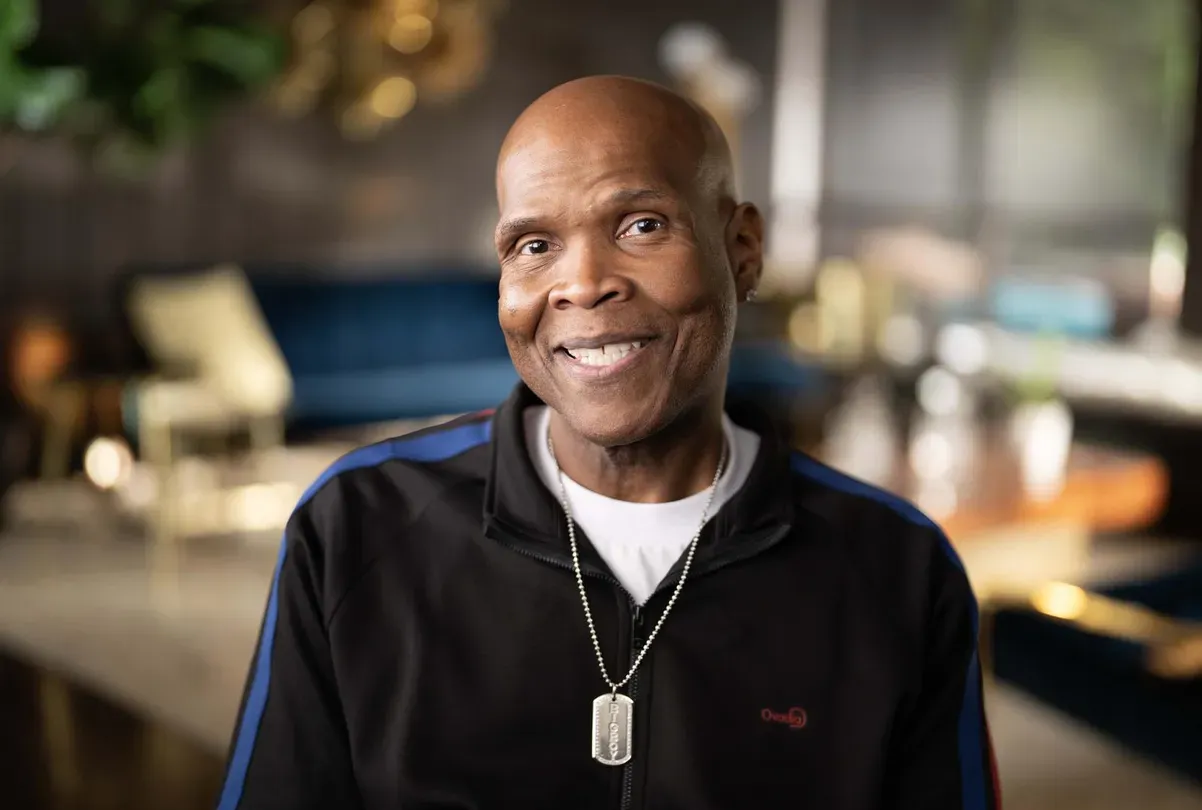
Kurt “Big Boy” Alexander, A Hip Hop Odyssey
7/1/2026 | 35m 13sVideo has Closed Captions
Radio legend Kurt "Big Boy" Alexander describes his struggle with food as a love affair.
Radio legend Kurt "Big Boy" Alexander describes his struggle with food as a love affair. Despite initially celebrating his size, he eventually realized that he wasn't truly comfortable with it and explains how he changed his life by addressing his weight issues.
Problems playing video? | Closed Captioning Feedback
Problems playing video? | Closed Captioning Feedback
The Thread is a local public television program presented by WETA
Kurt “Big Boy” Alexander, A Hip Hop Odyssey
7/1/2026 | 35m 13sVideo has Closed Captions
Radio legend Kurt "Big Boy" Alexander describes his struggle with food as a love affair. Despite initially celebrating his size, he eventually realized that he wasn't truly comfortable with it and explains how he changed his life by addressing his weight issues.
Problems playing video? | Closed Captioning Feedback
Where to Watch The Thread
The Thread is available to stream on pbs.org and the PBS app.
-I remember I'm sitting with the Baker Boyz, right?
And they say, "We want to give you a contract.
Emmis wants to give you a contract."
And I'm like, "Dude, I don't know what -- what a contract is.
How much should I ask for?"
And I remember Nick took his phone and he typed some numbers in, and he handed it to me.
I look at the phone and I'm like... "I can't ask for that."
And he was like, "Big, just ask for it.
You may get it.
If not, you'll get something close to it."
"Bro, I can't ask for that."
"Just ask for it."
I'm like, "Dude, you think they'll really pay me $35,000?"
♪♪ ♪♪ -We're just gonna start from the beginning to talk about where you grew up and kind of your relationship with your mother.
-I was born in Peoria, Illinois.
But Peoria, Illinois, I was there not even two years.
And from Peoria, we moved to Los Angeles.
And once we got here, it was, you know, my mom, pretty much a single parent, seven kids.
I have four sisters, two brothers, you know, just acting in the house, putting on plays.
We entertained ourselves.
We didn't have mobile phones.
Of course, you didn't have, you know, 5,000 satellite channels and all these streams available to you.
So you had a lot of conversation and you had a lot of time to -- to speak with -- with your peers or with your family.
But growing up, it was music in our household.
You know, you could smell my mom's cooking.
You know, from what I gather, it was the perfect place for her son, Kurt, to grow up at, at the house that I have built.
We definitely, definitely wasn't, uh, anywhere close to being rich, you know?
But we was affluent when it came to love.
You know, I heard I love you.
I heard, you know, there was hugs, and it was just one of those households where you didn't realize how bad things were until you kind of got a little bit of age and said, okay, you know, there were, you know, many evictions when we were growing up.
Um, you learn how to do without and you don't even realize you're doing without because some of your peers don't have it.
Not having a father in the household wasn't strange to me.
I never had my dad in the household, so it wasn't like a dad walked out and I was able to miss something.
So just growing up, I felt happy, you know?
And it's crazy, because when I wrote my book, I was -- I wrote that from that -- that viewpoint where I was like, "Oh, you know, it was a happy childhood."
And then I started doing some therapy and I was like, well, you know [bleep] maybe it wasn't as pleasant as what I thought.
-You're kind of moving from motels to homelessness a bit, and you were acting like everything was fine because maybe in your mind you thought it was, but you were using like humor and food... -Right.
...to kind of like, you know, sort of like get through those times.
-And just kind of growing up, you know, it's -- it's eight of us in the household, seven kids and my mom hit financial slippery slopes.
You know, my mom wasn't, you know, she didn't smoke, she didn't drink.
She didn't have a drug problem.
There wasn't like, what are you doing with the rent?
It's just taking care of seven kids and yourself, you know?
Do you buy your kid this sometimes or do you pay the rent, you know?
And we got into a slippery slope where we got evicted, and being evicted there was a stint of over a year of living in motels, not hotels, I mean motels, all eight of us.
You know, any motel that you see, that's probably between 300, 350, probably 400 feet, eight people in there, one bed.
So you kind of -- you kind of sleep on the floor and you lay where you can.
And it was just those things where, you know, you could stay a week here, probably a month here, a couple days.
But we were constantly going from motel to motel, either next door or across the street.
Growing up, we never had like a -- a family car.
So everything was kind of just -- just on the bus or you just, with the motels, you just moved how you could -- shopping cart and you go to the next one, you know?
But it's wild, because in my mind at the age of like 10, it's the first time we became homeless.
And at the age of 10, you want a home.
You know that other -- your friends and your peers are going to their homes.
But as a 10-year-old, you're thinking, okay, I have a swimming pool, you know?
As a parent, I couldn't imagine what that did to my mom, because I couldn't imagine what it would do to me now that I'm a parent with -- with two kids.
But she shielded us as much as she could.
But there were some things that, you know, you did know.
You know, you would have to hide when the maid came so they wouldn't know how many people were in the motel, and you'd get kicked out once again.
You know, I got accustomed to eating out of paper plates and plastic forks and putting your cold, you know, uh, refrigerated items in a -- in a cooler.
You know, those -- those are the things that get deep rooted into you as well.
And it follows you into your adulthood by how you live and what kind of patterns you have.
You know, how you make sure that -- that your -- either your bills or... It's a lot when you learn so much at an early age and so much that -- that a child would have to bear.
And then as you start to get older, you start to see how it really affected you.
-And at the same time, hip-hop is sort of in its infancy, and you're kind of getting introduced to that as it's sort of becoming a thing.
"Rapper's Delight" was kind of like your first step into hip-hop, and you had experience with your friend Trevor.
-With hip hop, for one, music was always in -- in my household.
You know, growing up, Jackson 5, anything Motown.
We always heard music in the house, the Commodores.
It was always something.
Music I always had.
If I didn't have, you know, a bed, if I didn't have a pillow, I had a transistor radio.
I had, you know, some headphones that I could possibly make, and but I always had something where I could listen to music.
And music always took me away.
And then comes this thing called hip hop.
And hip hop was... When I heard, like, "Rapper's Delight," I had a buddy by the name of Trevor and Trevor also lived in the same motel that we lived in in the Santa Monica area.
And we would walk together to the Boys and Girls Club, and that's all we would do to pass time.
We didn't -- we didn't have money to take a bus.
We didn't have bikes.
You know, we would just walk.
And literally hip hop, the hippie to the hippie, and, you know, and we just trade and rap this to the Boys Club and rap it on the way back.
But I fell in love with hip hop.
And early on I had hip-hop, and then I realized I had a connection with food.
If I was sad, I listened to music.
If I was sad, I ate.
If I was happy, I listened to music.
If I was happy, I ate.
All those things together was always kind of there for me.
You know, music was good for me and I enjoyed it, but food was as well, and I didn't realize what I was actually doing to myself as -- as a child growing up.
-And at this time, you -- you kind of knew in your head you wanted to be a part of the hip-hop game or the hip-hop world, and -- and you sort of started rapping a bit and sort of the birth of MC Scratch kind of happened at this time.
-Yeah.
-Maybe you could just talk about it like that.
-So I always knew that I wanted to be around hip-hop.
I knew I wanted to.
You know, everything hip hop.
I wanted to rap.
I was a DJ, you know, everything.
You know, I would try to do graffiti.
Everything that came with this culture, I wanted to be a part of it, you know?
And so at one point I started DJing and I had, like, no equipment.
You know, my first piece of so-called DJ equipment was like our home stereo that had the, you know, it was like a piece of furniture, big wooden piece.
And you the -- the record would drop down and it had no belt, and it was just horrible.
And I had another turntable on top of that, but that was my equipment.
And I fell in love with the art of -- of DJing.
I wanted to DJ, I wanted to rap.
You know, and even my name before Big Boy, I used to call myself MC Scratch.
And MC Scratch, oh, my God.
To me that was so clever.
Like you hear a Kanye West, okay.
Nowadays, Kanye, J. Cole, Kendrick.
Those names sound like, oh, man, those names sound empowering.
When I came with MC Scratch, you couldn't tell me... Like MC Scratch was, like, it was clever.
It was like, dude, I rap and I DJ.
I can't believe nobody else is calling themselves MC Scratch.
So MC was for the rapping and scratch was for the DJing.
And I went and got an iron on kit and put MC Scratch on my chest with the iron on letters, and you couldn't tell me anything until I went to a dance and I sweated it out and the letters start falling off, but that's another part of the story that we won't get into.
But yeah, I was -- I was MC Scratch and I lived it, but there was a gentleman by the name of Augie Johnson, and Augie Johnson was in a group.
He was a leader of a group called Side Effect.
And Augie lived in the same condominium complex that we lived in.
And my family knew of Augie, I knew of Augie, and they were like, "Oh, that's Augie Johnson, that's Augie Johnson."
And Augie stayed in one of the buildings where we were living at.
So I would see him and, you know, and then I was cool with his son, Damon.
And one day Damon was like, you know, telling his dad, oh, you know, Kurt raps, you know, MC Scratch raps, you know?
And so one day, Augie being Augie, he said, man, you know, hey, bro, let me hear something.
So I'm, you know, I'm spitting my little thing, my MC Scratch thing.
And, you know, good job.
I'm not thinking anything other than Augie heard me rap.
And so fast forward, he would believe, like, he was the first one that put me in the limousine.
He's the first one that I got, you know, promo pictures from.
He saw this -- this kid at 15 years of age, and Augie would tell me, "Hey, bro, you're gonna be a star.
You're gonna be a star."
And so I'm MC Scratch, you know, soon to be this legend.
And Augie calls me one day or we're talking.
he was like, "Yeah, man, I think we need to change the name."
And I'm thinking like, "How dare you, bro?
I'm Scratch."
you know what I'm saying?
Like, how do you like, dude, I had a couple letters on my -- on my -- my -- my sweatshirt still, you know?
I still got the R and the T or something that didn't fall off.
And so he was like, "Yeah, man, I'm just gonna start calling you big Boy."
And I'm like, "Big boy, what the...?
You know?
And every time, you know?
And it wasn't long, it was just "Big Boy, hey, Big Boy.
We gon -- we gon go over here, Big Boy.
Big Boy."
And I remember he told me, he said, you gotta have a name that people would recognize you as soon as they walked into the room.
And to this day, I still use that same thing where it's like, what separates you from the room?
And it was the birth of Big Boy.
You know, MC Scratch took me as far as I could, and then Big Boy, at 15, 16 years of age from Augie was just one of them things where I lived it.
I loved being big boy.
And even with the name Big Boy, the name Big Boy didn't feel like, oh, they're teasing you.
They're making fun of you, you know?
And it's crazy because at Big Boy, I -- I could see the weight gain.
It wasn't by the pounds.
You know, when you got to the -- the size that I was, I would count my size by Xs.
At my biggest moment, I was an 8X.
But at that time when I'm Big Boy at 15 and 16, I'm comfortable in my skin because this person is probably big, you know.
I'm the -- I'm the -- the cool guy.
I'm the guy that can still get a girl.
And I'm also the guy that will punch you in your effing mouth.
So you -- I wasn't the guy that was teased.
I wasn't the -- the butt of your jokes because people knew that I would fly your head off your shoulders, you know?
Even when I would talk, man.
I could outweigh someone by 100, 200 pounds and I'm calling them fat.
Oh, look at you.
With you're fat... And I'm like, you know, when you -- when you start to think about it, like, oh, bro, you're much bigger.
But it wouldn't come out of their mouths because I always kind of held my own.
Then you think like, mm, you know, you get older and you're like, man, were you really that comfortable?
I wasn't, you know, but at the time, while we're speaking on it, I enjoyed being Big Boy, not knowing that with gaining the weight, I was gaining also this baggage and -- and I was gaining these -- these patterns as I was gaining weight.
And I was learning how to not really let it affect me until I got older and realized, like, you have a lot of patterns from even your childhood of your -- your weight gain and your obesity.
-And at this time, like, it was sort of the rise of gangsta rap.
I mean, it was a lifestyle for many, but also you kind of got wrapped up in that, you know, a little bit in gang life.
So you decided to turn to selling drugs a bit.
One thing that really struck me was that you were selling drugs, but you were doing it with, like, a conscience.
-Yeah.
-Like there was something in your head that was telling you, you know... can you just talk about like that kind of era?
-I definitely was the, uh, the conscious hustler, you know what I'm saying?
The one that, um, that knew it was wrong.
But how do I find the right in it?
You know, probably even just lying to myself, you know?
But, um, there were times when, Yeah, I -- I did hustle, and by hustling, I mean I did -- I did everything.
You know, I sold -- I sold dope, I sold drugs, I, um, did the credit card fraud.
I did, uh, the phone -- the phone game with hooking up the phones, you know, but I always would do like, man, "I'm done with this," you know?
Then I'd come back to it, you know?
Um, I never -- and it's crazy, because even when you so-called hustling, there's this other thing where it's like, oh, man, you know, I'm not strong arming nobody.
I'm not, you know, taking something from someone, but you are.
You know, and I knew that what I was doing, I knew it was wrong, you know?
And saying you need it doesn't make it right.
You know, like, if I couldn't go to my mom and say, "Mom, you know, I sell drugs," then I knew that I was doing something totally behind her back.
So I would have my, you know, DJ equipment and, oh, mom, I gotta go do a party tonight just to justify these twos and fused this little money that I was, that I was making without having -- without having a job.
And I'm the type of person that I could throw -- I try to throw everything up against the wall.
And whatever I do, I'm like, man, I'm gonna be successful in it.
I try, and I knew I could have been a very successful drug dealer, you know?
And where -- where does that lead you to?
You know, would that lead me to, you know, being dead?
Would it lead me to jail?
Definitely.
But I knew that I could do it.
The only thing that held me back from being the top dog, the so-called kingpin, was my mom.
My mom, you know, my sister, Sherrille.
There were just some things that I knew wasn't going to fly, no matter how broke we were, no matter if there was a struggle going on.
My mom didn't want her money or her son to do that, you know?
So I hustled with a conscience.
You know, I hustled with a -- with a level of, oh, I'm not -- I'm not gonna, you know, go past this, you know?
And even with that, you know, just the close calls of knowing, like, the either the riding dirty or something that, you know, that's on your person that shouldn't be on you or even, you know, somebody getting a hint of what you're doing.
You know, I still live with my mom.
I still had a, you know, lived in a community, you know, and I had a, you know, I had enough close calls that not scared me straight, but it straightened me up, like, oh, you know, you know?
I knew I was doing wrong.
And even to this day, like, when I talk to people, you know, I was a bodyguard for The Pharcyde, you know, that's -- that's what I tell people and that's what I was when I got into radio.
And if you look at anything with my bio, my bio says former bodyguard for The Pharcyde.
If I would have tried to do this whole keeping it real and for the -- for the public and said, you know, this is what I used to do.
And so you can look at me like I'm just, oh, man, I used to do this and I used to do that.
I would have -- never that would have been my full intro.
My intro would have been as opposed to Pharcyde bodyguard turned, you know, radio guy, my full intro, anytime somebody brought me out on stage or brought me on a program, it would have been former drug dealer turned radio star, and I didn't want that.
I knew that I couldn't do this forever, you know?
And I saw people that was with me.
I saw them go from sugar to... I saw them go from the big dog into like -- like, what were we hustling for If you could only enjoy it for a year and then get 30 years, you know?
-And then sort of a theme in your life is kind of being at the crossroads and narrowly avoiding the wrong path to go down.
-Right.
-And, you know, whether it comes from a higher power or however you interpret it, you said there was this moment that was like the final moment for you.
-Yeah.
-I guess it was around this time that this happened.
-Yeah, This is, um, yeah, around The Pharcyde.
-Yeah.
-So, I'm with The Pharcyde.
And The Pharcyde was -- they had a show in the Bay area.
And being that we were driving to the Bay area, I was like, well, if we're going to drive, I'm going to bring my gun.
So I take my gun with me, and I had two warrants for my arrest.
Right?
Nothing too crazy.
But I always told my brother, I said, hey, I said, "If they ever pick me up on these warrants, I'm just gonna do the time.
I don't want to spend the money.
So if I just come up missing for a few days, I'm on the road or tell mom so she don't, you know, worry about her son being, you know, in jail."
So we're driving up to the Bay area.
We get there, check in.
The next day, um, they do what they have to do.
We do the show.
So Souls of Mischief, another hip hop group from the Bay area.
The Souls wanted The Pharcyde to stay.
I didn't want to stay.
So they were with the Souls of Mischief.
I said, "Hey, well, you know I'm gonna fly home."
I said, "But take my gun and drive my gun back home for me."
"Alright, cool."
Up there two or three days, whenever.
But when they were up there, I had another gun at the house.
Now, mind you, I'm like 400 pounds, 450 at this time, right?
And so they drive back, they call me, they're like, you know, "Hey, Big, we're home.
We got your gun."
"Alright, cool.
I'm gonna come and get it."
So I'm from LA, I'm on a swivel, whatever.
Nothing dangerous, but I carried a gun all the time.
So I had my gun on me to go pick up my other gun.
So I go drive, lollygag, whatever, pick up the other gun.
And, um, I'm driving back.
So now I got two guns on me.
As soon as I get to Culver City jurisdiction, because we're living in Culver City, [imitates siren], they lit me up.
And I'm like, "Ah [bleep]" They pulled me over.
He gets me out the car.
He starts to search me, search me, search me, go in my pockets, you know?
Does a thorough search.
"Have a seat."
So I sit down.
"Any warrants for your arrest?"
"Nah."
His partner comes and I see his partner say something to him.
Then he comes back over to him.
He said, "where's the gun at?"
"I don't have a gun."
"Where's the gun?"
They go back now, both of them in my van looking for my gun.
They come back, "Stand up."
I stand up.
My man starts searching me again.
Pat, pat, pat, pat, searching me, searching me.
"Sit back down.
Where's the gun at?"
"I don't have a gun."
So now I hear, "Oh, Kurt Alexander, warrant... Kurt Alexander, warrant."
And now them... just look at me.
He like, "You have two warrants."
Said, "We're going to take you in, and we're going to impound your van and put it on a detective hold.
We're finding your gun."
I'm like... So I'm literally -- See the van, the flatbed come in, because they had to wait until the van got hooked up.
I see the flatbed, and now I'm like, "Oh, my God.
They're about to take me to jail on these warrants."
I get to Culver City, they do their quick processing and they allow me a phone call.
So I called my brother and I said, "Mouse."
I said, hey, I said, "Uh, they arrested me on those warrants.
You got to come out and pick me up.
You gotta bail me out."
And he was like, "Nah, you said if you get arrested, don't come bail you out."
And I'm like, "Mouse, come bail me out.
They arrested me on the warrants.
They're going to take me to the county jail."
"What's going on?"
"Come bail me out."
So now it's almost like a movie.
It wasn't a long time.
Probably an hour, because we lived in Culver City.
But it's like a movie where you hear like, "Alexander, you made bail."
It's like cheesy like that.
So I'm walking out.
We walk out, walk down the few steps at the Culver City Jail, start walking down the street to where he's parked at.
I go under my stomach and I pull out both guns.
I had two guns under my stomach in the Culver City Jail, right?
The bus came at 6:00 that morning to take you to the county, and the county does a different search.
Strip search, pull up your stomach, you know?
I knew how to hide my compartments under my fat.
You know, my put stuff under my fat compartments.
So I made it out of that, right?
Would have had to do to warrant time if I didn't do the bail.
If they would have found the guns, that's a -- that's a long run because none of my guns were registered, all that kind of stuff, right?
So I get home, and I get to sleep probably about 5:00, 6:00 in the morning.
Around 10:30, my mom walks into the room, and she said, "Kurt," she said, "You have a phone call from somebody named Rick Cummings."
I'm like "Rick Cummings?"
And I'm like, "Rick, Rick..." She said, "He said it's from "Power 106."
I'm like, "Oh, okay.
That's where the Baker Boyz work."
So I get the phone call.
"Hello, Rick."
"Hey, hey, how you doing, uh, Big Boy?
I saw you once briefly, but I don't think you remember who I am."
I'm like, "Ah."
I said, uh, "What's up, Rick?"
'Cause I didn't know who he was.
And he was like, "Hey, you know, I'm sitting here with Nick and Eric, the Baker Boyz, and, you know, we're talking about you.
And, uh, you know, I wanted to ask you about you ever thought about doing radio?"
And I'm like, "Nah, I never thought about doing radio."
He was like, "Well, I have a crazy idea."
He said, "Would you like to come in for, uh, one night?
We give you $35 an hour and try for like four hours."
I'm thinking I'm a hustler, yeah.
I'm on the road with The Pharcyde.
We're home for, you know, from a Lollapalooza date tour.
Alright, yeah, I'll come in.
So I go in.
I don't know nothing about radio, but I know about love and hip-hop and loving, you know?
And I know timing and so on and so forth.
So I do the four hours.
He called me back the next day, and he was like, uh, "Hey, you know, would you, uh, would you like to try that again?"
"Yeah, I'll be there."
Go in.
I do the next, you know, four hours.
He calls me back another day.
And he said, "You know, I want to try something crazy with you."
He said, "I would like for you to do our night show at "'Power 106.'"
And I'm like, "What?"
He's like, yeah, you know.
He said, I can, um, so I meet him.
He said, "You know, I could teach you radio, but I can't teach you personality."
And he said, "You have personality, and I would like to sign you to a contract."
That's how my radio career started.
So if I had still been in jail on warrants, guns out of my stomach, I would have missed that call.
I would have missed that opportunity, and that's the one thing that made me say all this... gotta stop.
It's all gotta stop.
And at that moment, I knew that I had an opportunity that I couldn't mess up.
I couldn't let my gift be the curse.
And from four hours on one night, it's 30 years now.
And that's what I do.
I do radio.
I know how to go home.
I know how to keep myself out of situations.
I know how to respect my wife.
I know how to raise my kids.
And I know that the world is watching me and I have a responsibility, and it all came from that one phone call that changed my life.
Not knowing that this is how I was going to buy my mama house, this is how I was going to buy my real first car.
This was how I was going to put my sister through college.
This is how I was going to take care of my brothers and sisters when they -- in their time of need.
I couldn't F this up.
And so I took that from day one, not knowing that a year was going to pass that fast.
Three years, five years, 30 years have, you know?
29 years have passed fast, but I knew what I had.
And he heard something, and Rick, he just retired.
We talked yesterday.
He retired yesterday, two days.
And, um, it changed my life.
And I was able to change so many other lives, too.
-I guess we can't talk about this without talking about the Will Smith weight loss challenge.
Maybe you could just talk about that?
-So it's crazy because, um, years ago, you know, at -- at 500 pounds, 500 plus pounds, I had Will Smith in.
And Will Smith, you know, it's Will Smith.
We're having a good time.
We're clowning.
This wasn't Will Smith's first time in -- in the neighborhood.
And so at one point when the interview was over, while we were between something but it was a quiet enough room, and Will said, "You know, "Hey, Big," he said, "How much you -- How much you -- you know, not -- not bad, but you know, how much do you weigh?"
And I'm guesstimating four something, something like that.
And he said, man, he said, "Big."
He said, "You know, man," he said, "What about your heart?"
And I never really -- You know, you know every doctor growing up, you know, you need to lose weight.
You know that there is no healthy severe morbid obesity that I had, speaking for me.
And so he said, "Hey, man," he said, "You know, why don't we do like a weight loss challenge and I'll pay you $1,000 for every pound that you lose?"
And I'm thinking like, "You know what?
I would do that.
I would do that.
1,000 pounds -- $1,000 per pound for charity.
He's like, "We'll wrap it around charity.
You pick a charity, I pick a charity and we'll do a huge donation after six months.
I'll check in with you from the road and, you know, I'll come in and we'll talk."
So in my head, I want to do this challenge, but I want to do this challenge not for my health.
I want to do this challenge for radio.
Dude, I got Will Smith, $1,000 per pound for charity.
He's going to check in from the road and come in and check on me.
This is -- this is radio gold.
It wasn't about my health.
Oh, well, "You know, alright, I'm out here.
I'll check in with you, such and such."
Alright, cool.
Big Boy losing weight.
Will Smith challenge, Will Smith weight challenge.
You know, I'm living the life with this radio thing that's going to last for ratings period and everything, right?
Fast forward, it's the final weigh in.
We got the news there.
Will Smith is there.
We got the presentation, big check that we're going to put the number in as soon as I get on the scale.
And as I'm walking up on this step-on scale, because, you know, I had to get weighed by special scales.
So I walk onto the scale, and literally, while I'm on the scale looking down at the number, I'm thinking as soon as I get out of here, I'm going to go to La Fogata and get me some chicken nachos.
As soon as I get out of here.
I weigh in, I lost 111 pounds with Will Smith.
He cut that check for $111,000, right?
I'm on the way home, not thinking of health.
The radio bit's over.
I drive straight to La Fogata's.
I -- I get the nachos, right?
Next thing I know, I know I'm putting this weight back on because I'm doing nothing to keep it off, nothing.
The radio bit is over, you know?
People, "Hey, you know, how's -- how's your weight loss going?
How's your weight loss going?"
You couldn't tell I was gaining weight because I was -- I was still big, you know?
But, um, I remember I just was walking through the Burbank Airport one day, and I started getting this pain in my back.
I never had that pain before, and I had to stop.
And I was like, oh.
[ Sighs ] I was getting out of breath.
I was losing my wind.
That's never happened, because my weight loss was always gradual.
Now I felt what my body felt like losing that 100 pounds and gaining it like that.
So I'm putting it back on.
So I go -- one day I'm at this movie premiere and this guy comes up to me and he's like, "Big Boy."
And I'm like, "Oh, what's up, man?"
I'm looking at him like, who is this?
And he was like, "It's -- It's Ron.
Ron Lester."
And I'm like, "Ron Les--" And Ron, the big guy from "Varsity Blues."
And I'm looking at.
I'm like, "Man, what did you do?"
So he's telling me that he had gastric bypass surgery, so on and so forth.
I wasn't interested in gastric bypass surgery, but I'm at the movie premiere, and I'm looking at him sit in his seat, and I'm like, "Damn, that's crazy.
Dude lost a lot of weight."
And I remember I was 32, and I said to myself, I said, "Big, you know, you got to be 500 pounds," you know?
And I said, "You're 32.
Do you have more life behind you than you have in front of you?"
And out of all the celebration of being Big Boy and billboard, when I said do you have more life behind you than in front of you, I was like, yeah, you have more life behind you.
There's -- I've never seen a 500-pound 64-year-old man, And if I did see it, was he without, you know, walking on something or, you know, some kind of oxygen?
Was he living a full life even if he was 64?
So I started looking into gastric bypass, and there was one called the duodenal switch, which was the same one that Ron Lester got.
So I started talking to the doctor.
Would this work for me?
You know, talking to my family.
Of course, my family, the only thing they hear is, you know, you could die, but I could die with my heart exploding in my chest at, you know, whatever weight I was.
I didn't even know my weight.
And so I was like, "I'm going to do it."
But I went through everything.
I went through, you know, am I still gonna be funny?
Am I still gonna be Big Boy?
Are people still gonna rock with me and love me the way that they did?
AM I changing who I am?
And I said to myself, I said, "You know what?
It's not gonna matter because you're going to be dead in a year anyway.
I felt that I was going to be dead, and I'm not that, oh, I got something.
I gotta go to the doctor.
Oh, I don't -- I didn't -- I wasn't going to the extreme.
I knew that I was going to be dead in a year.
So I went and I got the gastric bypass, and that gastric bypass, it -- it changed my life.
And like I said, I live by the dimmer.
My mom died at 57.
I didn't think, oh, my mom died.
I gotta -- I gotta get my stuff together, you know, other people dying.
It was at one point when my mom died, you know, watching, you know, her with, uh, congestive heart failure, watching other people, it was like this dimmer.
And then I looked up, and now the room was bright, and I was like, you gotta do something, or else you're gonna die, you know?
And I tell people to this day, gastric bypass is the last thing for me that you will want to get.
You know, because I had a love affair.
You know, food was always there for me.
Anything I wanted to eat, and once I got into radio and had some money, I can get it at any capacity.
So now you're teaching yourself how not to kill yourself.
You're teaching yourself how to eat and stay alive.
And that was before I had kids.
Now it's a whole different purpose.
I did that for me.
I did that to keep Big Boy and Kurt Alexander alive.
You know, when I was 500 pounds, I met my wife at 500 pounds, you know?
So my survival was for me and for me to be able to take care of everything that's around me.
My family was fine.
This person was fine, friends were fine, but I was going to be dead.
So when I got on the scale, I was ranked as severe, severe, severe, morbid obese, and I changed my life.
♪♪ ♪♪ ♪♪













Support for PBS provided by:
The Thread is a local public television program presented by WETA