Chicago Tonight: Black Voices
Long-Stalled Push for Reparations in Chicago is Moving Forward
Clip: 4/23/2025 | 8m 9sVideo has Closed Captions
Applications are open for the city's reparations task force.
Chicagoans can now apply to join the city’s Reparations Task Force, which will come up with a plan on how to pay reparations to Black residents.
Problems playing video? | Closed Captioning Feedback
Problems playing video? | Closed Captioning Feedback
Chicago Tonight: Black Voices is a local public television program presented by WTTW
Chicago Tonight: Black Voices
Long-Stalled Push for Reparations in Chicago is Moving Forward
Clip: 4/23/2025 | 8m 9sVideo has Closed Captions
Chicagoans can now apply to join the city’s Reparations Task Force, which will come up with a plan on how to pay reparations to Black residents.
Problems playing video? | Closed Captioning Feedback
How to Watch Chicago Tonight: Black Voices
Chicago Tonight: Black Voices is available to stream on pbs.org and the free PBS App, available on iPhone, Apple TV, Android TV, Android smartphones, Amazon Fire TV, Amazon Fire Tablet, Roku, Samsung Smart TV, and Vizio.
Providing Support for PBS.org
Learn Moreabout PBS online sponsorshipfor reparations in Chicago is now moving forward.
Residents can apply to join the city's reparations task force, which will determine whether and how the city should pay reparations to descendants of enslaved African Americans.
The application opens almost a year after Mayor Brandon Johnson signed an executive order on Juneteenth creating that task force.
Joining us now with more on the effort is Carla Cook Pay Chicago's chief Equity Officer.
Carla, Welcome Chicago tonight voices say just looking at So first, let's start with the goal.
What's the vision for the task force so that the that the task for the task force will be basically to study rights and issue recommendations.
So what we want this test was to accomplish is to.
>> With a look at first of all, you know, the find what reparations means for Chicago, right?
We want to really make sure that this based on what Chicago believes it is consensus about that.
And then also again, looking at areas of harm that need address and then from their recommendations to address those.
When does the work gets started?
So I hope is to seat of the task by the end of June.
And then as the executive order calls for after the first meeting, they will have 12 months to then issued a report with recommendations.
So has mentions.
You know, we were just watching video of the mayor's signing that executive signing that order He launched this task force about a year ago.
>> Applications just now opening up.
What's been the hold-up?
>> I it.
What was the whole appear was basically a lengthier budget process than we anticipated.
So why is as you recall the budget and that really settle in tow mid December?
And what my team is past was the Office of Equity Racial Justice.
One of our responsibilities is to help us see the Parkland's to anchor equity into, you know, service provision, resource distribution and so forth.
And so we had to really be with them during budget kind deliberations.
And so we were basically held up that budget was settled in December.
So the minutes he came into this year, you know, we had a lot of time to really look at strategy and in partnership with the Chicago, all the men black caucus.
And so now we have a great map and a OK?
So now you're getting started because it's it's been a few months.
I'm sure that you probably would have preferred to start sooner but had work.
You need to do.
>> The executive order calls for a framework and selection process for the task force within 90 days Task supposed to issued a public report within a year.
And as you say, we're hoping for for to get started at the end of June.
What is the timeline after that?
When can we see the delivery of the report?
And then hopefully, you know, some right?
So the based on that timeline in the report will be due June 2026.
But before we hit that that go basically, you know what, that will be some public engagement, public education.
We will also that that's will also be holding public hearings in order to collect, lived experiences and that a total testimonies.
So obviously this progress, though, it's coming at a time when the current presidential administration is making it very difficult for anyone to employee diversity, equity and inclusion programming, which something like this could be looked at under that same sort of scrutiny.
Are you in this environment that your job might be even more difficult.
Concerned.
but if anything, welcome Because at the end of the day, you know, whatever we call it, the equity.
>> It's really, but they it right.
And then so, you know, Mayor Johnson repeatedly said that, you know, he will not.
I think that this can this administration is committed.
It to its values.
And and one of those is, you know, to take care and protect our communities that live feed that live learn work here.
So will it be harder possibly week me?
I mean, we'll see how things unfold, but we will stay committed to seeing this through.
>> The mayor's office has mentioned obviously several barriers.
And I think a lot of us know about these barriers that black Chicagoans face as a result of the legacy of slavery and the Jim Crow era shorter lifespans higher unemployment rates.
More likely to be incarcerated you know, once year-old get going, how do you think the task force's work can address these disparities?
So what we hope put the past what to do is to really look at the debt that has already been, you know, collected by many organizations that have done this fall while So we recreate the wheel in that regard.
>> But what what is going to be very key here is to then link those outcomes, those those those results, 2 city policies and practices wet because again, at the end of the day, you know, that's how in the framework preparations me that anywhere and even internationally, that's what's look that I like.
How how has the government played a role in either creating or maintaining these times?
And so that is really going to be the at the crux of the task responsibility.
Evanston launched a reparations program in 2019 to address housing discrimination.
That effort is now facing legal challenges.
But >> will the task force study the example that Evanston has set its going to be Evans than any other that we have, you know, >> Cities and states, you know, from the West Coast to the East Coast that all engaging in study such as this one.
So, yes, we were up.
Absolutely.
Look at that.
You know, it's lessons learned and see, you know how and if apply here again, we want to make sure that we come up with resolution that solutions for Chicago.
So yes, learned and what we hear from folks from the from other distinctions other cities.
Absolutely.
And then again coming to that, the focus coming back to Chicago and how will the task force be made up to 40 people?
Then what 40 people going to be I guess they So we will have 25 folks will be nominees.
And again, that woman mayor and the and equip list, correct.
So so we are reviewing this right now and then we will have to foot and the 15 folks who will you know, kind of through this public.
>> Half and both groups will be on that the folks who are submitting their applications.
>> Through these 2 pathways be looked at and then again, we will put us up with the other man, a black caucus, seat those 40 people.
What are you going to be looking for in those applicants?
So far?
polls obviously the need to be residents of the city.
But we'll also look at, you know, what their life experience has been there.
That live expanse have been here especially for those nominees because we out of time to make sure that we have different disciplines, you know, that that will be on this task from law to housing to artists and media.
2 new black advocacy.
So we want to make sure that we have a great diverse and robust panel here so that we can look at these you know, the data points come up with the best recommendations.
Are you surprised at all by the progress that the topic of reparations has even made?
Just because 5, 6, years ago, it was a nonstarter in political conversations yet made to.
I think I think what that indicates is a shift by the and the and and the heightened awareness of.
>> Really looking forward especially in this particular very crucial moment.
You know, we all have to ask myself the question of, you know, once we navigate through these initial moments here, what do we want at the end of the day, right then?
How do we want everybody's dignity, respected and protected?
And so I think that is why we see more conversation and current staff.
The conversation about this, OK, you've been in the
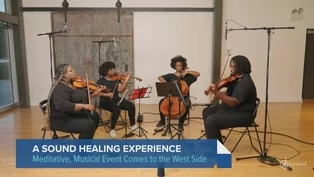
Singer Jamila Woods on the Healing Power of Music
Video has Closed Captions
Clip: 4/23/2025 | 7m 39s | What's known as a sound healing experience is being held on Chicago's West Side this weekend. (7m 39s)
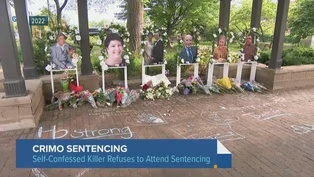
Survivors of Highland Park Parade Shooting Recount 'Utter Chaos'
Video has Closed Captions
Clip: 4/23/2025 | 3m 34s | The convicted gunman skipped his own sentencing hearing as victims shared impact statements. (3m 34s)
Providing Support for PBS.org
Learn Moreabout PBS online sponsorship
- News and Public Affairs

Top journalists deliver compelling original analysis of the hour's headlines.

- News and Public Affairs

FRONTLINE is investigative journalism that questions, explains and changes our world.












Support for PBS provided by:
Chicago Tonight: Black Voices is a local public television program presented by WTTW