Charlotte Cooks
Mahi-Mahi with Fungi | Charlotte Cooks
Season 8 Episode 7 | 26m 46sVideo has Closed Captions
St. Martin Creole' Mahi-Mahi with Fungi
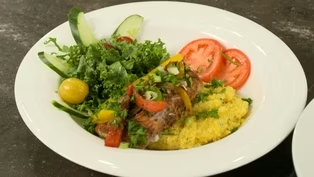
Chef Pamela welcomes Chef Cheryl Watkins from Ms. Elsie's Caribbean Bed & Breakfast into her kitchen to create a meal straight from the Caribbean-St. Martin Creole mahi-mahi with fungi and a crisp salad.
Problems playing video? | Closed Captioning Feedback
Problems playing video? | Closed Captioning Feedback
Charlotte Cooks is a local public television program presented by PBS Charlotte
Charlotte Cooks
Mahi-Mahi with Fungi | Charlotte Cooks
Season 8 Episode 7 | 26m 46sVideo has Closed Captions
Chef Pamela welcomes Chef Cheryl Watkins from Ms. Elsie's Caribbean Bed & Breakfast into her kitchen to create a meal straight from the Caribbean-St. Martin Creole mahi-mahi with fungi and a crisp salad.
Problems playing video? | Closed Captioning Feedback
How to Watch Charlotte Cooks
Charlotte Cooks is available to stream on pbs.org and the free PBS App, available on iPhone, Apple TV, Android TV, Android smartphones, Amazon Fire TV, Amazon Fire Tablet, Roku, Samsung Smart TV, and Vizio.
Providing Support for PBS.org
Learn Moreabout PBS online sponsorship(flourishing music) - [Narrator 1] This is a production of PBS Charlotte.
- [Narrator 2] The following episode of "Charlotte Cooks" is brought to you by Central Piedmont Community College and viewers like you.
Thank you.
(bright music) - Welcome to this edition of "Charlotte Cooks."
I'm Chef Pamela Roberts, and I am very, very glad you're here with me today because joining me, I've got someone fresh from the Caribbean, Ms. Cheryl Watkins.
And she's here from Ms. Elsie's Caribbean Bed and Breakfast right here in Charlotte.
Welcome, Cheryl.
How are you today?
- I am well, Chef, thank you for having me.
- Great.
What are we gonna make today?
- I'm gonna make you a Creole Mahi-Mahi.
- [Pamela] What do we need to make Creole Mahi-Mahi?
- [Cheryl] Well, Chef, we're gonna get started with some mahi mahi.
We're gonna put it in a lemon bath.
A white wine and lemon bath.
- [Pamela] Ooh, a lemon bath.
- [Cheryl] Let's just start with two filets, and then I'm going to grab some white wine for you.
- [Pamela] Any kind of white wine or just- - [Cheryl] I'd prefer something sweet, but I don't mind.
- [Pamela] If it's dry?
- [Cheryl] Yes.
- [Pamela] Remember guys, we talked about this before, about having wine that you cook with.
Make sure it's something you'll drink because you're not always gonna cook with the whole bottle.
So you wanna have something you can have later.
- And I take a couple of pieces of lemon and I use lime.
I use both.
All right, so let's give it a little bath.
And then you take it, and you're gonna flip it in the, in the bath a little bit.
Turn it over a couple of times, and you're just gonna let it soak a little bit.
Let it soak up some of that.
And what we're doing here, really, Chef is just for me, and as my grandmother would say, we're just giving it a little cleanse.
Give it a little acid cleanse.
And then we'll take it to the sink, we'll rinse it off, and then we'll go back and season it.
We're going grab a little cumin, all right?
We're gonna put a little poultry seasoning.
We're coming back with a little ground clove.
- [Pamela] This sounds a lot like a jerk seasoning.
Is it?
What's different between this and a jerk seasoning, besides the heat?
(both laughing) - Jerk has a lot more hot pieces to it.
And this basically is just for us.
- [Pamela] Not gonna be too hot?
- [Cheryl] Not too hot.
- But creole, it's gotta have some heat.
- You gotta have some peppers, being from the island.
- Yeah, absolutely.
- [Cheryl] So you gotta put a little flavor in there for me.
And then just a little pinch of salt in.
Put a little kosher salt in it for me, all right?
Brings out the flavor in the food.
Then I just like to take it and make a nice rub.
- [Pamela] Oh, nice.
- [Cheryl] I'm just gonna rub it all in.
And I'm going to just make sure I get all the seasoning.
You rub them together.
You get all the seasonings interacting with each other.
Give me a nice rub.
- And that stays on too, doesn't it?
- Yes, it doesn't go anywhere.
Food to me has to taste good.
- [Pamela] Oh, yeah.
- [Cheryl] From the seasoning before it even get in the pot.
- [Pamela] Absolutely.
So how long, Cheryl, will we let this season, will let this seasoning sit on the fish?
- We can let it sit for at least 10 minutes.
But my preference is to let it sit overnight.
- Oh, overnight?
- Yes.
Because when you let it sit overnight, the seasons really get into it, and then it just tastes so delicious in the morning.
- You have to do this with a nice sturdy piece of fish though, right?
- But absolutely, yes.
Mahi mahi is one of my favorites.
But you can do it with kingfish, red snapper, any one of those thick good steak fish where you season it up and you have a nice seasoned base in it.
Most of the times when we cook in the Caribbean, as my grandmother and them would do, they're gonna season it overnight.
They're gonna put it in the fridge, they're gonna put all the provisions in it.
And then we come back in the morning, and they make things happen.
- Do the cooking.
- Yes.
I'm gonna add a few more of the green provisions.
- [Pamela] What are you gonna add?
- [Cheryl] This is a little bit of thyme.
As we prepare it for settling, we're gonna put a little oregano, right?
- [Pamela] Mmm, yum.
- [Cheryl] And then we're also going to put a little fresh parsley to start.
- And you could also use cilantro too.
- [Cheryl] Absolutely, cilantro.
- [Pamela] If you didn't like cilantro, obviously, leave it out.
Substitute oregano.
- Right.
- But certainly you could use cilantro.
- [Cheryl] There's a little bit of hot sauce that I like to put in here as well.
- [Pamela] And what kind of hot sauce is this?
This is like a chipotle?
- This is a Chipotle pepper sauce today.
But I can use scotch bonnet.
That's my preference is a scotch bonnet pepper sauce.
So let's just let this sit, and we'll enjoy it, and then I'll be ready to put it in the pot.
So Chef, I'm gonna compliment this with what we call fungi.
Fungi is like polenta.
But it's also, it's like a yellow cornmeal grits.
So basically in the Caribbean, any fish that we do, particularly in the Spanish islands and so forth, and predominantly some of the British islands, like in Barbados and Grenada and those kinds of islands, they would normally call it fungi.
But fungi is made with okra and so forth, and they stir it in and they mix it in.
And fish is served with fungi.
But we're gonna make it plain today because it's more trying to just be accommodating.
And we make it just as a yellow cornmeal base.
- [Pamela] And we're gonna have a lot of flavor in the fish.
- Absolutely.
So we'll start this one a nice medium high.
I always cook my fish in a cast iron.
That's just how I like to cook it.
- Cast iron's wonderful.
- And I mix a little bit of the oil with butter.
I just like to just get a little bit of butter flavor.
Not much, right?
- [Pamela] Just a little bit.
- [Cheryl] Just a little bit.
- [Pamela] And the oil's gonna help keep that butter from burning.
- [Cheryl] Absolutely.
And you're gonna saute it in together.
Then we'll start to add our provisions.
We're gonna put a little garlic, right?
(oil sizzling) We're gonna come back with some scallions.
- [Pamela] Scallions are big in Caribbean cooking, aren't they?
- [Cheryl] Absolutely.
- [Pamela] There's been a lot of things with scallions that I've been reading.
- And some of the seasonings really is, we call it chadon beni.
Like in Trinidad, they'll call it chadon beni, right?
Gonna put some thyme.
I'm gonna add some more here.
I wanna add some bay leaves to this pot, all right?
And basically all I'm doing is trying to brown down the provisions inside of my pot so I can absorb some of the flavor, right?
I'm gonna throw a couple of peppers in here, but I will use them more so for garnish.
- [Pamela] Okay.
- [Cheryl] All right?
And then I'm ready to just add my fish.
- [Pamela] And all she's done is just the vegetables so far.
Here we're coming up with the fish.
- [Cheryl] Just make sure you get everything in it.
- [Pamela] So when we did the wine and the lemon juice and the lime juice in the beginning, that wasn't necessarily for a marinade, it was just to give it a nice refresh, just clean it off.
- Absolutely.
- And make sure the fish is ready to go.
- [Cheryl] And then you just basically pan sear.
- [Pamela] Look at that.
And that's what you get when you cook in a cast iron skillet, guys.
That's it.
- [Cheryl] And that is beautiful pan seared.
If you have a little water for me, that'll be great.
Then we take it, and you just garnish across the top so that you can bake in the flavors.
Turn this one over.
Pretty.
- [Pamela] It's beautiful and it smells so good.
- And we're done.
- So that's just gonna sit there now until- - [Cheryl] That's gonna simmer a little bit.
- [Pamela] We get the fish done.
So now we're gonna make the- - Fungi.
- Fungi.
- [Cheryl] So Chef, we'll begin with adding- - [Pamela] Boiling water.
- [Cheryl] Boiling water.
Then we'll take a bullion, and you just mash it up, squeeze it, mash it.
- [Pamela] You just squish that up?
- [Cheryl] Mmhmm, squeeze it.
- Woo!
- Whoa, wasn't expecting that.
And then break it up.
You just take it and you squeeze it and you mash it up inside the pot, okay?
And then I will add some butter, okay?
I'll probably just add two pieces more so it become nice and creamy, okay?
Chef, I'm going to add a little cream, - All right.
- [Cheryl] Just like grits if you want to.
It becomes nice and creamy.
- [Pamela] And if you didn't have cream, you could use half and half, you could use milk.
- If you're vegetarian or vegan, you can use your almond milks, your almond base and so forth.
I'm gonna borrow a little bit of your pepper.
Just a pinch.
I'm gonna add a little of this just for flavor, but also for color.
And you just put it in the pot and you're just gonna let it slow boil, three to five minutes.
We'll just go ahead and put them in the pot.
And as it boils up, and then the flavors incorporate, then I'll go ahead and stir in the food.
All right, we'll slowly add it in.
You don't wanna put it in fast because you don't want it to be lumpy.
Just like grits, you don't want lumpy grits.
You wanna take your time and slowly add it.
- [Pamela] And you'll feel it starting to get thick too, won't you?
- [Cheryl] Absolutely, yes.
You'll feel the resistance against your spoon.
- Now, Cheryl, does it make any difference if we use white cornmeal or yellow cornmeal?
- [Cheryl] No, if you wanna make grits and you wanna use grits with your fish, so be it.
You wanna bring breakfast to the table at night, by all means.
But this is not a morning or an evening meal.
Mahi mahi is what we serve in the morning for breakfast.
- Seriously?
- Absolutely.
- Oh wow.
I'll come to your place for breakfast.
- You got to.
And so as you see, it's starting to cream up.
And as we turn up the fire just a little bit on this one, so it can cook a little quickly, then we're gonna turn it down and just let it simmer.
And you can cover it.
- How long does it simmer?
- [Cheryl] You can simmer it for at least for 10 minutes.
You don't want it to be greeny.
Although this is a medium coarse harina, you want it to be creamy, but coarse enough so that the fish can sit on it as a nice bed.
And you just keep stirring it.
You just keep stirring it.
You'll let it rest on a low fire.
As you see, it just gets prettier and prettier and yellow.
- [Pamela] It is pretty.
- [Cheryl] It's a nice, pretty yellow base.
Right about here, we're ready, okay?
- Okay, there you are.
- There you are.
And then you turn the fire down.
- [Pamela] Let's talk about our salad real quick 'cause we're gonna put a little salad on the side of this, right?
- [Cheryl] Yes.
I'm gonna just cut myself a few pieces of cucumber to garnish my plate.
Okay, I just like cutting things on ovals.
I have an issue with rounding and straight lines.
We'll take a couple slices, right?
We'll just go down the middle and prepare these for the plate.
I'm gonna grab myself some tomatoes.
- All right.
- And basically, I'm gonna give you an oval cut today.
We'll grab a little kale salad, kale for our base.
I'm gonna grab a few pieces of cucumber and make the plate pretty.
And because it's Caribbean, you know we have to have a lot of color.
- Absolutely.
- So you can't bring a plate to the table if it's not colorful.
- [Pamela] If it's not colorful.
- [Cheryl] Hey.
(chuckles) - [Pamela] It's gotta have color.
- [Cheryl] Absolutely.
I'm gonna take this and let this be my base for my fish.
I'm just gonna ball this up a little bit for you.
I'm gonna put it right here in the middle and I'm going to just grab this nice little piece of fish right here, and I'm going to just plate them right here for us.
- [Pamela] Look at that.
- [Cheryl] And then I'll grab a couple pieces of the peppers that are already in the pot.
Okay.
And if we want, we can even add some more fresh peppers to it and give it a pretty garnish.
But we don't necessarily have to.
I just like the color.
And make it pretty.
- So here we have from Ms. Elsie's Bed and Breakfast, fresh from the Caribbean, we have a Mahi Creole with fungi, peppers, crisp salad.
Isn't that a beautiful, beautiful dish?
This is a marvelous recipe.
(bright music) First thing we're get started on is the bakes, aren't we?
- [Cheryl] Yes, we will.
- [Pamela] Okay, so what are we gonna use for the bakes?
- [Cheryl] For the bakes, we're gonna start with about three cups of flour.
- Okay.
- We're going to put in our baking powder.
We're gonna put a little sugar, a little salt, and we'll mix up your dough.
- [Pamela] You're just gonna mix these dry ingredients together so they get nicely incorporated.
And then we're gonna add a little bit of fat.
This is quite like making some of the pie dough because, except we don't add baking soda or baking fat to our pie dough.
And so what we're gonna be doing here is mixing our dry ingredients together.
Then we're gonna put our fat in and mix that up until it's kind of mealy.
Looks kind of like a really coarse cornmeal.
And we're gonna add some water to it and bring it all together.
This is a lot like making a biscuit.
In fact, you'd mentioned, Ms. Cheryl, that they were like- - Bakes are to the Caribbean as biscuits are to the South.
- There we go.
- There you go.
- There we go.
So we're gonna mix that until it looks like this.
And then we're gonna let this dough sit for about 45 minutes.
- [Cheryl] Once we mix it, and it rests, then we'll set our pot to fry.
Fill your pot enough for the bakes to float.
Flour your cutting board.
Flour it nice so the dough doesn't stick.
And then you just start cutting out your portions.
For every three cups of flour, you can probably get about 12 to 15 bakes out of your mix.
- [Pamela] And you try to make them as consistent in size as possible.
- Correct.
- Usually, you can end up with some big ones, some small ones, and it doesn't matter 'cause you're gonna monitor the frying of them each on their own.
And so once you get them all folded up into little balls like that, we're gonna lay them out on a sheet pan and we're gonna flatten them a little bit so that they actually end up looking like this.
What's gonna happen is now we're gonna let them sit for another 15 minutes, and then we're going, they're gonna get nice and fluffy, and we're gonna put them in the oil over here and we're going to cook them up.
And I'm gonna do that while Cheryl is helping us with the salt fish stew.
So you're doing this, so what you're... You're taking it, you're rolling it into a ball in your hand.
- And then you just pinch it to bring a nice neat ball in your hand.
- [Pamela] So you're just pinching it like this.
- [Cheryl] A pinch and fold, correct.
A little pinch and fold.
- [Pamela] And so what that's doing is a couple things.
It's giving it a nice smooth surface on top, isn't it?
- Yes, you want it to be nice and soft and smooth so that they have the chance to breathe.
- [Pamela] Okay.
And then we're just gonna spread that out like that and put them on the sheet pan.
Is that it?
- [Cheryl] You're gonna get a rolling pin and you're gonna roll them out.
You roll it to the size of a, a little bigger than a disc or biscuit size actually, if that's familiar.
And you wanna get a nice roll on it.
- [Pamela] Depends on it you're making a cathead biscuit.
- [Cheryl] Correct, correct.
And then you just take them in your hand and you stretch it out.
- [Pamela] So it's a nice circle.
- [Cheryl] Correct.
And you set them aside.
Want your oil to get about a good 350 degrees, not to burn, but nice and hot.
So you want to get a nice sizzle on the bakes.
- One thing that we're looking at to go in our bake is a salt fish stew, okay?
So one of the things that we're looking at here is a salt cod.
And you can get salt cod from a lot of different places.
And this, I got this at the local grocery store.
It usually will come wrapped in a bag.
You can find them in the freezer and that kind of thing.
So this one is a product of Canada, and it comes in a nice little wooden box.
And you open it up, and what you see inside here is the salt cod itself.
Okay, you could see big pieces of the salt cod.
Okay, you're gonna pull this out.
And you could see we've got nice long, big pieces of salted fish.
And so what we have to do with this to get this ready to make is we have to remove the salt from the fish.
And so what we do for that is, there's a couple ways of doing it.
If you wanna do it the long way, is you'd basically take the fish and you put it in some water and let it soak overnight.
Or you can take it and you can boil it.
But you'd have to trade that water out, what, two or three times if you're boiling.
- Two or three times to get the salt out of it.
- Yeah, 'cause there is a lot of salt in this.
If you're gonna soak this overnight, I would also trade out that water maybe once just before- - Once or twice.
- You actually... Once or twice, yeah, just before you get it finished so that we can actually not have the salt.
All right, do you think this is ready to go?
- I think so.
Let's take a chance.
- Okay, why don't you show us how to take a chance here?
Got a little bit of water.
Oh, yeah, there we go.
- There we go.
- Okay, so just drop those in.
- Yes.
You can lay them down in your pot.
You can lay as many as you can get in your pot.
- Don't crowd them.
- Don't crowd them.
- You need plenty of room so you can flip them and move them around, all right?
- Right, right.
And you just slide them over.
We have enough room for about five in this size pot.
Where's the spatula?
- There you go.
- And you just keep an eye on them so that they don't... And you just want them to brown on either side.
And the bakes will float.
And like people from Guyana will say, they call them floats.
In Dominican, in the Dominican Republic, they're bakes or Johnnycake.
Some people make them round, some people don't even flatten them.
Some people just make them, they drop them in the mixer.
Maybe it's a little softer.
It's not as dry.
And they'll just drop them in the oil, then you can have them as...
So then they're served in a variety of ways, as always with all cuisine.
And you let them brown on either side and you want them to come to a nice light caramel brown.
- Getting nice and fluffy in there too, aren't they?
- Yes.
And that's the deliciousness in your float because you wanna be able to take your salt fish, slice it, put it inside.
- [Pamela] So it's got a little, like a little- - [Cheryl] You make it like little mini sandwich.
So when you do that, you do it with eggs, you do it with salt fish too.
You could do it with fish cake, however you wanna serve it.
Serve a plantain and a little salad.
That's usually how we present the meal.
Everything for me has to have a little plantain.
My grandmother loved plantain.
So plantain and salt, fish and bakes.
Now Jamaicans usually do salt fish with ackee.
And ackee is a traditional fruit in the Caribbean island.
Mostly the British islands have ackee and salt fish.
And that's a traditional staple in that side, in the British Islands in the Caribbean.
Africans use it as well.
Spanish people call it Bacalao and Bacalaito.
So a lot of Latin countries, that's how they serve it.
Italians use it.
Italians use it and they use it with the polenta.
And it's served with the polenta and salt fish.
And so when I have guests from all around the world, it's not a staple that everybody's not familiar with.
- It's really interesting how sometimes, even though we say this is a typical Caribbean breakfast, you're gonna find these same elements all across the world, served in different ways and all kinds of things.
Why don't we get started on the fish stew?
- [Cheryl] Absolutely.
I want to heat my pot, and then I'm going to just put a little oil, teaspoon, tablespoon of oil, 'cause you don't want the salt fish to stick.
You're gonna drop a little garlic, all right?
You're gonna give me some onions.
- Some peppers.
- Red peppers inside the stew here.
You wanna brown everybody down.
Give me a nice caramelization inside the pot.
- We're flipping these over here, okay?
- Right, you're flipping your bakes.
- All right, now these are almost done, Cheryl.
What do you think?
Do you think these need to go a little bit longer?
- No, they're very good.
- [Pamela] They're good?
- [Cheryl] Yeah, you've done a nice job, Chef.
Put them on your pan.
And over here you're gonna give me a little thyme.
Give me, my favorite thing is some scotch bonnet peppers.
You gotta have the heat in Caribbean food.
- [Pamela] You're gonna have to tell us about scotch bonnets because I've got a bowl of scotch bonnets here, and I want you to tell me about when I go to the store and look at scotch bonnets, what am I looking at?
- [Cheryl] They're colorful.
So when they're green, they're not as hot as when they're yellow and red.
These are milder.
You can make good hot sauce with the green.
But you want the red ones and the yellow ones make a nice hot pepper sauce, if you want to just put that in some vinegar with onions and make that a seasoning.
This one on the other hand- - I've heard people say that they can put boiled carrots in with them to make it not quite so hot.
- Absolutely.
And you put a little pinch of sugar in your vinegar, you put it in a bottle and you let it- - Shake it up.
- Absolutely.
Now I'm gonna add my salt fish to this.
So you take this out of your water here.
- [Pamela] So show them that salt fish.
- [Cheryl] This is a salt fish cod.
- [Pamela] Okay.
- [Cheryl] All right.
It's a pretty piece of fish.
You put it in your pot and you just flake it down.
You just break it up here.
- Use a fork?
- Yes.
And you just take your fork and you just start flaking.
You cut it.
I can do both ways.
- [Pamela] So you want it to be kind of flaky.
You don't want it to be all mushy.
You just want it to be nice and flaky.
Oh boy, it's gonna be spicy, y'all.
- [Cheryl] Delicious, delicious.
This thing is delicious.
It doesn't have to be hot.
And that's an optional ingredient really, if you don't want to use it.
- You can make it as hot as you want.
- Absolutely, absolutely.
But salt fish is really just like a mild.
You don't have to overkill.
Some people who like pepper will always add pepper.
So you leave room for people to add pepper to their fish.
- [Pamela] Now could you use a jalapeno in this?
- You can, but it just depends on the flavor.
I prefer the scotch bonnet.
- 'Cause they have a very distinct flavor too.
- Distinct flavor.
It gives you the... 'Cause scotch bonnet is really what makes Caribbean food distinct in its flavor.
- [Pamela] Makes it different than a jalapeno.
- [Cheryl] Absolutely, absolutely.
I personally just like to add a little curry.
to my salt fish.
- [Pamela] And this is just a regular curry powder that you can buy in the store?
- Exactly.
- You don't have to make up any special curries.
- [Cheryl] A little paprika.
And you give me a little pinch of black pepper, not much.
I like a little parsley.
So you give me my green.
I love it for the color.
I'm very colorful in my food.
- [Pamela] A lot of times folks, when you get parsley on your plate as a garnish, parsley is usually the most nutritious part of the dish that's on your plate.
So parsley is a very, very, it's very high in iron.
It's got a lot of really good things going on with it.
So don't be shy in using parsley.
- [Cheryl] It's really delicious.
- [Pamela] Oh, that looks delicious, Cheryl.
- [Cheryl] You stir it in.
Make sure everything is all cooked in really well.
- [Pamela] Is that it?
- [Cheryl] Almost done.
The scallion on top.
- [Pamela] One thing that you mentioned also that goes with this dish is plantains, fried plantains.
- [Cheryl] Yes.
- [Pamela] I want you to tell me about these plantains because you go to the store sometimes and you see the plantains and you never know what kind to buy, right?
This is what I found in the store just the other day.
So when I'm looking to buy a plantain for this dish, what would I look for and what would I choose?
- [Cheryl] When you're looking for plantain, you really want it to be... A beautiful plantain is always the one that's big and yellow that looks like a banana, as yellow as a banana, that's pretty.
But you want a good ripe plantain to have some tenderness.
So you know when a banana's not too ripe and not too soft?
When they're a little bit dark like this, that means they're getting really ripe.
So you wanna hold it, you wanna be able to squeeze it a little bit.
You want to have a little tenderness to it.
The softer it is, of course, the sweeter it is.
Green plantains, we normally use green plantains when we do like a fish stew, like if you're doing a king fish, like you're doing a escovitch.
- 'Cause these aren't sweet.
- Right.
Or you can do it like Haitians do it.
Haitians take green plantain, they'll slice it, mash it inside the skin, salt it, fry it, then they'll come back and put it back in the skin, mash it again and they eat it dry.
- Oh, like a tostone.
- There you go.
- Oh, you guys have seen those, I'm sure.
A tostone, yeah, okay.
- [Cheryl] These are your overripe plantain.
You gotta be really careful with these because these can be too dry.
If the skin is dark like this, and if there's no firmness in it, it's dry.
You don't wanna buy that one.
All right, so we won't get that.
- So this is what you're looking for for a sweet juicy fried plantain.
- [Cheryl] Right, if you like sweet plantain.
- [Pamela] And if you're doing it for not so sweet, you wanna get the green ones and think about more of a savory dish for this, like with your fish.
And these, leave them in the store.
- And if you're using a green plantain, we also serve green plantain usually boiled.
So you can boil it.
You boil a green plantain.
You take your fish, you take your stew, your onions, you put it on top and you serve that as a side dish.
- [Pamela] Does it have a banana flavor?
- It's a little bit like a banana, but plantain still.
They're cousins, but they're not the same.
It's not the same flavor.
- [Pamela] Got it, cousins but not the same.
- Right.
- All right, so how about we go ahead and plate up?
You wanna do that?
- Absolutely.
- Okay, so what we're gonna grab is a couple of plates.
- Sure.
- And why don't you put the fish stew in here?
- Sure.
- And I'm going to grab a little bit of salad because we're gonna put a little bit of salad with this.
- I want to borrow your scooper, Chef.
- Sure.
The salad is...
I love green salads with just about everything and I'll put salad on almost everything I'm going to be eating.
So then I'm going to grab a bake.
Ooh, which one should I use?
I'm gonna grab this one.
How many should I put on these plates?
- You can put two.
- Two?
- Sure.
- Okay.
Put a couple of bakes on.
- Correct.
Give them something to eat 'cause then they're gonna think we're being meager, Chef.
- [Pamela] Yeah, we don't want them to do that.
- [Cheryl] Chef, folks that come to see me like to eat.
- [Pamela] These are your fried plantains.
These are already done.
So we're gonna put a couple of these on our plate.
Wake up Caribbean style.
Here we have some fried bakes, some salt cod stew with salad and some fried plantains.
I hope you try these recipes at home.
You can see this wasn't too difficult, it was very easy.
It went together lovely.
If you have any questions, I'd be happy to answer them.
Send me an email at pamela.roberts@cpcc.edu.
You can watch this show and past episodes on PBS Charlotte Passport or subscribe to our YouTube channel.
Thank you for joining us.
- Thank you, Chef, for having us.
We enjoyed it.
- We'll catch you next time on "Charlotte Cooks."
(flourishing music) - [Narrator 1] A production of PBS Charlotte.
Providing Support for PBS.org
Learn Moreabout PBS online sponsorship







Support for PBS provided by:
Charlotte Cooks is a local public television program presented by PBS Charlotte