

Medicine Ball
Medicine Ball
11/9/2026 | 56m 15sVideo has Closed Captions
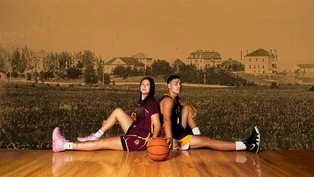
Through basketball, Native athletes face their campus’s boarding school legacy.
“Medicine Ball” follows Native college athletes Lexus Redthunder and Leroy Staples-Fairbanks IV as they navigate basketball and college life at the University of Minnesota Morris, located on a former Native boarding school site. Their journeys reveal how basketball became a source of resilience, hope, and cultural pride in Native communities.
Problems playing video? | Closed Captioning Feedback
Problems playing video? | Closed Captioning Feedback
Medicine Ball
Medicine Ball
11/9/2026 | 56m 15sVideo has Closed Captions
“Medicine Ball” follows Native college athletes Lexus Redthunder and Leroy Staples-Fairbanks IV as they navigate basketball and college life at the University of Minnesota Morris, located on a former Native boarding school site. Their journeys reveal how basketball became a source of resilience, hope, and cultural pride in Native communities.
Problems playing video? | Closed Captioning Feedback
Where to Watch Medicine Ball
Medicine Ball is available to stream on pbs.org and the PBS app.
(bluesy rock music) (basketball bounces repeatedly) [Pres.
Joe Biden] Generations of Native children stolen, taken away to places they didn't know with people they'd never met, who spoke a language they had never heard.
Hundreds and hundreds of federal Indian boarding schools across the country, tens of thousands Native children entered the system, children abused emotionally, physically and sexually abused, some left for dead in unmarked graves.
But the federal government has never, never formally apologized until today.
I formally apologize as president of the United States of America.
♪ The long walk ♪ The long walk (drum beat) ♪ The long walk ♪ We're still here ♪ We're gonna sing our song, we're still here ♪ ♪ Even though they thought we were gone, we're still here ♪ ♪ Bosque Redondo failed ♪ And my people got stronger and we will prevail ♪ ♪ The long walk ♪ Walk on (electric guitar chords) ♪ Walk on ♪ Walk on (electric guitar chords) (sneakers squeak against floor and basketball bounces) (distant band music plays) - When I come to a ball game, it puts me right back to when I was playing, when my dad was coaching, you know, at a smaller school, an Indian school.
Native basketball is just by nature fast paced and so I really enjoy the speed of the game.
History defines who we are and what we do and we've been left out of a lot of history.
(rhythmic rock music) Our involvement in early history of basketball is not very well known.
So it was introduced to the Native community early on in the very creation of the sport.
(projector whirs) Basketball was invented by James Naismith when he worked for the International YMCA.
He invented the concept around other sports and I think primarily Native because those are the best examples that he had.
My family goes back to the beginning because they actually worked with James Naismith.
He was amazed that basketball fit our culture.
We're faster, we could jump better, we could communicate non-verbally.
In the early days, when it was first played, as we understand it, within the Native community.
Before it was with girls, but there were 10, 20 on a team.
It was more like tackle football.
That first game that I'm familiar with took place was at Big Stone Lake.
So that was the first place that basketball was played by Natives, five by five, and the YMCA then went into the boarding schools and basketball then went with it.
And so that's why I say to us, it is our culture.
Basketball is our culture.
It became our identity through boarding schools.
[projector whirls] So that's why it's so spiritual to us.
We were a part of the creation of the sport.
- Howdy.
[Syd] Hau mitakuyepi, good to see you.
- Now, we got like three or four Native guys on the team this year, it's pretty cool.
[Syd] Having Native players that come from the reservation going to an off-reservation school that was at one time Native land as well as BIA land makes it all the more interesting.
(whistle blows) - One, two.
(buzzer blares) (pot sizzles) [Lexus] My mom calls it hobo soup, but it's really just like whatever she has in the kitchen, she throws into a pot.
And that's kind of why I like to make soup because it's so easy and I'm not really the best cook.
So whatever you throw into a pot, it essentially comes out good.
So I like to call this a Dakota delicacy, chicken wild rice.
Han mitakuyepi, cante wasteya nape ciyuzapi.
Lexus Wakinyan Duta emakiyapi ye.
My name is Lexus Redthunder.
I am from Sisseton, South Dakota.
I am an enrolled member of the Sisseton Wahpeton Oyate of the Lake Traverse Reservation.
I graduated from Sisseton High School.
I now play basketball at the University of Minnesota Morris.
Do you wanna go first?
- Yep.
- Stand up.
So I grew up in Sisseton and Sisseton is located within reservation boundaries.
However, the Lake Traverse Reservation is quite different than other reservations, meaning it's not closed off to white people.
So it's kind of sheltered from things even though there still is people that struggle.
There's a lot of addiction and alcoholism and still poverty.
But I grew up very fortunate.
I had a lot of opportunities and I took advantage of them.
I had education, I had basketball.
Basketball took me to so many places.
I was able to go to tournaments and travel.
And then you wanna know something funny?
We went to Ashaun's Res.
So Ashaun's actually from Rosebud and in May, for a basketball tournament and he got second place.
But my team, of course, we got first and I actually got MVP and they gave me the star quilt for MVP.
Yeah, I really like this one actually.
This one's super cute.
I love this one.
I know we wanna get a blanket ladder but on a budget.
So, {laughs} college version.
- I'm LeRoy Staples Fairbanks IV.
I'm from the Leech Lake Band of Ojibwe up in Cass Lake, Minnesota.
And I go to school at the University of Minnesota Morris.
(Chatting in the background) - Come on, hurry up, get your PS5 out bro.
- Dude, I'm just, lemme turn this quick.
What am I supposed to do?
Just stop?
- Yeah, lets call Makwa.
So before Morris I was just living life on the Res.
Go wake up, go to school, go to school, but not really go to school, just hang around and play basketball or video games like we usually do.
And the goals was just wanna play college basketball.
[Laughter] Yeah, that was a bad one.
That wasn't me.
[Leroy] We have a board here.
We got names for everyone.
Wins and loss records and as you can tell, I'm the best 2K player in the house.
- [Person Off-Camera] Yeah.
[Leroy] Basketball been in my life since when I can remember, all my uncles, Dad, he just put it on us at a young age.
My Uncle Brady, he attended Bemidji State for two years and then he transferred to Haskell down in Lawrence, Kansas.
And he was the All-American down there.
But he lived with us when we were younger.
He's biggest basketball dude in Cass Lake.
Everyone knows him.
So he's kinda like my older brother a little bit, but just watching him and living the life of basketball and you get life lessons through basketball, not even realizing it till afterwards where it just helps you become more of a man that I am.
[Lexus] So now this will all simmer together for about 20-ish minutes.
Okay, babe, you're on soup duty now.
♪♪ I don't think there was ever a specific moment I knew that I wanted to take basketball seriously.
It was almost like I couldn't take no for an answer.
Like, it was something I was so set on.
In high school, I wanted to leave my mark and do something bigger with basketball to show kids that they could do something beyond high school.
'Cause I feel like growing up on the reservation, it's kind of like you're already put in like a boundary and that boundary's not only like within land, but I feel like just life overall.
And kids kind of grow up with that same mindset, that they can't like exist without these boundaries.
And I kind of just wanted to push those boundaries.
I wanted to be an example that you can go past them and I feel like basketball gave me the opportunity to do that.
[Rock music builds] I joined the varsity team at eighth grade.
We went to state that year, but we had a pretty darn good squad and we were pretty deep, but that was just the best time of my life, being there with them, feeling like I was together as a team.
And then ninth grade all the way to 12th grade, made it to the section championship.
[Announcer] After the Eagles made one free throw, Kaydin Lee for the win.
No, but LeRoy Fairbanks there for the putback as time expires.
We're heading to OT, in overtime.
- But couldn't get past it for four years in a row.
But it was fun.
I scored my 1,000th point in my senior year.
- [Announcer] LeRoy Fairbanks surpassed the 1,000 point career milestone right at the start of the game against LaPorte.
It's something Fairbanks knew was the reality after his big junior season last year.
(leaves rustling) (car engine rattles) [Lexus] Out of high school, I got a full ride offer to the College of St.
Mary in Omaha, Nebraska.
And I was there to study physical therapy and I was really excited.
I met a super amazing group of girls and I love them still dearly.
And I had a pretty good year of basketball.
I started like majority of the games, but at the same time it was COVID and my family was getting sick.
I knew I wanted to be closer to home and when I wanted to transfer from my first school to Morris, I was really scared on kind of being judged.
Sure enough, like I came to my visit maybe two weeks later and as soon as I got to campus, like I don't know what it was, but I knew I had to be here.
(contemplative music) [Leroy] As soon as I came here, I seen Natives and I was like, wow.
I was like, they're here.
We were walking around and we walked past the Multi-Ethnic Resource Center.
They were talking about how this building is the last part of the former boarding school here.
And I was just like, "this place used to be a boarding school?"
I didn't really know how to react because I haven't really learned a lot about it.
[Rock blues music intro] ♪ It don't feel ♪ The way it's supposed to ♪ And I know ♪ Every dog has its day ♪ But I'm trying ♪ Trying so hard ♪ Trying so hard [Lexus] But what really intrigued me was who ran the boarding school and it was the Sisters of Mercy, and that's who ran the school that I just came from.
It honestly made this like tight feeling in my stomach that I still get.
I don't know how to explain it, but that's just something that's so like interconnected in a way.
Like, somehow I'm still in this system.
I didn't really know anything.
But that was just something that's odd.
Like, that's kind of weird.
(sneakers squeak against floor) (group chatters indistinctly) (basketballs thud against floor) [Syd] What I know about basketball is I loved everything about basketball, the running, the shooting, the smell, the sound and the understanding you'd get from being a part of something that's bigger than you.
That's holistic if you allow it to be.
[Rock music] ♪ You want it all, to have it all ♪ ♪ To gain it all so nobody else ♪ ♪ Could gain a thing, want anything ♪ ♪ The pain it brings just living your life ♪ (drums clash) ♪ For only one, not two ♪ We spin around you ♪ It's only life ♪ It all comes burning down ♪ Crashing into the ground ♪ Crashing to the ground (players chatter indistinctly) [Leroy] I am excited to meet you today.
I've been asked to talk about my personal background with basketball, coming out of boarding schools in particular.
And you're going to such a school, a college that was, you know, an Indian boarding school.
And so that history is important not just to us but everybody else here.
And those people who were here, their spirit is here with us, they're guiding us.
On this ground, you know, are those stories that a lot of people don't understand.
So I'm gonna be speaking about that, but I'd like you to help guide me in terms of how I should speak about it, what your experience has been, some of the things you've learned about the college here and your personal experience so that I can bring back to the school that sense of place and those stories that will make everybody else strong because they're here.
(uptempo rock music) - Even if there's one person in the crowd, show must go on.
This evening you will witness some of the dances that we do in these contemporary times.
♪ This heart will break (groovy rock music) ♪ And this pain you will take ♪ And this life ♪ This life is yours ♪ Won't you make it ♪ Won't you make it ♪ Something more ♪ So I run to you ♪ So I run to you ♪ So I run to you ♪ So I run ♪ Run to you, you, you, you (upbeat rock music) [Lexus] Knock, knock.
[Kevin] Hey, Lexus, how are you?
- Good, how are you?
- Do you wanna grab a seat?
- Yeah, so, I have a project that involves these pictures from the old boarding school here at Morris.
- Okay, yeah.
- And I just need help kind of getting the historical facts of the Morris boarding school and the things that have happened.
Kind of like a timeline, I guess.
- Okay.
- I think would be best.
I feel like Carlisle has like the really bad stereotype that was like really negative.
A lot of children necessarily didn't make it back to their homelands.
- Yeah.
- And, Morris I feel like it has a picture that it wasn't necessarily a bad thing.
Like, it was a good thing.
Like my family, like my own relatives, like they say that they brought agriculture back.
Like, they try to look at it as a good thing.
But I don't know if that's from trauma or if it actually is.
I'm trying to bridge the gap.
You know?
- Boarding school experiences are different for every community, every family, every student, right?
- Yes.
- But on the whole, Morris was a pretty difficult place.
All the bad things that you hear about with relation to boarding school history, those things happened at Morris as well, and definitely don't want to cover those up necessarily.
When this place opened, there is a kind of optimism that Native people become sort of the intellectual equals of non-Native people.
But as the boarding school at Morris transitions away from the Catholic era and toward the federal school, the curriculum gets geared less towards academics, more towards vocational labor.
Students are expected to spend half of each day doing the work that keeps the school functioning.
It's a curriculum of low expectations for Native people, in large part because they're Native people, because they're not equal.
From the late 1890s through the time the school closes, they get $167 per student per year.
So this means the only way for the school to get more funding is to overcrowd, which is a big health hazard.
And you have diseases like typhoid fever, diphtheria, tuberculosis, influenza, all of these things are present at Morris.
So the work, the diet, overcrowding, are really deadly blend of factors.
As a result, students did die at the Morris School.
[Contemplative rock guitar] As early as 1898, there are credible allegations of abuse, both sexual and otherwise.
Most often, these allegations are passed along by Native employees at the school and inspectors come pretty regularly.
Most of the time, they don't do anything.
Some interesting things that come out of the archives, though.
In 1901, A. O. Wright is an inspector for the federal government.
As he's sort of inspecting what's going on at the Morris School, he notices that both Native staff and students are speaking lots of Ojibwe and they're expected to never speak Dakota or Ojibwe with Native classmates.
And he basically says, this place is failing.
It's morally corrupt.
So you see these signs that at times and in places students are working to hold on to their language as they go through this experience that's supposed to erase it.
[projector stops] [Kevin] So I wanted to ask you about, its your great-grandmother Mary Redthunder, right?
- Yes.
- How did you find out that she went to the Morris School?
- So it was actually my older sister, Jessica, went to school here.
She came to Morris to kind of visit me and return some books to the library.
But she just asked me if I wanted to see something interesting and I was like, "Sure."
And she asked me to go to the library with her and she took me up to the fourth floor, which I've never been to.
And sure enough, she was just pulling out these files and it was files with our paternal great-grandmother's name, Mary Redthunder.
And, the feeling that I got was just so like, I don't even know, like even now.
- You okay?
- It's indescribable.
It's like a paradox 'cause I'm here too.
My sister was here and somehow like I have such an opportunity though to rewrite the legacy that Morris has had on my family and that's how I'm trying to look at it.
But that's how I came about it.
- Yeah, and that was the first time, since then I've had lots of other students who have had relatives go to the boarding school and then enroll in college here.
But that was the first time and that kind of hit home for me that this is people's families we're talking about when we talk about the history of this place, so.
[somber music] (cymbals rolls) [introspective rock music] Hau, Boozhoo Hau, Boozhoo Yeah, just came from class.
I'm working on this community talk that we're gonna have in the spring next semester, the boarding school that was here beforehand.
Like, how would you go about honoring those past relatives of ours?
- Well, I heard a real short clip, President Joe Biden somewhere in Arizona he went, and did a fairly long apology on the boarding school system in the United States.
[Pres.
Joe Biden] It's long, long, long overdue.
Quite frankly, there's no excuse that this apology took 50 years to make.
The federal Indian boarding school policy, the pain that it has caused, will always be a significant mark of shame, a blot on American history for too long.
- He said it was 50 years overdue, but I think it was way more, it's been more, longer than that.
I felt like it was just a real brief acknowledgement.
- Yeah.
- You would think a story like that would impact the whole United States and you would think they would be talking about it continuously, you know, and they didn't.
It was just really brief and, but I think the bottom line is at least a United States president did that and made that apology.
And so, you know, in this context you're talking about you're gonna be speaking and you're gonna be thinking about the past and the students that went here.
You want to honor and commemorate them in a good way.
And the way we do things as Anishinaabe people, we either put tobacco down, Asemaa or we sage, we smudge, right?
And so I recommend to you when you begin that, you get sage like this and you roll it up, you'll roll it up and then when you're doing your talk, you leave it in your hand like this and you'll speak to the people.
Some people, maybe they'll put it in their pocket.
- Uh-huh - And then as you're speaking and you're commemorating and honoring, then when you're done you go on your own and you burn the sage.
It's sort of like a prayer.
You're doing a prayer and once you burn that sage, when you burn it, the prayers are going, it's lifting into the spirit, to the spirits above.
So that's a good way of doing it.
Even as Native athletes, Native basketball players, sometimes they'll take a little pinch even and they'll carry it when they're playing.
- I put cedar in my shoes.
- Yeah, yes, or cedar in your shoes.
And that, those are teachings that are common practice in our life way as Anishinaabe people.
We put cedar in our moccasins even when we're dancing.
- Yeah.
- And those serve as protection, guidance.
You're taking care of your soul.
And so in everything that we do, we have that relationship, we have that understanding.
[Leroy] Being away from home at college is just a whole new experience, moving away from your parents' house, going into a dorm.
In the dorms, I had asked people my first week how to wash some laundry, you know?
And, but it comes together and it makes you who you are.
But the challenges were like, I got sick a lot my freshman year.
[weights clatter] Messed up last night.
Didn't get some good rest.
I have type 1 diabetes.
And for me at the time, I didn't really know what came with that.
So I was just like, whatever.
But I don't realize that until there's just days where you're just like, oh my God, I gotta take another shot.
Or God, I gotta eat, keep eating more sugar 'cause my blood sugars won't stay right.
Or else leaving practice early or being late to class all the time, things like that.
It definitely comes with feeling like.
(LeRoy sighs) I gotta handle this business while everyone else is having fun, you know?
But it also comes with the fact that like, hmm, I'm different than you guys a little bit.
I got my edge on you.
Something I deal with every day and takes toll on you at different times.
(heavy breath) ♪ Well death was put in front of me ♪ ♪ But I don't fear ♪ Because if God's love is a disease I got it bad ♪ ♪ And there is no cure ♪ So over death I stand [Trainer] Hey Lex, how are you?
[Lexus] Good, how are you?
- How's the knee feeling?
- Pretty good, about six weeks postop today.
- About six weeks, yeah, that sounds about right.
Okay - Let's hop over here.
[Lexus] Finding out that I tore my ACL and my meniscus and on the other side, it automatically just threw a complete like wrench in everything.
Like right now at this point it's like you can't even envision yourself running, let alone playing basketball.
- Well let's just start with your isometrics.
- I remember the first time I tore it, I remember my dad, he dropped me off and I was still a mess.
I was crying and all this and he just, he hugged me and he said, "The ancestors will take care of you."
There's times where I'll need to ground myself and just to relax and give myself the grace to recover and just slow down.
(knock on door) [Coach] Hey, Lex.
- Hey Coach, how are you?
- Good, how are things going down here?
- Pretty well.
- What's the update?
- So I'm six weeks as of yesterday.
So that's kind of where the fun things start happening.
You get to do more exercises instead of just like raises and stuff.
- There you go.
How soon until we start shooting?
(group laughs) Yeah, knocking down shots.
Lexus' injury happened during practice early in the season.
This was before we even competed.
We were preparing for our first exhibition game.
She was in the lane with the ball.
She was making a post move.
She did a pivot and no contact, just went right down to the floor.
- Rolling around, I couldn't breathe it just hurt so bad.
And it was the most like excruciating pain I've ever felt.
The pain that makes you wanna jump outta your own skin.
[Coach] By the time I had walked over to her, Lexus was holding her knee and she looked right in my eyes and she said, "Coach, I'm so sorry, I'm so sorry."
And so she internalized that like she was letting us down at that moment 'cause she knew, she knew right away what had happened.
She'd been through it before.
And for her to not think of herself but to think of her team at that moment, that just, I mean, crushed me actually, you know?
And because of that we are all just pulling for her, you know, to get through this injury, to come back, play for us, compete with us once again 'cause I really want success for her.
[Leroy] What up, what up, Ray?
Lex, what's up?
- Hey, LeRoy.
- What you up to?
Some broken legs?
[laughs] Yeah, actually.
Are you excited for the game later?
- Yeah, I come in here to get checked out by Ray and put some cedar in my shoes, actually.
- Really, cedar?
- Yeah.
- We always use like sage.
I don't know, my dad's always said it's like for protection, like put it in the bottom of your shoe.
- Yeah.
- You like put, put it on the bottom?
- Like within the sole.
- Really?
- You just lift the thing up and then put in there, yeah.
- Huh, I saw some people would tie it to their shoelaces sometimes.
That was kind of doing too much.
- Trying to be like Kyrie.
- Yeah.
(Lexus laughs) (uptempo rock music) (uptempo rock music continues) [Reading] Lex, you are awesome.
I really appreciate your perseverance, especially with basketball.
You are very kind and strong along with amazing basketball player.
I hope your surgery went well and all of your healing is on the right track.
I have been praying for you and your wellbeing.
I appreciate you a lot and I look forward to seeing you.
Remember you always have a friend in me, whatever you need.
Stay strong.
♪ You want to tear your room apart ♪ (team cheers) ♪ You let your rage, flow through the bass ♪ ♪ You let your stereo kiss you in the face ♪ ♪ Old medicine (group cheers) Staying connected with my team and basketball is something that is really like at the center of my recovery.
So it has been really helpful like being around the team, even if it does raise those feelings of like sadness and, it's still really helpful.
And me being the only senior, I feel like they still look at me in a certain light.
So I'm kind of just wanting to just be like a symbol of a strength for them.
(group cheers) (buzzer resounds) [PA] Checking in, 22, LeRoy Fairbanks.
[Coach Paul] Leroy is an outstanding teammate.
Big smile on his face all the time.
Guys love him.
He's the first to help somebody off the floor, to congratulate somebody.
And he's a great three point shooter, but he's also got the mid-range, which you just don't see very often.
So we like to put him at the free throw line against zones.
He just, he's got a big personality, he's a great kid, comes from a great family and he's become a very good student which from our standpoint, it's just great to see.
That's our number one goal.
So I mean, he's really close to getting that degree, which is the ultimate goal.
He's the type of kid that you want wearing your jersey, representing your school.
(group cheers and applauds) ♪ Don't let it take your smile ♪ Don't let it make you wild [Leroy] I had a year where I sat on the bench the whole year and that could really bring a person down and I seen people just get up and walk out.
But I don't know, I really love this game and getting the chance to showcase it at a collegiate level has always been my dream.
So that's what really pushes me every day, today.
I just want to be the guy out there, you know?
I'm, think to myself like, you put a lot of work in to be here so you know, enjoy it.
And thanking Gichi-Manidoo that I'm here every day.
You know, you had ancestors that used to be here and maybe not good things happened but you're here now and you gotta make the best stuff happen instead of it always just being a bad story, you know?
♪ Lay down, don't rely on ♪ Lay down, don't rely on ♪ Lay down, don't rely on ♪ Lay down, don't rely on ♪♪ Lay down, don't rely on ♪ Lay down, don't rely on ♪ Lay down ♪ Lay down, don't rely on ♪ Don't!
♪ Rely!
♪ Don't let it bring you down ♪ Don't let it bring you down ♪ Don't let it bring you down ♪ Lay down, don't rely on ♪ Rely on the one wearing the crown ♪ ♪♪ Old ♪ Medicine ♪♪ Old ♪ Medicine ♪ Don't let it bring you down ♪ Don't let it give you a frown ♪ ♪ Don't let it take your smile ♪ Don't let it make you wild (crowd cheers) [swish] [upbeat rock music] (crowd cheers and applauds) (crowd cheers) (upbeat rock music finishes) (crowd cheers and applauds) (buzzer resounds) - [Announcer] (indistinct).
[Syd] And my parents were the first graduates of Flandreau Indian School.
That's where they met.
They then went back to work there.
So I was literally born and raised in that boarding school.
(projector whirs) Boarding schools were very much discipline, assimilating us into a dominant culture through control and punishment.
Basketball was a way of liberating us because much of it included our traditional sports of running and jumping and throwing.
What I learned early on, my dad was a fluent speaker, but he could speak in the gym.
Just he was there with the players.
They could speak their native language, and they did, and build relationships around physical activities.
The French pitted us against each other.
Ojibwes and Dakotas competed for the fur trade.
But when we got to boarding school and we came together as sports, there was no boundary line.
People from different tribes were brought together and we formed inter-tribal teams.
We saw that we were experiencing the same traumas, the same struggles.
In one sense, the boarding schools operated against the very purpose to assimilate us and move us away from each other.
We found ways to come back together and I think sports was very much a part of that process.
[Leroy] It's cool just like, I've been to plenty of tournaments where there's people from all around the country and just to see their style, it's a different style.
But all in all, it's still res ball.
(upbeat guitar music) (crowd chatters indistinctly) (Powwow Singing) (singing continues) (energetic rock music) (whistle blows) (energetic rock music continues) (whistle blows) (crowd cheers and applauds) ♪ Where do I go from here ♪ Oh Lord, I'm so drenched in fear ♪ ♪ This mind is weak and weary ♪ The groom is coming (buzzer resounds) ♪ For his bride (energetic rock music continues) ♪ Come on ♪ I'm just an old dog dying ♪ I'm just an old dog dead ♪ I'm just an old dog dying (whistle blows) (whistle blows) (crowd cheers and applauds) Sorry, guys.
Love you, thank you.
(crowd chatters indistinctly) [Syd] When I went to school at North Dakota State School of Science, where I played basketball, I went to school with Norman Redthunder Jr.
And we used to go down to Sisseton every weekend and stay with I think Maxine DuMarce.
- That's my grandma, that's my dad's mom.
[Syd] Norman and I became very good friends and ... - Oh my gosh, [laughs] that's Syd.
- I'll show you something even scarier.
My dad was amazing basketball player and he coached, but here is their state championship team.
The captain of his team was Norman Redthunder Sr.
- So it was his dad.
- There are these families that go back to my time.
We intersected through the boarding schools and we continued to build those relationships.
You know, I have a list of all the students that were at Flandreau School when my parents were there and there's a whole bunch of Fairbanks.
[LeRoy] Yeah?
- A lot of 'em.
When I moved back to Minnesota saw this amazing basketball player, I think he played outta Cass Lake and I think one year, he was the leading scorer in the whole state in Minnesota.
- Yeah.
- So aren't you related to him?
- Yeah, that would be my Uncle Brady.
- He is about the same size, 6'4" or 6'5".
- Yeah, he's a little guy to me now.
(Group laughter) (gentle Rock music) [Leroy] Oh, what up?
[Brady] How did the tournament go?
- Ah, we took a couple L's.
- What happened?
- I don't know, man.
We weren't playing, you know, team basketball.
- You know, we talk about taking Ls and what we do after that.
- You gotta get back in the lab.
(Brady laughs) - It ain't gonna change either, right?
- Uh-uh.
- You know, when I was a little bit younger, kind of going in college, you know, we didn't really have anyone to look up to.
Your dad helped me out 'cause no one else went to college.
You especially would come watch, you know, as a little guy, you and Dominic.
Knowing that I'm on a platform, I wanted to make sure I was doing my best so I could showcase it for you guys.
[Practicing] Same move, same move.
[basket ball thudding] (Brady and LeRoy laugh) - Now you're about to be a senior in college.
You know, you only got one year left before you come home.
I think you need to start taking a look at is who's watching you?
How do they look at you?
How are they, how are you gonna approach these little ones who want an autograph from little LeRoy, you know?
- Wanna switch?
- I like shooting.
There we go.
- You're the second generation coming up.
There's a third generation coming after you.
Your little brother, your little sisters, you know, a lot of people who look up to us in this community.
We have a responsibility to give back.
You know, how are we gonna give back?
(gentle music continues) [sneakers squeak against floor] [sneakers squeak against floor] (players chatter indistinctly) (gentle music continues) [Steve] Model it up.
The name of the team is called the Onigum Nighthawks.
And it started in the '60s and the players that I watched, they were all excellent basketball players and they would travel, they would win championships.
That's what inspired me to continue playing and getting better.
When I finally got outta high school and started playing with them, we were invited to go travel to Phoenix, Arizona because they had a national championship.
We'd win first game, won our second game, won our third game, finally got into the championship game and we ended up winning by two points.
[Tribal Chairman] When we had the center built in 2017, I wanted to name this gymnasium in fitting to our Onigum Nighthawk team 'cause they kind of put Onigum on the map.
(gentle music continues) Steven] I was very fortunate that the older players deserve a lot of credit for teaching me how to be professional and how to stay focused.
And I would like to see that also with the youth today.
You build a relationship with the kids as a coach.
I think that's the most important thing you do.
You gotta teach them life lessons.
And what I learned from my mentors, I was trying to pass on to them.
♪♪ When I'm with you, oh ♪ When I'm with you ♪ I feel like I'm home ♪ I'm home ♪ With you I'm home [Paris Redthunder] I this it's cute.
Your senior pictures were always, I was always jealous of.
I wish you did the one with your basketball against the bleachers.
(oven buzzer rings) [David] Hot dish [people woo] That it is.
[Group] Looks good.
[David] If you're gonna blame anybody, [Lexus] I'm so hungry.
[David] blame Lexus.
[Daughters together] Why?
[David chuckles] - It's good.
- [Lexus] Dad, early on he would always say like, every time I drive to Morris I could just think about our ancestors and how they got here.
I just wonder how it felt.
- You know, my grandma Mary Redthunder, when she went to Morris as a residential school, and so when I'm driving to and from, I'll look off in that direction and I'll think my grandma as a young girl made that track probably on a train with her brother, um, and going to school there.
My great-grandfather and grandma, I'm sure they didn't go with her to Morris so they would've had to have seen them off at Browns Valley.
- Did you always know that your mom went to boarding school?
Like, from a young age?
- Yeah and I think I... - Like when... [Paris] Like that's the whole reason we don't speak.
- I've always had a block because of my mom.
She said nothing good comes from speaking our language.
And that's a boarding school.
- If you have such strong feelings about like boarding schools, why are you okay with us going to, you know, Morris?
- There's a difference from a boarding, a residential school and a college.
There's a big difference.
- There is a big difference but it's the same place.
- You are not forced there.
- You can't.
- But the memory of that is still there.
- You are getting knowledge, you're getting the opportunity to grow your life.
That's something that Mary and them did not get to do.
- You're reclaiming a space that has once done so much bad to your people and the fact that you're accepted in that place 100 years later, that's what it's all about.
[background chatter] You've never seen Dad around pie, I'm not gonna lie.
Yeah.
[Lexus] I'm gonna cry.
(group laughs) Oh my gosh.
[Paris] Let it out.
- So Dad, I just wanted to gift you this Pendleton as a token of my appreciation.
I know I've done a lot of good things in my life, but I hope you realize that I am in the position I am because of you.
And you may have not like put me here, but the characteristics and the qualities that I have are directly stemming from you.
[David] Oh, thank you.
Thank you.
I appreciate it and I love you immensely.
[Paris] Yeah, we never hug.
- Yeah.
(group laughs) - And it's funny 'cause I've always hugged Dad, like.
- Especially after you like moved out, it's like, "Did you hug Dad?"
And I'm like, "I forgot."
- I'm, you know what?
I'm always glad that she does that and I'm glad, I try to hug all of them, my daughters, because my mom never hugged and I never understood why.
- See, I'm healing.
- But it's that boarding school and so I've always made it a point to try to hug them because that's giving energy back and forth.
But that's something that was taken away from us.
(emotive music) [Lexus] My dad's real traditional.
Like, we have a sweat lodge in our backyard traditional.
But my dad's real simple too.
My dad always says like, if you are, you're overthinking, like to ground yourselves.
And he'll be like, "Lex, just go outside, take your shoes off, take your socks off and you stand in the grass.
If you feel the sun, that's all you need.
You be grateful to wake up.
You be grateful to go to sleep.
You be grateful for what Creator has gave you."
♪ Better days ♪ Coming our way [Student Leader] Welcome everybody!
This is gonna be a good conversation.
[Syd] Basketball as a sport, you know, became our spiritual way of survival.
And if you think about the basketball is a drum pounding.
(drum pounds rhythmically) [LeRoy] You go down to the state tournament and you are 17 (indistinct).
[Syd] I was in a magazine with Wilt Chamberlain and I've got documentation right here.
[Lexus] My family legacy was always interwoven with basketball.
I may not have known it.
I feel like there's a lot of gaps in my family's history because of the boarding school era and what my family has went through.
[Syd] We were really taken away from our families, but we were brought into a bigger family, which is the inter-tribal family.
- [LeRoy] You see people from each part of this country all playing res ball, loving the same game and having the same passion means it's pretty cool.
[Lexus] The biggest takeaway is that basketball is more than just a game for us, it's ceremony.
(audience applauds) (emotive rock music continues) ♪ Better days for my grandbabies, my, my ♪ ♪ Better days for my grandbabies, grandbabies ♪ ♪ Don't let go ♪ Don't let go of what we got ♪ This is all we've got, this is all we've got ♪ ♪ This is all we've got, this is all we've got ♪ ♪ This is all we've got ♪♪ It's all we've got ♪ Oh don't let go, hey (emotive music continues) ♪ Don't let go ♪ Don't let go (tranquil music) (uplifting music)
Video has Closed Captions
Through basketball, Native athletes face their campus’s boarding school legacy. (30s)
Providing Support for PBS.org
Learn Moreabout PBS online sponsorship









Support for PBS provided by: