Washington Grown
Milk & Cookies!
Season 11 Episode 1112 | 26m 46sVideo has Closed Captions
Washington wheat and dairy are the perfect combination at The Cowpath Bakery & Dairy.
Learn why Washington wheat and dairy are the perfect combination. We make delicious raspberry cinnamon rolls at The Cowpath Bakery & Dairy in Othello, plus see how a Vietnamese bakery makes tasty hamburger buns.
Problems playing video? | Closed Captioning Feedback
Problems playing video? | Closed Captioning Feedback
Washington Grown is a local public television program presented by KSPS PBS
Washington Grown
Milk & Cookies!
Season 11 Episode 1112 | 26m 46sVideo has Closed Captions
Learn why Washington wheat and dairy are the perfect combination. We make delicious raspberry cinnamon rolls at The Cowpath Bakery & Dairy in Othello, plus see how a Vietnamese bakery makes tasty hamburger buns.
Problems playing video? | Closed Captioning Feedback
How to Watch Washington Grown
Washington Grown is available to stream on pbs.org and the free PBS App, available on iPhone, Apple TV, Android TV, Android smartphones, Amazon Fire TV, Amazon Fire Tablet, Roku, Samsung Smart TV, and Vizio.
Providing Support for PBS.org
Learn Moreabout PBS online sponsorship- Washington Grown is made possible by funding from the Washington State Department of Agriculture.
And by The Potato Farmers of Washington.
Learn why Washington is home to the world's most productive potato fields and farmers by visiting potatoes.com.
[light music] - On this special season of "Washington Grown", we're following Washington produce around the world.
Here we go.
- I mean there is just stuff happening everywhere.
- Breakfast, lunch, or dinner.
- Breakfast, lunch, or dinner.
[Kristi laughs] I'm doing all the work over here.
- That's a Tomás deluxe.
All good things are better shared right?
- Cheers my friend.
- Cheers.
[Val laughs] - I can't even walk.
Hot diggety dog!
- We got a lot to explore and a lot to do.
So let's get to it.
- To Washington.
- To Washington.
- Washington.
- Hi, everyone.
I'm Kristi Gorenson and welcome to "Washington Grown."
Running a dairy, like this one here in Othello, is a 365-day-a-year job by itself.
Now, add a bakery to the family business plan and what does that day look like?
Stay tuned, because you're about to meet the Baginski family who's doing just that.
[upbeat music] We'll meet the family who's giving their kids a true farm-to-table experience.
That's a true family experience going on here.
- It is, it is.
- Yeah, my free range children.
[laughing] - [laughing] I love it.
Plus, we're seeing how Washington wheat is making sure Vietnamese baked goods are perfect.
- US wheat from Washington- - Mm-hmm.
- It can make a cake more softer.
- Plus, we're learning how special weeding technology is helping a Washington wheat farm.
- We think our wheat is the best in the world.
The customers that we deal with tell us that.
- All this and more, today on Washington Grown.
[upbeat music] Here in Othello, the people are surrounded by Washington's amazing agriculture.
And that means fresh produce, potatoes, dairy, wheat and more come fresh from the area.
And here at The Cow Path Bakery, they're treating the ingredients right, making some amazing treats for anyone walking through the door.
- You can taste the freshness, so that's what's really good.
- We've always said in Othello, "We just need a good bakery in this town."
Now we have one.
- I was helping him on the dairy when I first moved down here.
We had three little kids, so stay at home mom.
- Owner, Janice Baginski, and her husband Chris run both the bakery and a dairy.
Although it keeps them very busy, they get a little assistance from some special helpers.
- Yeah, my free range children.
[laughing] - [laughing] I love it.
- They're really good kids.
They make parenting easy.
Nate, he's gonna be 11, and he's trying to run the till.
And Eli, he likes to build the boxes.
And then Peyton, she's- - She's Peyton.
[laughing] - She's Peyton.
- Janice is just so talented.
- When I want to have something sweet to eat, this is the place.
- Don't miss later in the show, when Janice and I make Cow Path's special raspberry rolls.
- So we start glazing the rolls at 06:30 tomorrow morning.
[Kristi laughing] [upbeat music] [singers vocalizing] - At The Cow Path Bakery, they're no strangers to using Washington milk products in their food.
They know how important good ingredients are because they know firsthand where great milk comes from.
Here at the dairy, Janice's husband, Christopher Baginski, is working hard to make sure his cows are happy and comfortable.
But aside from his crew, he has a little help.
- I got three kids.
Nate here is gonna be 11 in October.
- Wow.
- I got another son, Eli, and my daughter, Peyton, and they're all involved.
- That's a true family experience going on.
- It is, it is.
They help on the day-to-day operations, and feeding calves and cleaning.
You take care of the cows, the cows will take care of you.
- Yeah.
And I can tell that these cows are well taken care of.
- We keep a happy environment here.
- Yeah.
- If you got a comfortable cow, she's gonna lie down.
She's gonna chew her cud.
When a cow chews her cud, she's producing milk.
And then also, we have exercise lots for our cows.
So we give them their choice.
If they want to go out and exercise.
- It like a spa resort.
[laughing] - As close as we can to it without a swimming pool and a massage therapist.
So this is our parlor.
So we're actually on the last line up here.
- Okay.
- For the morning.
- So we start at 04:00 AM.
The cows come in side by side.
They like to come in.
They kind of have a buddy system.
A lot of times you'll see the same cows.
- Oh, are you serious, really?
- In the night.
Yep, in the morning, they'll be.
And there's certain cows that are always in the front.
- And there's certain cows that are always in the back.
- Now, Chris is putting me to work.
- So at first we like to put on, this is a disinfectant.
It's kind of an iodine base.
- Okay.
- But it's got little bristles to help keep 'em clean.
And you'll go ahead and you'll wipe each teat clean.
- [laughing] She's like, "Nope.
Not having it."
- This turns on the vacuum.
[upbeat music] Yep, and there you go.
There the milk comes.
[laughing] - [laughing] Okay.
I almost sucked her tail up there.
[laughing] [Chris laughing] [upbeat music] Now it's time for the grand tour.
- This is where we raise all of our calves.
- You are adorable.
- Yep, this is a Jersey.
- You're adorable.
Hi, baby.
[laughing] - She's a little more than a month old.
- I don't think a lot of people realize that you have to have baby cows to have milk, right?
- Well, yeah, that's just it.
You want to have 'em have a calf every year, in that 15 months, so it just starts the whole milk production going again, right?
- Yeah.
- So we use our own milk here.
Any milk that cannot go into human consumption is fed to the calves.
Some farmers use powdered milk, but we prefer straight from the tank.
- Yeah.
Everybody seems so content and peaceful here.
I love that.
- Yes.
- This one over here really wants to be on camera.
- Yes.
[laughing] [Kristi laughing] This is a Brown Swiss here, licking my finger.
And they're very curious.
And then we got Jerseys here next to us.
And then the black and white are obviously the Holsteins.
So we like the Jerseys and they utilize their feed just a hair better than the other breeds.
And they got a higher fat content in their milk.
The Swiss eat as much as a Holstein and they'll grow as big as a Holstein, but they have more protein in their milk.
And as much as many people believe, they do not give chocolate milk.
[Kristi laughing] So this is what we call our freestall barn.
And in here, this is where all the cows are housed.
It's designed for this climate.
- Keeps 'em cool.
- Cool, exactly.
- It's nice.
- Like we were just out in the hot sun.
- Yeah, it feels really good.
- It's lot cooler here.
You get a little bit of a breeze.
And that's the idea, that we don't have to really run fans in here because it's shaded.
You get a nice air flow.
- You do.
Yeah, it feels really good in here.
- Yeah.
- Happy cows.
- Happy cows.
Happy cows, it makes a happy life.
[upbeat music] [singers vocalizing] - About how much milk does a cow produce a day?
I'll have the answer for you after the break.
- Coming up, I'm making raspberry rolls at Cow Path Bakery.
When I whisk, I throw things around.
- Yeah, try to keep it in the bowl.
[Kristi laughing] And we're in The Kitchen at Second Harvest trying Chef Laurent's Cannelé de Bordeaux.
[upbeat music] - A cow produces about six to eight gallons of milk a day.
- We're back at The Cow Path Bakery in Othello.
With so many amazing and delicious treats made fresh in the kitchen, it's difficult for anyone to walk out of here without a box of goodies, or maybe even two boxes.
- I have a different favorite every week.
One week, it might be these caramel sticky buns.
And then the next week, the raspberry rolls.
- We offer a lot.
[Kristi laughing] - Owner and baker, Janice Baginski, makes sure that the bakery is stocked with fresh made goodness in the mornings.
And with so many amazing treats, it's difficult to choose a favorite.
- We always have cinnamon rolls.
We always have bear claws.
- Her little tarts, I could eat those all day long.
- The sticky buns.
- The cheesecake is awesome.
- We do a carrot cake, which is to die for.
- I was looking at the strawberry rhubarb pies.
- Literally, you can't go wrong with anything here.
I think it's all good.
- Everything is made from scratch.
If we can make it in-house, we will.
They blame me for any weight gain.
[Kristi laughing] Like I have one customer, he buys his bread through the drive through, and he's like, "This is amazing."
And then he'll come in the door and he's like, "I've gained so much weight because of you."
[Kristi laughing] - I get to bake with you.
What are we gonna make?
- We are gonna make a raspberry cream roll.
- Okay.
- So we're gonna make the dough and then it's gonna have a raspberry and cream cheese filling.
Raspberries are just coming into season, so the timing I feel like is really good.
- Yeah, I can't wait.
- The unique thing about this dough, we use it for our cinnamon rolls at the bakery as well.
- Okay.
- We don't use eggs, which is different from a lot of cinnamon roll recipes.
- Awesome.
- So it just makes the dough light, and fluffy and moist.
- And we're highlighting the milk too.
- And we get to use a lot of milk, which that's what we're all about.
- Washington grown, that's right.
We start with scalded whole milk, canola oil and sugar, and whisk it up.
Then we add the yeast.
- That's just gonna hang out.
- Okay.
- It can take a few minutes, depending on how warm your- - Longer, if we stare at it.
[laughing] - Longer, yes, like paint drying.
- Next, we add Washington's fabulous wheat flour.
We add some salt, baking powder and baking soda in, and whisk it all up.
When I whisk, I throw things around.
- Yeah, try to keep it in the bowl.
[Kristi laughing] The weight of this has been accounted for.
[Kristi laughing] - I know, right?
- Put it on the KitchenAid and it's gonna do what we've paid it to do.
- I didn't know we were paying the KitchenAid.
- Oh, you know.
- I'm doing this for free.
- You get snacks in the end.
- I get good snacks.
- We pay you in raspberry rolls.
- In food.
We mix the dough up, then let it rest.
Once it's done, we roll it out.
Then, it's time for the cream cheese mixture.
- I'm all about anything dairy.
- Well, you have cows and the dairy, so.
[laughing] - Yeah.
- Next comes the raspberry filling.
- Now, the fun part.
- Okay.
- So you're gonna start at the top corner.
- Mm-hmm.
- And you're gonna fold down.
And you're gonna go all the way to the end.
- Yeah.
- Tuck and roll, people.
Tuck and roll.
- Tuck and roll.
- So that's what you're gonna do.
- Once it's all rolled, we cut up the dough.
This is gooey.
- If you don't like getting your hands dirty, pick something else.
- Right?
No, this is fun.
I love it.
We let the rolls rise, then bake them for 20 minutes.
Once they're finished, it's time for the lemon glaze.
- We prefer lemon, 'cause lemon and raspberries equals love.
Do you drizzle or spread?
I don't know.
- It's your show.
However you want to do it.
- I'm winging it, lady.
[laughing] Okay, I'm satisfied.
- So we start glazing rolls at 06:30 tomorrow morning.
[Kristi laughing] [upbeat music] This dough is magic.
- Oh, my goodness.
That lemon just adds a really nice tartness to it.
- Mm-hmm.
- It's delicious.
- I haven't had one of these in a while.
I'm so glad we did this together.
- It was a lot of fun.
We should do it again sometime.
- You're a great teacher.
To get the recipe for Cow Path Bakery's raspberry rolls, visit wagrown.com.
[folksy music] [upbeat music] Here in Vietnam, the food is absolutely incredible.
From the savory soups to the fine dining, everything is packed with flavor.
But today we're trying something a little different.
Some amazing sweet treats from ABC Bakery.
You're quite famous.
- Really?
[laughing] [Kristi laughing] - Chef Kao Sieu Luc is very particular about his products.
Every recipe is specifically designed to be the best it can be.
And in order to do that, Chef Kao knows only the best ingredients can be used.
His preference, US and Washington ingredients, - We like Washington flour.
The wheat absorbs the water more.
The quality is better.
I believe in quality.
Quality is very important for us.
- That quality has paid off.
ABC Bakery has become one of the premier bakeries in Vietnam.
- All the fast food chains in Vietnam, I calculate about 98% of customers, ABC supplies.
- Wow.
- Whole of the country.
We use all flour from the US, Washington flour.
- Mm-hmm, yeah.
The dough looks so perfect.
- Yeah.
- And fluffy and amazing.
- Hmm.
- What a facility you have!
A lot of bread.
- This line is the burger line.
We make a hamburger bun line.
Have Burger King, KFC, McDonald's.
- Wow.
- Every day, 8,000 pieces.
- 8,000 buns?
- 80,000.
- 80,000?
- Yeah, eight, zero, zero, zero, zero.
- Yeah, oh, my gosh.
So, a lot.
[laughing] Those are perfect.
That's like a big carousel of buns.
[upbeat music] - Many years ago, I have go to US, to sample the dairy products.
Cheese and butter, something so nice.
- Yeah.
- But nobody to import the good quality to Vietnam.
They worry about the price only.
They don't worry the quality, but I'm different - To solve this, Chef Kao came up with a special solution.
His company would import all the specific ingredients he needed.
Tomás is talking with one very special person who's in charge.
- My name is Christine, and I'm the second generation of ABC Bakery.
- So you probably grew up eating all that sort of stuff, didn't you?
[laughing] [Christine laughing] - We ate, we tried, we are the guinea pig.
[laughing] - Yes.
[laughing] - Christine is Chef Kao's daughter.
As the second generation of ABC Bakery, she knows that getting the right ingredients is the key to a perfect product.
- Quality will be something that people remember.
We always remember the taste that we eat when we was young, and we want to find like that taste.
- You know, as we're in here and we're chatting, it's pretty comfortable.
But you have other places that are a little bit more chilly, right?
- Yeah, so I will let you feel the comfort here first.
- [laughing] Okay.
- And after that, I'll freeze you.
And after that, I'll thaw you.
- Okay, let's go.
Let's go check it out.
Let's get chilled down.
[laughing] Just from there to here, we just dropped.
[Christine laughing] This is really, really chilly.
- Behind you, you'll see a very big door.
- Oh, this is a big door.
- And this one is going to drop you to -20.
Here, we keep the finished product where we are going to export.
- The finished product, okay.
Look at the frosty plastic.
Oh, oh, oh!
My shoes are sticking to the floor.
Now, we're in the serious business.
[Christine laughing] This is where we're getting cold.
Well, let's go talk some more, but not in this room.
- I think we have to go.
[both laughing] I'm shivering.
[Tomás laughing] - To end the day, Chef Kao let us try one or two of his baked goods.
I cannot believe how many beautiful baked goods we have in front of us right now.
We're so lucky.
- I'm a little overwhelmed- - I know.
- With the amount of goodness sitting here.
- US wheat from Washington.
- Mm-hmm.
- They can make a cake more softer.
- It is so perfectly spongy.
- Soft, yeah, spongy.
- Yeah, oh, it's so soft.
It does.
It melts in your mouth.
- Coming from Washington state, it fills me with a lot of pride to know that our farmers are producing things that someone in Vietnam is bringing to such life and flavor.
Chef, this is incredible.
[laughing] - So, how do you say delicious in Vietnamese?
- Ngon.
- Ngon.
- Ngon, yeah.
- Very ngon.
- Yeah.
[upbeat music] - Coming up, we're learning how special weeding technology is helping a Washington wheat farm.
- We think our wheat is the best in the world.
The customers that we deal with tell us that.
[upbeat music] [singers vocalizing] [folksy music] - During our trip to Mexico, we had a dedicated team of amazing professionals making sure things went smoothly.
Meet the leader of that team, Marco Alveron.
Today Marco and I are walking through the dairy section at the store.
Although this might not look exactly like the dairy sections back home, there's a particular reason this milk isn't refrigerated.
- We rely on shelf stable products.
So it's ultra high temperature.
So it's pasteurized.
So people can store them at shelf temperature before they use them.
- Mexican market is importing between 300,000 metric tons and 350,000 metric tons year over year.
- Mariana Lezama is the managing director for Darigold Mexico.
Because Darigold is made up of family dairy farmers in Washington state, Washington provides an important trade connection to Mexican markets.
- We are very proud to bring products from Washington.
The interest and the connection between countries is really huge [upbeat music] - To see how milk goes from Darigold to the stores, we went to a warehouse owned by Dilac.
They import ingredients in order to make dairy products for Mexican consumers.
Fernando Anaya told me that what they get from Darigold is not what you see at the stores.
Instead, the milk comes in powdered form.
Why is powdered dairy product so important?
- It's the easiest way to move milk.
It's better to dry the product and then just move the powder.
So this product will be used for cheese manufacturing.
It's very interesting to see how something that happened really far away from here.
You're seeing the cows, and then seeing how the powder is going into these little Mexican companies manufacturing cheese.
- Yeah, yeah.
- Of course the farmers are really important just for that to happen.
- Darigold also supplies ingredients for many dairy products.
And we have these goudas from Noche Buena.
This is something that we usually have, the gouda, and this is very good for our quesadillas.
- Yeah.
- So we use gouda in our quesadillas all the time.
- A lot of gouda, okay.
- This is an everyday thing for us.
- Everyday thing.
- Are we taking this for our dinner?
Let's take them for dinner.
- Well, I got my Fruit Loops.
[laughing] - Oh, yes.
- But thank you for showing me all the great products, like the milk.
That's awesome.
So I can have my Fruit Loops.
All right, let's go.
[laughing] [upbeat music] - My name is Gary Bailey.
I'm a third generation farmer.
I farm with my brother, Mark, and my niece, Erin.
The Palouse is some of the best soils in the nation.
Whitman County is the nation's leading wheat producing county, so there's pride in that.
We think our wheat is the best in the world.
Customers that we deal with tell us that.
We're stewards.
And to me, stewardship means keeping it as it is.
Staying on top of technology, listening to research, and just doing what is responsible for the health of the ground.
We wanna leave it better for the next generation.
- The newest piece of tech on the farm today is the WEED-IT technology, a special herbicide applicator that's more precise than anything Gary has ever used before.
- It's a neat technology because it only sprays the weed itself.
It doesn't spray broadcast.
It actually reads the chlorophyll in the plant and sprays that plant, so it's quite sophisticated.
As the machine is moving along and sees the weeds with the eyes here, it sprays 'em.
So the sensor has four eyes, so to speak.
And so when it recognizes a weed, the far right sensor would trigger this nozzle to spray that weed.
So each sensor does four of these nozzles.
If we've already sprayed it, it won't spray it again.
This probably still wants to recognize the weed, but the computer's telling it, "You've already sprayed it."
We use our herbicides responsibly.
We're not gonna just come out here and just flood the ground with herbicides.
We look at herbicides kinda like you inoculating your kids.
You want them to be as healthy as you can be, so we do the same with our wheat.
We just did a small run.
We covered 23.67 acres and used 26 gallons of material.
That works out to one gallon per acre.
Savings was 90%.
So in other words, we sprayed to only 10% of what we covered.
That's where the weeds are.
Okay, I just turned on the auto steer, and I'm not doing anything.
[laughing] And this is the GPS line.
The little tractor follows that.
Every generation has made advancements.
There's new stuff coming down the pike that is gonna be amazing.
There's more advancements coming.
[upbeat music] - We're in The Kitchen at Second Harvest Food Bank in Spokane, and it is time to taste some food, which we love.
- Sure do.
[laughing] - I am joined by my favorite gentlemen.
We have Chef Laurent Zirotti.
- Hello, Kristi.
- Thank you for being here.
- So good to see you.
- And my co-host, Tomás.
- Here we are again.
- I know.
We love it, don't we?
We love Second Harvest.
Thanks to Second Harvest for- - And we're closer.
- I know.
- It's nice, yeah.
- It's very nice.
And we had just quite the journey, Washington Grown, haven't we?
- This season was unlike any other.
- I know.
- It was very special, very unique, and I'm just glad that the viewers at home got a chance to see a little bit of that.
- Yes.
And the baked goods in Vietnam.
- Oh.
- We had our share, didn't we?
[laughing] - We did.
Well, and then you guys saw the spread of food that was in front of us.
I mean, it was insane how much stuff was out there.
- How it should always be, right?
- Right.
[all laughing] - We're gonna taste something, we need to taste everything.
- It all.
[laughing] - A lot.
[laughing] - Everything.
And I also loved visiting the family at Cow Path Dairy.
- Oh, yeah.
- Just seeing how the whole family gets involved, and it's a full family experience.
And that's what I love.
- Yeah.
- About our Washington dairy farmers, our wheat growers.
Because when you put the two together, right- - We can cook, after all.
- We can make some delicious stuff.
- Exactly.
- Limitless things.
- Yes, oh, endless things.
But today we're gonna cook Cannelé de Bordeaux.
It's one of my favorite cakes.
It's good as a snack for coffee, for a break in the afternoon.
For breakfast.
- Anything, it sounds like.
- Anytime, yeah.
- How do you pronounce it again?
- Cannelé de Bordeaux.
- Cannelé de Bordeaux.
- De Bordeaux.
- De Bordeaux.
- Cannelé de Bordeaux.
- De Bordeaux, yeah.
- Yeah.
- So we're gonna see how it's made.
- Yes.
- Our whizzes in the kitchen.
- Yes.
[laughing] - From Washington Grown and Second Harvest are gonna help us out.
So let's see how you make Cannelé de Bordeaux.
[upbeat music] This is beautiful.
- I know.
- It's just a nice, fun little shape.
This is impressive.
- Yes, and so you were saying that we didn't use a copper mold, but the original recipe requires that.
- Yes, exactly.
The recipe is with copper mold, but you can do it also with a silicone mold, it's great.
- Okay, so it looks crispy on the outside?
- It's a two day recipe, so you have to- - Two day recipe?
- Two day recipe.
I'm using my hand.
- I'm just gonna go for it right here.
- Go for it.
Oh, wow.
- Gooey a little bit inside.
- Oh, my goodness.
You're right.
- It kind of reminds me of a crème brûlée a little bit.
It's got like that custardy inside and then you got that crunchy outside.
- Yeah, the texture is amazing.
- Very crisp outside.
Very soft inside.
- Subtly sweet.
- Not too much.
- Right.
- There's a little bit of alcohol in there to give a little flavor.
- And what's the alcohol?
- It's rum.
- Rum?
The whole flavor of it is delicious.
- And one of the things I remember you talking about, Laurent, a lot was the amount of sugar and salt.
- Mm-hmm.
- Sometimes I think we're accustomed to using too much.
Whereas you get a recipe like this, it's subtle.
It's there.
- But it's not overwhelming.
- Right.
- Look at that.
- Exactly.
- So magic can happen when you put Washington dairy and Washington wheat together.
- Oh, yeah, the best wheat in the world.
The Washington wheat.
- I'm just sad I only got one.
[laughing] - There's more.
I saw them in the kitchen.
- I think I'm gonna finish it.
[all laughing] - To get the recipe for Chef Laurent Zirotti's Cannelés de Bordeaux, visit us at wagrown.com.
- What do you get when you start with the golden grains of wheat from the Palouse and add milk from a dairy in Othello?
I call it delicious.
That's it for this episode of Washington Grown.
We'll see you next time.
Video has Closed Captions
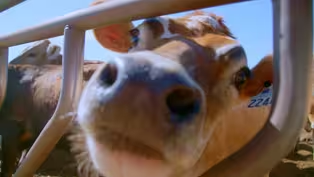
Preview: S11 Ep1112 | 30s | Washington wheat and dairy are the perfect combination at The Cowpath Bakery & Dairy. (30s)
Providing Support for PBS.org
Learn Moreabout PBS online sponsorship
- Food
Christopher Kimball’s Milk Street Television
Transform home cooking with the editors of Christopher Kimball’s Milk Street Magazine.



Support for PBS provided by:
Washington Grown is a local public television program presented by KSPS PBS