
Simply Ming
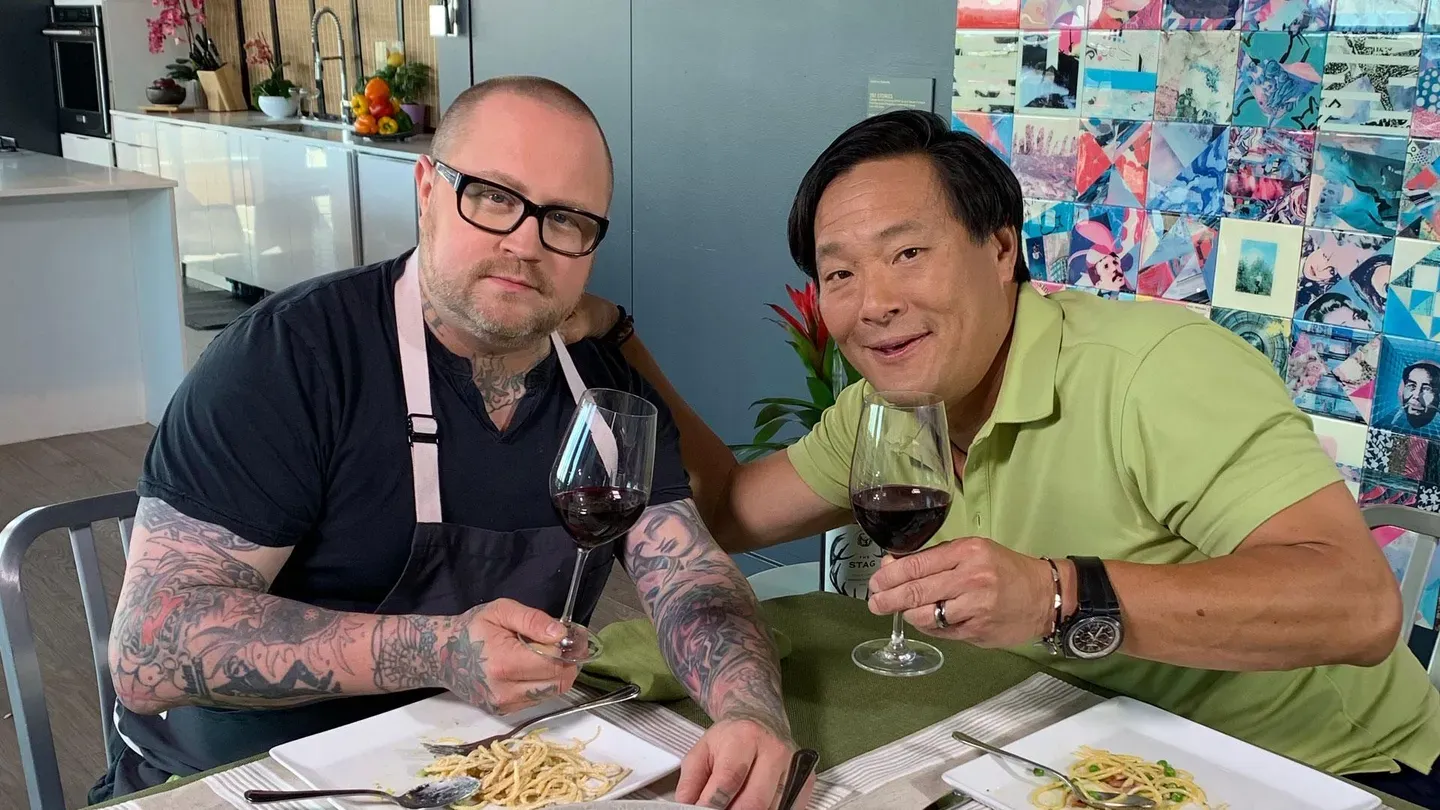
Ming Tsai with guest Jamie Bissonnette
2/3/2022 | 25m 4sVideo has Closed Captions
James Bissonnette stops by to make Spaghetti a la Carbonara.
James Bissonnette stops by to make the classic Spaghetti a la Carbonara, and Ming follows that up with a dairy free version with shiitake mushrooms.
Problems playing video? | Closed Captioning Feedback
Problems playing video? | Closed Captioning Feedback
Simply Ming is presented by your local public television station.
Distributed nationally by American Public Television
Simply Ming
Ming Tsai with guest Jamie Bissonnette
2/3/2022 | 25m 4sVideo has Closed Captions
James Bissonnette stops by to make the classic Spaghetti a la Carbonara, and Ming follows that up with a dairy free version with shiitake mushrooms.
Problems playing video? | Closed Captioning Feedback
Where to Watch Simply Ming
Simply Ming is available to stream on pbs.org and the PBS app.
Providing Support for PBS.org
Learn Moreabout PBS online sponsorship>> MING: Hey, Ming Tsai here with Simply Ming.
I got one of my great buddies: Boston's best, Jamie Bissonnette, in the house.
He's all over the world.
He's won a James Beard Award, first and foremost.
He's got Toros.
Where?
New York, Boston, Dubai, Bangkok.
He's got Little Donkey, he's got Coppa.
And he can cook it all.
Today he's going to show us a classic, the classic of all: spaghetti alla carbonara.
>> You've gotta nail your pasta like, pretty awesome.
>> MING: Right.
>> You cannot pre-cook your pasta because it needs to have the heat to residually cook the egg yolks.
>> MING: I'm going to take a version and inspiration from that and do a vegetarian version of spaghetti alla carbonara.
>> I mean soy sauce, adding to that, it's just going to make it so much meatier and richer.
>> MING: Got that.
It's carbonara time.
Right here, right now on Simply Ming.
>> MING: Jamie B.
>> What's up, man?
>> MING: Always good to have you back in the kitchen.
Thanks for coming back.
>> I always come back.
>> MING: Life's good?
>> Everything's awesome, man.
>> MING: Good.
So, as you know, we're going to start with a cocktail, get us in the mood with cooking.
It's called Thyme's Up.
If you could do the task, please, of just dumping out the pre-chilled coupe glasses.
>> All right.
>> MING: I say this all the time.
You guys spend all the time making a fantastic cocktail, then you take a chilled cocktail and you put it into a glass at 70 degrees, you kind of just ruined why you're doing it.
So... >> Or you just have to drink it wicked fast.
>> MING: Yeah, that is true.
So, maraschino liqueur.
Right, maraschino cherry liqueur.
Ounce of that.
We're going to put four ounces of a really good rum, right?
Just like, like a good tequila, your booze matters.
Make sure it's a really good rum.
>> Mm-hmm.
>> MING: This is a clear one.
So we put four ounces of that.
Because we like a stiff drink.
This is kind of a riff off of the Hemingway daiquiri.
>> Oh, one of my favorites.
>> MING: Lime juice.
You can't do a drink without lime juice.
>> Fresh, of course, right?
>> MING: Fresh.
An ounce and a half of fresh lime juice.
Right?
Just a touch of grapefruit.
>> Mm-hmm.
>> MING: Just half-ounce.
And the reason it's called Thyme's Up-- this is a thyme syrup.
So we infuse... >> Oh!
>> MING: Thyme into simple syrup.
So it's "thyme" with an H, "Thyme's Up."
>> Gotcha.
WAYNE: Not like watch "time."
All right, that's everything.
And then, of course, we will garnish with a little bit of thyme.
(ice rattling) >> See, you, you shake it 'cause it has citrus?
Stir it without citrus, right?
>> MING: Yeah.
And I just, you know how when you shake it does waterize it?
>> Mm-hmm.
>> MING: But you got so much good booze here, right?
That's okay if you waterize it.
>> Mm-hmm.
>> MING: That smells good.
All right.
And then you can garnish, if you don't mind.
Just a nice thyme sprig.
Right across.
I like when it's nice and foamy like that.
There you go.
That's right.
You gotta spank your herbs.
It releases the oils.
My kids always make fun of me when I do that.
I'm like, "Sons, you'll be spanking your herbs, too.
One day."
Cheers.
>> Cheers, man.
>> MING: To you.
Cheers.
>> Cheers.
That's delicious.
>> MING: Like it?
>> Yeah.
>> MING: All right, time's up.
>> Time's up.
>> MING: Spaghetti alla carbonara.
>> Time to cook >> MING: Exactly.
>> MING: Spaghetti alla carbonara.
>> Why not?
>> MING: Can't wait.
>> Yeah.
>> MING: It's probably the simplest recipe that's probably done wrong all the time.
>> So many people, they do things like they put cream in it... >> MING: Oh.
>> ...they undercook the pasta.
>> MING: Right.
>> They overcook the pasta more times than not.
>> MING: Right.
Okay, what's the secret?
What can I do, and talk to me.
>> Well, the secret is, let's first-- first and foremost, to not waste time, when you start this, have your water boiling.
>> MING: Yep.
but don't boil it with salt, because then it'll reduce, and it'll get too salty.
>> MING: Right.
>> Since we're ready to start cooking with pasta... we'll just taste the water.
Like anything, you should taste everything you cook.
Maybe not fry oil... >> MING: Yeah.
>> But everything else.
>> MING: What did it taste like?
>> It tastes like water.
>> MING: Okay.
>> Boston's finest, actually.
So then we're going to add some salt.
>> MING: Look how much salt, right?
That's a lot more than people would think.
>> Well, you want it to flavor the pasta, so dried pasta doesn't have any salt in the dough, so all the salt that's going to get into the pasta will happen through absorption during cooking.
Okay, we're good.
>> MING: Dump in?
>> Yeah, put it right in.
So then we're going to just, uh, kind of stir it around, and I think another thing that people think, "Oh, yeah, I'm going to break my spaghetti."
You don't need to break the spaghetti.
>> MING: Why would you?
>> I don't know why people... >> MING: I mean, that's such a bad Chinese stereotype.
You would, you eat noodles for birthday for longevity, the last thing you want to do is break your lifespan in half.
>> Yeah, exactly.
>> MING: So you never cover?
>> Nope, not gonna cover it.
And we just wanna make sure that we periodically stir it so the pasta doesn't stick together.
>> MING: And how long is that going to take?
>> You know, each pasta brand is going to be a little bit different.
We're using a pretty thick spaghetti.
>> MING: Right.
>> Um, set your timer for nine minutes, and then we'll do the pasta test where we throw it against the ceiling, and if it sticks... >> MING: Got it.
>> We made a mess.
>> MING: Okay.
>> Yeah.
>> So, while that's happening, let's let's start with the rest of the sauce.
>> MING: Okay.
Can I do any prep here?
>> Yeah, yeah.
>> MING: Slice and dice?
>> Can you just slice half that onion, please?
>> MING: Okay.
>> Great.
Um, all right, I'm going to add a couple pats of butter to this pan, and I'm going to slice up some bacon.
The origin of this of this dish is, you know, kind of obscure.
The one thing that we know is it comes from Rome.
>> MING: Right.
>> And they think it might be a derivative of cacio e pepe, but done cacio e uova.
>> MING: Ovo, yep.
>> Yep.
So it's with egg.
and we're going to use egg to make it creamy, rather than any sort of... any sort of like heavy cream or milk.
>> MING: Right.
>> And they say that the name "carbonara" comes from the coal miners, because there was, like, carbon from the black pepper, or the carbonari, which is a secret society of coalminers, which is what I like to believe, because I like conspiracies.
So we're going to put the bacon in.
You could use guanciale, you can use pancetta.
I like using just regular smoked bacon, because I always have it at home.
>> MING: Right.
>> Um, you don't want anything too too smoked.
>> MING: Right.
>> Nitrates, no nitrates, that's up to you.
>> MING: Right.
>> I don't I don't get involved with that kind of stuff, but we're going to put it into a cold pan with a little bit of fat, and we're going to let it render.
And as it renders, it's going to pull the fat out slowly.
>> MING: And-- because you don't want it to sear and go crispy right away, because then it doesn't render enough, right?
>> Yeah.
>> MING: Crispy and still fatty.
>> Exactly, yeah.
>> MING: Because that's going to take minutes, right?
>> It'll take a couple of minutes, yeah.
But if you have any like, leftover... like, breakfast bacon.
>> MING: Right.
>> And you saved it, you can totally use that, too.
>> MING: Right, got it.
>> Yeah.
>> MING: All right, so... Boom, what about these scallions?
>> Scallions just sliced pretty thin.
A little bit of white, a little bit of green mixed together is totally fine.
>> MING: Okay.
>> So what I'm checking for right now as I'm stirring, is I'm pulling out to make sure that none of the pasta is sticking together like it's wearing a belt.
>> MING: Right.
>> Which will happen if your water is not hot enough or if you didn't stir it enough, the starch will thicken it.
>> MING: So like wearing a belt, I like that.
>> So, I learned how to make this pasta working for Billy Grant in West Hartford, Connecticut, he called it Nonna's-- his grandma's-- carbonara, and he was fanatical about how we made it.
So, I take it as like a pride and joy that this is a pasta that we get to serve at Coppa almost every day.
>> MING: Well, it's a classic of all classics, and when it's done well, it's so rich and creamy.
But again, there's no cream in it.
>> Exactly.
>> MING: So... >> And it is so easy.
Like, you have almost all these ingredients around the house.
>> MING: Yep.
>> You've got, all you need is some nice aged either parmesan reggiano or even pecorino.
You need bacon, you need egg, and you need pasta.
>> MING: That's it.
Well, and frozen peas, if you want-- or fresh peas.
>> Well, I like frozen peas because they're-- the way that they're harvested, they're always ripe and nice.
They're not starchy and they're I.Q.F.-- individual quick frozen in the field and packaged.
So they're the best peas that you can get.
>> MING: Right.
>> And you don't have to... >> MING: Crazy, right?
This is a chef saying frozen peas in this application is better than actually fresh, and how much less work?
>> Well, I mean, at the restaurant, we use fresh peas.
>> MING: Oh.
>> But at home... >> MING (laughing): No, they don't.
Yeah, I know you do.
>> At home, I don't have Fernanda to clean them.
>> MING (laughing): You don't have... >> She's been with us for almost ten years.
She can clean peas better than I can.
>> MING: Prep cooks and dishwashers are by far the MVPs of our restaurants.
>> 100%.
>> MING: So much more important than anyone else.
All right, so how much more longer, do you think?
>> I'm going to add the onions here in one second, so that we can get two birds with one stone.
So the onions, right before I add the onions, one thing I like to do is salt them.
And then just kind of squeeze them with a little bit of that salt.
And it pulls out the moisture and breaks them down.
So they're going to cook quicker, and they're going to already have more flavor.
So you can see that there's a little bit of moisture.
If you look in there, you can see that they're now wet.
>> MING: Yeah.
Interesting.
I'm not sure I've ever seen the hand-crush onion technique.
I love it.
>> You could do it in the pan, too.
But my hands aren't made out of asbestos anymore.
>> MING: Yeah.
(laughs): Exactly, none of ours are.
We're getting more sensitive as we get older, what is that about?
>> I don't know.
>> MING: (laughs) >> Cooking hurts, tattoos hurt, taxes hurt.
Everything is more painful.
>> MING (laughing): Taxes really hurt.
I'm just going to add a little bit of pepper, then we'll add more pepper to the pasta.
>> MING: Smells so good already.
Right, but that's just the cheatness of bacon.
It always smells good when there's bacon cooking.
>> The combination of cooked onions, bacon, and butter.
>> MING: That's it, you're done.
>> Yeah.
>> MING: All right, so this pasta, probably got about two or three more minutes, right?
And we're going to keep checking it.
And when we come back, I imagine you're going to put the pasta straight in, is that how it works?
Or are you going to use the bowl technique?
>> We're going to put it into a bowl and not cook it in the pan, so the eggs don't curdle.
>> MING: Perfect.
It's important.
Come back, two minutes.
All right.
It's amazing, those onions.
We tried them.
They're so sweet and already soft.
>> Yeah.
>> MING: It's crazy.
>> It's great, just that little massaging and forcing that salt... >> MING: So, what do you look, for perfect pasta?
What do you... what's your test?
>> So I pulled it out and I took a bite of a little piece, and I want to make sure it's a little al dente, so the inside is still a little bit white... >> MING: Got it.
>> ...when the rest of it is kind of opaque.
>> MING: So you're, you're at eight minutes and 45 seconds.
>> Yep.
So, perfect, yeah, about nine minutes.
>> MING: Okay.
>> Um, so I'm going to add a little bit of this pasta water to stop the bacon from cooking and frying.
>> MING: Right.
>> Just a little bit.
And I'm going to add some chicken stock, if you want to pass that over.
>> MING: Yep.
If you don't have chicken stock at home, I totally-- you can totally just use that.
Just make sure that you taste it as you're going, because your pasta water is salty.
>> MING: Salty, right.
And your bacon's salty.
>> And your bacon's salty.
>> MING: But chicken stock has no salt.
>> Chicken stock shouldn't have too much salt.
>> MING: Yeah.
>> But if you don't make chicken stock at home, then don't worry about it.
So I'm just going to let that come up to a simmer.
>> MING: Okay.
>> Uh, let's pull out that bowl.
>> MING: Yep.
So this is, this a great trick.
So you... >> So we're just going to put it right into the bowl.
>> MING: 'Cause more often than not, people would put it into the pan.
>> You can put it into the pan.
You can cook it down in the pan a little bit.
>> MING: Is that wrist in the yolks turning the scrambled eggs?
>> Well, you get it so hot, the pasta sticks.
>> MING: Right.
>> There you go.
And it's not great.
It's just not my favorite way of doing it.
So we have it in the bowl, but one thing after taking it out of the bowl, you just want to make sure there's not too much pasta water in it.
So I'm going to strain it again a little bit.
Just to make sure, but we were pretty good, so that's good.
While that is coming to a simmer... >> MING: Right.
>> We're just gonna-- you want to add a bunch of black pepper.
>> MING: And by the way, the dish that was the inspiration, is, you were saying, it's cacio e pepe, is a fantastic black peppery pasta.
>> Exactly.
>> MING: It's one of the most delicious ones I've ever had.
Good?
>> A little more.
>> MING: Mas?
>> The one thing that makes this pasta to me so interesting is the black pepper.
Kind of like when you get hot and sour soup in Chinatown.
>> MING: Yep.
>> It's spicy from black pepper, like, I kind of like that.
>> MING: Actually, white pepper.
>> Oh, or white pepper.
>> MING: Peas?
>> Peas.
>> MING: Traditionally white pepper, because Chinese cuisine, we don't want... never want to see black.
You know why, right?
Because it looks like some parts of the wok are coming off, if there's black specks in your food.
>> See, that's funny.
I thought you guys used pepper to hide that.
>> MING (laughing): Yeah, no.
>> Who knew?
>> MING: Maybe some.
>> Who knew?
(laughter) All right, so I added the peas because they're still a little bit frozen.
We just want to let this come back up to a simmer, >> MING: Okay.
>> And that's going to be key.
Um, we're just going to take a little bit of butter.
>> MING: So salted, unsalted?
>> Unsalted.
If you work with salted butter, you just need to taste your food more often, which isn't a big deal.
>> MING: Right.
>> But you need to be more cognizant of how much other salt you use.
>> MING: We only use unsalted at Blue Dragon.
>> Yeah.
>> MING: Makes sense.
And that pastry chefs like unsalted.
>> As soon as it bubbles, we're ready to go.
>> MING: And cheese is garnish or cheese goes in it, too?
>> We're going to do cheese in it and cheese on top of it, which is... >> MING: Okay, so can I start grating some cheese for you?
>> Um... >> MING: Or you don't even need to?
>> Not yet, because if we grate it now without moving it around, the cheese will clump.
>> MING: Well, I was going to grate it into a bowl, have it ready.
>> I'm not a big fan of that.
>> MING: Okay.
>> If you're going to do it ahead of time, do it on a box grater... >> MING (whispering): Bad idea, bad idea... >> But don't, not on a microplane.
>> MING: That was just a fleeting thought, sorry.
>> All right, see how it's simmering?
>> MING: Yep.
>> We're just going to dump that over the pasta.
Oops.
>> MING: Awesome.
>> And now we can take some tongs.
And we're just going to mix it up.
You can add the scallions.
Can you grab those egg yolks?
>> MING: Okay.
>> Put them right in.
>> MING: All four.
>> Yep.
So, like in pastry cooking, people temper it in by adding a little bit to the egg yolks... >> MING: Yeah.
>> And back and forth.
But since we're off the heat and we're in this beautiful glass bowl, we don't have to do that.
And the residual heat is going to just cook this enough to make it creamy.
>> MING: Right.
>> You see, on the bottom, how it's starting to get a little bit saucy?
>> MING: Yep.
>> Will you do the honors?
>> MING: Oui.
>> I'll have you do this because I have tennis elbow right now.
>> MING (laughing): Okay.
>> So the key when you add cheese to pasta, if you're doing it in a pan, you want to keep moving it and flipping it so it doesn't clump.
But the cheese is also going to help this thicken up a little bit.
>> MING: Yep.
It smells so good.
>> There we go.
That's good for now.
And now we can grab a bowl to put it into.
>> MING: Yep.
Here we go.
>> So, one of my favorite things about doing this pasta, serving it family style.
Although I didn't make enough, I only made enough for you.
>> MING: (laughs) >> So we're going to... >> MING: So the key here, and I think, isn't the most common mistake-- or one of the most common mistakes, of course, overcooked pasta.
>> Mm-hmm.
>> MING: But the second most common is you added to the pan and your eggs cook, become scrambled.
>> Yeah, so a lot of times what'll happen is people will undercook the pasta.
It's not going to carry over here, so you've got to nail your pasta, like pretty awesome.
>> MING: Right.
>> You cannot pre-cook your pasta because it needs to have the heat to residually cook the egg yolks.
>> MING: Check.
>> Adding dairy totally doesn't make the egg yolks stick to the pasta, and you don't end up with that like, awesome, like, unctuousness to it.
>> MING: Right.
>> And then adding the eggs to the pan, the hot sides of the pan curdle it.
So doing it in a bowl on the side is the best way.
>> MING: Mas queso or no?
>> Of course.
>> MING: Of course.
>> Yep.
And then we just cover the top with some more cheese.
>> MING: That looks so good, dude.
>> Yeah.
Maybe I'll take a little bit of your scallion.
And just put that on top of-- and will you hit the top with a bunch of black pepper?
>> MING: Check.
I love how spicy this is going to be.
Fantastic.
>> A little bit more.
I like scallions, they're not super-typical, but I like the freshness and the punch from them.
>> MING: Right.
>> And that's it.
Spaghetti alla carbonara.
>> MING: Spaghetti alla Jamie Bissonnette alla carbonara.
Dude, fantastic.
Can you stick around?
I'm going to do my version with no meat.
>> Yeah, can I help?
>> MING: Of course.
>> Awesome.
>> MING: Stick around.
Carbonara two.
>> MING: Can't wait to try your carbonara, my friend.
>> Can't wait to cook with you.
>> MING: All right.
I'm doing a shiitake carbonara-- not vegan.
We have dairy, but we're going to use Greek yogurt instead of egg yolk.
So it's vegetarian.
If you could please halve that and give me thin slices of shallots.
I'm going to do the pasta.
You've just seen this once; I'm going to do exactly what Jamie does.
Boiling water.
No salt yet.
Add a good amount of salt.
Try it.
Make sure it's salty.
Then... Spaghetti.
All right.
Jamie just did it, it took exactly nine minutes.
My speculation is this going to take exactly nine minutes.
All right.
Again, like you said, mix it around.
You don't want this clumped together, and just watch it and mix it around every now and then.
It'll come back to a boil momentarily.
Then-- shiitakes.
Sir, if you don't mind, just give me a small dice like that.
Now I'm going get some bigger ones for some chips.
Thank you for the shallots.
We're going to shallots, garlic, ginger.
Not traditional... but using not-bacon is also not traditional.
Little bit of olive oil.
We'll take our shallots.
We'll take ginger, we'll take garlic.
All right.
We'll mix this around.
Just to sweat it, not looking for caramelization.
I know all the Italian people are like, "That's not carbonara."
And that's true.
It's not traditional carbonara.
Salt, pepper.
All right.
Sweat this down.
>> This makes a lot of sense to me.
Like, the mushrooms having that, like, chewiness, like a lardon or pancetta or guanciale, adding the garlic and the onions, which are usually part of the cure on something like a pancetta or garlic.
I mean, this makes a lot of sense.
We're going to have a lot of similar flavors, I like that.
>> MING: We are.
And then these are shiitake chips.
This I started doing at Blue Ginger, probably 15-plus years ago.
Super thinly sliced, and you actually fry them.
And this gets an incredibly meaty flavor... >> Oh, yeah.
>> MING: When they're fried up.
So this is kind of going to be the crunchy garnish.
I don't have the luxury of bacon with texture.
All right.
So, this looks good.
Put some mushrooms in.
Like that.
Do a couple more.
Just to have... All right, a couple more mushrooms.
>> Now, do you salt your mushrooms now, so they pull out liquid, or do you salt them afterwards?
>> MING: I salt-- I wait.
>> You wait.
>> MING: I want, I want-- I want to not get all... >> Yep.
>> MING: All wet up top.
Right.
>> I do the same thing.
>> MING: Because you want to... and they're not going to caramelize, per se, but you can get a little bit of brown color.
If you add the salt, no chance, right?
>> Yeah.
>> MING: The water comes out.
All right, so we got our pasta going.
It's going to take another about four and a half minutes.
These mushrooms will be done, and then we'll fry up these shiitake chips and plate the dish.
It's that simple.
Four minutes.
Do not go away.
Please.
>> MING: All right, Jamie, so it's been about seven minutes.
>> Mm-hmm.
>> MING: Just checked the pasta, it needs about another two minutes.
Just going to get these shiitakes into my fryer here.
This is just a shallow fry.
All right.
These will get nice and crispy in about two minutes.
>> Great.
>> MING: Right?
And here, these mushrooms got nice and soft.
Really meaty mushrooms, these shiitakes.
Just add about a tablespoon of soy sauce.
This is actually tamari.
(sizzling) Organic.
>> I mean, soy sauce, adding to that, it's just going to make it so much meatier and richer.
>> MING: You got that.
You know.
Here are the mushrooms.
All right, sir, do me a favor.
>> Yep.
>> MING: Give me some edamames.
>> Edamames.
>> MING: So here is pure protein, because I don't have any other protein in here besides the mushrooms.
That's about perfect.
And instead of egg, off the flame I'm going to use Greek yogurt to bring it together.
All right >> Very cool.
>> MING: So... let's try this one more time.
Oh, yeah.
>> Yeah?
>> MING: Good.
Straight in.
>> Straight in, and you're not straining it, so you can get a little bit of that water that sticks to it in there.
>> MING: Exactly.
And I turned off the flame.
This pan is plenty hot.
>> Great.
>> MING: And because I'm not using egg yolk, I can mix it all in the pan.
I don't need to worry about the egg turning into scrambled eggs.
>> And you don't have to wash an extra pot.
>> MING: That one-pot cooking, isn't it.
All right.
>> Well, it's like three-pot cooking.
>> MING: Well, three-pot cooking.
>> Your math's been off lately.
>> MING: (laughs) So here we have really umami-- you can smell how deep-flavored this is, right?
>> Yeah, it's... nutty and rich.
Yeah, it's... >> MING: Now here, we're going to get these... >> Smells pretty good, dude.
>> MING: We're going to get these shiitake chips, keep going.
All right, these are going to need about another minute.
And I'll show you how we do this.
So now, again, no flame, right?
Flame is off.
So we're going to take Greek yogurt.
You don't want flame, because if you have a flame, Greek yogurt can actually break.
>> So, why Greek yogurt and not just regular yogurt?
>> MING: It's thicker, more creamy.
>> Mm-hmm.
>> MING: And it tends not to break; regular yogurt kind of can separate.
>> Sure, okay.
>> MING: Right.
See here, see how it just coats it.
So like this, here, I'm getting the creaminess of a carbonara, of course, I'm cheating with dairy, meaning yogurt.
But this is a vegan version of it.
Oh yeah, that's looking pretty good.
All right, we're really close.
Let's go ahead and plate this up.
>> Yeah.
>> MING: This... >> I cannot wait to try this.
>> It smells fantastic.
>> MING: All right.
Gonna put all the good stuff on top.
(scraping) All these fantastic shiitakes.
>> Ooh, yeah.
>> MING: And then last but not least, we have these great shiitake chips here.
All right.
So it takes about four minutes, James, for these shiitake chips.
But look at these.
This is like...
I call this cheating.
This tastes like meat, these chips.
I love them.
>> It smells like bacon, right?
>> MING: Yeah, exactly.
Little bit of salt.
And that's what we have on top.
Really crispy shiitake.
Jamie, give me some cheese on top, please.
>> You got it.
>> MING: Perfetto.
There we go, spaghetti alla carbonara for the vegetarians.
And we have the real deal as well.
>> That looks awesome.
>> MING: Let's go.
Hey!
>> Mine.
>> MING: All right, Jamie.
Little bit of Australian Cabernet Sauvignon.
Cheers to you-- it has a touch of merlot.
>> Cheers.
>> MING: The North Coast, should go great with both our pastas.
>> Mmm.
>> MING: Oh, that's pretty good.
>> That's yummy.
>> MING: All right.
May I serve you?
>> Please do.
>> MING: Okay.
I'll get you a little bit of this.
There we go.
(humming) Sorry, forkage.
>> All right.
>> MING: You eat.
>> May I-- no, let me serve you.
>> MING: Oh, okay.
Well, you know.
>> So, I wanna mix it back up again.
>> MING: It's great, I love how you, you can see the egg.
And by the way, for those who may be concerned, "Oh, my God, that egg wasn't cooked all the way."
That's true.
As is your sunny-side up egg.
>> Yeah.
I mean, it's... >> MING: If your yolk is running, it's not cooked all the way through.
>> It's cooked just as much.
>> MING: It's cooked perfectly.
Let's see how we did here.
Wow, this just looks so luscious.
All right.
>> And look how creamy this is.
>> MING: Oh, my God, dude.
>> Mmm.
>> MING: Like, best ever.
This is so-- this is so creamy with no cream.
The bacon obviously ties it all together.
But perfectly cooked pasta.
How's that?
>> This is fantastic.
I really love the acidity in the Greek yogurt and how thick it is.
>> MING: Right.
>> The way it clings to the noodle, and then the crispy, and then the chewy shiitakes.
It adds-- there's nothing wanting for this, I would never even think this didn't have meat in it.
>> MING: Oh, I appreciate that.
Hey, try yours.
Let me try mine too, while we're here.
Love to just see how we did.
It's amazing.
Point here is, carbonara can have bacon, carbonara can not have bacon.
But, hopefully, I think the most important thing is you gotta cook your pasta perfectly for this.
>> Yep.
>> MING: If you don't do that well, you're done.
>> There's only one rule in cooking: make it delicious.
>> MING: Mmm.
And... both our pastas, the noodle itself... >> Mm-hmm.
>> MING: ...is seasoned.
Right?
You saw how much salt you put in, Salt is your friend.
Right?
You have to.
You.
>> Absolutely.
>> MING: And you are a great friend, my friend.
I love having you back.
>> Love cooking for you.
>> MING: You've been here like six times.
I love cooking in the kitchen with you.
Continued success, continued dominating the world.
>> (laughs) I love it, and let's cook again soon.
>> Yeah.
>> MING: And all you out there, let's cook again soon as well.
Peace and good eating.
Cheers.
- Food
Christopher Kimball’s Milk Street Television
Transform home cooking with the editors of Christopher Kimball’s Milk Street Magazine.





 New Episode



Support for PBS provided by:
Simply Ming is presented by your local public television station.
Distributed nationally by American Public Television