
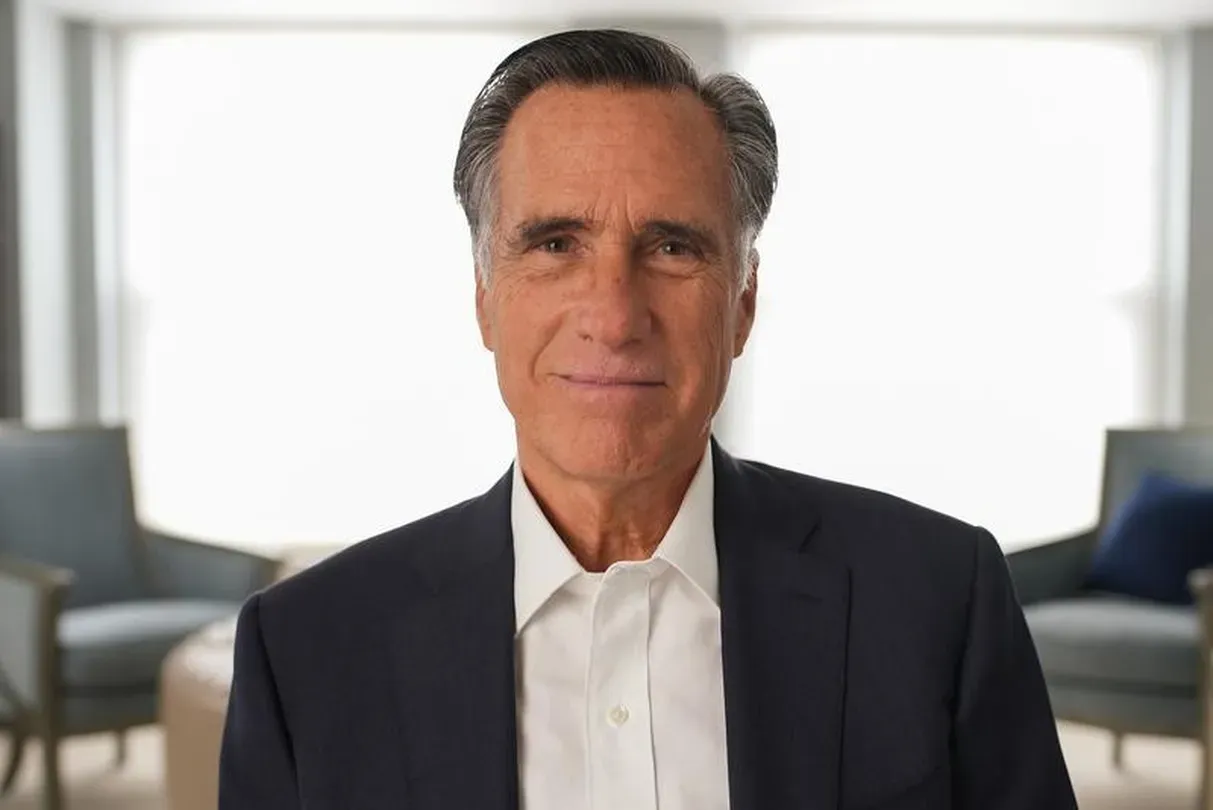
Mitt Romney, Family Ties
7/1/2026 | 32m 54sVideo has Closed Captions
Mitt Romney reflects on how 'being different' helped him to put his convictions and family first.
Life Stories sat down with United States Senator Mitt Romney who reflects on how 'being different' helped him to put his convictions and family first.
Problems playing video? | Closed Captioning Feedback
Problems playing video? | Closed Captioning Feedback
The Thread is a local public television program presented by WETA
Mitt Romney, Family Ties
7/1/2026 | 32m 54sVideo has Closed Captions
Life Stories sat down with United States Senator Mitt Romney who reflects on how 'being different' helped him to put his convictions and family first.
Problems playing video? | Closed Captioning Feedback
Where to Watch The Thread
The Thread is available to stream on pbs.org and the PBS app.
-Winning and losing an election, that really doesn't define who I am.
My relationship with my family, my wife, my God, that defines who I am.
And so losing is not as hard as people might expect in a circumstance like that.
Again, in politics, you don't control the outcome necessarily.
Things happen that you wouldn't have expected.
But if you define yourself by how much money you make or whether you get promoted or whether you win an election, you're bound to be disappointed.
♪♪ ♪♪ -Senator, I'd like you to talk a little bit about your childhood.
Talk to me about what your parents expectations of you were.
-You know, I had a, um... I think people would say a privileged childhood.
They'd probably say that because we were very well off.
Uh, I'd say that because I had two parents that loved me, uh, a brother and two sisters that cared for me.
They were older than I was.
My family had a strong faith tradition, and so I had a sense of purpose.
My parents gave me the kinds of values that they thought would be enduring.
Oh, and by the way, I had a great education, went to a wonderful school, was able to go to college, and, uh, and had, I think, uh, the kind of experience that you'd hope a child might have, particularly growing up during the 1950s and 1960s.
This was not as unusual as it is today.
The wealth was, yes, but the two parents and the education and the investment of time by parents in the upbringing of a child, I think that was less, uh, unusual then than perhaps it is today.
-What were the values your parents instilled in you?
-Well, it's a long story there.
My, uh, my dad was raised very, very poor.
My mom, not so much, but my dad's influence was probably the most significant, which is he felt that we needed to work.
So I had jobs all during high school -- summer jobs, that is -- and then at the home, I mowed the lawn, and it was a big lawn.
The driveway was never plowed professionally.
My dad and I shoveled the snow, and it was a long driveway.
We planted the flowers in the spring.
We didn't have a landscaping company take care of things around the house.
We did that ourselves.
And then we were involved in the community.
My dad had me collect signatures for ballot initiatives that he thought were important.
Uh, and, uh, and then there was our church, which is, uh -- It was, uh, a small church relative to others in our country, the Church of Jesus Christ of Latter-day Saints, or Mormon Church.
You know, my friends were Catholic or mainline Protestant, and I belonged to a little church.
I was the only one in my school that belonged to that church.
Uh, and so I grew up very comfortable with the idea of being different, not quite like everybody else.
Uh, and, uh, that's a little uncomfortable, but you get used to it.
And, uh, I think if you're different in important ways, uh, that can make a difference in your life.
So those are the kinds of values that I learned early on.
-Who was your father, and what was his role in politics?
-My dad, George W. Romney, was born in Mexico of an American family living there.
Uh, came to the United States when he was about five and, uh, ultimately became a governor of the state of Michigan, a member of the cabinet under Richard Nixon.
He was the secretary of Housing and Urban Development, made some changes that I think improved our housing market.
He was devoted to civil rights.
That was his passion as a secretary, and I believe he made a difference there.
-When you entered your own private-sector career, did a lot of those lessons that you remembered from your dad, did you employ them in your private-sector career?
-Well, you know, when you go into to a job, everything gets thrown up in the air.
It becomes an entirely new experience.
You feel overwhelmed and underprepared.
You wonder whether you're going to be successful at what you're doing or not.
Um, the private sector for me was a huge departure from just going to school.
I'm sure it's true for others as well.
I wasn't thinking so much about values and principles as instead just how I could be successful and do a good job.
My dad used to say that the key to being successful in any occupation is doing your present job well and not focusing on what the future might be or what the problems are with your enterprise.
Just do the job as well as you possibly can.
And I had a number of summer jobs.
I tried different things.
I had a law job working for a law firm.
I worked at Chrysler Corporation, big corporation.
Didn't like either one of those.
I got the chance to go into a consulting firm, which was in many respects right down my alley.
You know, I like solving problems, tough problems, and that's what consulting did.
And I got the chance to work in an environment where I solved tough problems day after day, was compensated for doing that, and rewarded with the success of feeling like you've accomplished something and found an answer.
But I think the thing I'm most proud of from a private-sector standpoint was helping create a new entity called Bain Capital.
It was a venture capital and private equity firm.
It still is.
And this came at a time when the markets were looking for new ideas and we had some, and we applied the kind of, uh, thinking and approach to problem solving that we had used as consultants to create a new enterprise.
Uh, I was able to select the team.
There were about 10 of us as we started off.
We made a number of investments, some successful, some not so successful, but we, uh, went to work in the investments we made to try and make them more successful and to help them make choices that would make them more profitable and enduring.
Bain Capital is today a very successful enterprise, which grew far beyond anything I would have imagined.
We got it started.
And by the way, starting something is a lot harder than just building something further once it's already been started.
Starting something from scratch is really a very challenging undertaking.
And I guess I'm most proud of the fact that we were able to get that launched.
We had a great team.
The folks that started it basically stayed with us the entire time I was there, and that I think I'm most proud of from a private-sector standpoint.
-What appealed to you about being the CEO of the Salt Lake City Olympic Games' Organizing Committee?
-Look, I didn't want to leave Bain Capital.
The financial rewards were large and getting much, much larger.
The work was exciting, to acquire businesses and bring in new management teams and help make them more successful.
And one day I got a call from my wife and she said, "Mitt, I've just talked to our friend Kem Gardner in Utah, and he thinks you ought to come out and run the Salt Lake Olympics."
And I said, "That's ridiculous.
Of course I'm not going to do that."
And she said, "I want you to give some thought to it."
And I said, "By the way, why did he call you instead of me?"
And she said, "Because he knew you'd say no to him immediately."
And she was right.
Uh, but over time, she convinced me of two things.
One, the Olympics was important.
It was the last great stage on the public arena where young people were able to see the greatest qualities of humanity -- dedication, teamwork, determination, hard work -- and it was important for the Olympics to thrive and to move on.
Uh, and number two, uh, it was something that, um, I desperately needed, that my life up until that point professionally had been focused on being successful and making more money, but that was ultimately not going to be fulfilling, that I wanted to make a difference, that I wanted something bigger in my life.
And going away from Bain Capital and the financial rewards of that enterprise, and instead doing something where I would initially not be paid and instead trying to save a troubled Olympics was something that would be very much in keeping with my parentage and my values.
-Did you learn anything from that experience that influenced your decision to go into politics?
-You know, I never imagined I'd be involved in politics.
My dad had said, "Mitt, don't get in politics unless you're financially independent and your kids are raised."
And his logic was, um, you want to be financially independent such that you don't have to win an election to pay your mortgage.
And number two, you don't want your kids to be young and growing up and think that their dad is someone special 'cause he's got some political job.
I never imagined I'd become financially independent, but Bain Capital became far more successful than my imagination, and I didn't imagine my kids would ever grow up, but ultimately they did.
Uh, and so I didn't get into politics until quite late in my career.
I was at the Olympics enjoying my experience there, and I had a dinner right before the closing ceremonies with Peter Ueberroth, who'd been the CEO of the Olympics in Atlanta, and he was now on the board of Coca-Cola.
And I said, "Look, I'm being asked to consider running for governor of Massachusetts.
What do you think?"
And he said, "You know, I made a mistake.
When the window was open to get in politics, I didn't jump through it."
And he said, "I wish I had.
But once that window closes, it's hard to get back in."
And he said, "Mitt, you've got the window open for you to run for political office, and you ought to go through it, because if not now, you'll never get the chance again, most likely."
So I decided to take the plunge to get involved in politics, to run for governor of Massachusetts.
My hope was that I could make a difference in people's lives, and that my experience in the private sector and at the Olympics in helping build great teams and make the right decisions would be good for the people of my state.
-How did your father's political career, and your mother's -- she ran for office once, too -- how did it influence your own career?
-My dad didn't worry about what other people thought.
Uh, he had his own values, his own perspectives.
Uh, he knew what he believed was right, and he said it forthrightly.
In some respects, that got him in trouble politically.
Uh, my mom was more attuned to what other people thought about her, but I followed more in my dad's path in that regard.
And, uh, and while we're all interested in whether we're popular and whether people like us and whether they agree with us, um, I think I'm a little more comfortable with being, uh, if you will, out on a ledge myself, then perhaps the average politician.
And I learned that from my dad and, to a degree, from my mom.
She got involved in a race.
She ran for Senate in Michigan against Phil Hart, a very popular Democrat.
And she had to know that the likelihood of her success was not very high, but she thought it was important for our party, the Republican Party, to stand up to the, she believed, the mistakes of the Democrat Party at that time and put herself out there and got in the middle of the arena, as Teddy Roosevelt once quoted or once said.
And, uh, and so that was, uh, that was part of my, if you will, the heritage that I learned from them and, uh, launched my effort politically.
-What achievement as governor are you proudest of?
-You know, I came into Massachusetts thinking that the issue I would face would be primarily a fiscal challenge.
Uh, the budget was not balanced, and I wanted to find ways to get our budget balanced without raising taxes on people and driving businesses away.
Uh, but I wasn't in office very long until a friend of mine, the founder of Staples, the office superstore, Tom Stemberg, came to see me and he said, "Mitt, if you really want to change people's lives and help people in Massachusetts, you'll find a way to get everybody health insurance."
And I laughed and said, "Tom, that's just not possible.
I mean, I'd have to raise taxes on everybody.
That just doesn't make sense."
And he said, "Well, you're a smart guy.
Put your mind to it.
See if you can find a way to get everybody health insurance."
I began thinking about it.
It crept under my skin, if you will, and I spoke with my colleagues about it.
My secretary of HHS, Health and Human Services, said, "You know, that's just not going to happen."
But one of the people that I had in my team, Cindy Gillespie, who had helped me at the Olympics, she said, :You know, maybe there's a way."
And we began thinking about, uh, solutions for this problem and found a very unusual circumstance in Massachusetts, and that was we were giving hundreds of millions of dollars a year to hospitals that were caring for the poor and the uninsured.
And the idea was we'd take that same money, and instead of giving it to the hospitals, we'd use it to subsidize the purchase of health insurance for people that didn't have health insurance and couldn't afford it.
And we wondered, would the funds be enough to actually get everybody insured?
And sure enough, they were.
And so we were able to put in place a health insurance plan that got everybody in Massachusetts health insurance, and we did it without having to raise taxes or cut vital benefits for others.
And by the time my term had ended, I think 97% or so of Massachusetts citizens had health insurance.
And that's probably what I'm most proud of.
It became a model for other states to follow.
And to some degree, I think Barack Obama followed it with Ted Kennedy for the nation with Obamacare.
I would have rather had states craft their own plans, 'cause I think there's some big differences between states, but the need for people to have health insurance and to get good health care is something I believe I'm most proud of.
-You lost a few races.
You lost a Senate run and two presidential races.
Is it difficult to get over those kind of defeats?
Did it take you a while, and what advice would you give other candidates about dealing with that kind of disappointment?
-You know, I think, um... I don't know.
I can't speak for other people, but my dad's life was not defined by, um, by winning or losing elections.
His life was as big as his faith and his passion for the country and his family.
That's what he lived for.
I likewise have lived my life for my family, for my wife, Ann.
But look, the most important thing to me in my life is that Ann is happy and that my kids are happy and that my faith is thriving and well and that the country is strong.
I mean, those are the things I live for.
If you define yourself by things you control -- your relationship with others, your relationship with your God -- these are things you control, and your success is measured by things you determine, not by things determined by others.
-You've never managed to let any disappointment, though, stop you from trying again, so you're quite persistent, I would say.
What made you decide to run for the US Senate?
-I didn't expect to run for Senate.
When my race for president in 2012 was over and I'd been beaten by President Obama, uh, you know, I retired from public life, I thought entirely and forever, uh, and was enjoying myself back in the private sector.
Uh, it's a little frustrating not to be as engaged as I had been when I'd been a governor and when I was running for president.
Uh, but, uh, you know, I happened to get a call from Orrin Hatch, the senior senator from Utah, asked to meet with me.
Uh, we met at a Marriott hotel.
He handed me two sheets of paper, and on it, he had laid out why he thought I ought to run for Senate and take his seat.
And that is not something I'd even given a thought to.
He was a Republican in my party I presumed running for re-election.
I thought he was coming to see me about a fundraiser for him.
But, uh, I began to give it some thought.
And frankly, it was a little tiring being on the beach.
I'm not a great golfer, so that certainly wasn't going to be my future.
And, uh, and being engaged at a critical time was something that drew me in, one, to confront some of the challenges we face, but number two, and perhaps even more compelling at that point was my concern that, um, uh, that we might face a constitutional crisis of some kind.
Uh, I recognized in Donald Trump a very great departure from what the Republican Party had been in the past.
Uh, I was concerned about where he might take the country and what kind of crisis there might be, and I felt that we needed more people of sober judgment and, uh, and serious mindedness in D.C., thought that I qualified in that category and that I might be needed to make a difference.
-Has the experience of serving in the Senate met your expectations?
-Uh, you know, I knew what I was getting into in the Senate.
Uh, I'm not necessarily made to be a senator, but I did for a long time work as a management consultant and as a management consultant, you don't call the shots.
You try and convince other people, uh, to do what's, you think, in their best interest.
Uh, so I'm used to not always being the top dog.
Uh, and I knew that in the Senate as a junior senator, I would not be the top dog, I wouldn't get my way, but I'd be collaborating with others.
And, uh, something unusual happened in the Senate, and that is that, uh, just by happenstance, Lisa Murkowski invited me to a dinner during COVID, a dinner at her home.
We each had takeout food, and, uh, we sat in her living room.
There were, I don't know, 8 or 10 of us, and half Republicans, half Democrats.
We began talking about a COVID relief package, because the president and the speaker of the House were at loggerheads.
And we came up with what we thought was the right idea.
We got our colleagues to accept a pretty similar proposal.
It got passed.
And this group of five Democrats, five Republicans, kept on meeting, and we were able to take on infrastructure.
We looked at gun legislation, religious liberty, uh, the Electoral Count Act, one thing after the other.
Uh, and this little group, even though it was outside the committee structure, not subject to the committee chairs being able to move legislation or to negotiate.
We were instead this group of our own, this little rogue group of about 10 people, and one topic after another we took on and got bills passed.
That doesn't happen very often.
Um, a couple of the senators -- I think it was Senator Susan Collins of Maine, she said, "Look, in all my years in the Senate, I've never had so much fun."
And I think it made a difference for the country.
I sure hope so.
But, uh, but the Senate has been far more rewarding, in part because of that group that came together.
And it was led by a number -- Joe Manchin and Kyrsten Sinema on the Democrat side, Rob Portman on our side, Susan Collins on our side.
Those were the leaders.
I was part of that group, uh, and enjoyed the experience a great deal.
-What's the least appealing aspect of the Senate?
-Look, all of us want to do the right thing, but personal interest, self-interest, getting re-elected, sometimes can lead us to rationalize decisions which we may, in our heart of heart, recognize are not entirely in the national interest.
That's probably the most frustrating thing in our political system.
-You gave a very powerful statement on the Senate floor explaining your vote for a conviction in Trump's first impeachment trial.
It seemed at times you were struggling to contain your emotions.
What were you feeling in that moment?
-There's no question but that the impeachment of Donald Trump was a difficult time for me, and, I believe, for our country.
I did not want to vote to convict Donald Trump.
I recognized that the consequence for me, personally and politically, could be extraordinarily severe if I were to vote to convict, so I did not want to convict.
At the same time, I recognized the human tendency to want to rationalize what's in your best interest and knew that I would try and rationalize not voting to convict.
And so from the outset, I made a concerted effort to try and apply reasonable justice, and to, uh, to put aside personal interest.
And so I took careful notes of each day's deliberations, uh, tried to draw conclusions from each day, keep an open mind to the extent possible.
And as we got closer to the decision day, I went through a timeline, considered all of the evidence, and weighed this, uh, the way I hope jurors generally weigh a vote of guilt or innocence, and came to the inescapable conclusion that Donald Trump was indeed guilty of withholding weapons from Ukraine for the purpose of a political means.
That is something I did not want to see happen.
I knew that the consequence for me would be significant, but I also knew that it was a defining moment in some respects for me, and, uh, was in a great deal of dimension a reminder of my dad's life and of my mom's life, which is, time and again, they, uh, had to put their personal beliefs above what was in their self-interest.
And, uh, my emotion was thinking about my dad and my mom.
Look, uh, my guiding star throughout my life, frankly, has been my dad, and my mom to a great degree, but they had different qualities.
And in my professional and political life, my dad was the one that I was following.
During the debates, I would put his name at the top of my notepad and circle it, uh, to remind myself that I had a measure of integrity to follow.
And, uh, and as I was speaking on the floor explaining my vote to convict Donald Trump, uh, I thought of my dad and hoped that he would have the occasion to look down and see that his son had not entirely measured up to my dad's example, but I was endeavoring to do so at that moment.
-How do you balance your career aspirations with your family, responsibilities to your family?
-Look, for me, family and faith come first, and that has been tested for me time and time again, and I have made decisions that are in keeping with that.
I guess that's because I found the most rewarding part of my life is my relationship with Ann and my kids and my commitment to my faith.
They don't fail.
Those things are there for me.
I, uh, I'm not disappointed in my family or my faith.
If I had a sense of personal accomplishment based on what happens politically from day to day, gosh, I'm not sure what my stock would be at this point, but because, um, I measure my life accomplishment by virtue of my faith in God and my faith in my family and my love for -- for my family and my friends, I'm able to feel that my life has been okay.
-Any career choices you made your family didn't agree with?
-You know, it's a funny thing.
I can't think back on a time when my family disagreed with what I was doing.
Uh, I think there may have been some, uh, some uncertainty about whether I should run for Senate or not.
I don't entirely remember, uh, but, uh, look, I've never gone a different direction than Ann has thought was right.
Uh, she has been my life counselor, and, uh, and she has a much better judge of character and people than I do.
She senses right away when people are phony.
Her assessment of whether someone is a person of character or not is, uh, virtually flawless.
Uh, I'm more likely to get taken in.
And, uh, and so I go to her, uh, for her thoughts.
I followed her advice.
Now, now and then, you know, we'll disagree, and we'll, uh, we'll battle it out and -- but come to a meeting of the minds and, uh, I don't think there's ever been a time when I made a decision she disagreed with.
-Can you tell me about Ann?
Who is she?
How did you meet?
-Yeah, I met Ann, uh, before she got a chance to meet a number of better looking, more athletic, more intelligent other guys.
Uh, she was 15 when we went on our first date.
She was a sophomore.
I was a senior in high school.
Uh, I fell, uh, immediately for her.
She was very standoffish and, uh, sort of pushed me away, dated other people from time to time, which drove me crazy.
I became more and more, um, focused on her, intent on winning her -- her love and affection.
Uh, as time went on, that became reality.
Before I'd graduated from high school, I'd asked her to marry me.
She said she would.
I said, "I don't want to go on a mission for my church, which was next in line for me."
And she said, "You'll regret that and resent me all your life if you don't go on a mission for your church as your dad and grandfather have," so I went on my mission.
When I came back from my mission two and a half years later, I was still very much in love as I had been.
On the car ride home from the airport, I asked her if she'd marry me.
She said yes, and we got married just a couple of months later.
So we've been in love ever since.
It's not that we always agree.
We disagree.
We've had, you know, arguments, but we don't fight.
I never really had a fight with her.
And people say, "Oh, that's just not real.
He's not authentic," you know?
But look, we grew up together.
We fell in love.
We're still in love now.
Uh, and even though we might disagree or have an argument, we don't fight and haven't.
Not that there's anything wrong with it.
I'm told there are a lot of marriages where the fighting ends up, uh, leading to a greater love and affection, but our love and affection has held up pretty darn well.
You know, Ann, as I met her, was, um, reserved, uh, quiet, uh, maybe a little shy.
And as time has gone on, we both developed in various ways.
Uh, she's a better speaker than I am, more extemporaneous, more natural.
She's an extraordinary person, a visionary, a leader, and a person I'm very deeply in love with.
-I remember in your acceptance speech when you won the nomination, you told a very affecting story about your dad and a rose and your mom.
Would you mind sharing that here?
-Oh, yes.
Um, yeah, my, uh, my mom and dad had a, uh, an unusual love story, not unlike my own.
Uh, my mom and dad fell in love in high school.
And, uh, my mom was educated.
She had a career in Hollywood, and my dad, uh, did not have a college degree, fell very badly in love with my mom, and once they were married, he'd get a rose somewhere and bring it and put it in a vase by her bedside such that when she woke up, there's a fresh rose every morning.
And that was the case throughout their marriage.
Uh, on the day he passed away, she woke up and there was no fresh rose in her vase, and she immediately recognized something was wrong and got out of bed and went in the room where the treadmill was and found that my dad had passed away.
So, a long family heritage of commitment to one another.
-As a son, can you tell me about witnessing your parents getting older and eventually dying?
-Yeah, it's not fun getting older.
Um, my dad was 88 and, uh, and I said to him, um, "You know, what is the most rewarding thing in your life?"
And, uh, and I thought about the fact that he had turned around a car company, American Motors.
Its stock price went from roughly $7 a share to over $90 a share when he was CEO.
He was elected three times as governor of Michigan, was a cabinet secretary.
I mean, so I thought, "What was the most rewarding, most exceptional part of your life?"
He didn't hesitate at all.
He said, "The most rewarding part of my life was helping raise you four kids," me, my brother, and two sisters.
And he said, "And your mother deserves most of the credit for that."
Uh, so even at age 88, he knew what was most -- most meaningful to him.
But he also said at age 88, uh, "You know, it's a funny thing.
I'm the same person inside I was during my 20s and 30s.
I look on the outside and see what's happened in my body and recognize that people see me differently, but I'm not a different person.
I'm who I was before."
And it's strange to get older and to get old, and there's no question it is.
I'm, uh, you know, I'm 76 right now and, uh, you know, the aches and pains and the various indignities that we go through as we get older have been visited to me, as they have on others.
Seeing it happen to my mom and dad was particularly difficult.
My dad passed away first.
My mom passed away about a year later.
Uh, she really was in failing health, but both of them fortunately had full mental capacity, uh, and mostly physical capacity till the very end.
And, uh, they were -- they were blessed with a -- an active and meaningful life.
-Do you fear death?
-Do I fear death?
I don't want it.
I want to stay forever.
I don't want to leave.
This could be a very interesting time.
The emergence of China as the world's largest economy is going to be interesting.
Uh, the tumult China goes through is going to be revealing.
AI presents a threat and an opportunity, a threat of unmeasured proportion, an opportunity of a similar dimension.
Uh, I want to see where that's going to go.
I'd like to see what's going to happen with the Earth, how we're going to deal with all these challenges, our climate change, what is that going to mean?
Huge migration of people.
I think it's going to be a very interesting time, even more interesting over the next 25 years than over the past 25 years.
So I want to be here for it, but I won't be.
So I don't want to go.
I want to stay, but that's not in the cards.
So, you know, my life expectancy is, what?
I'm 76, so maybe 10, 12, 13 more years.
Uh, I hope longer than that, but, you know, you can go at any time.
-Are you optimistic about the future of America?
-Um, I'm realistic about the future of America, and we will make choices that will make all the difference.
Uh, that which gives me the greatest optimism is the elixir of freedom.
Freedom allows America to outcompete anyone else in the world.
Our system, the rule of law, our financial system, our educational system, the dedication of our people to one another, all of these values, American values, will combine, uh, with freedom to allow us to outcompete the world.
And that's what gives me my optimism.
Um, the area that gives me concern is we become highly divided, subject to demagogues on both sides of the aisle, uh, and there's a jealousy or resentment and anger which is growing into America.
I don't know where that goes.
If for some reason we don't welcome innovators and reward innovators and encourage them to thrive, uh, then we could find ourselves being overtaken by, uh, you know, by some of the world's worst actors, uh, Xi Jinping and Putin and others.
Iran, North Korea, China, Russia represent a whole different way of life that would be unimaginable for me, for my kids, and grandkids to live in.
Uh, and so, uh, we're going to make those choices.
We got to throw off the demagogues and go back to the principles and values that have made us the hope of the Earth.
I believe the American people will do that.
I do now and then chuckle at the words of Winston Churchill.
Roughly, he said this, which is, "You can trust the American people to do the right thing once they've exhausted all the alternatives."
And right now, we're exhausting a very unfortunate alternative, which is divisiveness and demagoguery.
Hopefully we'll get back to the kinds of vision and passion we saw in Alexander Hamilton, John Adams, George Washington, Thomas Jefferson, the founders of this great land.
♪♪ ♪♪












Support for PBS provided by:
The Thread is a local public television program presented by WETA