A Shot of AG
Molly Christ Shares the Heart of Christ Orchard
Season 7 Episode 6 | 25m 33sVideo has Closed Captions
Molly Christ shares the apples, family traditions and faith behind Christ Orchard.
From a few apple trees on coal company land to a family orchard near Elmwood, Christ Orchard has grown through hard work and a commitment to serving others. Molly Christ joins Rob Sharkey to discuss growing apples, pressing cider and welcoming visitors, along with the faith and family values that guide the business.
Problems playing video? | Closed Captioning Feedback
Problems playing video? | Closed Captioning Feedback
A Shot of AG is a local public television program presented by WTVP
A Shot of AG
Molly Christ Shares the Heart of Christ Orchard
Season 7 Episode 6 | 25m 33sVideo has Closed Captions
From a few apple trees on coal company land to a family orchard near Elmwood, Christ Orchard has grown through hard work and a commitment to serving others. Molly Christ joins Rob Sharkey to discuss growing apples, pressing cider and welcoming visitors, along with the faith and family values that guide the business.
Problems playing video? | Closed Captioning Feedback
Where to Watch A Shot of AG
A Shot of AG is available to stream on pbs.org and the PBS app.
Providing Support for PBS.org
Learn Moreabout PBS online sponsorship(bright music) (bright music continues) (upbeat rock music) (upbeat rock music continues) - Welcome to "A Shot of Ag."
I'm your host, Rob Sharkey.
Communities love agriculture and there's no better place for communities to go than an orchard, right?
You got apples, you got cider, you got, I don't know, all this stuff.
It's fun.
People love it.
Well, today we're gonna be talking with Molly Christ.
How you doing, Molly?
- Good.
- You are the, what, a manager at Christ Orchards?
- Yeah.
Small family business, so I wear a lot of hats, but yeah.
- I bet.
Yeah.
And this is the family's orchard?
- Yes, my parents.
Well, my dad originally started it, but it's kind of a long story.
(laughs) - So you've known it your whole life.
So you grew up with this.
- Yes.
Mm-hmm.
- When did it start?
- So in the '70s, the Midland Coal Company was mining an area and the manager planted a few apple trees on some of the coal company's land because he liked apples and wanted to give back to the land.
And he asked the high school FFA kids in the area to help take care of the trees.
And my dad was a freshman in high school when they started, when they had their first crop of apples.
And he took an interest in it.
And by the time he graduated, he eventually bought the land that had the trees on it from the coal company in the '80s.
- Oh, so not when he was in high school though.
- Well, I mean, he was taking care of the trees when he was in high school and then rented it and eventually bought the land in the '80s.
- Well, that's pretty cool.
- Mm-hmm.
- So the coal company that was strip mining and destroying the world decided, "Oh, we're gonna put up some apple trees because we want to give back."
- Yeah.
Yeah.
Well, if it wasn't for that, we wouldn't be here.
- And then your parents ran it.
- Mm-hmm.
- When did it actually start being like the orchard that people think as an orchard?
- So back in the '80s, it was just a couple acres of apple trees.
They were selling apples out of a garage with a dirt floor and just the very, people would come pick their own.
But my mom married my dad in '88 and then people say that was when, you know, between the two of them, then you have a little extra touch of marketing and everything else, but God just blessed it.
And I'd say growing up in the '90s, I mean, we were just pitching in and it's just grown through the years.
- So part of my job is trying to read between the lines of what somebody says.
So your mom's the brains of the operation.
- Well, yeah, some people would say that, but my dad is the brains of growing and then he grows the apples and he's the mastermind behind that.
But you know, you got to be able to sell it too, so.
- So you're growing up, right?
And you have people coming out to your farm and they're dealing with the apples and the cider and all that stuff.
Was that a fun way to grow up or was it like any other chore or work you had to do?
- Yeah, depending on the day.
- Yeah.
- It was a lot of work and a lot of times I wished I, like any farm kid, some days you like it, some days you don't.
But no, looking back, it was a very good childhood to have of learning to work together.
And yeah, it was a lot of lessons learned and thankful for it.
- I don't think the average person realizes how much work an apple tree needs.
- Mm-hmm.
Yeah.
It's very- - It's pretty much a full, year round deal, isn't it?
- Yeah.
It's very labor intensive.
A lot of it has to be done by hand.
It's not like row crop farming where it's just a lot of machinery and all the automated stuff, but picking and pruning and all that's by hand.
- Yeah, when we first got married, you know how it is, right, you gotta buy some apple trees.
So we bought this, right when honey crisp came out.
So we're like, "We're gonna buy this stuff and it's awesome."
And you plant it and then you see the blossoms and you say, "Oh, the apples are coming, woo-hoo!"
And then nature just kicks you right in the rear.
- Yeah.
- And you end up with these deformed, freaky things that the bugs are eating and you can't even hardly find one that's good.
And the good ones have already fallen to the ground.
And then you go to the grocery store and you can buy them for like a fraction of the price you can grow them for.
So I said to heck with it.
- Yeah.
In this area, like in the Midwest, that's why you don't have very many orchards on every corner.
It's a tougher climate to grow apples in.
- Yeah, because you got to spray them with some oil or something in the spring.
- Yes.
Oil for different reasons, but it helps with the bugs and yeah, there's a lot of different things you need to take precautions in this Midwest where you have humidity and bugs and all that stuff.
- That's when I gave up on 'em.
- Yeah.
- I'm like, "I'm not spraying.
I'm done.
I'm just done."
- It's a lot to know.
- But here I am, I'm a farmer, - But here I am, I'm a farmer, I'm like a man's man, right?
Apple's an apple.
I don't care if it's got a worm in it or whatever.
And then I get it and I'm like, "I'm not gonna eat that."
- Yeah.
- So that's what you got to deal with.
- Yeah.
- I mean, look at, what is this thing?
What?
- Yep, that's a honey crisp.
- This is a honey crisp.
- Mm-hmm.
- I couldn't grow this if I worked at it every single day.
That is, how much does this thing weigh?
- [Molly] I think it weighs just over a pound.
- [Rob] Yeah, and that's good all the way through, huh?
- Yeah.
Mm-hmm.
- And this is what people want?
- Yeah.
- They want them this big?
- Some people do.
Some people, you have all kinds.
Some people want them small, some people want them big.
- Yeah.
- Yeah.
- I've talked to apple growers and they're frustrated because, I mean, you got here the honey crisp.
This was the new standard.
It was gonna be around for centuries.
Everybody loves it.
But then y'all, and I'm looking at you, as the breeders, you keep improving, you keep making stuff better.
How do you know?
Because you plant a tree, you don't get apples for a while.
How do you know what to plant?
- Yeah, that's the challenge.
We typically try, if there's a new variety, to just do a few trees and test it out, kind of get people's opinions on it before we just sink in a few hundred or thousand of a certain variety, so, we try to- - How long before you get an apple?
- So on the type of plantings we do now when they're dwarf trees, they actually can produce a crop in about two to three years.
- Oh.
- Mm-hmm.
- Well, that's faster than I thought.
- Yeah.
- Because you're supposed to pick the blossoms off the first- - Yes, for the first couple years.
- I never did.
- Yeah.
- I'm like, "Screw it.
I planted to get apples."
- Yeah, you're gonna get apples.
- I'm not gonna pick this thing off.
- Mm-hmm.
- Do you enjoy that part of it?
- The growing part?
- Yeah.
- Yeah, oh, it's definitely, you know, from spring, all the work that goes into it to have the harvest in the fall, I mean, it's very rewarding, and fun to see the different seasons.
- Mm-hmm.
- Yeah.
- And you got the cider.
That's kind of the standard.
Now, is this brought in or do you guys make it?
- No, we press it right on our farm.
My dad's been pressing cider since high school when they first started taking care of those trees.
He says he's been doing it about 50 years.
- Yeah.
- And so, yeah, he knows just the right blend of apples and it varies throughout the season because there's different varieties, different times of the season.
So yep, we press it.
During the season, we press it about once a week or so.
- Really?
I know- - Mm-hmm.
- I know there's apples.
- Just apples.
- There's no sugar or anything in this?
- No.
No added sugar, no water, just liquid apples.
- This is apple juice.
- Yes.
It's raw, we don't pasteurize it.
It's just raw, cold pressed juice, if you want to call it that.
- Okay, am I just weird, but I feel like when they pasteurize it, it tastes different.
- It can.
There's different methods of pasteurization.
So you can use like a UV light or you can use heat.
So different methods probably affect the taste differently.
- Yeah.
Here's the thing, all these guys, they want some of this, and they know if I drink out of it, then they're not gonna want it.
So, you know how the kids, they do the waterfall.
That's what my mom always said.
Waterfall it so you don't.
- Mm.
- All right?
So don't freak out boys.
(Molly laughs) That's the last time I'm ever being nice to any of you.
Ah, that's good though.
What is wrong with your jug?
- I don't know.
Sorry.
- Yeah, it's all your fault.
- Have to work on that.
- You know they never laugh.
I'm a funny guy.
I'm an entertaining guy.
I say jokes all the time.
They never laugh.
Look at them now.
Look at 'em!
- Well, you at least got the taste of it, right?
- It's good.
It's good.
Okay, yeah, that's what I remember cider being as a kid.
- Mm-hmm.
- I swear, like if I go to the grocery store or Kroger's or whatever and buy it, it doesn't taste like that anymore.
- Yeah.
Well, I'm glad you like it.
- Yeah.
I'm still, I should have put my mouth all over that right now, spit a little back in.
Where were we?
Oh yeah, so you got the cider.
- Yeah.
- Is this a big seller?
- Yes, yep.
Apples and cider.
That's our two big things.
- Okay.
But you grow other stuff.
What all do you grow?
- Yes.
Oh, we grow a few other fruits, a few plums, pears, other fruits like that, but do a little bit of produce, tomatoes, sweet corn, cabbage, just depending on the time of season.
- [Rob] Just a few different things, huh?
- Yeah.
- What about the pumpkins?
Do you do those?
- Pumpkins, yes.
Pumpkins is big for this time of year.
- Yeah.
- Yes, pumpkins, squash, gourds, all the fall decorations.
- Do you grow like the big pumpkins?
- Yes, we grow giant ones, all kinds of jack of lanterns, the specialty ones where there's the white or blue or striped and all that kind of stuff.
- Do you scratch like- - Oh yeah, we have done that before.
- Have you?
Do people like that?
- Yeah, where you scratch it while it's growing and then it kind of scars over.
- Yeah.
Yeah.
- Yeah.
Mm-hmm.
- I've seen that they'll put like a lion eye or something stupid on there.
- Yeah, except I'm not super artistic, so that's kind of... - Well, somebody there has to be, right?
- Oh, I don't know.
- Who's all involved with Christ Orchard?
- So my parents and then myself and I have a sister that also works there year round.
And I have a brother and sister-in-law that help a lot too.
And yeah, that's the main year round family that's involved.
- Yeah.
Who's like the worst at working there?
- The worst?
Oh, we all have our strengths and weaknesses.
I wouldn't want to say anything bad about anybody because we all are very, I appreciate them all very much.
- Okay.
We'll move on.
(Molly and Rob laugh) Is it fun working with family?
- Yes, it is.
Definitely a blessing.
It's a challenge at times, but definitely a blessing.
- If I go there, right?
Take me through the thing.
I'm gonna park my car and then what's my experience gonna be?
- Sure, well, depending what you're looking for, if you want to pick your own apples, you can buy a bag and go out in the orchard and you can choose from probably up to eight or 10 different varieties at a time that are ready.
You can pick your own apples.
You can go to the pumpkin patch once that opens later in the season and you can pick your own pumpkin.
And then when you're done with that, we also have all our fall stuff outside, like other types of the squash and the mums and all that kind of stuff.
And then we have what we call the shed, where we sell, our market area, where inside there you can find the already picked apples and the cider.
And new this year I got a slushie machine, so I have cider slushies.
I was gonna bring you one of those, but I didn't know if it would- - Stop talking for a second.
So you've got this in slushie form.
- Yes, yes.
Mm-hmm.
- That's it?
I mean, you aren't putting- - Yeah, it's just 100% cider.
And it just freezes it into that.
- Any vodka in there?
- Nope.
Nothing else added.
- A little tequila?
- Nope.
- Have you ever tried it?
- I haven't, no.
- The day is young, isn't it?
(Molly and Rob laugh) - Yes.
But no, that's been a hit this year.
So that's something that's been on my list for a while.
- Is that something the kids are into?
- Oh yeah.
Kids, all ages.
Yeah.
I mean, especially on a hot day, what's better than an icy cider slushie?
- Yeah.
So we're recording this, what is it, September 15th, right?
So is this right going into your peak?
- Yes, mid-September to mid-October would be our peak because that's when pumpkins is taking off and apples are kind of in their peak too with all the varieties getting ready.
Yeah, I'd say that's definitely starting our peak.
- Yeah.
One thing that is on the sucky side of being a farmer is I've got to rely on the weather.
You double dip on that because you've got to rely on the weather to grow this.
You also got to rely on the weather to have those little brats come out.
- Mm-hmm.
Yeah, for sure, yeah.
It's a challenge way back even in the winter, the weather in the late winter, early spring, if you have, this year it warmed up early and so the blossoms opened up early and then we had some freezing temperatures, which caused some damage to the blossoms.
So you just, yeah, weather all the way around with farmers.
(Rob sneezes) Bless you.
- I think that's the first time I've ever sneezed on air.
I was trying so hard to hold it in.
(Rob and Molly laugh) I blame it on your container.
- The cider.
- Anyway.
Okay.
Where were we?
- Let's see.
- The slushies with vodka in it.
Yeah.
Your family works together.
Your family also is very strong in your faith.
- Mm-hmm.
- Tell me what that's like, the importance of that when it comes to running an orchard.
- Yeah.
Well, I mean, I look at our farm.
I mean, it's our farm and our business, but it's also our mission field.
I mean, it's where we have the opportunity to serve others and spread the gospel and just try to be a blessing to others.
So that's definitely a place where I feel God's calling in my life to serve Him wherever He has me.
- Mm-hmm, and with a business like this, you're so at His mercy.
- Mm-hmm, yeah, it's definitely a business to be in where you trust and rely on God for His blessing.
- Now, is that something that your family really puts to the point, I mean, as far as like a daily basis?
I mean, we're going to focus on our faith and then focus on the orchard?
- Yeah, I mean, God always comes first in everything we do as a Christian.
So I mean, we're closed on Sundays, that's very important to us to basically live out our faith.
And yeah, we always want to put that first and not try to, we never make decisions based on what's best for, you know, it's not really about making the most money or, you know, it's not about that.
It's just about serving God and glorifying Him and trying to serve others and not really ourselves.
- Yeah, no, I truly respect that, because I mean, Sundays are a day where, you know, you got your Saturday and Sundays as an orchard, you're gonna make probably more money on those two days than the rest of them.
But you guys sticking, standing by your faith, and saying, "We're gonna do this."
You guys and Chick-fil-A, well done.
(bell dings) They do make a good sandwich.
My gosh, yeah.
(Rob laughs) So are you there every day?
- Yes, every day.
We're open Monday through Saturday.
- Except for Sundays.
Yeah.
- Yeah, except for Sundays.
Yes, yep.
Small family business.
You just, like I said, you wear a lot of hats and you have a lot of responsibilities and we want to stay the size we are, so we are the ones helping the customers.
We're not just letting it out to, I mean, we have a great team of employees, but when you're this size, we like to be the ones doing the work and farming and seeing the customers and doing all that.
So that takes a lot.
- I'm gonna make an assumption.
I'm gonna assume that you guys, if you wanted to, could grow.
- Mm-hmm.
- But you decided you're gonna stay where you're at.
- Yes.
- Because I mean, some of these orchards are very, very large.
I mean, they're just a big business in that.
Why, as a family, why have you decided, "You know what?
Let's focus on this."
- Mm-hmm, yeah, kind of for reasons like I said, I mean, when you grow, you have to get more employees, you're more managing people than you are a farmer or helping the customers at the checkout.
You're kind of just working in an office, so to speak, and you just have so much going on.
And we want to just stay the size where the family members we have involved can manage it and we can do what we do well and not get spread too thin.
And so it takes me a lot of time to think through decisions.
Even just adding the slushie machine was a big decision (Molly and Rob laugh) because I didn't want to get into more than we can handle and just want to stay that small farm, real farm experience and not get anything, like I said, we want to stay true to who we are.
- Well, I like that.
I mean, obviously I'm not knocking these other ones because- - Yeah, everyone makes their pwn decisions.
- We interviewed one the other day that does a tornado simulation in a grain bin and it's a fire tornado.
- Yeah.
- I'm like, "Well, that's something you don't see on an orchard every day."
- Yeah.
No, that's neat.
- But I mean, they charge admission, and then it's basically almost like, I'd say it's more of an amusement park than an orchard.
- Mm-hmm.
- So there's nothing wrong with that, but yeah, I think you do have to pick one or the other.
- Yeah, and to some extent, it's our niche or however you say that.
- Niche.
Yeah.
- Niche.
To have people come to us for just a quality product, affordable price of homegrown fruits and vegetables, delicious cider, and just the real farm experience.
If you're looking for other stuff like the entertainment or bakery or other stuff that we haven't gotten into, there's other places that do that really well, but we just want to do the farm experience.
- So no cider donuts?
- No.
- Okay, I've agreed with everything you've said up until probably that.
- Yeah.
- Yeah.
- That's usually where most people (laughs).
- You can bring those in.
- Yeah.
- Right?
Everybody else like, "Oh, this was cooked in our kitchen."
Well, it wasn't made there.
- Yeah.
- Yeah.
- Maybe someday.
(Molly and Rob laugh) - When you go out and you pick your own apples, are they cheaper?
- Not really.
So it used to be back in the day.
We used to have it cheaper.
People could go pick them.
And now it's more of an entertainment to most people, so they don't really want to pick large quantities.
They just want to take their whole family out and only pick maybe one or two apples.
Well, we don't charge an admission.
And so when you're only charging for the apples they pick, that's not kind of a great situation when people don't want to pick that much.
So they have to buy a bag and the price for the apples in comparison is similar or even slightly more to pick just to cover the liability and all that that comes with having them.
- Well they should be more.
And I'll tell you why, because you're gonna have Joe, the guy who's out there with his kids and his wife, and he's like, "I'm an apple picker."
So he's gonna pick this thing and then he's gonna, "Oh my gosh, it's not all red."
And then he throws it on the ground.
- Yes, exactly.
- And now he does that.
He's only picking one out of every three apples.
- Mm-hmm.
- And instead of you going out there and clubbing 'em in the head with a stick, you just charge 'em more.
- Exactly.
- That's brilliant.
- Mm-hmm.
Yeah.
Kind of what you got to do in this day and age, I guess.
- I don't know if I've seen an apple quite this... This is what you sell.
- [Molly] Yeah.
They're not all like that.
But I was sorting them yesterday and was thinking about what to bring you and I thought, "Oh, this one really stands out."
- This is a cutter, right?
You have to cut this.
- You have to, yeah.
- You'd have to have a big old mouth to eat that thing, wouldn't you?
- Yeah.
- Yeah.
- And a big appetite.
- Yeah.
When I raised hogs, I was kind of tired of eating pork chops.
Do you, have you had enough of apples?
- Sometimes, yeah.
(Molly and Rob laugh) It can get that way sometimes.
- Do people, are they picking them just to eat them, or do you still got the pie makers out there?
- Yeah, we do.
And we sell, yeah, we sell a lot, bushels for people doing, you know, whether it's pies or dumplings or apple sauce.
There's still people out there that are doing that, and so we definitely try to accommodate them.
- Are the honey crisps, they good for the pies?
- Some people like to do 'em, but they are a more expensive, premium apple, so I generally recommend them for eating.
But there's a lot of good varieties for baking, as depends on your taste.
- Mm-hmm.
Apples are that food that has kind of done the test of time as far as health, right?
- Yes.
- Everything's been healthy and unhealthy, but apples.
- Always healthy.
- Was it an apple a day keeps the- - The doctor away.
Yeah.
Yeah.
(laughs) Apple a day keeps the doctor away or sometimes my dad says, "Two apples a day gets the doctor's okay."
- Well, see, now he's just pushing it.
(Molly and Rob laugh) Not the size of this, right?
- Yeah.
(Rob laughs) - Any plans for the future?
- Just try to... Yeah, little by little, we like to improve and add things here and there, like the slushie machine this year, but generally- - I could tell that was a big decision for you, wasn't it, yes.
- It was.
But no, we just, steady, small growth, but nothing, we're not looking to do anything crazy because we do want to stay that size where we can just manage it ourselves, still be the ones helping the people and growing the apples.
- Okay.
I'm gonna make two suggestions for you.
Okay, first of all, get a container here with a spout on it.
- Okay.
- So it's easier to waterfall.
- Mm-hmm.
- And the second one would be apple cannons.
- Okay, I'll have to put those on my list, because I always keep a list of things, suggestions.
- You mean, put them on the top of your list?
- (laughs) We'll see.
- I don't think we're gonna see the apple cannons.
They've got them, you know that?
- Oh, I know.
Yeah, I know.
Like I said, we'll see.
- If people wanted to find more about your orchard, where would they go?
- You can go to our website, which is christorchardonline.com, or I'm on Facebook and Instagram at ChristOrchard.
- Chris spelled like Christ.
- Yes.
Mm-hmm.
- Yep.
Molly Christ from Elmwood from Christ Orchard.
Thank you for coming on.
- Yeah, thanks for having me.
- Thank you for the cider.
- Yep.
- The guys are gonna enjoy it.
- Yes.
- I love what you're doing.
I love that your family is secure in what you're doing and know what you want and are led by your faith.
I really love to hear stories like that.
So thank you.
Thank you very much.
- Yeah, thanks for having me.
- Everybody else, we'll catch you next time.
(upbeat rock music) (upbeat rock music continues) If you enjoyed today's episode, be sure to explore more of our local content.
You can connect with us on our social media platforms, visit our website, or download and watch the free PBS app.
We can't wait to see you next time on "A Shot of Ag."
(bright music)
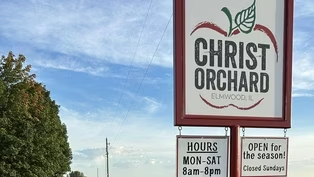 New
NewHow a Coal Company Helped Start Christ Orchard
Video has Closed Captions
Clip: S7 Ep6 | 1m 2s | A coal company's apple trees sparked an FFA student's lifelong connection to farming. (1m 2s)
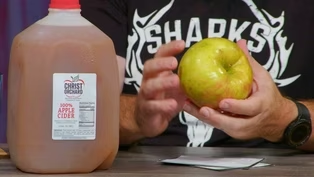 New
NewA One-Pound Honeycrisp and the Challenge of Choosing Apples
Video has Closed Captions
Clip: S7 Ep6 | 1m 24s | A giant Honeycrisp sparks a conversation about choosing which apple varieties to grow. (1m 24s)
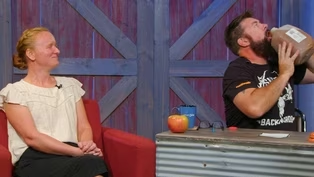 New
NewRob’s Cider Taste Test Gets the Crew Laughing
Video has Closed Captions
Clip: S7 Ep6 | 1m 24s | Rob tries Christ Orchard's cider, and his attempt to share gives the crew a good laugh. (1m 24s)
Providing Support for PBS.org
Learn Moreabout PBS online sponsorship New Episode
- News and Public Affairs

Top journalists deliver compelling original analysis of the hour's headlines.
 New Episode
- News and Public Affairs

Today's top journalists discuss Washington's current political events and public affairs.
 New Season
 New Episode
 New Episode
 New Episode
 New Episode



 New Episode
 New Episode
Support for PBS provided by:
A Shot of AG is a local public television program presented by WTVP