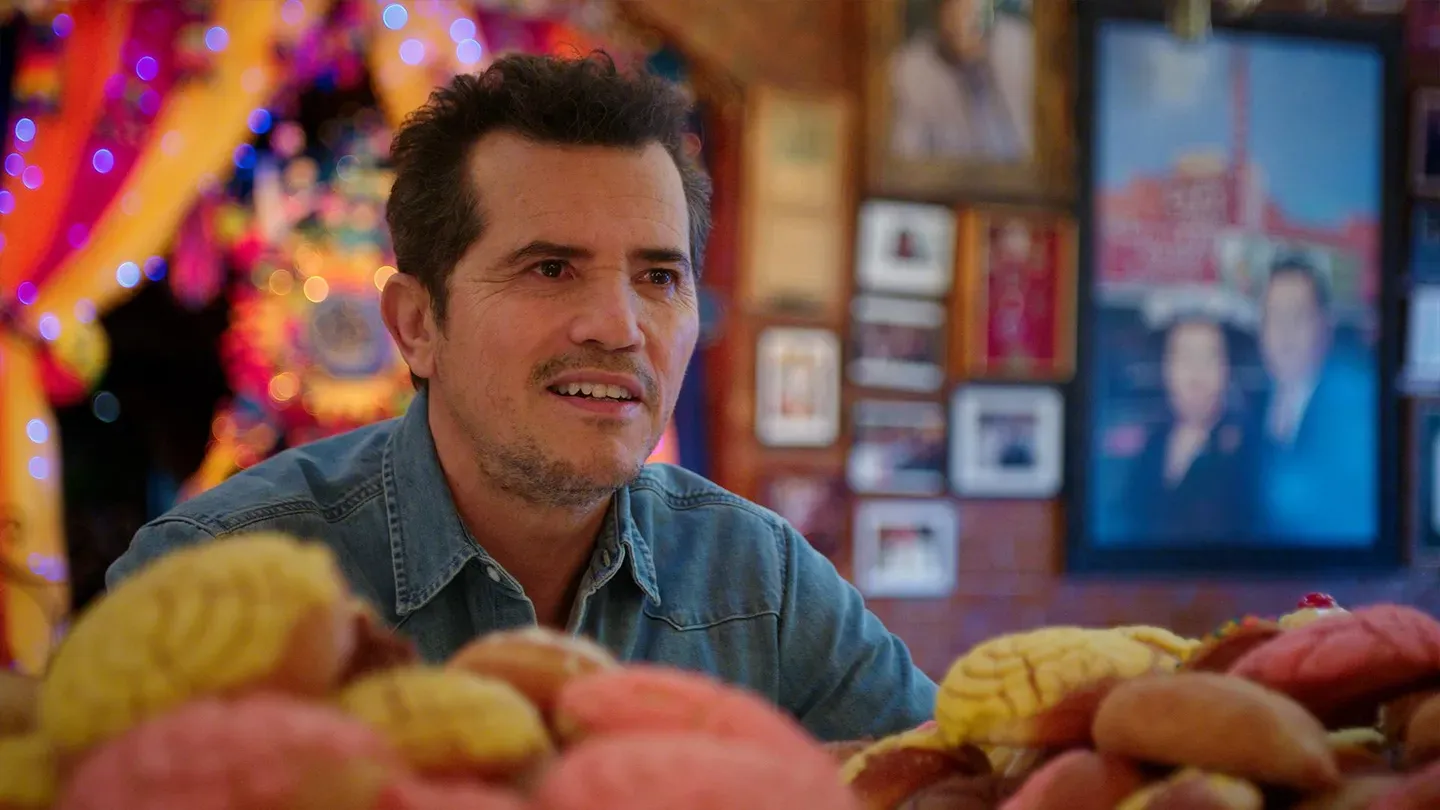
Leguizamo Does America
New Orleans
8/31/2026 | 44m 33sVideo has Closed Captions
John explores the deep, lasting impact of Latino culture on New Orleans.
John uncovers the deep and lasting impact of Latino culture on New Orleans, from its colonial roots to post-Katrina revival.
Problems playing video? | Closed Captioning Feedback
Problems playing video? | Closed Captioning Feedback
Leguizamo Does America is presented by your local public television station.
Leguizamo Does America
New Orleans
8/31/2026 | 44m 33sVideo has Closed Captions
John uncovers the deep and lasting impact of Latino culture on New Orleans, from its colonial roots to post-Katrina revival.
Problems playing video? | Closed Captioning Feedback
Where to Watch Leguizamo Does America
Leguizamo Does America is available to stream on pbs.org and the PBS app.
[upbeat jazz music] - New Orleans, the Big Easy-- you can hear jazz just about everywhere, and if you find the right spot, Latin jazz.
♪ ♪ Of course, NOLA has a French influence, but, actually, a lot of its famous architecture, monuments, and food were inspired by the Spanish.
And nothing screams melting pot like New Orleans, because you got Latinos, Black folks, and, of course, caribeños, you know, Caribbeans, who sometimes call NOLA the northernmost city of the Caribbean.
Mmm, beignets.
They're doughnuts' naughty French cousins.
And don't forget that Mardi Gras is just the French version of our Carnaval.
Hang on, do I have a powdered-sugar mustache?
Like that stuff that everybody was doing in the '80s, except me.
Okay, I'm super pumped.
We're going to connect with some Latinos who are making an already awesome city even "awesomer."
We're going to eat some food and do a little dancing.
Come on, I know you're really here to see me get down, right?
Come on.
♪ ♪ [upbeat Latin music] ♪ ♪ When it comes to Latinos in New Orleans, we're a small but mighty 6% of the population.
But there's one country of origin that stands out, and it might surprise you-- Honduras.
That's right, hondureños represent about a quarter of the Latino population here, more than any other group, which is pretty damn impressive, considering that they're only 2% of the Latinos nationwide.
Now, the reason they're here is bananas, as in actual bananas, the fruit.
Now, see, New Orleans has a long history with Honduras, stemming back to the banana trade at the turn of the 20th century.
American fruit companies exploited the small country, gobbling up the lion's share of their farmland and gaining influence over their government and economy.
By the 1930s, Honduras was the world's largest banana exporter, and New Orleans one of its biggest importers.
But you think the plantation workers saw any of that money?
Ha.
Anyway, the fruit trade established a steady flow of immigration between New Orleans and Honduras that continued into the 21st century.
So I'm excited to explore their cultural imprint.
And by that I mean, food, and I always mean food.
I'm here at Alma, where chef Melissa Araujo is putting a modern twist on Honduran classics.
And believe it or not, I've never had Honduran food before.
Oh, hello.
- Hello, John.
- How's it going?
What a pleasure.
Nice to meet you.
- Nice to meet you, too.
- So what do you got here?
- So we are a modern Honduran eatery.
I combine my passion for my cooking with my heritage, and this is basically telling the story of my family, too.
- You're telling the story of your family through cooking, through cuisine... - Through the food.
- Through menu items.
- Exactly.
Through the food.
- Honduran soul food.
- Exactly.
Having a baleada or serving a caldo de pollo or having arroz con pollo-- in the end of it, what makes my essence.
- And guess what.
I'm your next Honduran chef.
- All right, cool.
- Take me to your kitchen... - Let's go.
- And instruct me.
[laughs] - All right, let's go.
- La baleada is to Honduras what pupusas are to El Salvador and tacos are to Mexico-- a staple street food.
It's a thick flour tortilla, traditionally filled with refried pinto beans and scrambled eggs, topped with cheese and cream and then folded and stuffed into your face.
Yes, please.
- This is peasant food, John.
This is-- - I'm a peasant.
- This is where the field workers work so hard, and you need a hearty meal of the day.
It doesn't matter if it's breakfast, lunch, or dinner.
This is what a field worker would eat, you know?
So the base of the baleada is a good tortilla.
- It's like the Mexican tortilla.
- Yeah, it's basically-- if you don't know how to make a good tortilla round-- So this is a little trick that we do.
You put it on a round plate, you know, the size that you want it, and you flat it out.
And then you pull it.
- Oh, look at that.
- Pull like that.
We have the sofrito that we do, two different kinds of sofrito.
- Homemade?
- Homemade.
- Not sazón.
- Not sazón.
Yeah, exactly.
- Okay, now it's my turn.
I can't just eat and not do.
- All right, so what you're going to do is you're going to expand slowly, go around.
You're going to move the plate, okay?
Keep spreading it.
There you go.
Ah, you can be a professional at this, John.
- Oh, I ripped it.
Oh, man.
- That's okay.
It's okay.
You know what's the secret?
- What?
Just roll it-- - Treat it like a woman.
- [laughs] - Gentle.
- Gentle.
- Gentle.
- Yeah, yeah.
- There you go, see?
Imagine a beautiful woman-- - If I had your advice, I maybe would have-- my first marriage would have survived.
- But this is what you want.
- Those bubbles.
- You see those bubbles right there?
That's what you want right there.
This side, you want to put the refried beans.
- Oh, with real lard and beans from Honduras, pinto beans.
- And then... - I'm going to put some eggs.
- Yep.
- Crema.
- You put the crema.
Yep, there you go.
- Just a little topping.
- Then the avocado.
- You put a couple of rebanadas.
- Yep.
So now just a little bit-- - Oh, monte.
Un poco de monte.
- Monte, exactly.
- Look at that.
- Now you have an open-face baleada.
- Mine's sort of a Picasso version, a cubist version of a-- [chuckles] This is the before and the after.
Well, let's go eat.
- Let's go eat.
- You take the nice one.
- Yeah.
- I'll take the funky one.
Like that--the saloon door.
- It's easier.
- Right?
Who was that beautiful couple back there?
- Those are my parents.
- Those are your pops and your moms?
- Yes, my mom was 17 with that picture, and my dad was 22.
My mom is Sicilian Italian, and my dad is Honduran Mayan with descents of Portuguese, Spanish, and Jewish.
- You got everything in you.
- I'm a mutt.
All right, so... - Fold it up.
- Yep, fold it up like a big taco and then-- - Lift it up and bite it on one side.
- Yep, like that.
[drumroll] - Mmm.
Mmm, mmm, mmm.
The beans are so delicious, so powerful.
The crema, the cheese-- the cheese adds a little sharpness to it.
- The egg, the softness of the egg, and then comes the kicker of the avocado.
And then your wrap of the tortilla just makes-- - Oh, the flour tortilla is so beautiful.
It's incredible.
[Latin music] Mmm.
- Mm-hm.
- Mmm, mmm, mmm, so good.
Now, how did you call it Alma?
Where did Alma come from?
- So "alma" means "soul."
- Mm-hmm.
- And this is my soul.
- Mm.
- You know?
This is who I am.
- Yes, it is.
[snaps fingers] - Once you walk through those doors, I'm inviting you to experience what it is to sit down at my table, to eat my culture, to feel like you're home.
I have Hondurans that come in, you know, and they're like, well, let me see if she's actually Honduran.
And then once they have that taste, they're like, can I talk to the chef?
And I come out, and they were like, damn, you took me home.
- Part two.
Mm, mm, mm, now say goodbye to that.
Sorry.
- So this is a soft-shell-crab egg Benedicts.
- Mmm.
That soft-shell crab is amazing--that's bomb.
Yo, this soft-shell crab is melt-in-your-mouth buttery.
It's another fantastic recipe inspired by Melissa's childhood in La Ceiba.
- One of my fondest memories was going in the summers to Honduras, and as a kid-- - Amazing.
- You know, I'm from a coastal town.
So going to the beach and just swimming a little bit into the water and just grabbing the crabs or the lobsters and all that stuff.
A lot of people don't know, but the Gulf of Honduras is one of the richest gulfs in the world.
- Melissa took that Honduran heritage and paired it with her gourmet training.
But you know how it goes-- you mess with the classics, and you're bound to have some haters.
And Melissa's fresh take has rubbed some traditionalists the wrong way.
You call yourself "the modern chef."
So you're doing modern things to traditional Honduran cooking.
How do people react to that?
- It's shocking in the beginning, because the baleada, for example-- the baleada is open, right?
Originally, it comes closed.
The idea with that is so you can see every layer that we're presenting.
I want you to see the layers.
The traditionalists hated that I am opening the food, opening the culture up, you know?
- You mean opening it-- changing it or opening it up and giving it up to-- - Both.
That I'm opening it up and that I'm changing it.
Like everything in life, it needs to evolve.
It needs to change, you know?
- Mm-hmm.
- It's not easy to change, you know?
- No, not at all.
And they're going to hate.
Yeah.
both: Haters are going to hate.
- If you don't have haters, you don't have something you're doing right.
- Right, right.
- You know?
And that's the point.
- And Melissa is definitely doing something right.
Her incredible dishes, like pollo chuco-- deep-fried chicken thighs with fried banana and the fluffiest Honduran pancakes you'll ever taste-- have earned Alma and its chef a semifinalist place in the 2024 James Beard Awards.
Keep fighting.
Don't give up.
- I won't.
[both chuckling] And that's what it's all about-- honoring your heritage and then making it your own.
- You ever walk through a city and feel like there's more than meets the eye?
Yeah, that's how I've always felt about New Orleans.
We call it the French Quarter, but I've always gotten those Latino caribeño vibes.
This city screams Latino.
So to get to the bottom of it, I'm meeting with someone who has a PhD in the history of Latinos of this city, Rafael Delgadillo.
And calm yourselves.
I've asked him for the SparkNotes version.
What a beautiful spot.
- Yeah, welcome to New Orleans, my hometown.
- How old were you when you got here, and what did your family think of New Orleans, coming from New York, right?
- Yeah, so I was born in New York, and then when I was six years old moved here.
And then the first year that we experienced Mardi Gras, which would have been 1989, it started happening.
They saw what was going down, and they realized, oh, this is Carnaval.
[festive Latin music playing] I remember my father used to work here in the French Quarter.
And he would say often-- I feel like I'm back in Santiago in Santo Domingo.
And he really didn't understand why.
- We all know the French history of New Orleans from learning about the Louisiana Purchase in school, if you were paying attention, which I wasn't.
But what a lot of people don't know is that New Orleans was under Spanish control for about 40 years.
Yo, not only that, but it's been connecting Latin America and the Caribbean to the Mississippi since the 1700s.
So I know I'm going to sound like a broken record, okay?
But here it is again-- we've been here, and it shows.
I feel like when I'm in New Orleans, I feel like I belong here somehow, you know?
Like, it feels home to me in a weird way.
And I think it's for the same reasons your parents, too.
- You know, and they instantly understood a little bit more about the city.
- I guess it's the plazas... - Uh-huh.
- And some of the architecture.
- Absolutely.
- It looks like Cartagena.
- John, you wouldn't be the first Latino person to say that about New Orleans.
- Right, right.
- And I would say it's not just walking through and the architecture.
I would also say the pace of life here is a little bit slower than it is in places like New York.
- Right, right.
- The Northeast, right?
It's a little bit more laid back.
And, you know, for me, it feels a lot more like the Caribbean in that sense.
- Yeah, yeah.
To really understand our Latino footprint in New Orleans, we got to go way, way back.
- What I would say about New Orleans is that it's covered in layers of colonialism.
It's French, Spanish, and American.
The French and the Spanish used very similar colonial designs when they designed their cities.
But beyond that, you know, the city was rebuilt after two fires in 1788 and 1794.
And the Spanish were responsible.
They were the ones that were in charge of the city during that time.
Jackson Square was known as the Place D'Armes by the French... - Ah, and then it became-- - And then the Plaza de Armas under the Spanish.
- Looking around, it's hard to miss--the stucco walls, wrought-iron balconies, and flat tile roofs are all telltale features of Spanish colonial architecture.
But the Latin influence didn't end in the 1700s.
And we've been making our mark ever since.
- The most prominent way that Latinos have done that is through the rebuilding of the city after Hurricane Katrina.
The city was basically empty because people evacuated and didn't have homes.
And almost immediately, you know, as the water got pumped out and we started rebuilding, there were a lot of Latin American migrant workers that ended up in the city working in the construction.
They didn't stay.
A lot of them were undocumented.
And, you know, while George W. Bush, from what I recall, he lifted the regulations, it was scary, it was scary because these folks were here working for cash, so that's not always safe.
You know, getting stiffed by contractors and-- - I mean, that's basically what they did.
They got rolled.
- Yeah, pretty much.
- So it's so interesting, though, to look at this city in a different way, from a Latin point of view.
- Mm-hmm.
- It's like, we were here.
We helped build it to its glory in the 1700s, and then we came back and repaired it.
It's so important to have people like Rafael in our community who act as keepers of our history.
Now that I've learned from someone who studied it, I'm eager to meet someone who lived it.
- So listen up--you can't tell the story of New Orleans without talking about the city's darkest period in modern times.
And you can't tell the story of Hurricane Katrina without Latino immigrants.
- Millions of lives were changed in a day by a cruel and wasteful storm.
In the aftermath, we have seen fellow citizens left stunned and uprooted, searching for loved ones and grieving for the dead.
- In August 2005, Katrina destroyed over 200,000 homes, displacing over half a million people and killing almost 1,500.
While the federal government fumbled their response, thousands of Latino immigrants showed up to help rebuild this city once again.
But instead of gratitude, many encountered exploitation and threats of deportation.
And José Torres is one of them.
- To every person who has served and sacrificed in this emergency, I offer the gratitude of our country.
- And get this-- demand for labor was so high following the storm that the government briefly loosened labor regulations, making it easier to hire undocumented immigrants and, unfortunately, easier to exploit them.
A survey found that almost half the workers didn't receive all the pay they were owed and even more never received overtime pay.
When workers asked about unpaid wages, they say crooked employers would threaten to report them to ICE.
- José spent the next ten years living in the shadows, afraid of deportation.
After a while, though, he began to relax.
He kept working, got married, and had kids.
And then an unfortunate mistake put him on ICE's radar.
He was charged with driving under the influence.
After community service and paying fines, his record was expunged.
But then he was required to make regular check-ins with ICE.
But then in 2017, they abruptly issued an ultimatum-- leave now or get deported.
And thinking of his family, José chose a third option.
He sought sanctuary in this very church.
Since ICE generally won't arrest people in houses of worship, he was safe but stuck inside these walls for eight long months.
- Mm-hmm.
[somber music] And that's the thing about being an undocumented immigrant-- the stakes are always high.
- While José's future in the country hung in limbo, outside the church, his community rallied in support, providing legal services, signing petitions, and holding vigils.
Power to the people-- got to love it.
In 2020, José was granted a special visa which allowed him to stay in the country.
In 2024, he finally got his green card.
Today José enjoys life in New Orleans with his wife and two daughters, and he works full-time as a janitor in the same church that provided him sanctuary in his darkest days.
Talk about full circle.
José's story is one of courage, resilience, and faith, and it's also a reminder that when we stand with each other and recognize each other's humanity, that's when we're at our best.
[upbeat Latin music] - From parades and festivals to spontaneous dance parties, New Orleans is known for its electric street culture.
And, you know, we Latinos get down with that.
Come on, now, as if we needed more proof that it's an extension of the Caribbean.
Today I'm here to check out Dile Que NOLA, an organization open to anyone who wants to learn a dance called "rueda de casino."
Hey, I'm anyone.
[cheers and applause] - Hola.
¿Qué tal?
Wilma, nice to meet you.
This is amazing.
- Thank you.
- Choreography's hot.
I want to join you.
- Oh, okay.
- If you'll allow me.
[laughter] Rueda is salsa's older cousin, originating in 1950s Havana, 20 years before the golden age of salsa in New York.
That's right, at a social club, or casino, in Havana, teenagers fused son with cha cha, mambo, and rock and roll.
And, boom, rueda de casino was born.
After Castro took power in 1959 and Cubans emigrated to the United States in droves, they brought their music and dances with them, including rueda.
Unlike salsa, which is one-on-one, rueda is danced in a circle, with dancers swapping partners as the cantante calls out each move.
- Five, six, seven, hands up.
- Casino?
- Casino, yes.
- Rueda de casino.
- Yes.
- Love the cultural exchange.
We have people from New Orleans.
We have people from Michigan.
We have people from everywhere, Cuba.
- United colors of Benetton.
I love it.
Tell me all about it--I want to hear everything about it.
- Sure, sure.
[upbeat Latin music] - How did you start Dile Que NOLA?
- So, in 2015, it was a group of us women.
I think it was maybe eight of us-- the core OGs who started these underground rueda de casino practices.
I was thirsty for Cuban dance, and it was just so dispersed.
We were trying to bring it together.
- Yeah.
- And for a while, we were just a team of women because the reality is that in any other social dance form, there's not very many guys out there.
And the stereotypical rueda de casino has a lot of men leads or male leads.
So we're like, we don't need guys.
- Right, right, right.
- So told guys, no, no, we don't need you.
- Yeah, yeah.
- But in the end, we're like, okay, well, the guys are pretty cool.
- Let me consider, yes.
- Exacto.
Our guys are very, very, very dedicated, and the guys follow, so we broke that... - Oh, you taught them how to follow.
- Tradition.
- Yes.
- Yeah, that's hard for dudes to learn how to follow.
- Yes, to give in and let us take over.
- Right, right, right, right.
I'm sure they enjoyed that part, yeah.
- Yeah, very much.
- Yeah.
- Then after that, it just naturally started growing, and we were having more practices, more practices.
The reality is that we are a community organization, so we started-- - What do you mean by that?
- So it's just community based.
So there is no, like, payments involved.
There's no membership.
It's just, like, we just have a Facebook page and a website, and then we meet up, like, here at the park or at a dance studio.
And then people come up, show up, and they don't have an obligation.
- That's the beautiful thing about life is just sharing these moments and experiences.
And I think Latin people do that really well, you know?
I think that's one of our magic powers-- is that we know how to share in community.
- We really do.
- Yeah, we love it.
- That's true.
- We thrive in that.
Y'all, Dile Que NOLA isn't just creating a space for New Orleanians to dance.
They're creating a cultural exchange between two places with a long history.
- Yeah, we go to Cuba, I mean, every year, at least twice a year.
- Twice a year?
- We're trying to create this, like, pipeline between New Orleans and Cuba.
So we try to bring--at least once, sometimes twice a year, we have these group travel exchanges to where we go to Havana or Santiago de Cuba, and we learn with local dancers... We do a cultural exchange.
So we organize that every year.
- And that's beautiful.
You remember how the Spanish rebuilt the French Quarter?
Well, guess which city they modeled it on.
That's right, Havana.
But the bonds go way deeper than that.
New Orleans and Cuba have centuries of shared commerce and migration.
In fact, before the U.S.
embargo was enacted in 1962, Cuba was Louisiana's largest trading partner, with about a third of all exports from the Port of New Orleans headed to Havana.
To this day, many people still have ties in both cities.
- Are you ready?
- Yeah, yeah, I'm ready.
- Okay.
- I'm ready to make a fool of myself.
- I'm going to introduce you to my people.
- All right.
- Our people.
Y'all, yo, check it out.
[cheers and applause] We have a new friend who's joining us.
Y'all going to help me out, teach him, so... - All right.
- All right, welcome.
- I need remedial salsa lessons, please.
[laughter] - You know the drill.
Let's start with the easy step, which is guapea.
John, you're leading, so you're going to start on your one.
One, two, three, five, six, seven.
One, two, three, high five, six, seven.
Looking good.
Looking good.
- Okay.
[laughter] - It'll come.
It'll come.
Just keep the camera up here.
I look great.
[laughter] Here we go.
One, two, three, five, six, seven.
Enchufla, mambo con bulla.
♪ ♪ all: Hey, hey, hey, hey!
- Two, three, five, six, seven.
- Next.
- One, two, three, five, six, seven.
One, two, three.
And stop right there.
We got it.
all: Hey, hey, hey, hey!
- I love getting a little slice of Havana in New Orleans.
Nicole and Wilma are keeping those ties alive so that if and when the embargo is lifted, it'll be like a reunion of old friends.
Until then, a bailar.
Great job.
Great job.
- So good.
- Great job, teacher.
- Yes!
[record scratches, music fades] [upbeat Latin music] - After Katrina, a lot of Latino immigrants who rebuilt New Orleans ended up starting families here.
And without enough resources to help the adults assimilate, some of their kids began to fall through the cracks as well.
They were in desperate need of a connection to a larger community.
Enter Puentes, an organization whose name literally means "bridges."
Puentes was founded in the aftermath of Katrina for Latinos by Latinos.
Based in the aptly-named Beanlandia-- classic New Orleans-- Puentes is focused on empowering Latin youth, whether it's helping them apply to colleges, develop leadership skills, or share their experiences in a storytelling program.
- The Puentes mission is to make them feel less alone in a country that can sometimes feel pretty hostile.
They've even got a podcast called "Latido"-- that's right, heartbeat-- where the kids meet weekly to discuss topics like education, dreams, mental health, or you name it.
And guess who they invited to be their guest this week.
That's right, your boy.
[laughter] I became a problem child.
[chuckles] But I think my problems and my troubled childhood helped me to become the artist that I am today.
Now, my youth may be long gone, but the trauma of being a strange kid in a strange land never leaves you.
I can only imagine how different my childhood might have been if I had had a space like this to share my experience with other immigrant kids.
- We want to create a platform for positive change in our community, and this is what these guys are doing right now.
They're sharing their stories, and they are inspiring other youths in New Orleans and hopefully beyond New Orleans, so... - Yeah.
- How did you get involved with this organization?
I mean, what brought you here?
What keeps you here?
- Well, first, my sister got invited.
I came with her to the United States, I think, two years ago.
Bolivia.
I mean, I was fairly alone.
Like, I had to study.
I had to work.
I didn't have any time to make friends or anything.
Then I came to Puentes, and I met Luca, Jaime.
I met everyone.
And I was like, oh, wait, these are my friends.
These guys are my friends.
- And how about you?
You've been quiet.
I want to know about you.
- I'm the quiet one.
I didn't fit in with people.
No one looked similar to me.
My parents didn't really understand what I was going through, and they just wanted me to, like, "push through" and just, like, deal with it.
So, when I joined, I focused my own life towards something I enjoyed, which is talking to people, learning about people, and just telling my story, influencing the world.
- Is it that you came here and you saw a Latin community that you felt a little more like you belonged, like you found your chosen family here?
- Yeah.
- But Puentes isn't just a source of social interaction for immigrant kids just arriving to the States.
They also provide concrete help when it comes to navigating a new world.
- Many of these young adults have a poise and maturity that I did not tap into until much later in life.
In fact, I'm still waiting.
But Lucas isn't alone in his persistence.
Between 2000 and 2020, the number of Latinos enrolled in four-year college almost quadrupled.
It's clear our kids are hungry for higher education, despite the cultural, financial, and language barriers that have been stacked against them for generations.
And when I say generations, I mean it.
In 1946, five Latino families won the right to enroll their children in white schools after suing their school districts in Orange County, California.
That case, Mendez v. Westminster, paved the way for the landmark Brown v. Board of Education ruling eight years later.
Sadly, almost 70 years later, many public schools are still segregated.
And those majority-Black and Latino schools receive billions less in funding, meaning a harder path to higher education.
That inequity is what Puentes is working so hard to rectify.
- And I think what keeps us moving is that the more stories we share, the more people we advocate for, and the better it is for our communities.
I think we're doing the right thing here.
- I think you guys are doing the right thing.
- Thank you.
- Thank you.
- There's no jazz without New Orleans, and there's no New Orleans without jazz.
I couldn't leave without talking about the impact Latinos have had on the genre since its genesis.
So I met up with Afro-Cuban jazz virtuoso Alexey Martí, a staple of the local club scene and a frequent headliner at Jazz Fest.
[Latin jazz music playing] ♪ ♪ Whoo!
Yeah!
Uepa!
- Thank you for having me.
- What a beautiful, beautiful band.
Alexey brought me to Snug Harbor, one of the city's hottest clubs, to show me how Afro-Cuban rhythms combine with jazz harmonies to create the fiery sound I love so much.
How did you come to New Orleans for jazz?
Were you always playing jazz in Cuba?
Or here's where you started?
- No, no, no, I played jazz in Cuba.
In Cuba, we played-- - Yeah, you were jazz, too.
- Yes.
Most Cuban musicians, we learn jazz.
- You do?
- Yes, that's-- - Not salsa?
- In Cuba, in every school, people learn classic music.
- Classical music first.
- Yes, they learn jazz in their own.
- At home.
- Yeah, by their own.
- In the streets and the clubs.
Alexey grew up surrounded by music, but it was religion that got him drumming.
- I started playing percussion in my grandmother's house with religious purpose.
My family were practicing Yoruba religion.
People call it Santería.
- Sí, Santería.
- Yeah, so my family, that's what we played all the time, playing drums.
- Alexey's love of music only grew with time, and he quickly went from playing drums in his family band to pursuing it as a career.
Once he had perfected percussion, he began to focus on jazz.
Years later, Alexey got to open up for his hero, Chucho Valdés, one of the most influential figures in Cuban and Afro-Cuban jazz.
Who are your jazz heroes?
He was my neighbor.
And I learned with him to play percussion.
- Wow.
He's also played with the New Orleans Jazz Orchestra, is a regular at Jazz Fest, and won a New Orleans Big Easy music Award.
This guy is legit.
So I'm glad he's here to school me, because I hate to admit it, but I'm not as fluent as I'd like to be when it comes to Latin jazz.
The little that I know from the Internet was that Cuban music influenced New Orleans jazz from the very beginning, that it-- - Yes, in the '30s, a lot of immigration from Cuba went to New York.
- Right, right.
- Those people started influencing, changing... - Jazz.
- The jazz.
- So Cuban musicians came to New York in the '30s... - Yes.
- And influenced jazz.
- Yes, they start playing with famous American jazz musicians.
Like, for example, if you're going to listen to some John Coltrane music, you're going to hear he recorded some songs with congas.
In the beginning, it was Afro-Cuban when it started... - Right.
- Afro-Cuban music.
- Jazz is born from improvisation.
And once jazz artists heard Afro-Cuban rhythms, it sparked a whole new improvisation.
So, when composer Mario Bauza released his song "Tanga" in the 1940s with la clave as a foundation, Latin jazz was born.
I heard it was la clave that created jazz.
- Yes, so what happened was, in Cuba, we got a pattern called "enclave."
We got two--the son, y another one is the rumba.
- What is the difference?
- Okay, one do this.
It's... [rhythmic vocalizing] Y the other one do it reverse, two, three.
[rhythmic vocalizing] - Oh, that's-- It's blowing my mind.
- [laughs] So it's hilarious, because in New Orleans, that pattern, you got... [rhythmic vocalizing] Because in the '30s, you have to understand, "Cuban music" was very popular.
- In the '30s?
- In the '30s and even earlier than that.
- Yes, yes, because Jelly Roll Morton said-- he's one of the biggest musicians-- Afro-American musicians--said if it doesn't have that Spanish tinge, it's not worth it.
♪ ♪ I mean, of course, we're still talking about African music and Black music influencing Latin music.
- Yes, yes.
- And then influencing American Black music.
- The rhythm, it's African.
- Right.
- Y a lot of instruments that we have here coming from Africa, you know?
And the syncopation is Africa.
- Yes.
- The harmony is Spain.
- I didn't know that.
- Cuban music is the mix of-- The harmony is Spain, and the rhythm is Africa.
- Jazz is the ultimate metaphor for this experiment we call the United States of America.
It combines influences from Africa, Europe, Latin America, and Indigenous people, and creates something that is ever-changing, unique, and totally awesome.
It's beautiful, beautiful, man.
I love that you're helping us and everybody understand Latin influence in America and American music.
Well, thank you, man.
- Man, thank you for having me.
By the way, I got a show tonight.
I want that you play with us, man.
- Oh, you want me to play with you?
- Yeah, you have to-- - You know, I can't play a damn thing, except my Spotify.
- [laughs] - All right, let's go ahead.
What the ....?
- Yeah, let's do it.
[applause] - Hey!
- Alexey Martí!
[cheers and applause] - Alexey!
- I would like to invite... a beautiful, nice person, amazing author.
John, you want to play something with us?
- I mean, I don't want to wreck your evening, but-- [cheers and applause] - We're going to be simple.
We're going to be like... [rhythmic vocalizing] ♪ So I want everybody say like this... ♪ I know what you want ♪ all: ♪ I know what you want ♪ - ♪ I know what you need ♪ all: ♪ I know what you need ♪ - ♪ I know how you like it, baby ♪ ♪ The way you look at me ♪ You got it?
all: ♪ I know how you like it, baby ♪ ♪ The way you look at me ♪ [laughter] - It's better like that.
[chuckles] - We ready?
Come on, I can't hear you.
Come on.
♪ I know how you like it, baby ♪ ♪ They way you look at me ♪ Epa!
♪ I know what you want ♪ ♪ ♪ [song ends, cheers and applause] - Wow.
Maestro!
Oh, my God.
- Give it up for John Leguizamo.
[cheers and applause] - No, no, no.
What an honor to play with these local legends, and what a perfect ending to my LatiNOLA tour.
They say jazz isn't just music, it's a way of life.
Now, I may not be able to play it, but, baby, I certainly live it.
After getting a glimpse at the past, present, and future of the Big Easy, I finally understand why New Orleans feels like home.
It speaks to my roots, my soul.
From the tropic heat to the music floating on the breeze down every street and the buildings that feel so familiar, this city is Latin.
And I'm so grateful to everyone who shared their story with me.
But now to make my exit NOLA-style.
["When the Saints Go Marching In" playing] ♪ ♪ Epa!
Come on!
Come on!
♪ ♪










Support for PBS provided by:
Leguizamo Does America is presented by your local public television station.