Vermont This Week
November 6, 2026
11/6/2026 | 26m 46sVideo has Closed Captions
Scott wins historic sixth term | Democrats retake supermajorities in the Vt. Legislature
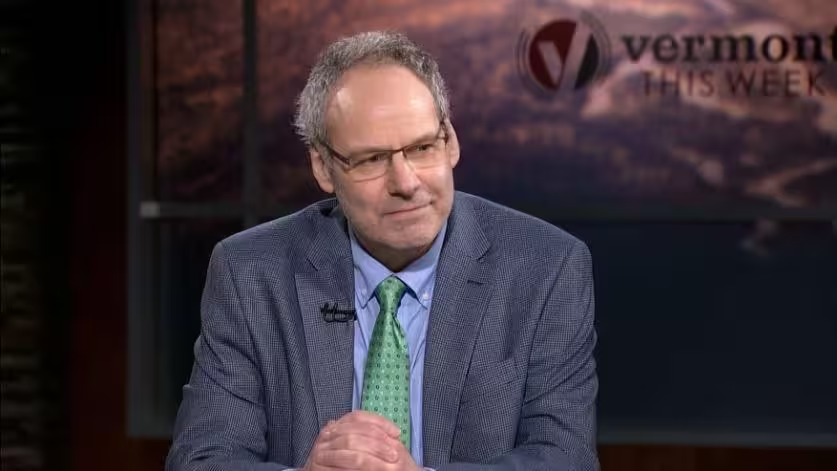
Scott wins historic sixth term as Vermont governor | Democrats retake supermajorities in the Vermont Legislature | Gray unseats Rodgers in Lieutenant Gov race | Moderator - Mitch Wertlieb; Lola Duffort - Vermont Public; Calvin Cutler - WCAX; Kevin McCallum - Seven Days.
Problems playing video? | Closed Captioning Feedback
Problems playing video? | Closed Captioning Feedback
Vermont This Week is a local public television program presented by Vermont Public
Sponsored in part by Lintilhac Foundation and Milne Travel.
Support provided by:


Vermont This Week
November 6, 2026
11/6/2026 | 26m 46sVideo has Closed Captions
Scott wins historic sixth term as Vermont governor | Democrats retake supermajorities in the Vermont Legislature | Gray unseats Rodgers in Lieutenant Gov race | Moderator - Mitch Wertlieb; Lola Duffort - Vermont Public; Calvin Cutler - WCAX; Kevin McCallum - Seven Days.
Problems playing video? | Closed Captioning Feedback
Where to Watch Vermont This Week
Vermont This Week is available to stream on pbs.org and the PBS app.
Support the crew
Help Mitch keep the conversations going as a member of Vermont Public. Join us today and support independent journalism.Providing Support for PBS.org
Learn Moreabout PBS online sponsorshipRepublican Phil Scott fended off Democrat progressive challenger Amanda Janoo this week to win an unprecedented sixth consecutive term.
48 hours ago, the political pundits were writing my obituary.
I thank you for your vote and your faith in me to do the job that I've done for the last ten years.
And I look forward to getting back to work tomorrow to make Vermont again more affordable, to grow the economy and protect the most vulnerable.
Plus, Democrats retake supermajority in the Vermont House and Senate and Molly Gray on seats.
Incumbent John Rodgers in the race for Vermont's lieutenant governor.
All that and more ahead on Vermont this week.
From the Vermont public studio in Winooski.
This is Vermont this week, made possible in part by the Lintilhac Foundation and Milne Travel.
Here's moderator Mitch Wertlieb.
Hi, I'm Mitch Werlieb.
It's Friday, November 6th, and with us on the panel today, we have Lola Duffort from Vermont Public, Calvin Cutler from WCAX and Kevin McCallum from Seven Days.
Thank you all so much for being here today.
And yeah, we've got so much to talk about in the wake of historic elections nationally here in Vermont.
As we talked about at the top of the show, Governor Phil Scott wins and historic sixth term as Vermont's governor.
This, by the way, amidst record voter turnout for midterms in the state of Vermont, as reported by the secretary of State's office.
People really showed up for all of this.
But let's first talk a little bit about Amanda Janoo.
Here's what she had to say as she gave her concession speech on the night of the election.
When I decided to run for governor, pretty much everyone I talked to in Vermont politics was like, that's a terrible idea.
And, you know, they had some valid points.
You know, I had no name recognition.
I had no money, little campaign experience, and was running against the most popular governor in the country.
You know, the thing that troubled me most honestly wasn't that people thought I couldn't win.
The thing that troubled me most was that people seemed to think that change was impossible.
I realized in this moment that, like my real opponent throughout this whole campaign, has never been another candidate or even another party.
The opponent has been cynicism.
Really interesting remarks from Amanda, who again lost the race to Governor Phil Scott, but not by a whole lot.
Calvin Cutler came within within what, six points or so of winning this race?
6 or 7 points.
Yeah.
Her last line there in that, in that clip where she says, you know, cynicism was what I was really fighting against.
Just you have a point there because she really did better than I think a lot of people expected when she first entered this race.
Totally.
I mean, if you had gone to anybody, any political observer in Vermont eight months ago and asked who was Amanda Janoo, nobody would have had a clue of what you're of who you were talking about.
And here we are today.
You know, granted, in a year where Democrats nationally have performed extremely well because of this blue wave from the federal government and the federal level, Amanda Janoo gave Phil Scott his most competitive race yet.
And I think it really goes to show, number one, the political environment that we're in.
But also, you know, really the energy that Janoo was able to tap into, there's a lot of voters that were really activated by her or sort of, you know, sort of economic populist message being a younger candidate, really, you know, talking to a lot of the concerns and fears and, frankly, desperation that a lot of younger people and a lot of people in Vermont have about cost of living, affordability, their future, finding a home.
So she really tapped into something that a lot of people at the party were saying of sort of the likes of Bernie Sanders, right, in that movement.
But in the end, it turned out it was not enough to overcome the popular incumbent governor Scott.
And it really does show also the governor and his brand of politics and who he is and how Vermonters perceive him.
You know that he was able to hold on during this election.
So it was really fascinating.
I find that the results of this election have been such an interesting test, because you can look at it one way and say, this woman came out of nowhere and gave Phil Scott the toughest gubernatorial race of his life.
And you can also look at look at it another way and say, you know, in a year where we saw this blue tsunami nationwide and also down ballot in Vermont, we saw, you know, Molly Gray also absolutely trounce her Republican opponent.
And you look at the results of the gubernatorial race, you can also say she underperformed.
And I am hearing both of those narratives right now.
Yes, I'm hearing both of those things too.
Yeah.
And I and I think it really which kind of interpretation you choose tends to kind of follow whether or not you sort of believe in the more moderate as a winning strategy.
You know, moderate ideological ideology is the winning strategy or whether or not you want to press the argument that progressive economic politics can build winning coalitions in America.
Kevin McCallum, how do you read this?
Because it really is such an interesting way of looking at it there.
Lowell is.
Right.
I mean, you could say, you know, Amanda Janoo did amazing, but did not do what other Democrats did around the rest of the country.
That's right.
I've had multiple family members and friends from around the country, you know, contact me after the election and note on their national map that a Republican won the governorship of Vermont, and they can't get their heads around it.
They can't understand how in this year, a Republican was able to win reelection to, to to a state like Vermont.
And it's a little difficult to explain to them honestly sometimes how it was that someone like Phil Scott was able to, you know, survive this tsunami.
But it takes a little bit of understanding of how long he's been doing, what he's been doing, how deftly he's been able to sort of distance himself from Trump over the years.
We've, you know, he's been criticized for not doing enough of that, but he's been steadily making it clear to voters that he is not a fan of Trump, and he opposes many of Trump's policies.
And so I think that, you know, inoculated him somewhat from from the blue wave.
And I think that's and in a way that the lawmakers in the state were not able to protect it from.
I think this also speaks to, you know, the governors brand of politics, who he is as a politician, as a person.
You mentioned, you know, he's been in office for 20 years.
Vermonters know him.
We talked so much about Vermonters liking to split the ticket and, you know, voting for not necessarily the party, but voting for the individual, voting for the candidate who is this person.
We are a small state.
We are our politicians are way more accessible than in other states.
And I think that plays a factor here, too.
And I think that can't be understated.
But but certainly, though, when you look at other Republicans maybe down ballot that have tried to sort of emulate Phil Scott with that moderate sort of New England politician, whatever you want to call it, they are unable to do so.
And Phil Scott just has this, you know, maybe it's his demeanor that he's a nice guy that, you know, there's so many of these these factors that go into making Phil Scott, the politicians so, so popular.
Even in a year when many people showed up to vote against Republicans.
And certainly that was a factor here.
But it really does show, you know, that that Phil Scott can hang on and just how resilient he is as a politician.
And it kind of makes you wonder as well, you know, if this is Phil Scott's last term, who's next?
Who's on the bench?
Yeah, I want to get into a little bit of that speculation as well.
But, you know, it's interesting to me too, because I think you can't understate how much the support of Democrats in this state for Phil Scott meant.
I mean, if you drove around, you saw a lot of scientists at Democrats for Scott.
You know, in the end, they helped him buck that national trend that you were just talking about Calvin.
And I think it's to Kevin's point, I have had people ask me many times, like they just assumed that Vermont had a liberal or Democratic governor.
And I would just say there has been this balance.
It's been shown before, whether it's Jim Douglas or other Republican governors.
So Vermont does have that.
I want to talk about Phil Scott now because he's really in an interesting situation, having won this historic sixth term.
He's coming back now to a situation where and we're going to get into this.
He is now dealing with super majorities in both the House and Senate.
First, let's hear what Governor Phil Scott had to say after the election tonight.
Vermonters have made their choices not just for me, but for the legislature.
And I respect their decision.
We will enter the next two years with some significant differences in our political views and the approaches to our government.
But I want Vermonters to know this.
My commitment to you has not changed.
I will continue supporting for, for, working for, and supporting a more affordable Vermont.
I will continue working to grow our economy, strengthen our communities, and create more opportunities for our kids.
And I will continue insisting the math adds up and we spend taxpayer dollars responsibly.
Okay, there's Governor Phil Scott talking after he wins a reelection.
Kevin McCallum, he is coming back, though.
It's a little bit of a Groundhog Day situation for him.
He's kind of back where he started where he, you know, two years.
These races happen every two years in Vermont and New Hampshire.
That's it.
But now he has lost that ability to, you know, block back vetoes, for example, from Democrats.
What does this mean for Phil Scott going?
Well, I believe Phil Scott, when he said what he just said, which is that he's going to continue to stand for those principles that he just outlined.
But there's a real huge open question about whether how firmly he's going to be able to stand on those principles, given the legislature that we now have or about to have in Janooary.
I think the all the games that he he asked Vermonters to give him some more ammunition, give him some more support, give him some more firepower to hold off these the Democratic legislatures two years ago.
And they responded, and they sent this red wave into the state that that gave him that broke the supermajority.
Those are all gone.
Almost all gone.
They're all gone in the Senate.
And we can go to the chart to show you just a dramatic how dramatic that is.
Thank you for giving me that segue.
I do want to go to the chart.
We're going to start with the House of Representatives here, and we're going to show for the folks listening at home.
We've got a graphic up there.
Democrats now have 102 seats in the House.
They gained 15.
Progressives gained four.
As we look at the Senate, Democrats now have 20 seats in the Senate.
They gained for Republicans have eight.
They lost five.
And by the way, back in the House, Republicans lost 18 seats.
So that's what we're looking at here.
And that's what Governor Phil Scott is going to be happy to be dealing with.
Yeah, it's it's fascinating because again, we're asking the question, what were voters trying to say this time around?
And it depends on who you ask.
And you'll get a different response.
I don't know if voters were intentionally saying, let's vote in a supermajority.
I think, again, there's a lot of ways to spin it.
But there's we knew that there was that were performing very well down ballot as well.
And I think that is definitely a factor here.
And I'm not really hearing from a lot of lawmakers are being voted in and people potentially coming into leadership positions.
They're not seeing this as a full throated endorsement of Democratic ideas or Democratic policies like we saw back in 2022.
Gil Kerlikowske at the time was talking about paid family leave and child care and all of these, you know, big sort of ideas that they were pushing.
I'm not hearing any of that right now.
And I think, you know, Democrats are not seeing this depends on who you ask.
But a lot of them are not seeing this as a mandate or marching orders.
No.
It seems like Democrats are still humbled by what happened in 2024.
And, you know, they seem to have, on a certain level, I guess, like learned their lesson, right, that Vermonters will punish whoever is in charge if things get too expensive and that taxes are a big part of that equation.
But I and I think, you know, the problem now for Democrats is they have to figure out exactly what they stand for, right?
Because they ran especially down ballot, basically an anti-Trump campaign.
And they did not.
I mean, they talked about affordability, but very vaguely.
Right.
And so I think they're going to have to figure out exactly what that means and how they can deliver for Vermonters.
And I think the question for them is, okay, like, what exactly do you stand for?
And I think the question before Phil Scott is, can I actually get along with Democrats in the legislature?
He has had a profoundly toxic relationship with legislative leaders for ten years now, and there was really only one brief moment in time when voters, you know, heard his message that he needed more backup.
And so, you know, 2026 is 2022 all over again.
And so he needs to figure out if he's going to get anything done, how to work with the people who are in Montpelier with him.
What does this mean for, for example, one of the big issues that Scott is going to be dealing with?
Let me start.
Keep here with you.
Education reform, for example, I, I think education.
So Phil Scott will say education reform is alive and well and we are going to follow it through and so will legislative leaders.
Right.
I have a very hard time seeing how capital E, capital R education reform isn't dead on arrival, because I do not see the legislative will to go there.
And particularly after we saw what happened in the elections, it does seem to have been a vulnerability for him.
So I don't I have a really hard time imagining that we are going to see a foundation formula happen.
And, you know, we also see clues to this, right?
There is something called for getting kind of wonky, but there's an excess spending threshold that lawmakers put in place that's basically tax penalty if you spend too much.
Okay.
And I'm starting to hear lawmakers and also folks in the administration say, well, if we don't get the foundation formula, we put that back in place.
So so a lot could change Calvin.
Yeah, I mean to to echo Lola's point.
Yeah, it's moving along.
But if you look at like how are some of these voluntary merger study groups going.
I mean a lot of them are kind of spinning their wheels, and I'm not hearing a lot of traction or a lot of like, yeah, let's link forces.
There's a little bit of maybe we'll move some grades and have sending, you know, turn some grades into sending grades to other high schools.
There's a little bit of that.
But in terms of the broad, you know, what is going to transform our schools, that's not happening.
To Lola's point with the foundation formula, we don't have the exact numbers, but a lot of Chittenden County Democrats are concerned about potentially millions of dollars leaving their districts and then the loss of local control.
I mean, you know, yeah, to echo Lola's point, I find it very difficult to believe education reform as envisioned will move forward.
What is the alternative?
I mean, the status quo, I don't know.
It's a good it's a good question.
I don't know if anybody knows.
I think it's important to remember, too, that Amanda Janet did an excellent job on the campaign trail of lionize our our our our system, our education system, a small schools in Vermont.
She really brought people.
She talked a lot about how wonderful it is that small communities have small schools where their kids can be educated locally, and she made it sound like just such a lovely, idyllic, warm sort of place.
And she just kind of skipped over the whole, how are we going to finance that thing?
And so I think that the residue of that sort of those good feelings about the small schools of Vermont is she was tapping into what many people were feeling about Phil Scott's program, and I think that is a problem.
It makes me also think more broadly, too, about this new Democratic supermajority.
How many, if any at all of Amanda Jana's proposals, I'm thinking income tax, wealth tax, whatever is second home tax.
Sure.
How many of those proposals will the legislature adopt on their own?
They've come up in the past, and they've certainly run into hurdles in both the House and the Senate, mostly on the Senate side.
You know, will this new supermajority flex their muscles and push some of that through over Governor Scott's objections?
We don't know, but there is an openness of some lawmakers.
There is a willingness to at least look at them.
Yeah, I could definitely see in particular the second home tax get a lot of airtime because it pulls well.
And, you know, if you if you are going to raise taxes, it has to be on it has to be a tax that people don't think will apply to them.
And also, you know, the education fund is going to continue to be pretty hungry.
I, I think if there's continued talk of education reform, I think the big fight will be about whether or not to keep the excess spending threshold.
I think that's going to be the skirmish line.
I go ahead and also, do we keep buying down taxes and with what money?
I think the JFK said over the next I think 2 or 3 years double check me.
I think it's going to be about half $1 billion that we're going to need to pump in non education revenues into the Ed fund to keep the property tax increase at 5%.
And while I agree with with Lola, the second home tax is definitely something that Democrats are going to try to revisit.
I don't think they're going to do it right out of the gate, because there's this long involved report that they've already commissioned about trying to figure out exactly what is a second home, what's a camp, how much money is this going to raise?
How high should we raise those taxes?
That's complicated stuff.
And you don't just come in in Janooary and be like, we're doing the tax.
They're going to they're going to probably let that lie for a little while and do that work.
But I do think one of the first things you're going to see out of this new legislature is they're going to revisit the data center bill.
So that went down last year.
It was not a ban, but it was pretty close to a ban because it had some real significant restrictions on energy use and water use and all manner of things.
And Phil Scott has suggested that he's okay with some version of that.
So I think they're going to quickly retool that thing and get that thing passed.
That's that's low hanging fruit.
Everybody's against data centers, right?
I mean, that's an easy thing to be against.
It's amazing he vetoed it in the first place.
Politically, that was probably not the greatest move.
He had a good answer for that was saying, look, these things are too big.
They're not going to get built here in the state of Vermont.
We should we shouldn't worry about it.
I am wondering if, you know, we saw these unbelievable upsets around the country in states that were deep red, that have turned blue.
Now, were there any upsets here in the state of Vermont in the legislature that shocked any of you races that, you know, as you said, I can't believe this person one here.
You know, I was kind of surprised by Colchester, Grand Isle, a long time state representative, then state Senator Pat Brennan was was voted out.
I was I was a little surprised at that.
Also, Chittenden North was another district also Milton I guess is now blue.
Those were three, three districts that sort of caught my eye.
Yeah.
Any others?
Well, the Chittenden North District is notable, I think, because Ashley Bartley, who lost the Republican is lost, was really one of the rising stars in the Republican Party.
I think she had a lot of credibility.
She was well liked.
She crossed across over the aisle on many occasions to work with Democrats.
And so to see her, to see her lose was surprising to me.
The other thing that happened, a race that was a little more contentious as far as the bitterness and maybe a little bit of nastiness.
We don't get a ton of that here in Vermont.
But it was the race for lieutenant governor in which Molly Gray beat Lieutenant Governor John Rodgers, the incumbent.
And here's what Molly Gray had to say after the I wasn't sure two years ago I would ever run for office again.
But here's the thing.
In Vermont, we are ride or die.
And what I've learned both from a victory and a really public painful loss, is that when you love a place like Vermont and you love her people and you want the best for her future, you never, ever give up.
I want to be clear about what tonight is not.
And we've talked about what it is, but what it's not.
It is not a referendum or mandate for Democrats.
It is not a moment where we should say, oh, let's take a victory lap.
It is just a moment that comes with a massive amount of urgency, a moment that is going to allow us to do some extremely, extremely hard work.
But the work starts tomorrow morning without question.
Lola Duffort I found that fascinating, what Molly Gray was saying there, and it seems to be reflecting what you were saying just moments ago about Democrats needing to be a little bit careful here and knowing that they need to be careful.
And I think really understanding that pocketbook issues come first for people nationwide and Vermonters.
Right.
And I think she was speaking to that.
But yeah, I mean, that was a really interesting race.
Molly Gray absolutely trounced John Rodgers.
She beat him in his hometown.
He lost Glover.
Yeah.
Yeah, he lost Glover.
And she really did extraordinarily well across Vermont in purple areas.
She was competitive in the Northeast Kingdom, which is, you know, which should have been kind of John Rodgers country.
Yeah.
And so, yeah, it was a pretty everyone I think was expecting her to win, given what the polling was saying.
But those margins were pretty stunning.
And she really did start increasing those margins right around the time John Rodgers started attacking her for all manner of, of alleged, you know, improprieties.
So like she was leading them by about 20 points, I think through September.
And then when when John Rodgers started to, as she put it, go after her family to criticize the operations of her family's farm.
And when he started to attack her for running for Congress after her first term as a tenant governor, it definitely changed the tone and the press releases attacking her for all manner of things just kept coming.
And I think Vermonters saw that.
And I think they're just as you say, we don't see a lot of that in Vermont anyway.
This year, Vermonters will not have in any of that.
That just reeked of the Trump playbook.
And I think they just they made it pretty clear that they had no interest in that kind of politics.
And, you know, compare that to like, the governor's race, for instance.
I mean, it was all the debates, all the public dialog between the governor and Amanda.
Janoo was so civil.
I mean, there was some outside spending on behalf of the RGA or from the RGA on behalf of Scott, about $1 million that came in that had attack ads.
But even those were, I mean, nothing compared to what we were seeing, like in Michigan.
I mean, I talked with Bernie Sanders this week about, like, you know, his involvement in some of these races, in Senate races nationally.
And boy, oh, boy, they got intense.
So it just goes to show really what Vermonters want out of their politicians, what their appetite is on the campaign trail.
And to your point, Kevin, they just they won't stand for it.
We should mention that, of course, representative Becca Ballot easily won reelection.
Kelvin, I know that you spoke with the representative ballot afterwards.
Was she connecting anything about the national mood to to what happened with here in Vermont with her?
Yeah, totally.
I mean, so the congresswoman says, you know, from her perspective, this was absolutely a referendum on the president, his policies, you know, executive overreach and corruption, she says of the president enriching himself and his family.
And, you know, so but she was really split.
She said two things like, number one, we need to listen to Americans.
And like Lola said, focus on those pocketbook issues and the war in Iran, improve housing and affordability and all these different things.
But also people want accountability.
And we're going to be seeing and she's going to be on judiciary, and we're going to be seeing, you know, Pete, Seth.
And I mean, you just name whatever cabinet secretary or big tech leader that's going to be pulled into getting subpoenas.
So there's going to be the accountability.
And she basically said, like, we're going to have to balance those because we need to walk and chew gum at the same time.
It's just going to be so interesting going forward.
It's just been historic moment in our country, and we'll see how this plays out in Vermont and beyond.
I want to quickly mention Vermont constitutional amendments were approved, proposal three, which covers labor rights and collective bargaining that passed proposal for dealing with equal rights protections that passed as well.
Sarah Copeland, Charity Clark and Mike Peacock all won their election.
Tim Ashe, former Senate pro tem wins state auditor.
We got a whole list of all the information you need, by the way, on all the wins in Vermont and analysis as well at Vermont Public.
Do check it out.
We're going to leave it there this week though.
Thanks so much to our panel.
Lola Duffort from Vermont Public.
Calvin Cutler from WCAX and Kevin McCallum from Seven Days.
I'm Mitch Wertlieb, thank you so much for watching and listening to you right back here next week, Friday for Vermont this week.
 New Episode
- News and Public Affairs

Top journalists deliver compelling original analysis of the hour's headlines.
 New Episode
- News and Public Affairs

Today's top journalists discuss Washington's current political events and public affairs.
 New Episode

 New Episode
 New Episode
 New Episode
 New Episode


 New Episode



Support for PBS provided by:
Vermont This Week is a local public television program presented by Vermont Public
Sponsored in part by Lintilhac Foundation and Milne Travel.