Vermont This Week
November 20, 2026
11/20/2026 | 26m 46sVideo has Closed Captions
Andrew Perchlik to serve as Vermont's next Senate president
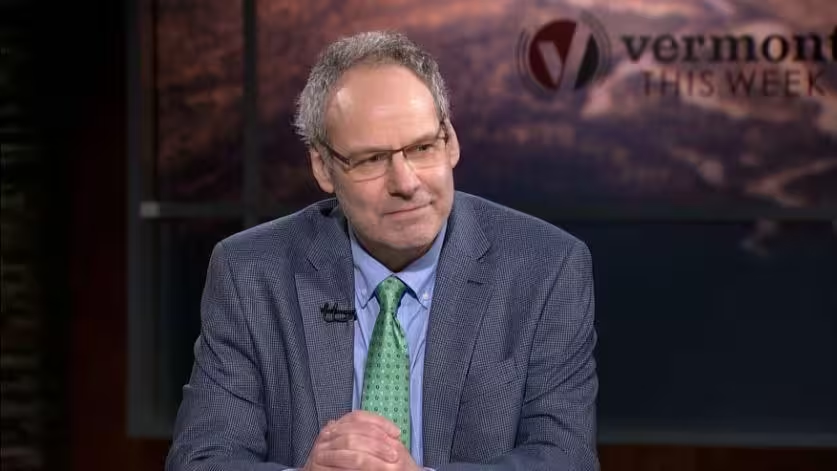
Andrew Perchlik to serve as Vermont's next Senate president | Sizeable turnover brings new lawmakers to the statehouse | Study finds corporate ownership of homes rare in Vermont | Moderator - Mitch Wertlieb; Lola Duffort - Vermont Public; Calvin Cutler - WCAX; Carly Berlin - VTDigger.
Problems playing video? | Closed Captioning Feedback
Problems playing video? | Closed Captioning Feedback
Vermont This Week is a local public television program presented by Vermont Public
Sponsored in part by Lintilhac Foundation and Milne Travel.
Support provided by:


Vermont This Week
November 20, 2026
11/20/2026 | 26m 46sVideo has Closed Captions
Andrew Perchlik to serve as Vermont's next Senate president | Sizeable turnover brings new lawmakers to the statehouse | Study finds corporate ownership of homes rare in Vermont | Moderator - Mitch Wertlieb; Lola Duffort - Vermont Public; Calvin Cutler - WCAX; Carly Berlin - VTDigger.
Problems playing video? | Closed Captioning Feedback
Where to Watch Vermont This Week
Vermont This Week is available to stream on pbs.org and the PBS app.
Support the crew
Help Mitch keep the conversations going as a member of Vermont Public. Join us today and support independent journalism.Providing Support for PBS.org
Learn Moreabout PBS online sponsorshipDemocrats will wield a supermajority in the Vermont Senate next year.
Elect their chambers next leader.
Plus, sizable turnover in the legislature brings a crop of new lawmakers to the state House.
And a recent study examines corporate ownership of homes in Vermont.
All that and more ahead on Vermont this week.
From the Vermont public Studio in Winooski.
This is Vermont this week, made possible in part by the Lintilhac Foundation and Milne Travel.
Here's moderator Mitch Wertlieb.
Hi, I'm Mitch Wertlieb.
It's Friday, November 20th, and with us on the panel today, we have Lola Duffort from Vermont Public, Calvin Cutler from WCAX, and Carly Berlin from Vermont Public.
And thank you so much, everyone, for being here today.
We're going to start talking a little politics here.
We are bringing in a new crop of lawmakers after the midterm elections, and there will be a new Senate president pro tem.
It is Andrew Lola Duffort.
And you know, this is a big job sets the agenda for what's going to happen in Montpelier.
What can you tell us about Andrew Perch, like his leadership style and what folks can expect in Montpelier?
Yeah, Andrew Perch is a senator from Washington County.
He's currently the head of appropriations.
I'd say, you know, he's one of the more liberal members of the Senate, but definitely not a bomb thrower and is known for being really mild mannered, really nice, like people like Andrew Pacheco.
And I think if he won this leadership post, it is because of that, right?
Because people are generally fond of him.
He is someone who does not talk that much, but he's very candid when you do reach out to him and he does listen, right.
So he knows what's going on.
He's, I think, got a pretty keen political sense, but he's not a grand stander.
And so a little bit unusual for Senate leaders.
Yeah.
Yeah.
And but I think that that's why he won this role.
And one thing that I thought was interesting was in his remarks on Monday when the Democratic caucus elected him, was, you know, he emphasized that the Senate needs to work with the House if it's going to get anything done.
Historically, those two chambers have had a pretty toxic relationship.
And I think the fact that he emphasized that kind of speaks to the fact that this is not a leader with a big ego and one who kind of understands that in order to get things done, you do need to work with a lot of different people.
Yeah, well, there's a lot to pick apart here though, Calvin Cutler, because, you know, we're bringing in all these new folks.
You know, Lola had mentioned that Andrew has described as a nice guy sometimes in politics that can be maybe not so great.
He actually went to take pains to say, just because I'm nice doesn't mean that I should be taken advantage of.
Like, don't think you're going to take advantage of me.
Was one of his remarks?
Yeah, absolutely.
I mean, he knows that there is a mandate that there are still huge issues facing the state of Vermont housing, homelessness, education, property taxes, this big, multiyear education reform effort that we've been undergoing.
And he's going to be taking the Senate at a pretty precarious time.
Remember last year coming out of it, Senator Baruch had to advance the education bill using Republican support.
It really divided the Democratic caucus.
And there still are a lot of really hard feelings about that with some of these members that were there for that vote heading into this new session.
So there are new members in, of course, in the Democratic caucus.
But I'm going to be very curious as to see sort of how he, as a leader, will bring the different factions of his caucus together.
Although they have a supermajority, you know, not everybody is of the same ideological persuasion.
And so, especially when you get into issues about education and class and wealth and urban versus rural, those issues really sort of start to spill out.
And so there's the Senate side of things.
Then, as you pointed out, there's the House as well.
And sort of what will they what is their approach?
What's their speaker going to be doing?
You've got over 50 new lawmakers in the House.
So it's going to be really dynamic.
I want to talk about the race for House leadership in just a moment.
But before we leave the Andrew Perch look story, Lola.
It's interesting.
You know, you're mentioning that perch look said he wants to make sure the House and the Senate are working together.
As Calvin said, there is this supermajority again which they enjoyed for a while.
And Phil Scott said he doesn't.
He's not crazy about that.
Talk a little bit about though, some of that tension between maybe some of the more moderate Democrats in the legislature and some of those who may be more progressive and want to do things quicker, harder, faster, right?
Yeah.
I mean, the split that we see at the national level is absolutely present in Vermont.
A lot of the newer members that are coming in on the Democratic side, particularly in the Senate, are more liberal.
There are younger.
They are very eager to do things like tax higher income earners.
They are ambitious.
They want to be aggressive.
And, you know, there are fewer Blue dogs, but they're still there and they are still important for getting to a majority in the House and Senate.
And so that is going to be a hard divide to bridge when the rubber hits the road.
And I think both sides of it have pros and cons, right?
I mean, I think a lot of people lament the loss of longtime lawmakers Bobby Star, Jane Kitchell, Dick Sears, Dick Mazza, all of these people that have been sort of modern institutions in the Senate.
And you can lament the loss of institutional knowledge and how to move a bill through and sort of what that bipartisanship looks like.
But then when you also have new members, they sometimes ask new questions in committee or bring up topics that people haven't thought of, and maybe a fresh set of eyes on old issues.
Because if you look back 5100, you know, I was reading a book recently in 1962.
They were talking about school consolidation and bringing hundreds of districts down to smaller numbers.
It was the exact same quotes in the exact same issues that we're talking about today.
And so, you know, I think there's both sides of the coin.
And when you have new members, whether that's good or bad, I think it can be both depending on it.
What about this race for the new House speaker?
I think shocked a lot of people when she said she was not going to be seeking that reelection.
Who's up for this now?
Calvin, let's start with you.
Yeah.
Tell us about some of the candidates.
Woodstock.
Democrat Charlie Kimball, Barrytown, Republican Representative Gina Montpelier Democrat Kate McCann and Essex Junction Democrat Lori Houghton.
All four of them are vying for the position.
Each sort of has a different ideological sort of place within the Democratic coalition.
It appears, at least as of right now, Lori Houghton sort of has been angling to sort of gain the majority of the support among Democrats.
Again, we don't know what the result will be until the votes taken.
There's a lot of just conversations that happen behind the scenes.
But like Lola was saying, you know, on the national level, this is a secret ballot as well.
And so you can say, hey, I will you vote for me, I've got your vote.
But then maybe you vote for something else.
Not saying that happens a lot, but each one of these leaders, depending on who is elected House speaker, will carry in a immense amount of influence.
They'll be naming committee chairs.
They'll be working hand in glove, in theory with the Senate and potentially the governor, to see if we can chip away at some of these big, big, challenging issues.
But there certainly is going to be a really interesting dynamic with that race, for sure.
How long do you think this you talked, both of you, about the new members who are coming in?
A lot of folks who are going to have to learn things for the first time.
How much do you think that's going to set the agenda on things like education reform or housing or things like that back?
I was talking with Shap Smith earlier this week, and he said that, you know, the first few months of the session, arguably the first half, maybe more of the session is just getting people in the building and bringing in interest groups and lobbyists and advocacy groups and helping lawmakers understand the interplay between state government, the legislature, the executive branch, the judiciary and all of these organizations and civic organizations out there.
So it is going to slow down work, I think, quite a bit.
But like with high level education reform talks, a lot of it has and did happen behind the scenes, sort of in smoke filled rooms and or conversations offline between some of the state's top leaders.
But in just in terms of like the productivity and getting bills across the finish line, I think it's going to slow it down quite a bit because as you said, I mean, we have not not record but near-record turnover.
I think this is the most we've had since reapportionment in 1962 64.
And actually, it's funny for a little fun factoid here, three of since 1962, three of the biggest years of turnover have been these past three election cycles, 26, 24 and 22.
There was another big turnover back in 1972, but really we have been seeing historic turnover in the state legislature over the last three election cycles, like we haven't seen since pre 60s.
I, you know, and I think like yes, having a bunch of new members slows down work because people just have to get to know their way around the building.
You know a lot of times people are like we should do this thing.
And then they learn, oh, actually, we've been working on it.
But but I think for a lot of the really high profile stuff, I mean, particularly education reform, I wouldn't blame the newness of the legislature if that hits the skids.
Right.
I think it's just going to be the politics of it all, complexities of the issue itself.
I wouldn't say the complexity of the issue.
A lot of people also just ran to kill this, right?
Like this was an unpopular plan.
And so, you know, I don't think if it dies, it's going to be because people were trying to figure out the complexities of education finance reform.
And I'll just add, there are so many lawmakers that ran on this issue, and there's a lot of people that are former superintendent in school board chairs, teachers, etc.
I don't have the exact number, but you're right, Lowell.
It was a really activating issue for candidates.
Yeah.
So I think if it you know, I think if it does, it'll actually be proof that like, these people came here to do what they said they were going to do, right, and were able to move effectively in the building to do that.
Although, of course, it is always easier to kill something than it is to get anything across the finish line.
And I think in terms of kind of creating new legislation, that is what's going to slow down, right?
Yeah.
But it's going to be fascinating to see how all these different personalities, some of these first time lawmakers interact with some of the more seasoned lawmakers, and, of course, with the governor, who's going to be dealing with the supermajority of Democrats.
Now, one of the issues I talked about that is going to be a big deal for these new lawmakers.
Everyone is housing curling Berlin.
We have some interesting numbers on homelessness in Vermont, initially good numbers.
The amount of homelessness, there's a slight decline, I understand, but that's not all the good news.
Why don't you fill us in?
Yeah, absolutely.
So we got the results of this year's point in time count.
So this is a survey that happens every January on a single night across the country.
Federal requirement, where you've got, you know, shelter providers, outreach workers going out, trying to count everyone experiencing homelessness in the state took a little while to get the results of this back.
We just got it a couple of weeks ago, and it showed about 3% decline in that overall number of people experiencing homelessness in the state from January 2025 to January 2026.
So these are decline.
We have that graphic.
We just show that up there for those listening at home.
Yeah.
Total number of people is just about 3300.
This I should say is considered an undercount for all kinds of reasons.
It is difficult to get out and count everyone experiencing homelessness, particularly people who are living outdoors.
It's hard in a rural state to to get to the places where those people are staying, and this is using a federal definition of homelessness that is pretty narrow.
It doesn't include people who are doubling up with relatives, couchsurfing, things like that.
So that 3300 number, which to me sounds a little bit alarming already in a pretty small state, is probably bigger.
Exactly.
And we saw some, you know, interesting trends over time.
That's what's helpful about having this snapshot in time.
Every January we saw the the share of unhoused people who are sleeping outside go up again.
We've seen that year over year for the last couple of years, and we saw the number of children experiencing homelessness go up by 5%.
So, you know, to take that in for a moment, we saw the overall number of people experiencing homelessness go down.
We saw the number of children go up 5%.
So there are 667 kids by this count, under 18 experiencing homelessness in the state, which is 1 in 5 of all homeless people in Vermont.
1 in 5.
Okay.
That's yeah.
Go ahead to emphasize also about this, about children experiencing homelessness.
And Carley mentioned this when she was talking about the the pit count, which is that it is considered an undercount because of kind of the definitions that we use.
And the agency of education also counts the number of homeless children, and they use a slightly more expansive definition.
And by that definition, we've got, what, roughly 1700 students in Vermont public schools in the 2024, 2025 school year.
So huge spread there.
That 1000.
That's a lot.
Right?
So and then.
Right.
So like the number from the pit count of kids who are homeless already like pretty horrifying going up and unacceptable.
But you look at a slightly more expansive definition.
And the program is the problem is more than twice as bad as we thought it was.
Curley Berlin.
What about capacity for housing?
Some of these homeless folks, we have seen shelter capacity grow in the state in the last year pretty considerably.
I mean, we see this fluctuate by season, but I was just going back to these Department for Children and Families reports they put out every month where they say, here's the number of households that we can put in community shelters by month.
That number grew by almost a quarter between October of 2025 and last month.
It's now at just over 720 households.
So we're seeing, you know, more year round shelter capacity in places like Brattleboro, white River junction, Middlebury.
We have more, you know, seasonal shelters that will be opening in Newport and Montpelier this winter that who's operators want to be continuing to to work past this winter if they can find suitable spaces and funding to keep open.
So we are seeing, you know, more capacity to offer people a place to sleep indoors.
You still have to step back and recognize that, you know, 700 is a really different number than the 3300 people experiencing homelessness in the state, like we said, is an undercount.
Still a huge, huge gap there.
I am sort of looking for the little bits of good news here.
I did read in your story that it looks like the capacity now for housing some people is overtaking motel rooms, is that right?
Yeah.
So this has been a huge debate in the last few years as state leaders have scaled back the motel voucher program, which has really been designed to be the safety net for when shelters are full, right shelters are always full.
And that safety net system has actually been much bigger than the community shelter system.
We have always been.
You know, that the motel system has been effectively our largest shelter option in the state for a long time now.
That is starting to shift.
We you know, when I was looking at those shelter capacity numbers, we actually had more spots in these community based shelters than we did in motel rooms last month.
That is, you know, that's not a static situation.
It's going to change, you know, this winter, like every winter, the the eligibility rules for getting into motel rooms loosen.
So it is a little bit easier to get in the state allows, you know, us to to pay for more rooms to use.
But that is an interesting benchmark because, you know, advocates have been saying for a long time now that as we scale back the motel program, there needs to be more, you know, there needs to be alternative places for for people to go.
We have seen, right, the number of people sleeping outdoors continue to go up.
But we are you know, we are seeing the state make some strides in building out more lasting shelter capacity to in fact, Kelvin Cutler, I believe there's 100 bed capacity in Burlington is thinking about trying to get about trying that.
Yeah.
So over the past few months really this whole summer, you know, there's been sort of this ongoing debate between Governor Phil Scott and Burlington Mayor Emma mulvaney in the council about where do we put 100 bed shelter.
We need people to be indoors when the winter comes somewhere stable that people can be.
And, you know, we heard actually earlier today I was a community forum with the mayor and she said, really, at this point, money is not an issue.
It's about number one siting it.
And Carly, I know you've had a lot of great reporting on that, but number two, finding somebody to operate it, find somebody to provide services.
And it's just been such a tough nut to crack for that larger shelter.
And so they've sort of looked into sort of smaller regional shelters around.
And it still remains a moving target.
And so, you know, it's to Carly's point, we have more shelter beds heading into the winter.
But, you know, it's definitely not enough.
I mean, there is still quite a bit of unsheltered homelessness, people living in tents, etc., outdoors.
Meanwhile, at the state legislature, we've talked a lot about this homelessness continuum law that was a bipartisan agreement between the governor and Democrats that has been moving forward.
And without getting too wonky, DCF has introduced, I believe, tier four.
Is that what they're calling it, level four, Department for children families?
Exactly.
Sort of.
Who is eligible for hotel rooms?
You know, the sort of basic, you know, bottom sort of level of of the social safety net.
And advocates and others say that the rules that the Scott administration is rolling out are not meeting legislative intent.
LQR legislative Committee on Administrative Rules is still reviewing that.
We'll see if they make any changes.
So anyway, this is all really tied up.
There's a lot of different storylines to this.
But just the I think end of the story is that like there is still a humongous need for housing.
You know, it really stood out to me, Curly Berlin, when you said it's not necessarily a money issue or are we running into Nimby problems here?
We certainly have.
I mean, to go back to this 100 bed shelter vision that the Champlain Valley Office of Economic Opportunity, based in Burlington, had been looking at this fall.
You know, what they wanted to do was open one larger shelter site that they could have year round.
What they've done the last few years is opened a shelter of about that scale when it is extremely cold outside.
So the state has this reimbursement system where, you know, temperatures hit a certain threshold.
The one CVO uses is negative ten.
Then they open this shelter at a community center for a night or two at a time.
The organization wanted to avoid having to do that.
So they were looking at, can we operate a shelter of the scale all the time?
Really hard to find a location to to do that.
And one of the issues, of course, is running into pushback from neighbors.
And in one case, CVO is looking at using an old mattress store on Williston Road over by the airport in South Burlington.
They got a lot of pushback from leadership in South Burlington about citing the location there, you know, and ultimately said, if you're not going to work with us on this, we're not going to push it down your throats.
But then they didn't find another option to be able to open ahead of the cold coming.
Yeah.
I want to move on to another topic, but very briefly, Carly, are we looking at pop up shelters?
Then when it gets super cold this winter for people to be able to use when it gets to the to really bad temperatures, we are.
So this is becoming more of a central plank of the state's response to homelessness.
Each winter we're seeing this model where when temperatures go down to a certain threshold, it's changed.
Each year.
The legislature keeps going back and revising this.
The threshold now is ten degrees, though, that shelter in Burlington is using actually a lower one.
They say they can't open so regularly if the that temperature is actually higher.
But we will see these sort of ephemeral shelters open up in Bennington, Saint John's, very Montpelier, a number of other locations, and there's now a website get warm now feet where you can, you know, go search that and find a map that will show you when these shelter locations are activated.
Mentioned that one more time.
I think that's really important to the website there.
Get warm now VTI okay.
And please use that if you need it.
And thank you for your reporting on that.
Of course we'll be following up on this.
I do want to stick with you briefly currently on this because we did I guess this is good news.
There was a study put out by the Agency of Housing and Commerce Development.
Community development finds a corporate ownership.
This is something that people are worried about.
Private equity firms, big corporations buying up single family homes in Vermont, around the country.
I guess this has been a problem.
Not a problem here.
We're not seeing that in the data.
So I will say this is, you know, this report from the state looks at a pretty narrow slice of this question.
So they looked at tax data for sales of single family homes and duplexes in a four year period from start of 2022 to end of 2025.
And they were looking for high frequency buyers.
They defined that as, you know, an individual or a company buying three or more properties in a given year.
They only identified 14 entities who hit that criteria in that four year time frame.
And those 14, you know, people companies bought 108 properties in that time.
You know, most of them only purchased five or fewer.
So there are some caveats to this.
You know, a bigger companies can can own properties under different LLCs.
This study didn't dig into that.
So, you know, it could be that there are there are actors here who are, you know, owning a bunch of different properties under different names, but it does kind of point in a direction that we are not seeing, you know, large scale corporations, private equity firms coming into the state, at least in recent years, and buying up a lot of housing stock.
I'll just add that this was a big priority, a big talking point on the campaign trail from Amanda Janu as well.
There's a lot of people in the legislature that are interested in this, and maybe if the data isn't showing us this, I know there certainly is an appetite among a lot of newer lawmakers to look into short term rentals.
I'm sure we might see a bill or 2 or 5 introduced on that.
So this is definitely a space to watch for sure.
Thanks for the updates on that story, and I want to finish with a sad story for a long time.
Mayor of Barrie Thomson died recently.
He was the mayor from 2006 to 2018, elected again in 2024.
This was kind of a shocking development, a shocking story.
It was very unexpected.
It was shocking.
He was only 65.
You know, he had just been reelected a few months ago.
And yes, I mean, the city of Barrie is really reeling.
He has been the most important person in Barrie for decades now.
Right.
It's kind of hard to overstate how much of a mark he's left on the city.
You just walk down Main Street and it's like, here's that building that he redeveloped himself, or here's that building that exists because he harassed governors past and present to get the funding for it.
You know, the fact that Main Street was reconstructed, but it also goes back to like the 1990s when he was on the school board, and he advocated for the repurposing of Barry's neighborhood elementary schools and the construction of a new consolidated, unified elementary and middle school.
And so it's it's really incredible how how much just a single individual has literally reshaped the the city of Barrie.
And he grew up in Barrie, went to Spalding High School.
I mean, he really poured himself into this, this town.
Yeah.
It must be very difficult for people.
Yeah.
And, you know, Tom Lausanne was a very brash individual.
He made no apologies for who he is somewhat controversial sometimes because he was both one of our biggest property owners and developers and also the mayor, but he was proud of what he was able to get done for the city.
And I think in general, people are really wondering, okay, what's next?
And there'll be a celebration of his life and legacy.
9 a.m.
at Barrie Auditorium on Sunday.
We'll have to leave it there for this week.
I want to thank our panel so much.
Lola Duffort from Vermont Public, Calvin Cutler from WCAX, and Carly Berlin from Vermont Public, whose reporting is presented in partnership with VTDigger.
I'm Mitch Wertlieb.
Thank you so much for watching and listening.
See you next Friday here for Vermont This Week.
 New Episode
- News and Public Affairs

Top journalists deliver compelling original analysis of the hour's headlines.
 New Episode
- News and Public Affairs

Today's top journalists discuss Washington's current political events and public affairs.


 New Episode
 New Episode
 New Episode
 New Episode

 New Episode

 New Episode

 New Episode
Support for PBS provided by:
Vermont This Week is a local public television program presented by Vermont Public
Sponsored in part by Lintilhac Foundation and Milne Travel.