Vermont This Week
November 27, 2026
11/24/2026 | 33m 41sVideo has Closed Captions
U.S./Canada Cross-Border Special
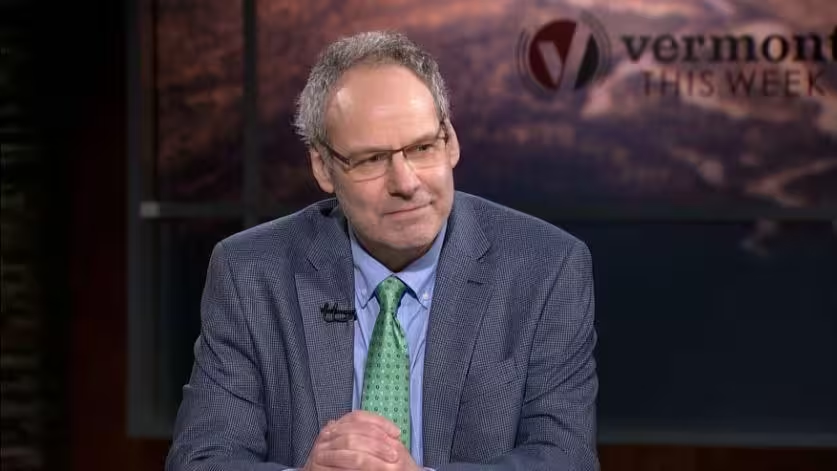
U.S./Canada Cross-Border Special | Moderator - Mitch Wertlieb; Tim Sargeant - Global News; Elias Makos - CJAD 800; Derek Brouwer - Vermont Public.
Problems playing video? | Closed Captioning Feedback
Problems playing video? | Closed Captioning Feedback
Vermont This Week is a local public television program presented by Vermont Public
Sponsored in part by Lintilhac Foundation and Milne Travel.
Support provided by:


Vermont This Week
November 27, 2026
11/24/2026 | 33m 41sVideo has Closed Captions
U.S./Canada Cross-Border Special | Moderator - Mitch Wertlieb; Tim Sargeant - Global News; Elias Makos - CJAD 800; Derek Brouwer - Vermont Public.
Problems playing video? | Closed Captioning Feedback
Where to Watch Vermont This Week
Vermont This Week is available to stream on pbs.org and the PBS app.
Support the crew
Help Mitch keep the conversations going as a member of Vermont Public. Join us today and support independent journalism.Providing Support for PBS.org
Learn Moreabout PBS online sponsorshipOn a special episode of Vermont this week.
Look at us Canada, cross-border relations.
The policies that are being implemented in the US are not only having an impact on America's, but having impact on Canadians, plus our neighbors to the North.
Join us for a conversation on tourism tariffs, the mood in Canada post midterms and more all ahead on Vermont this week.
From the Vermont Public studio in This is Vermont this week, made possible in part by the Lintilhac Foundation and Milne Travel.
Here's moderator Mitch Wertlieb.
Hi.
Thank you so much for joining us.
I'm Mitch Wertlieb, been with us on the panel.
Today we have Tim Sergeant from Global News, Derek Brower from Vermont Public.
And joining us from today from Montreal, Elias Mackos from CJAD 800.
Thank you all so much for being here.
I want to mention too, if you're watching or listening at home, we are taking this a few days before Thanksgiving, this very special episode.
I don't wear my dog tie my special dog tie for nothing.
We got a special episode here today because we are so excited to talk about the relationship between Canada and the US, which has been so fraught, honestly, since President Trump started making comments about Canada being the 51st state.
Tim, Sergeant, I want to start with you and thank you first for making the trip down here today.
My pleasure.
You know, it's just so wonderful that you were able to do that.
We appreciate it.
What was it like crossing the border today?
What did you see?
Well, you know, to my surprise, there were more cars than I expected.
I thought I would whip right through, but there was initially, they only had two lanes open and they opened up a third lane.
I was about ten cars behind and they opened the third lane, so it moved along quickly, but more than I expected.
And I was also here in August and I waited 30 minutes.
So it appears that, you know, and the numbers will show.
We'll get into that a little bit later that that Canadians and Quebecers are starting to come back down to the US, to Vermont and other destinations.
Before we get into some of the feelings about everything that's been going on, I am very curious about how you would describe to someone, maybe who's just parachuting.
It hasn't been paying attention in the news.
How would you describe relations between the United States and Canada right now?
Well, relations, there's two different ways of describing it.
Relations diplomatically is very, very tense.
As you're aware, our Prime Minister, Mark Carney, has strained relations with President Trump.
So there's lots of pressures there over the trade war, the tariffs, the counter tariffs, the whole idea of a 51st state.
Initially, Donald Trump was referring to our previous prime minister as governor, Trudeau, Justin Trudeau.
So there was lots of disputes there and it didn't play out.
Well.
Now, Canadians and Americans, though, do have a much closer relationship.
They still consider themselves friends, neighbors, allies they'd like to see each other, like to visit.
But as the numbers did show after President Trump was elected and he made all these comments and then the tariffs came into effect, Canadians wanted to stop coming to the U.S.
largely out of a protest move, because they didn't want their hard earned dollars going towards the US economy, benefiting Donald Trump.
Elias, I want to turn to you on this point because you get callers in all the time to your show.
They must be talking about all these issues.
You know, what Tim was talking about there?
I find it fascinating because Mark Carney, for example, I was sort of paying attention to your politics before ours became so fraught.
He was not.
The Liberal Party was not doing great in Canada right until Trump started making these comments.
In a way.
Did Trump help Mark Carney?
Oh, there's no question Donald Trump has directly impacted Canadian politics.
Some would argue not for the better.
You know, I just keep looking.
I keep looking at this situation, saying myself, there's some things that we just can't change.
We can't change the geography of Canada.
In the US, we're right next to each other.
So it doesn't matter if Donald Trump will be belligerent at times.
We still live next door to you.
It's still a 45 minute drive to the border, and that's not going to change.
I remember on my show, when I dare tell my audience that instead of going to a Quebec beach, I went to the Champlain Islands.
This is at the start of the Canada-US friction and they lost it on me.
How dare you, Elias!
But you know what?
I'm still someone that's able to separate the two.
I've got the friends.
I've got the family.
I'm not going to avoid seeing those friends and family because of any individual politician.
So I think a lot of things are at play.
The politics are key.
There's no question.
We have the government we have here in Canada because of Donald Trump.
And yeah, I mean, we could unpack this for hours, but that's just some of the things that are at play here.
And that's exactly right.
What Elias was saying.
And I noticed that directly when I did a story and came down to the border crossing and stopped at the duty free, and I was talking to Canadians who were going in, and they were going in to see loved ones, or they owned property down here, or they had close friends here, but they were going down because they said, the politics aside, I still want to see my my best friends.
I still have family.
Some people had kids who were on Division one NCAA scholarships at universities, so they had to go down and see them or they own property down here.
So for those reasons, but if you take that away, there were still, you know, in the number show, there were Canadians who who weren't coming down.
And I know Vermont was hit particularly hard because we even had some the the mayor of Burlington and some other state representatives came up in 2025 pleading for Quebecers to come on down.
And as you know, church streets became Canada streets, sort of symbolically, the flags up all over Church Street right now, unfortunately, that went largely unnoticed on the northern side of the border.
But they were doing all they can to lure the Canadians back.
Well, let's look at some of the numbers here.
Derek Brewer, I know you've been digging into some of this too, even if things feel like maybe they're coming back and we'll get into maybe why last year, tourism overall Canadian visitors down 28%.
That seems significant.
Oh, it certainly is significant.
I mean, we've never seen a change that dramatic in Vermont here.
And Tim, to what you were just saying, I think that's borne out in the data as well.
While the while the visitation is down 28%, which is certainly significant, the credit card spend is down even more dramatically.
That's closer to 40%.
And I think that is perhaps an indication of what you're saying.
There are some sort of essential trips that that folks are still making into the US, but they may be spending less money, less, less leisure travel.
Discretionary trips are becoming fewer and fewer in terms of the spending, but the trend is starting to go upwards.
If you take a look at the numbers in terms of the spending, sort of from September of this year compared to September of last year, there is an uptick.
But compared to 2024, it's dramatically way, way down, which is really more the benchmark.
And same thing if you look at the number of Canadians who are returning back home into the province of Quebec, coming from all legal ports of entry, which includes Vermont, New York, Maine, New Hampshire, those numbers are also slightly up compared to this time last year, but again, way behind what they were in 2024.
Yeah.
And I think to we've been certainly business leaders I've spoken with as well as public officials have really been looking at how quickly and if those numbers do rebound.
I think there was a big question here when the boycotts began, whether this was a sort of a moment of passion amongst Canadians that would dissipate quickly, or if this is a more kind of enduring trend.
And while I think it is starting to creep back up, it's, it's it's quite modest the increase so far.
So it does seem to be an enduring change.
Go ahead, Eliza, if I could if I could there I also want to highlight one other thing, and the point about the actual money that's being spent in Vermont resonated with me.
Because there's another thing that's unspoken a lot, and that is Quebec has been getting poorer, Canada has been getting poorer.
I don't think a lot of Vermonters know this.
But now, as it stands, GDP per capita, you guys outpace us.
Vermont outpaces Quebec by now 50%.
So the politics is a big deal here.
Like people are not going to the United States because they have a problem with who's in the white House.
But beyond that, there are Canadians.
There are Quebecers that are pulling back because the economic situation has not been going well.
We are talking now about over a decade of stagnation when it comes to GDP per capita growth, and that is showing up as well.
I know it's a case, maybe not for Vermont, but for the Canadians that are going down south, the snowbirds going to Florida, they are making decisions and they may be saying it's because of Trump, but in actuality, the financial aspects have been hurting them.
And I guess it's a little bit easier to tell your friends it's because of Trump and not because I can't afford it.
That's a very interesting point.
I want to follow up on that, Tim Sergeant, a little bit, because I'm wondering how much of that economic pain that allows macOS is talking about there.
How much of that is coming from the Trump tariffs against Canada?
Do we know it's hard to put it quantitatively, how much is it coming directly from the Trump terrorist.
But it's affecting the businesses.
Certainly it's affecting them a lot.
They're up to 50% tariffs on so many of our exports into the US on plastics, on auto parts, on chemicals, on agricultural products.
And then of course you have the counter tariffs on top of that.
You know, Donald Trump keeps talking about this massive trade imbalance, this deficit that the US trade has with with Canada, which is true.
But he exaggerates it by 2 to 3 times the actual number.
And if you look at the service industry, the financial trades, the consulting fees, the tourism, there's actually a trade surplus with the US compared to Canada.
So when you combine the two, yes, there's still a trade deficit with the US and Canada, but it's not as big as Donald Trump likes to, to play it out to be.
So yes, as Eliza was saying it really, you know, Canadians are really hurting.
And when business is hurt, the employees are affected.
And so they're going to be traveling less.
And of course, don't forget there's the exchange rate.
The dollar is still so much stronger.
The American dollar is so much stronger than the Canadian dollar.
And Canadians certainly feel it when they come down here.
They're really looking if they go shopping here for they have to bargain hunt.
Even though the sales tax may be less in Vermont compared to Quebec.
With that exchange rate, there's a significant difference.
What about the reverse of this?
How are the tariffs affecting Vermont?
We know there's so much cross-border transaction.
And I know that a lot of Vermonters depend on Canadian goods to some extent.
Yeah, I mean, Vermont does have a substantial trade deficit with Canada.
We exported over $600 million worth of goods to Canada last year, which makes Canada the state's biggest trade partner, but but imported over $2.7 billion during that same time period.
So the tariffs are certainly having substantial effects.
It is like like you said, Tim, though it's still difficult at this stage to really pinpoint how the tariffs are reshaping the economies and who is winning and who is losing.
I think this will reveal itself over, over more time.
But it's been fascinating as, as as a result of the the change in trade policy, I've been trying to learn more about these economic connections between Vermont and Canada, Quebec in particular, and they often aren't publicly visible.
These are companies that work behind the scenes or the sort of undergirding our economy in different, different ways.
And so it may not be as a parent to consumers, except for some of those more narrow use cases where it is quite obvious.
But, but, but our economies do remain very intertwined at this point.
And so the longer this goes on, you know, the more damaging it will be.
The economics are serious, but one of the things I really want to get to here is sort of the overall mood.
You know, we talked at the top of the show just about the relationship between the US and Canada, how far it goes back, the familial ties here in Vermont and Quebec.
ET cetera.
So, Elias, I have to ask you, let's go back to November 3rd.
You know, here, obviously in America, we were stunned by the blue waves tsunami, whatever you want to call it.
There were a lot of people who could not imagine that a place like Texas would turn blue.
My question to you is on Tuesday, November 3rd, were Canadians watching?
Were Canadians paying attention to what was happening here?
They were absolutely paying attention.
I would say I wasn't necessarily surprised.
You know, let me shower you with praise.
And when I say you, I mean the United States, your country shows and it's true.
You show time and time again.
Your democracy is so resilient.
I am not among those that have been alarmists over the last ten years and say, this is the end of US democracy and authoritarianism.
I've never been saying I haven't said that.
And that's because I know us federalism has all of these mechanisms that we could only dream for in Canada and US voters time and time again, show, hey, you know what?
If a party goes too far to either extreme, we're going to push you back in the middle.
So I would say I wasn't surprised by the blue wave.
I think it was.
It was a matter of time before we saw that.
I think the question is what happens going forward in the Canada-U.S.
relationship, because there are those that would say that, well, it doesn't matter who's the next president.
The the relationship with Canada will be different no matter what going forward.
You know, we were talking about Canadian and the US economy, the Canadian economy, how much the Canadian economy has been hurt.
And it is true that Donald Trump's tariffs have hurt us.
But, you know, 85% of trade still has no tariffs, 85% of the trade has no tariffs at all.
Right.
So that has continued.
But the thing is, whether it's Trump with his big beautiful bill or it was Joe Biden with the IRA, the Inflation Reduction Act, you have now had two presidents that have hurt Canada by going after red tape, by enacting by American policies.
And I think that has had an effect on the Canadian economy.
And it's happened whether there's a Democrat or there's a Republican.
And then exactly.
And to that point that Elias was talking about, you know, the damage is there, how much of it can be undone or will will it be undone?
And probably not even in the long term.
Mark Carney says it will probably never.
Things will never be the same again and don't expect it.
So our trade representative, Dominic LeBlanc, is looking at trying to settle some sort of make some sort of interim new trade deal with the United States and then wait and see in two years to see if we can have a new agreement with different types of tariff rates.
But there's sort of like a line has sort of been drawn in the sand.
And just how far or close, how close can you get to it or to go over it?
It's very questionable.
Things may not go back quite the way they were.
What do you think?
U.S.
go ahead, Eliza.
I'm sorry.
Go ahead.
Sorry about that.
Yeah, it was the U.S.
Trade Representative, Jason Greer, who was speaking earlier this week.
The way he put it is we're trying to square the circle as Canada continues to go down a path of globalization.
And the US, of course, has gone down a path of protectionism and tariffs.
Right.
And we have gone towards China.
Right.
And we've opened the door more towards China.
You, as I said before, you cannot change the geography.
We're literally right next to each other.
But the leadership of Canada and the leadership of the United States now see the world completely different.
But the relationship but the leadership you're talking about could very much change.
And that's what I'm trying to get to with these midterms, I think here in the US.
And again, this is all anecdotal and just from people that I've spoken to and friends, the I guess the surprise we had Elias over what happened on November 3rd, compared to how you were not as surprised, has caught us off guard.
We keep thinking something has to change now.
Something has to come back because we know and I think you we're making this point.
There's the difference between how Canadians feel about Americans just in general and then the political side.
Right.
That differentiation to me seems important about for the relationship moving forward.
Yeah.
Well, absolutely.
It's very, very significant.
But as Elias was saying, 85% of the trade is not affected by these tariffs.
So that will continue.
But but not only is Canada reaching out to China, but they're also reaching out to Europe.
Mark Carney is looking to diversify the trades with Canada and other countries around the world, not to be so dependent on the US, although that will always continue.
But, you know, Donald Trump's closing the doors, Mark Carney is looking to open them in other parts of the world.
And this is not making the Trump administration happy.
But Mark Carney is seeing an opportunity that we have to make new trade agreements with Europe, with the Europeans, with China, with Southeast Asia, and look at other opportunities as well.
This isn't going to happen overnight, but this is the way it's going to go.
He wants to globalize more of the Canadian market and not just be dependent on the US.
There's one other thing I want to talk about a lot of things I want to talk about, actually, and this has to do with how people feel about issues fraught up with caught up with immigration.
Canada has something called a safe third country country agreement.
Tim, let me actually, first let me give you what a protester who has been protesting the policy here had to say about that.
Canada actively deters people from coming coming to our our country to request safety.
I mean, you've seen a map.
The only way to Canada is is through your states.
Canada turns away so many people into the hands of ice where they face a horrible treatment.
You can say any more that the United States is a safe country for refugees.
Our argument is abolish the agreement and let people come and have their case assessed on its merits.
Okay.
One of those signs that we saw there, written in French, translates to let's break down barriers, not rights.
Tim.
Sergeant, explain to me what they're talking about.
Here is a safe third party agreement.
That is actually it's a bilateral agreement between Canada and the United States that was established in 2004 or 2004, correct 22 years ago, where any refugee seeking or any asylum seeker seeking refugee status, who is coming from a developing country and whichever country they landed first, whether it be Canada or the US, they have to seek asylum, refugee status there and they can't then go to another country.
So more often than not, they're arriving into the United States just because, geographically speaking, it's closer.
They would arrive there and then once if they seek refugee status there, they can't then continue on to Canada.
And if their claim is denied in the U.S.
and come to Canada and try to do the same thing, because both countries are considered safe countries to seek refugee status, it's a bilateral bilateral agreement.
But there was a loophole up to three years ago, whereas if they were coming, refugees were coming to the United States, they were denied status.
Then they would come into Canada through non-legal ports of entry in between the border crossings, and they could seek political asylum in Canada.
And they were doing that for many, many years, until three years ago when they closed that loophole.
And so now they are being denied entry into the into Canada.
And so these protesters are saying this is unfair because so many are now being turned away.
And so they're actually this is before the Federal Court of Canada right now, this case, because they see it as this is a violation of the Canadian Constitution, the Charter of Rights and Freedoms, to deny these people the right to come to to Canada because they don't consider the U.S.
anymore a safe country to land in.
Derek Brower, I know you've been following a story about this.
Yeah, yeah, just reminded me hearing about this, this fight, there was a you know, there are people who are coming through Vermont to to try to seek asylum in Canada and doing exactly what you're saying.
There was there was one woman, one mother, who a couple of years ago had come up, I believe it was through Texas to once Trump was elected, decided that she wanted to go to Canada because it wasn't safe for her in the US anymore, and tried to cross through Vermont in the winter and actually died along the way.
And her body was later, later found just just around the Jay area, I think, as well.
So this it's a it just reminded me of that because it is, you know, it's easy to forget, I think that people are coming, that people are trying to leave the US to go into Canada at this point, based on the same policies around immigration enforcement that I win, are partly what's motivating this challenge to the agreement.
Elias, I'm wondering if your viewers, listeners, people that call in are concerned about immigration as well.
And some of the things like Derek's talking about here.
Well, you all know that the immigration discussion is particularly fraught.
And we and we all know why.
You know, in Canada, we've spent decade after decade where the public polling was very clear, 90% plus of Canadians would say, without question, immigration is a good thing.
And now in the last year or so, that same polling question is now underwater.
Now you know that in 2024, one of the main reasons why Donald Trump won was because of the immigration issue along the southern border for Canada.
Right now, we got we have to be very careful.
And I plead, you know, as someone I'm a self-described centrist, I plead that we have to let the centrist in the room lead the discussion on immigration and have some sort of common sense here, because if you do not, extremists will win long term this argument.
So we're seeing it play out in Canada right now.
The Carney government announced their new targets for immigration in their budget just a couple of weeks ago.
They seemingly tried to sneak in a much higher number than they wanted to say it was.
They said, we're going back to stability.
And then when you looked at the numbers, no, it was another massive increase.
So you know what's happening at the Canada-US border and you have people listen.
These are people that are looking, searching for a better life.
But I think as Canadians, we also have to look at, you know, it's laughable to say that the United States is in a safe country.
And I know there are people that would disagree with that.
And they have a good natured argument that, no, the United States now with Ice is no longer safe.
But I think we have to look at it in a much broader sense, and that we want to get back to a position where Canadians in large parts say immigration is a good thing.
Having our southern border wide open would not lead to that.
Right.
And so many employers will tell you the very same thing.
The Canadian Federation of Independent Business really says we are very dependent on having immigrants arrive, and to be able to come here and work here and pay their taxes and contribute towards the economy, because there's a there's a labor shortage in so many different facets of the economy.
So they we need these immigrants, whether they're here on temporary work visas or they become permanent residents.
And in fact, Mark Carney's government is seeking to try to get 68% of all immigrants who are coming in to have permanent residences based on economic reasons, so that they'd be contributing towards the economy.
So he's really looking at trying to get some high skilled labor into the economy, working for a lot of employers.
And employers are crying out, they say, we need this.
Have you seen what Elias was talking about to.
Yeah.
Go ahead please.
I just want to point out, you know, unemployment rates in Canada are going up right now.
And the youth unemployment rate, 20 to 24 people leaving university.
It has not been higher in 40 years plus.
So some of those arguments from business leaders, I think is more about accessing cheap labor than to filling holes in the labor market.
All right, Tim, Sergeant, the last word to you in about 30s here.
Tell me what you think it would take to repair the damage that has been done between our two countries?
Well, you saw a bit of it.
First of all, with the midterm elections, with the result of that and a bit of this blue wave, I think that's making Canadians feel a lot better about the prospects of the US.
So they really do look at it politically.
And I think that's where things are going to go.
And they want their Mark Carney is a very popular leader right now because he's standing up to the Trump administration.
So it's really going to see how things play out over the next two years.
And even beyond that, but as the as the politics improve.
So to will, you know, Canadians, not their attitudes towards Americans, but their attitudes towards, you know, spending their money here, buying property in the United States, contributing more to the U.S.
economy.
So, you know, they are looking at it politically.
But in terms of, as we said the outset, their friends and their relatives, they're still going to come for those reasons.
Now, for those of you who may be listening on the web, but we want to give you some extra content here because we started talking after the program was done recording, and Elias Magnus brought up this fascinating subject about something that's happening with the Canadian Supreme Court this Friday, the last.
What's happening?
Yeah.
Friday at 9:45 a.m., the Supreme Court will rule on Quebec's Bill 21.
That is the bill that the Quebec government passed that barred people in positions of authority.
Think about police officers, think about teachers, people who are in positions of authority, who work for the Quebec government from wearing religious symbols on the job.
Now, it's been a very contentious bill since it was passed.
It has been challenged in the course that the Quebec government tried to shield this law from judicial review by using something in the Canadian Constitution called the notwithstanding clause, which allows governments to do things that normally would be in opposition of the charter rights and freedoms.
So they're going to rule on this at the end of the week.
And I would say if the Supreme Court goes against the lower courts, the lower courts have sided with Quebec on this.
But if they go against the lower courts and strike down Bill 21, Quebec Canada will quickly find itself in a constitutional crisis.
And, you know, support for sovereignty, which is at all time lows right now, could end up going back up towards that, that magic 50% mark.
Tim.
Sergeant, if he gets that dramatic.
No.
If it'll go as high as that.
Elias I think he's right though.
It will go up because this bill plays really well with the francophone Quebec people because they want to see they don't want to see any of these religious symbols on anyone who has a position of authority teachers, police officers, judges, anyone who works for the government.
And so it'll play well with them.
And with the Parti Québécois, the sovereignty pro sovereignty party in power, they will play this big time and use this as fuel to try to build momentum for sovereignty.
I don't know if it would go up overnight to 40 or 50%, but that that would certainly play in the favor of the parts of Quebec and the premier of Quebec, who, by the way, has said since he was elected that he's committed to holding a referendum, but only after Donald Trump is out of power in 2029.
And that's the key here, is that Quebec has and you, Premier Paul Saint-Pierre, though a new government that is separatist and they have been pining for some sort of issue to rile up the base.
I think this is it.
They tried over the last few weeks on on little things.
They're even trying to and, you know, there's another court case in Quebec courts about swearing, having to swear an oath to the king that's going to cause an issue.
But this is the real deal.
Bill 21, the religious symbols been a lot of Quebecers view striking this bill down as an affront to the society that Quebecers have chosen.
They want to build a secular society.
So this this will feed right into what separatists have been hoping for.
A big she can, as they say in French, a big scuffle with Ottawa.
You know, I remember back in the 90s when the Quebec separatist movement was pretty significant and people were really worried it could actually go that way.
It did not.
But now it's much less.
I even haven't even asked yet about what I was hearing.
Is a separatist movement out of Calgary.
Tim.
Sergeant, what's going on?
That's right.
There's a movement to if that's purely for economic reasons, that Alberta is such a powerhouse.
It's one of the strongest economies in the entire country.
So they were looking or there was a base there that was considering looking at forming their own country.
So there was a referendum that was held not to separate, but whether we should start the wheels in motion towards maybe, perhaps becoming our own independent state.
And they got they were soundly defeated.
So that ended that.
And in the premier reluctantly decided to go along with the referendum and to call it even though she is a strong Albertan, but she still believes in the Confederation.
Okay, well, we'll have to watch what happens.
Yeah.
Go ahead.
No, I just should point this out.
In this Bill 21 case, the provinces did file a brief with the Supreme Court of Canada in support of Quebec.
And they view this, whether it's Alberta or Ontario, that provinces in Canada, their rights are sort of being trampled on by the federal government.
I mean, you know, I think our provinces are in awe of US states because US states are almost like countries, or as in Canada, it's not the case.
We don't have the powers we'd like to have.
So I think that's part of it to whether, you know, and the economic motives in Calgary and Alberta, a very big thing.
But across the country there are more and more provincial governments that are fed up with what they view as a federal government encroaching on their territory.
When it comes to the the separation of powers between the various levels of government.
I got one more quick question because I keep coming up with more.
The more you talk about these things, the more questions I have.
It's kind of fascinating.
You mentioned before the popularity Mark Carney is enjoying now because really he stood up Donald Trump.
But my question is, you've also said that Canada is really hurting economically.
How long do you think he is going to maintain this kind of popularity?
Just over, you know, his opposition to what people perceive as the bullying Trump if the economics stay bad.
So every time Donald Trump insults Canada, the liberal numbers go up.
Every time we talk about trade war, the liberal numbers go up.
I sometimes have a sense that Donald Trump loves seeing this, but to answer the question of how much runway Mark Carney has, he's got some more runway.
I mean, next spring it'll be two years of him as prime minister.
And I think at the two year mark, people are going to say, wait, hold on a second.
You haven't changed things.
You haven't delivered on your promises of your version of a Liberal government.
Remember, we had Justin Trudeau as a Liberal prime minister for ten years.
So I think he has some runway.
But next spring, if the unemployment numbers continue to get worse and, you know, Quebec, Canada continues to get poorer, then that runway is going to end.
That's right.
And also depends on the alternative.
What are the alternative governments that you're looking at the parties.
And right now the Conservative party, the official opposition, their leader is not hugely popular in Canada.
In fact, he didn't even win his seat in the last election.
And so that's a big issue for the Conservative Party is that they have to gain some momentum and also have a very popular leader, because right now he's not standing strong in the polls.
Well, I just want to thank you so much for being here with us today.
And these days before Thanksgiving, I give thanks to Canada for so many things, including Joni Mitchell, Neil Young, Putin, Bob, your The kids in the Hall, SCTV.
We think you're great and we really want to thank our panel today.
Tim Sergeant from Global News and of course Elias Mackos as well.
Joining us from Canada remotely today, Derek Brower from Vermont Public.
Thank you so much for listening and watching.
I'm Mitch Wertlieb, we'll see you next Friday right here for Vermont this week.
 New Episode
- News and Public Affairs

Top journalists deliver compelling original analysis of the hour's headlines.

- News and Public Affairs

Today's top journalists discuss Washington's current political events and public affairs.

 New Episode


 New Episode





 New Episode

Support for PBS provided by:
Vermont This Week is a local public television program presented by Vermont Public
Sponsored in part by Lintilhac Foundation and Milne Travel.