
Oct. 28, 2026 - Full Show
10/28/2026 | 26m 50sVideo has Closed Captions
Watch the Oct. 28, 2026, full episode of "Chicago Tonight."
With affordability on the top of people’s minds, a new survey sheds light on how Chicagoans are faring. And the state makes a dent in residents’ medical debt.
Problems playing video? | Closed Captioning Feedback
Problems playing video? | Closed Captioning Feedback
Chicago Tonight is a local public television program presented by WTTW
WTTW video streaming support provided by members and sponsors.
Oct. 28, 2026 - Full Show
10/28/2026 | 26m 50sVideo has Closed Captions
With affordability on the top of people’s minds, a new survey sheds light on how Chicagoans are faring. And the state makes a dent in residents’ medical debt.
Problems playing video? | Closed Captioning Feedback
Where to Watch Chicago Tonight
Chicago Tonight is available to stream on pbs.org and the PBS app.

WTTW News Explains
In this Emmy Award-winning series, WTTW News tackles your questions — big and small — about life in the Chicago area. Our video animations guide you through local government, city history, public utilities and everything in between.Providing Support for PBS.org
Learn Moreabout PBS online sponsorship>> Hello and thanks for joining us on Chicago Brandis Friedman.
Here's what we're looking at.
A new survey is shedding light on the affordability crisis.
We hear from organizations helping Chicagoans navigate the higher cost of living.
And what Medicaid cuts looming.
How is the state's medical debt relief program ferry?
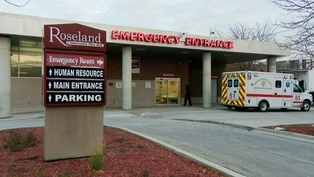
>> First off tonight, community members are protesting the closure of the labor and delivery unit at Roseland Community Hospital in just a few days.
>> When they come in excess, labor and delivery we have to ask what happens to the mother lived.
All righty.
And later.
A mother was left precious imagine here.
>> Activist and mother Marcedes well says community members deserve a detailed transition plan when maternity units close as has been the case with 4 more units across the city in shock in Chicago, in October, advocates also share concerns about the health impacts on women of color.
Black women have the state's highest rate of maternal mortality.
In a statement to Wt Tw News Today, Roseland Hospital CEO Tim Egan said, quote, suspending labor and delivery is not a decision.
Rosen hospitals administration made by choice.
It is the result of decades of historical underfunding of safety net hospitals that have made it impossible to sustain services that this community depends on and deserves.
The nation is remembering pioneering civil rights icon and labor leader Dolores Huerta who died today where co-founded the United Farm Workers Union to improve working conditions in the country's fruit and vegetable fields in the 60's.
She remained active in protests and organizing well into her 90's for causes, including racial equality, poverty, LGBTQ+ rights and women's rights.
Here she is on Chicago tonight in 2023.
Speaking with our Joanna Hernandez.
Everybody needs to be respected, you know, because of who they are.
>> And we have a lot of Latinos stint here program and watching him program.
And I was like, these are the Benito by this.
said just fit.
The of the digital handle is LaPlace respecting other people's right to speak.
however, you feel about women's rights reproductive rights.
However, you feel about rights.
You know we have to respect other people for they >> talking about that.
What advice to give to someone who wants to speak out about something injustice in their community but are free to do so.
Would you tell them?
Well, we can't be afraid.
We have so many challenges right now a society that everybody has got to be engaged in bombing us.
We have to use our voices.
>> We could cannot afford to be afraid to so many things that we needed to make better and dealing with that they can be made by our involvement engagement.
>> To Laura Swett was 96 years old.
Meanwhile, the city is breaking ground today on a new monument honoring honoring Chicago labor organizer Mary Harris Jones or Mother Jones.
She organized workers in the garment steel and textile industries and fought for safer working conditions.
Fair pay and equal rights.
The We shall Rise Monument will be installed in the median at Wacker Drive.
Wabash Avenue and South Water Street City officials say the project will be downtown Chicago's first monument dedicated to a historic woman.
new survey shows how Chicagoans are feeling about the affordability crisis.
>> Chicago tonight is made possible in part by the Alexander and John Nichols family.
The Joyce Foundation.
The Pope Brothers Foundation.
And the support of these donuts.
>> Affordability is a top concern for voters this election season and new data is shedding light on how widespread of an issue it is for Chicagoans.
The new Chicago speaks survey by Norc at the University of Chicago and first reported here by W T Tw News finds that more than half of Chicagoans are either just getting by or finding it hard to get by nearly 30% say they can't pay some bills or can only make partial payments on some of them.
And among those employed, nearly 20% think it is very or fairly likely they will lose their job or be laid off in the next 12 months.
Meanwhile, social services organizations are working to help fill the gaps for residents struggling with the rising cost of food, health care and housing.
Joining us now are Vance Welsh associate director at Norc at the University of Chicago.
Peter temp for president and CEO at all.
Chicago making homelessness history.
Nolen Downey sr director policy is Greater.
Chicago Food Depository.
And Curt Miller, senior regional director at Employment Employer Services, which operates American job centers with in the Chicago Cook Workforce Partnership Network.
Gentlemen, thanks to all of you for joining us.
Then, I should say, you know, we are excited to partner with you all on these on these quarterly survey.
So thank you for joining us to discuss this one.
Of course, we've been hearing a lot about the affordability crisis.
What are the numbers show about?
What Chicagoans are experiencing?
The numbers released show that Chicago winds are making But just barely the numbers that you cited earlier where over half of Chicagoans are either not making it or just getting and only around 5% or so.
Our report that they're thriving and so really what the overall picture is is.
>> One of kind of a precarious situation where folks really don't have a lot of room for error in any sort of way.
No margin for There.
>> Pete, we know housing costs are typically the largest expense and your organization offers emergency financial assistance with that.
What has demand been like?
>> As Vince is describing, demand is increasing because just as housing costs are going up.
So too, are grocery prices CAS utility bills, all those things combined to make making it day by day, even more challenging.
And when folks are living paycheck to paycheck, that puts people at risk of homelessness.
And of course, you can have a house, but it's difficult to pay for all the things that keep the house going.
Look, you can have a house, but you have to have utilities and you have to have food get to work.
>> How are you prioritizing the resources that you are able to offer?
>> We believe that the best way to end homelessness is to prevent it from ever happening in the first place.
You mentioned our homelessness prevention funding.
That is one of the best ways that we can help people to never enter homelessness in the first place.
It's also one of the most cost effective with around $1000.
We can prevent a family from ever becoming homelessness ever becoming homeless.
on the tail end, if we provide a suite of services, it can cost upwards of $25,000.
So that homelessness prevention funding keeps a family safely in their home keeps that peace of mind and keeps folks with the ability to work and to manage their health care and their families in the grand scheme of things $1000 could be a small amount if it means, you know, means keeping somebody in their home.
Things are betting homelessness.
>> Kurt, mentioned concerns of job near the beginning of the segment.
What are some of the common scenarios are barriers that people are dealing with by the time they come to you looking for help.
So people come in.
They're looking for stability.
That's the main thing.
So there's one story I have.
So we had a young lady coming to our American job Center, Shannon appointment and she got there.
She had a prop jet 6 get you've all 6 kids with her.
And so my career coach was like, well, we're gonna have to reschedule.
And what happened was in that situation to have daycare.
So she brought the kids with her to be able to do that.
And so those are the things we see coming in is people coming in worried about that and worried about if they're going to have a job when they laid off and also receive people worried about technology.
They haven't worked in a while to go back into the workforce.
How do I navigate this workforce?
How do I use technology and intimidated thinking technology is going to take their job?
You mentioned, you know, young woman, a young mother of son with 6 kids coming to you all are maybe not young to mother and 6 kids having y'all.
I mean, what what can you do in that situation?
>> I mean, because if she's got to reschedule, right, can you director towards resources?
Because childcare costs money.
She clearly didn't have it that particular day.
Yeah.
>> So usually you have a one-on-one conversation with the career coach and then address the barriers we have make referrals, making sure that the kids have daycare make sure that when she's able to go back to work, all the barriers are addressed.
And so we make sure that she's able to short to work transportation, make sure everything's covered.
>> Know in the study also touches on the impact of President Trump's one big beautiful bill.
which talked about a lot in the last year and a half.
What has been the impact of that on the bank?
>> It's been devastating.
I mean, there's no way around it.
The first round of cuts to hit from that bill were cuts to snap otherwise referred to as food stamps from the time that that bill passed.
And now we have 460,000 fewer people enrolled in SNAP and Illinois.
And when the bill first passed.
So that is staggering.
We have never seen million.
Okay.
Slow decline like that.
And food banks like us.
We are not position to meet that need.
We've set it on the show many times for every meal that we provide.
Snap provides 9.
And so when we're operating in the wake of these historic cuts to the safety net cuts to snap cuts to Medicaid, then Senate.
We have so many people that are just barely getting by.
And as more and more people lose, these critical supports.
We are going to be encountering more and more folks in the lives of our pantries who are now no longer getting by because they cannot afford their basic needs.
>> Vince, what does the study show or wanted to find out how people perceive federal programs like SNAP?
So we asked 2 questions with regard to kind of the federal safety net programs.
Number one, we asked if people thought that the federal government was currently spending about the right amount to much or too little on these programs and what we found is the majority of Chicagoans feel like the federal government is spending too little on the safety net programs and there's some.
And even this by party affiliation, there Republicans and are less likely to feel that the government spending too little and Democrats independents a little more likely to spend that they're looking at.
And you're looking at a graph graphic on screen right now from the report that that reflects what you're saying.
Go >> And then we also asked about awareness of the one big beautiful bill and >> expected impact on what we found was awareness was really an with.
About 45% of folks in Chicago knowing nothing or very little about the bill and only around 11% of folks in Chicago saying that they know a lot.
What and we also asked of the people who something about the one big beautiful bill.
What do they expect?
Those impacts to be.
About 80% of people who knew something about the bill expected negative impacts on SNAP or on Medicaid, OK?
people had some expectations going into that.
That legislation.
>> Pete, what are some common misconceptions that people have about homelessness?
The first and largest common misconception is that it's somehow people's fault that they become homeless.
>> Homelessness is a housing problem.
When housing is unaffordable, people end up becoming homeless.
That is the single most destructive myth around homelessness.
How do you how do you counter that?
It's important to tell those stories to tell the story that Vince is sharing that it's about the affordability and living in our city and that communities are really, really struggling.
And that people are working like encourage program.
People are seeking food to feed their families and that.
The math doesn't work.
It is too hard to make ends meet and as you stated, housing is the single largest expense for any family.
And when the pressures are on eventually you can end being homeless.
>> Kurt, how to how you know, the different issues that all intersect with affordability, head of that out of those impact job seekers, the people that you work with.
>> So a lot of ways because you even within a underemployed, it's tough because you're not meeting all your bills.
You're working so you can set up job interviews.
Also picking up kids, daycare.
Also, if you're arrest in one upskill a job, you got to find time to good time to go down to American job center and look at the resume.
So people looking for stability and without that without the direction, get overwhelmed.
And I think that's the big We say.
People experts in their own lives and so we try to work with them and say, hey, these are opportunities.
But you have to have a plan.
And that's the one thing we're able to do when they come in work with them.
plan on how to kind of maybe improve their wages and get a better job can be a lot of you have stability.
If you have it's a lot either Nolan, how do you think food fits into the broader conversation about affordability?
>> Well, I mean, it's been said food prices are going up.
But I think most disturbing are some of the tradeoffs that families are being forced into when housing prices go up.
That is a hunger issue.
When people lose access health care, that is a hunger issue.
It is not just grocery prices in cuts to snap that are driving people into our pantry lines that housing prices being increased its job loss, its loss of health care.
All of these things are things that we consider to be the root causes of hunger and things that we need to for truly gonna solve hunger in this country.
The cost of gas to get to the grocery store.
No question pantry or then talking.
Policymakers used this research which they know.
I would say the main takeaway is that.
>> Affordability.
is is front of mind.
Multiply because so as everyone here said it is about housing costs.
It is about food costs.
It's about employment, stability.
And so.
While our survey does not really measure.
The policies that people think that.
The government should be undertaking.
What it does when it does allow policymakers to know is that this is a very, very serious issue and it is really worth.
For all of their constituents and their constituencies.
It's really worth investing effort into finding solutions that address the totality of the affordability situation, right?
Put put hard numbers behind what people are actually feeling and experiencing that are living through.
>> Pete, what would you say is needed to make housing more affordable?
First and foremost to acknowledge that housing is a human right.
>> And that everyone deserves the safety of a home.
If we can start there, the policy initiatives can fall.
We do need investments at every level of government from the city to the state to the federal government.
But at the end of the day until we start treating housing like the human right, that it is, we will be dancing around the edges.
That's where we'll have to leave it.
Thanks to all of you for joining us.
We appreciate it.
Vince Welch, Peter, tougher know in Downey and Curt Miller.
Thanks, everybody.
>> Thank you, too.
>> Up next, how Illinois eliminated more than 1 billion dollars in medical debt so far.
>> as >> you heard health care, affordability is a concern for many and with local health care providers bracing for nearly 400,000 Illinoisans to lose Medicaid access over the next year.
Existing challenges could get more complicated.
One of those is medical debt which affects nearly one quarter of U.S.
adults earlier this month, Illinois health officials announced the state's medical debt relief program surpassed 1 billion dollars in relief while costing the state only 10 million dollars.
Joining us to explain that our staff wilding, the CEO of Community Health, Volunteer based Health Center in Chicago and Courtney Work.
The story, the vice president of government initiatives that medical debt, a nonprofit that contracts with the state of Illinois.
Thanks to you both for joining us.
Thank Courtney, starting with you, please.
This.
The state spent 10 million dollars to relieve 1.4 billion dollars in debt.
Asked that for us.
Explain that works.
Clean Houston.
Yeah, not a cult that we believe that medical debt is the debt of necessity.
Not Know things do get sick or injured and no one face financial hardship because they need medical care.
>> We aren't able to have such a great are alive because we purchase qualifying by the close from hospitals, providers and collection agencies directly often for a penny or less on the dollar and then we abolish it entirely.
There is nothing that patients need to do, which is what I think is the best part of our program.
There's no application, no cost and the tax consequences.
They simply received letter in the mail, letting them know that their medical that has been erased.
And Illinois has just been a tremendous partner in this work.
And like you side with that 10 million dollar investment, we have able to abolish more than 1.4 million 1.4 billion dollars in medical for over 694,000.
Residents across the state.
And with that purchase, you know, for pennies on the dollar, you know, of hospitals.
If they've been working to collect that debt, why would they sell it for so little?
>> At this point in the collections process, the hospitals have been unable to clocked at the medical that that we abolish is for families that are 400% of the federal poverty level or below.
than $100,000 a year for a family of 3.
So it's not that people don't want to pay at the camp.
As we heard in the last segment, the affordability crisis is hitting everybody right now and people just don't have the funds to pay very high medical bills.
>> Okay.
So that hospitals would rather get a little something rather than nothing at all, which is what they have been getting.
Staff medical that compound other challenges with accessing medical care.
Yeah, absolutely.
You know, when someone has to take on medical debt for the care that they received yesterday, that actually impacts them wanting to seek care tomorrow that they may need.
>> The burden off that that ends up becoming a significant barrier and then accessing care resulting in patients delaying doctor's appointments, preventive cancer screenings, patients who may have chronic diseases such as diabetes or hypertension, will avoid critical care that they need spread out their medications all in an effort to avoid taking on additional Det, which ultimately means that cancers are found later.
Disease management is a challenge.
Andy, do you do should emergency department utilization tends to rise staff of 2025 investigation from Illinois Answers Project found the majority of medical debt relief in Cook County went to people should have qualified for charity care in the first place.
>> What are the barriers for accessing charity care?
Why were these folks indebted versus receiving that charity Care?
Yeah.
Charity Care is an incredible program and it comes with a number of hoops that that families have to jump through.
>> In order to fill out that application qualify, including the order in which you seek out charity care, which often is after you've already received a bill and received that But Dish you know, if you speak another language, Spanish or polish like the patients at community Health, there's a language hoops a lot that folks have to jump through in order to be able to submit those applications and get approved and the administrative burden ends up becoming a critical barrier for being able to qualify for charity care.
Courtney, a criticism of medical debt relief has been that it comes too late to make a major impact.
That by the time the has been sold or forgiven for those pennies on the dollar, like we discussed earlier >> collectors, the hospital they've already given up on trying to collect that debt.
How do you assess the impact of debt relief programs?
>> Yeah, I mean, I think one of the most important ways that we can help both to get there earlier and earlier.
And that's exactly why we work directly with hospitals and health care providers.
Our model has significantly changed over the last several years.
And we are find that earlier and earlier in the election cycle.
And that is exactly the stuff just side the ways to make that impact for patients.
Even if the hospital is not collecting on it, the patients still knows that they it in the show up in their portal.
When they log and share, they may not seek that care that they need because they're afraid of additional bill are being asked to pay bill that they know that they so that is why medical debt relief is so important because it gives that he said the freedom and the ability to return to care without think our goal continues to be to abolish as a Polish as as we can as early in the cycle as possible.
>> And Courtney, explain if you would, the partnership that your organization has with Illinois.
>> Yeah, we have utilized the 10 million dollar investment that they made it make those purchases from hospitals across the state.
We worked with hospitals in Chicago up rock and roll hospitals in Illinois and we work with small clinics and that their investment has really allowed us to make that partnership happened.
abolished like aside more than 1.4 billion dollars and got a call that we've also receive friends from Cook County as well.
So all together in the state of Illinois between those 2 programs, we have a almost 2 and a half billion dollars in medical debt and both the state and Cook County have indicated that they would like to continue these programs in the future.
So we are really just beginning our work in the state.
>> Stephen few seconds left, but how can community health keep up with the rollbacks that seeing going to be seeing in Medicaid eligibility?
Yes, absolutely.
We've already begun to see 100 nearly 100,000 people opt out of marketplace plans and choose not to be insured because their subsidies expired on January.
First, Medicaid work requirements will go into effect where anywhere 150 to 300,000 individuals potentially going to lose their coverage to places like community health that serves exclusively and on insured population.
This is our time to really step up.
Do all that we can because we want to make sure that we are able to not only be key pillar in the safety net but be able to support others in the safety as We'll have to leave that as well.
Step wilding in Courtney Work the story.
Thanks to both for joining us.
Thank you.
Thank you.
And that's our show for this Wednesday night.
Stay connected with our reporters and what they're working on by following us on Instagram at W T Tw Chicago.
>> And join us tomorrow night at 5, 30 10.
We sit down with Mayor Johnson to talk about his budget proposal and how he plans on getting through City Council.
Now for all of us here at Chicago Brandis Friedman, thank you for watching.
Stay healthy and safe and have a good night.
>> Closed captioning is made possible by Robert a and Clifford law offices, a personal injury law firm that
 New
Illinois Grapples With Medical Debt, Care Access as Medicaid Work Requirements Loom
Video has Closed Captions
Medicaid work requirements are set to go into effect in the new year. (7m 8s)
 New
New Survey Sheds Light on the Affordability Crisis in Chicago
Video has Closed Captions
The ChicagoSpeaks Poll was commissioned by NORC at the University of Chicago. (12m 34s)
Providing Support for PBS.org
Learn Moreabout PBS online sponsorship New Episode
- News and Public Affairs

Top journalists deliver compelling original analysis of the hour's headlines.
 New Episode
- News and Public Affairs

Today's top journalists discuss Washington's current political events and public affairs.


 New Episode
 New Episode
 New Episode
 New Episode

 New Episode
 New Episode



Support for PBS provided by:
Chicago Tonight is a local public television program presented by WTTW
WTTW video streaming support provided by members and sponsors.