
Oct. 29, 2026 - Full Show
10/29/2026 | 26m 54sVideo has Closed Captions
Watch the Oct. 29, 2026, full episode of "Chicago Tonight."
One on one with Mayor Brandon Johnson on his budget proposal. And a stage adaptation of “Frankenstein” comes to life.
Problems playing video? | Closed Captioning Feedback
Problems playing video? | Closed Captioning Feedback
Chicago Tonight is a local public television program presented by WTTW
WTTW video streaming support provided by members and sponsors.
Oct. 29, 2026 - Full Show
10/29/2026 | 26m 54sVideo has Closed Captions
One on one with Mayor Brandon Johnson on his budget proposal. And a stage adaptation of “Frankenstein” comes to life.
Problems playing video? | Closed Captioning Feedback
Where to Watch Chicago Tonight
Chicago Tonight is available to stream on pbs.org and the PBS app.

WTTW News Explains
In this Emmy Award-winning series, WTTW News tackles your questions — big and small — about life in the Chicago area. Our video animations guide you through local government, city history, public utilities and everything in between.Providing Support for PBS.org
Learn Moreabout PBS online sponsorship>> hello and thanks for joining us on Chicago tonight.
I'm Nick Blumberg.
Brandis Friedman is on assignment.
Here's what we're looking at.
Challenging corporations to pay their fair share in taxes.
That's that's a reasonable expectation.
Mayor Brandon Johnson talks budget borrowing and more in a sit-down interview with our Heather Sharon.
A government planning agency outlines its proposal for how to address the region's most pressing problems.
>> What we really try to do is to make movies live front of the audience sizes and very simple materials.
>> And a Chicago based production company brings to life Mary Shelley's Frankenstein.
First off tonight, a panel of federal judges considers Trump administration efforts to revive a challenge to local sanctuary policies.
Previously dismissed federal lawsuit claims that the Illinois Trust Act and Chicago and Cook County's ordinances or attempts to obstruct federal immigration enforcement by protecting undocumented immigrants.
But judges on a three-member appellate court panel hearing the government's appeal questioned whether any local officials can be required to cooperate with federal immigration agents, which the state and city measures prohibit the original Trump lawsuit was kicks more than a year ago.
The appellate court heard oral arguments today but did not issue a ruling.
A key piece of Mayor Brandon Johnson's budget proposal is facing and not just at City Hall.
Governor JB Pritzker today reiterated his opposition to the mayor's plan for a corporate head tax, which would impose a $25 per month per employee tax on companies with more than 125 workers.
>> It's just the the most direct signal to employers.
Don't hire more people.
When you say we're going to tax you for every person you hire, we want more people hired.
So what we really want is to make sure that more people get hired.
And then, by the way, that provides tax revenue.
>> And we'll have more on the budget proposal coming up in our sit-down with Mayor Johnson.
The Bears bet big on a pricey trade with the Tennessee Titans.
All pro defensive tackle.
Jeffery Simmons is heading to Chicago after the team gave up their first round draft picks in 2027 2028.
Plus a 4th round pick next year.
The 29 year-old saw a career-high 11 sacks in 15 games last year.
So far he's got 4 sacks in 7 games this season.
Simmons will be a welcome contribution to a shaky defensive line for the 5, 2, bears.
In addition to Simmons, Chicago also got a fifth-round draft pick in 2028 in the swap.
Up next, a one-on-one with the mayor of Chicago.
That's right after this.
>> Chicago tonight is made possible in part why the Alexander and John Nichols family.
The Joyce Foundation.
The Pope Brothers Foundation.
And the support of these donors.
>> Mayor Brandon Johnson is fighting for his political life on 2 fronts as budgeting and his reelection bid collide after reviving plans for a corporate head tax that his city council opposition rejected last year.
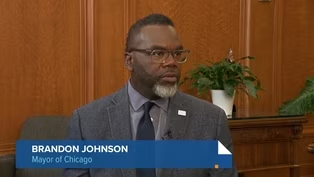
Johnson making the pitch for progressive revenue as the threat of another credit downgrade looms our Heather sure around sat down with the mayor on City Hall's 5th floor earlier today to talk about all that and more.
>> Last year the city council rejected your proposal for head tax to it.
Tax corporations, large corporations based on the number of employees.
We tried again this Lot.
>> because it's the smart thing to do.
This is a fair balance budget that makes critical investments in the neighborhoods, improving the quality of life for everyday Chicagoans.
That is my top priority and challenging corporations and the ultra wealthy to pay their fair share.
That's a reasonable expectation.
In fact, look, nearly 90% of Chicagoans who have been survey agree with me, right?
And so what we did in this particular budget, we ensure that we're investing in community safety, housing homelessness.
Investing in the quality of life program through Washington, Senate Asians division to make sure that trees are trending more potholes or field.
That's what the people of Chicago want and challenging corporations to pay their fair share in taxes.
That's that's a reasonable expectation.
Well, we've got a couple of days of budget hearings behind us.
I wouldn't say that the reception of your budget has been especially warm.
What do you need to do to make sure that Chicago is a budget on December 31st will continue to have conversations rate taken.
>> My budget proposal right to the community.
I'm having regular conversations with City Council members.
My team has made a commitment to reach out to every single older person every day I reached out to to a few of them just yesterday having continuous conversations.
That's how we're going to make sure that this budget is not just past but its past in the spirit in which the people of Chicago I'm going to show you a clip we had Jamie Dimon on the show.
>> I find astounding when people say fair share and they have no idea what the facts are.
If you think that we don't pay our fair share, that's absolutely wrong.
That to make a political choice.
You know, Jane will make its choice but to make a political choice, they should do more now taxing head count, what Let's check out just by the nature of that act.
>> Well, you know, listen, first of all.
You know, the city of Chicago has experienced a revolution, quite frankly, we are the top location or relocation for corporate headquarters, 13 years in a row voted the best big city, 10 years in a row.
What I've heard over and over again from whether you're a corporate CEO or the your child care worker.
What I've heard is that the city of Chicago has to get a handle and safety in and we are obviously move in the right direction.
I'm having some predictability around what revenue streams we will rely upon and driving violence down.
Those were always 2 of the top 3 aspects that I've heard from every single resident in constituent and stakeholder.
The other thing that I heard from corporate leaders is to streamline the process, make it easier to do business and Chicago.
We've done that.
So we've experienced a 60 year low in homicides.
We just broke ground on Foundry Park.
We got that done in 10 months.
The 19 0, 1, project on the west side of Chicago.
The soccer stadium that we're building in the South Loop.
right.
We have a hotel occupancy rate at 90% and our airport is the busiest it's ever been ensuring that corporations put more skin in the game to improve the quality of life for working people.
That's a reasonable expectation.
And in fact, you know, corporations just experienced the largest up for a transfer of wealth at the expense of the services that people rely upon just in the 2nd quarter alone.
You know, corporations had a profit margin of 483 billion dollars.
That's essentially 4.8, 3 trillion dollars annually.
Great.
And so we want our corporations to do But again, you know, with the employee, the equitable employer tax, that would provide essentially tax rebate if they are hiring from communities that have been historically disadvantaged, this corporate, you know, responsibility is something that the people of Chicago overwhelmingly one right.
And then if you look back and see this tax was removed, it caused a 35 million dollar budget shortfall that had to be made up in fines and fees on the backs of working people at a time in which affordability is one of the top issues that Chicagoans and Americans are thinking about.
You know, corporations who just received an incredible tax break from Donald Trump.
It's a reasonable expectation to challenge them asked them to put a little bit more skin in the game.
>> The other part of your budget that strong, a little bit of fires.
The proposal to borrow 481 million dollars to cover the cost to resolve lawsuits alleging police misconduct.
Your chief financial officer said the plans to borrow 350 million dollars in 2027 and that is likely to cross the city 190 million dollars interest.
Why is that the right thing to do given that extraordinary cost?
Well, first of you know, the size of these settlements really speaks to.
>> The longstanding damage that has been done to a number of people in the city.
Right.
Overwhelmingly black and brown men who wrongfully convicted addressing this is something that think the people of Chicago deserve.
In fact, the 2 cases that are centered in the settlements.
Watts in Guevara.
They comprise 72% of the settlements right most of these occurred in the 90's.
And then the 80's, you know, look, there's no easy pathway forward.
What we do know this new era that I've assured in global settlements, it's estimated that we're going to save the taxpayers anywhere from 800 to 900 million dollars.
Right?
And so this one time demand an using a one time fix, I believe is the responsible thing to do.
And quite frankly, the even the estimated amount of interest was a little.
All of the good thing is we are moving closer towards constitutional policing.
Thank you for all the coverage around 98% preliminarily over 30% in full compliance.
What I took office, think it was around 6 or 9%.
So we're moving in the right direction towards constitutional policing.
And I'm grateful that our police department has turned the from a a very dark past sticking with the police department 2023 20 between 2023 in 2025.
The police Department overspent its budget by more than 520 million dollars.
>> I can't.
Cpd stay on budget.
Well, you know, I put some safeguards in place last year's budget.
One, there is a public face.
>> A public facing dashboard around.
Please over time, there's a monthly review police overtime and through an executive order.
If the CPD expects to spend beyond what has been budgeted, they have to notify my office furs and thus of course, be appropriated 200 million dollars for overtime of they've spent roughly 158 million dollars in overtime, which the 6.6 million dollars less than what it was this time last year.
So we're moving in the right direction and in this and we were able to, you know, put things into a stronger accountability.
And this is raises, right?
So you're seeing the reduction of hours at a time in which our officers are earning better salaries.
So, yeah, look, we're going to make sure that that public dashboard is still available.
We're going to remain transparent, monthly reviews if they believe that they have to spend more than what's been appropriated through my executive order.
They have to notify my office first.
But again, 158 million dollars so far of the 200 million that that has been appropriated just a couple of more months to go.
And I know, Heather, you will be watching closely the city seen its credit downgraded to several times in the last couple of years.
The ratings agencies warned 2 things will prompt another downgrade.
>> increased political fighting between U in the city council and an inability to sort of find structural solutions are new revenues.
How concerned given the tenor of the these budget hearings and the lack of sort significant sort of progressive revenue that the city even has the ability to raise will trigger another downgrade.
>> Well, you know, listen, they also mentioned that, you know, spent close to revenue.
Sources also are problematic.
Unfortunately, City Council moved on speculative revenue sources that turned out to not only ineffective, but they didn't yield any real revenue.
The city council's made a commitment that they're not going to do that again, which is a good sign that they've learned that lesson.
I'm going to continue to work with city council members have really regular conversations around what the people of Chicago won in deserve and that we do it in a cordial way.
Listen, you know, having you know, you know, back and forth in a budget.
That's that's normal.
But ensuring that we are investing in youth employment, that's something that we should all be committed to doing.
We hired over 33,000 young people for paid summer jobs, the largest investment in the history of Chicago.
This budget increases at the 40,000 because 56,000 people applied, we're doubling our crews at street sanitation so that we can remove tree debris, especially because we're having 100 year rainfall.
That's right.
We're going to reopen another mental health clinic.
We put 30 million dollars into housing and homelessness.
You another 30 million dollars into our libraries.
And so the structural, the proposals that I put forward have proven to be effective, right?
And so the expectation is that the people of Chicago have their voices heard and that city council as well you know, the mayor's office work hand in hand to ensure that we can deliver a fair and a balanced budget.
Great.
I think we'll have to leave it there.
Thanks very much.
Mayor Brandon Johnson, thank you.
>> Northeastern Illinois is facing mounting challenges like an uptick in severe weather and aging population and evolving technological needs.
That trifecta is what the Chicago Metropolitan Agency for Planning calls the Poliec Risis in response.
The group has created a roadmap in an effort to help the region prepare for those problems for the next 100 years.
And joining us now is Erin, all among the executive director of the Chicago Metropolitan Agency for Planning.
Good to see you.
Welcome back.
Yeah, thanks so much for having me.
So this century planned still in the preview phase.
It's kind of akin to, you know, the Daniel Burnham 19, 0, 9 plan of Chicago, you know, make no little plans.
You know, that really helped reshape the city in powerful ways.
Why is now the right time to be thinking on sort of a grand scale for our region?
One of the reasons why we think it's so important for us to be thinking towards the next century.
>> It's really because the problems that we're seeing today aren't problems that one community or multiple communities can solve on their own.
It's really the collective impact that I think we're going to need to be thinking about in order to address the systems that are going to set us up for success for the next century.
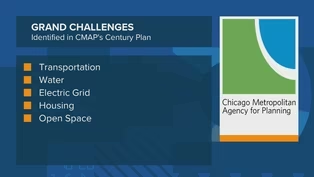
So talking about some of those problems you've identified kind of 5 big challenges to tackle in this plan.
>> The transportation water, the electric grid, housing and open space.
Why is it important to think about those holistically?
>> So as a regional planning agency, our role really is about thinking about systems and systems change and all of the systems that you just mentioned are interconnected.
You know, we can think about transportation without thinking about how transit could help us clean the air.
You know, our natural resources also help us things flooded.
And so we're trying to think about one of the system spot for regional action are going to make sure that we have the right economy and our competitive well into the future and talking about the inner conductivity.
You know, those last 2 housing and open space.
>> Given that the major housing shortage locally, you known around the U.S., how do you balance new development with maintaining, you know, necessary open space?
Well, that's one of the conversations were really excited to have right now is the tension between development and open space.
We know we need both.
We also know.
>> But if you don't plan for them together, it can be, you know, a challenge to go back and fix those things.
But as we think about housing today and we think about who's going to be here in the next 10, 2030, years.
We're expecting to have about 700,000 more people over the age of 65 by 28, 50, about 10% fewer people under the age of 20.
And so what types of housing to those people need and what kind of access to they need to outdoors to transit in order to live their best lives.
>> Well, in talking about, you know, the open space issue, I thought it was interesting that you, you know, obviously there's the question of just sort of natural beauty, natural resources.
There's also more practical things like stormwater the F to consider.
That's right.
The ecosystem services that are open spaces provides to communities helps reduce flooding.
It helps us reduce urban Heat island effects as well.
And so again, this idea of multiple converging challenges, we think these systems are going to again help support one another.
If plan for them correctly and talking about the issue of water, you know, we all know what a vital resource Lake Michigan is.
You know, kind of the jewel that we have right next to us.
But, >> you know, a lot of the communities and the sea map region.
They also rely on groundwater.
How sustainable is that resource?
So we have about it 0.6 million people who live in the region.
284 communities of those 284 communities.
>> Two-thirds of them are Lake Michigan, water and one-third of them are on groundwater.
The communities groundwater we're expecting to be in a drought scenario in their early 2030's.
And so while we have beautiful lake, we want to make sure that we are protecting the water that we have, that we're thinking about.
The future needs that our region has and recognizing that that's going to be attractive to lots of other people who potentially could come to the region.
How do we make sure that we have the resources available for whether those pressures start to emerge to sort of a question of of how best do we balance?
You know, that the needs of varying communities that, you know, maybe reducing water demands, things like that.
That's right.
And we've seen water demand reduces over time, you know, with more energy efficient appliances.
So they've been some real positives over the past couple of decades.
But again, it's really about making sure that the systems that we have today continue to provide fresh drinking water.
When you just turn on the tap and that the pricing for the water is affordable to everybody across our region and talking about the electric grid.
You know, there's challenges demands from data centers.
There's the need for cooling amid extreme heat by climate change.
>> What's the gap like between the current electric grids capabilities and what our region's going to need?
>> One of the amazing things about Illinois that's made us most economically competitive is that we are energy exporter right now, you know, but our projections are showing that by early 2030's, we're going to need to import energy in order to continue to sustain the business that we have today.
And so it's really important that we're thinking about where energy is.
You know, we might be thinking about where battery and stole solar storage is to help complement the grid that we have.
But if we are and positioning that system which was built for the last century, right for next century, I think again, like these are things that we're trying to get out ahead of and help support our communities and in the process.
Yes, it's not just across.
obviously there is the the environmental aspect of it trying to.
>> You know, make sure we have these, you know, clean energy sources.
It's also just a question of supply.
It sounds like it isn't, as we see sort of and goods movement and their their trucks transition to energy.
You know, a medium-sized delivery truck facility could consume as much energy as a community of 20,000 or 25,000 people.
So like Woodstock of Vernon Hills of that, you know, those are choices that we need to make beef be thoughtful about as we move forward.
You mentioned a public transit.
See map instrumental in helping develop the vision be time.
The new northern Illinois Transit Authority which now oversees CTA, Metra pace.
What are you going to be watching for?
As as metrics of success is NIDA begins its work in earnest, you know, just kind of took effect beginning of September.
Yeah.
Well, first, let me say I think that's a great example of how our region can do big things.
And so as we look to the next century, what we want to replicate that.
>> But I think for Neda, it's really about making sure that they're thinking about systems that they're thinking about the fair integration, you know, safety and security were also things that we heard a lot about moving forward.
But we really want to make sure that one time table, you know, one system that it's seamless for the user for the customer to get on and not sort of have to think about the modes that they're taking.
>> And, you know, given see maps success in helping to craft that vision to shape that future of transit.
Are you hopeful that you can get buy-in from state and local leaders to try and tackle these problems, holistically that you're looking at when you put together the final sentry plan.
>> We think so.
One of our great strengths that see a map is data information.
And so by telling a compelling story by showing where we can head in the future and how we can solve the solutions where we are excited about this entry plan and hopeful that next October one, it's adopted.
We have partners a line to help us finish to help U.S.
start implementing the plan.
All right.
Well, we will be very curious what goes in the final Aaron Allen on, thank you very much.
Thanks so much, Nic.
>> A local production companies, adaptation of Frankenstein.
It's alive.
>> A rather live.
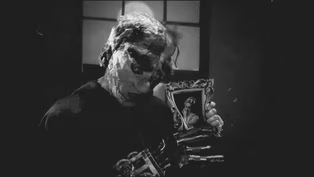
>> The Chicago based production company Manual Cinema is bringing its re-imagining of Mary Shelley's Frankenstein.
Back to the Studebaker Theater just in time for Halloween, combining elements of Shelley's own life and the classic tale the adaptation brings to the stage ideas about empathy, death and technological advancements.
The show combines puppetry.
Live sound effects music and cinematic techniques to bring the production to life.
Frankenstein continues >> Have a lot of symbolic power in our culture.
Humankind is created lots of technologies this lost control of.
>> Right now developing a technology artificial intelligence since the 19th century.
At whatever historical urine.
>> Readers of town residents and Mary Shelley's Frankenstein and felt like it spoke to their time.
I think it continues to speak to our time it was also a story that has been adopted in almost every year cinematic history.
like the old Thomas very early silent films where that picture comes out of that to the James Real.
like new century adaptations.
So we're creating the Keys.
>> Our name is manual cinema.
And what we really try to do is to make movies live in front of the audience's eyes using very simple materials.
Me like looked back at all of those pieces remix to that with some of our own ideas, you know, living in the 21st century like ideas about robotics engineering to create our it's alive sequence or a creation sequence for the creature.
Mary Shelley become sort of a framing story for telling this version of Frankenstein shortly before she had written her novel.
Frankenstein.
>> She'd given birth to a daughter who had died in infancy.
And in her journal, she wrote that she had this night near of bringing her dead child back to life.
And we thought that was so poignant, just the act of creating anything like whether it's a baby or like rather, it's like public show like whether it's like a piece of rating or like anything you're trying to like out of yourself like into the world is like.
>> Extraordinary and beautiful.
But then off thinking like feel like friend in your own lives.
>> When you come to see a manual cinema show, you have the option of either watching the final product on like a big movie theater screen above the stage.
>> Or you can look below there.
You can see all the puppeteers and all the musicians and performers >> making the work.
We don't hide any of stage at from you.
Any of the special effects.
You can see how or making the projections making the puppetry.
>> In real time, there's no wrong way to watch the show.
It's marriage of process.
A product that unfolds in front of >> and you can see manual Cinema's Frankenstein tomorrow through Sunday.
That's our show for this Thursday night.
Be sure to check out our online voter guide for information on the candidates on your ballot.
That's A W T tw dot com Slash voter guide.
Join us tomorrow night at 5.37, for the weekend review.
Now for all of us here at Chicago tonight, I'm Nick Lumber.
Thank you for watching.
Stay healthy and safe and have a good night.
>> Closed captioning is made possible by Robert a and Clifford law offices, Chicago, personal injury and wrongful death.
It supports
 New
CMAP Outlines Its Proposal for Addressing the Region's Most Pressing Problems
Video has Closed Captions
Northeastern Illinois is facing more severe weather, an aging population and evolving technology. (7m 30s)
 New
Manual Cinema Is Bringing 'Frankenstein' to Life at Studebaker Theater
Video has Closed Captions
The Chicago-based production company reimagines the Mary Shelley classic. (3m 23s)
 New
Mayor Brandon Johnson on Budget, Borrowing and More
Video has Closed Captions
WTTW News senior reporter Heather Cherone sits down with Chicago's mayor. (10m 36s)
Providing Support for PBS.org
Learn Moreabout PBS online sponsorship New Episode
- News and Public Affairs

Top journalists deliver compelling original analysis of the hour's headlines.
 New Episode
- News and Public Affairs

Today's top journalists discuss Washington's current political events and public affairs.
 New Episode

 New Episode
 New Episode
 New Episode
 New Episode


 New Episode

 New Episode

Support for PBS provided by:
Chicago Tonight is a local public television program presented by WTTW
WTTW video streaming support provided by members and sponsors.