
October 20th, 2026 | Carolina Impact
Season 14 Episode 1407 | 26m 36sVideo has Closed Captions
Future Engineers; Wells Fargo Neurodiversity Program; Matthews Help Center; & Gold Rush ’77
High school students tackle college-level courses while building dreams for the future; An inside look at Wells Fargo Neurodiversity Program; At Backporch Treasures, thrift shopping helps support the Matthews HELP Center and local neighbors; & Fifty years later, Charlotte celebrates the 49ers and their historic 1977 Final Four run.
Problems playing video? | Closed Captioning Feedback
Problems playing video? | Closed Captioning Feedback
Carolina Impact is a local public television program presented by PBS Charlotte
October 20th, 2026 | Carolina Impact
Season 14 Episode 1407 | 26m 36sVideo has Closed Captions
High school students tackle college-level courses while building dreams for the future; An inside look at Wells Fargo Neurodiversity Program; At Backporch Treasures, thrift shopping helps support the Matthews HELP Center and local neighbors; & Fifty years later, Charlotte celebrates the 49ers and their historic 1977 Final Four run.
Problems playing video? | Closed Captioning Feedback
Where to Watch Carolina Impact
Carolina Impact is available to stream on pbs.org and the PBS app.

Introducing PBS Charlotte Passport
Now you can stream more of your favorite PBS shows including Masterpiece, NOVA, Nature, Great British Baking Show and many more — online and in the PBS Video app.Providing Support for PBS.org
Learn Moreabout PBS online sponsorship(upbeat music) - [Presenter] This is a production of PBS Charlotte.
- [Presenter] Carolina Impact is brought to you in part by Bragg Financial, serving high net worth families with portfolio management and planning advice.
Bragg Financial is committed to our clients and our community.
Braggfinancial.com.
- Just ahead on Carolina Impact, Rock Hill students tackle college level engineering while still navigating high school.
Plus, Wells Fargo embraces different thinking and helps neurodivergent employees shine.
And Charlotte's legendary 49ers relive a final four run that made history.
Carolina Impact starts right now.
(upbeat music) Good evening.
I'm Dara Khalid, standing in as the host for Carolina Impact.
Our longtime host, Amy Burkett, has stepped away from the station for personal reasons.
We want to thank Amy for her many years of service to our community and wish her all the best.
I'm looking forward to our show tonight and thanks for joining us.
Well, college level calculus, physics and engineering might sound tough enough after high school, but some Rock Hill students tackle that work years earlier.
And they're doing this while they're juggling sports and tests, clubs, and of course, teenage life.
Well, my colleague, videographer John Branscum and I show you how a classroom at South Pointe High School challenges young minds and helps shape big dreams.
(bell rings) Colorful pieces snap together, forming molecules while curious hands turn chemistry lessons into something students can actually touch.
- Carbon dioxide.
- [Dara] Calculators crunch equations while pencils fill notebooks, and laptops carry college coursework, all before these students collect their high school diplomas.
- And then the last thing- - [Dara] For senior Hampton Woods, the dream of flight started early.
Before he finished elementary school, airplanes had already captured his imagination.
- Ever since a young age, maybe around five or six, I've been interested in aviation and airplanes.
- [Dara] Years later, that childhood fascination now meets physics, calculus, and engineering through Accelerant.
- [Teacher] If we know these vertical distance- - [Dara] A governor's school program that connects students to live instructors through video.
- But I wanted to take more of a academic risk and challenge myself.
- [Dara] The teachers may appear through a screen, but Jamesa Mickles keeps a watchful eye inside this classroom, tracking assignments, grades, and the students she says feel like family.
- They become my children, even though I have a senior here myself.
- [Dara] She also knows affection can complete a college assignment.
- Now to see them as seniors and the way they buckle down because it is an engineering program, I'm really excited when I can actually see the growth.
- [Dara] That care doesn't lower the bar.
A virtual whiteboard warns about tomorrow's test while a note taped to the wall spells out arrival times.
Small reminders that success here demands discipline.
- I wouldn't try to bookmark some of those pages.
- [Dara] Students can earn up to 32 college credit hours through Coker University.
Sophomores, juniors, and seniors tackle advanced coursework.
Junior Anna Raymond arrived already drawn toward biology and medicine.
Then a lab introduced another possibility.
- We had a lab at USC and that like really opened up the whole engineering field because I was pretty dead set on doing like medical.
- [Dara] Now, she pictures a career that could connect both worlds.
- So I would try like to do engineering and tie in medicine and like how to make it better.
- [Dara] In today's class, a red filament spool unwinds while the 3D printer builds designs layer after layer, giving digital creations weight, shape, and something students can hold.
- [Hampton] Actually, the project we're working on for the next couple of weeks is something we can 3D print as well.
- [Dara] A student prize of finished red creation from the printer, a small object, but a tangible reminder that an idea can leave a computer screen and land right in their hands.
What happens in this classroom goes beyond a grade.
Students aren't just learning about engineering, they're actually having the opportunity to develop skills that'll help them in their futures.
Junior Lucas Watson already imagines putting those skills to work for someone else.
- And I realized engineering would be a path for me to do that.
And one other thing, I realized I could help people, you know, live better like with prosthetics and other stuff.
- [Dara] His vision stretches beyond a career or paycheck.
- I'd also like to figure out ways to just help people get more food, water, and just like help people build up to where like other well-off countries are.
- [Dara] Principal Dr.
Valerie Williams sees more than students when she looks through these classroom doors.
She sees future leaders.
- To see students that are so focused and to see future salutatorians and valedictorians and business leaders and doctors right here.
- [Dara] Williams says enrollment has grown during her five years leading South Pointe, but she wants more families to discover the opportunity.
- It's something that just truly makes me proud.
Not only is proud as a principal here, but just proud as a parent.
- [Dara] The work demands a lot, long hours, Saturday labs, and the same tests, practices, and deadlines facing every high school student.
But with each problem they solve and each idea they bring to life, they're building more than college credits.
They're building the confidence to look at a complex problem and imagine what's possible.
Well, I had a great time telling this story with John and those students have bright futures ahead.
Now the program reaches beyond South Pointe.
Students from Rock Hill High and Northwestern also participate.
Accepted students begin the accelerate program during their sophomore year.
Well, up next, when we think of the word diversity and its meaning, chances are the first thing that comes to mind is someone's race or perhaps its ethnicity, gender, religion, or social class.
As it turns out, just like the word itself, diversity carries with it many meanings.
Carolina Impact's Jason Terzis joins us now with the story.
- Well, at its core, diversity is simply the range of human differences, traits, and beliefs.
When we think of diversity in terms of employment, it usually means having a workplace where different cultures are represented, but there's another type of diversity you may not be as familiar with.
It's called neurodiversity, the concept that there is no single correct way for the brain to function.
- I had a master's degree, I was a published author, and I had never held down employment for more than about a month.
I never had a workplace that was willing to work with me.
It was easier for them to just let me go than bother to ask why.
- [Jason] Alexander Lieberman works at Wells Fargo in a job he's held for over six years, but it's the first job he's been able to hold onto.
- I cannot sit at a computer for eight hours straight.
I do my work in bursts and people would look at me and they would either see me not working and conclude I wasn't working at all and be let go or I would force myself and then I would burn out and then I would be let go.
- [Jason] Alexander is neurodivergent, part of the roughly 15 to 20% of society that is.
- That's a lot of people who are having trouble in the workplace.
- [Jason] Neurodiversity is the concept that there's no right way for the human brain to operate.
Instead, viewing neurological differences such as autism, ADHD, and dyslexia as natural variations of human diversity.
- And the way we design processes or environments, it kind of assumes neurotypical.
It assumes that people will behave, interpret information, communicate back in a certain way.
- [Jason] And because of those differences, neurodivergent people like Alexander tend to have difficulty finding and keeping jobs.
- I had almost given up.
- The neurodivergent community typically suffers from a 30 to 40% unemployment/underemployment rate.
- The traditional job interview is designed in a way that inherently disadvantages neurodivergent people.
- My session is going to be about building your professional LinkedIn profile.
- [Jason] Recognizing the issue, Wells Fargo launched its neurodiversity program in 2020, designed to give the neurodivergent community increased opportunities to land employment with the company.
- I came to this program, it was a Hail Mary almost.
- We know that talent exists everywhere, but unfortunately opportunity doesn't and we think we have a role in that.
So we feel like it's a responsibility to create more accessible pathways to employment opportunities that are inclusive, accessible, and predominantly skill-based.
- And so for Wells Fargo, it's about seeing people, seeing the capabilities that they have.
And so we think about individuals who are neurodivergent, who may not have all the same opportunities as everyone else.
We want to make sure that they see themselves at Wells Fargo.
- I'm certainly grateful they took that risk.
- [Jason] One of the main things Wells did was alter the way standard job interviews are conducted.
- So it starts with how are we writing our job descriptions and being inclusive, how we're evaluating candidates on their skills.
- And you create an environment where candidates can come in and really demonstrate and showcase their knowledge and their skills and their abilities that are relevant to performing successfully in the role, everybody really wins.
- [Jason] So instead of an interview lasting the typical hour or so and focusing on social skills and personality, Wells expanded the process to last several days, making it more skills-based.
- So what we did was we de-emphasized the behavioral considerations and we do a series of workshops.
It's across two days, small workshops.
Day one is completely unscored.
We do introductions and team building and problem solving alongside the managers to build that relationship, build some safety, build some trust so the candidates bring the best version of the authentic selves to the following day.
- We spend time getting people acquainted and comfortable and seeing how they interact with each other.
- The following day, they get to show us their skills rather than tell us their skills.
So they complete a practical exercise, something that they would be expected to do if they got the job.
So if it's an analytics job, they're analytics exercise.
And if it's a software engineering, they're gonna, you know, write some pseudo code, but they have an opportunity to show us those skills rather than in a typical interview, tell me about those skills.
- [Jason] Wells' success rate with the program has been off the charts with nearly 400 new hires since the program's inception.
- Since launching the program back in 2020, we've been able to support 388 employees, 32 interns, and as of the end of last year, we've seen a year-over-year retention rate of 82%.
So those outcomes really demonstrate that when you're able to remove barriers and create an environment where candidates can really showcase their skills, everybody really wins.
And the results also just demonstrate the value in creating more accessible pathways to employment.
- And my hope is that each of you leaves with at least one new insight, one new connection, and one new tool that helps you move forward in your journey.
- [Jason] Wells recently opened its doors to the broader community, inviting more than 100 people from the neurodivergent community in for a full day of immersive learning, professional development, and networking.
- So we'll have sessions throughout the day that are focused on job search strategies, focused on resume preparation, how to identify and maybe communicate any transferable skills.
We're also gonna introduce some financial literacy, some AI, and just overall career readiness.
- A father dropped it off, his daughter, for this event, and he wanted to come in because he wasn't sure who to thank, but he just wanted to say, "Thank you for this opportunity."
Right?
So that's the impact there.
- All right, Jason, tell me a little bit more.
I understand they're going to be expanding the program.
- Yeah, they're working to expand it.
Well, Wells Fargo is making its neurodiversity program training available to all of its employees, and their corporate workshop is now introducing the program to other Fortune 500 companies.
So they're trying to share what they've learned over these last six years about neurodiversity with other area companies and just trying to spread the word and just get that word out.
- All right, just getting the perspective out and introducing people to the way other minds work.
- Other way other brain works, because not all brains operate the same.
- That's it.
Well, thank you so much, Jason, for that.
All right.
Well, do you like finding a bargain?
I know I sure do.
And according to a survey conducted by Talker Research, two thirds of American adults who responded say they visit thrift shops to help stretch those household dollars.
Now, we found a local thrift shop that turns finding a great deal into a great deal of help.
Producer Russ Hunsinger takes us to Backporch Treasures Thrift Boutique operated by the Matthews Help Center.
(lively music) (bell dings) - [Russ] It starts in the driveway when people are donating their donations.
Their donations are hope to us, and then they go into our thrift shop.
Our community can go shopping and pay for those items, and that was what's helped fuel our mission through Social Works.
- Thank you very much for coming in.
We appreciate it.
- We are just a place to walk alongside our neighbors who are struggling.
The Matthews Help Center is a nonprofit organization to serve our community.
Backporch Treasures Thrift Boutique is the revenue stream of the Help Center, but it's also a program of the Help Center.
- In April of last year, I was laid off, had a four-year-old who was in preschool, and we needed to feed the family and we needed to keep him in school.
So we heard about Backporch Treasures, Matthews Help Center, and it was at a time where I felt so untethered in the world, and it made me feel like I had a home.
- The demand is so great right now.
We have hardworking families that work overtime, they have multiple jobs, and one little thing, if they have a reduction in hours, just by a couple hours a week could actually derail them and put them behind in their rent.
Our goal is to keep the families in their homes, so anything that we can do to prevent an eviction or a utility disconnection is gonna be our highest priority.
- Everyone that applies with us is in crisis, and every situation tends to be an emergency situation.
Someone comes in, calls or applies that has fallen behind on their rent, and it could be one month, two months, but whatever's on their ledger, we work with their apartment complex so that we can maybe come to a term where we can help them.
Utilities assistance, we partner with just about every utility company in the area.
There's been times when we're on the phone with a client having our appointment, we know that we're gonna be able to help them, their power gets turned on.
Childcare assistance, if somebody falls behind on their daycare, then we can come in and help them look at what they owe on their ledger, and nine times out of 10, if the crisis fits our criteria, we're able to help with that.
- Some of our clients, because they are in crisis and some of them actually use the last few dollars they have to pay whatever the bill is, they don't have money to purchase food.
We provide three days worth of non-perishable food items to our clients.
(phone rings) - Matthews Help Center has made extra calls.
I came to the Matthews Help Center.
I got assistance.
I received help paying my financials, also help with paying for rent, for food, was able to shop in the store for clothing, and it's been a blessing.
And so I came later and I volunteered.
I went from being help to volunteering and then employed.
It's been a great pleasure.
- [Russ] Volunteers are the heart of our mission, and we have probably close to 350 weekly volunteers to make this operation happen, and without them, we would not be able to do the work that we're doing.
They are crucial.
- Can I put this in your car for you?
Our donations come in, buy a car, and they go from donations into what we'll call triage.
We look through and find out what we can resell and what we probably can't.
Just have so much fun.
And that's the thing about volunteering here.
There's always so much that needs to be done.
- First, I go through the drive-through and drop off, and then I park and go inside and look for little treasures to take home.
- Thank you.
- Thanks for shopping with us.
- They spend so much time in this store making it beautiful and easy to shop, and at a time in your life when you feel so low, they help you maintain your dignity.
You don't feel like you're sifting through junk, just hoping to find something.
You know that they're there, that there's going to be something for you.
- Shoppers can find deals every day.
It's a great way to save money.
Our families do not have to pay to go shopping in our amazing thrift shop.
- I bought a science magic kit and a tie for a graduation for my friend.
- [Russ] The help part of the Matthews Help Center means something.
It's hope, empathy, love, and partnership.
And we believe that to be our core value with our staff, our volunteers, our clients, but really it's our community too, because we can't do what we're doing without our community.
- Thank you.
- Thanks for coming.
- Such a great story, Russ.
Thanks for that.
Well, in fiscal year 2025, over 431,000 items were sold at Backporch Treasures Thrift Boutique.
Now, that allowed the Matthews Help Center to provide over $1 million in financial and non-financial assistance.
This November 11th will mark the Center's 47th anniversary.
Well, finally, tonight, we visit a Charlotte team whose historic run gave an entire city something to celebrate.
You may remember this.
College basketball is back, and for Charlotte, this season comes with a milestone worth remembering.
50 years ago, a group of 49ers took the city and the university somewhere they had never been before.
Their run became part of Charlotte's sports history.
Tonight, Carolina Impact's Chris Clark looks back with Gold Rush '77.
- [Chris] Long before Charlotte had the Hornets or the Panthers, one of the city's biggest sports moments was taking shape on a campus a lot of people still didn't quite know.
- UNC Charlotte was not in the city limits of Charlotte until the 1990s.
- [Chris] That's one way to say it.
Cedric Maxwell had another.
- You go out on 49 and then you in the country.
You are leaving, essentially leaving Charlotte.
- [Chris] In North Carolina, the basketball map already had its landmarks, and Charlotte wasn't one of them yet, but Melvin Watkins could see the outline.
- You know, they talked about and actually showed me a vision of what the campus was supposed to be.
And of course, I'm looking cross-eyed at that point thinking, "Yeah, one day, right?
Yeah."
I guess glorified junior college may be the best way to describe it, but it had its personality.
- [Chris] Cedric Maxwell would one day be drafted by the NBA's Boston Celtics, but when he first heard from Charlotte, he wasn't thinking about Boston, banners, or anything close.
Truth is, he wasn't even totally sure which Carolina sent the letter.
- Got my recruitment letter from UNC Charlotte and thought I was being recruited by Chapel Hill.
My first recruiting trip, and I went to the cafeteria, and we had breakfast that morning.
I said, "Can you go back and get some water?"
Said, "Yeah, all you can eat."
I said, "Where's the paper at so I could sign?"
- [Chris] And this wasn't a one coach miracle.
Bill Foster helped get the right players in the door.
Then Lee Rose came and let everybody know this thing was serious.
- First day I always remember Lee coming in and the line he gave us was, "Some of you guys can't play.
I need some scholarships."
That was his first line.
- [Chris] Before the rest of the country figured them out, Charlotte had already built something at home, first in the Mineshaft, later at the Coliseum.
- My four years of college.
We never lost a home game when I played.
When Cedric played, we never lost a home game.
Teams that came there came with a smile, left with a frown.
- [Chris] By 1976, Charlotte had done enough winning to earn a trip to the NIT, and in those days, the NIT wasn't a consolation prize you shrugged at.
- [Anchor] From Madison Square Garden in New York City.
- Can you imagine this country bumpkins going to New York City?
Oh man, we though we had died and gone to heaven, staying in the hotel, playing in Madison Square Garden.
Come on.
It doesn't get any better than that.
- [Chris] But it wasn't just the stage.
It was who they had to go through.
Charlotte didn't wander into the NIT championship game.
It earned its way there.
- We played against like Oregon, San Francisco North Carolina State and Kentucky, and we were right there to win possibly the NIT Championship.
- [Chris] They didn't come home with the NIT trophy, but they came home different, and when they got back, Charlotte was waiting on them.
- There were about five or 6,000 people at the little Charlotte Douglas Airport.
(crowd cheering) And I remember this Black woman coming up to me with a plate of cornbread.
"Cornbread, I know you love."
I remember that.
- [Chris] Before the big sports city image, the 49ers gave Charlotte something to rally around.
- I remember even as a kid tuning in and then they were local heroes.
- The basketball team at the University of North Carolina Charlotte, they're called the Mean Dream.
- And it was just the neatest thing that our UNCC was on TV and making it this far.
- [Chris] The next season, that confidence carried right into the NCAA tournament.
Central Michigan first, followed by Syracuse, and then Michigan.
Number one in the country at the time came in thinking they were just going to keep on moving.
- They were number one.
(Cedric laughs) They weren't number one once we left the building.
- [Chris] Every upset has a play where belief turns to blood in the water, and for Charlotte against Michigan, it came above the rim.
- [Anchor] (indistinct) you see that play?
- Chad Kinch, he comes from the right-hand side.
- And I think I gave him the ball and he went baseline and took off, and I'm like, I've never seen Chad do that.
- Our crowd just erupted and went crazy.
- We all were just stunned.
They were stunned.
We looked at their bench and they were like, "Ooh, ooh."
- [Chris] That win sent Charlotte to the final four.
Against Marquette, the 49ers were one basket away from playing for it all.
One basket from North Carolina, one basket from forever.
- I was involved in all these plays, and the last one, there's a long pass.
I grabbed the basketball.
I recovered quick enough to get there and block his shot as he tried to dunk it.
The ball was on the rim and he tapped it in while it was essentially goaltending.
- [Anchor] And now it's a matter whether it fell before the buzzer.
It is good.
- [Chris] It hurt then.
It still hurts now.
But losing that game didn't make the run smaller.
A school some people confused with Chapel Hill made the country learn a different name.
- I don't think anyone felt like they had lost.
I think everyone felt like, wow, they made it to the Final Four.
That's just incredible.
- [Chris] That's why it lasted, not because they won, but because of what Charlotte saw in them, a school, a city, and a team all trying to prove they belong.
- Can you imagine a little UNC Charlotte that none of the rest of the state knew about was one of the four best basketball teams in the nation?
- [Chris] They started the decade barely on Charlotte's radar.
By the end of it, they left a mark you could still feel on campus.
- We had our names on the back of those jerseys, and we had the name of the university on the front of the jersey.
That meant something.
- [Chris] Nearly 50 years later, those ghosts still have plenty of company.
Every banner, every memory, every roar inside Halton Arena traces a little of its history back to a group of players who showed Charlotte just how far it could go.
For Carolina Impact, I'm Chris Clark.
- Thanks, Chris.
Well, five decades later, that season still means something to the men who lived it and the university they represented.
And as another Charlotte basketball season begins, the echoes of 1977 are never very far away.
For one remarkable group of 49ers, the memories are still very much alive.
Well, do you have a cool story like this one?
Don't be shy.
Feel free to email the details to stories@wtvi.org.
Well, before we leave tonight, I'd like to thank the group from Phillips Academy in Charlotte who joined us in studio for our taping.
They asked a lot of good questions and were a joy to have in the audience.
That does it for tonight, and thanks so much for joining us.
As always, we appreciate your time and look forward to seeing you back here again next time on Carolina Impact.
Goodnight, everyone.
(upbeat music) - [Presenter] A production of PBS Charlotte.
(upbeat music)
 New
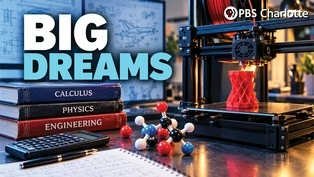
Engineering Their Futures | Carolina Impact
Video has Closed Captions
Clip: S14 Ep1407 | 5m 24s | High school students tackle college-level courses while building dreams for the future. (5m 24s)
 New
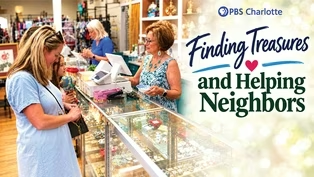
Finding Treasures and Helping Neighbors | Carolina Impact
Video has Closed Captions
Clip: S14 Ep1407 | 5m 6s | At Backporch Treasures, thrift shopping helps support the Matthews HELP Center and local neighbors. (5m 6s)
 New
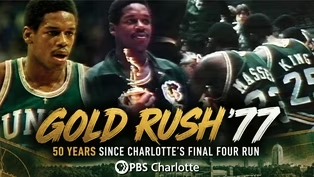
Gold Rush ’77: The 50th Anniversary of Charlotte’s Final Four Team | Carolina Impact
Video has Closed Captions
Clip: S14 Ep1407 | 6m 31s | Fifty years later, Charlotte celebrates the 49ers and their historic 1977 Final Four run. (6m 31s)
October 20th, 2026 Preview | Carolina Impact
Video has Closed Captions
Preview: S14 Ep1407 | 30s | Future Engineers; Wells Fargo Neurodiversity Program; Matthews Help Center; & Gold Rush ’77 (30s)
 New
Wells Fargo Neurodiversity Program | Carolina Impact
Video has Closed Captions
Clip: S14 Ep1407 | 6m 21s | An inside look at Wells Fargo Neurodiversity Program (6m 21s)
Providing Support for PBS.org
Learn Moreabout PBS online sponsorship New Episode
- News and Public Affairs

Top journalists deliver compelling original analysis of the hour's headlines.
 New Episode
- News and Public Affairs

Today's top journalists discuss Washington's current political events and public affairs.
 New Episode
 New Episode
 New Episode
 New Episode
 New Episode




 New Episode


Support for PBS provided by:
Carolina Impact is a local public television program presented by PBS Charlotte