Vermont This Week
October 23, 2026
10/23/2026 | 26m 46sVideo has Closed Captions
Scott, Janoo contrasts on display in first debate | Vermont considers wealth tax
Scott, Janoo contrasts on display in first debate | Vermont considers wealth tax | Scott, lawmakers approve emergency home heating aid | Moderator - Mikaela Lefrak; Peter Hirschfeld - Vermont Public; Alison Novak - Seven Days; Calvin Cutler - WCAX.
Problems playing video? | Closed Captioning Feedback
Problems playing video? | Closed Captioning Feedback
Vermont This Week is a local public television program presented by Vermont Public
Sponsored in part by Lintilhac Foundation and Milne Travel.
Support provided by:


Vermont This Week
October 23, 2026
10/23/2026 | 26m 46sVideo has Closed Captions
Scott, Janoo contrasts on display in first debate | Vermont considers wealth tax | Scott, lawmakers approve emergency home heating aid | Moderator - Mikaela Lefrak; Peter Hirschfeld - Vermont Public; Alison Novak - Seven Days; Calvin Cutler - WCAX.
Problems playing video? | Closed Captioning Feedback
Where to Watch Vermont This Week
Vermont This Week is available to stream on pbs.org and the PBS app.
Support the crew
Help Mitch keep the conversations going as a member of Vermont Public. Join us today and support independent journalism.Providing Support for PBS.org
Learn Moreabout PBS online sponsorshipWith less than two weeks before Election Day, Governor Phil Scott and Amanda Janoo went head to head for the first time.
Drawing sharp contrast for voters on health care and taxes.
Most of all, the proposal that really just looks at, again, recouping the tax cuts for the wealthiest Vermonters, equivalent to the amount that they're getting from the big, beautiful bills.
We don't have that many rich people in Vermont, and I'm not sure how many we want to lose over the next few years.
And an update on if and how the state will help low income residents with home heating this winter.
All that and more ahead on Vermont this week.
From the Vermont Public Studio in Winooski.
This is Vermont this week, made possible in part by the Lintilhac Foundation and Milne Travel.
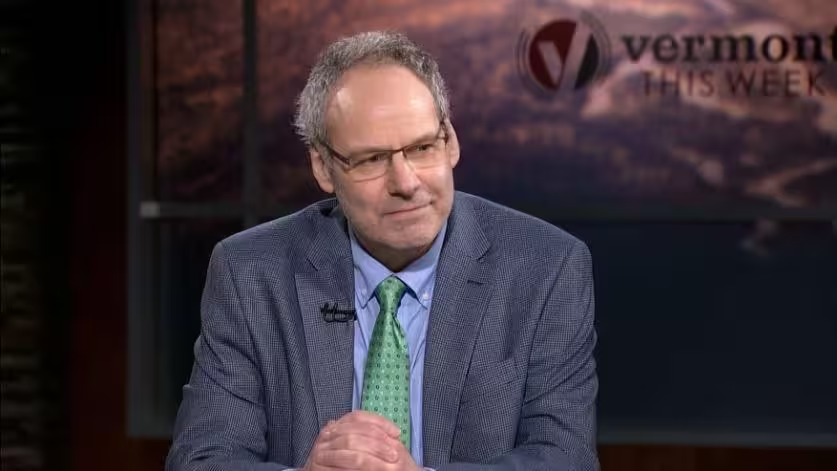
Hi, I'm Mikaela Lefrak in for Mitch Wertlieb.
It is Friday, October 23rd.
With us on the panel today we have Peter Hirschfeld from Vermont Public, Calvin Cutler from WCR, and Alison Novak from seven days.
Thank you all for being here.
All right, so let's start with the race for governor.
We have less than two weeks until Election Day, though I know many people have already cast their ballots by mail.
Polling suggests that this is the most competitive gubernatorial race since Phil Scott was elected ten years ago.
He's now seeking his sixth term, and we saw some debates between the two major party candidates this week, starting with Vermont Publics.
I was there, I was moderating, so I'm going to take a step back.
Pete, I would love to hear your thoughts.
What was one big takeaway from the debate for you, that both candidates are coming to voters from the same starting place, that Vermont is at an inflection point, and the things we do over the next two years are going to have outsized influence on Vermont's trajectory well into the future, that things deviate wildly.
These are two candidates with two vastly different visions for how Vermont ought to deal with the myriad crises facing Vermonters, whether that's housing, health care, education.
And we got to see some real contrasts during both debates this week.
Contrast, but not not anger.
The vibes were pretty chill, despite those very stark contrast.
You know, it's a very cordial, very civil debate.
There weren't a lot of, you know, swipes or criticisms of each other.
In fact, in the debate, Amanda, Janoo actually said that she respected Phil Scott.
When you asked, who's the politician on the other side of the aisle who she respected?
So I thought it was surprisingly friendly.
Yeah, yeah, I agree.
Kelvin, what's it out to you?
I mean, just the contrast as well.
I'm sure we'll get into the Lieutenant governor's race, but looking at the governor's race versus the lieutenant governor's race, I mean, boy, rhetorically, what a difference.
These two races make.
So, I mean, this is one of the most cordial races that we've seen, especially just given nationally the rhetoric and how nasty campaigns can get sort of the national level.
It's refreshing.
Yeah.
Well, let's get into some of their key policy differences here.
And I'd like to start with education and school funding.
Let's let's watch a clip here of what both of the candidates said.
We know that two of the primary drivers of rising education costs are health care and mental and behavioral support for kids.
And so the important thing is that we actually have to address and look at what are those actual root drivers of costs, because otherwise no amount of consolidation is actually going to decrease the overall spending.
And so I proposed this idea of community schools, which I can get into more.
But in my logic, I guess we deal with property taxes through property tax reform, not through public education cuts.
We have to look at the system itself.
And again, I would disagree that it's all health care related, $1 billion more in the last ten years.
The numbers just don't add up.
But when you look at the number of kids that we're we're losing out of our schools, 30,000 over the last 25, 30 years.
That tells you everything you need to know.
I mean, we still have the same number of schools.
Staff has probably increased, same footprint, same costs and so forth.
But 30,000 fewer kids.
Now, Allison, outside of election season, your debate is usually or excuse me, your beat is usually K-12 education.
So let's go to you first on this one.
You said no amount of consolidation is going to decrease the overall spending.
This has really been the crux of the consolidation debate over the last two years.
Yeah, yeah.
And I mean, I think there is really not a lot of conclusive evidence that consolidation on the scale that the governor has suggested would save money.
You know, there's the notion that if you're consolidating districts, you're leveling up teacher salaries.
And in that case, you might be spending more to level up salaries than the amount of administrators you're going to be losing from consolidation.
So I think there's a lot of factors that actually go into consolidation.
I mean, I think the governor has a point, though, in the sense that we have seen a very steep decline in the number of students in our schools, and we pretty much have the same number of buildings.
And so I think his point is that we need to make systemic change to kind of the way our schools are organized in order to achieve cost savings.
So, yeah, I think what's really interesting about this too, and not to get too wonky at the state House here, but you know, the path that we are heading down with education reform, with the voluntary consolidation, but also the foundation formula, I mean, this is all aimed at helping those districts that continue to vote down their budgets and they have to cut, cut, cut.
And then you have more.
You have other districts that vote up their budget on the first try.
And so these education reforms are in part aimed at addressing that sort of inequity question that a lot of schools are dealing with.
And at least I could be wrong.
I'm not hearing exactly what Amanda Janoo's proposal would do for the Slate Valleys and the Barre towns and Barre cities of the world.
But that said, I mean, it's a really hot topic.
And, you know, I think where we go from here when the legislature reconvenes, I mean, this governor's race is going to really set the tone in the direction of where we go with education reform in Montpelier.
And I think the key aspect of Phil Scott's education reform vision, the thing that makes it the what would be the most significant education reform endeavor in modern Vermont history is that it eats away at the local control that has defined Vermont's education system for centuries.
And what Phil Scott is saying is we can't allow local communities to make spending decisions about their schools anymore.
We need the state to be doing that.
And Amanda is saying no decisions about local schools should stay with local communities.
I think she's acknowledged that there may be some costs related to that decision, but what she's saying to voters is we're still going to be able to solve your property tax problem because we are going to hit up wealthy out of staters that own second homes in your communities for way more money than we're getting for them now, and we're going to return that money to you so that your tax bills aren't as high.
And she.
I'm sorry.
Just to be clear.
I mean, Phil Scott's idea of school consolidation is a very unpopular idea, not just with rural communities, but pretty much with every school district I've talked to.
People don't want the type of consolidation that Phil Scott has proposed.
And so he is kind of taking a stand on this issue in a way that might cost him politically.
Whereas Amanda Janoo, you know, saying that small schools are the heart of communities, that is what people in rural communities say.
So I think her kind of comments really echo what I hear on the ground when I talk to people who work and are served by these schools.
And Janoo also, she talks about, I believe it's Norway or Sweden, one of European countries.
They talk about how they have a future commission.
Right.
There's a commissioner that says, how is this policy going to affect us five, ten, 30 years from now?
And you talk with Janoo about why she believes we shouldn't be closing schools or consolidating.
She says ten, 15 years, maybe we might have climate refugees, we might have political refugees coming to Vermont.
And if your school is the institution, if that is the core of your community, why would you close that?
Well, it's not a couple other topics that came up during the debate.
One that I haven't heard them discuss too much on the campaign trail is the kind of intertwined issues of public safety, homelessness and crime.
We asked the candidates about this specifically with an eye towards Burlington, because there's been some debate in the past year or so between the Scott administration and Burlington mayor and the Mulvaney Stanek on what kind of state support that can and should be provided to the city of Burlington to address addiction and homelessness and crime.
What stood out to you about their their answers?
Because they were pretty darn different.
They were different.
And I thought this was one of the more interesting exchanges.
You offered a very open ended question, right?
What should we do about the quality of life issues that are deriving from from homelessness in Burlington?
And Amanda Nanu talked about a Housing First model.
This is where you provide people housing no matter their circumstance, no matter whether they're using drugs and alcohol or not.
And the idea is that when you put these supports around people, they're able to get their lives moving in a right direction and find a sustainable path toward being a productive, responsible citizen.
Phil Scott's response to that question was, we need more access in the courts so that we can sanction people that are committing these quality of life violations and have them answer for these in the judicial, judicial arena.
So it was just a pretty stark contrast between their fundamental approach to resolving issues like the ones Burlington is experiencing right now.
That's right.
Let's also talk about health care.
Big issue of the day for for many voters, one of you brought up the the tax on highest the highest income earners, which Amanda Janoo has proposed using that tax revenue to fund a universal primary care system.
Before we get into this, let's let's hear directly from the candidates on health care.
I think a big root driver of not only our rising budget as a state, but also the pressure that's on our schools, on our businesses, on our non-profits, on our families is the fact that health care has more than doubled in a decade.
And we need to get to the root of that spending, which is recognizing at this point, we have to move towards a universal health care system, and a first step of that can be universal primary and preventative care.
The Vermont way of bringing back small town doctors and nurses and mental health providers, and really ensuring that every Vermonter has access to that best quality of care.
For instance, if if we use some of the age banding and so forth, look at what New Hampshire has done.
They have used the Affordable Care Act to their advantage.
So when when someone, a young person in Vermont goes and buys insurance, it costs them about $800, right, $800 a month.
And in in the Hampshire, it's 300 because they've used some of these tools from the Obama Care Affordable Care Act.
And I think that we we have an obligation to go back to that and figure out what we can do in the meantime, and then let them debate on the national stage as to whether we go to Medicare for all, as Senator Sanders has been advocating for.
Alison, it was so interesting to listen to Amanda to describe her vision for healthcare, which is so based in this empowerment of towns to hire their own doctors and nurses, and to compare that to what you were just describing with her vision for community schools.
In many ways, they seem like similar ideas.
Yeah, I think a common thread in her platform is like the importance of bottom up decision making, and community is kind of determining their own destiny.
And in terms of the kind of small towns doctor nurse idea, you know, she does base that on some models that already exist within the state.
There are several towns that have town nurses that they have hired to kind of work outside insurance, to provide services to the citizens of those towns.
So I think she is basing that on something that already exists and saying, let's take that idea and expand it throughout the state.
And Calvin, you've reported on this idea of taxing the highest earners very recently.
It was something that Governor Scott pushed back on a bit during our debates.
And the math doesn't quite math here.
Talk us through what you learned from your reporting.
Yeah, I mean, this is really the key underpinning of not just Amanda campaign, but Molly Grays.
And there's lots of Democrats running in House and Senate seats saying we need to deliver on the promise of universal primary care by taxing income tax on some of the state's top earners.
It's based off of the Fair Share proposal campaign that came out from the Public Assets Institute, the NEA, I think the ACLU, they launched it a few years ago at the state House.
And what it would do is it's a 2% surcharge on households making up to over $250,000, and I believe it's 8% on those making over half a million.
And so Janoo and a lot of advocates for this plan say that this is reclaiming tax cuts that were given during the from the big beautiful bill, something to the tune of I think $57,000 per household per year.
And they're saying this is really a way to sort of level the playing field, right.
Then you have other skeptics like the governor and some business groups and others that are saying, number one, you know, the big beautiful bill just extended the first Trump administration's tax cuts, not created new ones.
So this would be a new tax.
So that's number one.
But number two.
They also argue that the pool of people that were were looking to tax here is not that big.
And they are now not that affluent.
You know, we have, I believe 1600 millionaires.
We have one billionaire.
And they're basically saying that the wealth and the ideology that a lot of these candidates are trying or the taxing strategy that a lot of these candidates are trying to pursue and to reclaim this wealth.
Just we are not seeing the same scale like we have in other states, because Vermont is a very low income, very rural state, and we just don't have the same tax base like we see out in California or New York or elsewhere in there simultaneously saying these people are also very mobile, right?
Like if you have this, if you're making this kind of money, then you have choices about where you want to call home.
And if your home state decides that they want to increase income taxes, let's let's say they went ahead with the 8% surcharge on income over $500,000, Vermont would have by far the highest marginal, the top marginal income tax rate in the nation by by a number of percentage points.
And they say people aren't going to abide that they're going to leave.
I thought one of the interesting things last night that you new campaign sent out a press release after the debate.
This was the NBC was NBC five debate.
Yeah.
And it included some quotes from Representative Emily Kornheiser and Washington County Senator Andrew Perch chairs the House, the Senate Appropriations Committee, Kornheiser chairs the House Ways and Means Committee, and they wanted to make it very clear to voters if a man who was elected governor were going to give this a shot, we're waiting in the wings in the legislature to move forward with this proposal, signaling to voters, you've got people saying like, you shouldn't do this.
This is a bad idea.
We're going to give it a shot, because the Democratic majority in the state House has debated this type of tax numerous times before, including this last legislative session, to to fund different things.
And it hasn't happened.
Yeah, it really split Democrats.
I mean, there was a really I mean, there was a I believe it was SB coal Teddy was act there were a handful of sort of progressive Democrats that were really pushing for this, and they forced leadership's hand.
And there was, you know, it got its day in committee in ways and means.
But, you know, this has really split Democrats, not just here in Vermont, but also I'm thinking the idea of a wealth tax nationally.
Bernie Sanders has been a huge advocate of the I think it's prop 40 or 42, whatever it is out in California to tax billionaires.
But then you have others, other Democrats like Gavin Newsom who are saying, no, we shouldn't do this.
So I thought that statement was very, very telling, especially on the Senate side of things, because the Senate has been very lukewarm in tackling an issue like this in recent years.
It'd be great if we had a Vermont version of that bill, and it would just be to tax billionaire, period.
I thought it was just also interesting to note that Amanda was actually part of that fair share for Vermont Coalition that developed the plan that then went to the legislature.
So it's an idea that then she's using her campaign platform, but it was something she was actually instrumental in helping develop.
So, yeah.
Well, let's talk about a different form of money in this campaign, which is campaign fundraising.
And you guys of all reported on this in some way, shape or form recently.
Allison, let's start with you.
How big picture here.
How does mandatory news campaign fundraising compare to Governor Scott's.
So looking at the last reporting period, which I think was September 20th 9th to October 12th, Amanda Dunaway is 181,000, whereas Phil Scott raised 175,000.
So pretty equal.
Yeah.
In total, Janoo has raised 888,000 as of October 12th, which is pretty big amount.
And whereas Phil Scott raised 509,000, and it does seem like she does have more money on hand than he has at this point, or at least as of the last filing.
Where that money is coming from is also notable, I think.
I mean, imagine a news campaign has over 7000 donors at this point.
An unusually large percentage of her overall hall has come from people who are giving $100 or less.
I've been talking with some veteran campaign operatives in recent weeks who are paying much closer attention to this race, and they had been a while ago, and they say it's remarkable.
They say there's something very real going on right here.
She has tapped into something.
People are unusually energized about this campaign, and it's proving in these campaign finance reports.
Yeah, I'm just going to be curious in the final weeks here, how and where are they spending their money?
Because, I mean, you know, if you're running a campaign, you know what voters you need to reach, right?
And so you are slicing and dicing maps and addresses and neighborhoods.
And who are we reaching out to?
Who has voted before, who's a low propensity voter, who's a high turnout voter?
And how are you reaching them via TV?
Are you door knocking?
Are you investing in social media to try to reach more young people?
And really what what Janoo has had to do?
A lot of folks have said this race is go for those sort of, you know, Democrats that vote for Governor Phil Scott because he's historically gotten most of his support from Democrats or bring new voters into the fold.
So, you know, it's just I'm going to be like looking where are they going to be spending this money in the final weeks?
Two because that's just us telling.
I think we're good on lawn signs, though.
I think we can all agree.
Please no more.
What I find interesting is so I think, like Amanda, Ginny's grassroots support is reflected in the fundraising numbers, but it's also reflected into kind of in her campaigning, like when you go to her events.
So I spent a lot of time traveling around going to her events.
You know, she's drawing crowds of hundreds in bury, in, you know, Brattleboro all over the state in Newport.
And so, you know, I think you see the grassroots support in that way as well.
And, you know, they have run pretty different campaigns.
She's been all over the state.
Right.
Like having these public events, these forums where people can ask questions, whereas Phil Scott really hasn't had a lot of announced campaign events.
Most of them have been like honk and wave type kind of traditional campaign events and not really giving people a chance to interact with him or ask him questions.
And so I just find that a notable difference in their campaigning.
We're all among the reporters that have been reaching out to fill Scott in the waning days of the campaign to say, hey, when can we see the governor on the campaign trail?
You know, this weekend, any time, any place, tell me where to be.
I want to go check them out.
There isn't anything.
And I mean, it speaks to the approach that his campaign has taken from the get go.
The last wild card in the campaign finance arena, of course, the superPAC that the RGA has funded, and they have spent close to $700,000 now running ads against Amanda Janoo.
And for Phil Scott, I think one of the outstanding questions here is, can that are they are they going to spend more, and is that going to be enough to offset some of this more grassroots energy that Amanda Janoo has been able to stoke?
So all of us will be looking for those mass media disclosures at the Secretary of State's website in the coming days.
And most of the money for that was donated to the superPAC was from the Republican Governors Association.
Correct.
That.
Yeah.
All of that.
Yeah.
Yeah.
I won't hit one other race that's going on right now.
Before we have to wrap this up, though, I know we could talk about the gubernatorial race for hours here together, and that is the lieutenant governor's race.
I'm going to go to you on this one because six just hosted a lieutenant governor's debate last night.
It was their first joint event.
These two candidates, Molly Gray and and John Rogers, since they met for a rather contentious Vermont public debate on October 6th.
Needless to say, the vibe has been less civil than what we saw with the governor candidates this week.
Right out of the gate.
I mean, you know, it was you had John Rogers continuing to criticize Molly Gray for allegations of, you know, mistreating or not properly housing migrants on her family's farm, Newbury.
You know, there was a lot of back and forth.
We got into the issues, probably later into the debate.
But this has continued to be one of the more contentious races, statewide races that at least I've ever seen here in my time here in Vermont.
You know, recent polling showed that Molly Gray was ahead in the race.
You know, whether any of the tactics that the Rogers campaign is deploying, whether that's going to resonate with voters or flip votes, I don't know, we'll have to see.
But but definitely, it's very contentious.
Yeah.
Yeah, yeah, it was struck by something Molly Gray said at last night's debate, which is she was talking about how her mom was getting threats from, she said, MAGA Republicans over the comments that John Rogers had made and just how kind of disappointing it was that he had kind of stooped to that level in her, in her view.
So yeah, yeah, yeah, it was interesting.
I will say, though, on the policy front, you know, there was this back and forth where they were talking about farms and agriculture and they were both really leaning into, you know, I represent in no rural Vermont.
No, I know rural Vermont.
And that, I think, was a really fascinating interplay between the two, really trying to lean into, you know, who is the not real Vermonter, but like, who is more in touch with, you know, farms and dairies.
Well, in the time we have left, let's talk about some updates to a program that could could affect the lives of Vermonters this winter.
And that is the the home heating funding that could be coming out of Montpelier as well as out of Washington.
We hit on this topic a little bit last week on Vermont this week, and we have a bit of information that could be clarifying for Vermonters, specifically, Pete, bring us up to date.
So there are about 15,000 low income Vermonters to qualify for the Low Income Home Energy Assistance Program.
This is a federal program entirely funded entirely by federal funds.
But the amount of money that Vermont is slated to receive this winter for that program is the same as it was.
Last problem is, the cost of many heating fuels has increased dramatically since then.
The cost of number two, heating oil is up by about 76% from last winter, kerosene up by 61%.
So this is all tied to the Iran-Iraq war and Iran primarily.
Yeah.
So the Vermont Emergency Board met this morning.
This is Governor Scott in the four chairs of the House and Senate Tax and Budget committees, and they have approved $15.3 million supplemental funding package.
This means Vermont is going to step in with state funding to enhance assistance primarily to people that heat with and kerosene.
And the idea here is that out of pocket heating expenses for those families this winter will be approximately what it was last winter.
Notwithstanding this significant increase in fuel costs.
All right.
So a lot to think about.
We were going to I was going to end by asking you all, what do you all do to take a break from the pre-election grind?
But ironically, we don't have time to take a break from the pre-election guide.
That's all the time that we have for today.
Our thanks to the panel, Pete Hirschfeld from Vermont Public, Calvin Cutler from WCI and Alison Novak from seven days.
Thank you so much for watching and for listening.
We're going to see you next Friday right here for Vermont this week.
 New Episode
- News and Public Affairs

Top journalists deliver compelling original analysis of the hour's headlines.
 New Episode
- News and Public Affairs

FRONTLINE is investigative journalism that questions, explains and changes our world.
 New Episode
 New Episode
 New Episode
 New Episode

 New Episode
 New Episode

 New Episode

 New Episode
Support for PBS provided by:
Vermont This Week is a local public television program presented by Vermont Public
Sponsored in part by Lintilhac Foundation and Milne Travel.