Vermont This Week
October 30th, 2026
10/30/2026 | 26m 46sVideo has Closed Captions
Governor candidates meet for final time ahead of election day
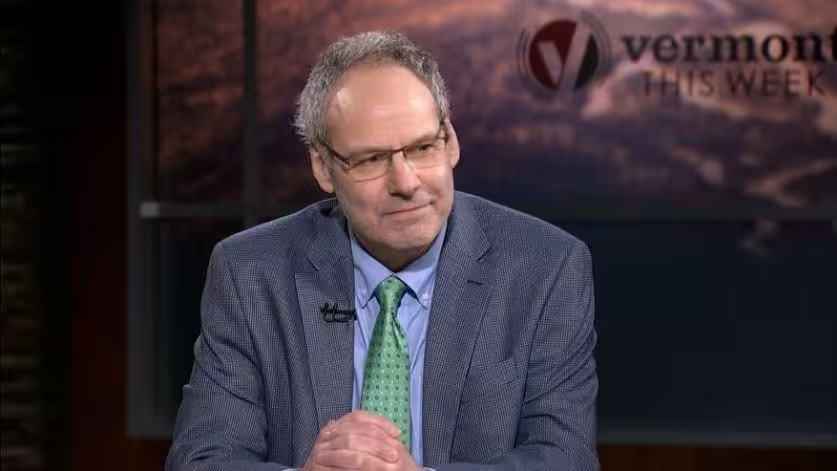
Scott, Janoo differ on housing policy | Rutland County senator arrested for alleged domestic assault | Cases under review after concerns raised about Barre cop | Moderator - Mitch Wertlieb; Liam Elder-Connors - Vermont Public; Shaun Robinson - VT Digger; Carly Berlin - Vermont Public
Problems playing video? | Closed Captioning Feedback
Problems playing video? | Closed Captioning Feedback
Vermont This Week is a local public television program presented by Vermont Public
Sponsored in part by Lintilhac Foundation and Milne Travel.
Support provided by:


Vermont This Week
October 30th, 2026
10/30/2026 | 26m 46sVideo has Closed Captions
Scott, Janoo differ on housing policy | Rutland County senator arrested for alleged domestic assault | Cases under review after concerns raised about Barre cop | Moderator - Mitch Wertlieb; Liam Elder-Connors - Vermont Public; Shaun Robinson - VT Digger; Carly Berlin - Vermont Public
Problems playing video? | Closed Captioning Feedback
Where to Watch Vermont This Week
Vermont This Week is available to stream on pbs.org and the PBS app.
Support the crew
Help Mitch keep the conversations going as a member of Vermont Public. Join us today and support independent journalism.Providing Support for PBS.org
Learn Moreabout PBS online sponsorshipVermont's major party gubernatorial candidates meet one more time before Election Day, with each showcasing vastly different approaches to tackling the state's housing crisis.
Plus, twice elected Rutland County state senator faces domestic assault allegations, and the FBI investigates a former Burlington School official for the alleged embezzlement of nearly $2 million from the district.
All that and more ahead on Vermont this week.
From the Vermont public studio in Winooski.
This is Vermont this week, made possible in part by the Lintilhac Foundation and Milne Travel.
Here's moderator Mitch Wertlieb.
Hi, I'm Mitch Wertlieb.
It's Friday, October 30th, and with us on the panel today, we have Liam Elder-Connors from Vermont Public.
Shaun Robinson from VTDigger and Carly Berlin from Vermont Public.
And I want to thank you all so much for being here today.
Well, we have been talking about the midterm elections, folks.
They are right around the corner, just four days away.
As we're taping this program today, the governors met one more time for one more debate.
WCR had a debate there.
Shaun Robinson, I know you watched that debate.
Did anything stand out to you?
Did anything seem vastly different?
Did anyone make any gains, any losses there?
Or are we still sort of where we were heading into that final debate?
Yeah, I think I would probably say the latter.
You know, you mentioned at the top that these candidates are just so vastly different on a lot of major issues.
And I think this debate, much like the first two, just really underscored that for me.
You know, from everything from housing, like you mentioned, to tax policy to the way that they talk about big tech and AI, I think there's just really like candidates who are different, both in the substance of what they talk about, but also just the style with which they present themselves to voters.
And that style, was it still civil?
I mean, the first two Bates debates seemed pretty civil.
Yeah, I thought it was civil.
You know, I think, you know, even their their questions to one another were, were pretty, you know, phrased kindly and yeah, I think it was you know, they both I think have made comments due to the effect of like, you know, we're upholding an example for the country of civil debate even when we disagree on, on so many different issues.
Polling is kind of interesting.
You know, we have been talking about the polls leading up to it.
Vermont public had its own poll that was a few weeks back.
There was one more, I guess, a national poll that looks at statewide races.
And what did that tell us?
What do we know from that poll?
Yes, this was a poll from a group called State Navigate.
And they pulled they released a poll kind of at the beginning of the month than one this week.
And the most recent one this week showed Scott with 49% support and Janu was 46%.
So a three point gap I think, is that's pretty much the same size gap that they found at the beginning of the month as well.
So kind of reinforcing what we've had a sense of for while now that this race has the potential to be super close.
I think what's interesting about those numbers is that, as you could tell, I'm not the best of math, but neither of those is a majority, right?
And we have a process in Vermont where if neither candidate for governor gets the majority of the vote, it would get kicked to the legislature to pick the winner.
And typically with history, with our precedent, folks might remember this with Governor Shumlin not so long ago, even with Lieutenant Governor John Rogers just two years ago, over David Zuckerman.
You know, the legislature typically picks the candidate who got the most votes.
But, you know, it's an interesting political process, and there's potential for some uncertainty.
And even, like wheeling and dealing in the months between Election Day and when lawmakers come back to Montpelier.
You know, it's interesting, even if there was no like, you know, major decision that would shock everyone that the legislature made if it was as close as you were saying.
I do wonder if the if it's super close and let's say Amanda Janu does not win, but gets very close to Governor Phil Scott's number.
What does that mean politically for Scott moving forward?
As we get into some of the issues that are going to have to be decided?
Montpelier.
Yeah, I mean, let's remember that Governor Scott won by like 52 points, right, in 2024.
So let's say that the state navigate pool is exactly what happens.
And he wins by three points right.
I mean that's a 50 point drop in support.
So that's a huge blow to the political capital that the governor to his credit, has done a, you know, has has built up over the ten years he's been in office.
Right.
So I think that does leave a lot of questions for where we go with not just these kind of proposals he's talking about on the campaign trail this year, but the stuff he's already set in motion over the last couple of years.
Most notably, of course, his school reform plan.
Yeah, school reform is huge.
So is housing, of course.
And Carly Berlin, that brings us to a story you did recently for Vermont Public.
Really fascinating on the ways that Governor Phil Scott and the challenger, Amanda Janu, differ on housing policy.
How would you describe that to someone who doesn't know of these candidates, or what are their views on housing in Vermont?
They're really different, as John talks about, you know, just ideologically, they have very different senses of what's driving Vermont's housing problems and then how to fix them.
So we start with incumbent Phil Scott.
He sees housing as a supply and demand problem.
He talks often about our severe shortage of homes.
And to fix that problem, he talks about, you know, we don't need to we don't need new taxes.
We need more taxpayers.
We need to grow our tax base.
The way to do that, of course, is creating a lot more housing.
I managing you, on the other hand, is talks a lot more about who owns the homes in the state.
Right.
So she talks a lot about second home ownership, private equity, large corporations.
And her main focus is this signature, you know, restructure of our property tax system.
Does she agree, though with Phil Scott, that there is a need for more housing?
She does.
I think this is all a matter of emphasis.
Right.
So you know, Amanda Janu and her platform does talk about the need to make it easier to build homes to fund, particularly the the construction of permanently affordable housing.
But the place that she comes back to is this, this restructure of the tax system of, you know, incentivizing the kinds of homes that she says ferment communities need and disincentivize others.
What's your sense, Carly, on this issue as it relates to voters?
I mean, is this something that you think when people go to the polls, it's going to be forefront in their minds?
I think for a lot of people, it will be.
I mean, you mentioned our Vermont public polling earlier.
We've talked a lot about it on this show.
We asked this open ended question to poll respondents about what they thought was the most important issue facing the state, affordability and the economy was the top of that list.
Of course, you know, the cost of housing is typically someone's greatest expense.
And how is it going to homelessness on its own was another one of the top three categories that came up in response.
Well, I appreciate your updating us on that.
We have to turn now to some stories that, you know, are a little bit disturbing, you know, and they have some of these have broken over the last couple of weeks.
Liam Elder-Connors, I want to ask you about this story.
It's kind of fascinating out of Franklin County.
You've been reporting on this for a while now.
John, who was the former Franklin County state's Attorney, give us some background on this.
He is running again, but there was a moment where he was facing possible impeachment.
Why?
That's true.
I mean, in fact, he was elected in the last election and then resigned while lawmakers were looking at impeaching him because of an investigative report that found that he made numerous derogatory and offensive statements in the office to employees, and he was just on the brink of lawmakers potentially bringing impeachment and and removing him from office when he decided to resign.
And so he's running again.
He can run again.
The legislature didn't ultimately impeach him or remove him from office, which could have potentially barred him from seeking office again.
And so he's come back and he's making the case to Franklin County voters that, you know, he's really reflected on his behavior in office.
He's taking responsibility for it and that he knows it was indefensible conduct and not anything that he would do again, and that he, as a veteran prosecutor, is the one who should return to leading the office, which he says needs a lot of a lot of help.
He does admit that some of the help is needed because of some of the instability that he caused through his behavior, but he thinks there's also a lot of other reasons why the office needs help.
And as a veteran prosecutor, he could take take the reins there.
Is there any kind of, you know, pushback publicly or from from other lawmakers about him trying to run again?
You know, Martin Malone, who is in the House of Representatives and led the impeachment committee, has sort of raised this and said I, we were under the impression that he wasn't going to run again, LaVoy says.
I never said that, obviously, and I haven't seen too many statewide leaders in Franklin County speaking about this.
But you've seen letters to the editor, people saying that they're concerned about him running again.
There is another person running in that race, Zach Waite, who won both the Republican and the Democratic nomination.
He's been a prosecutor in Washington County and ran the Chittenden County Accountability Court over the past year as well.
And so we'll see, you know, where voters, you know, what they end up doing.
It's interesting because Zach and ran against John LaVoy four years ago in the race and lost.
So it's actually the exact same matchup that happened the last time.
Interesting.
I was going to ask about name recognition for the challenger.
But you say he's run before.
He's run before and now he lives in Saint Albans City.
He moved their earlier this year and he's had a higher statewide profile as well with this work in the accountability court.
Okay.
We're going to move on to this other story now that that came out, Shaun Robinson about Rutland County state Senator Terry Williams, twice elected.
He is now facing alleged domestic assault charges.
What can you tell us about that?
Yeah.
So talk about kind of things coming up right at the last minute before the election.
This was just this week.
Senator Williams, who one of the three Republican incumbents from Rutland County, like you said, elected in 2022.
He was arrested on Tuesday for.
Yeah, for domestic assault.
It was, you know, he this was like a. Yeah.
He was arrested and charged with assault again before election Day.
Police say that he allegedly hit his adult daughter in the face during an argument about a moldy bale of hay.
That's the quote from the police charging documents.
And yeah, it's just really interesting timing.
You know, voters have already been, you know, sending in ballots.
So, you know, and he's an incumbent too, so folks will know who he is.
I wondered about that with early voting.
You know, someone's already perhaps voted.
I do know that Governor Phil Scott had endorsed Williams for for reelection.
Has the governor said anything since this news came out about that endorsement as he retracted any movement on that?
Yeah, he has put out a statement and he hasn't retracted his endorsement.
He's, I think, said something to the effect of, you know, I'm waiting for all the facts to come out.
The state GOP has said a similar thing.
I'm the Democratic Party on their end said this week, you know, he should resign.
He should not run again.
And you know, there's an independent in that race.
I'll note who I'm not a, you know, pure blood Democrat.
But so we have three Republicans then one independent running as well.
Okay.
Well, thanks for the update on that particular story.
Liam Elder-Connors, I want to come back to you because there's this other disturbing story, this one out of Washington County.
This has to do with a police officer who I think there are about 100 cases linked to this officer now under review.
And why is that?
Yeah.
So this is a Barry City Police officer, Matthew Frey, who is was under investigation for allegedly beginning a relationship with the woman that he arrested, which is concerning, prosecutors say, because there is a pretty big power imbalance there, even in a consensual relationship, consensual relationship between a police officer and a defendant in a criminal case that this officer is a part of.
And so prosecutors filed what's called a Brady Giglio letter, which is a legal disclosure which says that the prosecutors have concerns about the officer's credibility.
And sometimes that means they won't even call the officer to the witness stand anymore.
They have such concerns.
And so the Washington County state's attorney says that she's not going to call Officer Frey anymore to the witness stand and is reviewing all the cases that he was a part of, and some that might be, you know, just sort of tangentially involved in a case.
There are some where he's the lead investigator, and in those cases, she says she'll dismiss them outright because he'd be such an important part of the state's case that it'd be hard to continue that.
We don't know how many cases are going to get outright dismissed.
Michele Donnelly, who's the prosecutor in Washington County, says she's still reviewing those cases.
I mean, that's a pretty frustrating thing for anybody who may look at some of those cases and say, you know, there was a conviction.
It was a right conviction.
You're saying this well.
They haven't been convicted yet.
I mean, that's these are pending cases, right?
So these aren't convictions.
These are these are things that are still going through the court systems.
But the state is saying we don't have the evidence now because we have these credibility concerns.
So we're dismissing them.
Should say that the officer, Officer Frye, there hasn't been charged criminally with anything.
State police did an investigation Barry Cities doing their own independent investigation.
But the officer doesn't face any criminal charges right now.
And his lawyer told me that they're concerned with the way that prosecutors so quickly raised credibility, concerns about this officer as well.
So we'll see how it all kind of shakes out.
It does seem like it could sort of mess things up within the court system, though, which we know is already dealing with backlogs and all sorts of other issues.
It just seems like this could complicate so many different cases.
Yeah.
And I think, you know, it's we've seen other examples of this over the years.
You know, I have in covering this where officers are named in a Brady Giglio letter and it imperils a lot of cases.
And so, you know, that's why these these letters are often seen as the end of an officer's career.
Because if they don't have their credibility anymore, they and can't be called as a witness in cases they investigate, then they can't really do their job.
I should say that isn't the case all the time.
Some prosecutors will continue to accept cases from officers, but sometimes they won't.
So it's a really interesting area that Brady Giglio letters in general.
But we don't we don't need to dive too deeply into that right now.
Well, that's why viewers of this program or listeners of this program will now know what a Brady Giglio letter is.
Thanks to you, Liam.
I do appreciate that.
I want to stick with you, Lima, about this other story out of Burlington.
And we've had embezzlement stories in the state of Vermont before.
This one is $1.8 million.
There are allegations that a former district school official embezzled this money over ten year period.
Yeah, around in the last decade or so, it's another.
I should just note this individual has not been criminally charged yet.
The reason we know about this is because court records in federal court were unsealed showing that the Federal Bureau of Investigation has sought search warrants for this individuals, their home seized laptops, their email account to look into these alleged embezzlement of almost $2 million.
And what appears to have happened is Stephanie Phillips, who's who's the person who's at the center of this case, was working at the Burlington School District and appears to have created a fake company that submitted false invoices to the Burlington School District.
And then she was allegedly taking the money that the district was paying to this fake company.
She started and lining her pocket with it and, you know, allegedly bought bought a dog from Italy who did some home renovations as well.
So no criminal charges there yet.
But it seems like the FBI has gathered a substantial amount of evidence that that she has been connected to, to some sort of financial impropriety.
It seems kind of unusual the FBI would get involved in something like this.
It seems pretty serious.
Well, I mean, not necessarily.
I mean, just given the scope of of the case.
You know, Burlington Police initially were investigating this.
And then at times, you know, if certain allegations better, you know, could could be federal charges as well.
The feds might come in.
And given the scope of this case, the FBI might have been had the resources to be able to to really help and dig deep here.
The other thing striking about the story is that we hear so much about school districts that are suffering financially, dealing with financial issues, trying to find money for so many different projects.
And here we're talking about almost $2 million sort of disappearing.
Yeah, I think, you know, that's a big question.
I think that we all have is, is what kind of controls were in place to prevent this sort of thing from happening in the Burlington School District?
How how did that go on for a decade that this money was just disappearing?
It wasn't $2 million all at once, but still, it's a pretty sizable amount over time.
And you know who is checking in on where the money was going and these invoices that were coming in from this company that this individual appears to have started.
Wow.
Well, to keep following that story as that goes along and as we get into the new school year.
But thank you for the update on that one.
Curley Berlin, I want to turn back to a question that deals with housing.
You mentioned homelessness before, a big issue that people care about.
Advocates in Vermont for homeless Vermonters are saying that there are new rules being put in place that puts process over people.
What do they mean by that?
What are the criticisms here?
So this is all about the rollout of act 143, which was this law passed this summer that restructures Vermont's response to homelessness.
What of the main things it's trying to do is get away from relying so heavily on this motel voucher system that's been this, you know, political football for years now and invest more in homelessness prevention, community based shelters, other options for people.
You know, part of the tension in that is we have to have other options for people as we scale down the use of motels.
And advocates for years have said, you know, we can't cut motel access before we have those other things.
What's happening right now is the Department for Children and Families has put out these new rules specifically for the motel voucher piece of this.
That's where they focused first.
There are new caps in place as part of this law that went into effect in September.
And one of the things that DCF has done is institute these new processes for people to get access to the program, new sort of surveys that that individuals have to do to get scored for their risk and that prioritize them for access to a spot.
At the same time, the state has stopped using the 211 call system in evenings and on weekends for people to be able to to get access to a motel room, which effectively means that people need to call during regular business hours to be able to seek shelter.
And, you know, on the aggregate, on the whole.
Advocates are saying, you know, this, this is too restrictive.
This wasn't the point of this law.
You need to you need to scrap this this rollout and effectively start over.
Are they making the point to that?
You know, we're talking now.
It's October.
Winter is approaching.
This is the time when people start paying more attention to these issues.
And, you know, all of a sudden we're going to be hitting the coldest months of the year.
It's absolutely right.
And I mean, I'll say that during the winter months, some of these rules get relaxed a little bit.
There are more rooms that the state is allowed to use in motels.
People don't face the same sort of strict time limits, but we've seen over time that, you know, still, on the whole, we're restricting this, this particular kind of access to shelter during the winter and relying more on these pop up shelters that, you know, will go into effect when it's really, really cold, when there's a temperature trigger and volunteers or in some cases, paid staff put up these things that might last for a couple of days and then take them back down.
So we're going to see more of that this this winter.
What are our officials saying about why they've maybe I don't want to say complicated, but they've made the process.
It sounds like a little more difficult to, you know, get your name in for one of these motel rooms.
What is the thinking behind that?
I think you would alluded to it in that you want to make sure people are screened properly, right?
That they're, you know, they don't have maybe a criminal background.
I'm not sure what that process is.
Yeah.
I mean, DCFS sort of main point here is that we, you know, they have a limited number of rooms that they can use in this system and that they need to prioritize people who are facing the highest risks.
So, you know, the Democrat led legislature who led the process of writing this bill, they were always really uncomfortable with the idea of prioritizing individuals in need and trying to kind of decide, who is this family with minor children more at risk than this person on oxygen, right?
They don't want to have to make those kinds of choices.
For anybody to make.
It absolutely is.
And what DCF is saying is, no, we actually need to look pretty critically at this.
We have 700 rooms to fill, and we need to decide internally who's going to be, you know, at the top of that, that waitlist essentially.
Okay.
Yeah, we're going to be seeing as as, you know, again, the winter moves in.
It's going to be pretty tough.
Well, I mean it's all I mean, like, there's been just been a years long effort to figure out what to do with the motel program.
And so like we're talking about like the nitty gritty details of how it looks right now.
But this has been a question of should this program even exist?
And Phil Scott's administration and the legislature have been sort of battling back and forth for, you know, years now about what it looks like, and this is the point they've arrived at.
But really, it's all about trying to to wind down the program to some degree, is sort of like how I've seen it play out over the years.
And all of Carly's reporting indicates that.
But yeah, it'll be interesting to see, you know what what this winter looks like, especially when we're not standing up more permanent shelter around.
Like all those efforts to make more permanent shelter haven't gone anywhere either.
Well, there are some there are some examples.
There's a new year round shelter in Brattleboro that's opening.
There's a new one in white River junction, but they take a long time to get these things going.
And when we look at the scale of need versus the scale of shelter options we have available, there's just such a stark gap there.
I mean, the the number of people experiencing homelessness in the state as of last month was 4800.
I mean, it's a. Really.
It's a really striking number.
We're talking about 700 motel rooms, roughly the same number of shelter spots.
I mean, it's just, you know, the math doesn't add up there.
Is it still true that Vermont per capita has the second highest rate of homelessness in the country?
I think you would have reported that.
That's that's a couple.
That number is the last time we had it, we were fourth.
But you still think of us in the top couple states.
Yeah.
Which is tough in a state that gets as cold as Vermont does in the winter time, it's going to be tough.
I do very quickly wonder if any of this was brought up.
Shaun Robinson, during the debate, the homelessness question, did that come up with Scott?
And you know.
You know, I'm trying to remember what did you hear, Curley.
During during Vermont public's debate last week?
They talked a little bit about this and particularly around homelessness response in Burlington specifically, and whether you know how much the state should, should intervene.
You know, part of the focus there, Amanda talked a lot about this Housing First model that people should be able to get access to homes without needing to go through treatment or to, you know, agree to services as a condition of that housing.
I think that's going to be that's another one of these areas where we see a pretty stark divide between the candidates.
Yeah.
And I think there's definitely been this politicization, if I can say that word correctly, of the relationship between between the city of Burlington and their leadership and the governor's office.
Right.
And it'll be interesting to see if we do have a governor of a different political bend going forward, like, well, that relationship change, how will that evolve?
And like, maybe will their priorities align in different ways?
So we'll have to see.
And to that point, as we're speaking, it's amazing to me that there's been so much lead up and ramp up to this all these midterms.
It's so important for the country where just a few days away now.
Shaun Robinson, what have you heard from election officials about the security of Vermont's elections?
We know this is such a concern all across the country.
Yeah.
You know, our Republican governor, Phil Scott, and our Secretary of state, Sarah Copeland, who's a Democrat, have made a point a couple of times in the last, you know, this fall, just stand up together and say, look, we're this is a bipartisan team.
You know, we're here to reassure that our elections are safe and they're secure.
And obviously, they're doing that because of this national context.
Right.
And all this misinformation and frankly, disinformation we're seeing about election security.
it sounds like there's been a few instances this fall.
This came up when they gave a press conference earlier this week about, you know, some, some threatening rhetoric.
And folks in been going into their their town clerk's office and questioning the integrity of the process.
But it sounds like, you know, for the most part, things have gone pretty smoothly.
It would be nice if that was uneventful.
Halloween should be scary for masks and costumes, not for elections.
And I am not going to ask each of you what you're all going for as Halloween.
Although I do want our viewers and listeners to know that all three of our panelists today, serious reporters are getting dressed up for Halloween.
Not me.
I think it's silly.
We're going to have to leave it there for this week.
Thank you so much to our panel.
Liam Elder-Connors from Vermont Public, Shaun Robinson from VTDigger, and Carly Berlin from Vermont Public, whose reporting is presented in partnership with VTDigger.
Thank you so much for watching.
I'm Mitch Wertlieb.
We'll see you right here next Friday for Vermont This Week.
 New Episode
- News and Public Affairs

Top journalists deliver compelling original analysis of the hour's headlines.
 New Episode
- News and Public Affairs

Today's top journalists discuss Washington's current political events and public affairs.

 New Episode
 New Episode
 New Episode
 New Episode
 New Episode


 New Episode



Support for PBS provided by:
Vermont This Week is a local public television program presented by Vermont Public
Sponsored in part by Lintilhac Foundation and Milne Travel.