Washington Grown
Potato Innovation
Season 10 Episode 1008 | 26m 46sVideo has Closed Captions
How potato farmers and processors maximize water usage,, Essencia Artisan Bakery in Yakima
We see how potato farmers and processors team up to maximize water usage and crop nutrients. Cooking potato flatbread at Yakima's Essencia Artisan Bakery and learning about pre planning meals.
Problems playing video? | Closed Captioning Feedback
Problems playing video? | Closed Captioning Feedback
Washington Grown is a local public television program presented by KSPS PBS
Washington Grown
Potato Innovation
Season 10 Episode 1008 | 26m 46sVideo has Closed Captions
We see how potato farmers and processors team up to maximize water usage and crop nutrients. Cooking potato flatbread at Yakima's Essencia Artisan Bakery and learning about pre planning meals.
Problems playing video? | Closed Captioning Feedback
How to Watch Washington Grown
Washington Grown is available to stream on pbs.org and the free PBS App, available on iPhone, Apple TV, Android TV, Android smartphones, Amazon Fire TV, Amazon Fire Tablet, Roku, Samsung Smart TV, and Vizio.
Providing Support for PBS.org
Learn Moreabout PBS online sponsorship- Washington Grown is made possible by funding from the Washington State Department of Agriculture and the USDA Specialty Crop Block Grant Program.
- Hi everyone, I'm Kristi Gorenson and welcome to Washington Grown.
Adaptability is the name of the game when it comes to farming and our Washington potato farmers have what it takes to deal with the everyday challenges that come with growing our food.
In this episode, we're gonna take a closeup look at some of the innovations that are helping our farmers along the way.
I'm visiting Friehe Farms.
Feeding the world?
- Feeding the world, one potato at a time.
- Yeah.
And I'm making potato flatbread at Essencia Artisan Bakery in Yakima.
I like how mine kind of - Yours has more personality.
- does that!
Plus Tomás is learning how entomologists are using data to help farmers.
You know, I think it's pretty incredible that I'm talking to an entomologist while a caterpillar is crawling across your back.
- All this and more today on Washington Grown.
[Upbeat music] - My favorite part of the day!
- You gave me this job just to keep me occupied, didn't you?
This is what fine dining is all about right here.
[barking] - I could eat these all day.
- You all make this look so simple and easy.
- Cheers to that.
- I only hang out in pretty potato fields.
[melodic music] Artisanal treats, fresh baked bread and an atmosphere to match.
Essencia Artisan Bakery sits right in the heart of Yakima and they're taking full advantage of the fresh produce in the area with a menu of fruit-based pastries and other goodies.
Owner Ryan Lowe takes his job seriously creating unique delights for his guests.
- What is it that you love about baking?
- You get to see the whole process.
Every one of those steps is really important to the final product.
- I think my favorite thing about these is the artistry of them, and that's why I'm drawn to them.
- I ordered the triple berry scone and it's one of my favorite things that they make.
- On the sweet side, the lemon bar.
- I really love the pecan tart.
- The chocolate croissant.
- No, this isn't all my breakfast.
- The beehive is a really flaky product that gets all over.
You can't eat that in your car - That's good to know.
- On your way to work.
- I just always enjoyed coming here 'cause they're so friendly and the food is just delicious.
- Can't go wrong.
Can't go wrong.
- Don't miss later in the show, when Ryan and I make a special potato flatbread.
This is the fun part of your job, right?
- Mm-hmm.
This is how I tenderize my skin.
- Yeah.
[easy intermission music] [Upbeat music] - Hey, let's go!
When you find an amazing barbecue joint, you make sure that you come back.
I'm down at Jack's barbecue in Seattle talking to owner Jack Timmons, and just from the amazing aroma you can tell that a little piece of Texas came here to the Pacific Northwest.
- The barbecue's legit.
Like I went to barbecue summer camp in the meat sciences Department of Texas A & M. - Wait, wait.
A meat science department?
- Guys with PhD's in Texas teach barbecue.
Came back like Moses coming down the mountain with the, the tablets of knowledge - Right!
- of barbecue.
And I started doing barbecue and it just took off.
- Today we're trying the loaded Washington fries with queso sauce, fresh spring scallions and something I haven't really had before, beef bacon.
Oh my gosh, Jack.
Look at that.
- It's heaven in a basket.
I'm telling you.
- The beef bacon!
- I had never heard about that until I went to barbecue summer camp.
- There you go.
- They're making bacon outta steers instead of pigs.
I thought I'd try it and it's delicious.
It's like a cross between bacon and steak.
Oh man.
- The fries are perfect and that beef bacon is very unique.
That is definitely a first for me.
And it will be a second for me.
And maybe a third.
Something about potatoes and cheese.
You just can't go wrong.
Time to see what the streets of Seattle have to say about these loaded Washington fries.
- Dig right into 'em.
I don't use hands for real barbecue stuff.
- There you go.
[excited laugh] - These are really good.
- We got good piece of the bacon.
Bacon's delicious.
- There's a nice tooth to the meat, but it's not like too crunchy.
- I like the bacon fat, of course.
- Because it's beef, the fat renders better and then it kind of deep fries itself.
- And the fries are really good too.
They're not, they're not soggy.
- They're perfectly seasoned.
- They're still soft on the inside, but they're crispy.
- Right!
- A little bit smokey.
- All the right crispiness.
- And then that fresh spring scallion just really pops.
- I would recommend these.
- This could just be a meal.
- This could definitely be a meal.
It's definitely hearty.
- It's hard to talk about potato processing in Washington state without mentioning one of the biggest french fry producers around, Simplot.
Using the phenomenal potatoes grown right here in the soils of central Washington, Simplot makes one of America's favorite salty snacks, french fries.
But in addition to delicious fries, they're also giving back in many ways.
- One of the things that I absolutely love about the company is that they like to recycle.
- Hector Garcia is the environmental supervisor for Simplot.
Whether it's giving back to the environment or the local communities, he believes in what Simplot is doing.
- One of those things that I get to recycle is aluminum that I can actually sell and I can actually donate that money to say, say like Children's Hospital.
- Oh that's great.
- Or, ah, little league.
Or you know, whoever needs it.
- Recycling and giving back to the community.
- Correct.
Sometimes we go out to events and just give fries away.
- Hallelujah.
Best day ever.
Free fries from Simplot.
- Correct.
- One of Hector's biggest focuses is Bertha, an enormous digester that takes waste water from the processing plant and converts it into clean water.
That water is then used to water crops and the biogas produced is recycled to power the plant, bringing everything full circle.
Well, tell me about Bertha.
And I love the name.
- Basically what we do is we use the used processed water from the plant comes over here.
We have some bacteria in the digester that eats the organics of the processed water.
Because of the process over there, we're actually able to create some biogas.
We use the biogas to power our plant down the road, and that in turn helps us so we don't use as much natural gas.
- So this is the digester itself.
- Okay.
Matt Schmidt is in charge of making sure Bertha is running well with no issues.
Every day he makes sure the digester is working properly and recycling biogas and water.
- This shows me our, our mixing pumps, our effluent pumps.
- Influent and effluent.
What do those terms mean?
- Influent water is water that's coming into the digester from the plant.
- Stuff that needs to be cleaned.
- It's waste, it's the wastewater out of, that's coming out of the plant.
Effluent water is water that's leaving the digester itself after the cleaning process.
- Cleaned by the bacteria.
- Our wastewater comes in over here on the side of the building.
- Influent.
In.
- Yeah.
Influent comes in.
It'll go through our sludge and mixing pumps.
Sludge pumps, what they do is, there is a layer of exactly what it is, sludge, where the bacteria live.
And so what we do is suck 'em up from the bottom, push 'em through it so they get mixed in with the water as well.
There's a constant flow of things inside of there.
So.
- Now it's finally time to meet Bertha, face-to-face.
What are we standing on?
- What you see is a protective cover for the - For the digester.
- For the digester that actually collects the gases.
- Okay.
So what's holding us up?
- Biogas.
You got a layer of biogas, and then there's water and sludge, basically you know, like a - So cool.
- black mud.
There's at least 30 feet of water below us and in the fields you see around us are all Simplot's fields.
- That use the water that comes from Bertha.
Thank you, Bertha.
Why is it important to Simplot to do that type of recycling?
- We try to minimize our environmental footprint.
Also, we know that water is a valuable resource, so we try to reuse it as much as we can.
- Save the earth.
- Yeah, save the earth.
It's all about earth.
- Save the earth and French fries.
Coming up, I'm making potato flatbread at Essencia Artisan Bakery in Yakima.
- I like how mine kind of, - Yours has more personality.
- does that!
[easy intermission music] - We're back in Yakima at Essencia Artisan Bakery.
Seated right in the heart of downtown Yakima, this bakery is well known as the perfect spot to enjoy your morning with a fresh baked loaf of bread in hand.
- They have an artistry and a way of going about the food and the customer service that is just gonna invite you in and make you wanna stay and really enjoy where you're at.
- Just so buttery and fresh every morning when I order it.
It's fabulous.
- It's our hometown bakery.
- I like to do everything from the bottom up from scratch.
- Owner and head baker Ryan Lowe uses the fresh produce of the area to his advantage, working with local farms and markets to inspire his menu.
- Just load up at the farmer's market with whatever looks good.
I'm the one pushing the big cart full of fruit.
Probably some of the best relationships I've ever had have been at the market.
Just working with fresh produce, it's just such a better journey 'cause you can stop it at certain intervals.
- They do seasonal things, which is wonderful here with all of our good produce and fruits and berries.
So it's always a treat.
- We have lots of farms in a short distance from this bakery.
So if I need a box of peaches, or I need asparagus or a box of potatoes, I can drive out to a farm, grab it, and run back here and hopefully get them prepped in time for lunch.
- You're blessed.
- We're very lucky to be in this spot.
- Yeah.
- Just like the love that Ryan puts into everything that he does is, is just really nice, just 'cause of the ingredients they use and like how much heart and soul he puts into it.
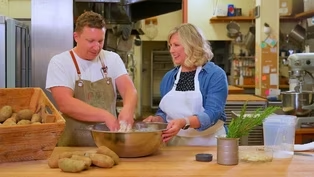
- What are we gonna make today?
- I think we'll do a potato flatbread.
- Okay.
- With rosemary and a little bit of cheese.
- Sounds delicious.
Time to get baking.
Why these kind of potatoes?
- Well, they're pretty common.
They're easy to get.
- And where do these come from again?
- Taki Farms.
- Taki Farms.
Well thank you Taki Farms for these beautiful Washington grown potatoes.
Well, let's get started.
We add flour into a bowl and start mixing it.
- Now we just get really dirty.
- Okay, you first.
- We add yeast, salt, sugar, and olive oil, then knead the dough.
- So you can see this has started to come together already.
- Sure.
- You don't need to work the dough the entire time.
You want to kind of pull it together and step away.
- I think it's hard for people to step away.
- No, they want to keep kind of - They wanna keep going.
- Putting their hands in.
- Yes.
Right.
- I'll let this rest and then come back to it probably three times in that order.
- Oh, okay.
Should we walk away?
- This is it.
We're gonna walk away.
That's it.
- Now it's onto the potatoes.
We cut them into quarter inch discs and season them up with some Italian seasoning and Old Bay.
While Ryan mixes, I pour in some olive oil.
This is the fun part of your job, right?
- Mm-hmm.
This is how I tenderize my skin.
- The potatoes then go onto a sheet pan and into the oven to cook until tender.
While they cook, we cut up some garlic and rosemary and mix them with some ricotta cheese.
- Is it ric õtta or ric ätta cheese?
- You tell me you're the expert.
I think if we say it with an Italian accent, it's okay.
Ricotta.
When the dough is done, we transfer it to the oven loader and stretch it out.
Next we add the ricotta and some aged provolone.
When the potatoes are tender, we place them on top, add some soft melt provolone and finish with some mushrooms.
Doesn't get much better than this.
Lovely dough, potatoes, cheese, potatoes, more cheese.
[upbeat music] ♪ - Piping hot right out of the oven.
- Yeah, it does smell really good.
- I like how mine kind of - Yours has more personality.
- Does that!
Those potatoes are excellent.
- The potatoes do most of the lifting on this.
- I taste a lot of rosemary.
I mean that's like the perfect combination with potatoes, right?
I'm a big ends fan, so I'm gonna take this part again.
- Great.
- Have some more.
- Me too.
- To get the recipe for Essencia Artisan Bakery's potato flatbread, visit wagrown.com.
- Out here in Moses Lake, miles of farms produce one of our favorite veggies, potatoes.
Here at Friehe Farms they're right in the middle of the growing season.
- Potato growing is kind of an addiction.
- Heath Gimmstead is the agronomy manager for Friehe Farms.
His pride and joy is growing amazing potatoes to make into french fries.
- Every time you have a failure, you want to do better the next time, and we only have one chance a year.
And so it's very much an addiction.
- And so these potatoes are made into fries?
- Yes.
We are exclusive producers for Simplot and all of our production goes into french fries that, for the most part, is exported to the Pacific rim.
- To grow the perfect potato, you need the perfect amount of water.
Although the farm has moisture monitors in every field, the best tool to make sure the potatoes are watered correctly goes back to the basics.
- We obviously have technology.
We have equipment that'll help monitor the soil moisture.
But I personally feel the good old fashioned shovel and feeling the soil with your hand to me, is the best tool to monitor soil moisture.
- Does the shovel have a name?
- My shovel does not have a name.
Just don't steal it.
- I won't steal it.
- Don't steal it.
- I will not steal it.
Nope!
I'm coming.
Slowly but surely.
- Take your trusty shovel and then just feel it with your hands.
- This, I mean, this to me feels, you know, pretty.
- This is about spot on.
That's about 75 to 80% right there.
And that's where we try to maintain it throughout the majority of the growing season.
And then as the crop begins to senescence and day lengths gets shorter, they will tend to use less water.
So senescence basically means the potato is dying.
So there's a large amount of carbohydrate and tuber bulking.
It happens as they begin to senescence, and then at some point they're obviously dead.
- In order to grow great crops, it all begins with water.
The water here in central Washington comes from Grand Coulee Dam, many miles away.
- The water starts at Grand Coulee and then comes downhill.
And basically there's a large canal.
We pump it to this location and then - Yeah.
- deliver it from there.
Yeah, it's pretty amazing that whatever president in 1942 said, "Hey.
Let's put a dam in this river and we're going to put water on this sand dune a hundred miles away."
And it's turned into enormous viable agricultural production area that's just incredible.
- Feeding the world.
- Feeding the world, one potato at a time.
- Yeah.
Friehe Farms also works with nearby Simplot to reuse water from their plant for the crops.
The water comes out of the plant, goes into the digester, Bertha, that we saw earlier to be cleaned, and then gets used to make more potatoes.
- Obviously Simplot has to get rid of the water and we're a good source for utilizing that water.
So it works really well.
The water's the most important resource that we use and so we obviously don't want to waste it.
Without the water, we wouldn't have a crop.
Farmers spend a lot of time, a lot of effort, a lot of hours to produce the food so that when you go to your supermarket, it's there and it's safe and it's clean.
It's fresh, but it took a lot of work and effort, time and money to get that product to the supermarket shelf Is a potato a solid or a liquid?
I'll have the answer for you after the break.
- Coming up, Tomás is learning how entomologists are using data to help farmers.
- You know, I think it's pretty incredible that I'm talking to an entomologist while a caterpillar is crawling across your back.
- And we're in the kitchen at Second Harvest, trying out some papas rellenas.
- So here's your answer.
Potatoes are primarily 80% water and 20% solids.
[upbeat folk music] - This is a really fun one today.
We all know that dinners can be really hectic.
It's just a busy time of the day.
And so how do you utilize one or two ingredients and stretch it out to make more than one dinner?
Well, it's super, super easy.
Let's say on Sunday night you guys have a delicious roast for dinner.
You are gonna take the remainder of that roast and the next night add some wonderful Washington potatoes and make a beautiful stew.
Everyone loves a hearty, good beef stew, but most people don't want to have beef stew two nights in a row.
And we know that there's usually leftovers for something like that.
So instead of just tossing it out or putting it in the fridge and forgetting about it, throwing it away, we are going to put it in some storage containers and we're gonna pop in the freezer and we are going to leave it in there for a few weeks to a month.
Now the biggest thing to you guys is you can either do big ones like this, or you can even do small ones this size as well.
So you can just do single serving, if everyone's running around, and at practice and you're home by yourself and you want some soup real quick.
And so you're gonna put it in there as much as you think you want and then you're going to make sure to label it because I think probably more than just me, I put things in the freezer and I forget when I put them in there.
And then I don't wanna use it because I don't remember how long it was there.
And you can keep that in there for, I would say, about two months and then enjoy it whenever you're ready.
- Today I'm at WSU to meet with David Crowder, an associate professor of entomology.
David and his team run the Decision Aid System, an essential tool for tree fruit and potato growers across the state and region.
So what is D-A-S?
- D-A-S is the Washington State University Decision Aid System.
That's the abbreviation.
Basically, it's a forecasting system for insects and plant populations.
So we have a system that's pulling in data from hundreds of weather stations throughout the state.
- Okay.
- And using those data, we can actually predict when crops are in bloom, when insect populations are coming out of their overwintering site.
And we provide all this information on a free digital platform for growers so they can log on, get predictions for what's happening on their own farm, and forecasts of when those insect pests are gonna be there up to two weeks, four weeks ahead of time.
And allow them to make proactive decisions as opposed to reactive decisions.
- Okay, so give me an example of what a forecast would be.
Like one particular pest.
What would a forecast be?
- Sure.
One of the major pests in potato cropping systems is called the Colorado Potato Beetle.
- Okay.
- And this insect lays its eggs on potatoes.
Those eggs hatch.
The larva start feeding on the leaves.
And when the larvae develop, they actually fall off the plant and dig a hole about five centimeters down in the ground, and that's where they pupate.
So we really need to tell them when the eggs and larvae are gonna be present in the system.
So a forecast might say, you know, 10 days from now based on the weather conditions in your field, you're going to start having eggs of this species being produced.
- You're going to start having larvae.
So we're really trying to give them a sense two to four weeks ahead of time of when these populations can be controlled and when they can get their optimal timings down.
- David explained that over 90% of the tree fruit and potato acreage in Washington is using the D-A-S system.
And I was curious, how does this help the grower's bottom line?
- Our users actually estimate the benefits of this system to be somewhere between 75 and 100 dollars an acre in reduced pesticide costs and labor cost inputs.
- That's significant.
- And we believe we're kind of helping save the broader ag industry in Washington around 30, 40 million dollars a year based on some of these estimates.
- You know, I think it's pretty incredible that I'm talking to an entomologist while a caterpillar is crawling across your back.
Let me get him.
Oh, there's actually several of them.
[laughing] As we were speaking, this guy was just creeping along your shoulder.
So for those of you at home that are squeamish around creepy crawlers, we need to thank these guys for doing what they do to keep us fed.
Thanks David.
[upbeat guitar music] - We are back in The Kitchen at Second Harvest Food Bank in Spokane, and we get to taste some lovely recipes from allrecipes.com and joining me to lend their expertise, we have Tomás over here.
- How's it going?
- Thanks for joining us.
- I don't know if expertise is the word but, but a voracious appetite.
Let's go with that.
- Yes.
That's what we like.
That's what we like.
And Laurent Zirotti, chef and culinary arts instructor.
Thank you.
We're always so glad to have your expertise.
- So great to be here with you too.
- Thank you.
- Yes, thank you.
- So this was the potato episode, all about being sustainable.
And our Washington farmers are very, very good at that.
- Well, and the innovations that are created, even just in, in watering the potatoes where only certain sprinkler heads are turning on at certain times and using GPS technology.
And it's just great to see how the sustainability is becoming at the forefront of farming here in Washington state.
- Yeah.
Always being innovative.
So today we are going to make papas rellenas, right?
- Nice.
- Right, so?
Yeah?
- Yeah!
- Did I say it okay?
- Yeah.
Yeah, I think it's like a potato version of a chile relleno right?
- Yep.
- Yes.
- We're just removing the bell pepper and inserting a potato instead right?
- Right.
- You gotta be delicate with it.
- Sure, so let's take a look and see how they made it.
- Alright.
[guitar music] - Well, this looks amazing, but I can't imagine actually.
I, I'm just envisioning me trying to do this at home and it would be - That's a process!
A complete disaster.
- Yeah.
That is an intense process.
There's a lot of steps into making this.
That's a good challenge right there.
- Yes.
- A little trick maybe for, for the one at home.
If you know, the, your, your mix is a little loose.
It's very fragile.
Make your mix, make sure it's well tight.
Maybe you add a little flour to it and put it in the freezer and then you are gonna do your, your three step breading.
After when it's frozen, it's much easier and it's gonna be less of a, - Great idea.
- Less of a struggle.
- Steamy hot inside too, be careful.
- That's hearty.
- Crispy on the outside, creamy on the outside.
- And that pepper, pepper flavor.
Yeah.
- Salty, warm.
I'm very happy.
Good stuff.
- I could eat a dozen of those.
- So thank you, aloo.
We appreciate this recipe.
It's delicious.
And if you wanna give it a try, we'd love to see your creations.
Tag us on social media, show us a picture of what you did.
Be a lot of fun.
Even if it's a disaster, we wanna see it.
It'd be fun.
- That's right.
It's fun anyway.
- Yeah!
To get the recipe for papas rellenas, visit wagrown.com.
- It takes passion, dedication, and a whole lot of grit to be a farmer.
And thanks to the innovators like we met today, they're not going it alone.
That's it for this episode of Washington Grown.
We'll see you next time.
Preview: S10 Ep1008 | 30s | Maximize water usage and crop nutrients. Potato flatbread at Yakima's Essencia bakery. (30s)
Providing Support for PBS.org
Learn Moreabout PBS online sponsorship

- Food
Christopher Kimball’s Milk Street Television
Transform home cooking with the editors of Christopher Kimball’s Milk Street Magazine.











Support for PBS provided by:
Washington Grown is a local public television program presented by KSPS PBS